
Falmers - slaves of their land, part one
Part One - The History of the Snow Elves' Fall
Part Two - The Life of the Falmer in Our Time
Proud Nords of Skyrim consider themselves the rightful owners of these harsh lands. But long before they arrived from their native Atmora, the territory of present-day Skyrim and the island of Solstheim was inhabited by the Snow Elves, the Falmer. It is believed that they were a highly developed race, at a level comparable to their Altmer cousins. They were excellent mages even by elven standards, and their skin was covered with a magical icy veneer that made them resistant to the harsh northern environment. Unfortunately, to this day, no settlements or artifacts from the Falmer before their fall remain.
When the Nords, under the leadership of Isgrimor, arrived in Skyrim, the Snow Elves, as the indigenous people, attempted to resist the invaders (rumors suggest that the conflict was originally provoked by the Falmer themselves, but there are no credible sources). Nevertheless, the Nords managed to push the natives back, and the final point in this confrontation was the battle at Moesring, on the island of Solstheim. During the height of the battle, the legendary Snow Prince appeared on the battlefield. With his arrival, a blizzard arose, and under its cover, the Prince punished countless Nords with his shining spear. It is unknown whether the Prince could have turned the tide of battle in favor of the Falmer - he unexpectedly met his death at the hands of a little girl. Despite this and the Nord tradition of burning their enemies' corpses, they treated the Prince's body with respect and buried him as a noble representative of their people.
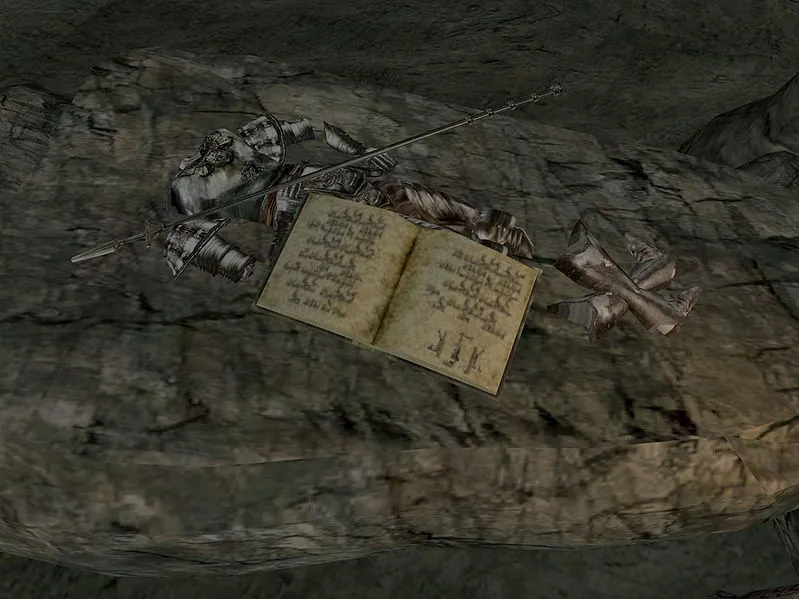
The Spear and Armor of the Snow Prince, Solstheim, [The Elder Scrolls III: Bloodmoon](/games?search=The Elder Scrolls III: Bloodmoon)
With the defeat of the Snow Prince, the morale of the Falmer was broken, and a large part of them fell in a bloody slaughter under the onslaught of the Nords. A small portion of the elves fled the battlefield and sought refuge with their distant relatives, the Dwarves. Whether fearing the magical talents of their new neighbors or just due to the natural cruelty and calculation of the Dwarves, they began to subjugate their guests. They fed them poisonous mushrooms, which led the Falmer's bodies to mutations and degradation. As a result, they lost their sight and changed their appearance. The Falmer became slaves to their kin, while a constant diet of poisonous mushrooms ensured the preservation of mutations for future generations.

The Only Image of the Former Appearance of the Snow Elves
The slavery of the Falmer continued for centuries, but over time they matured for an uprising against their oppressors. It is unknown how long the skirmishes between the Falmer and the Dwarves lasted and how they might have ended - in reality, the outcome was unexpected. At some point, the Dwarven race completely disappeared, leaving the Falmer alone in the Dwarven cities. Their acquired blindness and addiction to poisonous mushrooms rendered life on the surface unsuitable for them, so the Falmer simply settled in the deserted ruins, leaving the confines of their reservations.
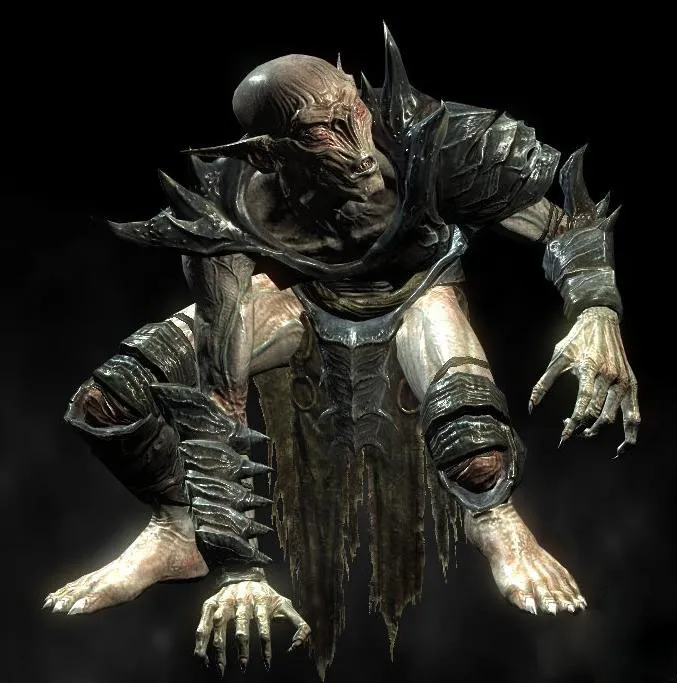
The Modern Appearance of the Falmer
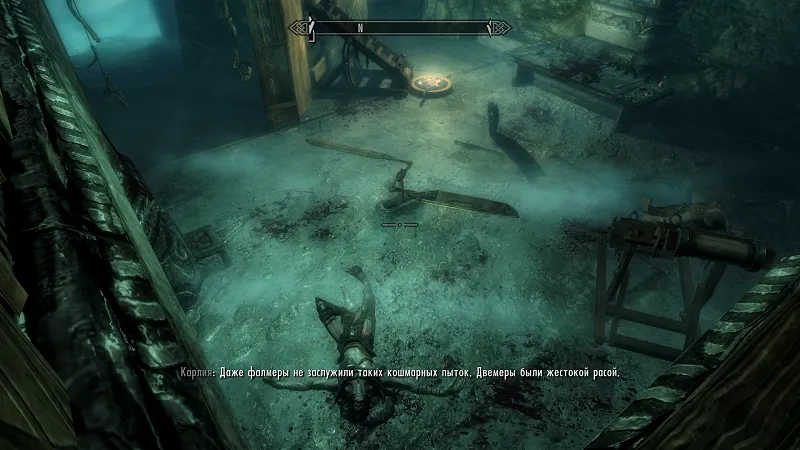
A Dwarven Torture Room: the hall contains stretching devices, a table for instruments, an automatic cutter embedded in the center, and a balcony with seats for spectators at the upper part of the hall.
In addition to the Falmer residing in Dwarven ruins, there are several possible descendants of the Snow Elves. In the territory of Solstheim, one can encounter mysterious and intelligent Riekling - short blue-skinned humanoids with pointed ears and sharp fangs. They are also called Snow Goblins, and perhaps there is no connection between them and the proud Snow Elves, but their habitat and outer appearance allow for hypotheses on the matter.

Players encounter Riekling in the expansion [The Elder Scrolls III: Bloodmoon](/games?search=The Elder Scrolls III: Bloodmoon)
In the caves near the city of Dawnstar, one can find Snow Warriors of the Ice Tribe, who, with their sturdy constitution, resemble Orcs, but their skin has a blue hue and undeniable cold resistance. Perhaps these tribes share some common roots with the Snow Elves that previously inhabited these same lands.

A Warrior from The [Elder Scrolls](/games?search=Elder Scrolls) Travels: Dawnstar
And in the Ice Caves of High Rock Province, travelers sometimes encounter blue-skinned goblinoid creatures. They live among the ice, wielding spears and armor - but who are they? A distant clan of Riekling? A branch of Snow Orc development? Is there a drop of proud Snow Elf blood in them? Unfortunately, science does not know, but an inquisitive researcher must consider all possible options.
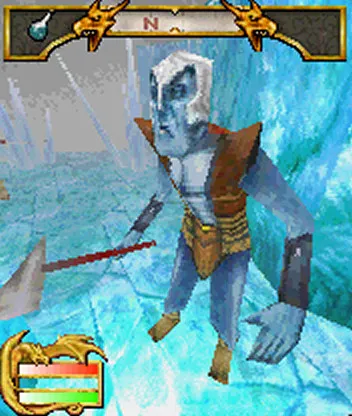
A Snow Goblin from The [Elder Scrolls](/games?search=Elder Scrolls) Travels: Shadowkey. The The [Elder Scrolls](/games?search=Elder Scrolls) Travels series was released in 2004 for mobile phones.
I would advise curious readers to familiarize themselves with two books that are important for understanding and studying the history of the Falmer: "The Fall of the Snow Prince" and "Falmer: A Study".
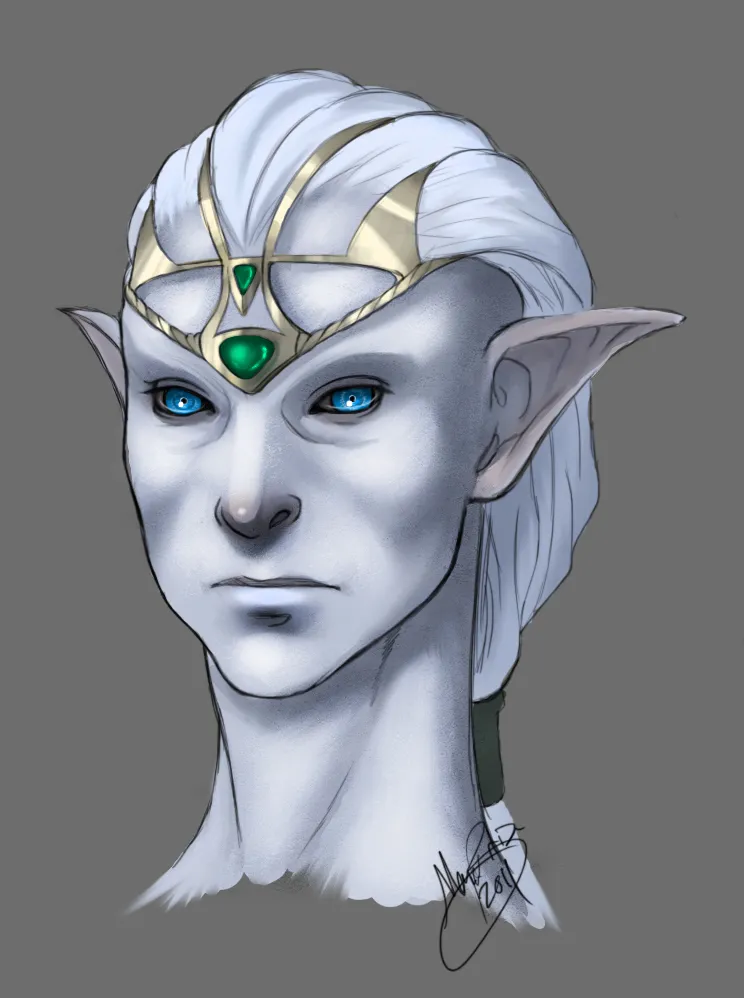
Portrait of the Snow Prince by Ayleid
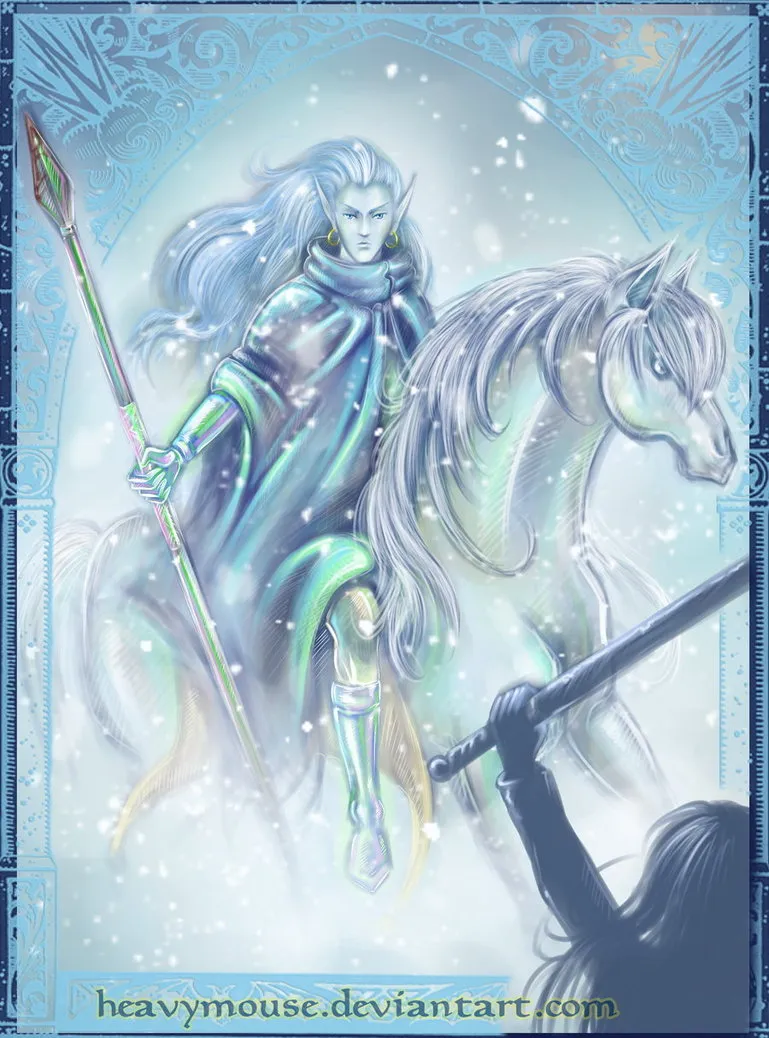
Again the Snow Prince by HeavyMouse
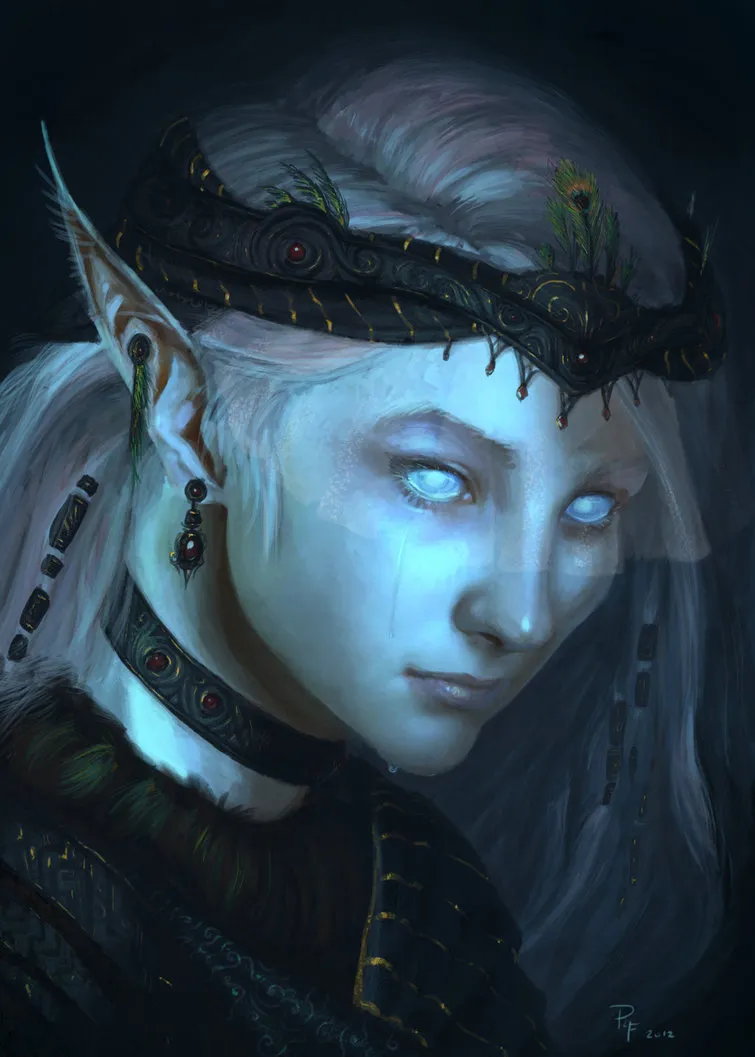
Snow Elf by 1Rich1
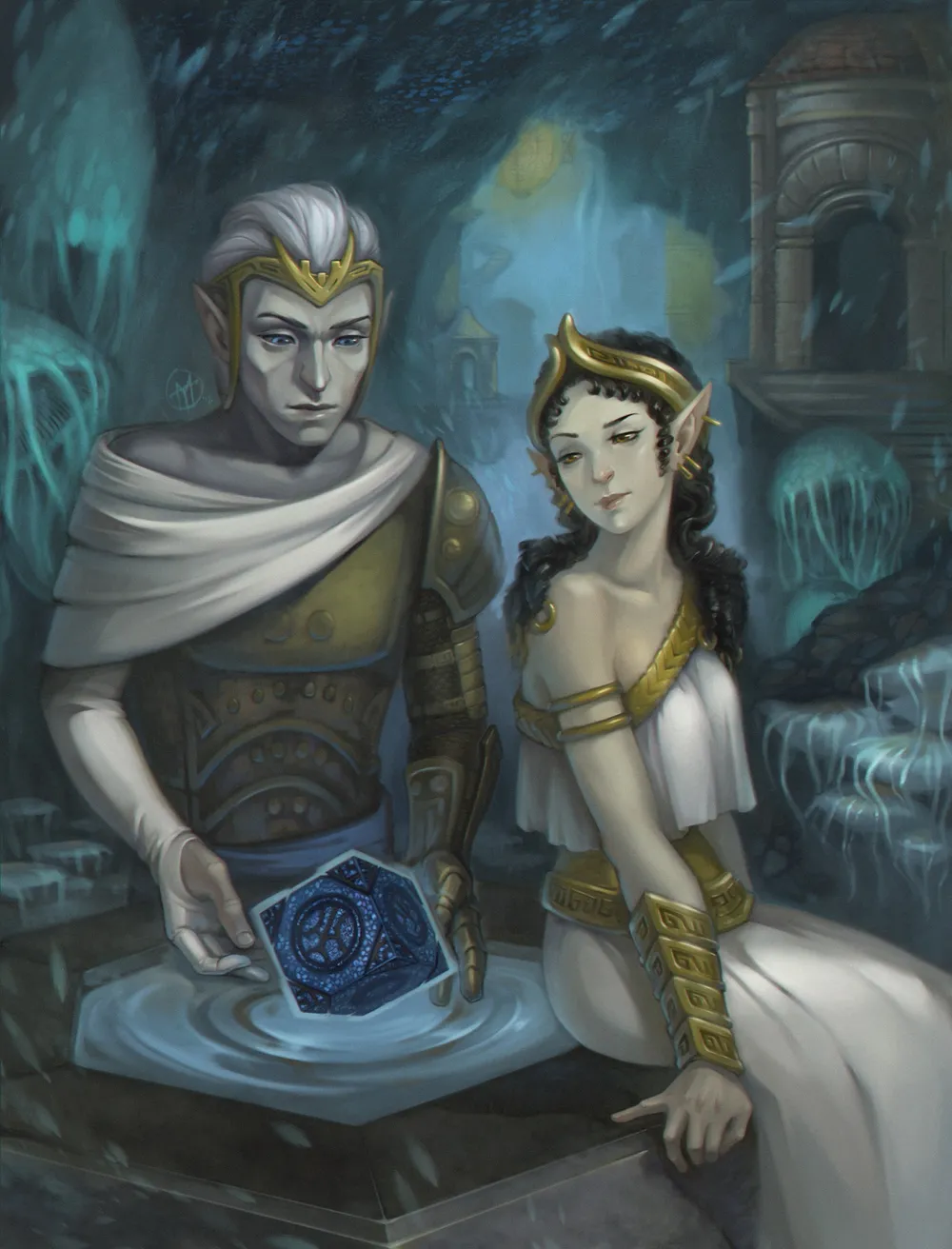
A picture of endearment - a Falmer and a Dwarven woman before the conflict arose between the brotherly races. Author - Alteya.
Part Two - The Life of the Falmer in Our Time
Screenshots from Elder Scrolls: Travels sourced from UESP