
Farmers - Slaves of Their Land, Part Two
Part One - The Fall of the Snow Elves
Part Two - The Way of Life of the Falmer Today
As mentioned earlier, after the disappearance of the Dwarves, the Falmer freely settled in the ruins of their former brethren. Unfortunately, due to their newly formed addiction to poisonous mushrooms, the changes in their nature have become irreversible, and to this day, there are no signs that the Falmer can return to the former level of development of their race. Their current level of culture is extremely primitive; no signs of written language have been discovered, although the language of the original Snow Elves was intricate and complex. In our time, only a few scholars are familiar with the Falmer language. A worthy monument to this writing system is a bas-relief from the personal collection of the scholar-mage Kolselmo, the court mage of Markarth.
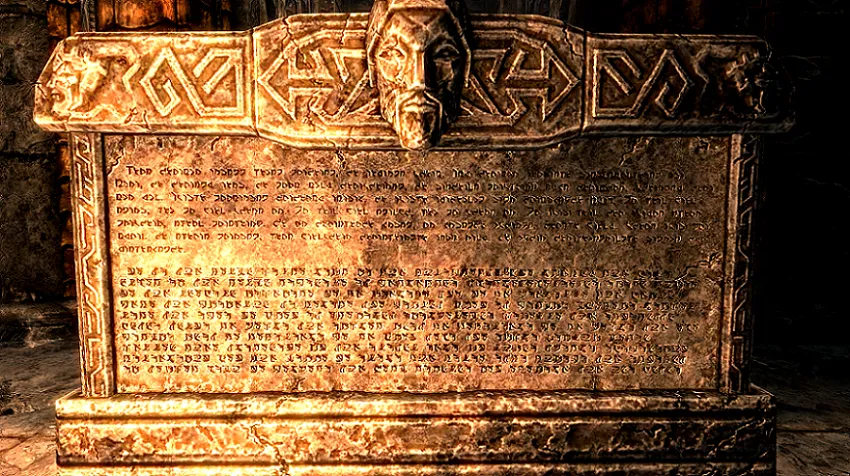
Unfortunately, Kolselmo keeps his scientific research materials hidden from outsiders, so one can only familiarize oneself with this historical monument by dishonest means.
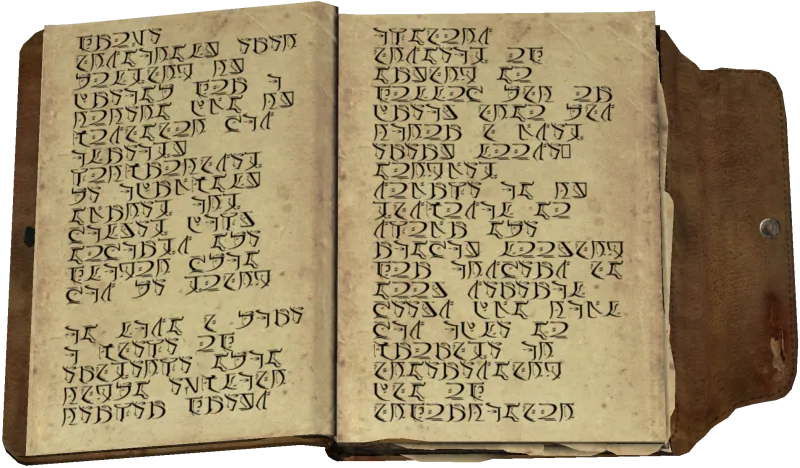
Gall, the former head of the Thieves Guild, used the Falmer language to encode his personal diary.
The basis of the Falmer’s diet is the underground vegetation - mushrooms and roots, which grow abundantly in damp caves, as well as the meat of cave rats, which the Falmer have learned to breed. Fishing is also practiced - researchers have not observed any special tools, not even nets - apparently, the fallen elves catch fish by hand in shallow waters.
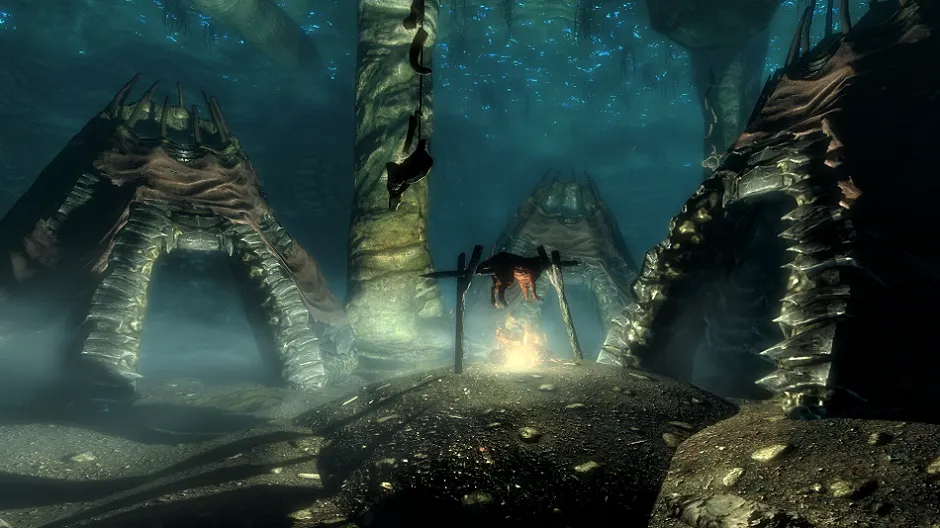
Three Falmer huts, a campfire, and a roasted cave rat on a spit.
In addition, the Falmer breed frostbite spiders, whose venom serves as an alchemical reagent, and archers apply this poison to the tips of their arrows for greater effectiveness.
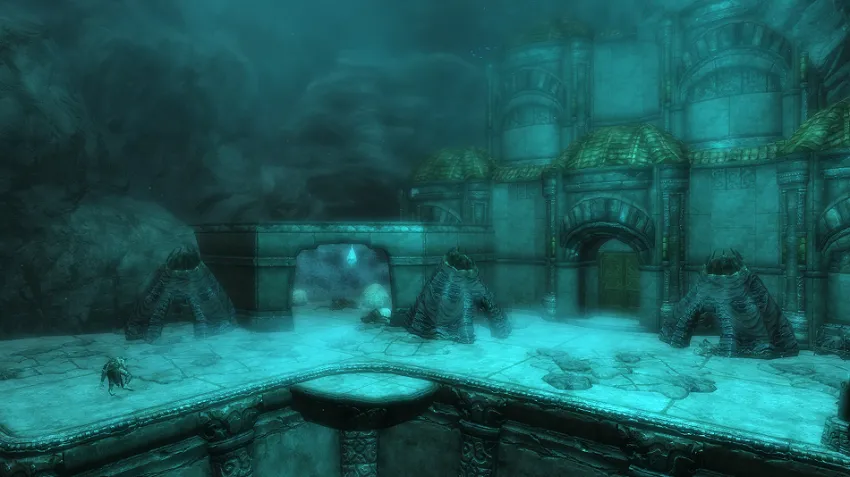
Dwemer ruins are now adorned with tribal life and cobwebs.
The main building material and raw material for weapons and armor for the Falmer is the chitinous shells of giant chaurus insects. The Falmer can make almost anything from the shells of these insects - including their homes, fences, and furniture.
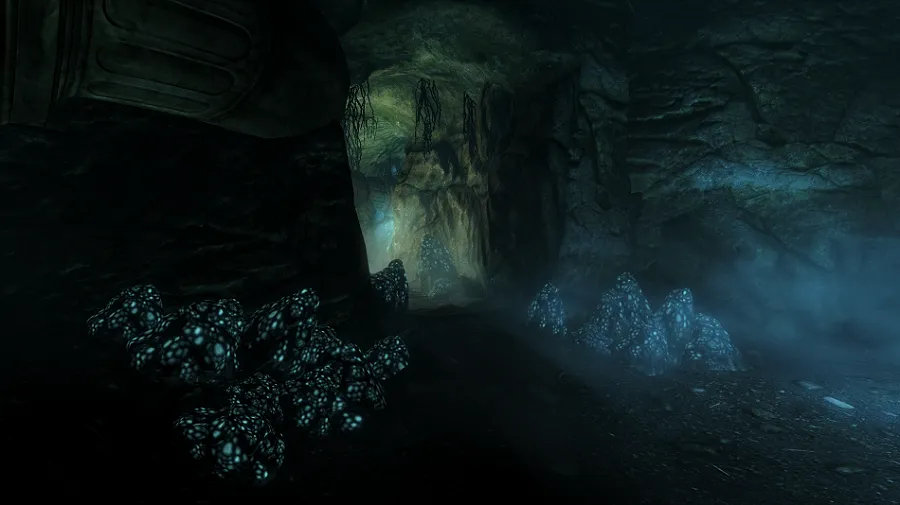
Chaurus nests beside Falmer huts. A decent source of light, by the way.
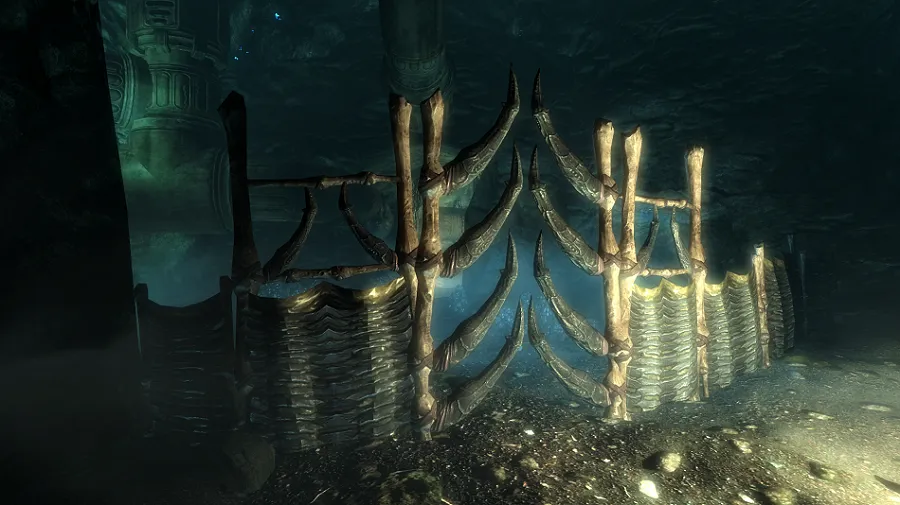
A fence and gate made from chaurus carcasses, protecting the chaurus nests. Please tell me how a lock ended up in this gate that had to be picked open?
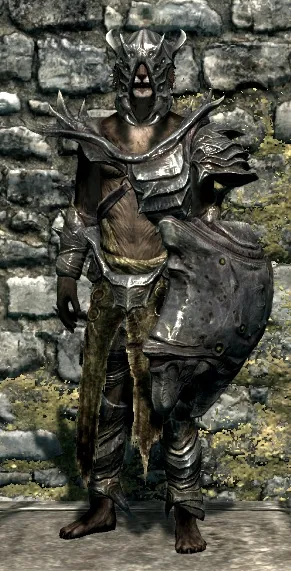
A complete set of armor made from chaurus on a Khajiit.
Despite the overall degradation of the race, the Falmer have not lost their abilities in alchemy and magic. Whole gardens of mushrooms and vegetation can be found in their settlements, with collected reagents prepared potions on tables. They are not even averse to using the ears of their kin as an alchemical reagent.
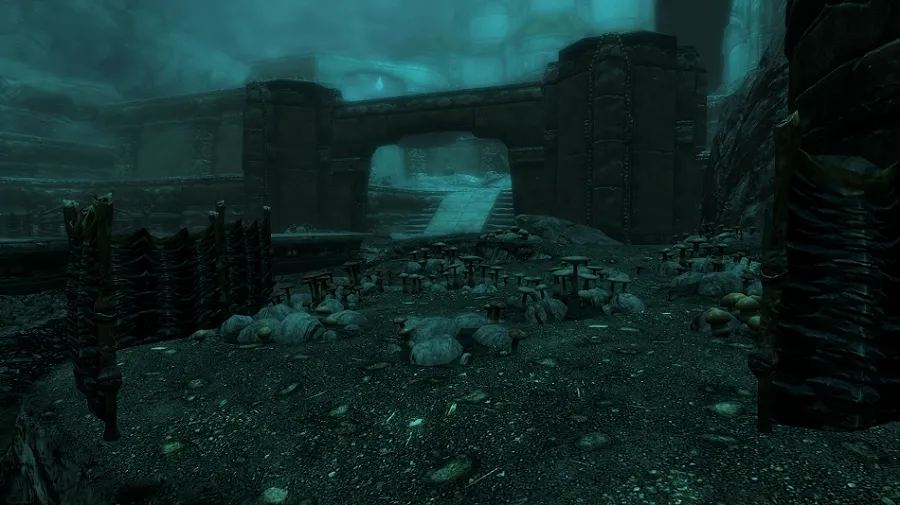
A mushroom garden.
Although the Dwarves have left their cities, the autonomous systems and mechanisms they created still function. Living underground, blinded, and oppressed for centuries, the Falmer have learned to be quiet and cautious. Their warriors are masters of stealth and can move past working Dwemer centurions, spheres, and spiders without attracting the attention of sensitive mechanisms.
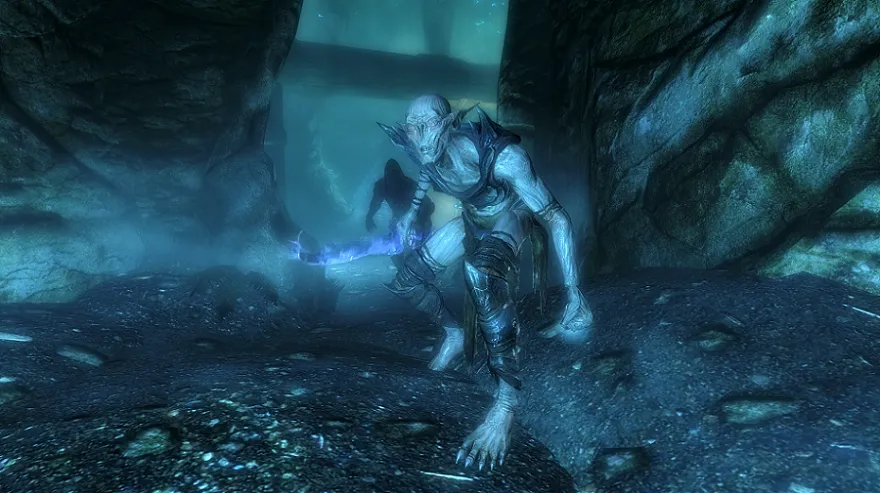
A Falmer wizard on guard. Behind him approaches the equally skilled in the art of stealth Brynjolf.
Until recently, it was believed that the Falmer were mythical creatures, and in their folklore, the Nords equate them to something akin to gremlins, who spoil livestock, steal things, and are generally blamed for all domestic disturbances. This is mentioned in the "Pocket Guide to the Empire". In reality, there is no evidence that modern Falmer ever leave their caves.
Currently, the study of the Falmer is just beginning. I have received information that the scholar-mage Kolselmo is preparing to publish his works and research on the Dwarves and Falmer, which will assist in understanding the writing and history of this proud people. I hope that Kolselmo will include a translation of that very bas-relief from his personal archives in his book. For now, those interested in the history of the Falmer can visit the Dwemer Museum in Markarth and explore a section dedicated to this unfortunate race. There are a few exhibits and literature presented, but it is already a step, a step towards understanding and a tribute to respect. We must continue our study of the nature and life of the Falmer - and who knows, perhaps one day we can help these fallen elves.
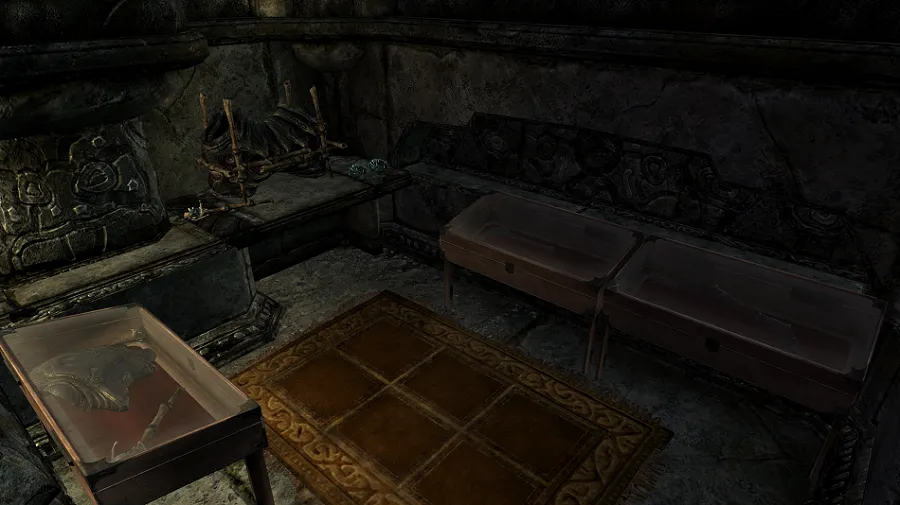
The Dwemer Museum of Markarth is unusually interesting - the only difficulty is gaining access to it.
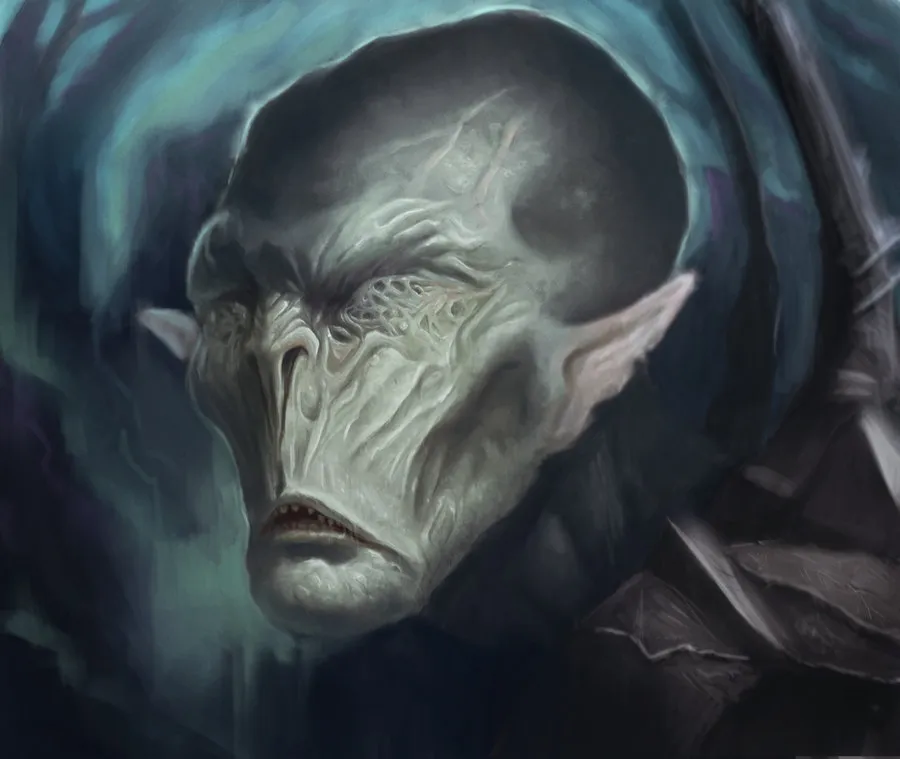
Portrait of a modern Falmer by PumpkinPie92.

The lurking Falmer ruins by 1Rich1.

Chibi-Falmer by GreyTheWanderer.
Part One - The Fall of the Snow Elves