
Computer modding in the style of Necron Monolith. [Updated in December]
In this hot time of year, I don't want to think about anything complicated that clouds the mind.
So, I offer you something that has no relation to the author's literary work on the GRU.
Here it is, my fan modding labor! in honor of the gaming universe [WarHammer 40,000: Dawn of War](/games?search=WarHammer 40,000: Dawn of War) and Gods of the Necrons!
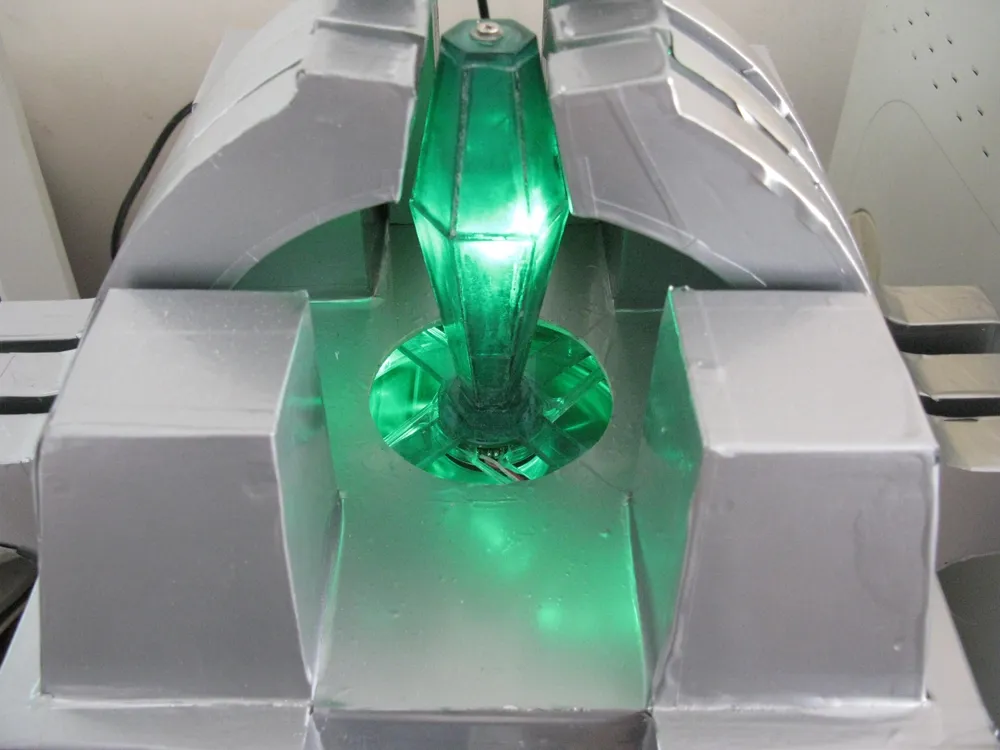
It started with a wild idea after reading almost all the posts in the blog about the first game in [WarHammer 40,000: Dawn of War](/games?search=WarHammer 40,000: Dawn of War), and the need to have a second computer for my brother, so he wouldn't intrude on me and disturb me while playing games and flooding the GRU.
After surveying candidates among buildings and structures in the gaming universe, selecting suitable candidates based on weight and size characteristics, and, of course, on that supposed impact on the visual sensors of those observing, and after a short consultation with Surt, about how this exhibit of future decoration might look Kunstkamera of unnecessary things and curiosities, working gaming desk, HE was chosen!
Monolith of the Necrons!!!
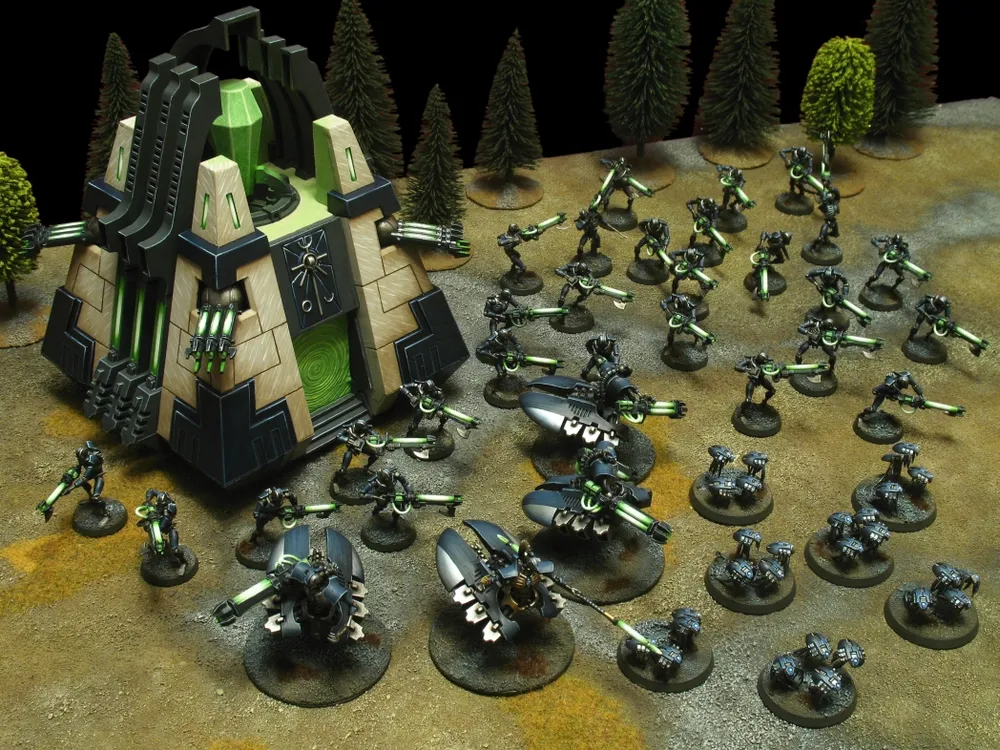
**Monolith painting options:**
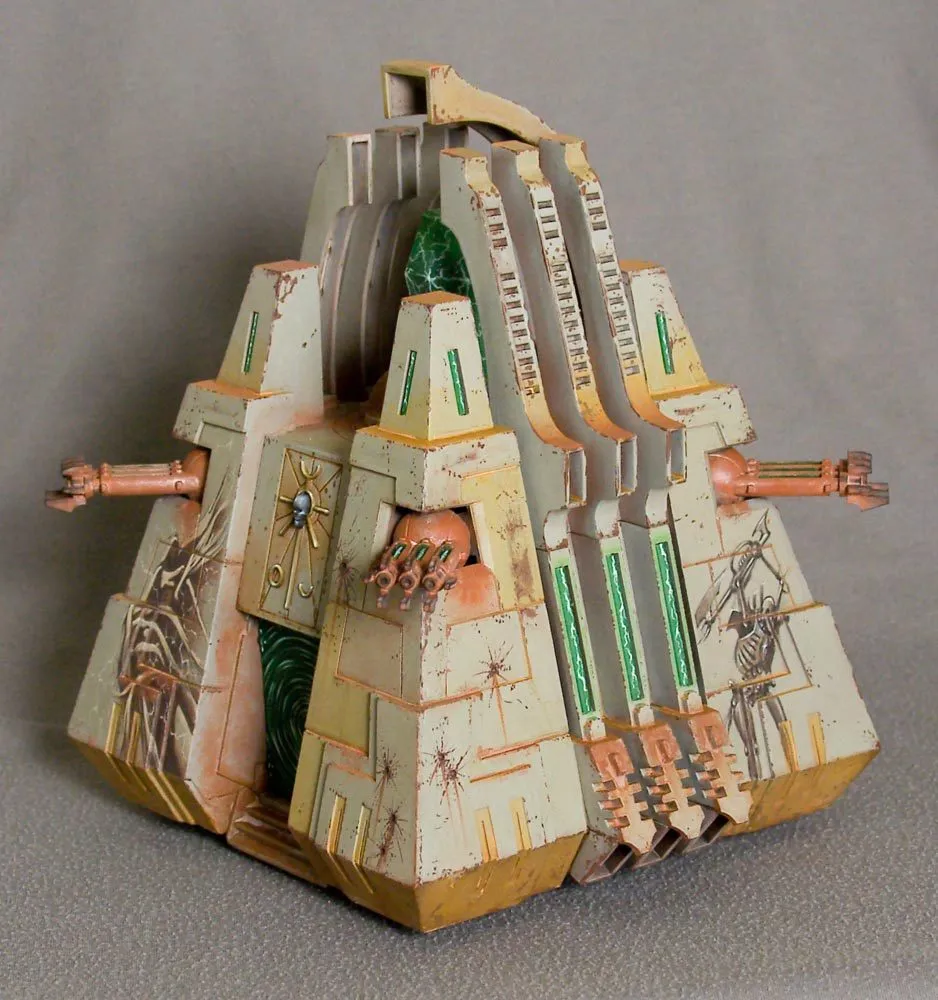
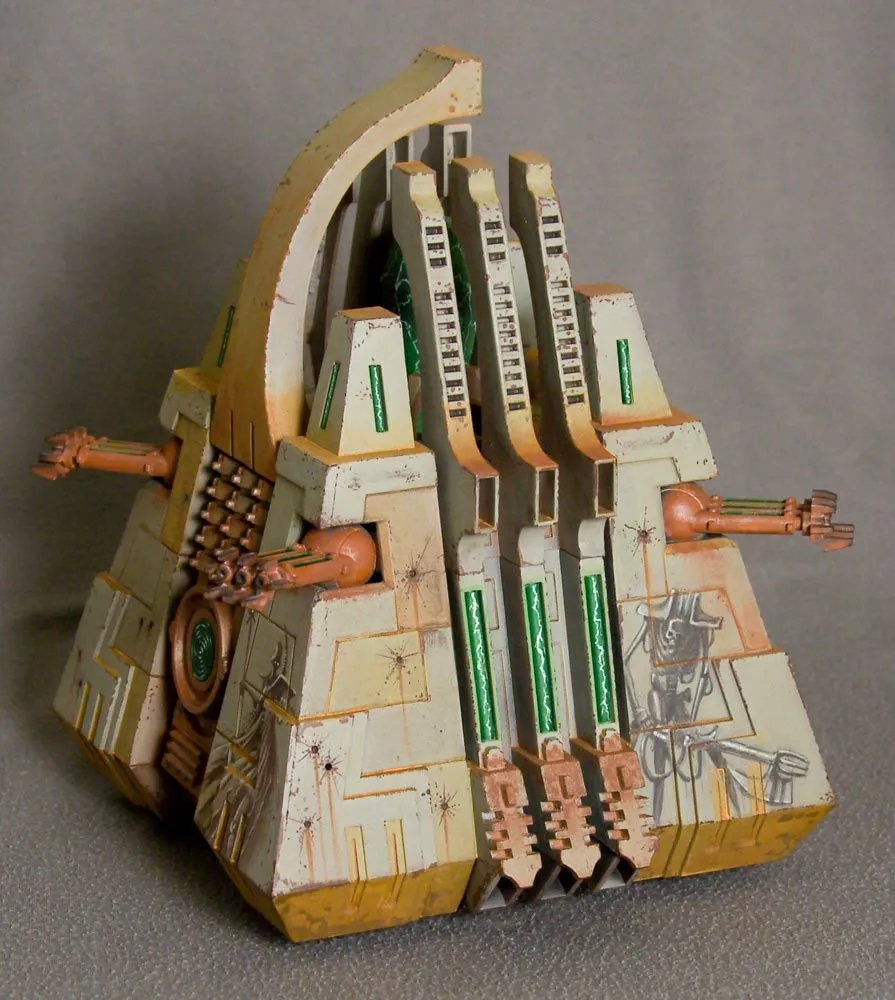
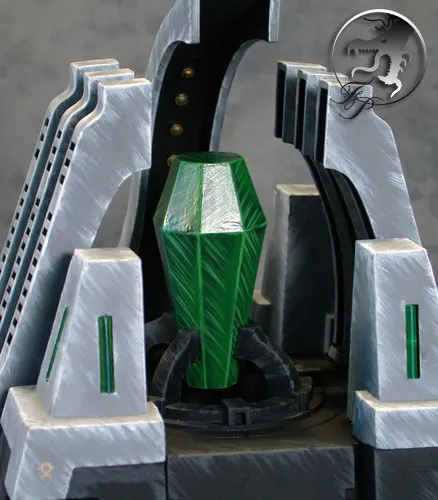
So, what do we know about it?
The manuals and guides for Dawn of War tell interesting details about it, but I will only mention the main tactical and technical characteristics:
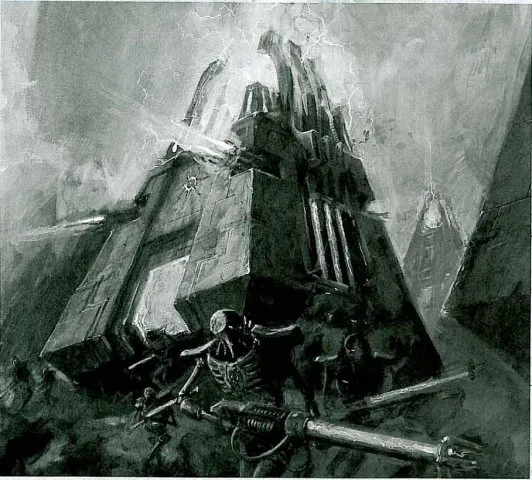
So, something about how the Necrontyr fell asleep, and when they woke up, they were already Necrons... Together with them, the Monoliths awaken, their centers of Life, if you can call it that, their activities and way of existence.
The Monolith is the main stronghold of the Necrons, the main building, and a mobile, well-armed platform. Destroying it will bring glory to the victor and deactivate the Necrons in the area for a while.
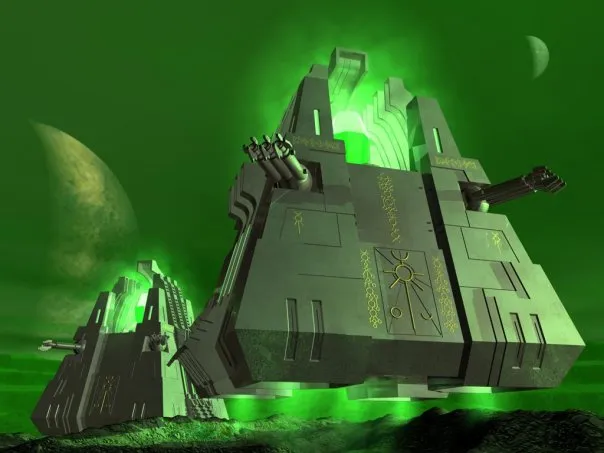
The Monolith can open a portal that instantly transports Necron warriors to the battlefield. And, of course, it carries a certain number of squads. In addition, it has a great selection of powerful Gauss weapons. Initially, it can be hidden beneath the surface of a planet or other astronomical object - an asteroid or a moon, and is not noticeable. Once awakened and fully charged, it gains the ability to levitate and move from one place to another.
The Monolith is the only building of the Necrons that can produce squads, making it valuable at the start of missions for the Necrons. Of course, some players immediately deploy a second Monolith, but this slows down the development of the first building. Therefore, one must choose either the speed of squad creation or their upgrades along the technology tree.
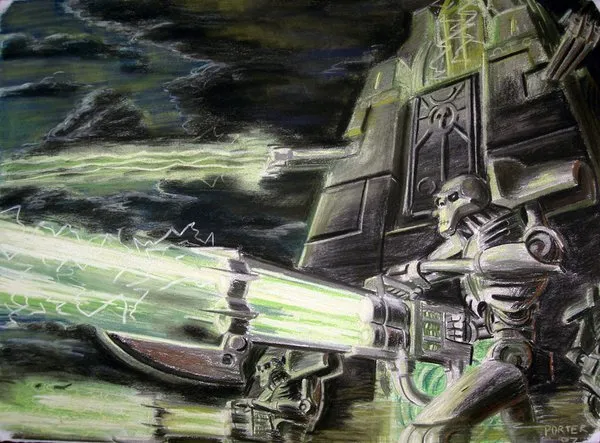
**Squads** produced by the Monolith:
Scarabs, Necron Warriors, Necron Lord, Spirit, Flayers (requires awakening system), Immortals (awakened Monolith), Outcasts (revived Monolith).
Technology produced by the Monolith:
Cave Spider, Destroyer (requires an upgraded awakening system), Heavy Destroyer (revived Monolith), Lord-Destroyer (energy circuit).
The Monolith can be upgraded: and then it has the ability to perform resurrection miracles or, conversely, bring things to a lifeless state, depending on the perspective. From the Necron's side or from their opponents'.
**Awakened Monolith:** cost - 340, research time - 70 s.
Requires an awakening system.
Effect: Transition of Necrons to the 2nd level allows: to order ‘Immortals’, to build an upgraded awakening system, to conduct new research in the forbidden archive and the awakening system, to conduct research on ‘enhanced energy circuit’ (1st energy upgrade). The cost of the Necron Lord increases by +50 (the effect accumulates with each awakened and restored Monolith, reaching a maximum of 4500 - that is, 3 Monoliths in tier 3)
The health points of the Necron Lord increase by 450 points (the effect accumulates with each awakened and restored Monolith, reaching a maximum of 4500 - that is, 3 Monoliths in tier 3)
The health points of the ‘Flayer’ increase by 150 (the effect accumulates with each awakened and restored Monolith, reaching a maximum of 1450 hp - that is, 3 Monoliths in tier 3).
Revived Monolith: cost - 400, research time - 70 s.
Requirements: awakened Monolith, upgraded awakening system.
Effect: Transition of Necrons to tier 3 allows: to order ‘Outcasts’ and ‘Heavy Destroyer’, to build energy circuit, to conduct new research in the forbidden archive, to produce 2nd upgrade for energy (plasma battery). The cost of the Necron Lord increases by +50 (the effect accumulates with each awakened and restored Monolith, reaching a maximum of 4500 - that is, 3 Monoliths at level three)
The health points of the Necron Lord increase by 450 (the effect accumulates with each awakened and restored Monolith, reaching a maximum of 4500 hp - that is, 3 Monoliths at level three)
The health points of the Flayer increase by another 150 (the effect accumulates with each awakened and restored Monolith, reaching a maximum of 1450 hp - that is, 3 Monoliths at level three)
Living Monolith: cost - 1000, research time - 60 s.
Requirements: Revived Monolith (tier 3) with at least 50% health, energy circuit, captured relic point.
Effect: The Monolith will be fully restored and can freely move, attack, essentially becoming a kind of transportation.
The idea to create 'something interesting' in the spirit of the gaming universe formed in mid-February, serious work on the object began at the end of March, before that there was searching and determining materials, defining sizes and details and compliance with the original. There wasn’t that much free time, there was a certain fear about whether I could finish this? Immediately, some minor details were abandoned and the placement of elements changed.
I worked mostly in the evenings, sometimes all day if I wasn’t too busy with work. Several times, I abandoned this work for a long time, twice (for 7-10 days) at the very final stage of finishing shapes and surfaces due to workload and lack of motivation and the heat.
But here it is - the modder's computer case in the style of Necron monoliths is finished. Hooray for me. Thunderous applause, applause... the applause ended, the counting began.
Stages of work:
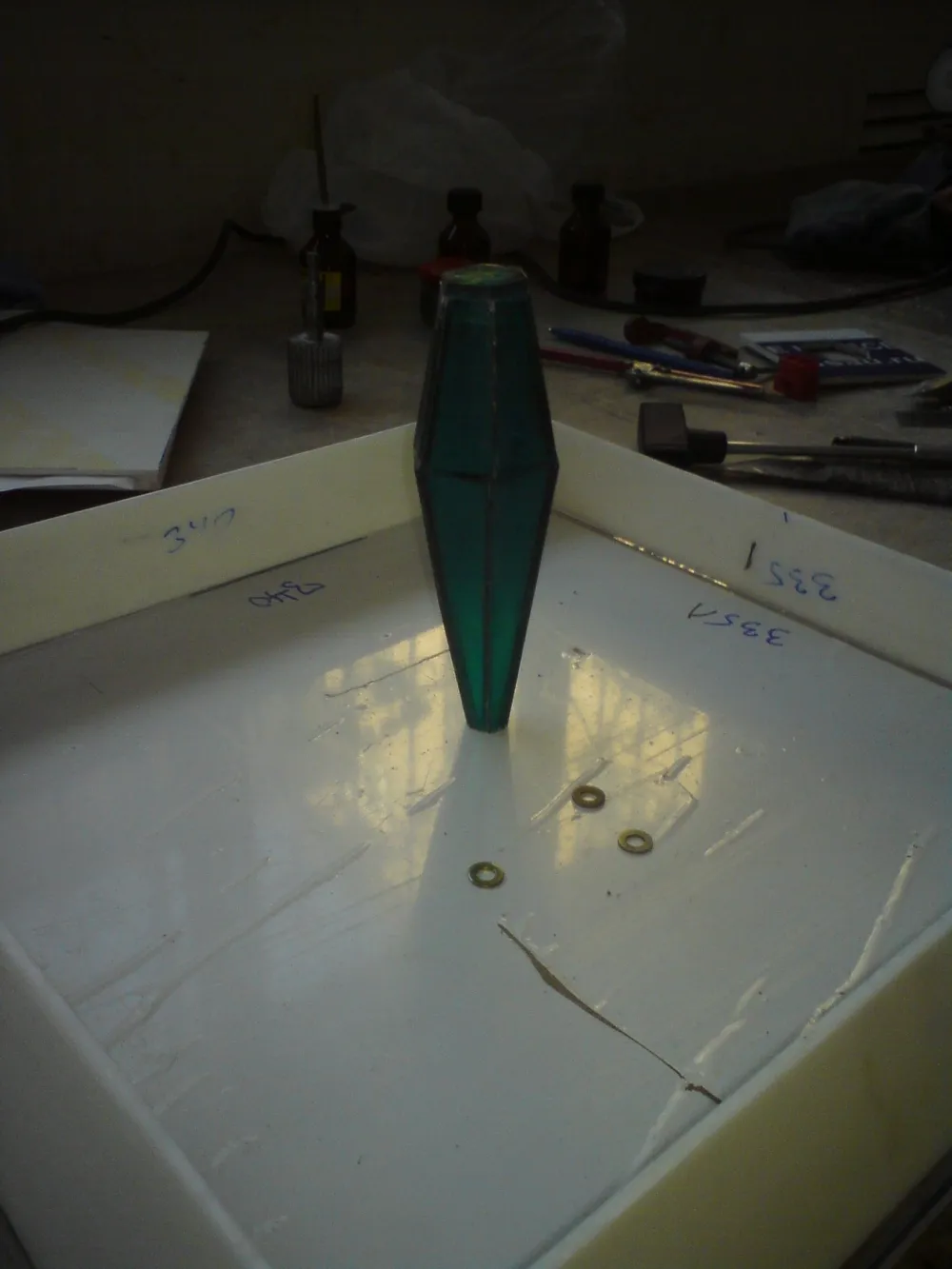

First stage
On it, the pallet was glued, as well as the upper crystal and the main body of the four-sided pyramid. The decision was made to immediately discard the embedded corner turret guns, as they would interfere with the installation of the video card, and maybe even RAM and coolers. With such a small size, I was very worried about this. And indeed, I slightly miscalculated, minimizing dimensions so that the case would fit on my desk, well, I couldn't keep this fanatical madness under the desk, that would be sacrilege.
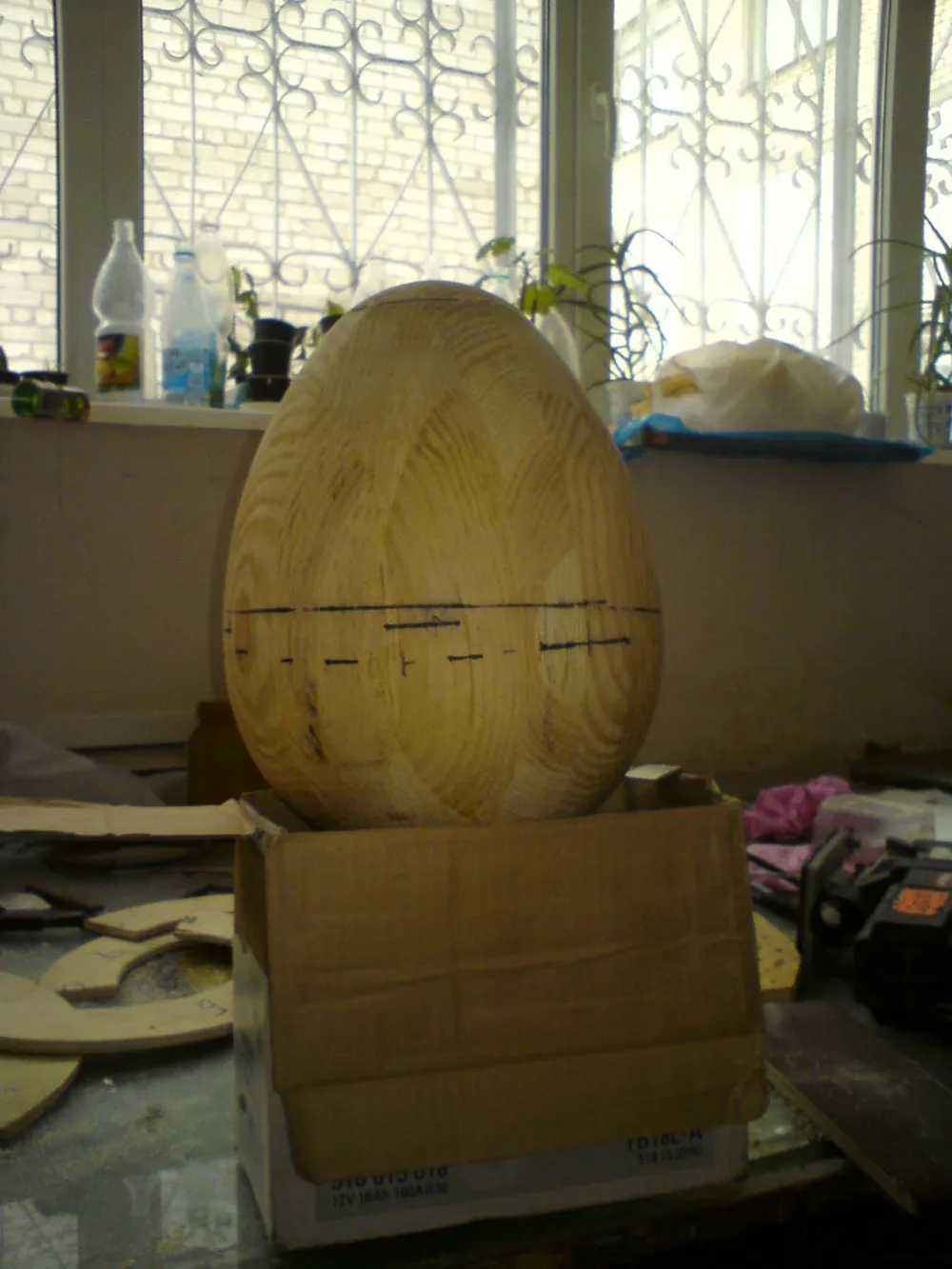
In the meantime, I knocked down an egg.. :)
But I still had to redo it slightly, raise the height, so all the coolers fit, and the coolers themselves were slightly modified, trimmed. Although I tried to choose low fans.
Second stage The cutouts for the side coolers began to be made. The top cover was cut out with a round hole for the crystal. Four towers were assembled from found white soft plastic.
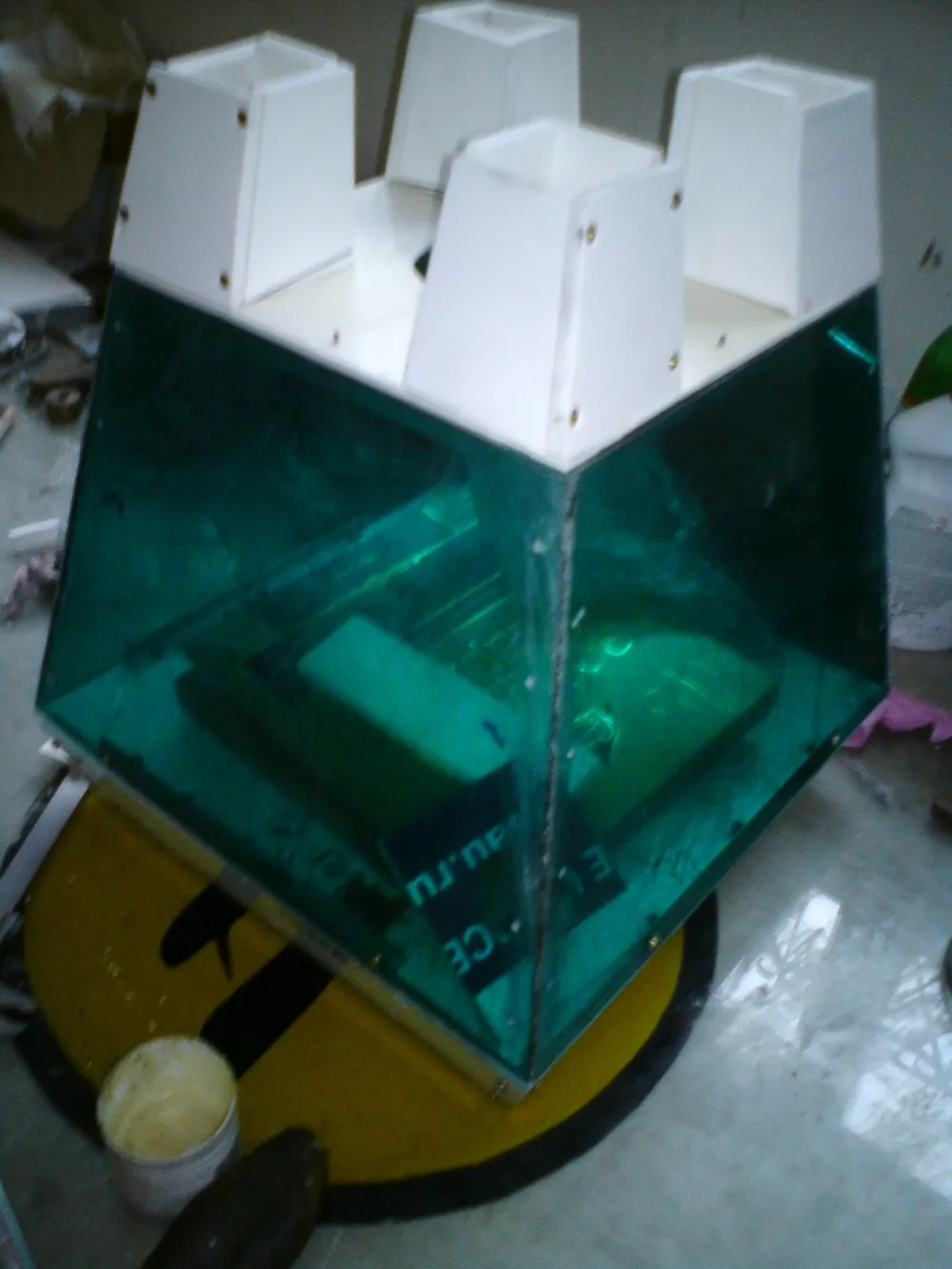
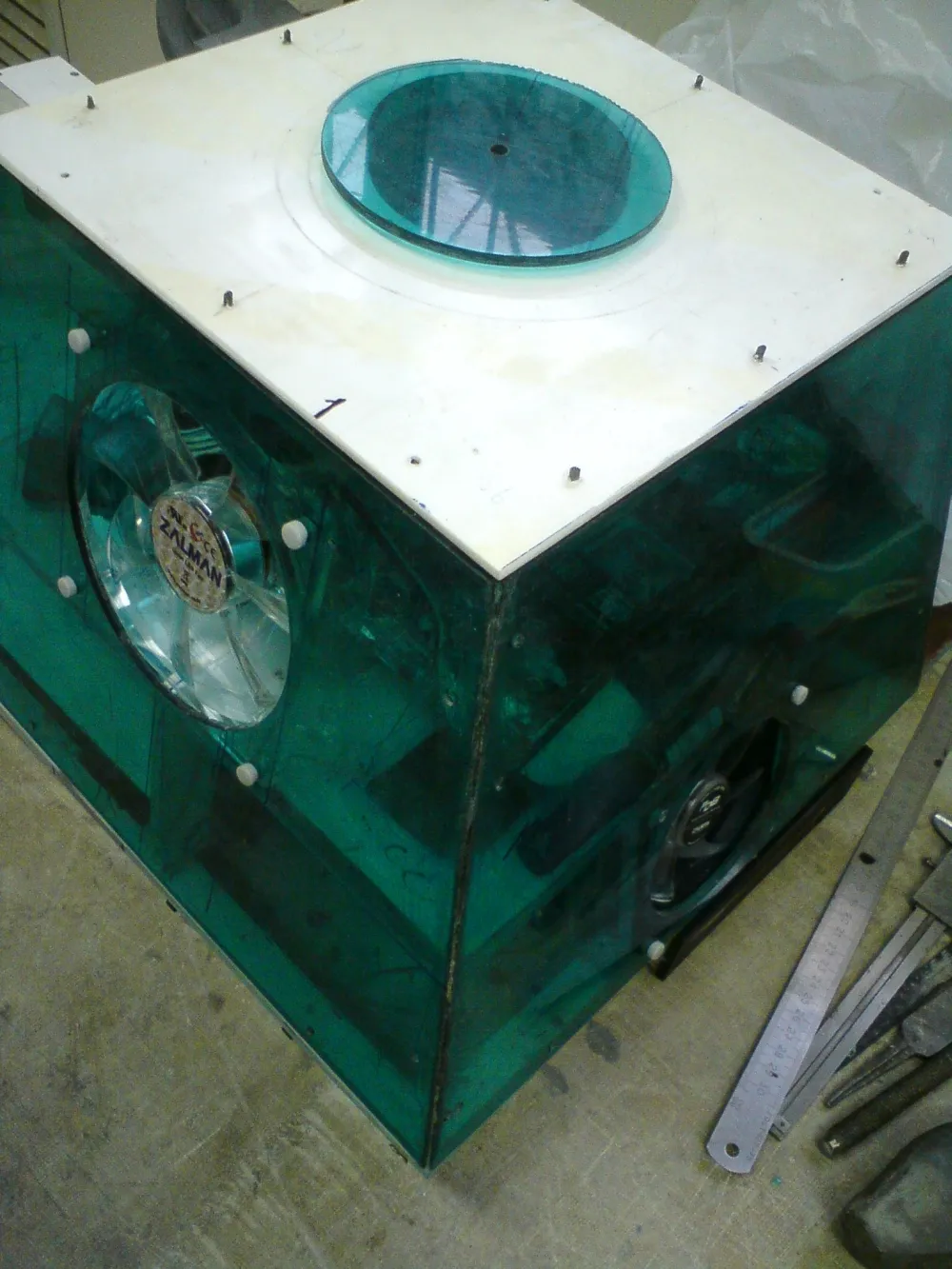
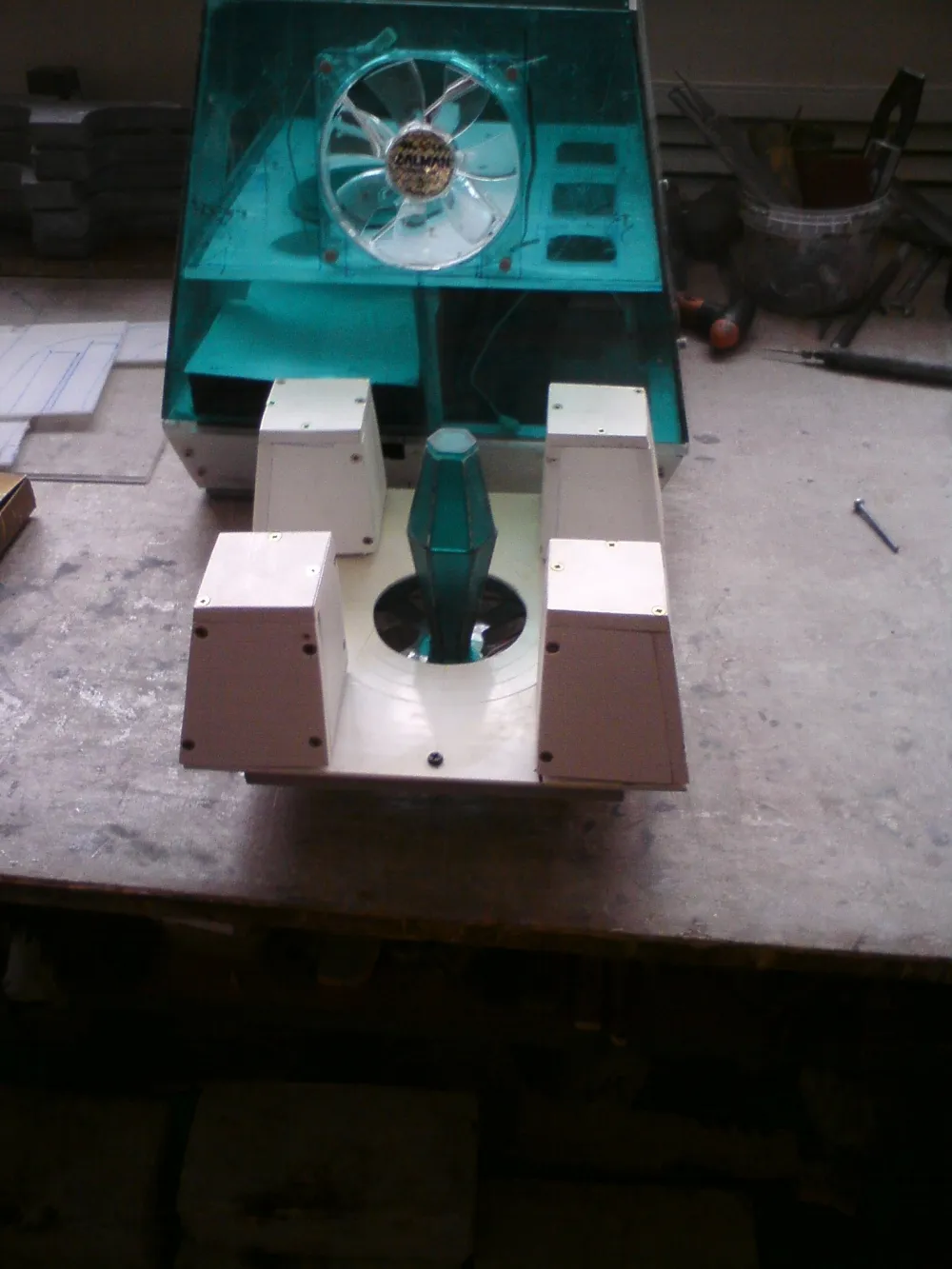
Third stage
An intermediate stand-shelf for the motherboard was assembled. The paths for routing the bundles to the motherboard were determined, as well as how the case would be ventilated. Of course, some works were carried out simultaneously, but without one assembly and its dimensions, it was impossible to assemble another. (An excess of cooling was created, although it looked impressive).
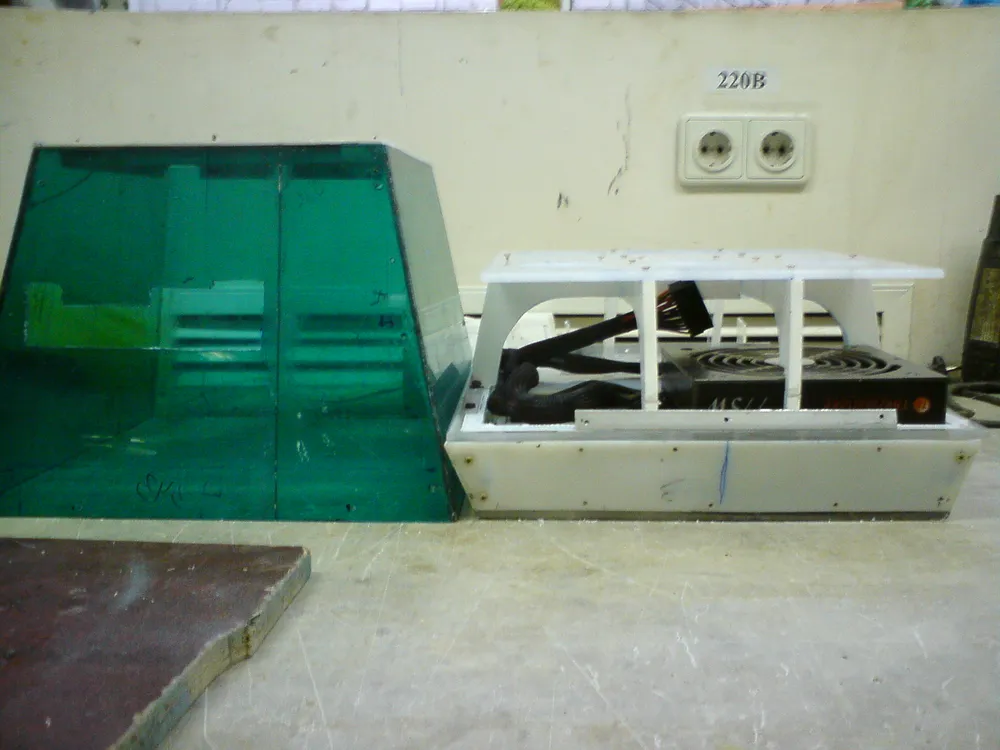
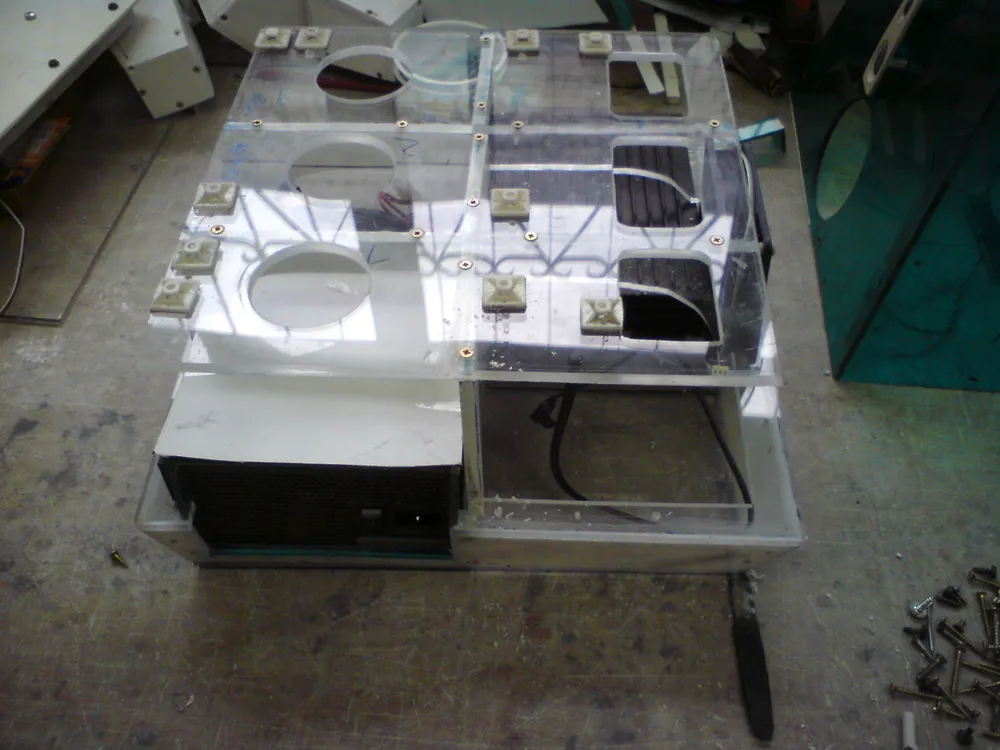
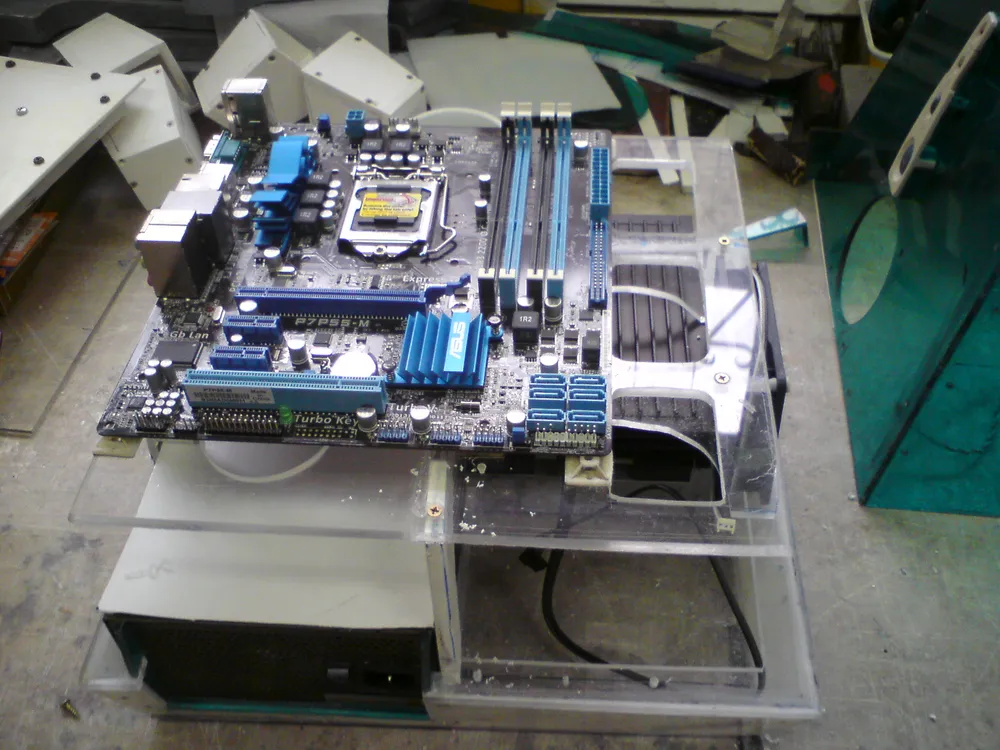
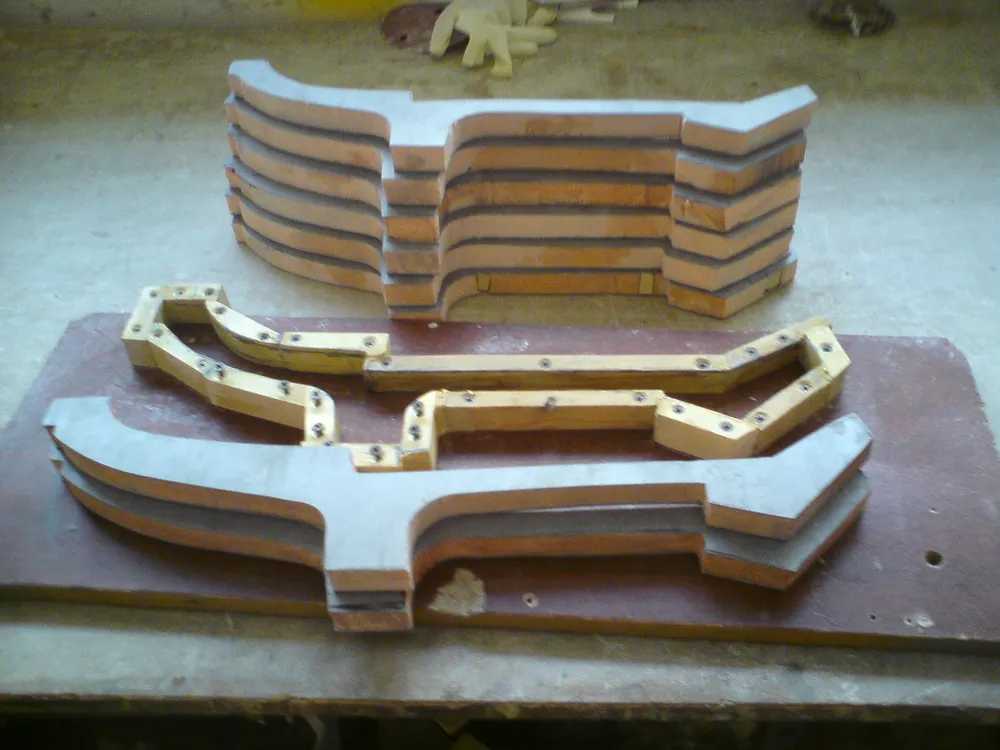
Separately, two horns - crests were glued in a separate matrix-template. Six side ones and two larger ones at the back. Covers for the main case were also glued. This was foam between two layers of fiberglass, and then I had to cover the edges with it too. And for a long time, almost until the last moment, I had to bring the surfaces of the crests and covers to perfection.
I started buying the computer internals in the middle of the work, gradually trying and installing them. The first thing purchased was a good PSU (along with it, I bought a new video card for the second Witcher, but that’s another story).
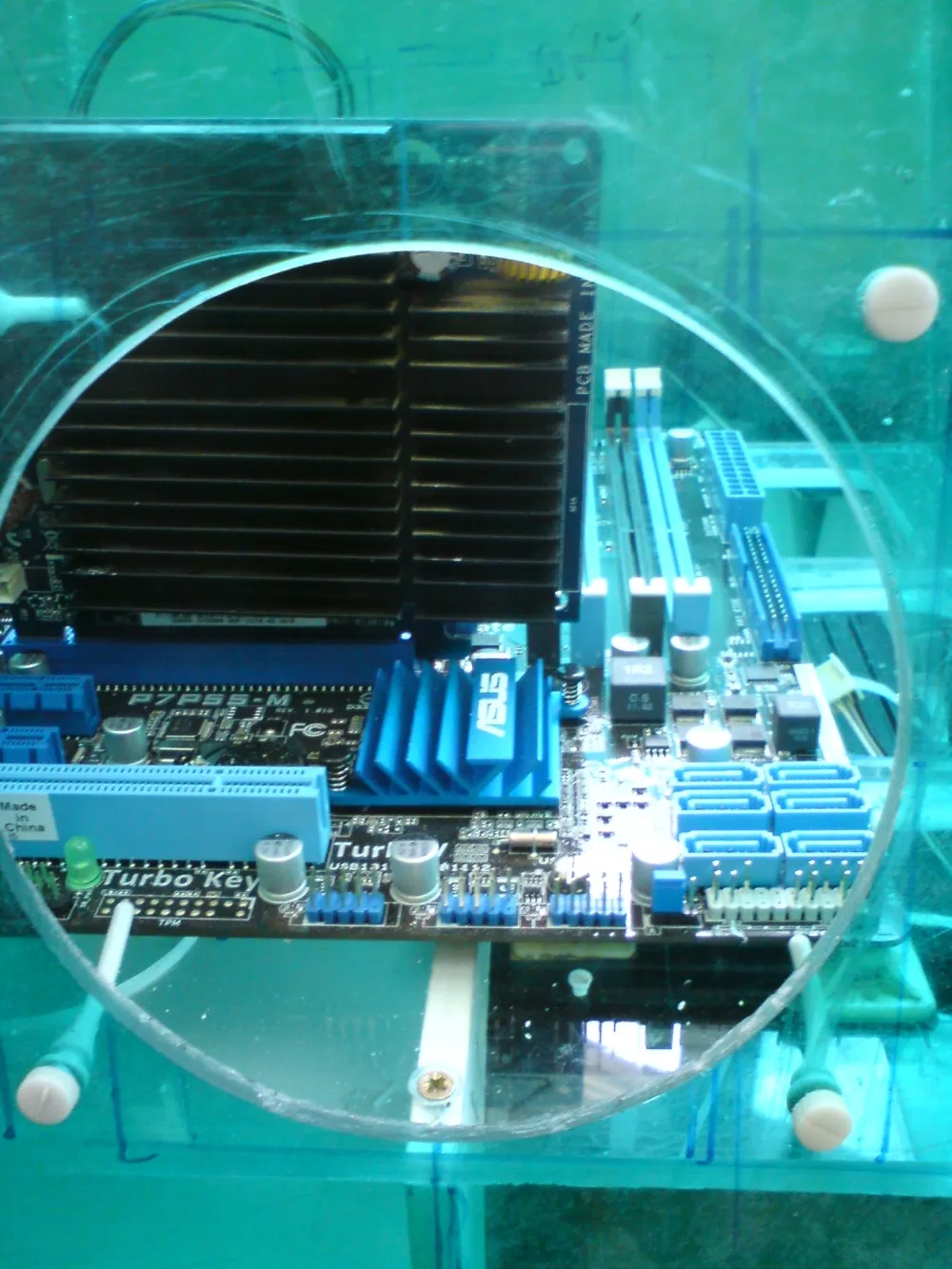
The motherboard was purchased, then after a while, with some money, RAM and processor. Oh yes, I bought three coolers, two of which had green backlighting, and I also bought tube lamps with green backlighting, but it turned out they were too long and wouldn't fit in their intended spots. I’ll find somewhere to use them. A HDD was bought, almost immediately for it a black container with passive ribbed cooling. The last things bought were a simple mouse and, just at the very last moment, before hauling the case home, a keyboard. I also used an old case from which I cut out the power and reset buttons with diodes, several wires for the coolers, pieces of copper wire for trying to ground, and an old video card, for the time being. And so on, little by little, various little things, an immense number of screws, bolts, and tubes of glue.
Fourth stage.
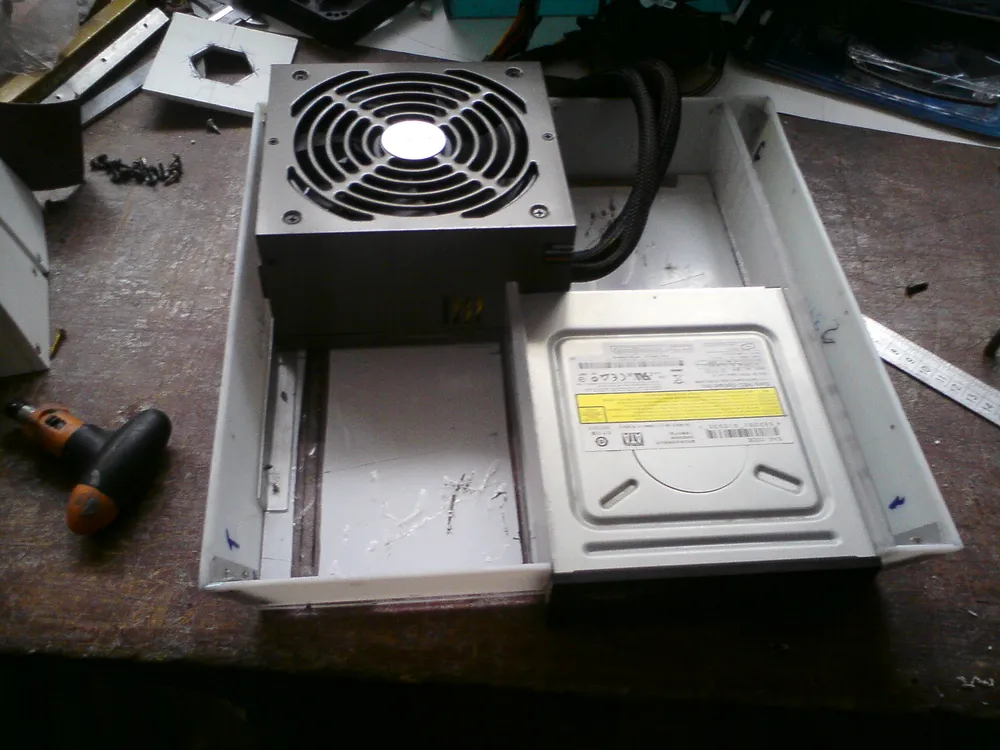
In the pallet were installed: in one corner, the power supply, in another - the DVD drive, although I first put in an old, seemingly working drive for trial. But it didn’t read disks, which was discovered during the operating system installation stage, I had to urgently run to the nearest computer store for a new one, disassemble what was already assembled, and insert it. Above the optical drive in the cooling container was a 1TB hard drive, and between them for better cooling, I stuffed an old set of HDD cooling fans.
I secured everything in place with rigidly mounted walls made of plexiglass and several screws.
Above, I placed a transparent acrylic shelf-stand, already with the motherboard secured on it.
I had to cut out holes, fearing to dig out too much, for the PSU outputs and the rear panel connectors, as well as for the video card output. I had to file the case for a long time, so the video card could be quickly replaced without disturbing too much.
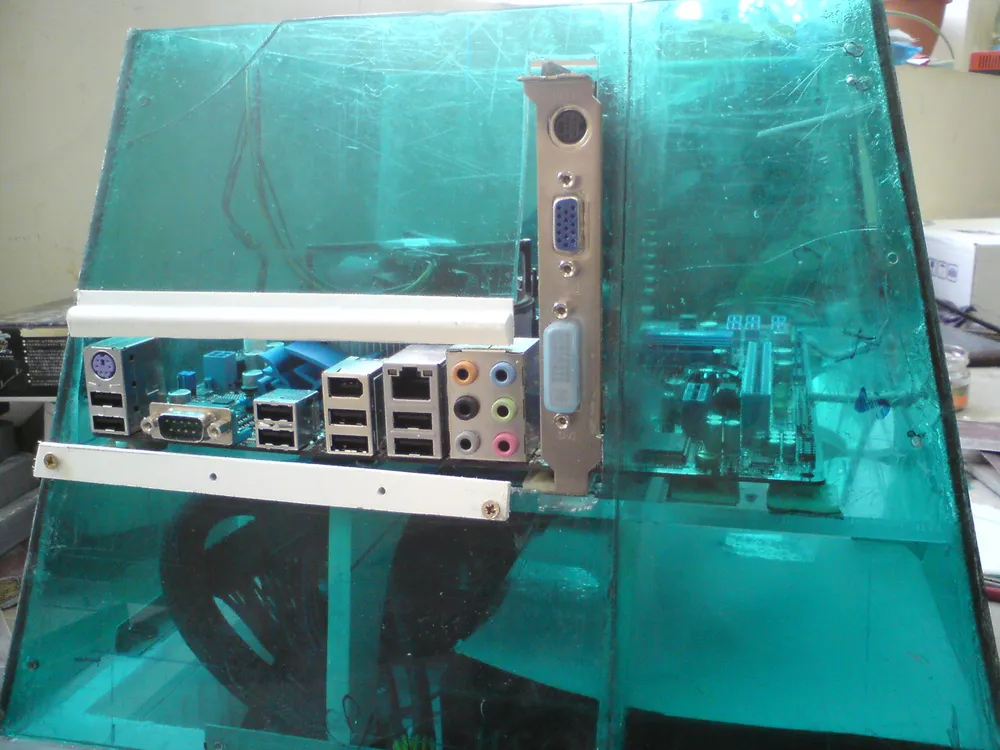

There was a small epic saga about installing the crystal, inserting two LEDs into it, securing them there with a spring, cutting out a special stand for the crystal above the upper cooler.
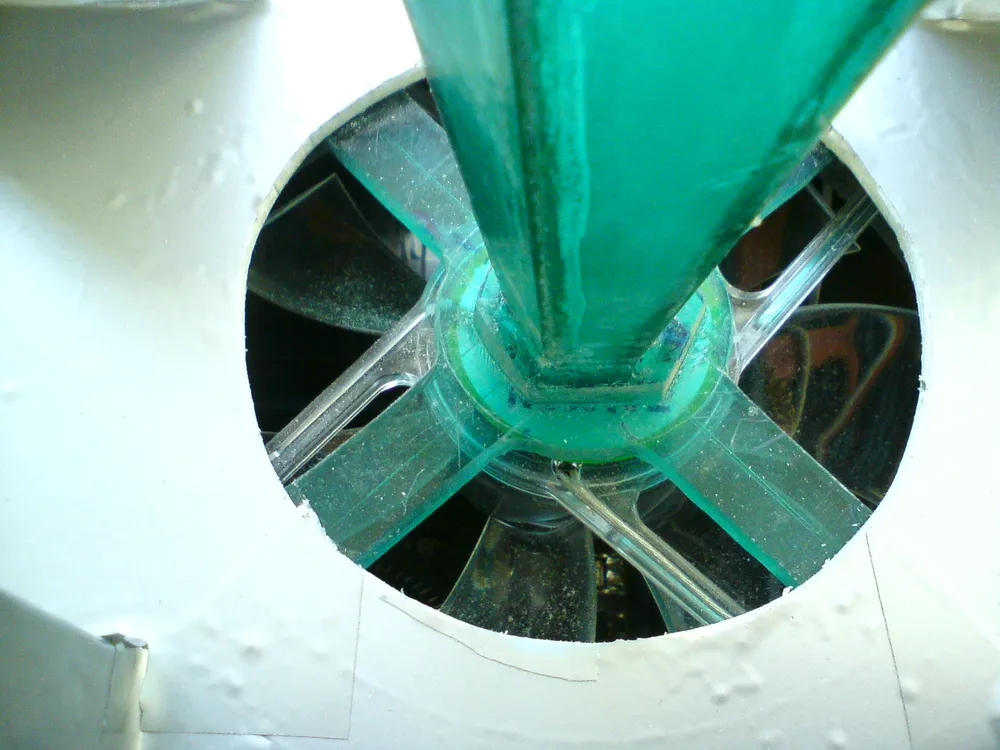
It was time to assemble everything together, and it turned out that (motherf***er...) the top of the video card and the upper cooler occupy the same space, so I had to urgently increase the height by 10-12 mm and still install a lower cooler.
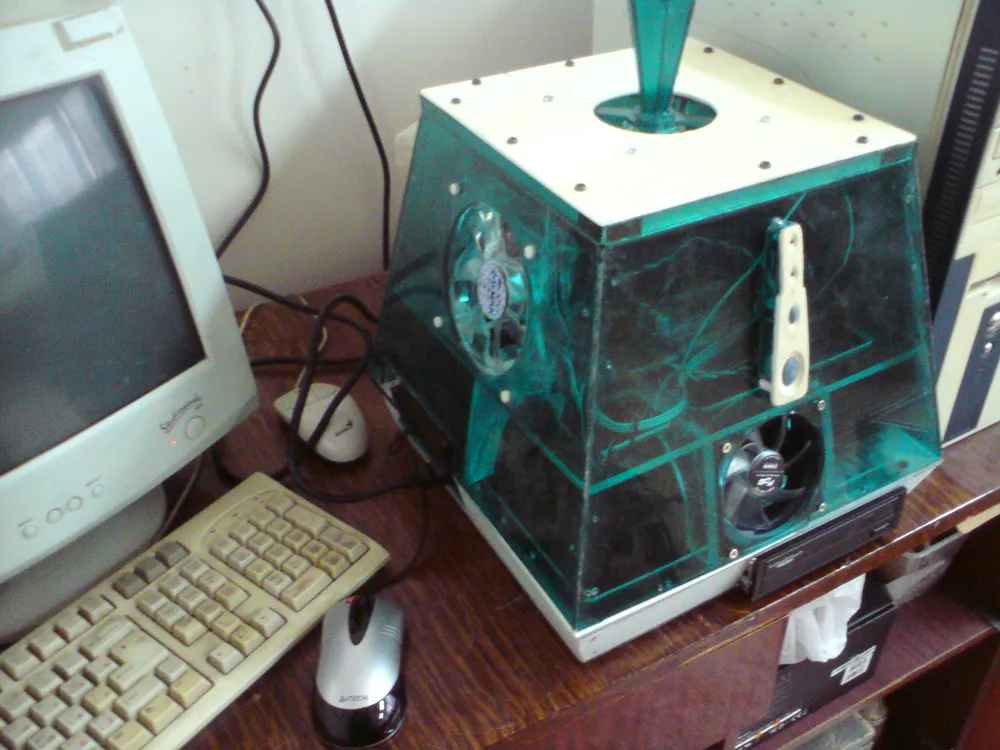
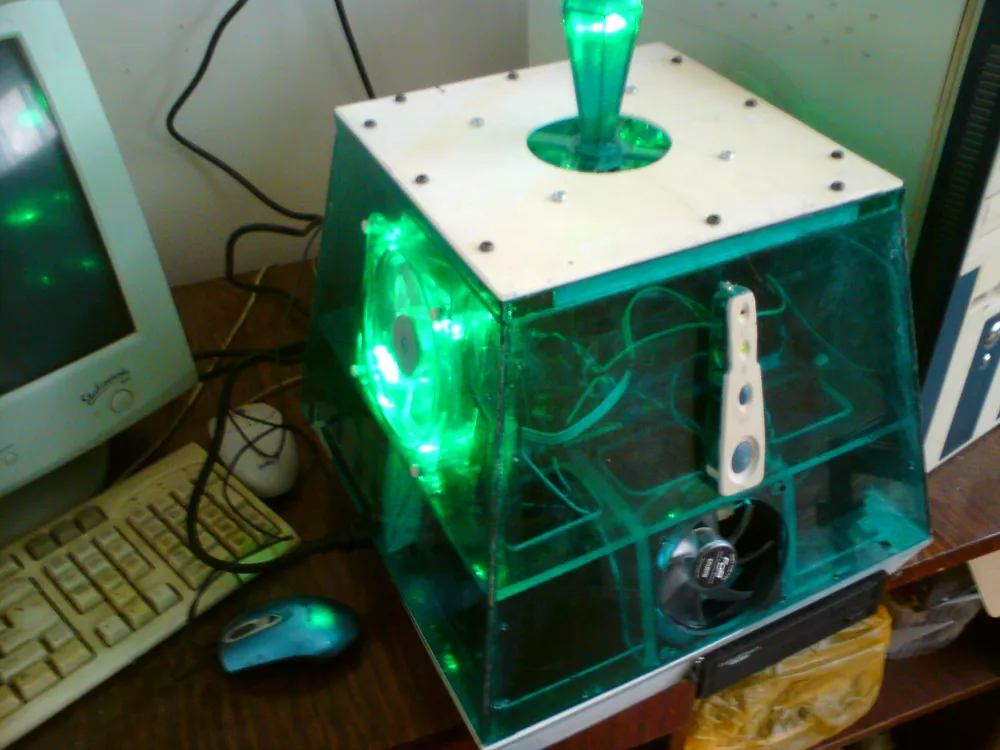
Using simple sealant, I brought everything together with a live thread, set up the operating system with great difficulty (see above), and continued work.
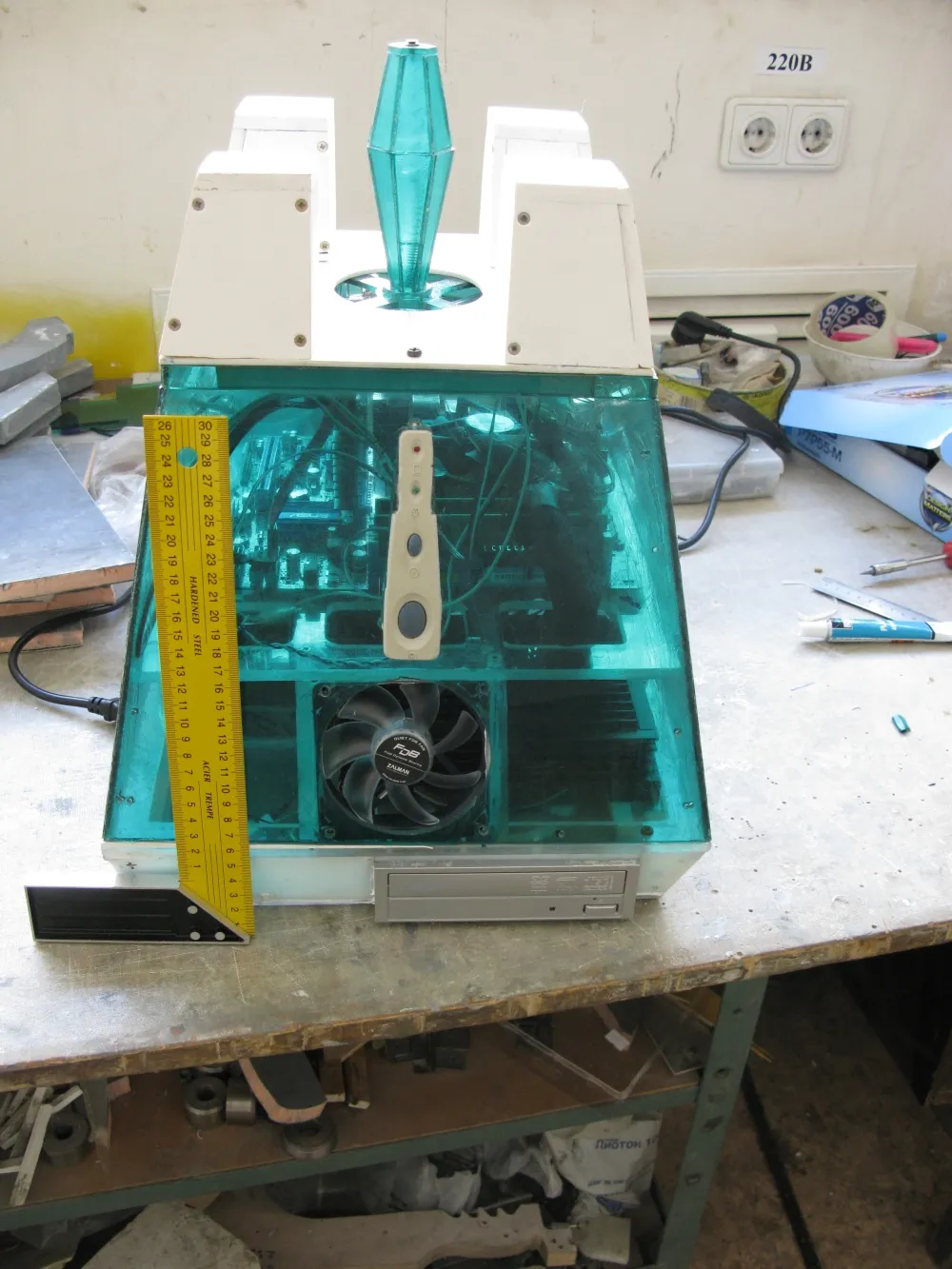
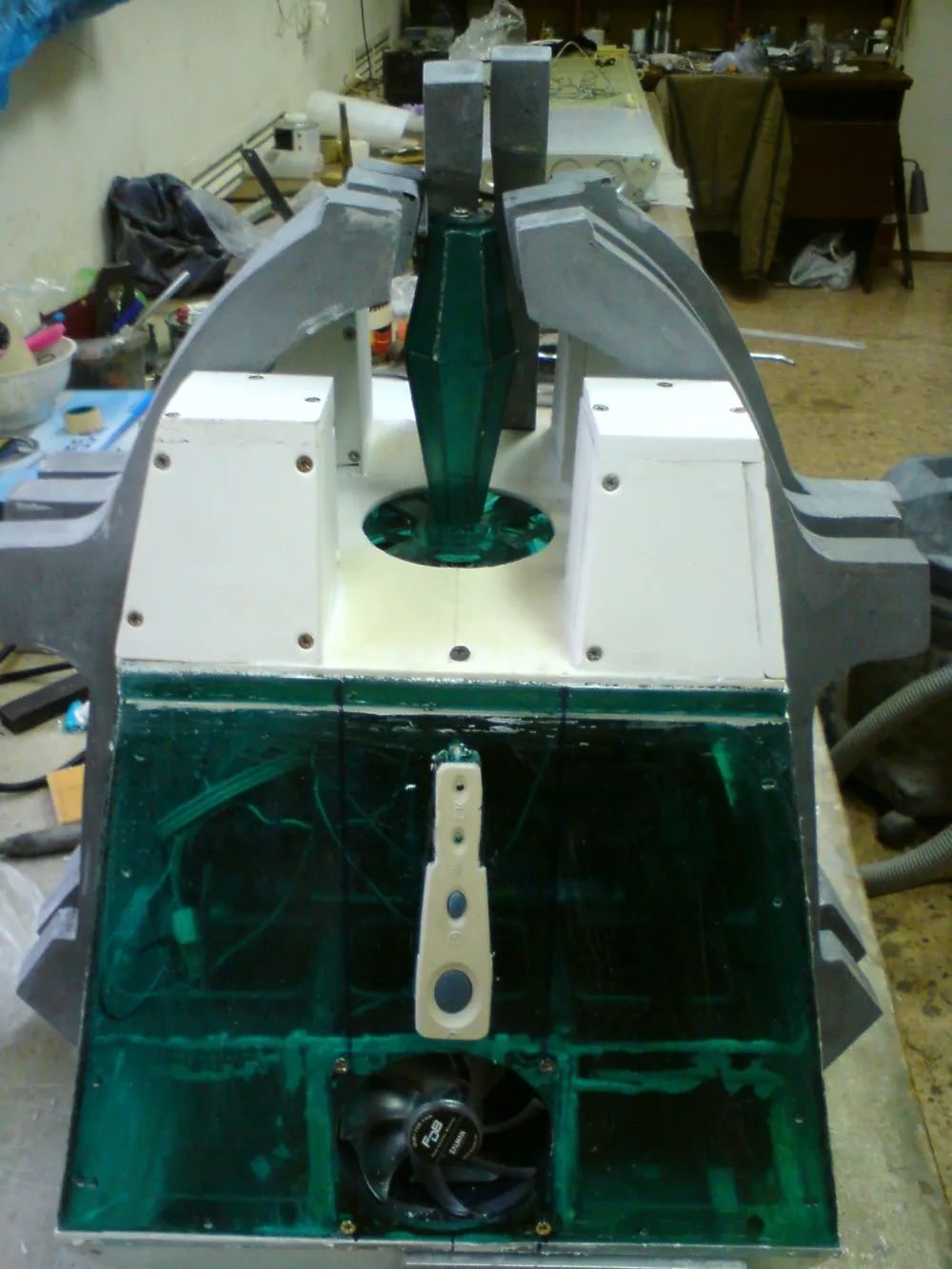
Now I assembled the entire case using a stronger adhesive sealant, began to refine the geometric shapes and surfaces of the basic (for now, green) case. I installed towers, processed all inlet holes. I roughly fit the crests. Everything seemed to fit and look okay. Well, probably, the fifth stage
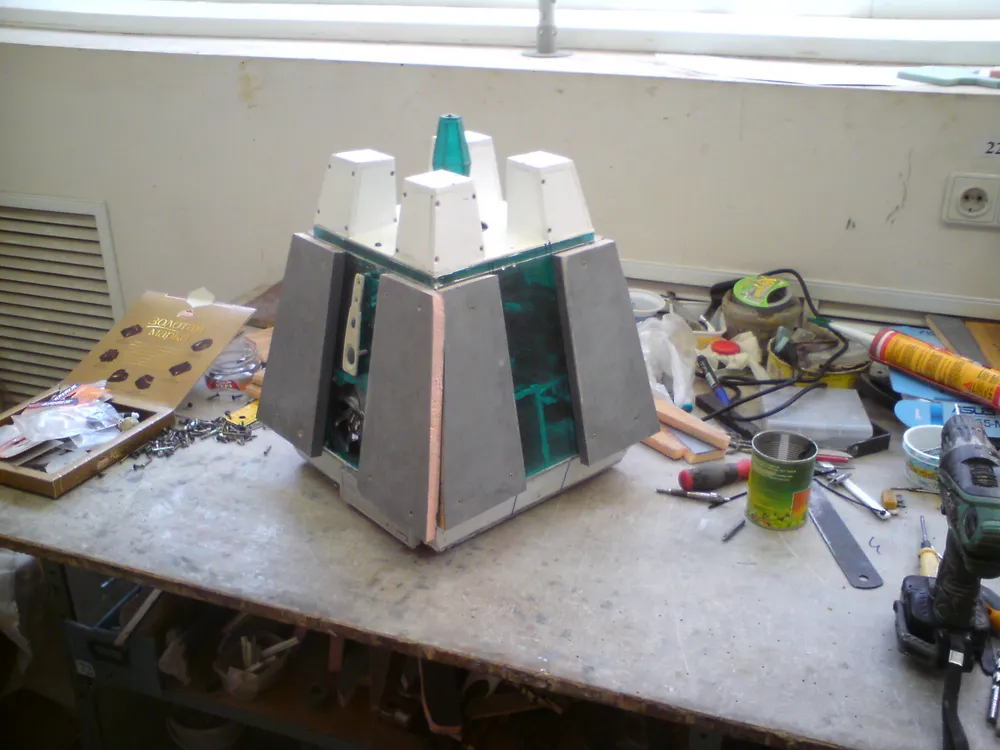
I started to glue the covers on the case. Again, a lot of effort and refinement. A pair of screws and special construction adhesive for foam secured them in place. In some places, I had to work with resin, filling up gaps and slots.
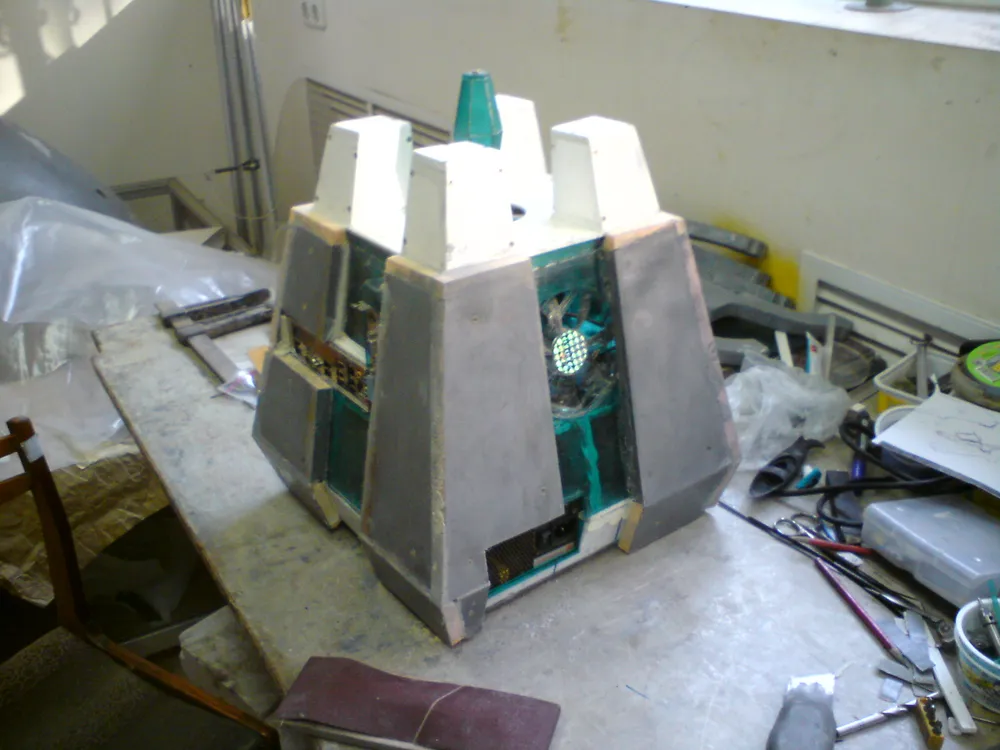
It was time for final refinement. But then came the heat, laziness, and business... In short, this box sat sadly in the corner for a long time, evoking its strange construction and appearance, dull (AAAAHH, I could just kill...) questions.
- What the hell is this lampshade, a stand-cage for hamsters... a UFO model... Is it even a lamp???? And what are these hooks??
To be honest, questions poured in as soon as I started work on the case. The first questions: Why?? A feeding tray... that’s about the pallet. Then; what is this lamp? Lampshade, cage… about the main green body. Human rubbish,... why do you need such hangers? That’s about the crests.
And then, when I simply began to send everyone away, they observed from afar. But they didn’t stop firing questions like a cornucopia. That’s why I’m so glad to finish this work and haul everything home. I was tired not physically, but morally. A green sadness from human stupidity, or am I just strange? I decided to engage in this instead of earning money?
What could I explain to people unfamiliar with the Warhammer universe... I could only grit my teeth and throw lethal looks. I was no longer glad I started this modding saga.
The very last stage, not counting the installation of the system.
After gathering dust in the corner, sooner or later, my hands reached it. I sanded, puttyed the imperfections, leveled it out a bit.
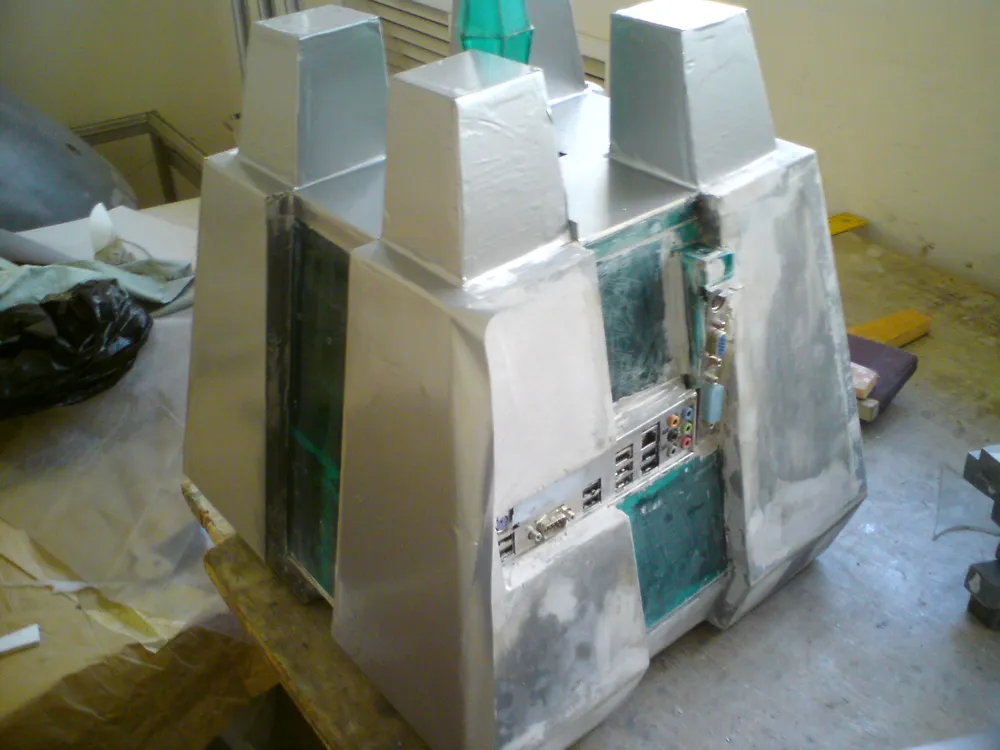

I started to cover everything with found silver oracal - one-sided sticky film. I wrapped the entire case and all the crests. The case came into a more or less pleasant appearance, although due to a bit of haste, the seams and flaws are visible up close.
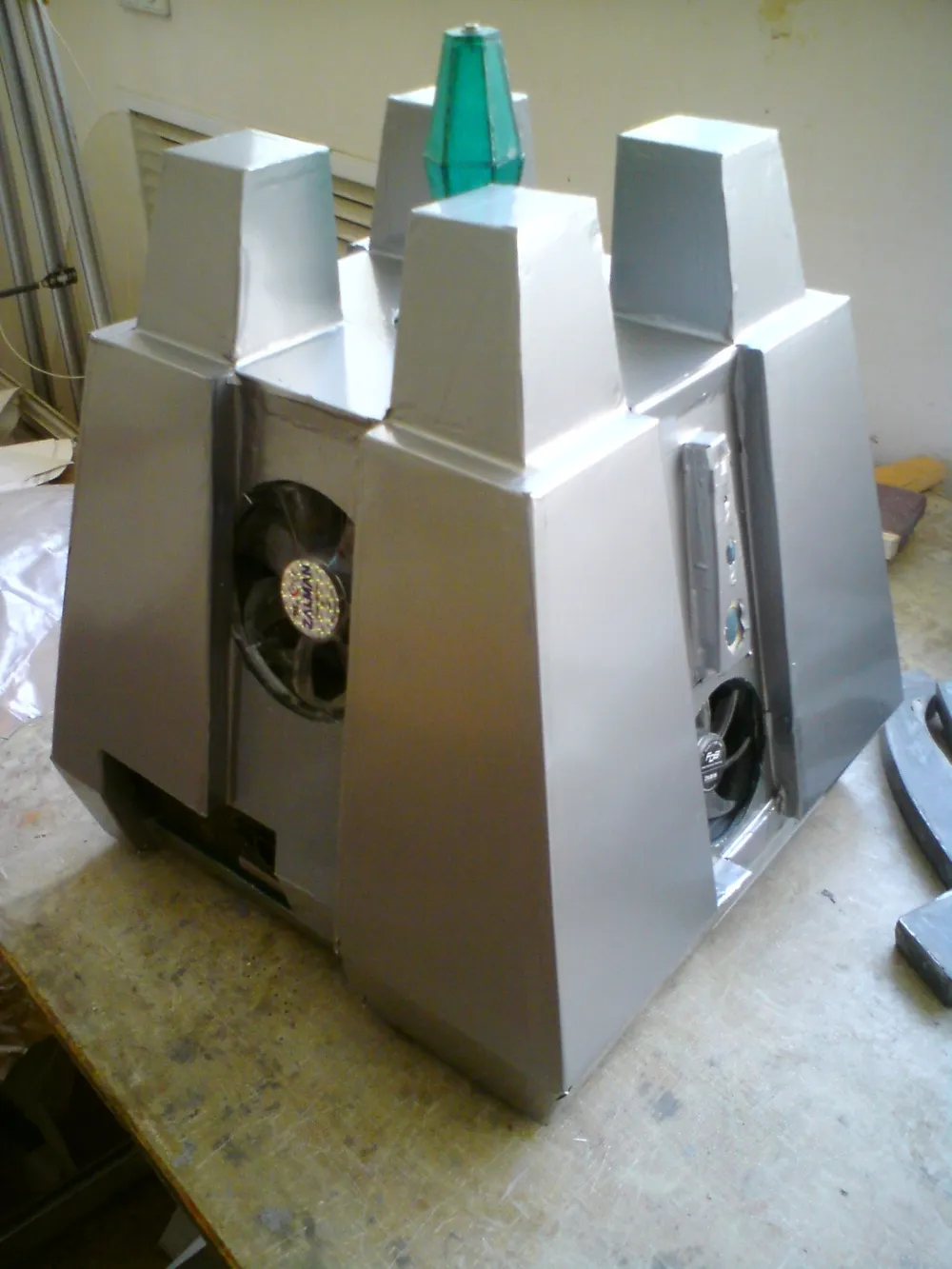
To be honest, I could have just painted it grey, but then I would have to polish it to a shine. And it wouldn’t shine as much, yes, the seams are visible, but it's okay for myself.
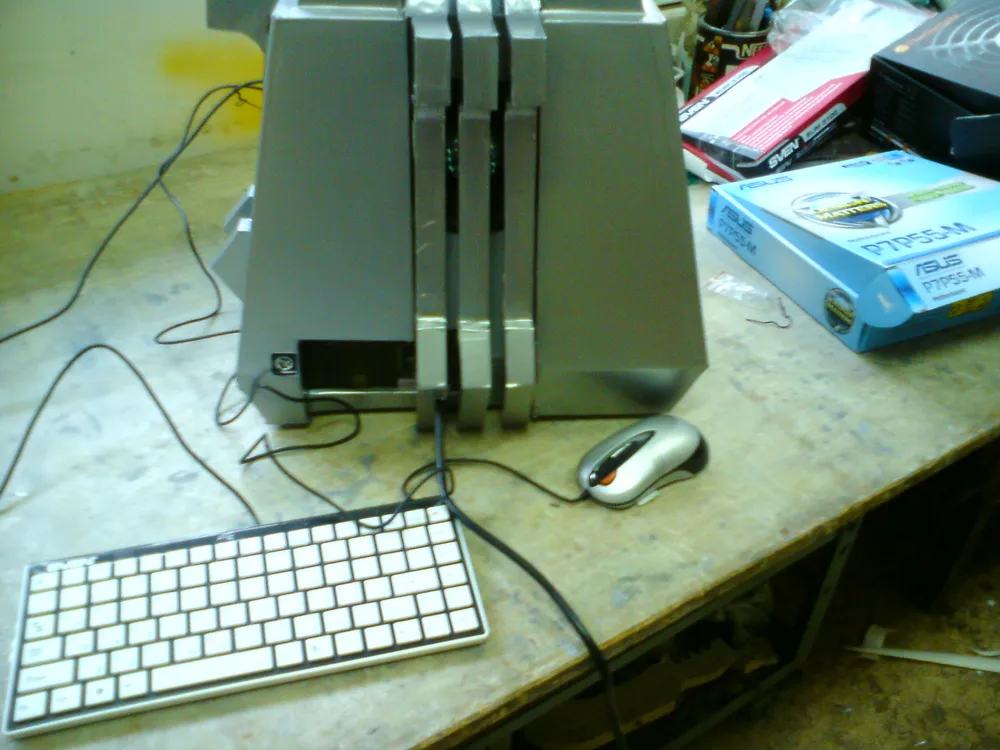
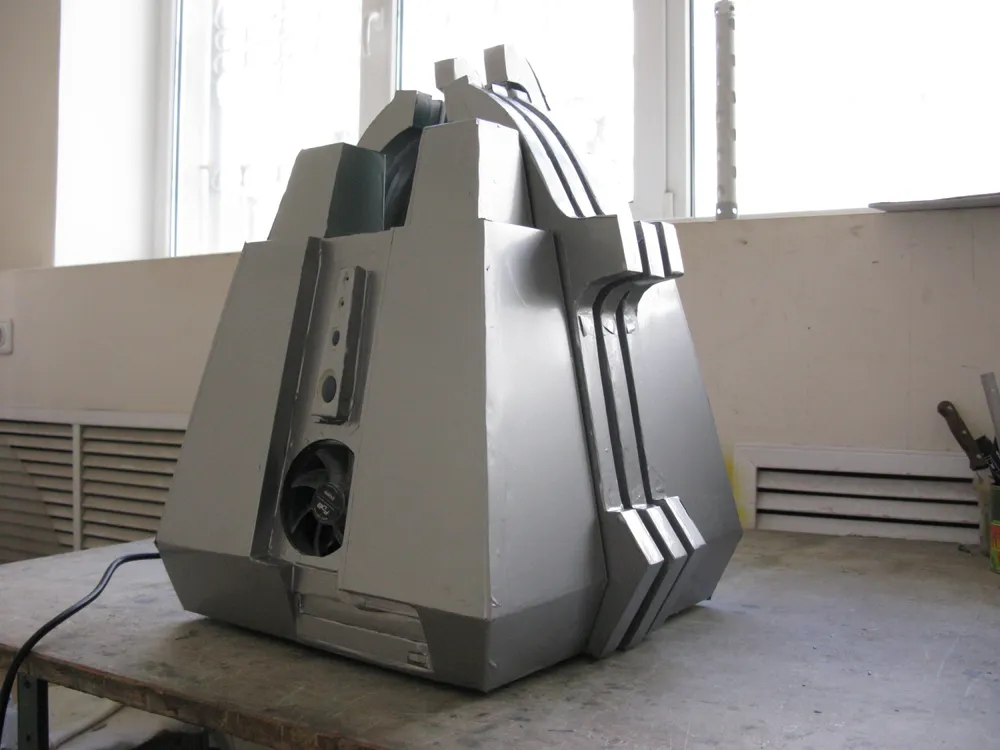
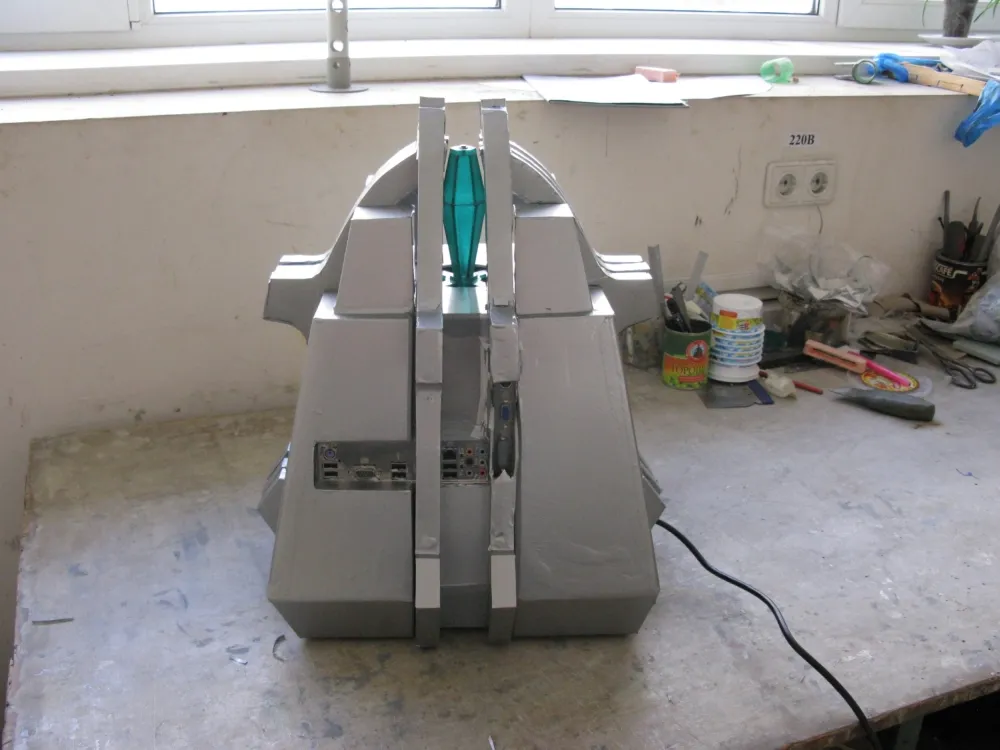
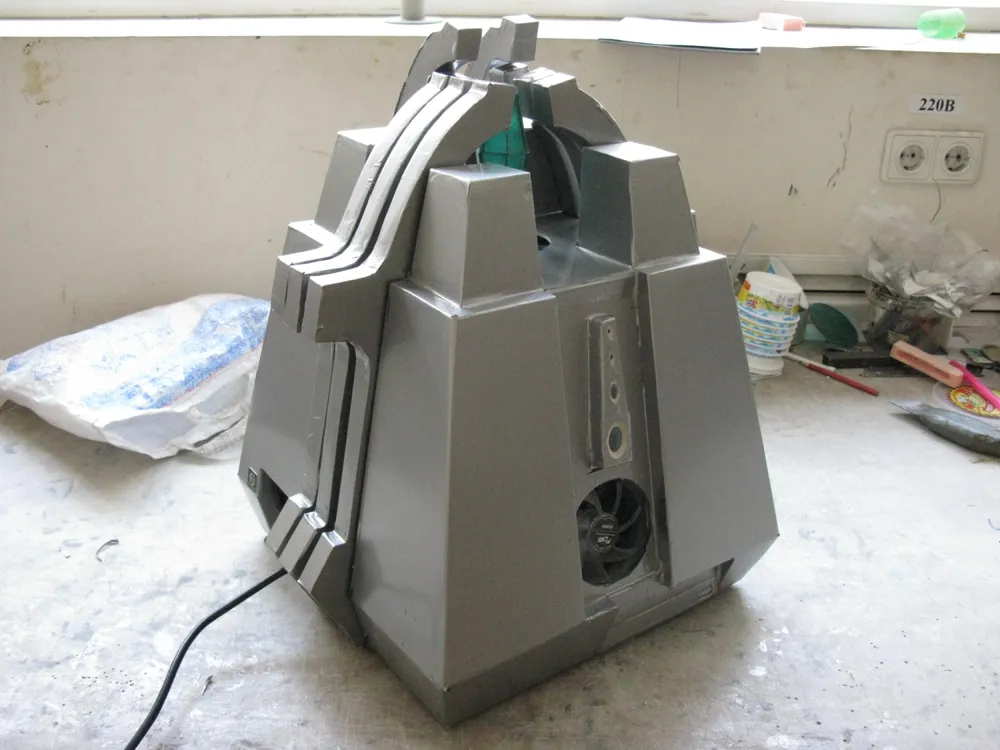
Then I temporarily screwed on all the crests with a couple of screws because I plan to go inside again. Clean out the debris and connect the front cooler.
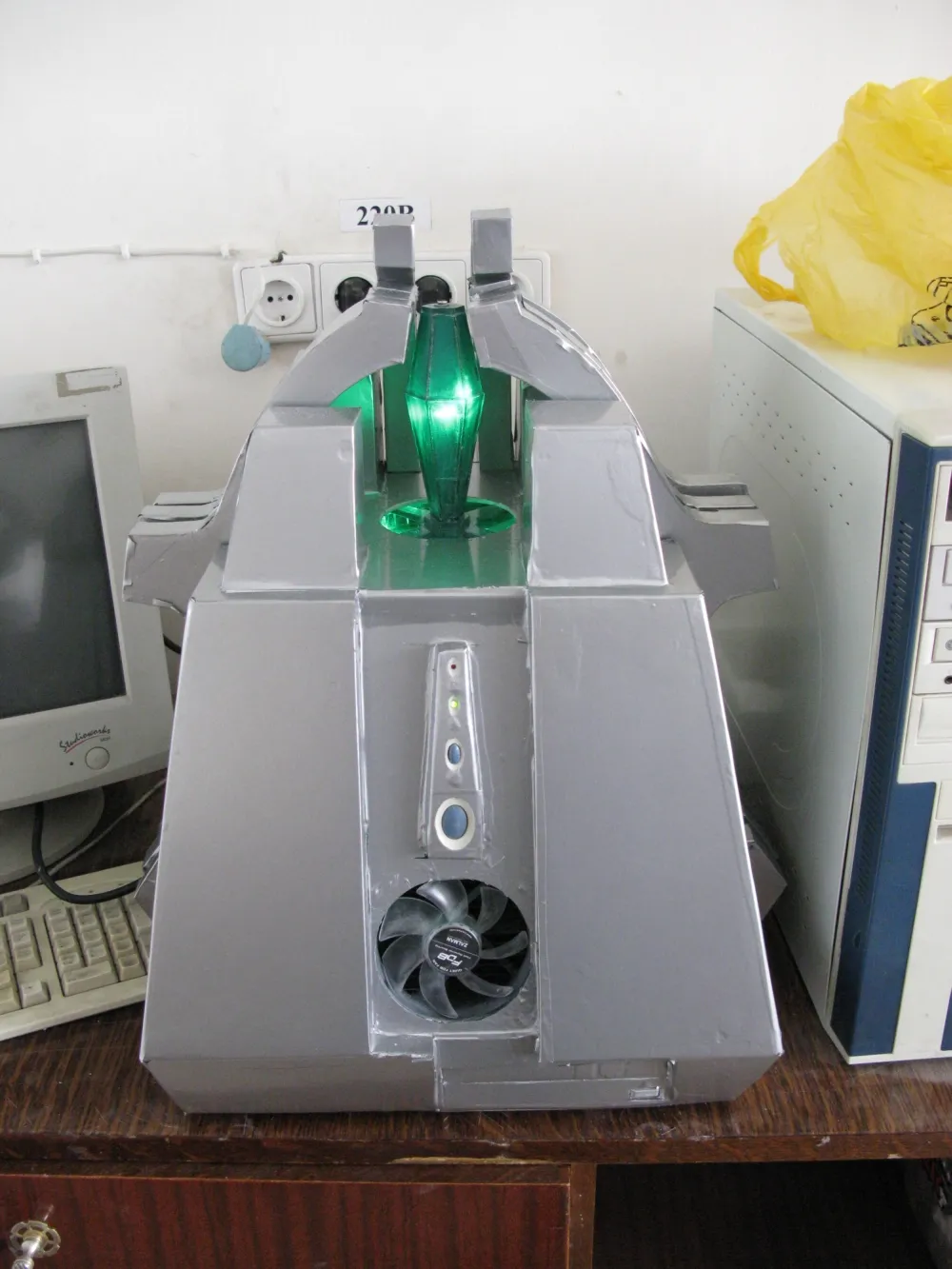
I connected and checked, it works quite normally. It hums, glows, works. I gathered any unnecessary spare parts in bags, took them home, they will come in handy, threw away scraps and debris. The next day, I took the case home.
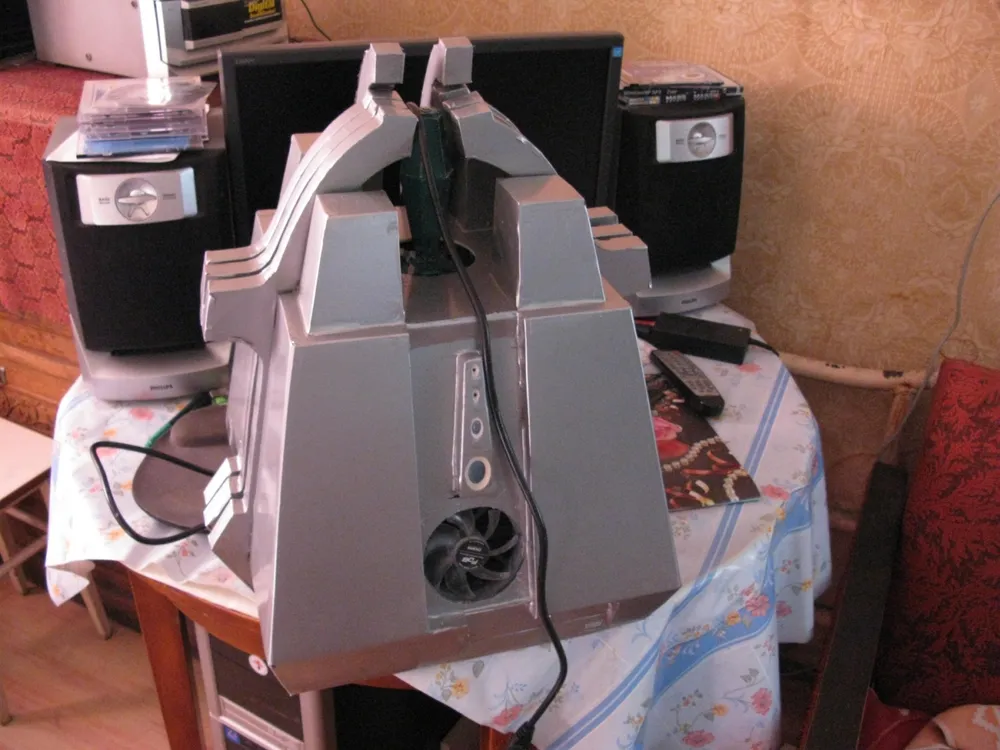
It stands there, pleasing me, I am tired, but glad that I finished.
Motherboard - ASUS P7P55-M under LGA 1156, processor - Intel Core i5 3.2 Ghz 650 oem, RAM - DDR3 2048 Mb PC1066/1333 Kingmax, video card, an old one for now, ASUS Nvidia GT8500, HDD - 1 Tb Seagate (ST31000524AS) Barracuda7200 12 7200rpm 32Mb SATAIII-600, DVD Optiarc something. Power supply - Thermalake Touchpower TPX-775m, modular, just right, what I needed.
The weight turned out to be about 11-12 kilograms. There are no handles, you have to carry it in your arms or in a blanket.
Not all images are included, maybe not in the right order, but I think the meaning is clear.
Thank you all for reading and viewing the pictures and photos, I look forward to feedback.
**I started, as I promised, upgrading**, but for this, I had to crush the case a bit. Remove the crests and scalp with the crystal from the computer.
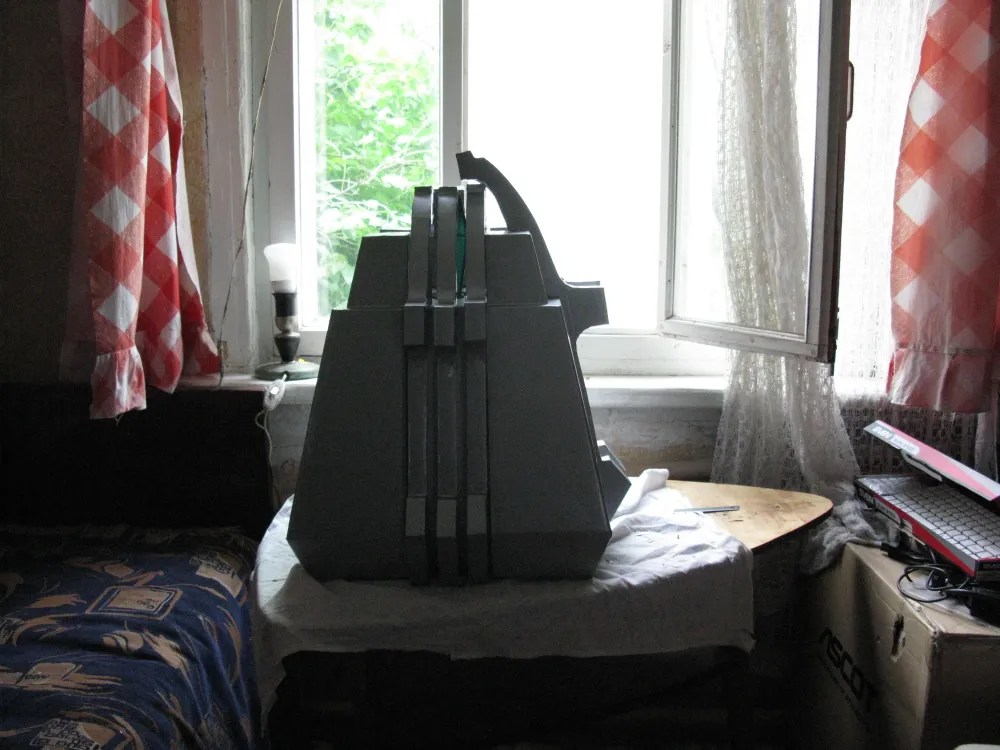
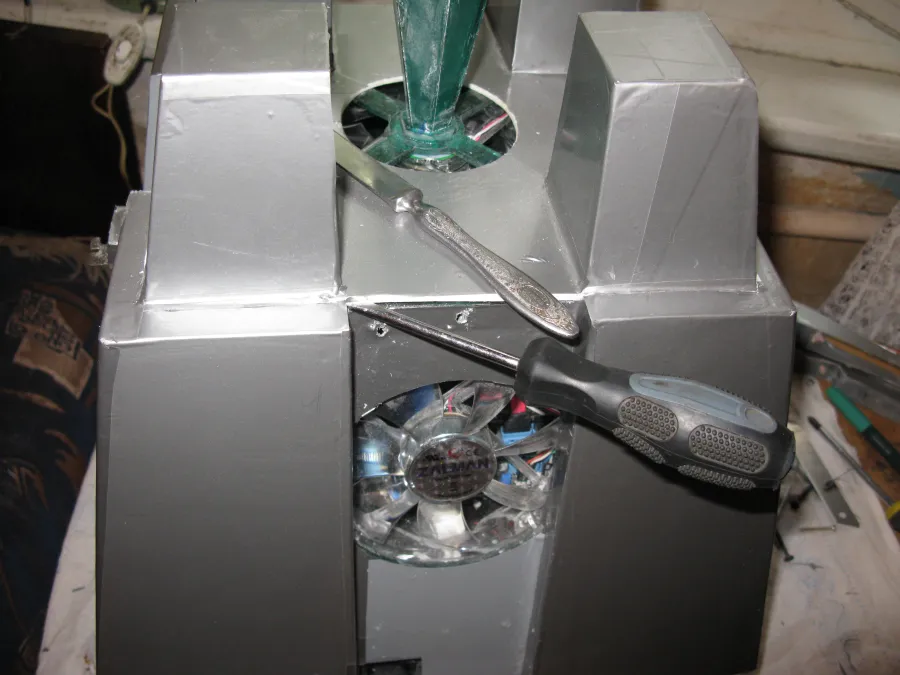
skull-paw of the case
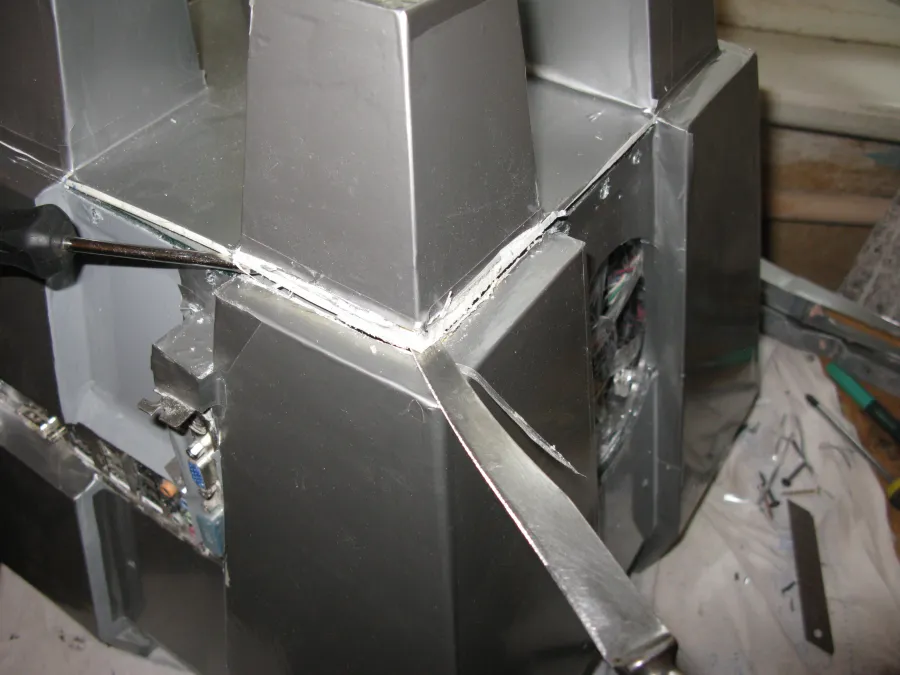

Oh my, how angry I am!!

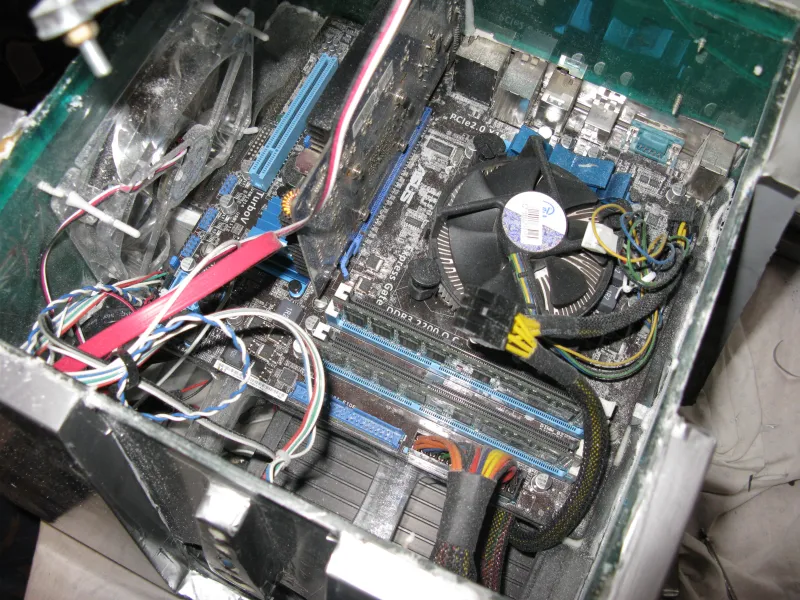

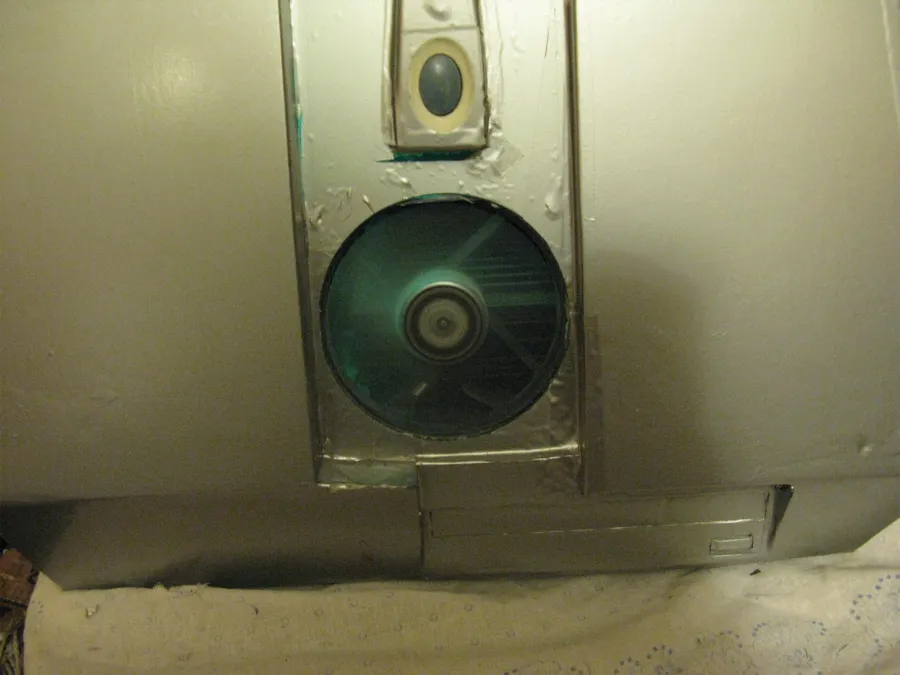
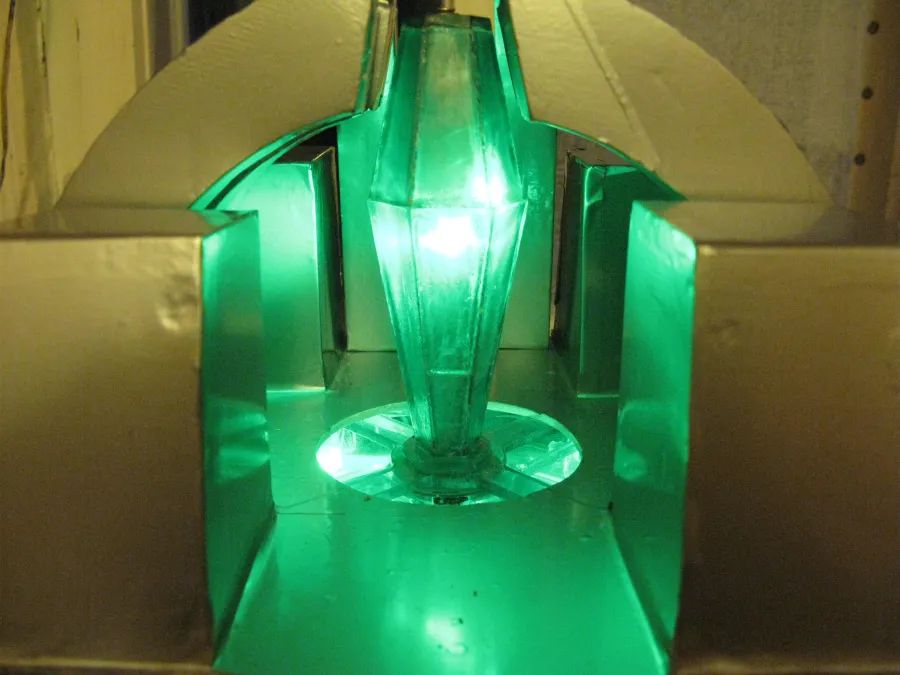
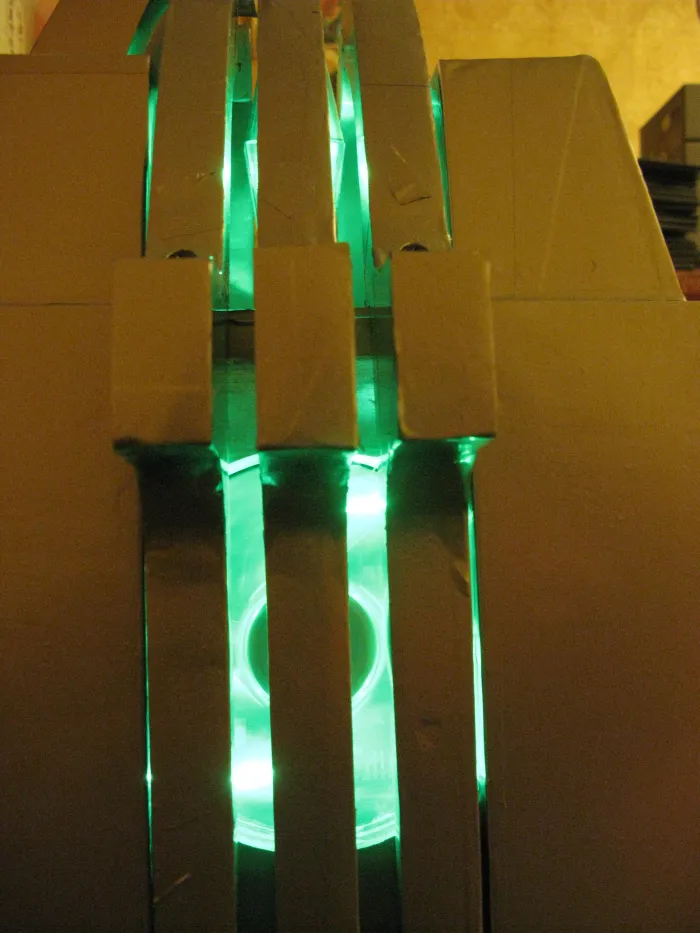
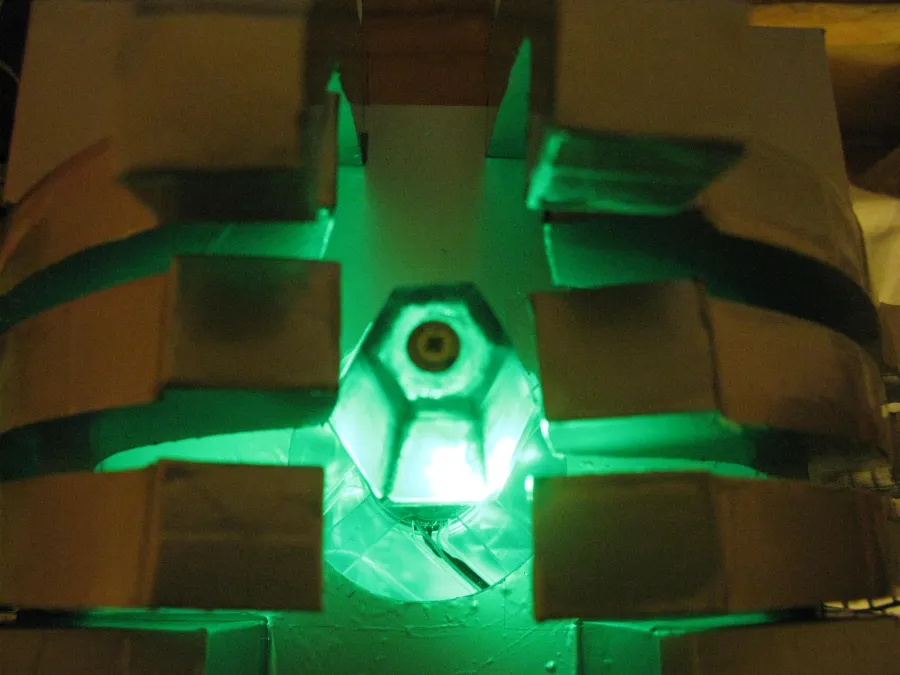
Sweet hummusic buzzing, lighting... don’t buzz, or I’ll swiftly cut off all the wires.
Now, in the long winter evenings, it stands on a separate coffee table and casts green mysterious glimmers out of the window and onto the faces of the people playing on it. It hums strongly, I had to turn off one cooler, but this didn’t greatly affect its performance. Since cooling was excessive, and it’s still cold at home.
It works well, where would it go, although the old CRT monitor died, I had to buy a new LCD. And a wireless mouse somehow doesn’t get detected...