
Warrior with a two-handed weapon
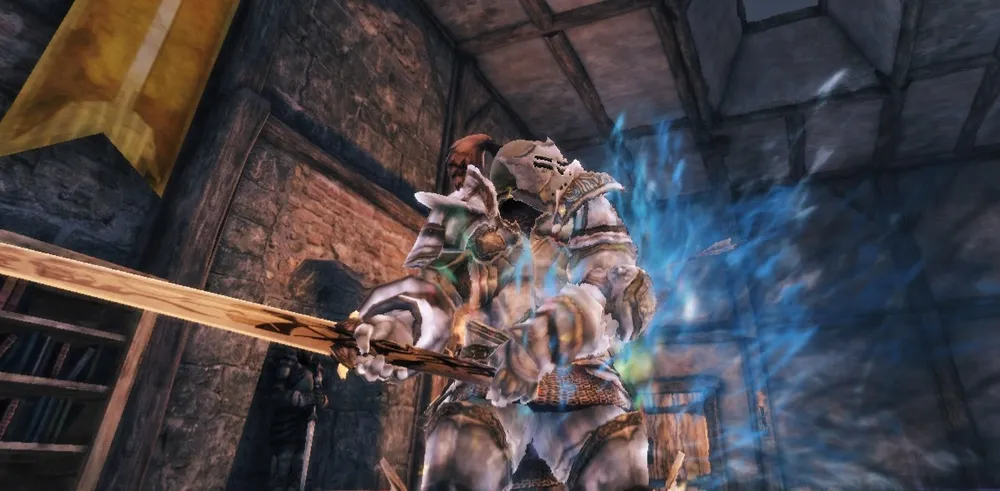
A character wielding a two-handed weapon is rightly considered the best damage dealer and is indispensable when facing fat bosses. I'll confess right away that this isn't my favorite type of character, but below I've tried to present and systematize my thoughts on this build.
Two-Handed Warrior in Dragon Age: Origins
Race Selection
In principle, this doesn't matter much, but both noble dwarves and noble humans automatically receive one point in the shield weapon proficiency school at the start. If you've decided to get a mod with a crow respecialization, you can "forget" this skill in Lothering and spend the freed point on something more useful. Moreover, all the nobles flaunt their two-handed swords in the game—KaiLann, Eamon, CoutreN, and your Cousland will appear equally impressive against them, and dwarves have a 10% chance that a spell cast on them simply won't work (more useful for a tank). In the worst-case scenario, one shield skill won't make a difference.
...
Human
Elf
Dwarf
Strength
11
10
11
Dexterity
15
14
15
Willpower
12
14
12
Magic
11
12
10
Cunning
15
14
14
Constitution
10
10
12
Attribute Point Distribution:
Strength is the most important stat for a warrior; by the end of the game, I raised it to over 80.
Dexterity isn't particularly needed, and you can forget about it. At most, in the Mage Tower, you will raise it with essences to 20.
Willpower should be leveled to 25-30; it affects stamina, which we will use to fuel some important skills.
Magic is not needed. For healing and buffs, we will have mages.
Cunning should be leveled to 16-20 to learn the Persuasion tree, and then also forgotten.
Constitution should be leveled to 20-25 and also forgotten. Damage in a party should be taken by the tank, but some damage dealer skills imply health loss, so it's better if your character doesn't fall from a couple of hits.
Skill Study:
We can spend 1 skill point for every 3 levels. The following skills should be taken:
Influence – level this up first and to the max. By level 9 (if you tackle all side quests immediately after Lothering), you will be able to easily control enemies and allies—let's say, intimidation depends on strength, and we will have plenty of it.
Stealing – it's worth taking a maximum of one level, just to get the quests from the sly Coldri waiting for you in the Denarim Trade Quarter. More about this here: Guide - Denarim (Section - 'Crime Wave'). The rest can be left for Leliana to learn.
Survival – a skill that allows you to detect enemies in advance and assess their danger level, as well as provides a decent increase in resistance to nature's forces with each level and physical resistance when fully leveled.
Trap Making – we won't learn it. Let some companion handle that (even Alistair or Sten).
Herbalism – a skill more appropriate for mages, namely Wynne.
Poison Making – we should also only take one point, to utilize poisons in battle. They can be made by Zevran.
Combat Training – definitely level this up, and the sooner, the better—along with Influence.
Battle Tactics – entirely unnecessary, as for most of the time the character is controlled by you directly.
Specialization Selection
Of the four warrior specializations, Berserker and Butcher are the most useful for damage dealers. The templar with its resistances is better suited for tanks, and I consider studying the Champion for the skill of Approval (+10 to defense) unnecessary. Let this specialization be learned by the same tank.
Berserker

Bonuses: Strength +2, Health +10
This is the best specialization for a dps hero.

1. Berserker Rage (active)
The berserker enters a combat frenzy, hitting harder by 8 damage points. At the same time, he incurs a penalty to stamina recovery. What’s needed – deal as much damage as possible, and stamina will be replenished via healing from the purification spell or after you've wiped out all opponents.

2. Resilience (passive)
Reduces the penalty to stamina recovery when using Bersker Rage and grants a 5% bonus to resistance against nature's forces.

3. Temperance (passive)
Health regenerates faster, improving Rage.

4. Finishing Blow (activated)
The berserker expends all stamina in a single blow, dealing additional damage proportional to stamina expended. This is the most useful skill for damage dealers, used during the finishing of bosses; however, all maintained skills are disrupted during this, so it makes sense to first deal with minions and only then finish off the strongest.
Butcher

Bonuses: Constitution +1, Physical Resistance +5
An alternative to Templar.

1. Devour (activated)
The butcher restores health by consuming the nearest enemy corpse. It's better to consume bodies of living foes rather than golems and skeletons.

2. Frightening Appearance (activated)
An analogue of the spell Terrify – an enemy who fails the mental resistance check ceases their attack and freezes in place.

3. Aura of Pain (supported)
This area skill deals 20 magic damage with Spirit magic over 4 seconds to all enemies at a decent distance, as well as to the Butcher himself. It makes sense to drink Spiritual Balm before using this.

4. Blood Frenzy (supported)
For every 10% of health lost, damage increases by one. In short, the more we take, the harder we smack our opponents.
Skill Study:
So, to teach your character to easily deal damage of 500 units, we study the following skills:
First Warrior Skill Tree

1. Bogatyr (passive)
Increases the warrior's health and reduces stamina penalty from wearing armor. We study this first.

2. Intimidation (supported)
Distracts mobs from allies, drawing them to your warrior. More useful for tanks, but can suffice in the early game (or if the tank is in real trouble).

3. Courage (passive)
Provides a bonus to physical and mental resistance, damage, and critical hit probability. The best skill in this tree.

4. Deathly Surge (passive)
Restores part of stamina with each kill of mobs. We don't have a lot of stamina, so we study this skill.
Second Warrior Skill Tree

1. Calculated Strike (supported)
Increases attack, and is quite useful at early levels. Later it can be disabled – you will have gained enough skills to increase damage, and you'll equip good gear. This skill also increases critical strike chance (this chance increases with each level), but reduces attack speed by 10%, which two-handed weapons cannot brag about.

2. Provocation (activated)
The warrior lets out a battle cry, forcing enemies to attack him. This skill is better suited again for tanks and isn’t particularly needed.

3. Exit Combat (activated)
Mobs lose all interest in the character and switch to other party members. Useful to restore spent health without interruption, allowing you to return to slashing enemies.

4. Perfect Strike (activated)
Increases attack by 100. Codename “Death to Bosses.” It’s unwise to spend stamina on this skill when fighting any small fry.
First Two-Handed Weapon Skill Tree

1. Hilt Strike (activated)
The character delivers a blow with the blunt end of the weapon, and if it fails the physical resistance test, it knocks the opponent over. While the mob is getting up, you can slice it into ribbons twenty times. Quite useful, especially at the start of the game.

2. Indomitable (supported)
Provides a bonus to damage and complete immunity to stunning and knockdown. Very useful in fights with the Undead, enemies wielding two-handed weapons, and mages casting Storm or Earthquake.

3. Stunning Strikes (passive)
Increases the probability of stunning on attack, so we take this one without thinking.

4. Critical Strike (activated)
No comments needed.
Second Two-Handed Weapon Skill Tree
More directed towards weakening opponents than dealing direct damage.

1. Weapon Breakdown (activated)
Does not deal damage, but if the target fails the physical resistance check, they receive a temporary penalty to attack. Useful at the start of the game.

2. Crushing Strikes (passive)
Serious bonus to damage against golems and other artificial beings.

3. Armor Breakdown (activated)
Deals normal damage, and if the opponent fails the physical resistance check, they receive a penalty to armor (damage to armor or natural resistance). Ideal for enemy tanks.

4. Destroyer
Damages enemy armor and temporarily decreases its effectiveness. Slightly less useful than the previous skill, so we learn it closer to the end of the game.
Third Two-Handed Weapon Skill Tree

1. Mighty Strike (activated)
The attack deals an additional strike, and the target that fails the physical resistance check receives a penalty to movement speed. If you hit a rogue, he will become a much simpler target at once.

2. Powerful Strikes (supported)
Gives a damage bonus and penalties to attack and defense. Not very useful without the next skill.

3. The Strength of Two Hands (passive)
Reduces penalties when using the skill “Powerful Strikes.” All together: +5 to damage, -5 to attack and defense. We also learn this in order to gain access to the last skill.

4. Two-Handed Weapon Sweep (activated)
Practically the only area attack for a damage dealer – the sword sweeps an arc, and mobs gathered around take normal damage and if they fail the physical resistance check, they are knocked down. The sooner you learn this, the better.
***Blood Power (DLC