Numidium
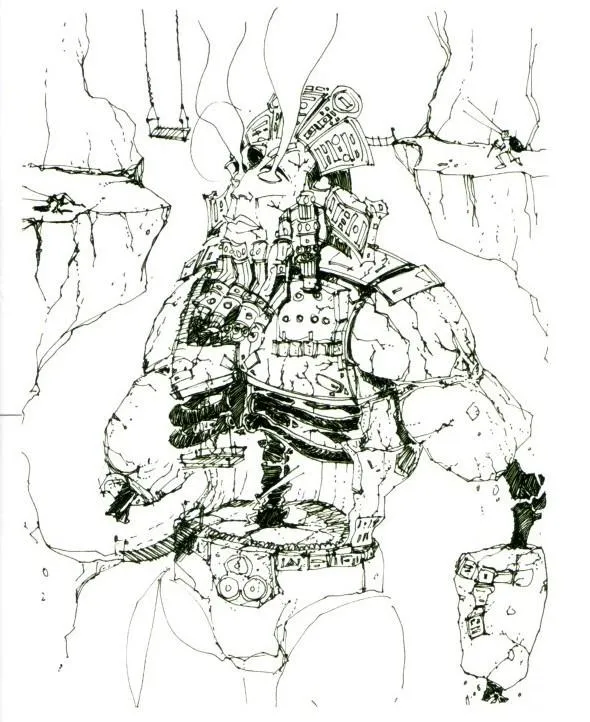
Numidium
About a year ago, you commissioned me to discover the history of Numidium, its creation, and its significance. Although I still consider the advance and payment to be utterly insignificant… And don't talk to me about the good of the Empire; personally, the almost-successful two hundred and four attempts (over the last month) of the flora and fauna of Morrowind trying to shred me for breakfast, lunch, dinner, and one time –six o'clock tea – were not a blessing at all. I'm preemptively anticipating your response – the security was (yes, was) dreadful, and sometimes it even ventured into that flora and fauna itself. The only reason I’m still dragging these limbs and tails around is that I’m moving quickly enough to do so.
Yes, the payment is pathetic, and it was even worse to withhold information from you, though you remember that delay. As a result, even now I cannot present you with information that I would consider definitive. I suspect that after this, I’m in for a few more surprises from the archives of the Blades? Just tell the agents to stop waking me up with kicks to the ribs.
"Zurien Arctus did not create the golem Numidium through spells from the schools of Mysticism and Sorcery, as Bero claims. The truth is that we do not know how Numidium was created or even if it was a golem or an atronach in the traditional sense of the word..."
Yes, Zurien Arctus did not create Numidium as many believe. At least, not completely.
If we start from the very beginning of the history of Numidium (Anumidum), it all began with the heart of Lorhan being ripped out and thrown from the Adamantine Tower (the Iliac Bay, Isle of Balfiera). Where it fell, the Red Mountain was formed.
Later, the dwarven miners discovered the Heart of Lorhan beneath the Red Mountain. The dwarven priests realized that power could be drawn from this artifact, and the Senior Total Architect Kagrenac began the creation of Numidium, the Brass God or the Great Walker, who would become a new god and feed on energy from the Heart. It is kept in the chambers of the fortress Btuanqtu, built in the crater of the Red Mountain, now better known as Dagoth Ur.

Dwarves.
After the horrendous demise of the last guard at the damned rock rider (he, in principle, didn’t last long – dazed from his Flint and Sujamma soaked lunch, crashed into the rock in front of my eyes), I was forced to make my way as quickly as possible to the nearest city – Vivec. There, upon learning of my goal, the mages' guild showed me books found by the previous archmage – Trebonius Artorius. I will never admit that the old (heavily struck through) mage wasn't an ass, though I am sure that the books were found by someone young (they are constantly sent to Daedric on shards – they are not missed, and the work gets done). I am sending copies with brief notes.

"Divine Metaphysics." Kagrenac. On the Construction of Numidium.

"The Egg of Time." Btuanth Mzanch. Facts about the safety of using the Heart of Lorhan are outlined – in contrast to the prevailing opinion at the time about the catastrophic consequences of its use.
However, the envoy of the Sixth House, Vorin Dagoth, learns of the experiments with the Heart of Lorhan, which he reports to Nerevar, the king of Resdayn (now the province of Morrowind). He contacts the king gno of the dwarves Dumak Gnom-Orc, but he either truly knows nothing or simply does not wish to speak.
As a result, a religious conflict (while the dwarves were agnostics and relied more on reason than faith, the Chimer faithfully worshiped Daedra and considered the dwarves' lack of faith a challenge to their gods) erupted into the War of the First Council (668-700 1E), a confrontation at the Red Mountain between the Chimer (now Dunmer) and the dwarves (some sources state that this battle involved Nords and Orcs), culminating in the rise of the Tribunal.
End of the Second Era. The onset of Tiber Septim in Morrowind. During negotiations, Numidium was handed over by Lord Vivec in exchange for the preservation of faith and self-governance in the province. And here we can pose the first question – where was Numidium created? Was it really in Btuanqtu?
Records detailing the conclusion of the War of the First Council emphasize the transformation of the Chimer, the death of Nerevar, and the Tribunal, but there is no information about the fate of Numidium. Let’s suppose that the Dunmer had no need to disturb this act of "blasphemy" of the dwarves, which is why it remained untouched. After the peace with Morrowind, Numidium ends up with Tiber, but a review of "The Plans of Dagoth Ur" (which you held on to until the very end) indicates that no one had entered the Heart Chambers since 282 2E. Along with this record comes a discussion of Akulahan, the Second Numidium – nobody entered the Chambers, but the idea that Akulahan was being built there is put forward. Thus – either Numidium was indeed built there and later transported, or the Heart Chambers were simply the only sufficient place to construct such an impressive creation (both could be testified by those who visited there in the interval 700 1E – 282 2E).
Version One: Numidium, "the dwarven mockery of the gods," was built in Btuanqtu and was transported between 700 1E – 282 2E. Why? Who could want it? The answer is self-evident: Sotha Sil took it for his research in the Clockwork City. Let’s recall – according to many versions, he was the one who studied the tools of Kagrenac used to extract power from the Heart, and although the Clockwork City is closed to visitors, one of our agents managed to visit it and describes the place as filled with mechanical things reminiscent of dwarven creations.
Version Two: The Brass God was not built in Btuanqtu, but it was transported only once – in exchange for Tiber (or, not excluding Sotha Sil, it could have been transported twice – quite possible). Alas, it’s impossible to allow a detailed examination of every dwarven ruin to find workshops large enough for the construction of such a leviathan. From the documents, it can be suggested that Dumak Gnom-Orc was unaware of the construction of Numidium; ensuring secrecy at the fortress harboring such an important item as the Heart of Lorhan (and attracting a lot of attention), such a large thing as Numidium… Moreover, it seems extremely unusual that the two fortresses are located where they are: Kagrenac's Library and his Studio. Why not connect everything in one place?

Territory of the Red Mountain.
No less important in the history of Numidium is the place of its assembly and the assembly itself. Some point to Cyrodiil, but it is reliably known that it was Elsweyr, in a place called "The Halls of the Colossus." But there remains the so-called "Incident in Rimmen." "... You did it again with the Great Walker, not once but twice! Once in Rimmen, with which we shall never learn to live in peace. The second time in Daggerfall, or in Sentinel, or Wayrest, or in all three places at once?.." - says R'leith-hahr in the book about the Dragon Break. What exactly happened there could not be determined, but it certainly resembled the West Deformation of 417 3E, albeit due to Elsweyr's seclusion and secrecy surrounding the Brass God, it did not gain much resonance. Was the activation a cause? But the Halls of the Colossus are located in the south, almost by the coast, while Rimmen is on the northeastern border. An error during field tests before hostilities began against the Aldmeri Dominion?

Halls of the Colossus.

Province of Elsweyr.
However, one of the most pressing questions that arise when researching Numidium is what replaced the Heart of Lorhan, the original source of energy in Kagrenac's plans? After all, though Numidium was transferred to Tiber, the Tribunal kept the Heart for themselves. Yes, Mantella, some soul gem. The question is – whose soul?
Sources provide two candidates – King Wulhfahrt and Zurien Arctus, the Battle Mage of Tiber Septim.
Wulhfahrt of Atmora was chosen as the chief of Skyrim after the death of Howga the Storm Elf in battle against the Alessian forces. The first record of him dates back to around 500 1E. According to "The Five Songs of King Wulhfahrt" and "The Arcturian Heresy", Wulhfahrt became a powerful undead, the Under-King. He was an advisor to Tiber, but realizing the possibilities that Numidium offered and what was required for its "resurrection" as an energy source, he captured Wulhfahrt's soul in Mantella with the help of Zurien. Zurien perished in the process, and Tiber declared him a traitor to avoid unnecessary gossip.
Zurien Arctus, the Battle Mage of Tiber. It is asserted that he sacrificed his heart (soul) for the restoration of Numidium. But how could an ordinary mage, however powerful, impart such might? After long travels and searches for information, I managed to determine that Zurien and Tiber together formed the so-called Enantiomorph, the embodiment of Lorhan. This makes it clear how Zurien's soul had such power…
Thus, Numidium was assembled and conquered the Aldmeri Dominion. And, as if created solely for this purpose, it was destroyed, and its destruction is directly linked to the powers that initially bestowed it.
"The Arcturian Heresy" speaks of a "Wizard controlling the heavens." Vengeance of the mages of Summerset? Or the Under-King?
Version One. Wulhfahrt is trapped in Mantella, Arctus dies and is declared a traitor. Who then is the Under-King – unknown.
Version Two. Arctus gives his heart for Numidium, but then tries to reclaim it due to conflicts with Tiber. The operation fails, Numidium is destroyed, Arctus transforms into the Under-King, unable to find peace without Mantella.
In 417 3E, on the 10th of the Frostmonth, the West Deformation or Miracle of the World occurred, during which six Numidiums were seen simultaneously, instead of the dozens of petty kingdoms around the Iliac Bay remained Wayrest, Sentinel, and Daggerfall, Orsinium gained independence, Mannimarco, the lord of necromancers – divine status. The Under-King found peace (at least, no reports have come in since). All this, happening in one day (the day that arguably never occurred), prompts many to speak of the Second Numidian Effect.

Cover of The Elder Scrolls II:Daggerfall. Image of the Under-King.
The golem itself, according to reports (now tell me, did keeping this from me play in your favor?) of the Blades, disappeared without a trace, which puts a full stop to the many mysteries of the history of the Brass God of the dwarves.
P.S. Akulahan, the Second Numidium, which Dagoth Ur created, was destroyed during the actions of the Nerevarine. The Chamber of the Heart was buried. It is only known that he (D.U.) intended to use the Heart of Lorhan directly for power, while Akulahan was made from the blueprints of Kagrenac and was a copy of Numidium.
Further research on Akulahan I kindly ask to assign to someone else, as I categorically refuse to repeat such a research feat for such a paltry payment. I will await your response at the tavern "Southern Wall," city of Balmora.
Your Vistha,
Freelance scholar in the service of the Blades.