
Tedas: Dating and Chronology
The church calendar measures time in centuries. The current one is the Age of Dragons, before that was the Blessed Age. Each age lasts about one hundred years and there are currently 9 of them.
The first age was marked by the founding of the Church. The time period before this age is called the Ancient, so 400 years before the first period would be -400 Ancient. This is approximately 800 TE according to the imperial calendar or 1300 years before the present day.
In the 99th year of each age, the Divine seeks an event or omen to determine the name of the new age. The last omen was an untamed awakened dragon, which was a portent of an age full of violence and destruction. Dragon Age: Origins tells the story of events that began in the 30th year of the Age of Dragons.
Name of the Age
Omen
The Divine Age
Justina I became the Divine. Official establishment of the church.
The Age of Glory.
The Archdemon has fallen, the Blight is over.
The Age of Towers
The great cathedral in Minrathous is completed.
The Black Age.
Crusade to eradicate heresy in Tevinter.
The Age of the Just
Beginning of the Just Crusades and the Blight.
The Age of Steel
Queen Antiva was found dead.
The Age of Storms
The Free Marches face the Qunari.
The Blessed Age
Twins were born to the Emperor of Orlais.
The Age of Dragons
The emergence of dragons.
Ancient Times. (Tevinter Calendar)
1 TE. The creation of the Tevinter Empire, the coronation of the first Archon. Before this event, only small fragments of history are known. It is believed that the lands were first inhabited by elves, while humans came from other lands—though many theories exist regarding this, and only a few can be agreed upon by history. Some believe that humans crossed the ocean, like the Qunari, but if this is true, no records of those times exist. Humans settled across Thedos in various tribes known as the Ciriane, Planacene, Hacian, and Alamarri, but it was specifically the Tevinters, who settled in the port city of Minrathous, who managed to rise above.
There is historical evidence of enmity between elves and humans, as well as Tevinter having a leading role in the aggression against the elven city of Arlatan. Elves ceased to contact humans since then, and Tevinter flourished and spread its influence. The first "Dreamers" learned to use lyrium to delve into the fade from captured elves. These "Dreamers" later became the first ruling magisters of the Empire.
500 TE: The western part of the Tevinter rebels creates the Anderfels, mostly inhabited by the human Uzhandi. The same is done by the Empire to prove the difficulty of dealing with the Ciriane in the south. The result of internal strife was multiple uprisings and civil unrest.
620-640 TE: The first civil war of Tevinter began when it began to markedly distance itself from its Golden Age. Magisters from various noble houses possessed terrible power but sought even more. Their competition led to human casualties, and summoning demons became commonplace. When the two largest houses of Tevinter began to fight for the throne of the Archon, the Empire split in two. As a result of the war, ruins appeared where the magical taint is still felt today. A senate is gathered to prevent the collapse of the Empire, but the nobility continues to oppress the people, trying to outdo each other.
780 TE: Anderfels is captured by the Tevinter Empire.
800 TE: The first attempt to free the ancient gods from their underground prisons with the most powerful magic of the lord-magi, who opened the gates to the golden city at the heart of the shadow. The result was a catastrophe that destroyed the golden city and unleashed the taint into the world, giving rise to the first darkspawn. The ancient god Dumatis was freed, becoming the first Archdemon. The first Blight began. The army of darkspawn launched a massive attack, initially focusing on the underground Deep Roads used by the dwarves.
The dwarven kingdom began to perish, with darkspawn using the Deep Roads to spread across the continent. All Imperial cities fell under siege, and chaos ensued. Eventually, the peoples of the Empire grew accustomed to the protracted war and the surges of darkspawn. Communication became difficult throughout the Empire, but cooperation was of the utmost importance. The people of Tevinter prayed to the remaining gods for aid against Dumatis but received only silence in response. Popular faith waned, many temples were destroyed in the unrest, and the people of the Empire began to turn away from the ancient gods, believing they had been betrayed. This dark period lasted for over 200 years.
890 TE: The Grey Wardens are founded in the fortress of Weisshaupt in Anderfels to combat the growing darkspawn threat. The organization is formed primarily of veterans from the darkspawn wars. They maintained communication throughout the Empire and quickly found themselves where darkspawn appeared, rapidly constructing fortresses everywhere while receiving tithes and support from all lands.
940 TE: The perfect dwarf Karindin creates the first golem to fight the darkspawn terrorizing the Deep Roads. Dwarves begin to attack to reclaim lost taigas and part of the Deep Roads. Seven years later, Karindin disappears along with the secret of golem creation, and the dwarven kingdom continued its path to oblivion.
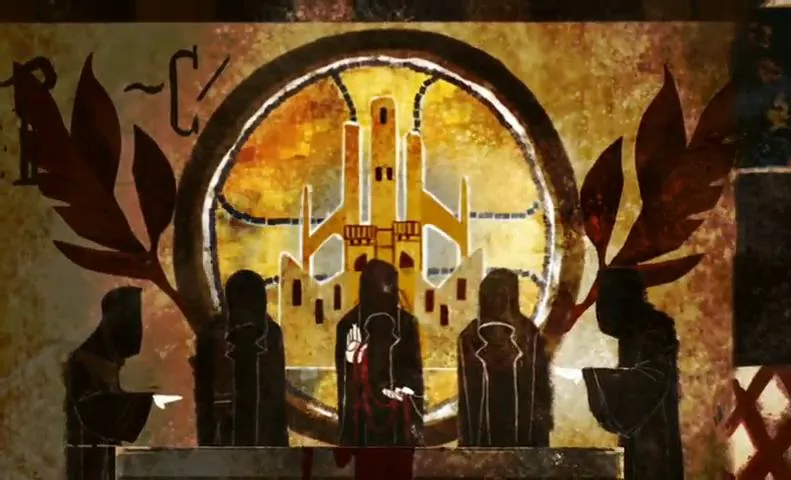
992 TE: The Grey Wardens gather forces of men—both imperials and Ciriane, and Rivain—to confront Dumatis in a colossal battle on the Silent Plains in southern Tevinter. Eventually, Dumatis was destroyed, and the darkspawn forces were routed. Although numerous darkspawn remained and continued to fight, they were no longer led by Dumatis and became scattered. From this time on, treaties were established by the Grey Wardens to secure their authority and right to summon.
1000 TE: Slowly, the last darkspawn were destroyed. They were forced to flee westward into the far reaches of Anderfels and the Deep Roads. For the dwarves, the war continues underground, but for humanity, it seemed the fight was over. Weakened by centuries of war, the Empire was a tempting target for potential enemies.
1020 TE: A massive horde of barbarians crossed the Sea of Awakening from the south, led by the figure of Maferath and Andraste, the bride of the Creator. Some records claim that the barbarians were driven north by the darkspawn. Others say that Andraste bore freedom to the peoples of the Empire still suffering under the yoke of the magisters. Regardless of the reasons, the arrival of the barbarians in the south was met with mass uprisings supporting their incursion. The south of the empire began to crumble, and the magisters of Tevinter were forced to unite to combat a threat to their power greater than the darkspawn.
1025 TE: After the death of the prophet Andraste, the barbarian army is dispelled. The southern Tevinter Empire fractures, forming a set of independent city-states. The sons of Maferath unite some lands into the kingdom of Ciriane and the kingdom of Planacen. Both survived less than a century—Ciriane soon became the lands of Orlais, while Planacen formed a free confederation over the plains, known as the Free Marches. The lands between the Sea of Awakening and the Frostback Mountains are granted to the elves as their ancestral lands and named the Dales. A long journey was set in motion as the elves from all over the Empire began their trek to the Dales, mostly on foot, escaping from bandits and diseases that were causing mass chaos. The cult devoted to the teachings of Andraste quickly spread in the south but was very disorganized and unpopular among the populace worshiping the Ancient Gods.
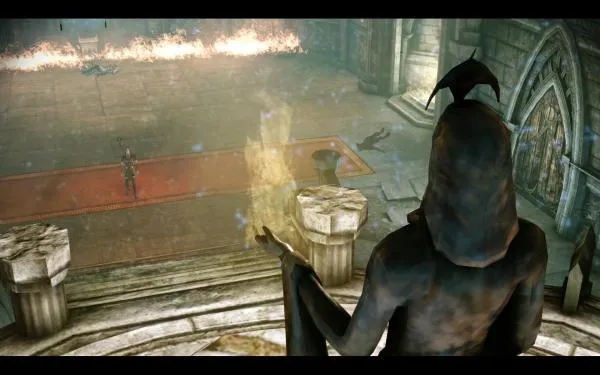
1040 TE: The Song of Light is created by the followers of Andraste who gathered her history and teachings into hymns. There are numerous versions of the Song of Light, with various interpretations of Andraste's teachings about the Creator, spread across different regions. Together, they became known as the "Cult of the Creator."
1050-1120 TE: Rebellions began in the East, Rivain decided to detach itself from the Empire. There were final campaigns to distract the Empire from its attempts to reclaim the Free Marches, allowing the south to gather strength. Many of the eastern cities of the Free Marches intervened on behalf of Rivain, and after some losses leading to the catastrophic Battle of Temerin in 1117 TE, the Empire finally withdrew from the east.
1155 TE: The dwarves of Orzammar in the Frostback Mountains closed the last Deep Roads leading to their kingdom. Over a span of 10 years, the Dwarven Kingdoms of Hormak and Gundaar fell to darkspawn attacks, leaving only Orzammar and Kal-Sharok remaining. The dwarves of Kal-Sharok claimed they would never forgive the king of Orzammar and severed all contact with him. Kal-Sharok was lost.
1175 TE: As the borders of the Empire receded, Kirkwall became one of their solitary outposts on the remote and violent frontier. The adjoining territory quickly divided into what would later become Orlais, the barbaric Free Marches, and also the new homeland of the elves—the Dales. Despite isolation, Kirkwall repelled numerous enemy assaults until finally, the slaves within the city limits revolted and executed their Tevinter rulers in a rampage of violence. The possession of the fortress city remained contested for centuries, but it never returned to the Empire.
1180 TE: The Cult of the Creator spread swiftly through the southern lands, resulting in the construction of the first great Temple in Val Royeaux, becoming the center of worship for the new faith. One of the most ardent followers of the cult was the young king of Orlais, Cordillus Dragon. In 1184, Dragon began a series of holy wars in the name of the Creator, almost immediately proving himself to be one of the greatest generals in history.
1192 TE: Having conquered several neighboring city-states and imposing recognition of his dominance upon others, Cordillus Dragon is crowned in Val Royeaux as Emperor. His ambitions spread further into the north, encompassing the Free Marches and also the Dales to the east. Emperor Dragon converted the cult of the Creator into a church and sent missionaries to other lands.
The Divine Age.
1195 TE or 1:1 Divine (the first year of the first Divine Age): The first Divine of the church, Justina I, appears in Val Royeaux. The free use of magic is declared illegal in Orlais except for those mages who operate under the direct control of the Church.
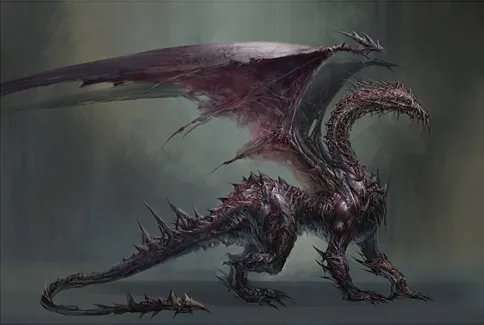
1:05 Divine: Zazikel awakens and the second Blight begins with an army of darkspawn attacking the city of Nordbotten, before the Grey Wardens are alerted. Now, darkspawn are coming forth from mountains across the continent, not just the west. Once again, humanity began a desperate struggle for survival over the next hundred years. The Tevinter Empire abandons Anderfels and attempts to protect itself, a betrayal that Orth remembers to this day. The Free Marches and Orlais can barely defend themselves, but the Grey Wardens and a strong army under the brilliant Emperor Dragon shift the balance of power in their favor. The Orlesians achieve a number of victories in their fight against the darkspawn army, including at the Battle of Cumberland in 1:16 Divine, destroying several hordes of darkspawn and preserving many cities. The Orlesian Empire, under the leadership of Emperor Dragon, begins to rapidly expand, just as the influence of the Church grows. Most importantly, the Tevinter Empire was weakened by the devastation of Minrathous in 1:31 Divine, granting Emperor Dragon the chance to expand the northern border. Instead, he diverted his forces westward to relieve the siege of Weisshaupt in 1:33 Divine Age. The Grey Wardens are impressed and are even ready to worship the church; together, the Wardens and Dragon save the severely weakened Anderfels from total destruction, resulting in a belief in the Creator that continues to this day. Throughout this time, the elves of the Dales remained neutral and useless. The people of Orlais were outraged when the city of Monsimard was almost obliterated by darkspawn in 1:25, while the elven army simply watched from the sidelines.
1:45 Divine: Emperor Dragon dies of old age in Val Chevin. His empire, formed from the western lands of the Free Marches and all of Anderfels, could not survive his death. His successor, Cordillus II, lacks the political sense of his father, and Anderfels declares its independence twenty years after the death of Cordillus I. Over the next 200 years, the Orlesian Empire loses territories until the situation finally stabilizes at its modern borders. However, for 50 years, the church continues to rapidly spread its influence eastward into the Free Marches, Antiva, and even north into the Tevinter Empire, though met with resistance, as the church stands in direct opposition to the power of the magical nobility.
1:95 Divine: The final battle of the second Blight occurs in Starkhaven. An army of men, led by the Grey Wardens, defeats Zazikel. The army of darkness is routed. The period known as the "Restoration" begins, during which trade, culture, and religion became paramount in many human lands.
1:99 Divine: The Divine Age ends, and the Age of Glory is named, with prophecies of rebirth after the plague.
Age of Glory
2:05 of Glory: Hostility grows between elves and humans due to numerous skirmishes at the borders of the Dales and Orlais. Finally, in 2:09 of Glory, elven forces attack the Orlesian city of Red Crossing and quickly take it. It is said that the atrocities they committed against the humans in that city incited the wrath of the church and the people across the land. Orlais goes to war with the Dales and is taken aback by the fierce resistance of the elves. A quick victory was denied to Orlais.
2:10 of Glory: The elven army seizes Monsimard and approaches Val Royeaux, and the church calls for a holy war against the elves. This event is known as the Exalted March of the Dales. Although the elves eventually pass through Val Royeaux and enter the lands of humans, Halamshiral is defeated, and the elves are routed in 2:20 of Glory. The lands of the Dales fall under Orlais's control, and the elves are exiled from their homes and forbidden to worship their gods. They were forced to either live among the humans, submitting to their rule, or become homeless wanderers.
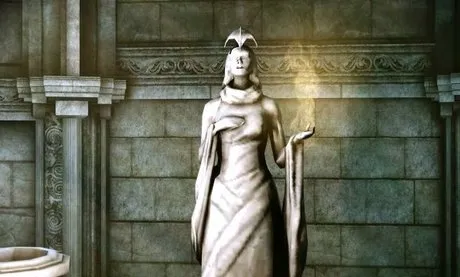
2:15-2:45 of Glory: King Starkhaven, Furiss, attempts to unite the Free Marches under his banner and build his own empire. Eventually, Furiss is betrayed by his ally—the Tevinter Empire—and Starkhaven is conquered by the Tevinters, remaining so until 2:80. The Antivan cities in the north unite in 2:33 to preemptively safeguard against Furiss's incursion. By the time of his death, Furiss's name had become synonymous with arrogant folly.
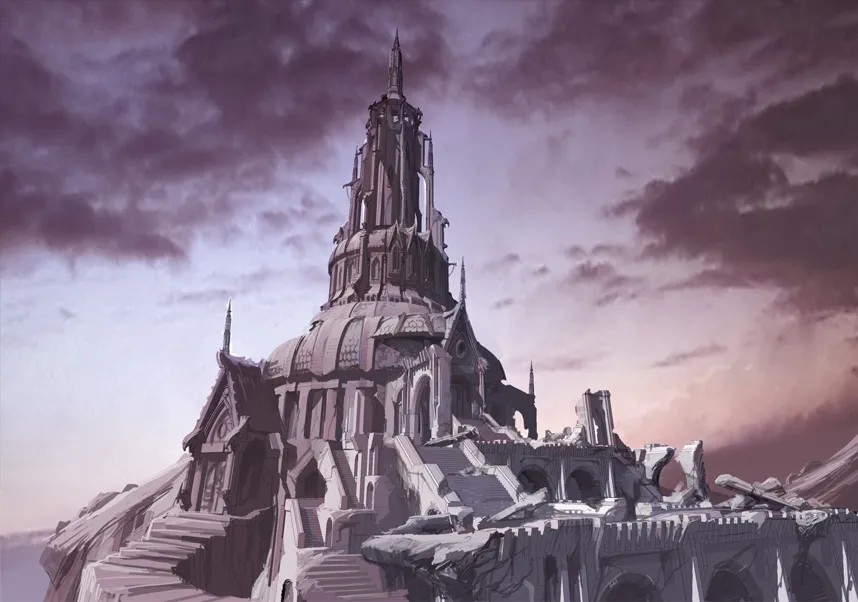
2:99 of Glory: The end of the Age of Glory. The construction of the Great Cathedral in Val Royeaux is completed, its two main towers visible from everywhere in the city and for miles around. Thus, the next age is named—the Age of Towers.
The Age of Towers
3:10 of Towers: The Ancient God Toth awakens, the third Blight begins in the central lands of Thedas, with even greater numbers of darkspawn than ever before. Hordes of darkspawn sweep through the Tevinter cities of Marnus Pell and Virantium, as well as Orlesian cities Arlesans and Monsimard. The Grey Wardens of both nations are able to quickly organize defenses and, despite heavy losses in the besieged cities, the darkspawn are repelled.
3:18 of Towers: The darkspawn ravage the Free Marches, attacking cities along the Minanter River. Initially, the Orlesians and Tevinters take no action, but the constant pressure from the Grey Wardens in Weisshaupt compels both nations to redirect aid to the beleaguered city-states.
3:25 of Towers: The armies of Orlais and Tevinter meet at Hunter Fell, joining the Grey Wardens in the final battle of the third Blight. Toth is destroyed and the darkspawn are annihilated in one of the bloodiest confrontations in history. The corpses of the darkspawn are piled into a mound reaching 100 feet high and set ablaze. The people of the Free Marches will not soon forget this sight. The victorious army decides to occupy the lands liberated from darkspawn. Orlais occupies Nevarra, while Tevinter occupies Hunter Fell. This does not last long; Hunter Fell breaks away from Tevinter in 3:49 of Towers and Nevarra gains independence in 3:65 of Towers.
3:87 of Towers: After many years of debate, the Church fractures when the Imperial Church in Tevinter elects its own Divine, a male mage, in the cathedral of Minrathous. The Imperial Church has always been more loyal to magic and asserted that mages should be able to rule as long as blood magic remains banned. It also claimed that Andraste was not of divine origin but merely a mortal prophet with significant magical potential and that her siding with the Creator does not deify her, even if she was a symbol of hope. Both these arguments contradicted the rest of the church. Once Val Royeaux moved to restrict the power of the Circle of Mages in Tevinter, the Imperial Church made its decision. The Divine of Minrathous was nicknamed the "Black Divine," and the Church's propaganda against Tevinter and the Circle of Mages became popular.
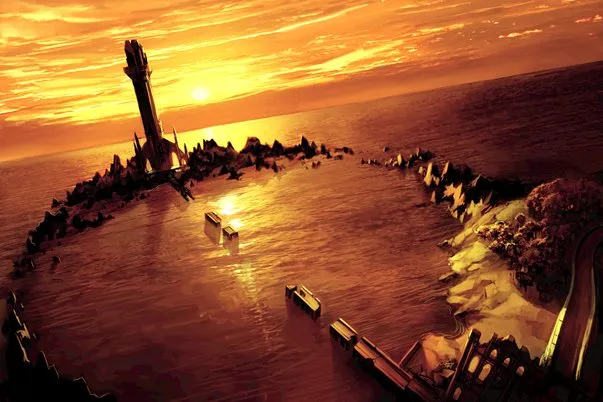
3:99 of Towers: The death of Divine Joyce II in Val Royeaux is marked in Minrathous, and a holiday is declared for the Divine Empire. The next age was named the Black Age as the church resolved to go against the false divine of the north.
Black and Just Ages
4:40 Black - 5:10 Just: The Church declares a series of Holy Crusades to eradicate the "pagans" of the Tevinter Empire. Each of the four times large armies from various areas of the Church were assembled and sent deep into Tevinter. However, each time the Just Crusade failed to achieve its goal, namely—subduing Minrathous. Eventually, the Just Crusade served only to create an irrevocable rift between Minrathous and Val Royeaux. The Imperial Church begins crafting its doctrines, and mages from the southern lands flee to Tevinter, strengthening the faltering power of the Empire.
5:12 Just: The Just Crusade comes to an end with the awakening of Andoral and the onset of the 4th Blight. Darkspawn appear in massive numbers in the northeast and northwest of the continent. Antiva is filled with darkspawn, and the ruling family is destroyed. Darkspawn flood into Rivain and the Free Marches. The Blight also begins in Anderfels, with the capital of Hossberg coming under siege. Orlais and the Tevinter Empire faced the fewest assaults, and were able to push the darkspawn back into the Deep Roads. Despite this success, Tevinter refuses to send aid to the Free Marches and Anderfels, while Orlais provides only symbolic assistance.
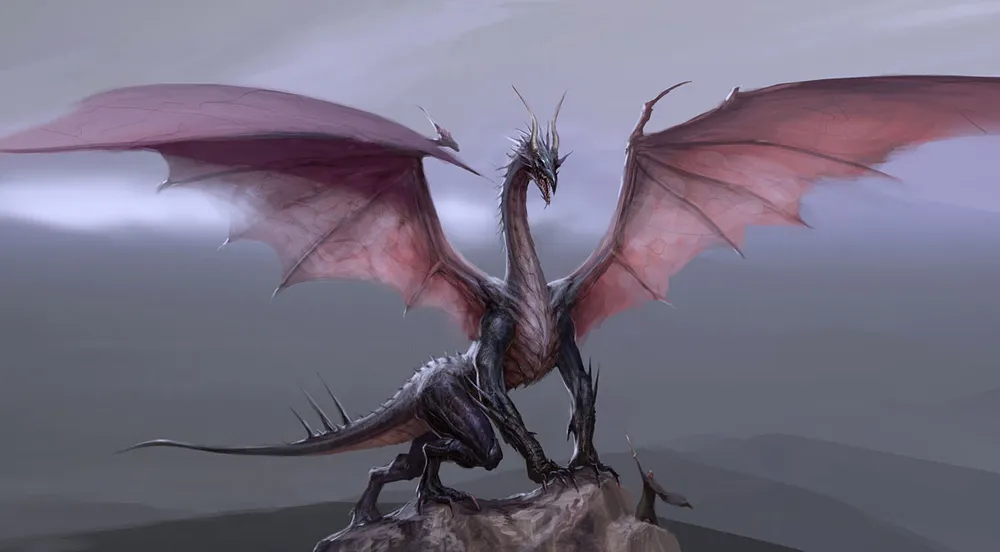
5:20 Just: Grey Warden Garael led an army of Wardens and Anderfels into the city of Hossberg and lifted the siege. Garael gathered Wardens from Orlais, Anderfels, and the Free Marches. In Starkhaven, he formed an alliance of petty kings and teyrns of the Free Marches. Antiva is freed from darkspawn during the infamous battle in 5:24 in the city of Aislege, where Garael dies after defeating the Archdemon Andoral in combat. So many darkspawn perish that he is practically certain they will never return. The Blight continues to be felt in the dwarven halls of Orzammar, ignored by all except the Grey Wardens. Most of them strive to end the war to begin regular trade.
5:37 Just: The first Van Markham, King Nevarra, Tylus, is crowned after asserting that he is a descendant of the son of the Dragon killed in Cumberland. Having been a hero of the last Blight, Tylus managed to awaken patriotic feelings in the western Free Marches against the growing power of Orlais. He showcased his military strength by winning several major battles against the Orlesians, establishing Nevarra as a new, powerful power.
5:42 Just: After the coronation of King Kalenghad in Denerim, the various warring factions of Ferelden finally united under a single banner.
5:99 Just: The Exalted Age ends with the death of Queen Madrigal of Antiva (she was found in the woods during a hunt, pierced by four steel swords, a job reportedly by Antivan Crows). The next age was thus named the Age of Steel.
Ages of Steel and Storm
6:30 Steel: The Qunari invade Par Volen and quickly conquer it, although news of this does not reach the continent until the Qunari ships start a mass landing in Seheron and Northern Rivain in 6:32. The First Qunari War begins and lasts for much of the century. The Qunari's initial successes are great: by 6:42 they had conquered much of the Tevinter Empire, Rivain, Antiva, and began storming the Free Marches. Only Minrathous remains besieged but unyielding in the northern part of the country. By 6:85 the people organized and waged mass uprisings in Tevinter to free the Empire, and the Qunari lines began to crumble. By 7:23, the Qunari have settled in Seheron and Rivain, and are well fortified there. The Battle at the Northern Sea is the largest naval combat in history, with massive ship losses on both sides.
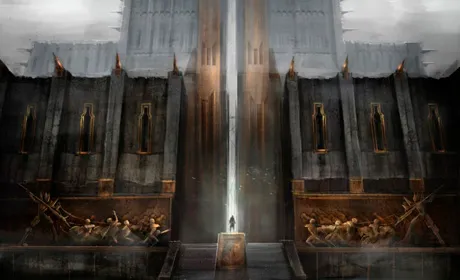
7:25-7:85 Storm: New Just Crusades repeatedly commenced by the Imperial Church (to regain Seheron and the eastern city of Kvarinus) and the church (to regain Rivain). In total, three main crusades were initiated—at 7:52, due to a total disaster (the Qunari seized much of Antiva). By the end of the third new Just Crusade in 7:84, the Qunari were exiled only to the city of Contaar in Northern Rivain and Pal Volen. By the end of the last Just Crusade, the restoration of all destruction was far more important than booting the Qunari from Contaar again. A meeting of envoys from most human lands (except for Tevinter) and the Qunari in Lloimerin to sign the Lloimerin Accord took place in 7:84, formally declaring a truce. There remains no peace between Tevinter and the Qunari, although skirmishes between them have been rare since the Qunari left Par Volen to rebuild.
7:60 Storm: The brutal occupation of Qunari in Kirkwall is defeated by Orlesian forces, who leave Chevalier as the temporary ruler of the profitable trading city. This move is done against the agreement of the allied cities of the Free Marches, as well as many elves, who became full-fledged citizens due to their faith in Kune. Uprisings in Kirkwall and threats from trade partners forced the Orlesians to leave. For the first time, the nobility of Kirkwall could choose their own government, and the first Viscount of Kirkwall was appointed.
7:99 Storm: At the end of the Age of Storms, twins were born to Emperor Etienne I of Orlais, which the Church deemed an omen. The long period of barrenness and fear of civil war upon the emperor's death dissipates with the onset of the Blessed Age, an age of generosity and prosperity.
The Blessed Age.
8:24 Blessed: The Orlesian Empire, under the rule of the "Mad Emperor" Revill, re-invades Ferelden. With the covert support of several powerful banns undermining the kingdom’s defense, Orlais quickly gains a stronghold. The Tower of Vigilance and Amaranthine were seized by the empire, as was Redcliffe, and in the battle at Lothering, King Vanedrin Teirin was slain, and Kalenghad's sword, Nemetos, was lost. Young King Brandel is unable to unify the country alone, resulting in Ferelden plunging into bloodshed and battle for two decades.
8:44 Blessed: The Orlesian Empire finally captures the city of Denerim, celebrating victory in Ferelden. King Brandel goes underground. Although they lost, the king and other representatives of true Ferelden nobility continue to wage a guerrilla war against their oppressors. When Brandel finally dies a few years after the birth of his grandson—Merrick Teirin—the Orlesians crown the "False King," Megrena, although Brandel’s daughter, the "Rebellious Queen" Moira, is significantly more popular and charismatic than her father and continues the resistance.
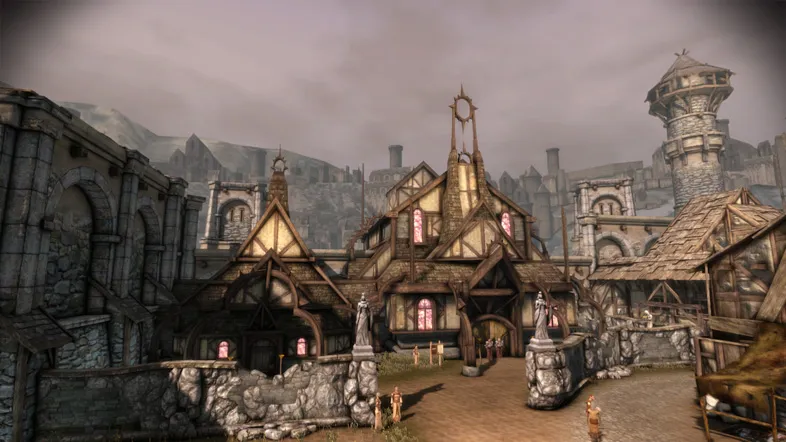
8:55 Blessed: The war between the Qunari and the Tevinter Empire continues as the Qunari land and conquer Seheron in three years. Tevinter is solitary in its struggle against the Qunari, although the peace between the Qunari and the other peoples is very shaky. Several attempts by the Qunari to land on the continent and attack Tevinter have been thwarted.
8:70 Blessed: The war between Nevarra and Orlais for control of the western hills in Perendale ends in Nevarra's victory. However, Orlais managed to incite a rebellion among the locals in Perendale, who were outraged at Nevarra's rule.
8:99 Blessed: In the last few years, two dragons have been reported flying in the Frostback and Orkney Mountains, although it was believed that all dragons had been exterminated by Nevarran hunters in the Age of Steel. The dragons ravaged the rural areas of Orlais and Nevarra, and all attempts to kill them ended in disaster. Despite the destruction, many in Thedas see the return of the dragons as a good omen, while the church claims it to be one of the worst omens. As the Blessed Age came to a close, the next age was named the "Age of Dragons," asserting that it would be filled with violence and turmoil.
8:99 Blessed: Ferelden rises against the occupiers of Orlais. The beginning of the Ferelden uprising.
The Age of Dragons (current)
9:00 Dragon: Led by the young king Merrick, Ferelden successfully rises and liberates Ferelden from Orlais. Ferelden and Orlais officially sign peace in 9:20 after the ascent of Empress Selene to the Orlesian throne.
9:01 Dragon (approximately): The birth of Kaelan, the future king of Ferelden.
9:08 Dragon (approximately): The death of Queen Rovan.
9:10 Dragon (approximately): King Merrick allows the Grey Wardens to return to Ferelden after two hundred years of exile.
9:12 Dragon: Long-lost dwarven cities of Kal-Sharok in the Hunterhorn Mountains are discovered. The dwarves, aggrieved by Orzammar, refuse to submit to the authority of the dwarf king.
9:13 Dragon (approximately): The dwarven fortress of Bonamarr, where the Legion of the Dead is stationed, falls under the weight of the darkspawn.
9:21 Dragon: Lord Marlowe Dumar is appointed the new Viscount of Kirkwall, replacing Perrin Threnhold, the tyrant killed by the templars of the city "for the good of all people." Many noted that Threnhold's abuses met resistance only when he attempted to disband the Order of Templars. It is said that Dumar was in power with the tacit consent of the templars, and that their order became much stronger in Kirkwall during his rule. They became the central force of the Church in eastern Thedas, keeping their Circle of Mages on a tight leash.
9:25 Dragon: King Merrick of Ferelden dies at sea; his son, Kaelan, inherits the Ferelden throne. About a month later, Kaelan marries Anora, the daughter of Teyrn Loghain Mac Tir.
9:28 Dragon: Branka takes her entire family apart from Oghren into the Deep Roads in hopes of finding the Anvil of the Void. Leliana seeks refuge in the church of Lothering.
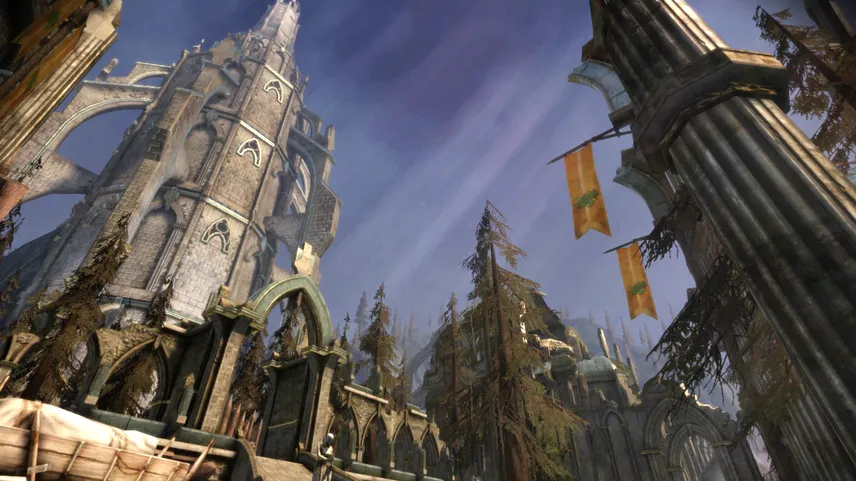
9:30 Dragon: The events of Dragon Age: Origins. The Fifth Blight begins when the Architect attempts to subjugate Urthemiel.
9:32 Dragon (approximately): Urthemiel appears to slay the Grey Wardens in the battle of Denerim.
9:32 Dragon (approximately): events of Dragon Age: Origins - "Awakening." The Architect awakens the Mother, who goes mad and sends her armies of "children" to subjugate Ferelden.
9:32 Dragon (approximately): The Mother is slain by the commander of the Grey Wardens. The dwarves of Orzammar reclaim Kel-Hiroth.
Author's translation.
The chronicle is incomplete as I understand. Some events are not marked. There may be additions.