
The Tevinter Empire. A Kingdom of Slavery and Magocracy
The Tevinter Empire is a nation in Thedas, governed by a powerful magocracy. The leaders of Tevinter are called magisters, and their leader is known as the archon. The Tevinter Empire worshipped the Ancient Gods, who may have taught the magisters the art of magic. According to the church, at the behest of the ancient gods, the magisters encroached upon the throne of the Creator by invading the Golden City of the Creator, defiling it, which led to the first Blight. The Tevinter Empire suffered greatly during the first Blight and subsequently from the invasion of southern barbarians led by Andraste. Now it is merely a shadow of its former power and size.
Excerpt from the Chronicles of Thedas:
1 TE. Establishment of the Tevinter Empire, coronation of the first archon. Before this event, only a few fragments of history are known. It is believed that initially the lands were inhabited by elves, and humans came from other lands—though there are many theories about where from, and only a few of them can be agreed upon by history. Some believe that humans crossed the ocean like the Qunari, but if this is true, there are no records from those times. Humans settled in Thedas in various tribes known as Ciriane, Planacene, Hacian, and Alamarri, but it was the Tevinters, who settled in the port city of Minrathous, who were able to rise.
There are historical accounts of hostility between elves and humans, as well as that Tevinter played a leading role in aggression against the elven city of Arlatan. The elves ceased to contact the humans since then, and Tevinter began to thrive and expand its influence. The first "dreamers" learned to use lyrium to enter the Fade from captured elves. These "dreamers" would later become the first ruling magisters of the Empire.
500 TE: The western part of Tevinter rebels creates Anderfels, mostly inhabited by humans of the Yusandi. The Empire does the same to prove the difficulty of fighting the Ciriane in the south. The result of internal strife was multiple uprisings and civil disorder.
620-640 TE: The first civil war of Tevinter began when it became noticeably removed from the times of its Golden Age. Magisters of various noble houses possessed terrible power but sought to gain even more. Their competition led to human sacrifices and summoning demons became commonplace. When the two largest houses of Tevinter fought for the archon’s throne, the Empire split in two, and many cities turned to ruins, where magical taint is felt even to this day. A Senate was convened to prevent the disintegration of the Empire, but the nobles continued to oppress the people in their attempts to outdo each other.
780 TE: Anderfels is captured by the Tevinter Empire.
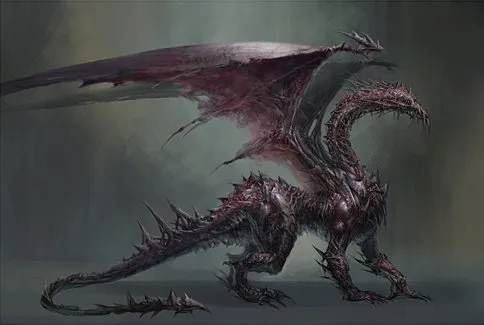
800 TE: The first attempt to free the ancient gods from their underground prisons with the most powerful magic of the magister lords, opening the gates to the Golden City, at the very heart of the Shadow. The result was a catastrophe that destroyed the Golden City and unleashed the taint into the world, giving rise to the first darkspawn. The ancient god Dumati was freed and became the first archdemon. The first Blight began. The darkspawn army launched a massive assault, initially focusing on the deep roads used by dwarves.
The dwarven kingdom began to perish, the darkspawn used the deep roads to spread throughout the continent. All imperial cities were besieged, and chaos ensued. Eventually, the peoples of the Empire grew accustomed to the protracted war and the surges of darkspawn. Communication across the Empire became difficult. The people of Tevinter prayed to the remaining gods to aid them in their fight against Dumati, but received only silence in response. Public faith waned, many temples were destroyed in the unrest, and the people of the Empire began to turn away from the ancient gods, deeming them traitors. This dark period lasted over 200 years.
...
You can read the continuation of the chronicle of the history of Thedas and, in particular, the Tevinter Empire here.
Minrathous
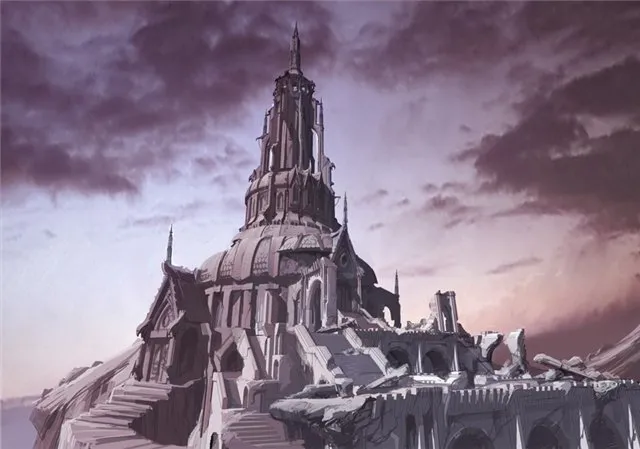
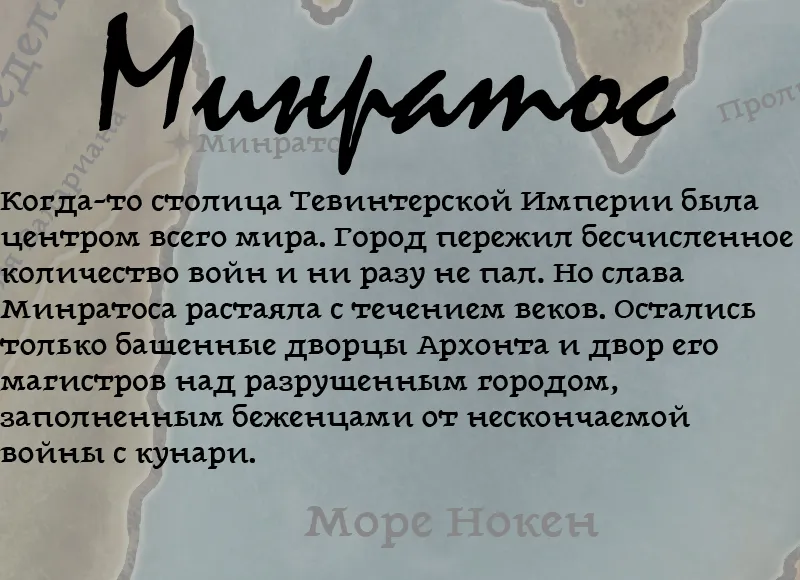
Minrathous is the ancient capital of the Tevinter Empire.
Minrathous is one of the oldest human settlements in Thedas and in the glory days of the Empire, it was the capital of the known world. Governed by powerful magisters and a dynasty of mighty archons, the city was the largest and wealthiest in the world for nearly a thousand years. Guarded by high walls and powerful golems called giants, protected by powerful blood mages, the city became a symbol of the Empire’s glory. No army—whether the hordes of the archdemon Dumati, punitive expeditions, or great legions of Qunari—could conquer the city as long as it was protected by loyal Tevinters.
The fall came from within.
The power-hungry magocracy literally tore the Empire apart in its struggle for dominance. Thus began the first Blight, and the power of the Empire began to crack. Later, when Andraste and Maferath invaded the lands of the Empire, even despite the capture of the prophetess and her burning in Minrathous, the Empire fell.
Now the Empire resembles an aged, gaunt lady who has settled in the north of Thedas and, inebriated, curses everyone and everything for her lost beauty. Upon arriving in Minrathous, a careful observer may notice that it was once the center of the civilized world. Traces of its former glory have not yet faded into the past. But deeper and deeper they sink into the mud and refuse that accumulate year after year in this era of the Empire's decline. The ruling class, consisting of mages, lives in beautiful stone towers, literally rising above the filth where slaves and peasants reside.
The outskirts of Minrathous have been overwhelmed by waves of refugees, exhausted from the endless war between the Empire and the Qunari. Yet the Empire persists. Whether by sword or magic, Tevinter remains a force to be reckoned with. Minrathous has been besieged by humans, Qunari, and even Andraste herself, but no one has succeeded in taking it.
Minrathous was likely modeled after Rome or Constantinople, the capital of the ancient Eastern Roman Empire (Byzantium).
Politics
The Tevinter Empire is still governed by a strong magocracy. This is generally condemned by other nations. The nobility abuses its position, and slavery thrives. The Empire is a center for black markets, smuggling (including the harboring of runaway mages from other countries), and slavery. Though it is just a shadow of its former glory, the Empire is still a powerful nation with significant military strength. It could turn against the southern lands if not for its constant war with the Qunari.
The Empire attracts a diverse array of soldiers from all corners of its territory, creating an impressive army. Most notably is the usage of elephants, which were imported to Tevinter centuries ago from coastal colonies near the northwestern jungles, as well as three massive battle golems acquired from dwarves and known as Juggernauts.
The Empire has maintained good relations with dwarves since the time of Archon Darinius.
Slavery
Slavery is an established system that has its roots in ancient Tevinter. After the elven homeland was conquered and destroyed, and the elves enslaved by the Empire, they were despised by ordinary people. Gradually, the institution of slavery was eradicated; however, it currently manifests in the existence of elven slaves and other forms of discrimination directed against elves.

And it seems a slave has a personality.
Struggle for Freedom
When Andraste attacked the weakened Empire, she liberated most elven slaves, who joined her and fought under her banner against their former masters.
Slavery in Modern Thedas
Currently, slavery is practiced in the Tevinter Empire. It is one of the few places where elves are still slaves in the literal sense (as opposed to elven slaves who are technically not slaves but are usually accepted into the lowest-paying and most undesirable jobs in the bottom of society), and it is common for elven slaves to sell themselves or each other into slavery to provide for their families. Thus, the status of an elven slave in the Empire is slightly better than in other countries. Slave hunters can capture elves from other lands (where, for the most part, slavery is illegal) and smuggle them into Tevinter, but those caught doing this are executed as a warning to others. Elves who have been sold on the black market are considered "non-contracted" elves and have the worst living conditions.
Although slavery is illegal in Orlais, wealthy nobles can still own elven slaves. In recent years, however, laws against slavery have been enforced more strictly. Empress Celene has played an important role in this policy change.
The Imperial Chantry
Some say that the Chantry is the same everywhere, that the Grand Priestess in Val Royeaux holds the highest authority in the eyes of the Creator, and that this is not questioned throughout all of Thedas. Do not believe it. The second commandment of the Creator, "Magic is meant to serve people, not rule them," was always understood differently in ancient Tevinter than in other lands. The Tevinter Chantry interpreted this commandment as: mages should not control the minds of others, and in all else their magic should serve the rulers to the best of their abilities. When the clerics of Tevinter altered the Song of Light to reflect this interpretation of the second commandment, the Grand Priestess in Val Royeaux ordered them to return to the original Song. They refused, declaring that it was Val Royeaux that was at fault for the distortion of the Song. This dispute lasted until 4:87 of the Tower Age, when the Tevinter Chantry elected its High Priest—"legitimate and righteous" Valhael, who, not only was he not male, but also turned out to be one of the most influential members of the Tevinter Circle of Magi. This "Black Priest" was angrily condemned everywhere outside of Tevinter, and his very existence became a grievous offense to the Chantry of Val Royeaux.
After four Sacred Marches against the "rebels," the Chantry in Val Royeaux achieved only one—entrenching the split. While many aspects of Andraste's teachings align in both Churches, the Tevinter Chantry has loosened restrictions on magic, and its ranks are dominated by male clerics. Today, Tevinter is ruled directly by the Circle of Magi—after, in 7:34 of the Storm Age, to universal rejoicing, a mage named Nomaran was elected archon.
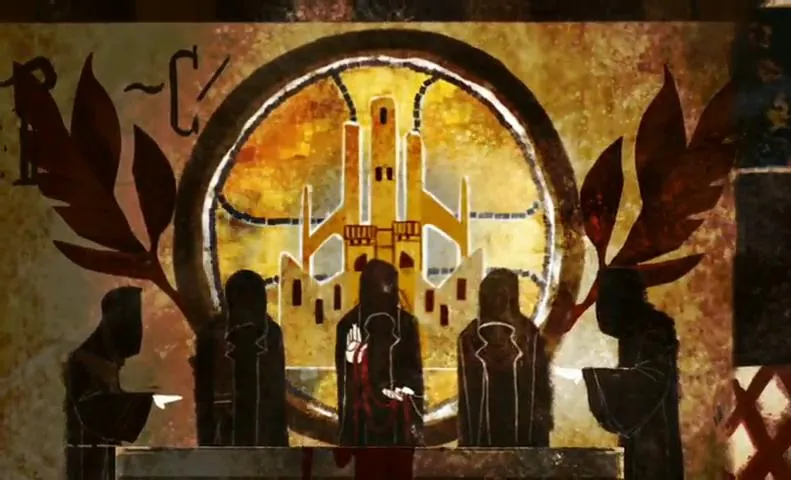
Gold rush. A city, golden, let it be served!
He has loosened the previous rules that forbade mages from engaging in politics, and in less than a hundred years the true rulers of the country from various imperial houses (i.e., mages) openly took their place in the government. From now on, the High Priest of Tevinter is elected only from among the first mages and combines the office of High Priest with that of Grand Mage.
To every servant of the church (except for the Tevinters themselves) this is the greatest heresy, a return to the days of the magister lords who spawned the Blight. However, this state of affairs remains unchanged, and while we even cast the Tevinter Empire to the mercy of terrible Qunari, Tevinter stood firm. An open confrontation between the "Black Priest" and our so-called "White Priestess" is inevitable.
The Imperial Language
Arcanum - the official language of the Empire, was created as a potential distant ancestor to English.
The Tevinter language is prevalent with elven words, one of which is "fen" - "wolf". The root of the Tevinter word "fenrir" is similar to the root of the elven god's name "Fen'Harel".
Ei vento nai mordoi deid: I do not want to kill you.
Tir-ev-e ei-l-ud degit-ud: Pull my finger. (Don’t procrastinate)
Na via lerno victoria: Only the living know victory.
Festis bei umo canavarum: I will be your death.
In the second example, (-l) is the genitive case, or possessive. (-ud) is accusative, a direct object. 2 allomorphs: (-d) and (-ud) are based on epenthesis, to avoid consonants. The suffix (-ev) is imperative, a command.
The suffix (-e) is a marker for second-person agreement. English has a kind of "residual" agreement systems, especially in old forms of the verb, for example, "to be." Consider: I "am," but you "are" and he "is." Or in some dialects: I "be," you "be," we "be." From the language above, however, (-e) indicates that the subject of the verb is second person ("you").
You can learn about the elven language in the corresponding thread.
Notable Tevinters
Kaladrius
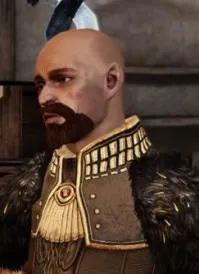
A blood mage with whom the Warden will face in his struggle against the Blight.
Kaladrius is the leader of the slavers in the quest "Turbulence in the Elvenage," which the Warden must investigate. He has documents proving Loghain's involvement in the slave trade, which the Warden needs. You can negotiate with him or engage in combat. Negotiation involves purchasing a letter of Loghain's involvement and agreeing to release the mage along with the elven slaves. Most companions will disapprove of this choice. If you refuse Kaladrius's negotiation and defeat him in combat, he will offer a "gift"—to use blood magic to kill all the elven slaves to enhance the Warden's health. Companions will largely not be pleased with such a sacrifice, which will give +1 to the Warden's constitution.
Devera

Devera is an elf working for the Tevinter blood mage Kaladrius.
Upon first entering the Tevinter warehouse during the quest "Turbulence in the Elvenage," Devera will confront the Warden and challenge him. She can be intimidated into fleeing with her gang of thugs, or she can be killed on the spot. If intimidated, she will run away and return in battle with Kaladrius. She drops the "bow of the golden sun."
Eleni Zinovia
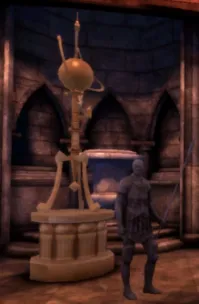
The essence and soul of Eleni Zinovia are met during gameplay as a mage Warden. She was turned to stone for prophesying the fall of House Valerius. David Gaider has confirmed that she will return, possibly explaining her disappearance from stone.
Once the wife and advisor to the archon Valerius of Tevinter, she used her gift of prophecy to warn him of the fall of the house, and thus was cursed and turned to stone because the archon did not believe her words. The statue was displayed for all to view before his fortress, so she could tell lies to all who came, but her prophecy proved true, and Valerius fell at the hands of his foes.
It seems that Eleni knew the punishment she would receive for her stance, but accepted it, as she states that becoming a statue is her demise and her fate.
She returns in "Witch Hunt," still as a statue, a source of information about Eluvians and where to find the lights of Arlatan. She tells Finn that they will no longer communicate, possibly implying that her spirit can finally rest.
Danarius

Act I
Fenris tells about his former master, mentioning that he used Fenris to "scare other magisters," showing off his lyrium tattoos. Upon the first encounter with Fenris, he will ask Hawke to help him find Danarius by assaulting a mansion in the upper city. However, by the time Fenris and Hawke reach the mansion, Danarius will have already left the city.
Act II
If Hawke has enough influence over Fenris, he will recount his past with Danarius. He will note that Danarius valued him and did not want to lose his precious investment.
While traveling the outskirts, Hawke and Fenris are attacked by mercenaries sent by Danarius's assistant—Adriana. Whether Danarius orchestrated this attack or not is unknown.
Act III
During the personal quest "Loneliness," Hawke and Fenris come to the "Gallows" to find Fenris's sister, Varanya. It is at that moment that we finally encounter Danarius, who has set a trap for his slave. Seeking to regain his property, Danarius offers Hawke to deliver Fenris to him. Hawke can agree or refuse. If he agrees, there will be a fight, and Fenris will kill Danarius.
If Hawke delivers Fenris to Danarius, a letter will arrive stating that Fenris's memory has been wiped again.
Adriana

Adriana is a Tevinter magister. She came to Kirkwall to capture Fenris. When Fenris was a slave and she was Danarius's apprentice, she abused him, depriving him of food and sleep. She appears in the quest "Bitter Pill" and is killed by Fenris, telling him about his sister, Varanya.
Fenris

A former slave of the Tevinter magister Danarius.
Companion of Hawke and a potential romantic interest for the hero of any gender.
He is detailed here.
Orana
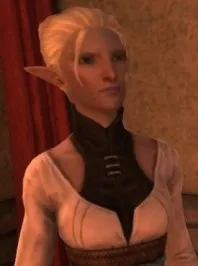
Orana is a slave of Adriana, a Tevinter magister who arrived in Kirkwall to capture Fenris.
Orana encounters us while searching for Adriana, during the quest "Bitter Pill."
Orana will tell Hawke that Adriana killed her father with blood magic, explaining that she needed his life to gain more power. Hawke can free Orana and give her gold, or he can take her home as a slave or servant. In the estate, during a conversation with Orana, she can be let go for free, without spending any coin. You can also release her if you ask her to consult her mother for help. Later, her mother will say that she sent Orana to the church.
If Merrill lives with Hawke, Orana will teach her music.
Varanya

Varanya is Fenris's sister. They grew up together until Fenris agreed to participate in an experiment in exchange for the freedom of his mother and sister. Varanya became free, but had to endure many hardships after their mother's death. Fenris learns about Varanya in Act II.
Adriana tells Fenris during his personal quest "Bitter Pill" that he has a sister and offers more information in exchange for her life. Fenris, whose memories were wiped by Danarius's experiment, agrees, but still kills Adriana. She reveals that Varanya is still in Tevinter, serving at the court of Magister Ariman. When asked if she is a slave, Adriana replies no; Varanya is a servant. Adriana omitted that Varanya is a mage and is trying to apprentice to one of the magisters of Tevinter.
Danarius, Fenris's master, used Varanya to lead Fenris into a trap. The magister promised her that if she helped capture her brother, he would make her his apprentice to eventually become a magister. Fenris can kill her or let her go. As she leaves, Varanya will say, "You said you didn't ask for this, but that is not true. You wanted this, you fought for it. Freedom was not a selfless gift. Now I look at you and realize that you gained the most from it."
Something Else.
- Writer David Gaider stated that the Tevinter Empire is partially based on the real Roman Empire, especially in its later Byzantine period. They share several similarities: The Roman Empire executed Christ for heresy, just as the Tevinter Empire executed the prophetess Andraste. Just as the Byzantine and Roman Catholic Churches conflict with one another, so too do the Imperial and Orlesian Churches deny each other. Tevinter underwent several punitive expeditions, just like in the Byzantine Empire—the Crusades. Finally, Tevinter fights alone against the Qunari, just as the Byzantine Empire fought alone against the Seljuks and later the Turks for five centuries.
Author's text and translation.
Thank you for your attention ^^