
Guide to Morrowind
I decided to write a brief guide to the regions of Vvardenfell, and I'm doing it all myself; I'm taking screenshots myself too, so please don't spit or hit me for mistakes. Essentially, I'm writing this while the game is minimized, and the text will be typed as I enter each of the areas.
So, we begin our acquaintance with Morrowind in the village of Seyda Neen, located in the Bitter Coast region. What is remarkable about this area? See for yourself:
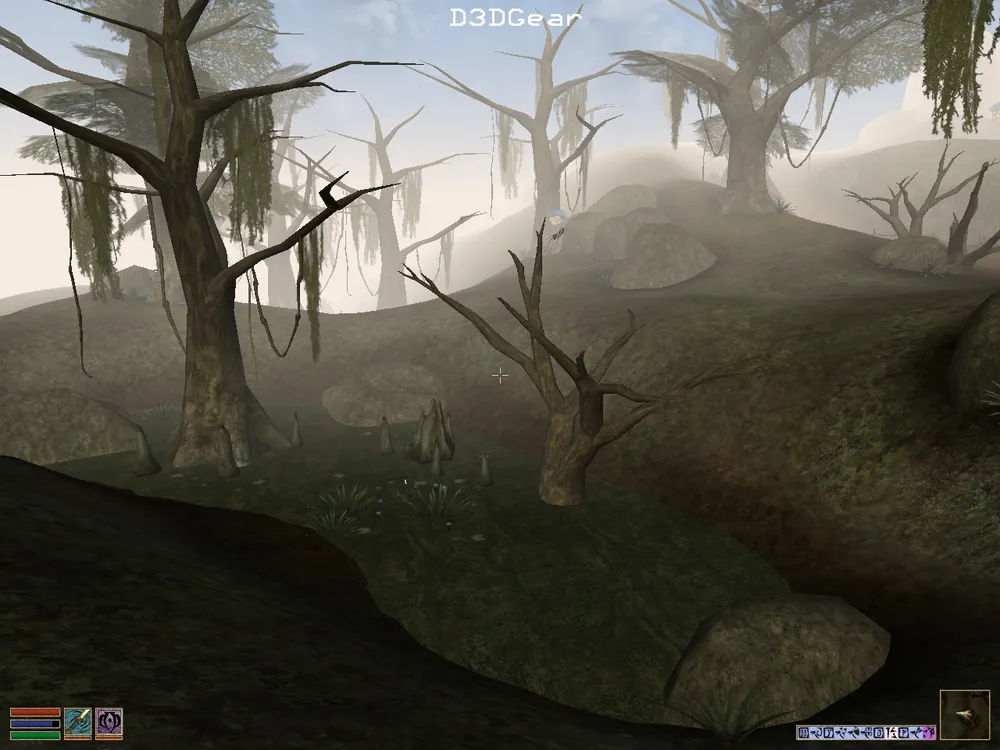
And what do we see here... copulating Netch, rats, cliff racers (in fact, we see cliff racers everywhere, so I won't mention them further :)), crabs, and other insects and herbivores... the flora is not particularly diverse: some tree trunks, hanging vines, little flowers in the green swamps... overall, this place is suitable for novice mushroom hunters and alchemists, as almost all plant ingredients (or at least the majority) can be found here.
The next city we reluctantly visit is Balmora, belonging to House Hlaalu and located in the West Gash region... you could say it’s our middle strip, with the only difference being that there is no snow there in winter.
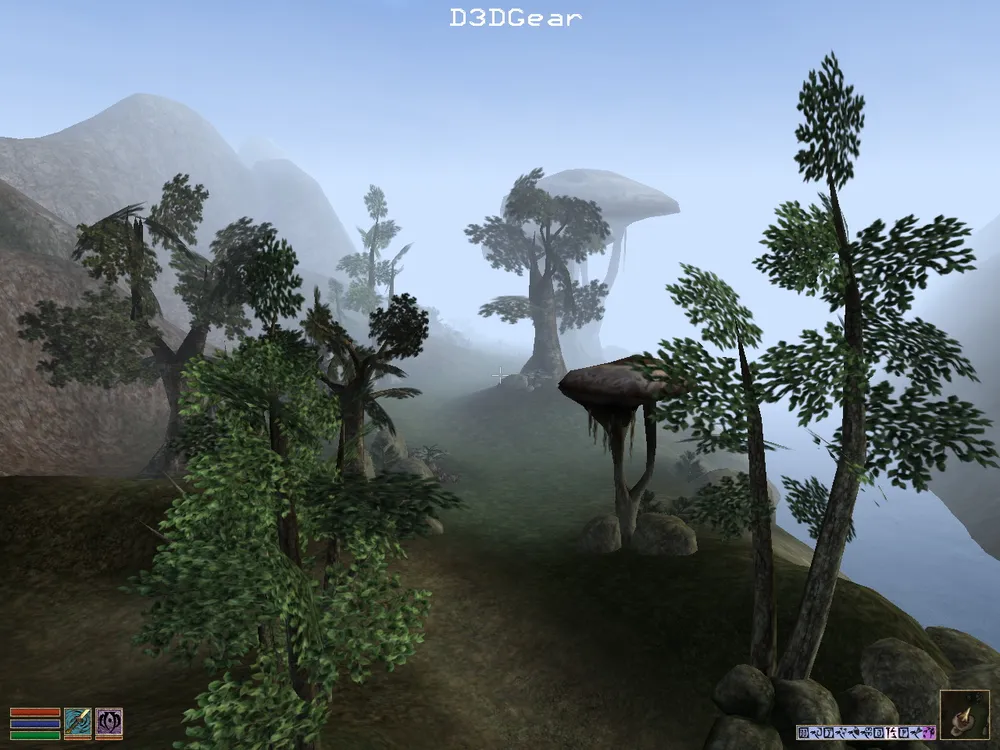
Neither the flora nor the fauna here is particularly impressive... the most common plant is the stoneflower and the choking vine, especially around Caldera. The wildlife is not very friendly: wild Guars, Kagouti, rats. Only the Netch leave us alone :)
Next, I will describe the Red Mountain region.
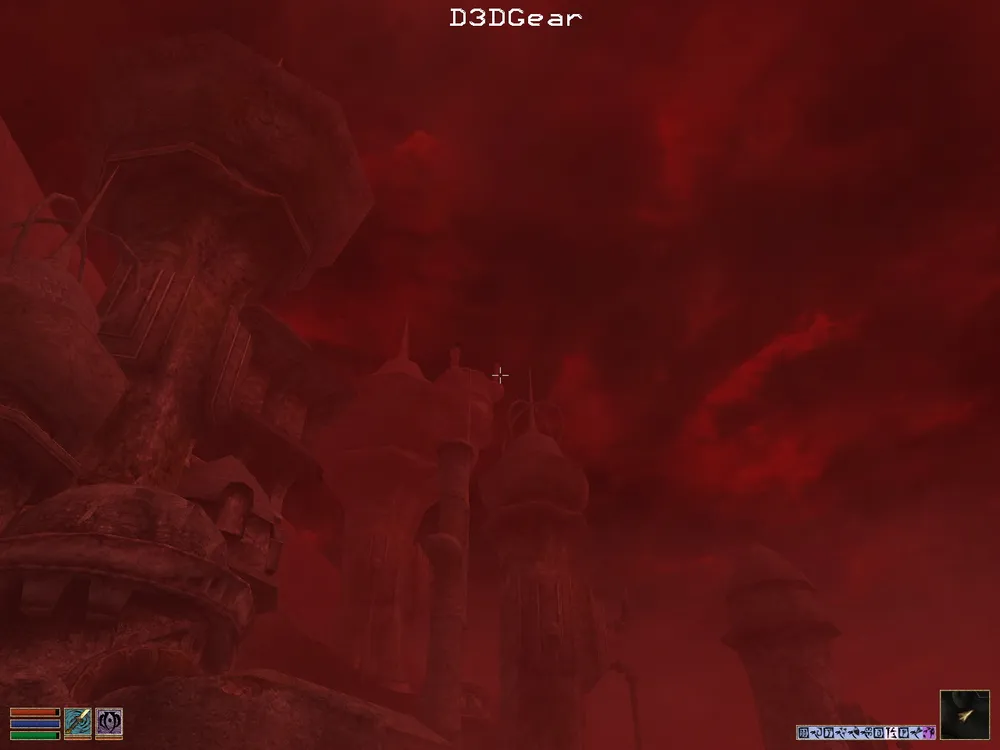
As you can see from the color of the sky, it’s not a particularly friendly place (at least until we complete the game). The flora here is, to be frank, non-existent, except for dry tree trunks (which apparently grew when the Tribunal gods were still in existence). The fauna is also disappointing: Ash-Storm Cliff Racers and Ash Rats... And not to mention, unfriendly humanoids wandering the mountains (both corpus creatures, risen sleepers, and ash zombies).
Now let’s turn our eyes and head to the Ashlands region... another area not particularly remarkable in terms of natural attributes. The climate is not very resort-like, the sun rarely breaks through the dust and ash (or whatever else is there). The terrain is dotted with uneven surfaces and boulders sticking out of the ground, akin to Stonehenge. The plants encountered include lichens and ferns... much like during the Jurassic period.
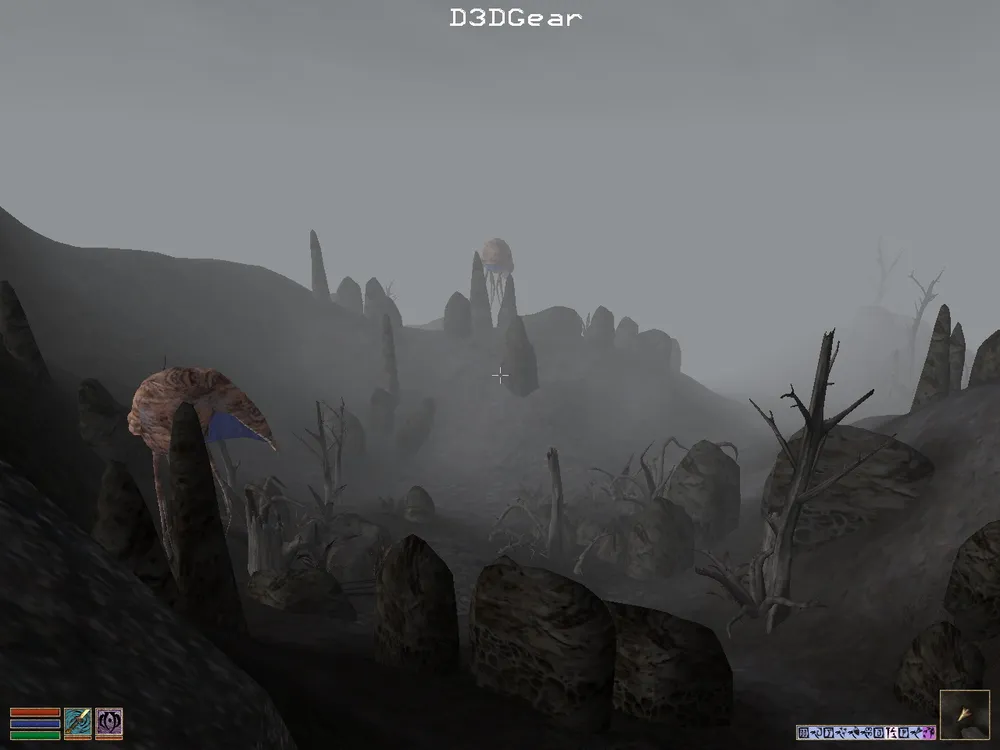
Despite such an unfriendly climate and atmosphere, the wildlife here is richer than anywhere else: there are Guars, Netch, rats, and Shalks with Scribs, and Kagouti... probably the greatest variety is found here, so hunting enthusiasts will have plenty to feast on.
The next region in our sightseeing tour will be the Graze Lands. A rather pleasant area where the sun shines, and the concentration of creatures per square kilometer is quite low, which makes our travels easier. Notably, various Daedra are scattered across the map in this region, as well as holy beings, Ogrim, and hungerers, although there are no ruins marked within a two-square radius.
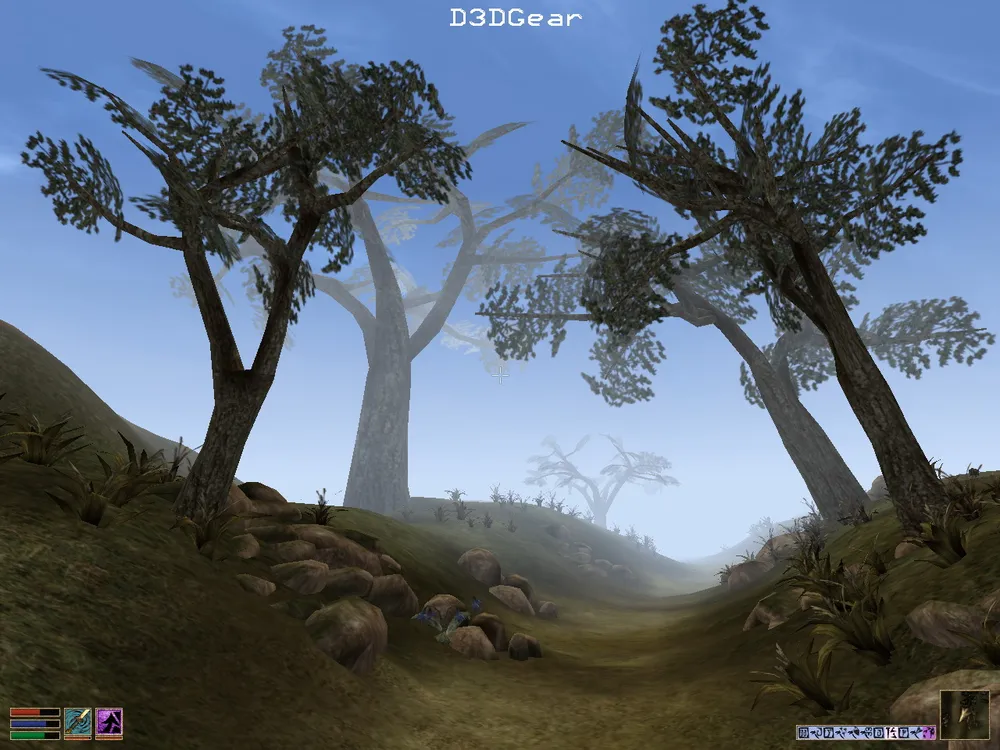
The flora is similar to that of the West Gash region while the fauna resembles that of the Ashlands. By the way, both the Ashlands and Graze Lands have quite unfriendly Ashlanders who are ready to slice you with spells and physical weapons!
Now let’s head south from the Graze Lands - to Molag Amur. This rather colorful region resembles Kamchatka. There are steams, geysers everywhere, and in some places, magma erupts to the surface.
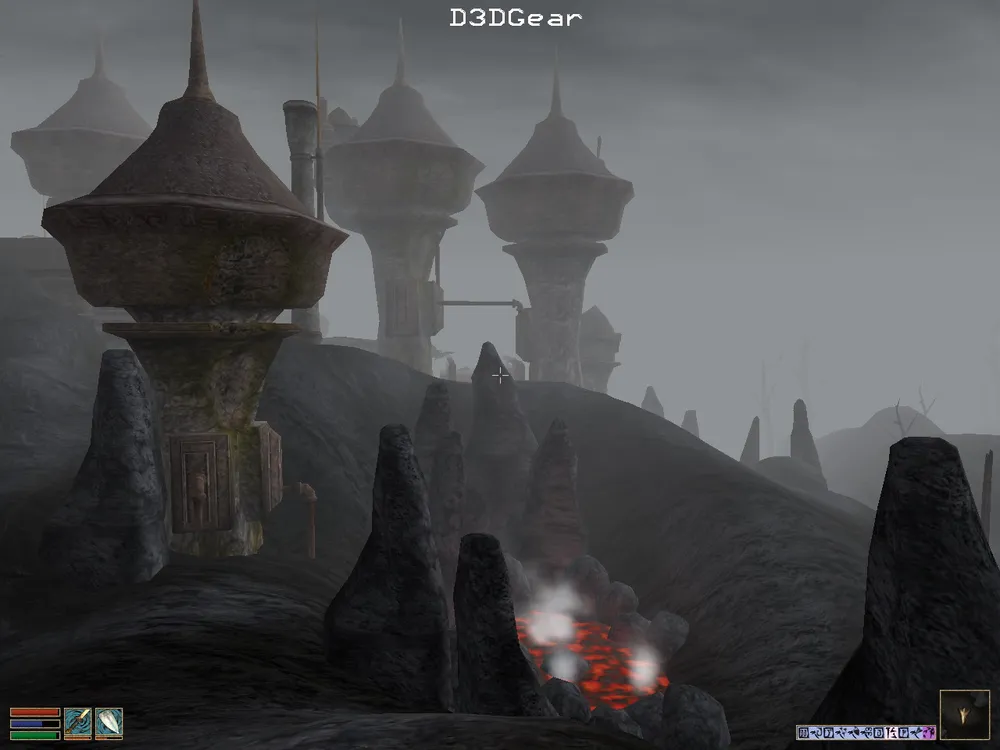
The flora is similar to that of the Ashlands, while the fauna resembles that of the Graze Lands, primarily insects and Daedra roam about. The landscape is uneven, and in many places boulders protrude, so be careful not to fall into the lava while navigating down a hill!
To the west of Molag Amur lies, in my opinion, the most picturesque region of the island - the Ascadian Isles. Here the sun shines most of the year, rain falls rarely, and the greenery is such that you can hardly look away. And there’s wildlife just like in the Bitter Coast region... well, see for yourself - it’s beautiful.
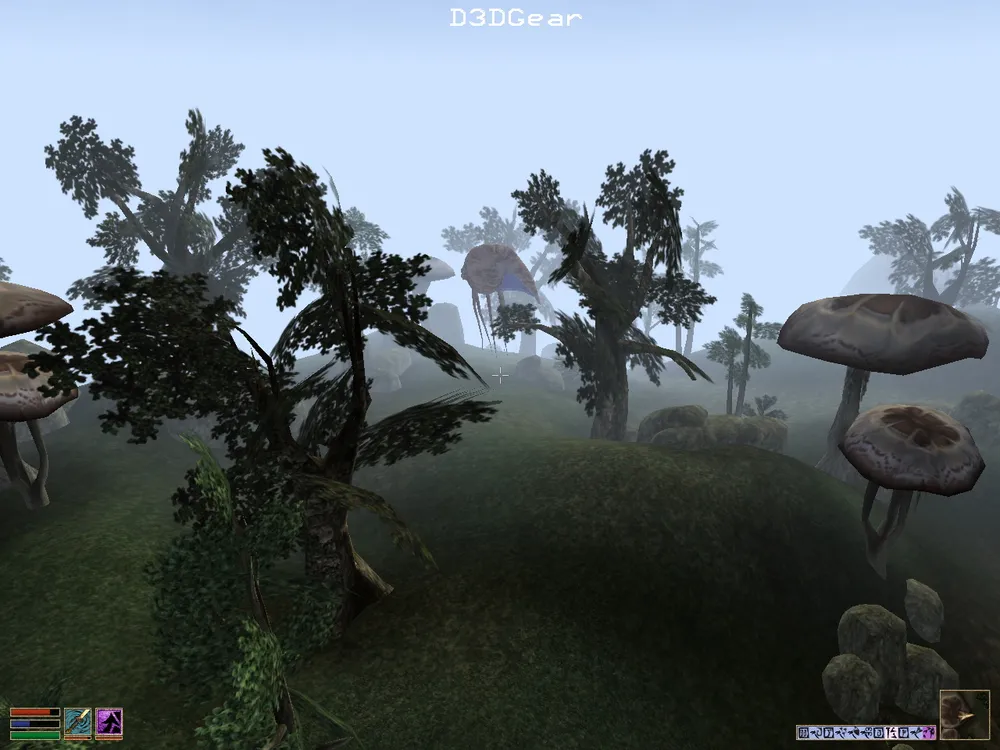
And so, the last region on the list but not in beauty and significance: The Azura Coast region. This region is the land of the rising sun, where the days are the most beautiful and the nights the most starry. The concentration of creatures per square kilometer is quite high, so equip yourselves accordingly.
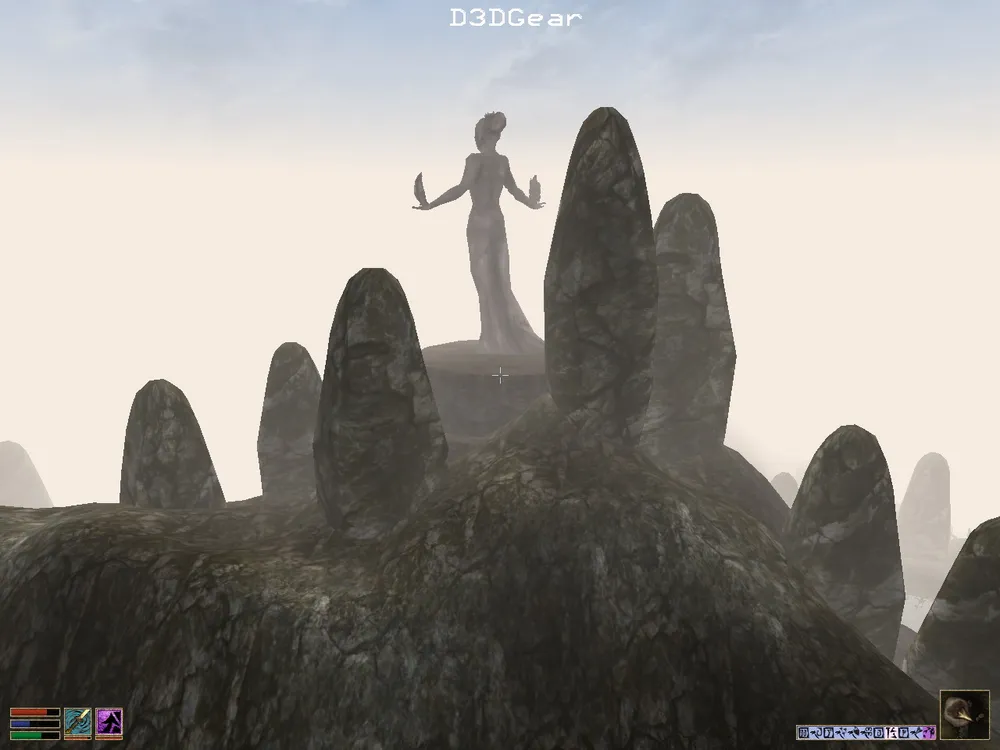
That’s all from me. Thanks to the Boots of Blinding Speed - this post was written in less than two hours. And another thing: a question from the author (that is, from me) to those who read so many letters and words and managed to get through this text:
Does everyone remember where the island of Solstheim is located in relation to Morrowind? And does everyone remember where Morrowind is located in relation to the province of Cyrodiil? Correct, Morrowind is located to the north, and Solstheim even further north. So why is it snowing in the northern part of Cyrodiil (the city of Bruma is remembered to be located there) even though it is much further south than Solstheim, while in the southern or at least the middle part of Morrowind - there is none, while they are approximately at the same longitude?