Overview of Star Wars Battlefront II

Prologue — Clone Profession
The first part (*Battlefront*) is almost a blatant clone of *Battlefield*, as the developers did not want to waste time and reinvent the wheel. The action simply takes place in a different, parallel universe. The second part, which this is about, brings a bit more personal charm and freedom for the player. But despite this, it still resembles a more successful game that is unlikely to be displaced.
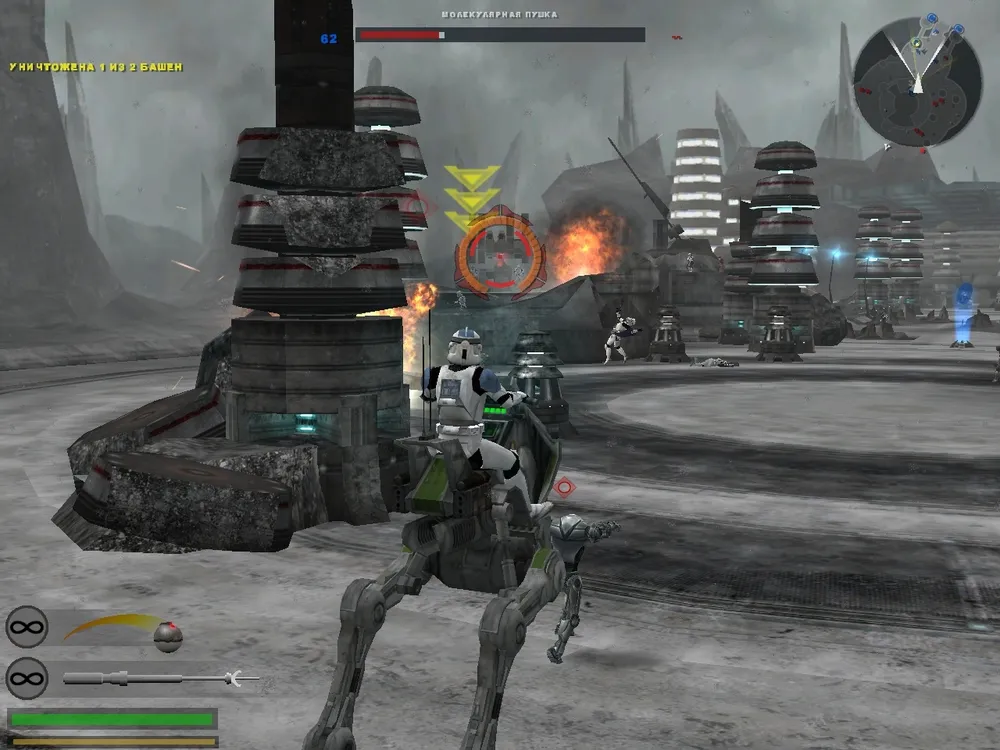
I would never climb into such a contraption in my life
Episode I — The Horn of Plenty
Battlefront 2, unlike its older brother, is filled with all sorts of events from the movie (especially from the prequel trilogy: can't argue with that). There are even a few video inserts.
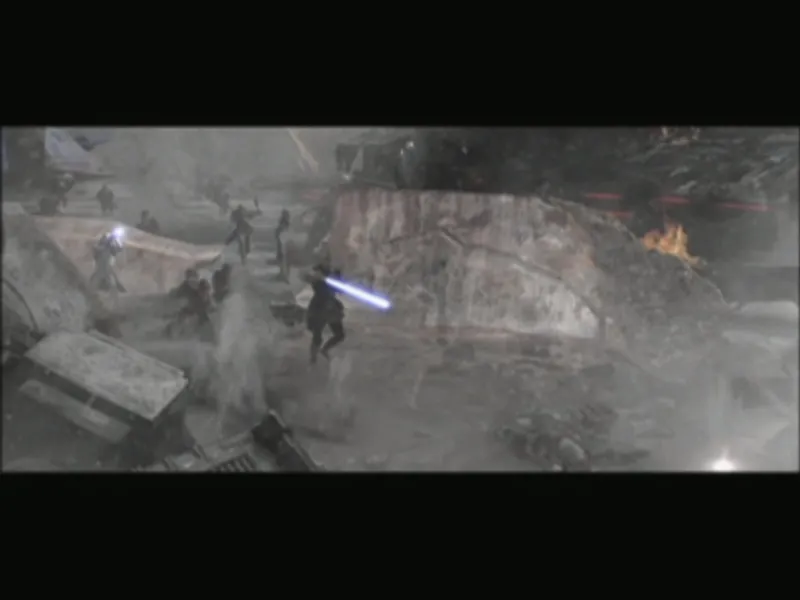
Frames are mainly from Episode III. No longer than 5 seconds
The PC version, compared to its console counterparts, has a modified interface, improved graphics, and changed controls. The sounds that every fan recognizes are of good quality. Overall, the game isn't difficult to master. A newcomer just needs to go through a brief tutorial, and they will be aware of the simplest aspects of the game.
I consider the main innovation to be playable heroes: Jedi, Sith, etc. Existing classes have been improved. The larger variety of vehicles, compared to its predecessor, was also a pleasant surprise: tanks, walkers, gliders, and aerial vehicles. When you first enter the hangar, your eyes might widen: what to choose?
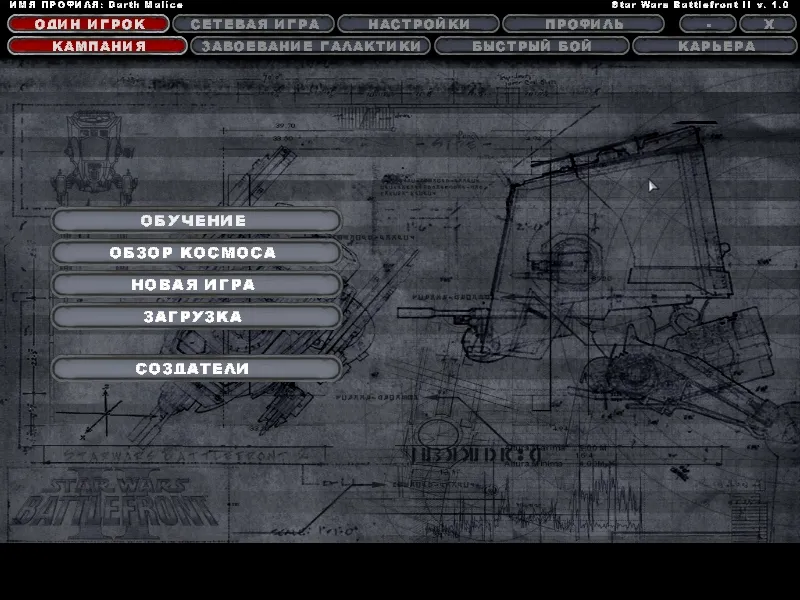
Main menu — cozy and understandable
Episode II — Rise of the Empire
Personally, I’m not a huge fan of multiplayer modes (please don’t throw stones at me), so I was very pleased that Battlefront 2 introduced a decent campaign mode (which kept me engaged for a long time). The “main character” of the narrative is the great and powerful *501st Legion* of the Republic's clones (later the Empire's stormtroopers), which played a significant role in the Clone Wars and was fighting well over a century after the fall of the Galactic Empire.
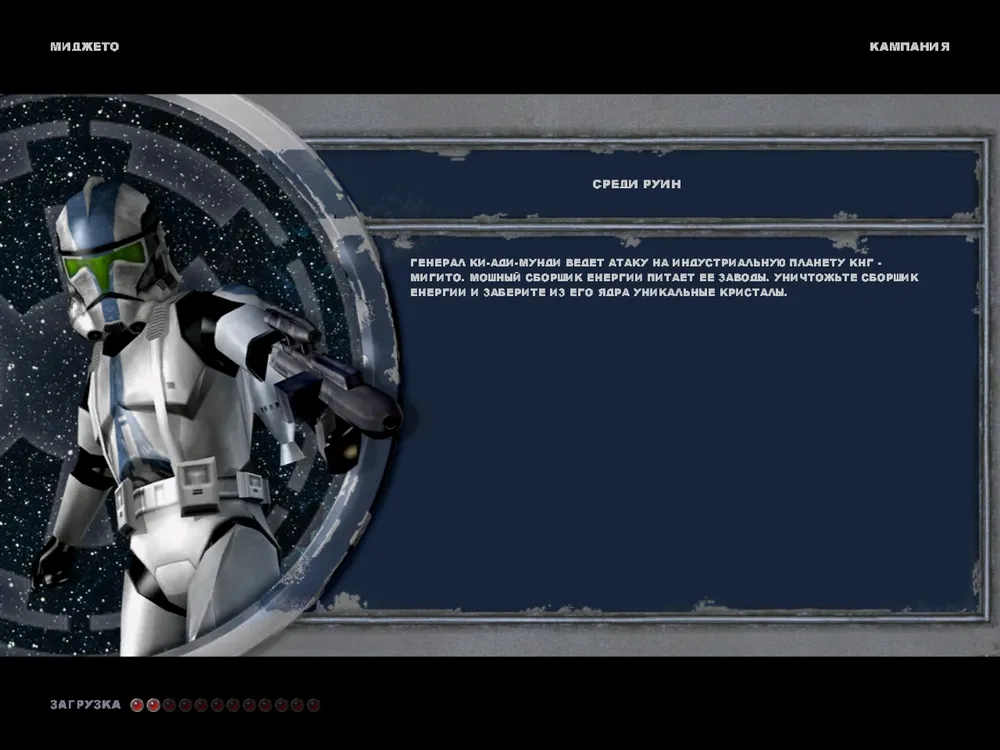
Before each mission — a brief briefing
Unfortunately, there are only 10 missions (the last describes the battle on Hoth, Episode V), but that doesn’t mean they are easy to pass. The tasks aren't the most sophisticated, but they won't let you get bored, and will even teach you to act as a team and think through tactical maneuvers. There is always a not very large unit limit, which can run out at the most inconvenient moment. Also, many missions are time-limited. On each map, you need to complete several tasks that reveal the narrative but aren't covered in the films. The most disappointing thing is that just as you start to adapt to the enemy and study the map in more detail, everything comes to a swift end. Another significant downside is the lack of motivation for replaying — no bonuses or new levels to uncover. What a pity...
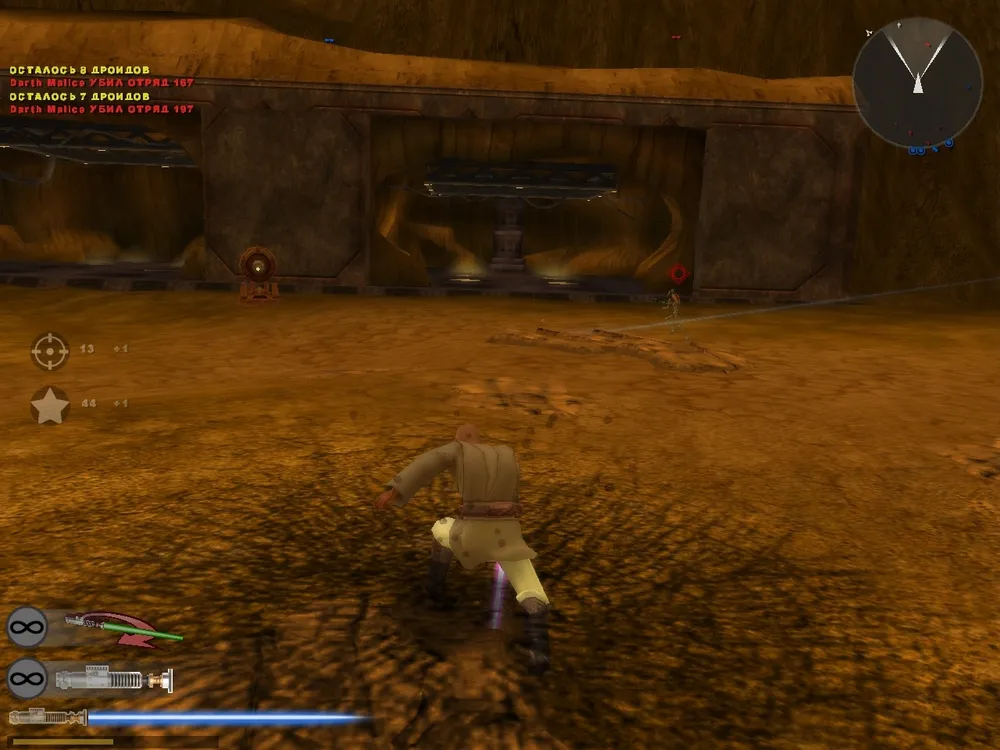
Mace (Eng. — hammer). We believe
Episode III — Anything else?
In addition to the main campaign, there are two additional modes (besides the training for newbies): Quick Match and “Conquest of the Galaxy”. The first is merely a training mode for multiplayer battle enthusiasts. You set the preferences (number of troops, time available for the hero, small settings for various modes), choose a map, a side to fight for, a soldier class, and off you go — to shred the enemy.
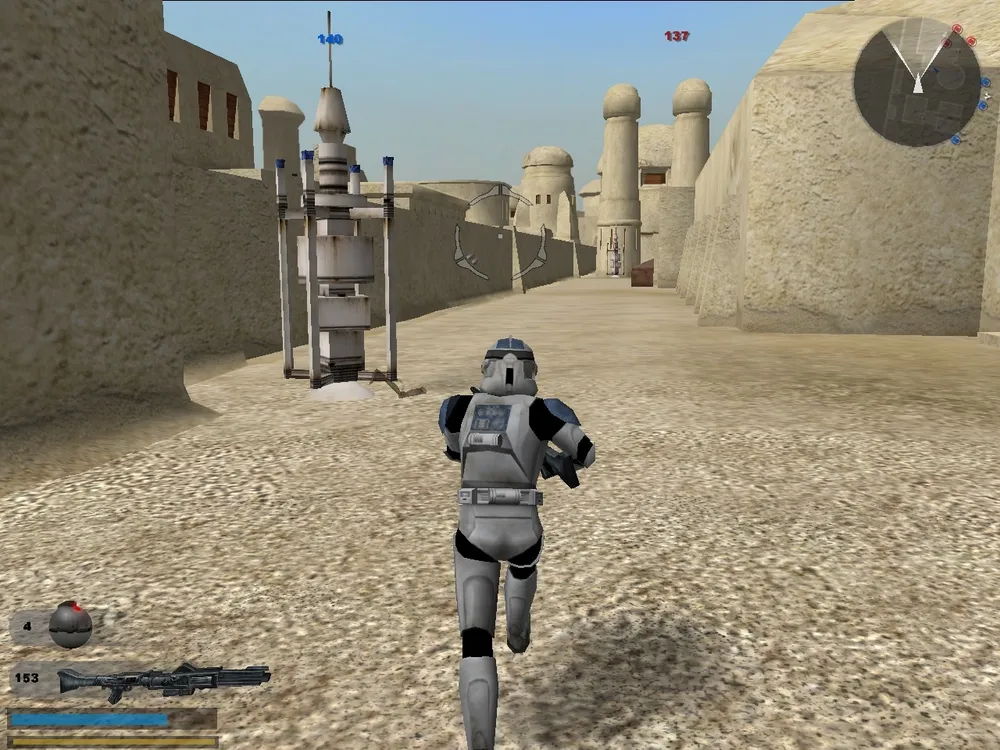
A third-person view is available, but it doesn’t deliver...
I personally consider the second mode to be the best idea in the game. Here, given: the SW galaxy, two time periods (the Clone Wars and the Galactic Rebellion). The task: conquer the galaxy by destroying enemy forces. The playing field consists of several planets, divided between the player and the computer. Movement between planets is done by a fleet (essentially consisting of just one flagship).

The galaxy is small, but it’s enough for a couple of evenings
If two fleets meet in orbit of a planet, a space battle begins (which will be discussed separately). If the orbit is empty, troops are deployed to the planet's surface. There's nothing complicated: battles unfold just as they did in the first part. A few checkpoints- respawn points, several specializations, a “limit” of units, medical droids, plenty of vehicles, and interesting maps (though somewhat simplistic). You can win in two ways: capture all control points and hold them for 20 seconds or reduce the enemy's unit limit to zero (starting value — 150).
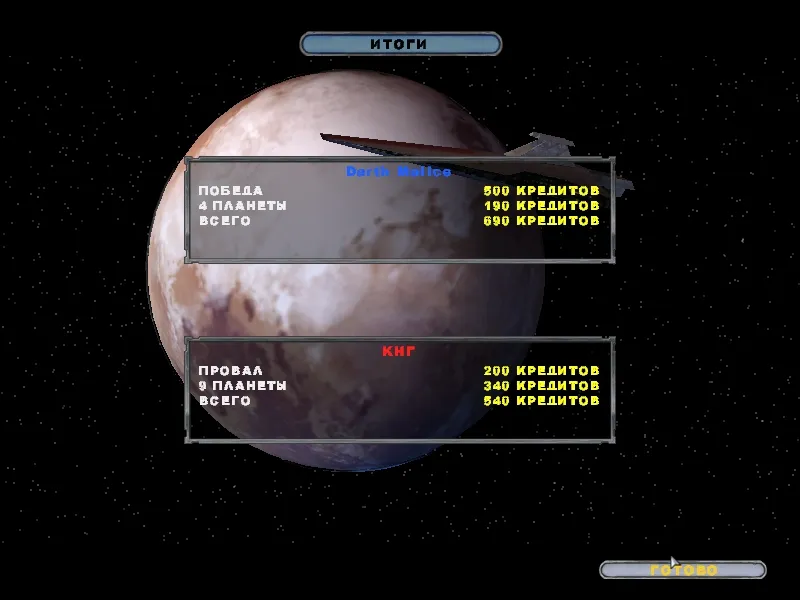
Not that many, but enough to feed the fighters
At the end of the turn, the player receives income, depending on the number of planets (the more planets, the higher the earnings). After victory, there's a monetary reward. With the credits earned, you can unlock additional units (only a couple are available at the start) and buy bonuses (whether they be additional supplies, reinforcements, a hero, etc.). Overall, this mode can even be called a FPS with elements of turn-based strategy (as the player and computer take turns on the galactic map).
Episode IV — Come get me jedi!
In the game, besides ordinary classes, there are so-called premium classes (assault troops, droidekas, Wookiees, etc.) that can only be unlocked in battle by earning a certain number of points (which can be earned by defeating enemies, capturing control points, and flag capture in CTF mode). They were added to the game more for flair than for utility in battle (see the first point of the review). More primitive classes do all the grunt work, bringing their efficiency close to 100%, while the premium classes can even be difficult to handle: what's what, and their controls are inconvenient.
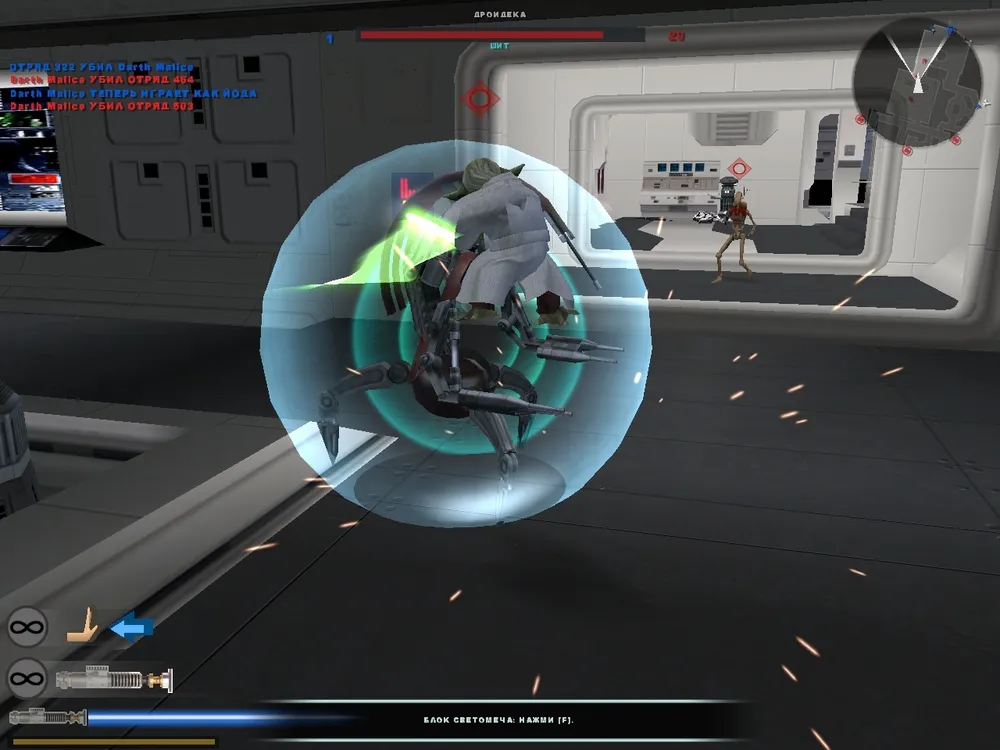
Small but fierce ©
But the game also has another special class — heroes. These are key (and not-so-key) figures from the film saga, from both Fett’s to Obi-Wan and Darth Vader. While Fetts, Han Solo, and Leia Organa still fit into the overall concept of