
The Witcher Chronicles
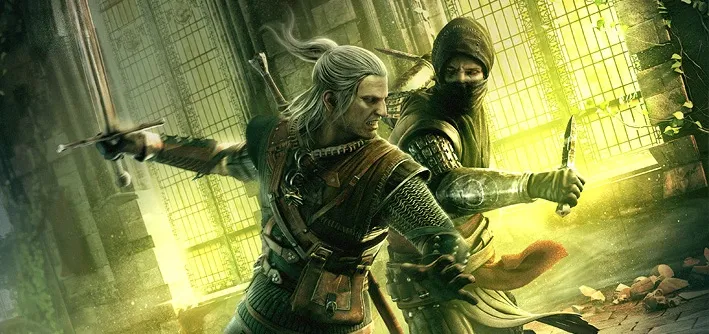
There is simply Evil and Great Evil, and behind both of them hides Very Great Evil…
Renfri, the bandit
Andrzej Sapkowski for Poles is like… well, let’s say, Rowling for Harry Potter fans. He is the top fantasy author (or rather, the best) in the whole country, the most read and discussed. Who would have thought that initially, Andrzej Sapkowski's world was a work resembling, how can I put it, a historical fairy tale? A world where people had familiar names, lived a habitual life, coexisted with a realm of fairy creatures – elves. Yes, I mentioned these beings to you before, and an uneducated person might immediately think that the elves here are kind creatures, as in many other fantasy universes (let's take Tolkien's elves, for example). But no, gentlefolk, the situation is quite different here.
It’s no surprise that Sapkowski's stories have gained such wild popularity around the world (I’m lying, not all over - his novels and stories are published in Czech, Russian, and German (maybe I missed some others, please point that out); the rest of the citizens of planet Earth had to learn foreign languages), ensuring the author lifelong loyalty from fans of fantasy literature. This universe has a very deep and well-developed literary foundation, delving into the details of which is not an easy task for many. More precisely, for a person captivated by the works of the author of The Witcher, it will be incredibly fascinating to dive into the books of the Polish writer; however, this endeavor will require quite a bit of time. But for lovers of quality fantasy, it will be productive and fly by unnoticed.
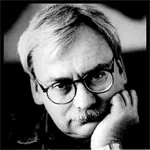
Andrzej Sapkowski, a popular Polish author writing in the fantasy genre. Born in 1948 in the city of Łódź. Graduated from the Faculty of Foreign Trade at the university. Worked for many years in his profession but then realized that this occupation was not for him and took up his favorite hobby – “writing”. By that time, he had already gained some recognition among fantasy enthusiasts. He wrote the first “Witcher” in 1986.
If we generalize “The Witcher”, it involves dragons, magic, and the Middle Ages. Here, many myths, legends, and various fairy creatures have come to life. Moreover, Sapkowski's books are devoid of the pathos and clichés that are abundantly found in the works of followers of the famous Tolkien's literature. “A living language, subtle irony, and a departure from stereotypes are the unchanging traits of the Polish author's work,” critics write.
The first thing that strikes the eye when studying the world of “The Witcher” is that there are no bad or good, no primitive division into good and evil. “Racism, genocide, and other nastiness are absolutely normal,” reviewers aptly note. The local pointy-eared beings (far from the ethereal creatures we know from other books – would engage in any vileness for their goals), who migrated from world to world, using them for their needs, underestimated humans, who mercilessly began to conquer the surrounding lands, enslaving one species after another and exterminating those who disagreed. Thus, Sapkowski pits two powerful races against each other in his works: cynical and proud elves with greedy and determined humans. And it would be alright if in his books the author attempted to reconcile the two warring peoples, tried to extinguish the spark of hatred between them; but no, he makes his main character not a virtuous one but a human whose heroic deeds are driven by a simple desire to earn some money..
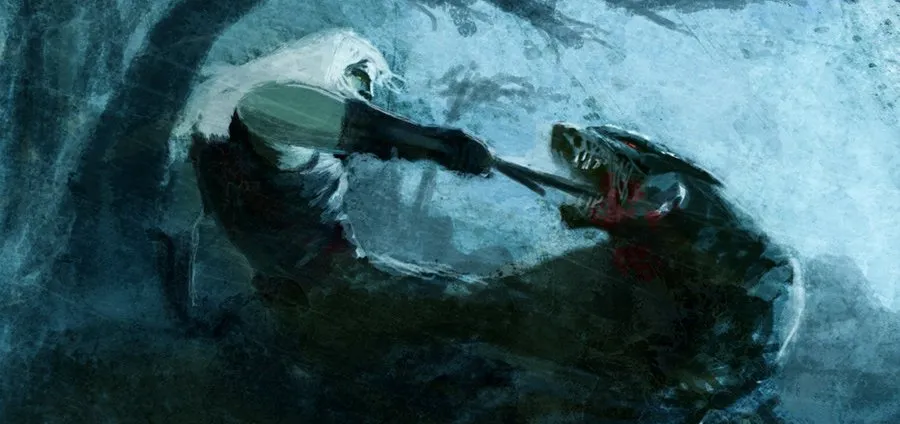
Money opens all doors…
Elf Errdil
To be precise, Geralt (or as he is also called – “Geralt of Rivia”, “White Wolf”), the main character of “The Witcher”, is not quite human. He is a mutated warrior who possesses a dozen inhuman abilities: tremendous stamina, hawk-like reflexes, the swiftness of a wolf, the endurance of a dog, perfect vision, delayed aging, and many others. Geralt is a witcher, a being far superior to humans and elves, created to fight monsters that cause suffering and torment to all living beings. As I mentioned earlier, Sapkowski's Witcher is not an ideal knight in shining armor fighting evil. Yes, he kills the wicked and monsters, saves people, performs heroic deeds.. But, as a rule, he is driven by a simple desire to receive payment for his efforts. Geralt is cynical, unpredictable, but nevertheless, he evokes sympathy from the reader. The Polish writer has created a truly deep image of a tough warrior man who, despite his brutal appearance, is an ordinary, vulnerable human.

The word