
Races in the Universe of the Game Mass Effect
I. Races in the Citadel:
The Citadel is home to the ruling body of the galaxy "Milky Way." Of the many wise races across the galaxy, the overwhelming majority acknowledge the authority of the Citadel and its ruling council. The duties of the Council include regulating trade and maintaining peace among the various races of the galaxy. All races retain their form of sovereign governance, and the Citadel Council generally does not interfere in their affairs unless the issues pertain to the galaxy as a whole.
Members of the Citadel Council:
The Citadel Council consists of the three most influential races in the galaxy. The Asari and Salarian were founding members of the Council, and the Turian are the last race to occupy a seat on the Council. Depending on the player's choices at the end of the game, Humans may take a place on the Council.
Asari:
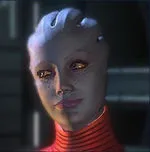
The Asari are a race of blue-skinned humanoids and one of the three permanent members of the Citadel Council. Asari have only one gender, and although they possess feminine characteristics from a human perspective, they also have the ability to give birth and nurse children. Their reproductive system allows them to have a child with a member of any organic race of any gender, but the child is always an Asari. Physically, Asari are slightly slimmer than the average human, but their average height is the same. Asari do not engage in sexual intercourse as humans do (though the act and its pleasures are not foreign to them), instead forming a mental and spiritual bond with their partners. Thus, they extract genetic material which, combined with their own, creates an embryo. In sexual terms, Asari can be considered anti-xenophobic, as they not only do not mind having a child with a member of any race but even prefer to do so with those of other races, believing that the genetic and racial information derived from other races improves the overall gene pool of the Asari. Moreover, children of two Asari, or "purebloods," are considered undesirable members of society, as such unions bring nothing new to the race's gene pool. It should be noted that excessively polite Asari will never openly shame "purebloods." The Asari homeworld, Thessia, consists of interconnected city-states, similar to medieval Italy.
Of all the races in the Citadel space, the Asari are the most widespread, powerful, and respected, primarily due to the fact that they were the first to become an interstellar race after the Protheans. It was also the Asari who first discovered the Citadel and founded the Citadel Council. Despite this, the Asari are always open to serving others, and their culture holds no negative stigma towards the arts, even sexual ones. This has often led to scandalous rumors about the "loose behavior" of the Asari, which the Asari themselves consider unfounded.
The Asari have the most powerful economy in the galaxy; their culture, goods, and entertainment dominate the galaxy. They are governed by a flexible democracy known as the Asari Republics. Asari are political centrists, preferring stability that enhances their cultural and economic development. Politically, they practice a type of direct democracy that can be described as "electronic democracy," where citizens participate in general consensus through a vast electronic network. They also have a matriarchal council that makes decisions based on the desires of the people. The average lifespan of an Asari is 1000 years; throughout their lives, Asari go through three stages: maiden (up to 350 years)—a vigorous phase of life during which the Asari matures and sets the course for their future; matron (350-700 years)—the Asari slows down and establishes the foundation of their family and position in society; and matriarch (from 700 years)—the Asari actively participates in cultural and political events of society and mentors the next generation.
Salarian:
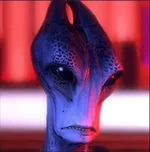
One of the permanent members of the Citadel Council, the Salarian are known for their sharp intellect as well as their technical and espionage abilities. Salarians have a fairly high metabolism, reducing their average maximum age to 40 Earth years. At the same time, they only require 1-2 hours of sleep per day. To many humans, Salarians vividly resemble the Greeks from ufology; however, they are not and have never visited Earth before humanity ventured into the galaxy.
In interstellar society, Salarians have created numerous technological advancements that are now ubiquitous. The high intelligence of Salarians is praised everywhere. Many races consider Salarians hyperactive; Salarian, conversely, consider representatives of other races to be slow and dull-witted.
Politically, Salarians are quite liberal, contrasting them with the conservative Turians and centrist Asari on the Council. The Salarian Union is primarily governed by a group of dynasties, led by elder women. Of the three permanent members of the Council, the Salarians have the smallest economy, but even their economy far exceeds that of the Systems Alliance. The Salarians were responsible for the "cultural uplift" of the Krogan to fight the invading Rachni. Additionally, Salarians later created the genophage, a biological weapon that suppressed the Krogan rebellions. In the military domain, Salarians are greatly outmatched by Turians in combat, and therefore prefer to use saboteurs, scouts, counterintelligence agents, and commandos against enemies.
Turian:
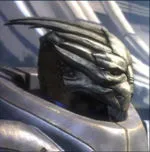
The last of the permanent members of the Citadel Council, the Turians obtained this position after their victory over the Krogan during the Krogan Rebellions, employing biological weapons designed by the Salarians that nearly completely destroyed the Krogan’s ability to reproduce.
Turians are derived from predatory birds. Most of them have painted faces; the design and color of the markings signify the Turian's place of birth and clan affiliation. This tradition first emerged during the Unification War, in which various Turian colonies fought against each other for territory and influence within the Hierarchy. However, many years of internecine battles left the clans too weak to resist the unifying influence of the Hierarchy itself. Realizing they could not win, the colonies voluntarily entered the Hierarchy, but the facial markings remained. Some Turians have no markings; during the war, these were the loyalists of the Hierarchy, who were often dubbed "clean-faced." While the unmarked Turians are no longer pariahs, the derogatory term remains and now signifies that some Turians are "politicians" or "unreliable"; in the Turian language, these words are synonymous.
Turians have a reputation for being skillful and valiant warriors; at the same time, they are not bloodthirsty. In battle, Turians can quickly adapt to any situation, yet still maintain strict discipline. Turian squads never break, despite being outnumbered; they may retreat when necessary but will do so in an organized manner, leaving cover and ambushes along the way. An unwavering code of honor and strict discipline are integral components of any Turian officer and soldier. This code includes humane treatment of prisoners of war and captured enemies. A Turian squad will never leave one of their own in danger (unless ordered to), regardless of the cost of retrieval and rescue. The concept of honor permeates almost every layer of Turian society and culture. Every Turian is focused on maintaining the state; almost all Turians are government workers. Military service is law for all Turians, as well as for members of other races wishing to become full-fledged Turian citizens. Although in every society there is a criminal element, Turian criminals (of which there are few) always maintain a level of conscience. For instance, while a Turian criminal may flee from authorities, upon capture, he or she will almost always confess and accept punishment with honor (in Turian jurisprudence, punishments are quite severe). Despite this focus on law and order, many are surprised to find that the concept of personal freedom is an integral part of Turian society. Turian laws allow for freedom of speech, worship, and, generally, anything that does not violate the integrity of the state. There are even Turians who have adopted the beliefs of the Asari or Humans; for example, Confucianism and Zen Buddhism attract an increasing number of Turians.
The Turian Hierarchy is the government of this race and is composed of military leaders and autarchs. They also have the largest fleet of all known races, though not the most powerful. However, their technology, diplomacy, and economy still fall short compared to the Asari. Therefore, they often take the front lines in any battle. Most of the Council's peacekeeping forces primarily consist of Turians, including the Special Tactics and Reconnaissance Corps (Spectre) and the Citadel Security Service (C-Sec). Although they are autocrats, Turian hierarchs rarely cross into tyranny and despotism, as the concept of "everything for the people" is instilled in them from childhood. Politically, Turians are quite conservative, constantly upholding tradition, duty, loyalty, honor, and maintaining the status quo. However, this does not prevent them from maintaining decent relations with other races, with a few exceptions. Following the Krogan Rebellions, both Turians and Krogan view each other with suspicion. The same is true for Humans, following the First Contact War. Nonetheless, Turians hold great respect for the military tactics and abilities of Humans, as demonstrated during the liberation of the Xi'anxi colony. Indeed, the growing expansion of Human colonies, as well as their economy and influence within the Council, irks some prominent Turians, but between the two races, there is still respect; moreover, Turians and Humans are officially strategic partners in military affairs.
Non-Council Members:
These races are represented in the Citadel by embassies and are subject to the Council's authority in decision-making. Alongside the Council races, those members collaborate economically and freely exchange their diverse cultures.
Elcor:
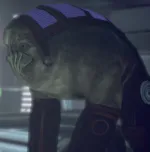
These large, elephant-like aliens speak slowly and monotonously. Among themselves, Elcor use scents and subtle body movements to convey their emotional state, which other races typically convey through tone of voice. Since other races cannot understand these nuances, Elcor prefer to describe their emotions before making any statements. Elcor originated on the large Earth-like world of Dekuuna, which has a tremendous gravitational pull. This is why Elcor always move slowly (any stumbling can lead to injury or even death). This physical necessity is also reflected in their political, social, and cultural philosophies, focused on caution, thoughtfulness, and patience. The Elcor political system is governed by the Counts of Dekuuna. Their archives, thousands of years old, contain all information, up to the most recent news. In making decisions, the Counts constantly consult the archives to ensure the maintenance of precedent and respect for all opinions. Thus, it takes the Counts a long time to reach a decision or draft a law, sometimes spending entire decades on comparatively simple state matters. Although they are quite large and physically strong, Elcor are rarely warlike. However, in situations where conflict is inevitable, an Elcor's thick skin makes them virtually impervious to conventional weapons, and their incredible strength allows them to carry a large amount of heavy weapons and significant supplies of ammunition.
Hanar:
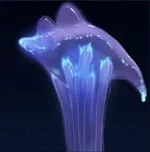
A race reminiscent of Earth's jellyfish. The Hanar are slightly taller than humans, and their tentacles end in three fingers on each. According to their religion, Hanar were previously not intelligent life, and Protheans turned them into thinking beings during their prime, but the evidence supporting this is unknown. Since Hanar do not have vocal cords, their language is based on the bioluminescence of their skin, which makes the use of electronic translators mandatory when communicating with other races. Hanar are governed by the Enlightened Primacy, a theocracy worshipping Protheans under the name "Enkindlers," although they are tolerant of other races and their beliefs. Because of this, it is difficult to consider Protheans extinct. Their excessive cultural obsession with politeness and protocol sometimes leads to issues with other races who do not understand Hanar etiquette (any careless or inaccurate statement is considered offensive to Hanar). Since most Hanar holdings are fairly self-sufficient, trade and diplomatic relations are generally unnecessary. All Hanar wishing to move to planets of others or serve on stations entering regular contact with aliens are advised to take interspecies diplomacy courses.
Hanar have two names; speaking "I" or one’s "spiritual" name among outsiders is considered impolite. Instead, Hanar use either the word "this" or a special public name. Their financial connection to the galactic economy is quite limited, and Hanar territory has very few buildings or facilities designed for bipedal beings. Since Hanar are an aquatic invertebrate life-form, they are unable to maintain their physical form in standard gravity conditions, using levitation technology based on mass effect to do so.
Humans:
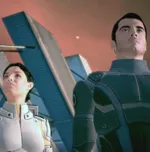
Humans in the game are just like those today, only their technology is more advanced. At the beginning of the game, humans are a relatively young galactic race. The Systems Alliance (the unified government of humans) rapidly advanced technologically, particularly in the field of faster-than-light travel, due to the discovery of a cache of Prothean technology on Mars. After discovering that Charon is actually a mass relay station, humanity quickly began colonizing uninhabited worlds. Eventually, Humans encountered Turians, with whom they entered into conflict known as the First Contact War. This conflict lasted only a few months before the "upstarts" attracted the attention of galactic society. Thanks to a rapid and effective counterstrike from the Alliance, triggered by Turian occupation of the human colony Xi'anxi, and the fact that newcomers on the galactic stage managed to put up a respectable resistance against the powerful Turians, the Citadel Council ended the war and allowed humans near-unlimited expansion of their sphere of influence. However, this act drew the ire of Alliance's competitors—the Batarians, who closed their embassy on the Citadel in protest. In just a few decades, humanity quickly grew in power and influence. Also, the Citadel Council recently allowed the Alliance to open its embassy on the Citadel, granting them political weight in the eyes of the Council.
Most other races consider humans to be intelligent, aggressive, and highly adaptable. Their rapid population and military power growth leads to the belief that the newly arrived race will soon be invited to become full members of the Council, which would be unprecedented. Fearing humanity's terrifyingly rapid advances, the Council limited the Alliance fleet through the Farixen Treaty, in exchange for the embassy on the Citadel. Since the number of large ships (dreadnoughts) in the Alliance cannot exceed 1/5 of the Turian dreadnoughts, Humans focus their shipbuilding industry on small vessels, frigates, and cruisers. It should be mentioned that before the First Contact War, none of the races in the galaxy, aside from humanity, had thought to have a class of ships specifically designed to transport swarms of fighters into battle—shuttles. Although other races have begun producing shuttles, humans still possess more of them.
In the game, Commander Shepard comments on the difference between the lifespans of humans and Asari, claiming that a human "would be lucky to live to 150," possibly indicating that humans have managed to extend their lives by several decades.
Keepers:
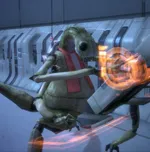
This race exists solely on the Citadel. When the Asari first discovered this space station, the Keepers were its only inhabitants. Many believe that the Keepers were created on the Citadel and that their numbers are regulated by the station itself. Keepers resemble large beetles, and there is ongoing debate about whether Keepers can be considered sentient. No one, not even the members of the Citadel Council, can command or control the Keepers. One of the unfortunate anomalies of their behavior is the constant alteration of rooms, decorations, wiring, and even the structure of certain parts of the station, contrary to the desires of the inhabitants. Only death will cause a Keeper to cease its work, but their population continually increases to a certain level. Attempts to catch and study Keepers trigger a self-destruct mechanism that secretes acid, dissolving the captured Keeper into constituent molecules. Therefore, to maintain the station's functionality, the Citadel Council has declared any attempts to interfere with the operations or try to capture or kill Keepers illegal.
In reality, Keepers were created (or enslaved) by a race of genocidal machines known as the Reapers. Keepers are programmed to respond to signals from a Reaper Observer, activating the Citadel in mass relay mode, allowing the other Reapers to seize the galaxy. However, the last remaining members of the Prothean race managed to find a way to block the Observer's signal, rendering their primary function useless.
Vorcha:
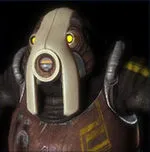
Little is known about this race, but their suits and breathing masks are necessary outside the dense atmosphere of their homeworld. The gravity of the home planet of the Vorcha exceeds Earth's by 1.5 times, which, along with the thick atmosphere, has led to almost round bodies. Although Vorcha have a fairly difficult time staying on other worlds, they do have a slight advantage since many planets in the galaxy have conditions similar to their own, allowing them to colonize territories inaccessible to others. Vorcha are governed by the Vorcha Protectorate, a connected system of clans and feudal holdings, but they voluntarily became a protectorate of the Turian Hierarchy, exchanging political freedom for military defense and stability. In return for protection, Vorcha offer Turian (as well as other races in the galaxy) their expertise and services in financial matters. Vorcha developed a unified galactic economy for the Council and introduced a credit system. Vorcha are exceptional traders, and their economy far surpasses their territory.
II. Races not in the Citadel:
These races are not governed by the Citadel. They either do not acknowledge the authority of the Citadel, were rejected or expelled from it as members by the Council, or simply live beyond the borders of Citadel space.
Organic Races:
These organic races are not members of the Citadel's government. Krogan and Quarians were excluded from participating races for their crimes, the Batarians left the Citadel in protest after the Council denied their exclusive claim to the territory humans began to colonize, and the Collectors, considered a mythical race, remain outside.
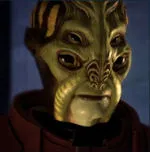
Batarians:
A race of humanoids whose culture closely resembles that of humans. Partly because of this, the Batarians and Humans are political enemies, as both races wish to claim unclaimed territories. The Batarians have a second pair of eyes located on the sides of their nose, i.e., slits where a human would have a nose. The Batarians once had an embassy on the Citadel, but they closed it in protest after the Council decided to refrain from interfering in human colonization of the area known as the Styx Abyss, which the Batarians believe is within their sphere of influence. Consequently, they have essentially set themselves against other races of the Citadel Council, particularly the Systems Alliance (the human government). This hostility has led to a cold war between the two races. The Batarians use their influence in the chaotic Terminus systems to stoke political instability and crime, which creates problems for the Alliance. As a result, Batarians are linked to nearly all galactic criminal syndicates and terrorist groups. Despite their significant role in the prequel novel, Batarians do not appear in the game (though they are mentioned). Players can download a bonus mission for the game called "Deliverance from the Skies," in which the player fights Batarian mercenaries on a controlled asteroid plummeting towards an inhabited planet. The comments of the mercenary leader hint at the possible presence of Batarians in "Mass Effect 2" and a potential attempt at mass invasion of Alliance space.
Krogan:
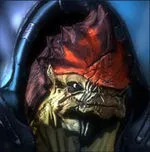
A race of large bipedal reptiloids from the planet Tuchanka. Once the saviors of the galaxy, Krogans are now but a shadow of their former glory. Due to the hostile environment of their homeworld, natural selection played a significant role in the development of this race. Krogans naturally reproduce and mature faster than any other race, but after their entire race was infected with a biological weapon known as the genophage, their birth rate plummeted to nearly zero.
Four thousand years ago, at the onset of the Krogan nuclear age, battles for small patches of habitable land on Tuchanka began, quickly leading to a global nuclear war. As a result, Tuchanka became a radioactive wasteland during a nuclear winter. The Krogans devolved into primitive warlike clans. Two thousand years later, the Salarians "culturally uplifted" the Krogans, providing them with advanced technologies and relocating the population of Tuchanka to a new (non-radioactive) world. This was done to use the Krogans as soldiers against the Rachni, who at that time were winning the war against the Citadel races. Within just two generations, the Krogans reproduced to the extent that they could not only defeat the Rachni but invade their home world and commit genocide against that race.
However, the Salarians' plan backfired as the uncontrolled population of Krogans, spurred by the predators and environment of Tuchanka, experienced a demographic explosion. In order to combat this overpopulation crisis, Krogans began to conquer other planets, not always uninhabited. These so-called Krogan Rebellions lasted almost three centuries, and despite enormous casualties, the Krogans' birthrate gave them a chance to win. The Council requested assistance from the recently established Turian Hierarchy. The Turians, after some rather unsuccessful battles, unleashed the genophage devised by the Salarians on the Krogans, which caused almost total destruction of newborns. Seeing that their primary asset was lost, the Krogans surrendered to the Turians.
Due to the genophage, only 1 in 1000 Krogan infants survive at birth. Therefore, Krogans can be considered an endangered species. This has led many Krogans to become egoistic.
The humps on the backs of Krogans serve the same function as the humps of camels—storing liquids and nutrients to allow Krogans to go long periods without water or food. A large hump, besides its direct function, is also a sign of honor as it demonstrates a Krogan's success in hunting. The skin of Krogans is incredibly thick, which makes them resistant not only to physical damage but also to radiation, toxins, and extreme temperatures. Krogan biotics are rare yet powerful.
The most respected individuals of the Krogan race are considered to be Krogans who achieve the rank of Battlemaster. These rare individuals are perfect soldiers. Those among them who possess biotic abilities know how to employ them with lethal efficiency. However, following the Krogan Rebellions, there remain very few fighters of this rank, and many of them have turned to mercenary work.
Quarians:
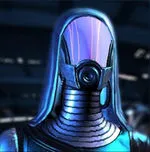
A humanoid nomadic race. Physically, Quarians are slightly shorter than humans and narrower at the shoulders. They wear suits made of various materials, concealing their faces behind goggles or breathing masks. Since they spend their entire lives aboard completely sterile spaceships, their immune systems have atrophied. As a result, Quarians must wear hermetic suits outside their fleet. Because space and resources on the fleet are limited, each family is allowed to have only one child. All young Quarians are required to undertake a Pilgrimage, a ritual that requires them to leave their home fleet and travel the galaxy in search of something valuable or useful for the fleet. This can be an artifact, equipment, or even knowledge, which the pilgrim presents to the captain of any vessel. To prevent inbreeding, Quarians are prohibited from living on their native ship. If a captain accepts a gift, then the Quarian becomes a member of that ship’s crew; gifts are rarely rejected, as tradition requires the captain to accept whatever is needed, but pilgrims presenting poor gifts receive a negative stigma in society.
Politically, Quarians are divided into two branches of government: the Enclave, a civilian body representing the majority of the people on various ships of the Migrant Fleet, and the Admiralty, consisting of the five highest-ranking officers of the fleet. The Enclave is subdivided into councils on each ship which pass the desires of crews along to their captains. However, the captains hold the final say on all decisions made aboard and jurisprudence. Captains who frequently disregard their councils' opinions receive orders from the Admiralty to either resolve these disputes themselves or relinquish their authority. The Admiralty wields considerable influence over all decisions made within the fleet, commands all combat ships directly, and holds veto power to overturn any decision by the Enclave. But by fleet law, if the Admiralty uses this power, all five admirals must support it and immediately depart from the Admiralty. This ensures that no admiral grows too powerful. Should any admiral refuse to relinquish their authority, they are subject to immediate arrest.
All races of the Citadel look down upon Quarians, primarily due to events that took place three hundred years prior to the game. After all, it was the Quarians who created the Geth and failed to suppress their uprising. Since then, what remains of this once-mighty race wanders across the galaxy in their fleet of barely working ships. Upon arriving in any habitable system, the Migrant Fleet consumes a fair amount of its resources, and the local population does not appreciate the "junk" appearance of the fleet and that Quarians serve as cheap labor. To avoid this, many colony leaders or systems "out of kindness" offer the Migrant Fleet whatever they do not need as a bribe for the fleet to leave. Though these gifts aren't motivated by charity, the Quarians are grateful for them and never abuse this. Yet the electronic, engineering, and cybernetic expertise of the Quarians makes them ideal workers for large corporations and mining firms. When it comes to technology and geology, the Quarians have no equal in the galaxy.
Collectors:

The Collectors are an unknown race of aliens that reside beyond Citadel space and were first introduced in the book Mass Effect: Ascension. This race is named so because they often distribute gifts to other beings with unique abilities. Samples of these gifts once included seven parts of left-handed Quarians, sixteen parts of Batarians twins, and humans with biotic abilities among others.
Synthetic Races:
They are synthetic or machine races that have achieved sentience; both races are antagonistic towards organic life. The Geth are a relatively young race of living machines that revolted against their creators, the Quarians, and the Reapers are an ancient race that apparently controlled the development of countless space civilizations before subsequently exterminating them.
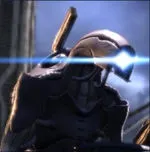
Geth:
The Geth are humanoid AIs residing in the Terminus systems. The Geth were created around 300 years before the events of the game by Quarians to serve as workers and soldiers. When the Geth began to dispute their masters’ orders, the Quarians understood that the Geth had become self-aware and attempted to destroy their creations. The Quarians lost the war to the Geth, and the remnants of their race fled their worlds, becoming nomads. These events prompted the implementation of a galaxy-wide ban on AI research. Many feared that having defeated their former masters, the Geth would attempt to seize the entire galaxy, but this did not occur—the Geth went into isolation. All attempts by the Council to re-establish contact have been unsuccessful. The Geth became allies of the former Spectre Saren Arterius, as they see the Reapers as the highest form of cybernetic life and divine progenitors of their race, with Saren being their prophet. "The Sovereign," one of the Reapers, reveals that the very idea of primitive AIs being derived from the Reapers is an insult to him.
Reapers:
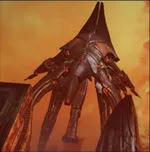
The primary exterminators of all living beings in the history known universe, a mechanical race that periodically appears to annihilate all organic life (in the game, a time frame of 50,000 years is cited, however, this is unlikely to be permanent for all cycles). The term "Reaper" is not a self-designation of the race, but was coined to denote them by the Protheans, according to information from Sovereign (a living inorganic ship—the vanguard force of the Reapers, left behind until their return). In the game, the Reapers dwell in "dark space," which is beyond our galaxy. Their return to the Milky Way galaxy occurs through a mass relay, with the Citadel being a giant space station. The plot of the game revolves around preventing their incursion into the galaxy, which is eventually accomplished by the forces of the interstellar alliance.
The Reapers possess the ability to influence the psyche of organic beings, indoctrination, which allows them to enslave the minds of organic beings, turning them into mindless drones or zombies, through an unknown energy emitted from their ships. Sovereign seized the mind of the Turian Saren and cunningly used him to facilitate the return of other Reapers. Saren himself did not consider himself controlled by anyone; he believed he was voluntarily assisting the Reapers, thinking that only the races that knelt before the Reapers would escape extermination. Captain Shepard, however, believes this to be untrue, and that the Reapers' sole purpose is the complete genocide of organic life.
The Reapers' genocidal objectives, motives, origins, and precise location in dark space remain undisclosed throughout the game. Sovereign speculates that organic races simply cannot comprehend the Reapers' motives. The Prothean system of virtual intelligence independently suggests the same.
III. Extinct Races:
These varieties have died out or were declared as such before the events in Mass Effect. The Protheans and Zeioph vanished thousands of years ago, while the Rachni were systematically exterminated due to the threat they posed. Countless other extinct races once existed but have yet to be identified.
Protheans:
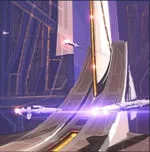
An extinct ancient race whose technological level far exceeded that of all known races in the galaxy at the time of the game's events. It is believed most space races would have remained within their star systems had it not been for discoveries of Prothean artifacts. In the game, it ultimately unfolds that, although the Protheans were indeed excellent scholars, they were not the creators of the mass relay network or the Citadel.
The Protheans were exterminated around 50,000 years ago. Despite their advanced technology, the Protheans were systematically annihilated by a race of intelligent machines that the Protheans called the Reapers. Although their race was destroyed, a small group of Protheans survived the genocide, who, understanding that their race could not be revived, resolved to do everything possible to prevent the return of the Reapers to the galaxy and save future races. They are the ones who leave a series of clues and warnings foretelling the impending return of the machines of death. The player learns that the planet Il remains untouched by the Reapers, and it is there that a few representatives of the Prothean race survived, who created a Channel, a scaled-down copy of a mass relay between Il and the Citadel. Upon reaching the Citadel, they were able to disable the signal that turns the Citadel into a mass relay for the Reapers.
Neither in the game nor in the book are Protheans described. However, their statues depict a humanoid figure with a head resembling that of a squid, its tentacles hanging like a beard. Commander Shepard, through a chance encounter with the Prothean beacon, also receives chaotic visions. In these visions, one can see beings resembling those statues. On Eletania, Shepard can discover the ruins of a Prothean archive containing records of Protheans observing humans during the Cro-Magnon era (the archive activates upon using a Prothean key given by Shaira). This archive records the impressions of a Cro-Magnon who saw a Prothean spaceship.
Rachni:
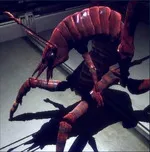
This insectoid race threatened to obliterate all the races of the Citadel approximately 2000 years before the events of the game. The first contact with them occurred accidentally after the activation of one of the mass relays to an unknown end. The highly xenophobic Rachni, enraged by the presence of "inferior" beings, attacked them with the intent to exterminate those they saw as invaders. However, when the Salarians discovered and "culturally uplifted" the Krogan race, the aggressive Krogans managed to repel the Rachni and completely annihilate them. Before the game starts, one of the corporations discovered a Rachni egg on an abandoned ship and brought it to a corporate research lab on the corporate planet Noveria, whose laws allowed almost any form of experimentation and studies. As a result, the Rachni were revived.
The Rachni Queen, born from the egg, claims that the Rachni’s hostility in war was not inherent but rather a consequence of some external factor, likening it to the influence of the Reaper ship "Sovereign." The queen promises that if the player releases her, she will breed a new peaceful race of Rachni that respects all forms of life. The subsequent choice is up to the player.
Zeioph or "beings of light":
Zeioph or "beings of light" are an extinct, formerly living race mentioned in planetary research. Nothing is known about them except for their enormous graveyard on the planet Armeni in the Knossos system, the excavation of which was not permitted by the Council. It is possible that their tombs could be likened to those mentioned in the review of the planet Klencory; investigations explain that billionaire Kumuun Shol directed himself to that planet after allegedly experiencing a vision in which he was instructed to search for "lost tombs of the beings of light" that previously protected organic life from "machine devils."
Will be updated as needed.