
Fallout: Krasnoyarsk.
I
They called at lunchtime, told him to get ready, Mikhail Yegorovich was scared, but he tried not to show it. The engineer had been warned in advance about the possible evacuation of his family; last February, his candidacy, as one of the developers of the project “USSSJ” - a shelter with self-regulating life support systems, had been approved by the local committee. However, he could never have imagined that this would ever happen. He sat on a stool by the phone, groaned, lamented, meaningfully held his head, and after five minutes, he spoke to his wife. In the most accessible language for a completely apolitical village woman, he tried to explain the possibility of destruction by the cursed capitalists, communism, which was just beginning to arise from mature socialism. However, due to the shock he experienced, the engineer became confused, and thus spoke absurdly, tripped over declensions, constantly misquoted, it turned out to be nonsense.
-Misha, what’s wrong? – looked at her trembling husband with fear, Maria Filippovna.
-God gave me a village fool! – Suddenly burst out Mikhail Yegorovich, - Pack your things, quickly! There will be a war... nuclear.
Upon learning of the possible apocalypse, his wife wilted, slid down the wall to sit on the parquet floor, and began to sob uncontrollably. Mikhail Yegorovich tried to comfort his wife, but the impulsive woman only cried more at her husband’s clumsy attempts, and moreover, she began to cross herself. “At least no one sees” thought Mikhail Yegorovich, and waving his hand at his wife, began to gather their things. He didn’t take long to prepare, following a clear list provided by the head of the district committee, the first item of which was documents.
As warned over the phone, exactly fifteen minutes later, someone knocked on the door. Standing rigidly at attention on the landing was a man dressed in military uniform. Mikhail Yegorovich, like every self-respecting citizen, had served in the Soviet Army, and thus, upon glancing at the epaulettes, identified the soldier’s rank. “Amazing,” thought the engineer, “They sent a Lieutenant, well, it’s clear now - this isn’t a drill,”
-Comrade Stishov? – the officer asked loudly.
-That’s me. With whom do I have the honor? – Mikhail Yegorovich asked nervously, swallowing hard.
-It doesn’t matter, we are here for you. Are you ready? – asked the lieutenant, glancing at his officer’s watch, worn for some reason on his right hand, clearly indicating he had no free time.
-Of course, of course… - Mikhail Yegorovich mumbled, showing the officer the leather bag with prepared things. Realizing that no one was asking for proof of his readiness, he stammered an anxious “Now”, and physically lifted his sobbing wife from the floor. By that time, Maria Filippovna had calmed down a bit, her crying had become quieter, more like an intermittent whimper. Quickly throwing on a simple fur coat and tilting a rabbit fur hat on her head, the caring husband dressed his wife and dragged her along behind the soldier.
As he was leaving, Mikhail Yegorovich turned back to glimpse his apartment for the last time, which he had to say goodbye to so unexpectedly. The two-room apartment he inherited from his parents was so dear and cozy that the bitterness of parting with it tightened his heart. The shelves crammed with hundreds of books, enormous flowers in whimsical vases, carpets, which had been so carefully shaken out in the yard just yesterday. And just a week ago, he had spent half his salary on the latest model of a “Horizont” television, of which only ten had been brought to Krasnoyarsk. The tube monster towered on an oak stand in the living room. A aspen frame with carved details, an anti-glare convex screen one and a half meters wide, a built-in power stabilizer, a remote control - with a red button communicating with the television via a three-meter grey cord, with which channels could be switched without getting up from the sofa! In general, all the latest trends in technology were embodied in one model. But along with the whole city, this wonderful television set would disappear in the nuclear glare for no reason, and after all, Mikhail Yegorovich hadn’t even had time to watch it, as he had simply not found time to adjust the antenna in the past week, how frustrating. If only he had known in advance that everything he had worked so hard for would have to be so easily abandoned, instead of mindless purchases, he would have taken a week’s worth of splurging on his last paycheck. And to start at “Kalinka” - the best restaurant in the city, then to the pubs, with friends, with his wife... But which wife? With Verochka, the secretary, in the hotel room, to the sauna, and... Thoughts of Mikhail Yegorovich were interrupted by the military, sternly calling from the stairwell.
-Comrade Stishov? Are we waiting for you?
It was time to leave. Taking a deep breath, Mikhail slammed the door. Upon exiting the stairwell, the Stishovs ran into their neighbor on the landing - Emma Eduardovna, who was surprised to see her neighbors in the company of a brave soldier.
-Misha, something happened? – the old woman asked with surprise, following the lieutenant with her gaze.
“Should I tell her?” flashed through the kind-hearted engineer’s mind. The lieutenant, as if reading Stishov’s thoughts, suddenly turned around, giving him a piercing, spiteful look.
-This is work, Emma Eduardovna, work. - Stishov whispered, tightening his hold on his wife so that she would not accidentally say something in a fit of hysteria, and quickened his pace.
In the yard, a huge military truck of sandy color awaited them. The bed was covered with a tarpaulin, a winter trip in such a vehicle promised to be quite uncomfortable, but complaining never crossed their minds. The neighborhood kids, in a noisy pack, swarmed the truck, examining it in minute detail, intrigued by the previously unseen contraption. Children of different ages, from young to old, hollered, trying to climb onto the enormous tires, talking to the silent driver who ignored them completely. “What will happen to them?” suddenly crossed Stishov’s mind, to which a logical answer emerged, making him shudder and turn pale. He felt ashamed in front of the little ones, for being alive and unharmed, for not being able to save any of them, and also for regretting the loss of the TV just a moment ago. The engineer shyly looked away and passed the group of rowdy kids, first helping his wife into the truck’s bed, then jumping in himself.
-That’s the last of them! - Stishov heard the lieutenant shout. A minute later, the truck started moving. They traveled quickly, without stops, judging by the terrible condition of the road half an hour later, and the truck began to shake from side to side as they were taken out of the city limits. The Stishovs rode tightly embraced, bouncing in tandem over every bump. During the trip, Mikhail Yegorovich managed to study the motley company of comrades around them. There were about a dozen couples, some with children; Stishov recognized a few people, they were party officials and directors of large enterprises. “Apparently, they are all big shots, it’s clear how they ended up in this truck,” thought Stishov with disgust, but remembering that he shamelessly took advantage of his connections, he calmed his maximalism.
Half an hour later, branches began to crack against the tarpaulin covering the truck bed, then the vehicle climbed uphill slowly and steadily, coming to a stop. After a few minutes, they turned off the engine, but they weren't in any hurry to let people out of the truck. Sitting in silence for about fifteen minutes, people gradually started to converse. Maria Filippovna had stopped crying somewhere in the middle of the trip, but she looked terrible, her eyes swollen and red, her lips oddly pursed, her face expressed concentrated sadness.

-Misha, Misha, but mom? How about mom? – Maria Filippovna whispered.
-I don’t know. I hope it will be okay, she’s in the village after all, you can’t direct a bomb at every village. – The engineer reassured his wife, knowing that the nuclear fallout and the flow of contaminated water from the destroyed hydroelectric station explosion would give no chance for survival to the nearby settlements. And although Tamara Lukyanovna, Maria Filippovna's mother, was not the classic mother-in-law from stereotypical anecdotes and Mikhail Yegorovich loved her very much, there was nothing he could do anymore. Soon, the tarpaulin covering the truck bed opened, and the lieutenant asked people to get out of the vehicle; they gladly left the cold truck, now quite cold themselves.
What awaited them outside the truck was an intriguing sight - a fifty-meter clearing in the dense fir forest, in the middle of which steel pipes of varying diameters rose straight out of the snowdrifts. Besides those who arrived in the truck with the Stishovs, there were many other people brought in similar trucks. One of the trucks had apparently gotten delayed, causing the unforeseen holdup. People were lined up in an improvised square, a majority of them shivering, trying to warm up, with some jumping around, waving their arms. They were waiting for someone, probably someone very important. The soldiers guarding the site were whispering to each other so as not to be overheard by the people, but Mikhail Yegorovich managed to catch a couple of phrases.
-Yes, a drill, of course a drill. - said a tall soldier in a long gray greatcoat to his friend, one of the truck drivers. – Our superiors warned us that they would conduct drills when no one expected it, well, winter has come.
-I don’t think so, it all seems too serious, - argued the driver with his friend - Just think about it, they pulled people out of their homes, we were practically kept under fire the whole trip. And the lieutenant who accompanied us today, is clearly not in a good mood, serious and neurotic; I know him, he’s usually a cheerful guy. I don’t like this, oh I don’t like this at all.
-You’re always imagining all sorts of nonsense. - answered the soldier after a brief pause - Last time, you mistook a newbie for a Chinese spy, reported it to the superiors, remember how you almost got fired afterward. Just calm down, you nervous wreck...
Soon, the October silence of the snowy forest was disturbed by the rumble of an approaching vehicle’s engine; an army gray-green UAZ drove out to the square. The door swung open, and a short, stocky man in a long black leather coat and boots polished to a shine stepped out. He was followed by three soldiers with automatic weapons, struggling to keep pace with the short fellow, stuck in the not-so-high snowdrifts, stumbling. If it weren’t for the guns those men held at the ready, the scene might have seemed comical.
The short fellow ordered the soldiers to move the guards away, and made his way to the group of people gathered at the square. The cold folks were invited into a small container in the middle of the square, which, however, was no warmer inside. Against one of the walls of the container stood a wooden table hastily put together from rough boards, on it lay some papers; four freezing servicemen in padded jackets huddled on a wooden bench by the table.
-A moment of your attention, comrades! – spoke the short man in an unusually deep voice - I, Oleg Petrovich Mironov, a KGB commissioner sent to oversee your relocation, shall say immediately, comrades, this is not a drill or an exercise. According to our information, nuclear warheads have already been launched by our enemies, their target is the Soviet Union, and undoubtedly, one of those targets is the city of Krasnoyarsk.
There were nervous gasps, hysterical sobs, and frightened sighs in the crowd.
-You have been selected from millions of residents of the great country, from hundreds of thousands of citizens, each of whom, no less than you, is worthy of being here now. - continued the short man. - I have no time to tell you everything I would like, we have too little time, and with every passing second, it becomes less, so I will keep it brief and to the point. Justify the hopes placed on you, live as long as you can, have children, raise them as true communists. Let your children emerge into a new world, a world that has survived a catastrophe, let them recreate the social order.
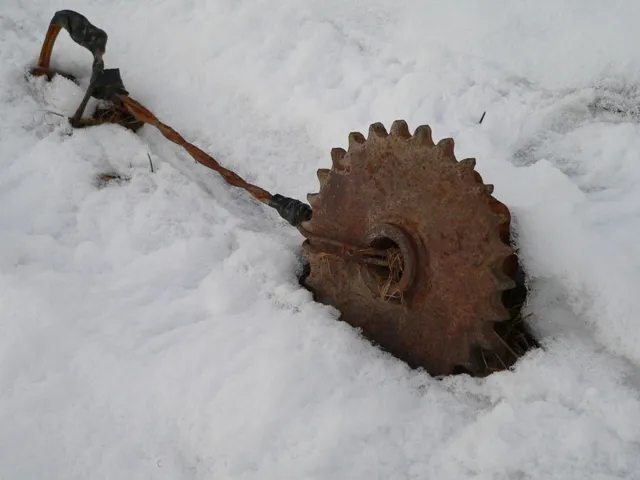
The short man spoke so passionately and fiercely, gesticulating broadly, pacing back and forth, while the people listened to him in silence, almost not stirring.
-The place you have been brought to is a specialized bomb shelter, designed for the event of a nuclear war. It is equipped with every possible technological advancement, and even some impossible ones. But what am I telling you, you will see it all with your own eyes in a moment. But before entering the shelter, you are required to sign this document. - the short man pointed to the makeshift table. - There’s no time to read the papers, comrades, just sign, you’ll review the documents later. The papers are personal, the guards will check your documents and issue you the mandated paper upon arrival.
The crowd rushed to the table en masse, extending their documents with frozen hands, calling out surnames. The guards checked all the data carefully, noting something in their folders, giving each person a slip. Most people signed the papers without reading them, however, Mikhail Yegorovich received his paper among the first, scrolled through the document quickly.
Inside were rules of conduct, party assembly regulations, decrees, orders… Then it became a bit more interesting: apartment number where the family would reside, permitted number of children, and the future profession of the signer sheltering in the shelter. And here Mikhail Yegorovich flinched. His sheet had a word written there that he had not expected at all, in black and white – “commander.” At first, the engineer thought that he had misread his position, that it was an illusion, so he shut his eyes tightly, but upon checking again, he found no changes in the data. Anxiously, puzzled, he shook his head, not understanding what was happening, but suddenly caught the piercing gaze of the KGB officer.
- Everything is as it should be, Mikhail Yegorovich. – said the officer, stepping closer to Stishov. – No need to panic. You built this shelter; you know every corner of it. Who better than you to entrust the management of this complex?
Mikhail Yegorovich, bewildered and touched, didn’t know how to respond. He, raising his eyebrows in surprise, bewilderedly tried to say something, but others had read the cherished papers as well.

-Comrade Mironov, Comrade Mironov! - gasped a plump man approaching the commissioner, shouldering through the crowd as he waved his contract. – Comrade Mironov! There has been a monstrous mistake in the documents! Comrade Mironov, I'm Nesterенко, Pyotr Petrovich Nesterенко, head of the city party committee. The matter is that… - the plump man, trying to exude importance, attempted to lead the commissioner away from the people, speaking in a low tone.
The commissioner did not move from his spot, nervously pulled his arm away, glaring at the man with flaring nostrils. Nesterенко, having assessed the KGB officer’s unwillingness to compromise, altered his behavior from informal to nervously agitated, fidgeting, speaking in an elevated tone as he waved his arms.
-Comrade Mironov, I was promised the position of commander, by none other than Comrade Varygin! – the plump man pronounced the coveted surname of his high-ranking friend almost syllable by syllable - He, by the way, is very well acquainted with some of your superiors!
-Comrade… What was your name again? - the commissioner asked reluctantly.
-Nesterенко! - the plump man proudly raised his head as he introduced himself again.
-Comrade Nesterенко, to put it frankly, you are free to not sign the mandate proposed to you and you may, with your wife and children, return to the city. I even promise to take you there. - The commissioner said absolutely calmly, extending his hand towards the plump man's document. He jerkily pulled it back, nervously glancing around, looking at the others, and, squatting down, began to sign the contract with a frozen pen on his knee. The pen refused to write, so the nervous Nesterенко shoved it into his mouth to warm it up a bit, then raised his eyes to the commissioner, who was looking at him with undisguised disgust, and decided to take his last chance.
-Does the central committee know? – asked the plump man, freezing in anticipation of an answer.
-The central committee, citizen Nesterенко, knows everything, even about your three mistresses, one of whom, your secretary, you managed to sneak into this shelter disguised as a cook, thanks to your connections. Can she cook, Pyotr Petrovich? Or can she only brew coffee and please men? - the commissioner asked with a sly smile, intentionally loud.
Startled, Nesterенко froze, still holding the pen in his mouth. His wife, standing a little farther away, a large woman in an angora fur coat, gasped in disbelief, dropping her bag. The commissioner showed no interest in observing the family drama, allowing him to draw Mikhail Yegorovich aside.
-Well, this one... do you want to entrust him with management? - the commissioner could not find a suitable word to fully characterize his feelings towards Nesterенко, and thus refrained from loud epithets, replacing them with a significant pause. - He’ll tear everything apart in a month or two, and in a year, it'll all fall apart, and everyone in the shelter will starve to death or go seeking death from the radiation outside.
Mikhail Yegorovich shook his head negatively in reply.
- Just be tougher, be tougher. Especially with the likes of him. – the commissioner again glanced at Nesterенко, whose wife was slapping him as hard as she could. – I have a feeling he’ll give you trouble yet.
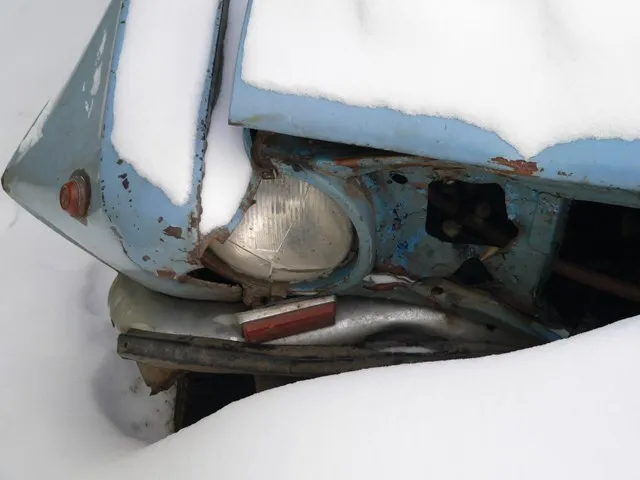
-Comrade commissioner! – Suddenly called out a guard checking the documents, - There’s a group of citizens here who have short memories! They forgot their documents.
The commissioner turned around; before the guard stood a couple, a young man in a checkered coat and a pregnant woman. They were the only ones who had not signed the documents yet, embracing each other, staring fearfully at the soldiers.
-Give them their mandates back, – ordered Mironov, - we can't send them back to the city! Everyone follow me!
The people quietly exited the container. The commissioner personally led them to the entrance of the shelter, a narrow long corridor with inconvenient steps. At the end of the corridor, a steel door lay open, shimmering with metallic luster, as if inviting them inside. When everyone had descended, the commissioner handed Mikhail Yegorovich a keychain adorned with an intricate assortment of keys.
-Here they are, for all the doors. Use them in good health. The biggest one is for the main gate.
Stishov took the keychain and headed towards the tunnel, almost at the entrance to the corridor, he hesitated, turned around, and looked at the commissioner.
-Will it be alright? - asked the newly appointed commander hopefully.
-Maybe it will be alright. - replied the commissioner with a shrug.
Stishov entered the corridor. When he was already at the steel doors, he heard the sound of machine gun fire erupting somewhere nearby, followed by screams, which made him jump nervously. Then he inserted the largest and most intricate key into the lock and locked the door behind him.
Nothing did go smoothly; October 23 would become the last day of this world, wiped off the face of the earth by a thousand megatons of nuclear glare akin to the hell itself. The world turned to dust; however, the day of Armageddon did not mark the end of humanity. Billions died instantly, millions perished afterward, thousands remained alive but devastated, while hundreds survived the nuclear cataclysm in the shelters, from which they emerged into a different world, an entirely new world.

II
When the rusted metal door, made from two-centimeter thick steel sheet, was almost closed behind him, Ivan heard his father's voice. So clearly:
- Godspeed, son, Godspeed...
Ivan froze, turned around. Godspeed? Hearing such words from his father, a staunch communist and atheist, was strange, unusual, and even frightening in such a situation. His father, through the narrow gap of nearly closed doors, was watching his only son leave into a dangerous unknown, as if he had read Ivan’s thoughts, lowered his eyes to the floor, then abruptly shut the door completely. The locks clicked, the bolts rattled, and Ivan was left alone in the narrow tunnel. His father’s words echoed relentlessly in his mind; how he must be terrified to say such a thing out loud. These thoughts caused Ivan's knees to tremble and a cold bead of sweat to trickle down his spine, followed by a rush of goosebumps.
Memories of his father's speeches at party meetings where he took Ivan as a little snot-nosed boy flooded back; his tirades ardently disproving the theological theory of the universe's emergence, his fiery speeches, his burning eyes. This could not be a farce; indeed, intense fear and animalistic dread must drive even such a rigid and uncompromising person like his father to believe in the divine essence.
Ivan remembered that his mother was religious; his father always became very angry when she crossed herself. Once, his mother attempted to explain to Ivan what God was, and although he didn’t understand anything then, later, throughout many nights, he secretly prayed to God for her health while she was dying in a quarantine medical box from tuberculosis. Back then, prayers had not worked, and Ivan, having convinced himself through 'practical experience’ of the absence of the Lord, forever banished all that ‘divine absurdity’ from his mind. Although he didn’t want to remember all this, heavy thoughts involuntarily intruded into his mind.
Out of fear, Ivan wanted to pound on that cursed rescue mission and bang with all his might on the steel door of the shelter, to see its narrow corridors, his friends, his father, and never again attempt to go outside. However, pride stopped him from taking such a step. If he turned back halfway, he would let down the entire shelter, but the most horrible part was that he would let down his father.
Since childhood, Ivan’s father had been held up as an example. Got a two - the father was an honors student; beat someone - the father never laid a hand on anyone; got a black eye - the father could stand up for himself. The father was some unattainable ideal looming over him, oppressive. Sometimes the soul of a rebel stirred in Ivan; he tried to do something deliberately bad, but soon he would come to his senses. It was precisely his father that held him back from despicable deeds, who treated his own figure with a fair amount of skepticism.
-Dad, why are you the most important in the shelter? – Ivan had asked his father.
-It just turned out that way. - his father replied, sitting the boy on his knee. - Long ago, one person decided that I could perform this mission better than others.
-And why did he think that? - Ivan persisted.
-I often think about it. Probably, I simply know how to make the right decisions, son. - his father suggested.
-Dad, do I know how to make those… right decisions? – Ivan asked, hoping to receive an affirmatory answer from his father with childlike naivety.
-Well, son, that’s yet to be known; when you grow up, your actions will show.
“Well, here’s a deed for you - thought Ivan, and slowly stepped up the steep staircase of the narrow corridor leading towards the glaring exit bathed in dazzling light – I have asked for this upon myself; what did I want to prove to anyone?”
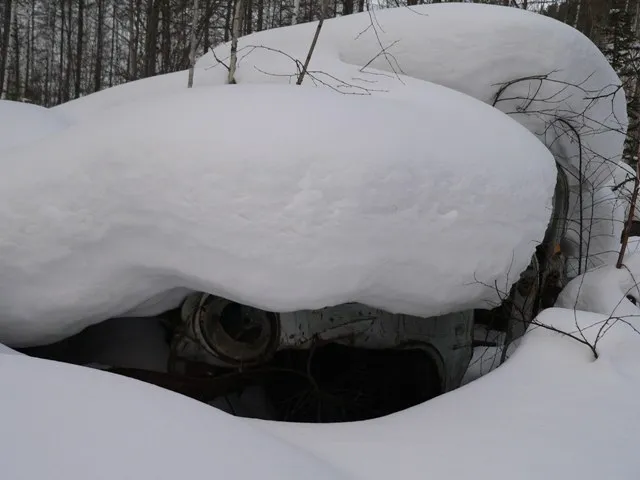
At the graduation exam, which consisted of five stages, the most challenging part for Ivan turned out to be the last one - composing an essay. He had never enjoyed composing since childhood, and he was clearly lacking imagination, as this was a common plight among children in the shelter. The monotonous landscape, represented by the familiar walls painted green up to the middle, illuminated by the yellow light of dim lanterns, did not favor a creative flight of thought.
Against the gray backdrop of child-like masses in light blue uniforms and red neckties, only Mashenka probably stood out. She was like a visitor from another world, as if the girl had stumbled upon the stuffy corridors of the shelter by accident. Her paintings were always full of colors, her poems always piercing the heart, not to mention her essays, which she wrote so effortlessly, as if thoughts from her head, embellished with juicy details, poured onto the paper by themselves.
The essay topic was the same year after year - “What do I want to become when I finish school,” and everyone knew in advance that their essay was a contract for employment upon graduation. Practically, it looked like this: the daughter of cook Alfiya Zaurovna inevitably wanted to become a cook, the son of plumber Pyotr Lukyanovich naturally aspired to pursue a career in toilet cleaning, while the son of the warehouse head absolutely wanted to be a warehouse manager and nothing else. Since all those positions were filled by parents who did not want to leave their cherished spots for their suddenly grown-up offspring, the prefix ‘assistant’ was added to the newly minted child’s profession. Thus, assistants to cooks, plumbers, and warehouse managers were born in the shelter.
What was left for Ivan? He promptly began writing about how he dreamed of becoming the shelter commander, of making the right decisions, fighting hunger, scurvy, and tuberculosis. The phrases he had learned since childhood fell onto the paper by themselves until Ivan glanced at Masha. He thought that she had surely conjured up some interesting, unprecedented profession. He recalled with indescribable excitement how the girl spoke of the world outside the shelter, as if she had been there countless times before. He wanted to do something meaningful in his life, not remain forever in the shadow of his authoritative parent. In front of his astonished peers, Ivan crumpled up his essay and, on a new sheet with a confident hand like that of an adult making the most important decision in his life, wrote: “I want to leave the shelter!”
Then began a long month of arguments with his father, who pleaded with him to reconsider:
- Nobody will ever know. – Father begged, shaking a crumpled version of Ivan’s essay from the trash in front of him. – Let’s swap them, you stay here, I’ll teach you everything; you’ll take my post.
- No, - Ivan insisted, - I’ve made my own decision…
Now he was here, on the other side of the steel door, slowly, reluctantly making his way up the steep stairs to meet the very new world, unprecedented and dangerous. And this world could either accept the envoy and show mercy or crush him like a fledgling that unintentionally fell out of its nest, with equal probability. But that’s a story for another time.
The End.
I wrote this nonsense specifically for you, dying from a worsening sinusitis Exstas.
Photographs styled after Fallout: Krasnoyarsk provided by my good friend, photographer Maxim Mikhailovich Tikhomirov, for which I am grateful.
That’s all.