
Puzzles
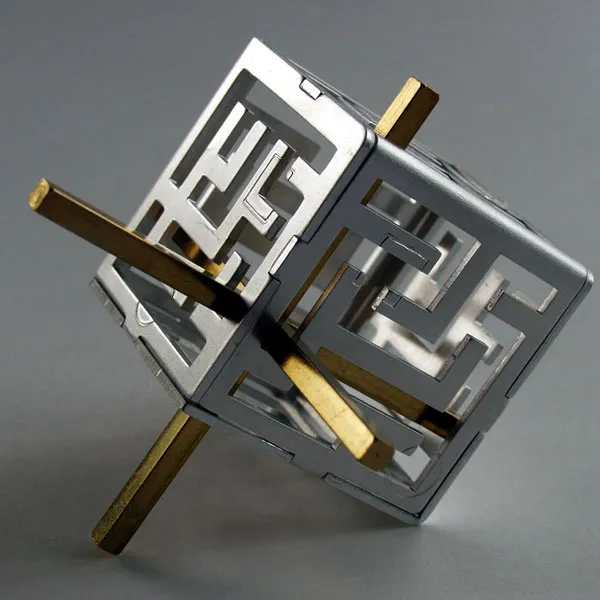
Puzzles are intellectual games that require a certain sharpness of mind and good spatial modeling abilities. Although puzzles are mostly designed for individual play, they can also be used for tournaments (for example, speed solving). Puzzles can be made of plastic, metal, wood, paper, rope, glass – as far as the designer's imagination can reach.
Let's take a look at the most well-known mechanical puzzles that can claim to be table (and not so table) games.
RUBIK'S CUBE
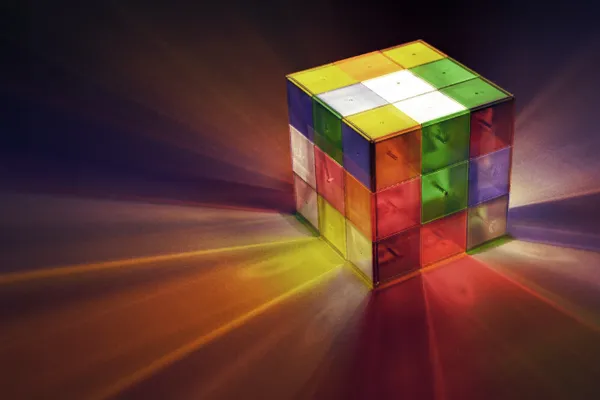
This puzzle was invented in 1974 by Ernő Rubik, a sculptor and professor of architecture from Hungary.
The Rubik's Cube is made up of 26 small plastic cubes (for the original version 3x3x3) that can rotate around invisible axes outside.
The sides of the large cube are painted in different colors (usually – white, yellow, blue, green, red, orange), forming 54 colored squares.
The rotations of the cube's sides allow the faces to change relative positions. The player needs to