
Rash. Craft Weaponsmithing (weaponcraft)
Rush. Craft Weapon Crafting (weaponcraft)
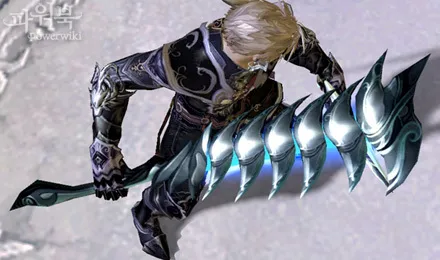
Weapon forging is the most labor-intensive crafting. It often drives the crafter insane if their peaceful profession is rare in the guild. Often they are afraid to enter the city, because forging 4-5 daggers in the hope of scoring a critical hit for the next friend can take half a day.

However, weapon crafting is also a very profitable craft. In terms of turnover, it has the highest figures here. Both in terms of costs and potential results prices. Guns - swords, knives, halberds, hammers - are the main aspirations of most players. Even two-handed swords are gladly accepted. Every critical craft (which doesn't always happen) and the highest level items (mastercraft) significantly enrich you. Therefore, developing this craft earlier in the late game phase is not very profitable.
One of the downsides of weaponcraft is its dependence on "successful crafting," called critical craft. You spend a ton of resources and time creating one item, and if you end up with the basic item stated in the recipe rather than its improved version, you most often receive money in the form of an item and now have to sell it. People making 20 items in a row on gear crafts rarely lose out. According to probability theory, they always end up in profit. But epic failures can happen too. Additionally, the focus on critical craft forces you to create items with mastery 70 above the recipe, which is expensive for low levels.
The advantage of crafting is the ability to equip yourself with end-game gear at final levels much cheaper. If you have trading abilities and considerable persistence, invest in weaponcraft. Weapons sell out instantly, even the low-quality ones. But you'll spend a good amount of time.
Why is this article in the Rush topic?
Rush provides for your rapid development to the end-game phase and the latest dungeons. Weaponcraft is a way to buy yourself gear and craft end-game weapons. This is what Rush leads to.
This craft should be developed by classes that use its products (Templar, Gladiator, Sin, Cleric, Chanter), because while you are crafting a quality weapon, you will create a whole sea of non-critical items for sale. Also, the labor intensity of production will not allow a low-level crafter to tire out for free for long. It will also be easier to attract armor craftsmen for cooperation.
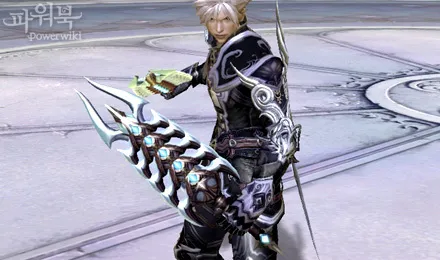
Other classes are better suited for other types of crafting, and it will be explained why.
Weaponcrafting, like any crafting, is divided into several levels of mastery. Each requires its own consumables, resources, and materials.
1-99 Lesser Craft (Lesser)
100-199 Regular Craft (Regular)
200-299 Greater Craft (Greater)
300-399 Major Craft (Major)
400+ Mastercraft (Master Craft) and Dragoncraft
As you progress in crafting, you essentially produce the same items, but for higher levels and better quality.
The hits are: swords and knives for attack speed, halberds with increased crit and HP, maces with boosts/crit/HP.
To produce weapons, you need resources from the earth and air + sharpening stones + low-grade weapon blanks.
Let me explain the principle.
To create white weapons, you need resources. A critical item will be green weapons.
To create green weapons, you need either drop loot from mobs (often named ones) + resources, or critical craft (green) from a white blank + resources. A critical item will be blue weapons.
To create blue weapons, you need either a very rare blue part + resources, or critical craft (blue) from a green blank + resources. A critical item will be gold.
So the process of creating a golden gun will look like this:
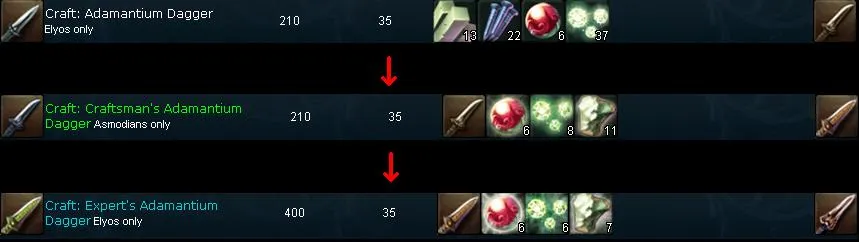
Or like this (a bunch of very rare and expensive blue resources + loot from legends)

A very lucrative activity for the hardworking.