Dark Eldar. Technology and Heroes [translation]
The previous post in the series — "Dark Eldar. Infantry".
Talos Pain Engines
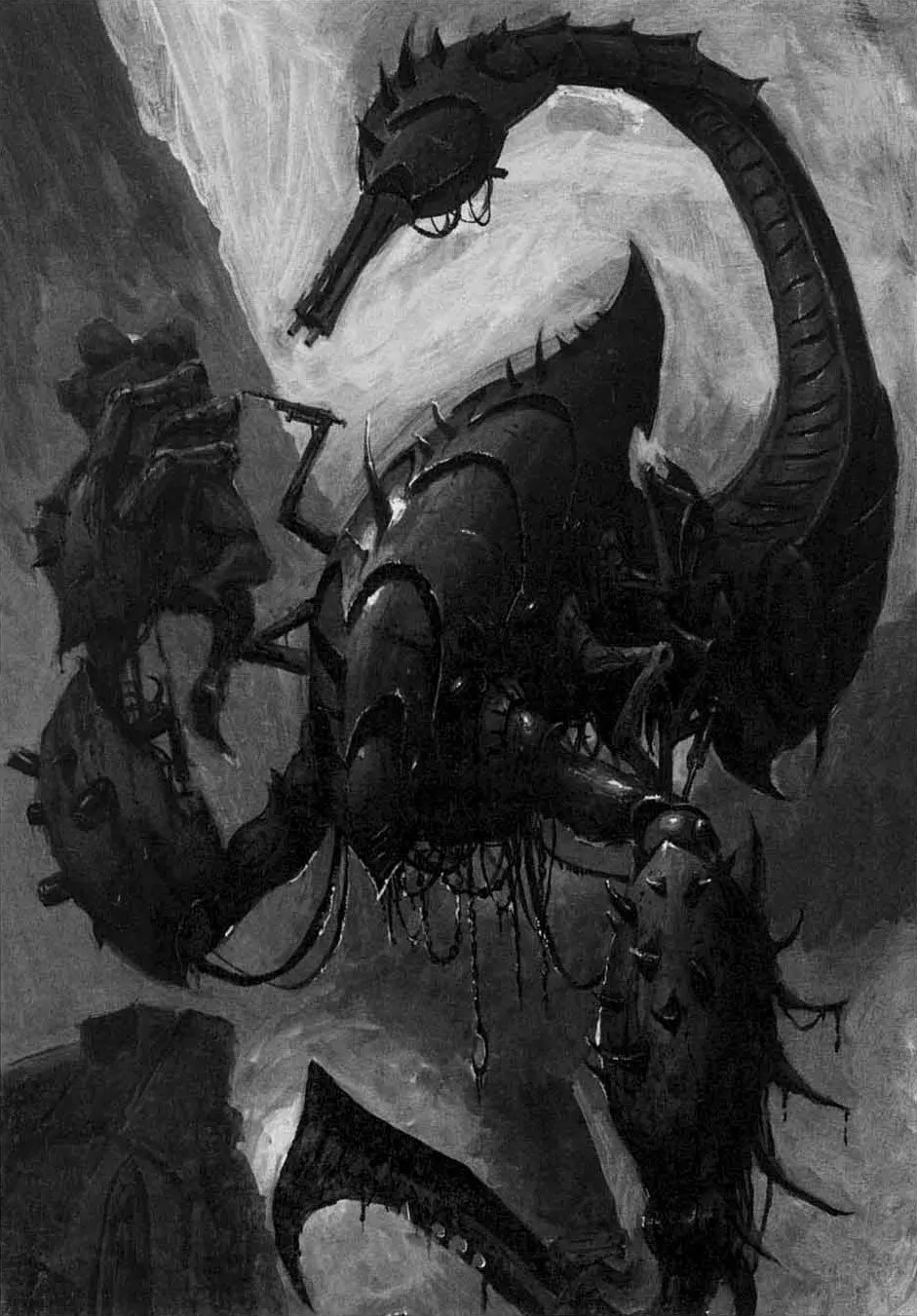
Pain Engines, the most common variant of which is the "Talos", are regarded as the pinnacle of the homunculi's art. These partially organic and partially mechanical creations of mad genius are outfitted with surgical tools and horrific weapons. What unites all the various Talos models is one thing — they are superbly equipped for terrible vengeance against the masters who have angered them. From the clattering "Chainfiends", favorites of the Prophets of Flesh, to the drill-limbed Engulfers guarding the Spiral of the Abyss — each Talos is a horrifying abomination, many times exceeding the size and strength of its creator. These semi-sentient constructs move with a menacing slowness, approaching their prey under the roar of grav-drives and the clicking of silvered blades.
In the homunculi's dungeons, the Talos is used for various purposes, serving as both a guardian and a field torture device capable of plunging its victims caught in its steel claws into a dizzying array of agonies. The Talos is valued by the homunculi not only as a shield (its metallic shell is nearly invulnerable to enemy fire) but also as a tool that allows its master to punish the hesitant and the brazen without lifting a crooked finger. With its blades on its front legs, the Talos can chop even an ogryn to pieces, and its ichor-spitting apparatus in its chest allows it to turn lightly armored vehicles into bubbling mush. But true fear is instilled by the manipulators and razor-sharp claws hanging from the segmented body of the Talos. When an opponent is caught in the steel gripping claws of the Talos, the Pain Engine begins to quickly and efficiently disassemble them with its other limbs. Under the roar of engines and the shriek of drills, it works with surgically sharp tools, collecting every amputated part and peeling the victim's carcass layer by layer until only a few drops of blood remain.
In battle, this grotesque process brings immense pleasure to the homunculi, not only as a splendid sight but also as a stimulus for the Talos, which catches and devours living prey. Cracking and twitching as if anticipating the next kill, the Talos rushes forward with doubled energy, cutting through the enemy ranks with the scorching fire of high-tech weaponry. Upon catching a new victim, it resumes its work; the fate of those killed by the Talos does not end with death — when the machine returns to the dungeon of the coven, pieces of its victims are extracted from the metallic body and used as ingredients for new potions and elixirs.
Chronos Parasite Machines
"Chronos" resembles a gigantic biomechanical insect or a spiny parasite; its polished body bristles with antennas and resonators. Although used for the same purpose as the Talos and other Pain Engines — to torture and destroy — the Chronos is even stranger. Utilizing a bizarre blend of alchemy and science, the homunculi covens created this machine with the aim of stealing not the physical parts of its victims, but their very life. What the victims of this vile creature become after it has fed is a testament to the devilish skill of its creators — for the "Chronos" leaves behind only desiccated gray corpses.
The "Chronos" is infamous for the horrifying action of its primary weapon, a ribbed crystalline device protruding from the sensory nodes of the machine or hanging from its head like the proboscis of a strange insect. The name of this dreadful device roughly translates to "soul-sucker", as it creates a vortex of negative energy that siphons the life force from all those caught within its field of effect. To an outside observer, the victim of Chronos's invisible influence would appear to age incredibly rapidly, withering away and ultimately decaying into a desiccated mummy.
Strangely, the grisly feeding process of the Chronos does not end there. The stolen life forces within its shiny body are amplified, passing through the ribbed valves of condensers and being emitted by resonators. Waves of soul energy wash over the dark eldar nearby the Chronos — typically the homunculus itself and its ugly entourage of horrors. However, this healing effect is by no means limited to the members of the coven; all dark eldar can absorb the life forces stolen by the Chronos, growing stronger and more vigorous with each feast of the creature. Thus, the metallic beast nourishes and rejuvenates the nearby fighters, aiding them in committing horrific deeds. Some models are modified to increase the range of the soul-sucker, while others drain every last drop of energy from their victims by directly piercing them with the device. Among the superstitious inhabitants of the Imperium, the Chronos is known as the "thief of time" as it steals the youth and strength of its victims, granting it to its cruel masters.
Archons planning particularly long raids are willing to pay dearly for having a "Chronos" at their disposal, as if their warriors get mired in a fierce melee, the arriving "Chronos" will nourish them with such deadly energy that the tide will swiftly turn in favor of the dark eldar. Bathing in waves of stolen life is exceedingly pleasurable; wealthy archons often keep a "Chronos" close at hand to enjoy the consequences of their subordinates' failures to the fullest.
From the sky, buzzing and clicking, came a gleaming machine bristling with antennas, the color of dried blood. We didn’t consider it a top priority, for the appearance of the commorran swarm resembled a fight with a whirlwind of blades. After unleashing a volley of bolt fire, my brothers began to silently drop to the ground. Brother-Captain Alcon did not respond. I pulled off his helmet and found only the grinned bare skull beneath. And then the alien attack intensified twofold…
— Scribe Tulle of the Silver Skull Order on the Iridian Massacre
"Poison"
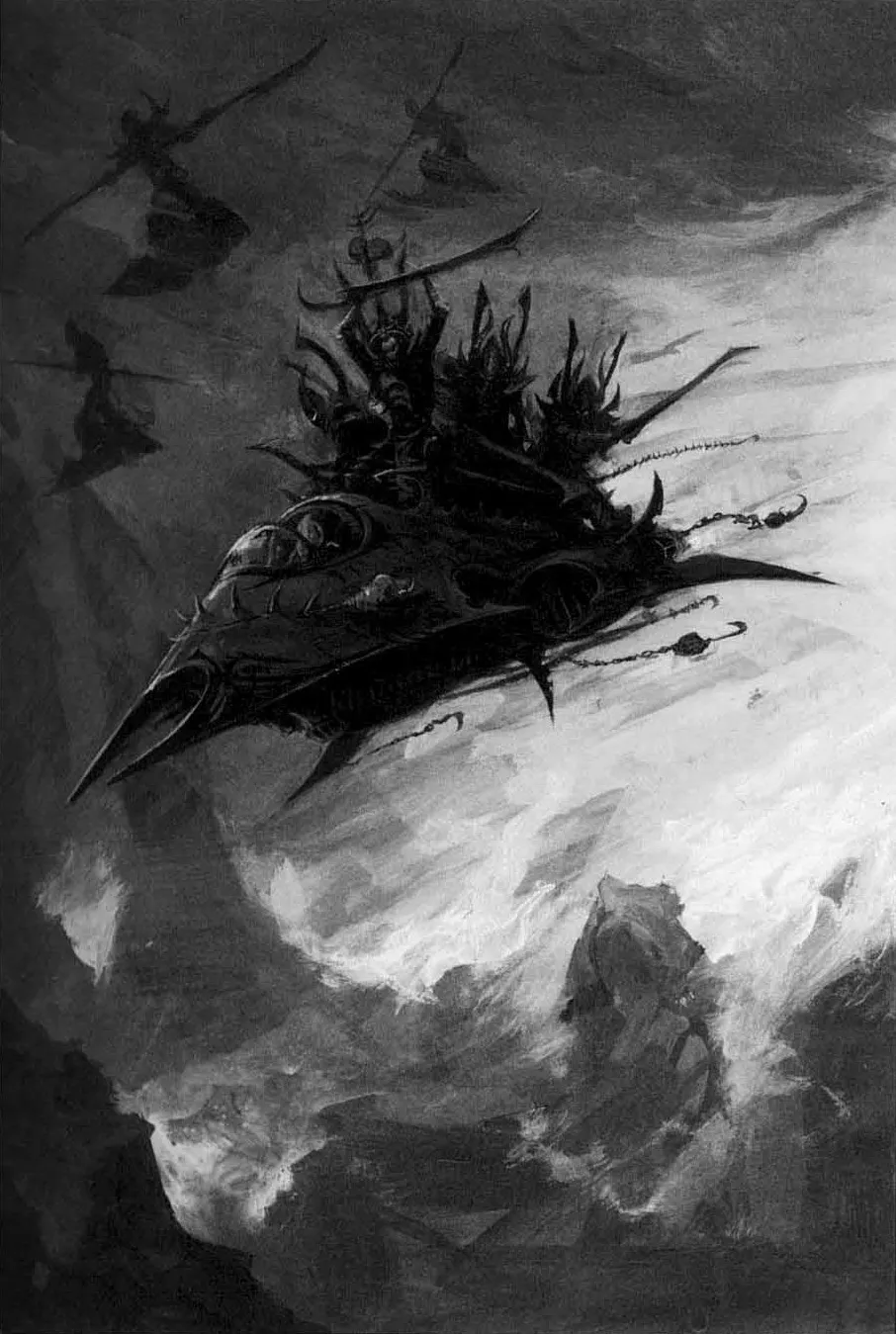
The dark eldar rely on surprise and speed, which is why their aviation consists of fast and maneuverable machines. The swiftest transport of Commorragh is the "Poison", a speedy grav-jet carrying an entire squad of warriors ready to enter battle; a kind of poisoned dart aimed at the heart of the enemy.
Rather than conveniently providing the enemy with a specific target, the strike groups of the dark eldar attack in waves; a dizzying number of transports dive towards the enemy’s artillery from the yawning heavens. Though many are caught in flak fire, even a well-drilled battery will never be able to intercept all of the sinister swarm’s machines. Moreover, to any experienced commander of the dark eldar, it is well known that trained enemy soldiers will first target the larger transports with greater numbers of fighters onboard. Therefore, the savvier dark eldar rush into the fray aboard machines not exceeding the size of the "Vipers" of the raiders or their ancient eldar aerial chariots. Speed is paramount — if even one "Poison" slips through the defensive positions, chaos will reign there; the transport will cover the fire of its passengers, who have begun their bloody work.
Although the starting engines and grav-drives of the "Poison" are similar to those found on other dark eldar machines, the control systems of this nimble transport are so sensitive that it can slip through withering flak fire, confounding gunners with a holographic shimmering field. It is said that an ace on the "Poison" can even navigate through the corridors of the Web, designed for the passage of a single humanoid. As a result, "Poison" is extremely popular among Commorragh hunters and aristocrats from the upper spires, who enjoy chasing down enemies for sport.
Despite its modest size, the "Poison" can carry a small squad of chosen warriors, used to fighting as a unified whole. While most lords and heroes of the dark eldar prefer to lead their cabal warriors in their personal "Raider", there are those who are not accustomed to elbowing with common foot soldiers. Sometimes, a single warrior takes to battle aboard the "Poison" — some dark eldar aristocrats are too squeamish or suspicious to even trust their own escort. Those who have seen dark eldar in battle know that sometimes a single fighter can turn the tide of the battle — the "Poison" brings a toxic payload, not a weapon.
"Raiders"
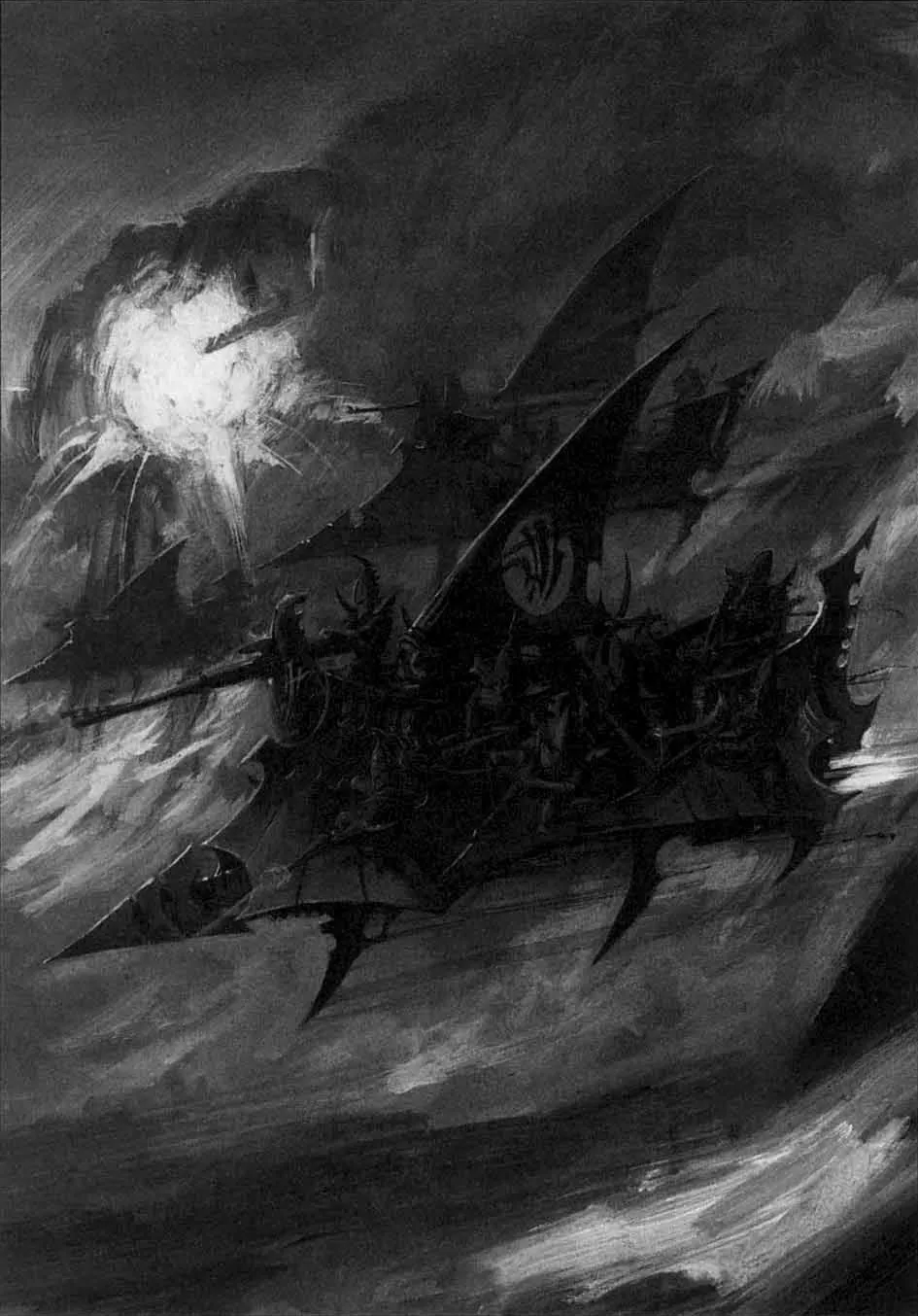
The first sign of a dark eldar raid is the glint of anti-light in the sky, unfolding and stretching into a shimmering portal, ablaze with green flame. Through these ethereal gates fly dozens of blade-studded machines, heading towards their shocked prey with the determination of sharks that smell blood. The most common of these machines is the "Raider", a favorite transport of the dark eldar.
Light and exceedingly maneuverable, the "Raiders" embody the dark eldar doctrine of speed over sturdiness. Unlike the passengers of the unwieldy machines of the Imperium, the fighters in "Raiders" are not hidden behind armored plates. These transports resemble ancient eldar pleasure boats but are faster and outfitted with razor-sharp stabilizers and serrated keels to cut enemies in half.
"Raiders" are propelled by compact turbo engines, and an anti-grav cushion holds them aloft, allowing them to move at breakneck speeds even across rough terrain. While each machine is adorned with the symbols of the cabal to which it belongs and parts of fallen enemies, they share a number of common features: a deflector blade, operated by an experienced pilot; ethereal sails that capture the energy emitted by the portal; a bow-mounted heavy weapon for suppressing the enemy with fire. Wide fairings protrude from the elegant bodies of the "Raiders", and the metallic decks are covered with intricate patterns of holes that reduce the vessel's weight. Moreover, "Raiders" are often fitted with sickles, electro-shocking rams, and weapon mounts — dark eldar happily make use of any weapon.
At first glance, the low and streamlined "Raider" seems more like a racing car than a grav APC. Indeed, at maximum speed, it can keep pace with even the magical grav-jets of the eldar from the craftworlds. However, the main task of the "Raider" is to deliver fighters to the battlefield; and passengers are confident enough to cling to the rails and hooks for trophies, enjoying the thrill of the hunt while shells explode around them. In mere moments, a fighter can leap from a "Raider" into the thick of battle, baring their teeth in eager anticipation of the bloodshed.
When the enemy is defeated, the survivors are bound, shackled, or simply impaled on the hooks of the "Raider". The dead dark eldar are also transported back to Commorragh without ceremony, tossed in a blood-soaked heap on the deck or dangling like dead dolls from the spiked hull of the "Raider".
Private Malco stared at the wondrous eclipse in the heavens. The disc of the red moon drifted over the sun, leaving only a dark abyss framed by the rays. Malco furrowed his brow and shifted his gaze to the suddenly appearing emerald point in the center. It seemed to be shattering into parts and expanding, opening like a mouth or a wicked eye. He fumbled for the transmitter, preparing to report the strange phenomenon to Commissar Radchek, but the words stuck in his throat.
The stunned soldier saw an agile blade of a vessel fly from the heart of the rift in the sky, incredibly close and heading straight for him. Behind it followed another, and another, and then a whole dozen ships, howling as they dove from the sky like poisoned darts from the god-hunter.
Malco retreated, remembering how, when he was small, Mother Ingrid would tell him frightful stories of the werewolves that came from the sky and whisked innocent people straight to hell.
— On the positions! — screamed Malco with a voice hoarse from terror. — For the love of everything holy, ON THE POSITIONS!

"Slayers"
The "Slayer" grav-jets are no slower than their "Raider" cousins. However, the seats for passengers have been replaced with three powerful heavy weapons. On the battlefield, the "Slayer" provides fire support and is deployed against the most heavily armored targets. However, comparing the "Slayer" to an Imperial tank is like comparing a swift aerial predator to a cumbersome pack animal. The "Slayer" grav-jets are so fast and agile that they can destroy an enemy tank in one pass, disappearing before the enemy even sees the attackers.
"Slayers" are a type of killers in the war against reality, but their target is armored vehicles, not enemy leaders. Each crew is given a task that they must accomplish under the threat of severe punishment upon returning to their home cabal in the depths of Commorragh.
The cabals load all available information about the target into the "Slayers"’ guidance systems, and the grav-ski crews are instructed on the best method of destroying the chosen vehicle. All this is done so that the unruly crew of the "Slayer" can concentrate on its primary task, such as destroying a valuable enemy machine, stopping an armored column, or severing retreat paths. Upon achieving this goal, the crew of the "Slayer" receives carte blanche to wreak havoc on the battlefield and ruthlessly eliminate all enemies caught in their sights.
The fact that the "Slayer", the most common model of battle grav-jets of the dark eldar, is slightly more armored than the Imperium’s APCs, vividly emphasizes the dark eldar doctrine of "Speed Above All". According to the pilots of the "Slayers", if they fly away before return fire is opened on them, their chances of survival are much higher than those who take it on armor. This tactic breeds intense hatred in the officers of the Imperium, who have been taught to wage war by the hammer, not the rapier. However, its effectiveness is hard to doubt. A squadron of "Slayers" is quite capable of appearing from nowhere, obliterating an Adeptus Mechanicus god-machine in one volley, and disappearing over the horizon before the titan crashes to the ground.
Less than a hundred meters from the orc positions, three more elegant machines with blades on their keels surged from a whirlwind of blinding light. Above the hastily constructed defenses of the green-skinned on the walls of the bulbous fortress arose a thunderous roar — a proper brawl was in the works. The orks, in unified fervor, swallowed the bait.
From the huts around the fortress poured a crowd of orks who decided to escort the armored column of orc hospitality out to meet the darkness-cloaked attackers led by an enormous battle-wagon with rusted metal jaws and the word "Food" written on its blunt nose. Nine beams of anti-light shattered the twilight as they shot straight to the vital parts of the metal monster — axles, gun ports, engine, fuel tank. The "Food" lurched so violently that two impatient trucks were flipped over and hurled directly beneath the heavy spiked treads of the battle-wagon behind. Next, the "Red Crusher" fell, exploding into atoms in a cloud of crimson plasma. The remaining orc machinery swerved around the heaps of scrap metal; individual groups of lads dived into the darkness, eager to shed blood in the attack. Those left in the fortress heard the fading sounds of battle coming from the supernatural mist. By the time the whole orc horde arrived, the raiders had already vanished without a trace. A few hundred bloodthirsty orks, rushing to intercept, had vanished too.
Reactive Fighters "Cutting Wing"
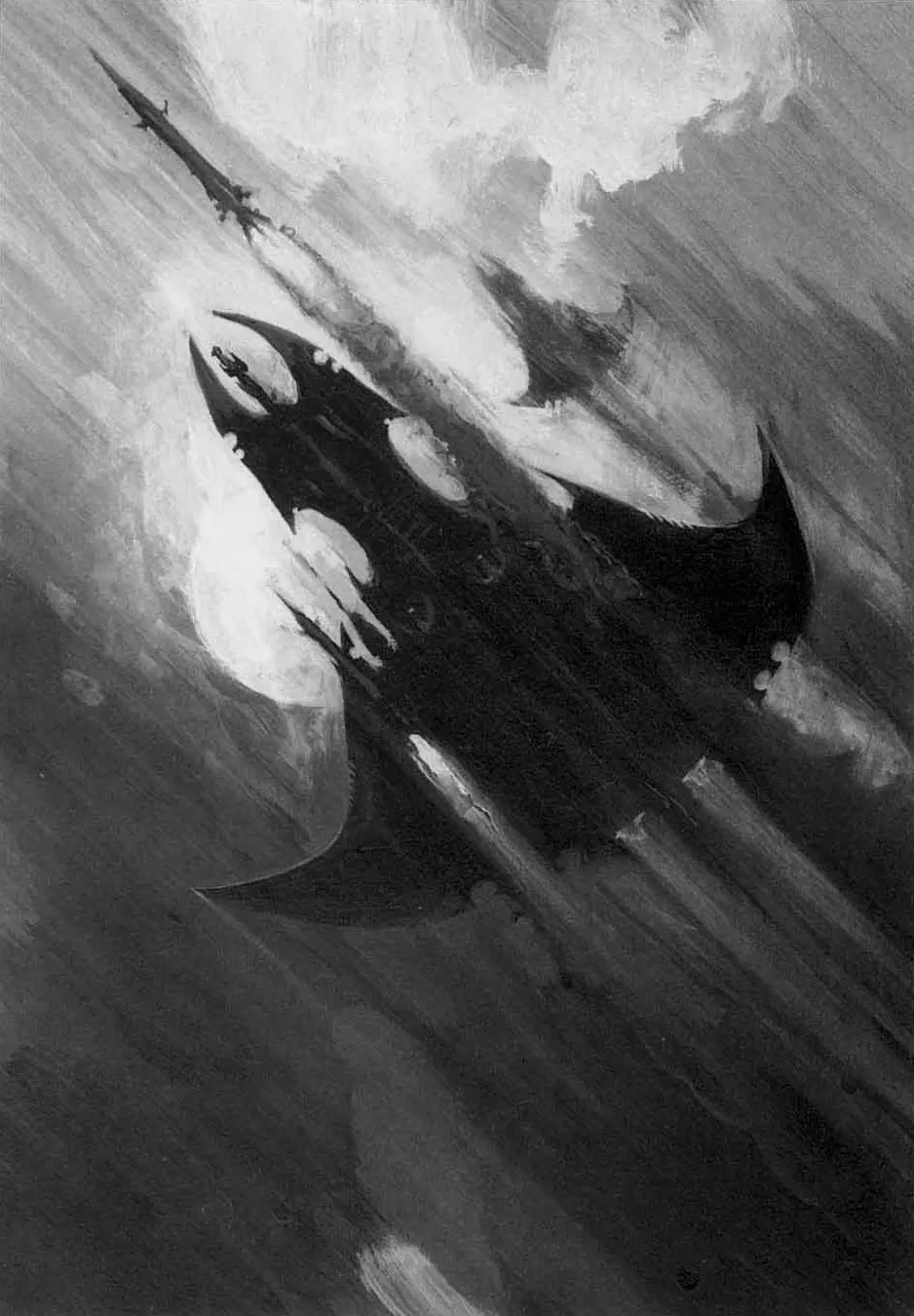
The swirling mist that envelops every dark eldar raid is inevitably sliced through by the twin vapor trails of the "Cutting Wing" reactive fighters — alien aircraft so fast that their missiles reach their targets in an instant, with the thunder of the volley that released them.
Even the most pompous archon understands that the armored vehicles of lesser races, though clumsy and ugly, can still be quite dangerous. An air raid intercepted by skillfully targeted flak fire is often forced to retreat, suffering monstrous losses. To prevent the enemy from utilizing such means, the dark eldar employ the "Cutting Wing" reactive fighters, sowing death and terror in the ranks of their foes. There is no target that the aggressive and experienced pilots of the fighters cannot catch, as they are exclusively drawn from the Veteran Raiders, for whom fighting at insane speeds is second nature.
The shapes of the "Cutting Wings" are reminiscent of jagged blades with double edges, and their sickle-shaped wings and razor-sharp curves conceal deadly armaments. Imperial commanders often mistake the "Cutting Wings" for the interceptor fighters of the eldar from the craftworlds due to the common elegance and dizzying speed shared by all eldar aircraft. However, the pilots of the "Cutting Wing" reactive fighters specialize not in aerial battles but in eliminating ground targets. These veterans of the deadly races of the Dark City have earned enough to leave the arenas forever and now yearn to kill and maim all within reach, without risking their own skins. The purpose of the "Cutting Wing" pilot’s existence is to soar through a hell of their own making, exterminating the panicking survivors scurrying far below.
The "Cutting Wing" reactive fighters are fitted with a whole array of devilishly effective missiles. The volley from a squadron of "Cutting Wings" seems to tear apart the earth with monstrous invisible claws. The most curious example of munitions is the chilling "harvest" missile, which the fighter pilots aim at the center of the enemy formation. The grim reputation of the harvest missiles has been earned by their warheads: upon detonation, instead of a normal explosive wave, a wave is released, held in a specific direction by powerful built-in energy fields. At a designated altitude, monstrous energy is released, the wave of which decapitates or even cuts in half all those unfortunate enough to fall within the blast radius. Such surgical precision delights the pilots, who, like all dark eldar, prefer unusual kills.
They come for your souls, I have seen it. They have come to devour your souls...
— Yolla Black Winter, first-rank psyker
Bombers "Raven of Void"
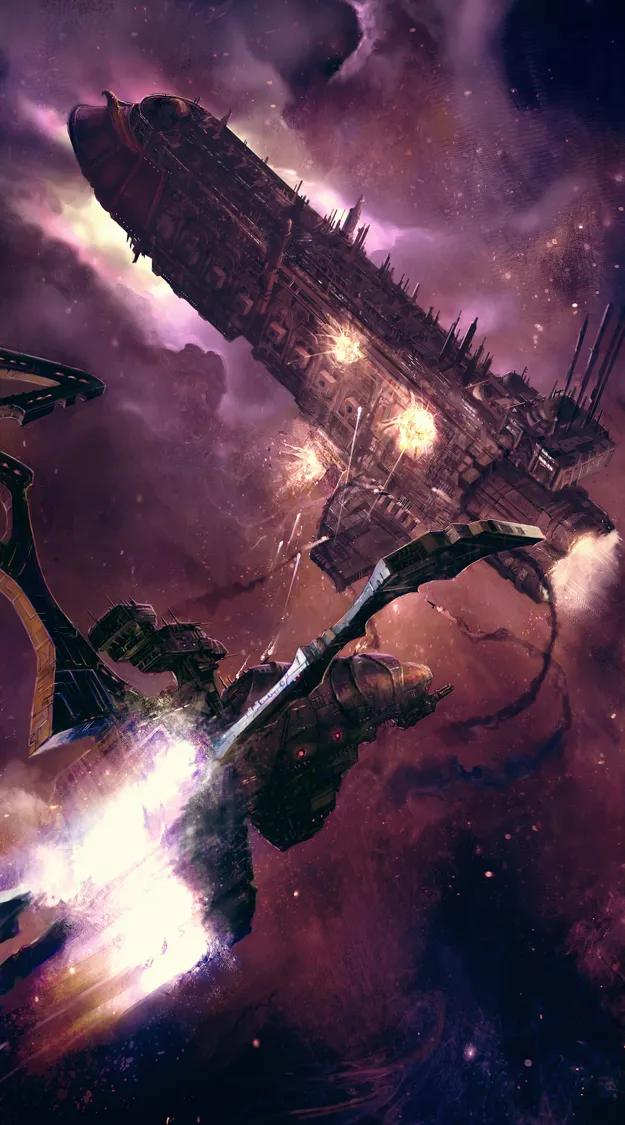
Although for the dark eldar the bombers "Raven of Void" are the heaviest armed vehicles, they are still capable of easily outpacing the maneuverable fighters of the Imperium. "Ravens of Void" share many similarities with the reactive fighters "Cutting Wing", particularly their characteristic sickle-shaped wings and aerodynamic form, but their payload is far larger and deadlier than that of their younger brothers — a horrendous void bomb.
Like the reactive fighters "Cutting Wing", the bombers "Raven of Void" are piloted by veterans of high-speed and deadly races around the high spires of Upper Commorragh. They are used to speed and calmly execute the most dangerous aerobatics that another pilot would not survive. However, the specialization of the "Raven of Void" is determined not by the pilot but by the gunner — the true maestro of the symphony of destruction played by the dark eldar for their victims.
At the nose of the "Raven of Void" sits a crystalline capsule, the interior of which resembles the cockpit of a Raider, with its targeting holograms and targeting runes shimmering and dancing around the unsuspecting target. From this richly adorned cabin, the gunner of the "Raven of Void" unleashes scorching volleys from the ship’s void spears.
Unlike the reactive fighters "Cutting Wing", whose crews revel in the roar of their targeting runs, the bombers "Raven of Void" are equipped with a clever sound suppressor that completely mutes the noise of the engines. Often, the first sign of the arrival of a "Raven of Void" for enemy fortifications will be two bright red beams, leaving burning trails at the positions of anti-aircraft artillery.
Hand in hand with all its deadliness, the void spear is not the most terrifying weapon in the arsenal of the crew of the "Raven of Void". When the gunner assures himself that he can work without hindrance, he launches a void bomb from the weapon gondolas of the bomber. In a well-aimed bomb, not one but two warheads explode, with a split second's difference. The first is harmless — it merely creates a power sphere, a bubble in reality that shields all outside of itself and dooms everything inside to destruction. The second warhead contains a particle of pure dark light, released by the explosion of the first warhead. The consequences of even a tiny fraction of dark light breaching reality are catastrophic. Were it not for the force field created by the first warhead, the implosion would annihilate not only the enemy but also the "Raven of Void" itself. As it is, only what is contained within the crackling sphere is anihilated. After the void bomb explodes, only a smoking crater remains, meticulously cut into the earth, with the vapor trail of the fleeing "Raven of Void" in the sky above.
Baron Satonyx, Lord of the Cursed
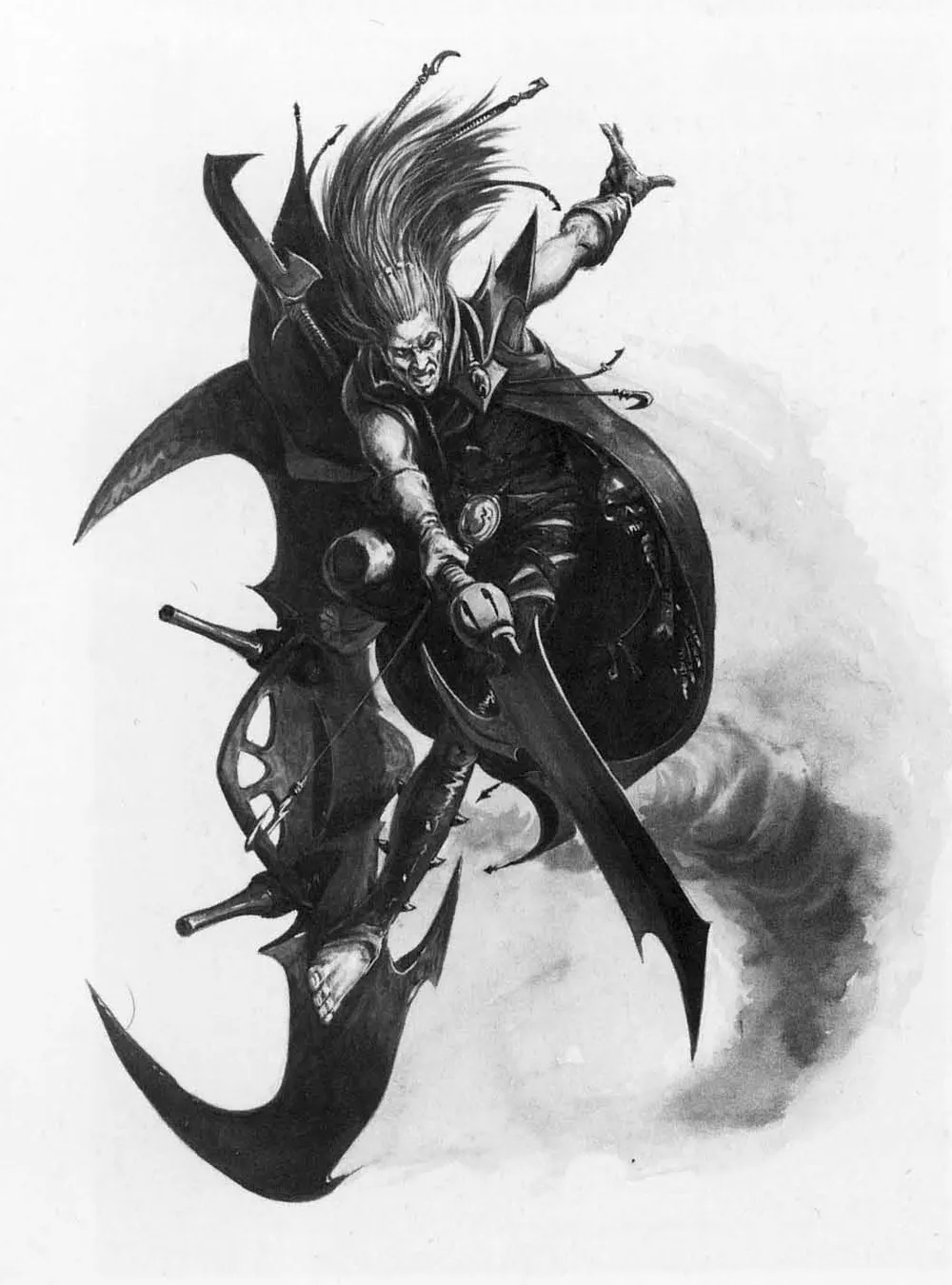
In the rotting underbelly of Commorragh dwells a warrior, ruling the unruly, a cruel king of the rabble. This self-proclaimed Baron Satonyx, Lord of Bedow, Master of the Middle Darkness, whose influence spreads throughout the criminal world. It is said that no gang of the Cursed ventures into battle without his blessing, and only the leaders of gangs know how to locate his airborne court, for the baron is shrouded in a veil of secrecy, like a ragged cloak.
Satonyx was once a minor nobleman in the Cabal of the Split Eye, known for his unquenchable thirst for excitement from raids into reality. During a raid on Eleightok, Satonyx captured none other than an enemy seer, which he trumpeted in all corners upon returning to the Dark City. However, in the opinion of Archon Citrax, master of the Split Eye, Satonyx had put the entire cabal in danger by bringing a psyker into Commorragh. Satonyx was expelled and sent to Lower Commorragh under escort from his fellow cabalists. Burning with hatred, Satonyx awaited an opportune moment, viciously dealt with his guards, and escaped.
Since then, a substantial bounty has been placed on Satonyx's head. Experienced bounty hunters and alien hounds have sought after it, but one by one they are found hanging upside down from the towers and minarets of the Split Eye.
Next were the elite Born cabalites, who cut a bloody swathe through the Dark City, trying to drag Satonyx to Citrax’s throne. He somehow managed to elude them as well. Gradually, Satonyx began to be respected as a master of survival, fighting for his life by any means. As his fame grew, he became a hero for the gangs of the Cursed and all those who despised the tyranny of the cabals. The baron gathered under his command something resembling an army of outcasts, rebels, and dissenters. After a campaign lasting a full year, he succeeded in bringing the Citrax house to its knees.
To this day, even the baron’s closest advisors do not know his greatest secret. Among other trinkets under the bloodstained hems of his cloak lie the remains of that very seer whose capture led to Satonyx's expulsion. By scattering these bones with crystal inclusions into a pool of blood, he captures the shadows of what is to come. Thus, the baron cannot be caught, and his airborne court of outcasts is always one step ahead of pursuers.
Baron Satonyx has earned the respect of archons of the upper spires. They believe that it is better not to change the established order — since Satonyx's rise, at least it has become possible to negotiate with the gangs of the Cursed, as they are loyal only to their lord. But the archons will never admit that the baron is a master of espionage and blackmail; they keep secret the knowledge that the recently risen rulers once belonged to Satonyx's gangs. "The Baron knows everything," is Satonyx's favorite saying. Given that he himself rose from the muck to become a prince of the commorran underworld — perhaps he is right.
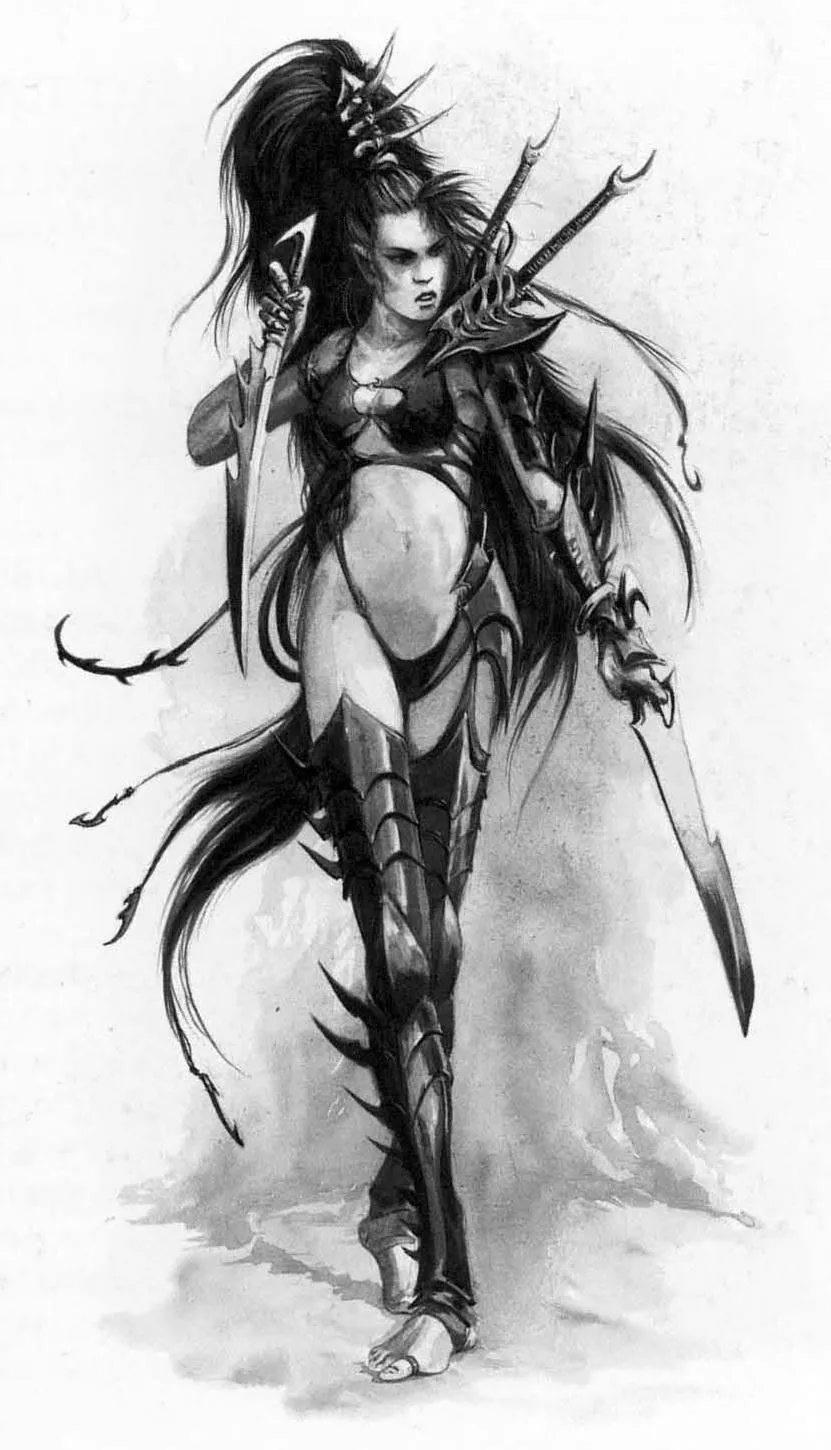
Lelith Hesperax
Lelith is the undisputed champion of the arenas, deadliest of gladiators, a genius in the art of combat. Lelith is a personification of grace; her sensual movements hypnotize and mesmerize. Only the wealthiest dark eldar can afford to witness Lelith's bloody entertainments. To personally attend a performance given by such an incredibly talented succubus is a dream for most cabalites, as such a sight energizes and inspires even the oldest among them.
While her purring is compared to honeyed velvet, Lelith seldom speaks — she is an eldar of art, not an orator. However, her commands are always precisely carried out by her handmaidens from the Cult of Strife, who watch with envious admiration for their mistress's flawless form and supernatural agility. The night before a raid into reality, Lelith typically slinks into the chambers of the archon preparing for battle, surrounded by dozens of handpicked witch acolytes. Mistress Hesperax honors the cabals with her presence only to find herself an interesting prey; she enjoys entering into conflict with the most dangerous veterans and heroes of the Galaxy. To this day, she has never returned to Commorragh without blood on her blades and new trophies for her private collection.
Among all the witches of all cults, only Lelith does not use combat drugs to enhance her abilities. The handmaidens of Lelith, the Cult of Strife, assert that their mistress can outmatch any opponent with nothing but a sharpened piece of metal. Indeed, while she masterfully wields all exotic types of weapons favored by witches, Lelith typically fights with two simple yet perfectly balanced daggers.
Rumors among the competing cults persist that Lelith's incredible mastery has a supernatural basis — that she somehow convinced the homunculi to replace her blood with hyper-adrenaline, that as a child she sucked steroids from a syringe, that she sleeps in a barion sarcophagus filled to the brim with stimulants... The truth is far simpler — like any natural predator, Lelith prefers close combat. Combat drugs are only for weaklings — they distort the moment of delivering the fatal blow, when the victim bleeds out. How can one truly appreciate the subtle nuances of the last breath of a victim when one’s senses are tainted by toxins? Typically, abstaining from using chemical compounds in the frenzied world of the arena is suicidal, but Lelith is so gifted that her skin remains untouched by scars.
In combat, Lelith employs not only blades but also her own body as a weapon. In her flowing hair are woven blades and hooks, which she uses to seize the weapons of her enemies, like Arachne with splinter nets. Her long, bare feet are adorned with blades to easily slice throats in a pirouette, while fingernails are reinforced and sharpened to scalpel edges. Lelith can kill a dozen warriors in seconds, drawing gleaming arcs with her blades between deadly strikes and finishing with a graceful salute. Footage of such performances of hers spread throughout Commorragh and beyond. Perhaps, her admirers say, not only mortals are enthralled by Lelith's deadly dance...
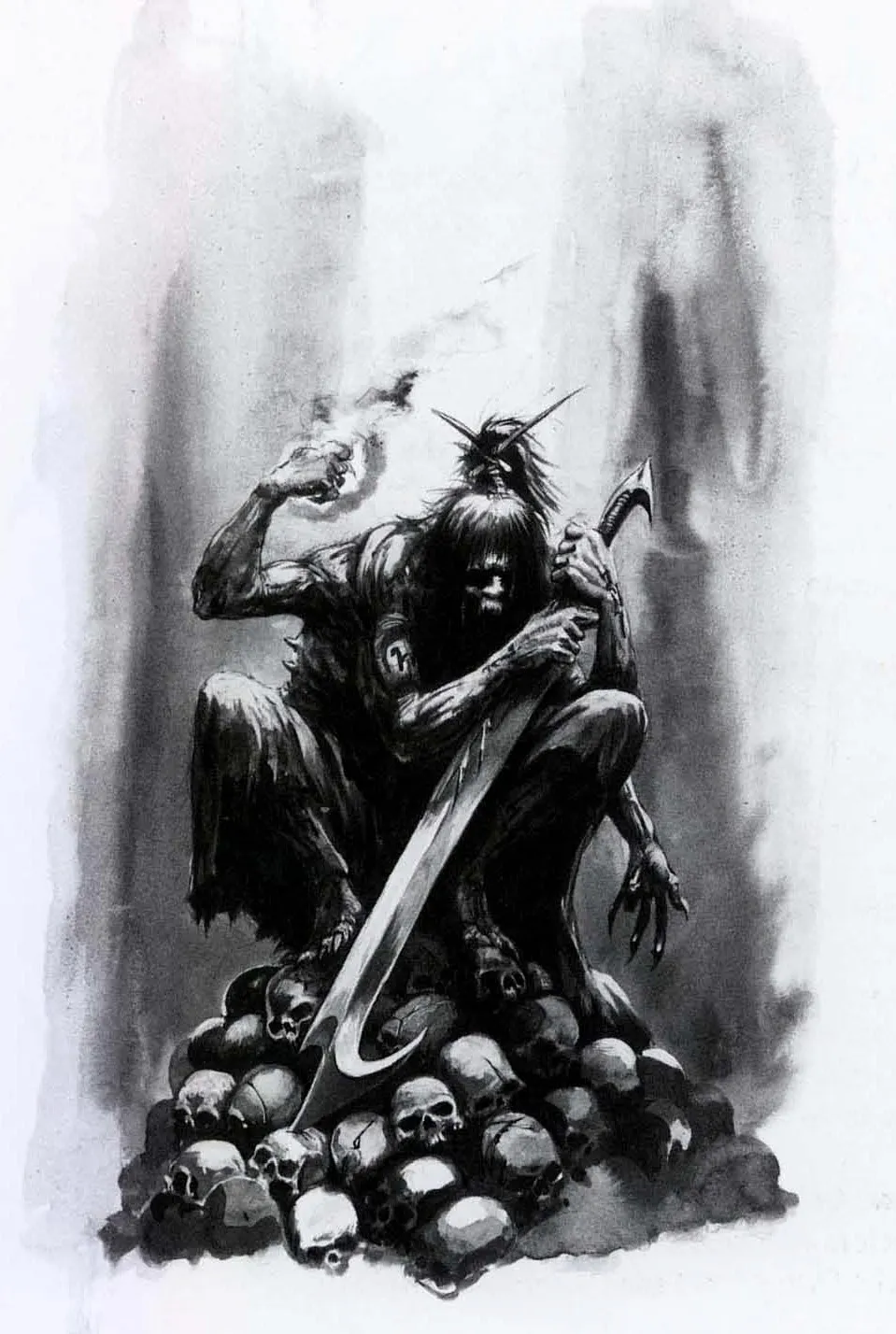
Kheradruakh the Decapitator
The mandragore known as the Decapitator is a nightmare prowling the alleys of Commorragh. Little is known about Kheradruakh — which translates to "Hunter of Heads" — except that he can emerge from the slightest shadow and always takes the head of his victim. Rarely does a victim realize that the shadowy stalker has empty eye sockets and an extra pair of clawed hands, though it remains unknown whether this is part of the anatomy of the mandragore or a product of the homunculi's work. Though Kheradruakh apparently kills indiscriminately and without cause, there are known cases of him being hired as an assassin who takes the head of a selected target in exchange for an incredibly high price in souls. There have been instances where the Decapitator appeared during a raid into reality, claimed a single skull, and vanished as silently as he had come. Only mandragores know what Kheradruakh is trying to achieve with his sinister actions.
Kheradruakh silently severs the head of his chosen victim with his long, sharp blade and, after a cursory inspection of the trophy, disappears into the catacombs where he has set up his lair. The dome of his vast hemispherical lair is lined with skulls, arranged in such a way that they all gaze at a single point directly above the empty throne at the center of the chamber. There sits Kheradruakh, resembling an ugly black insect, and with quick movements begins to strip the muscles and tendons from the horrific trophy. Once the skull is completely cleaned, the Decapitator twists it in his hands, examining every hollow and curve with his long fingers and agile tongue. If a meticulous inspection reveals the trophy’s unsuitability, Kheradruakh discards the skull among others like it, grimly crushing it underfoot and setting off again in search of a new victim. If, however, the skull meets his requirements, he carefully climbs up the dome, clawing at the jaws and eye sockets, until he reaches the topmost circle, where he inserts the skull into an empty niche with the care of an obsessed sculptor. Although such a distinction is bestowed upon only one skull every decade, there are now few empty niches left in the Den of the Decapitator, and the air within is already saturated with forbidden energy.
Each of the skulls chosen by Kheradruakh echoes with the remnants of the soul of its former owner, and their empty eye sockets gaze at a single point with their supernatural eyes. Some apprentices of the mandragore believe that upon achieving a critical mass, the weight of the gazes from the skulls will break through the barrier between the shadows, and malicious entities will peer forth into the world. Beneath the unblinking gaze of the skulls above the throne of the Decapitator, the fabric of the Web will slowly unravel, darkness will gather at the hole like a living being, and then the terrible energy of the shadow realm beyond reality will plunge the depths of Commorragh into a new coal-black hell. Perhaps then the dark eldar will learn the true power of the mandragores and their monstrous allies, and the entire Dark City will dance to Kheradruakh's tune.
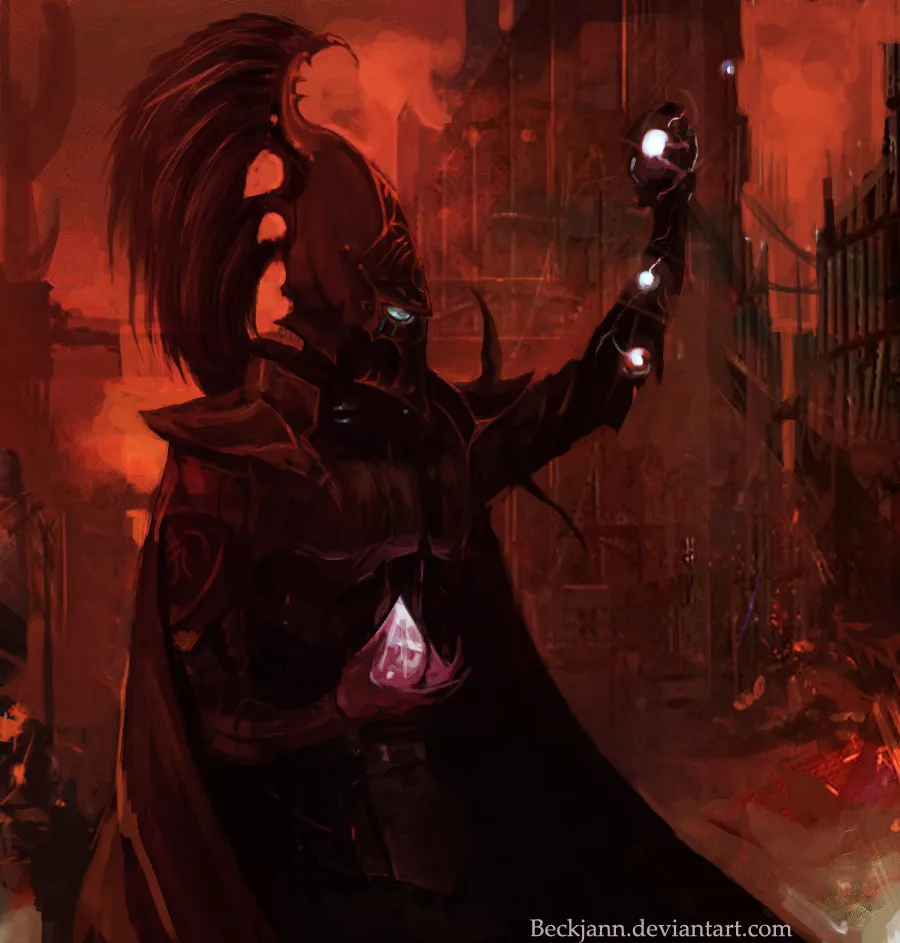
Duke Slicsk, the Serpent
The eldar pirate fleets that sail the sea of stars are as diverse as the planets they attack; some adhere to a code of honor, while others are ruthless and brutal. But Duke Trevaliat Slicsk is the most headstrong of all. He is willing to gamble his entire fleet for the chance to stylishly destroy an enemy flagship — for nobody remembers the names of those who opted for safety! His pirate armada follows him without question, as it is known that beneath Slicsk's madness lies a steely core that has doomed entire fleets to their demise.
It is said that the duke grew tired of the constant political intrigue of Commorragh and decided to leave with a bang. Gathering a band of captains willing to follow him, he waited for Commorragh to become mired in yet another civil war, then pulled off an unprecedented trick, hijacking three flagships of cabals at once and fighting his way out of Commorragh’s ports. Of course, the three humiliated archons who lost their precious ships fell into a wild rage, but it was already too late — Slicsk escaped into the abyss and never returned.
Obsessed with grandeur, Slicsk has commanded the Star Serpents for many millennia, believing that sovereignty over the stars is his by right. He is known by many names and titles from Alpha-1 to the Omega Belt, primarily for his unpredictability. Charming and charismatic one moment, he can instantly become cruel and bloodthirsty. Once, Lady Malis described him as "amoral, repugnant, and, moreover, impeccably dressed".
There is a well-known story where Slicsk agreed to negotiate with a planetary governor begging for mercy and then massacred all the nobility in the capital hive when the human ambassador made a mistake in his name. For his ability to go from smiling free spirit to malicious killer, the duke earned the nickname "the Serpent", which greatly amused him. He is far more dangerous than any animal, even if venomous, and notes that it is the snake that should have been named after him, not vice versa. Despite his celebrated sense of humor, the duke’s advisors believe that Slicsk values the expression of despair on the faces of victims most of all when they realize that his heart contains no room for mercy, that pivotal moment when relief is replaced by all-encompassing dread. As many of his admirers say, he loves playing with his food.
Slicsk’s deeds become increasingly strange over the years due to his limitless and indiscriminate power. His alabaster skin is nearly translucent, as whole groups of concubines scrape it after he has spent time in a room with a representative of a lesser race. He never wears the same outfit twice; each includes the remains of the duke's last enemy. Poisons are served to Slicsk to build an immunity to toxins, and when he falls into a pensive mood, he delights in carving poems into the flesh of his captives. His personal banner is made from the skin of Admiral Bakk, as the segment fortress and massive fleet base were ill-prepared for the sabotage and stealth tactics Slicsk employed.
The duke remains immensely popular among the dark eldar, especially those who have fled from the Dark City. Surrounding the three stolen flagships is a flotilla of cruisers, privateers, and warships that have clustered under his banner, and Slicsk is in no hurry to rid himself of them — in a lean year, a serpent will feast upon its own allies. For now, his raids annoy the wealthy and the nobility, and the legend of Slicsk grows with each battle.
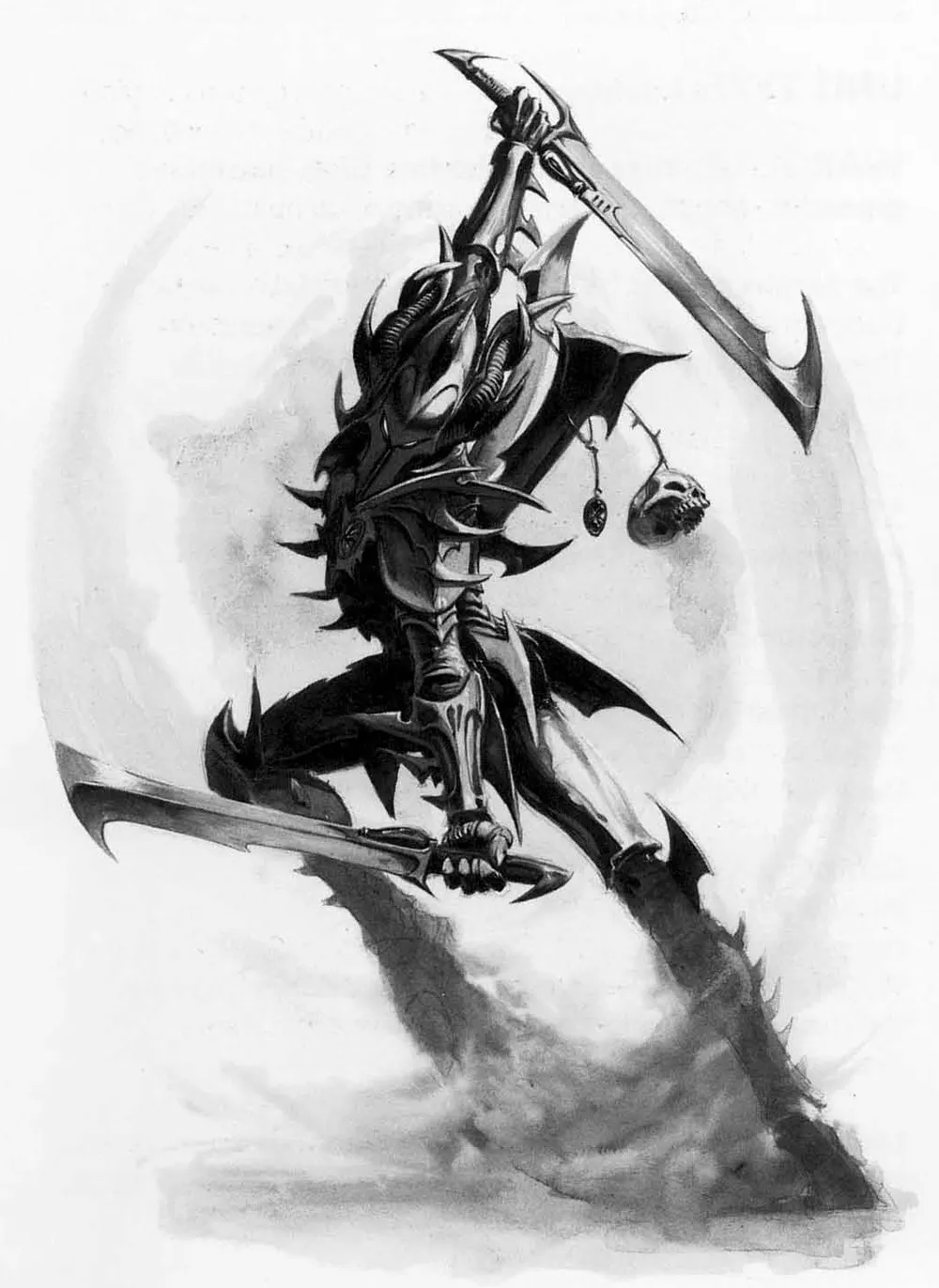
Drazhar, Master of Blades
Even the upper echelon of the Incubi know little of the mysterious Drazhar. All that is known is that he entered the Grand Temple of the Incubi without warning or invitation, encased in the segmented armor of a high-ranking incubus. He burst into the inner sanctum, leaving those who tried to stop him grasping halberds and retrieving swords from the floor, and challenged the hierarch sitting on the throne. Angered by the upstart’s disregard for protocol, the hierarch rose from his throne, entered the candle-lit dueling ring, and assumed the stance. The confidence of the hierarch in his superiority evaporated as soon as the challenger rushed into battle, moving so fast that in the dim light it was difficult to follow him. The duel lasted only a few minutes, and at its end, the newcomer stepped over the dismembered corpse of the hierarch. He could rightfully claim the throne, but Drazhar merely wiped the blade and bowed carelessly.
The mysterious arrival of Drazhar sparked a flurry of speculation and unanswered questions. In the weeks that followed, amid whispers and the spread of rumors, it became clear that none of the temples of Incubi throughout Commorragh had ever heard of Drazhar or could recognize his unique and ancient armor. Some believe him to be the embodiment of Archra, the famed Dark Father of the Incubi; others think that within the armor there is nothing but bone dust. However, it soon became undeniable that regardless of the skill of whoever challenged him, Drazhar always emerged victorious. While he has never hinted at a desire to claim the title of hierarch or clefex, his deadly prowess in the martial arts of the Incubi is unmatched. Thus, he was bestowed the title of the Executioner, champion of the order, the personification of lethality.
While since his dazzling debut Drazhar has become an important member of the Grand Temple, it is known that he has never uttered a word nor removed his helmet for food or sleep. Even the very name — Drazhar — is ceremonial and means "living sword". Drazhar deigns to acknowledge only rare nods or shakes of his head, and even this courtesy is reserved for senior Incubi. The masters of other temples of the Incubi view the Master of Blades with extreme suspicion, as despite their present position, all of them were once mere warriors, flawed and mortal. Although their true names and identities were long forgotten, a glowing ember of ambition still smolders in their black hearts. And only Drazhar remains untainted by feelings or pride. He exists solely for killing; no more, no less.
Taller and slimmer than other Incubi, Drazhar possesses the deadly speed of a mantis and rewards with a strike from his pole weapon any who so much as aim a weapon at him. He has a supernatural ability to move blindingly fast even amid the most chaotic melee, slitting the throat of a chosen fighter before they can strike or pull the trigger. The intended victim of Drazhar had best submit their soul to the gods, for they only have a couple of seconds left to live.
Lady Malis
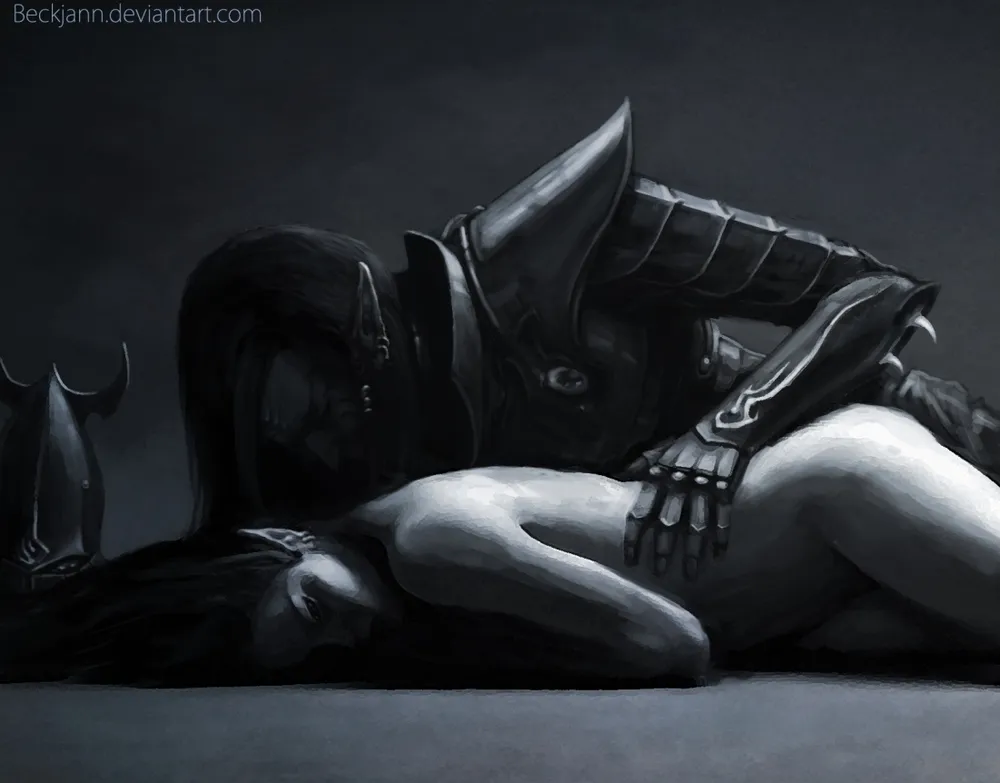
Though she is less than a thousand years old, Lady Aurelia Malis is the only archon who has managed to outwit Asdrubael Vect countless times. Even before the momentous events that led to her rise, Malis's mind was like an incredibly intricate clock mechanism, a tangle of miniature golden gears, each perfectly in its place. She is immensely cunning, yet invariably conducts herself according to proper manners and with an icy politeness that conceals her true intentions. Her arrogance and haughtiness are characteristic of her court members as well, for the Cabal of Poisoned Lips lets in only the smartest of the smart.
The precision with which Malis predicts the plans of enemies borders on the supernatural. Lady Malis’s detractors love to spread rumors that she possesses psi-abilities, but most dark eldar believe that she owes her gift of foresight to her trap-like mind. She has a stunning talent for dodging the blades of enemies — whether those blades are real or political. A witness to Malis calmly taking apart a crowd of howling orks with an exotic sword and a razor-sharp fan is left with no doubt that her blade is as sharp as her tongue.
However, the story of how Malis acquired her strange ability to foretell the actions of opponents is far more interesting. Long ago, Lady Aurelia was the lover of Asdrubael Vect — the Supreme Overlord was intrigued enough by her astonishingly complex mind to bring her close to his court and himself. However, in less than ten years, he grew tired of his new toy and began to treat Malis like a tedious insect before ultimately casting her from his circle forever.
Malis was not pleased by this at all. Enraged, she left Commorragh with her chosen followers and ventured into the Web. Her voluntary exile had unforeseen consequences. Deep within the tangled dimension, Lady Malis encountered a brilliant creature of pure light. With a single effortless motion, it banished her retinue, and then engaged Malis in a duel of minds, with the heart of the defeated at stake. To their mutual astonishment, Malis matched the celestial trickster’s endless riddles and, incredible as it may seem, ultimately triumphed. The creature vanished with a giggle, leaving behind a strange blade that moved of its own accord and a heart — a crystal the size of a fist, radiating light. Nearly driven mad by such an ordeal and determined to exact revenge on Vect at any cost, Malis seized the blade, carved out her own heart, and replaced it with the heart of her mysterious opponent. The wound in her chest closed without leaving a trace. The heart-crystal beats to this day.
When Lady Malis returned to Commorragh, she slowly but surely reclaimed her post as archon of the Poisoned Lips. Her plans and schemes seemed invulnerable, each an impeccably woven web of cause and effect. In raids into reality, Malis is now horrendous, battling as if possessed, entraping the forces of other cabals so that she can elude with the lion's share of the spoils. Throughout all the time she climbed to the heights of power, Malis has never smiled; her face has forever frozen into a mask of self-assuredness and contempt toward dark eldar who have taken to court her favor. However, when she is confident that she is not being watched, Malis stares at her reflection for a long time, smiling, then giggling, and eventually bursting into laughter that seems to come from two throats at once. The being that shares her soul is truly powerful, and with its help, Malis may just succeed in toppling Vect — and determining the fate of Commorragh itself.
Another flawless victory. Well, fine. I'm almost eager for a defeat, purely for variety's sake. Almost, but not quite...
— Lady Aurelia Malis on the Denial Massacre
Urien Rakarth
An immensely perverse creation known as Urien Rakarth has so deeply penetrated the mysteries of flesh that he is capable of dying and being reborn countless times. The mastery of this mad genius of genetic modification and bioplasty has entered into legend. Although he once played a significant role in the web of intrigues surrounding Commorragh, he now stands above the squabbles for power and prestige. Rakarth now exists solely for the enjoyment of perversion.
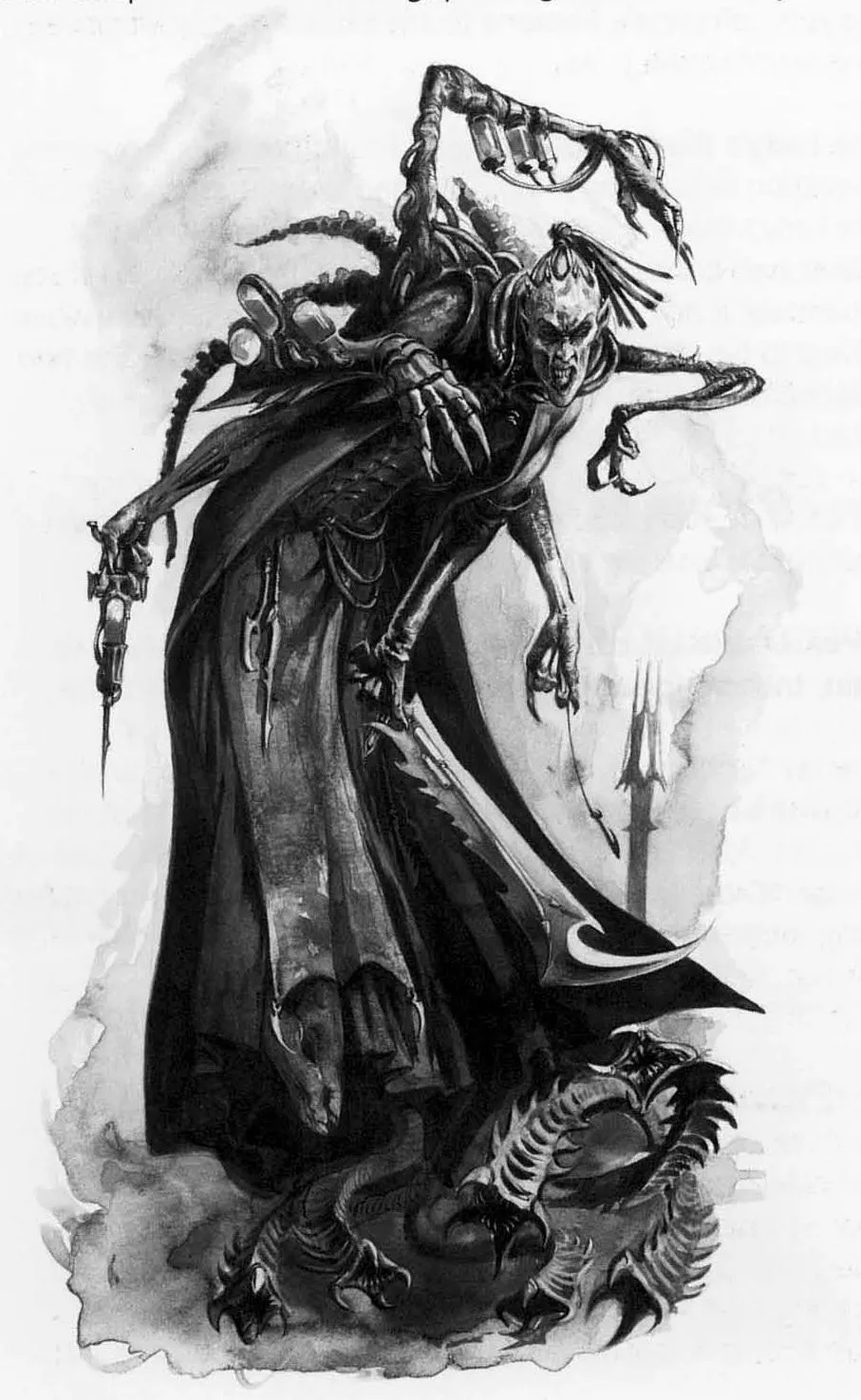
Urien long ago lost the ability to give his emaciated body the form of a sated dark eldar, for his age counts in the thousands of years. Over this time, Urien has died from a bolter shell, the flames of a flamer, a blade, a bullet, poison, a chain sword... and many other horrific means. After each death, a new incarnation of the master homunculus is slowly grown from what remains of Urien, as he is the inventor of the regeneration process, and every bone within him holds the key to dark resurrection. Rakarth has crossed the threshold between worlds so often that he has begun to savor death like a fine wine, relishing the agony and transcendent experiences at each demise. However, in recent centuries, the regeneration process has evidently been interrupted, and Urien's latest incarnations have emerged with rudimentary parts of the body from previous incarnations. Consequently, Urien is now a truly hideous sight — hunks of vertebrae protrude from his back, and a grinning face is stretched over his skull by hard muscle ligaments. Rakarth possesses several pairs of hands: some are stripped to the bone, silvered, and once more rendered into fully functional appendages while others are atrophied, grotesque in appearance, and jutting from his torso, listlessly waving at those nearby. The constant rebirths have so drastically altered Urien's metabolism that his specially enhanced flesh can regenerate at an incredible speed — Rakarth revels in any injury, particularly on the battlefield, as they compel him to improvise.
Urien shares the general excitement among all homunculi in creating symphonies of pain. In battle, he wields an array of bizarre weaponry including a gauntlet that sprays his own highly mutagenic ichor at enemies and a blade that kills with the first scratch. But the true weapon of this deranged fiend is the repulsive creatures writhing from his flesh-pits: a nightmare menagerie that drives spectators mad. Blood-soaked corpses and towering grotesques wander among the moaning and twitching living sculptures, while greedy grostes squirm in their blood behind them. Leading this horrific procession is Rakarth himself, orchestrating the unfolding slaughter like an inspector of a hellish circus.
Rakarth, accompanied by a cabal or cult of witches, has made numerous appearances in reality and shows no signs of stopping. Releasing his creations onto the battlefield, he displays his masterpieces to the entire world, for any true artist requires an audience. The master homunculus even finds amusement in the ruthless contest for the right to accompany him. Few performances can rival the savage and unrestrained carnival of agony that Rakarth unleashes upon his victims.
Asdrubael Vect, Supreme Overlord of Commorragh
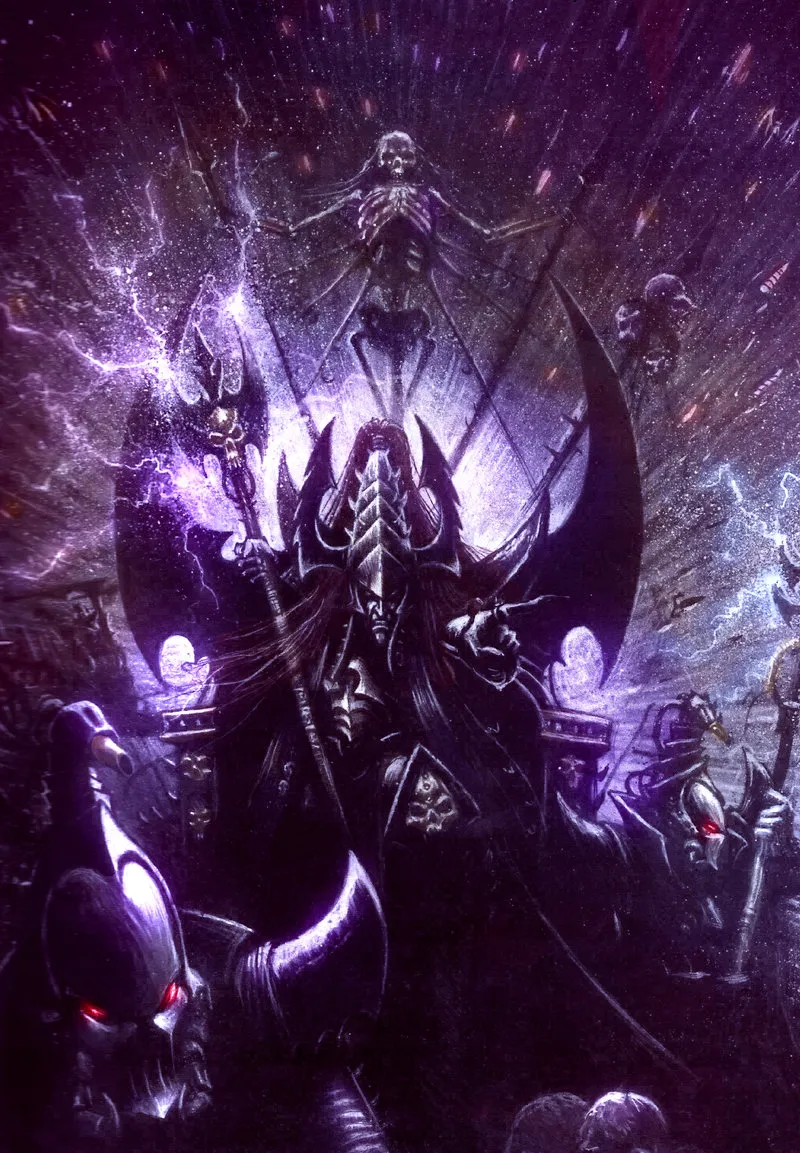
Vect is a festering sore at the heart of Commorragh, a black spider at the center of the galactic web. It is Vect who, over the course of several thousand years, has transformed the Dark City from a vast port to a galactic capital. It is Vect who has conquered noble houses and one by one subdued the sub-kingdoms of the Web. It is Vect who rules Commorragh with an iron hand to this day.
Asdrubael Vect is the most treacherous and cunning dark eldar in history. His milk-white skin bears not a single scar, though in his fathomless black eyes swirls a terrible hatred that reveals a fierce soul. His mind is so intricate that it could be compared to the edge of a fractal or the crystal labyrinth of Tzinch. His brain contains almost endless plans, counterplans, and schemes for which centuries are needed, but for one who has lived for millennia, a hundred years whiz by almost as swiftly as a single year. There is no conspiracy that would pose even the slightest challenge to Vect, and no betrayal that he would not foresee and turn to his advantage.
Vect entered life as a lowly wretch, sold into slavery as a child. The dark eldar gentry never accepted him as an equal. Perhaps this is what led to his boundless thirst for power and razor-sharp wit, as Vect's schemes always have to be more thought-out than those of the nobles who stood above him. Slowly, step by step, Vect climbed the hierarchical ladder of the Dark City. He left a mountain of corpses in his wake, though his blade has never been stained with blood — Vect is too cautious to risk himself. Throughout most of his youth, Vect was underestimated — Commorragh’s nobility, other enemies, even his own warriors. And this played only into Vect’s hands. Under cover of lowly birth, he became more and more powerful, eventually founding the Black Heart cabal — an organization that was ignited into flame.
By the time the nobility of Commorragh realized that this upstart posed a real threat, it was already too late. Vect had tightened his grip on all the threads of power. Forcefully uniting all sub-kingdoms established prior to the Fall, Vect continually expanded his influence until he virtually enslaved all dark eldar. The last to fall was the three-times-cursed underkingdom of Shaa-Dom, which Vect destroyed without a shred of mercy, leaving only the ghost-filled ruins in its place. For almost six thousand years, this evil genius has ruled the Dark City as its supreme overlord.
However, although there are no fools bold enough to speak it aloud, Vect’s grip on the throat of Commorragh is slowly beginning to weaken. Those who have long prowled in the shadows are emerging into the light, seizing their chance. More and more, Vect unleashes extraordinarily direct retribution upon his enemies. The wrath of the supreme overlord knows no bounds — with each passing year, Vect stages increasingly more raids into reality. Some say that his tortured body is beyond rejuvenation; others claim that his rivals have found his vulnerability. The speculations abound: some say that Vect has grown weary of successes, of power, or even life; that he plays with himself, knowing of no worthy opponents; that this is merely another plan, aimed at luring enemies of the supreme overlord into the open... One thing is clear: if, for whatever reason, Vect falls, the Dark City will be consumed by war.
The Dark Musicians
Although dark eldar usually bow to no one but themselves, they pay homage to those they respect. Valorous warriors or morose artists may earn the esteem of their kin; not as a token of recognition, but rather to learn more about their art.
Thus, truly powerful dark eldar of old have entered legends. Many of them embody a certain vice, the worship of which led to the weakening of the ancient eldar gods and, through this, to the Fall. They are all known as dark musicians, beings of terrifying power. Assassins and killers honor Shaimesh, the Lord of Poisons, the two-faced brother of Saim-Hann, the Cosmic Serpent. Elite courtesans of the Cult of Lamia worship Lilith, the Spouse of the Abyss, while mighty archons often follow the precepts of Vileth, renowned for his unrestrained pride. On the eve of battle, many conservative cults of witches invoke the Red Harpy Gekatia or offer sacrifices to Kva’lech, the Lady of Blades.
There is a belief that one day even Asdrubael Vect will join the dark muses; however, considering his supernatural ability to cheat death, that "someday" will not come anytime soon.
Darklight Weapons
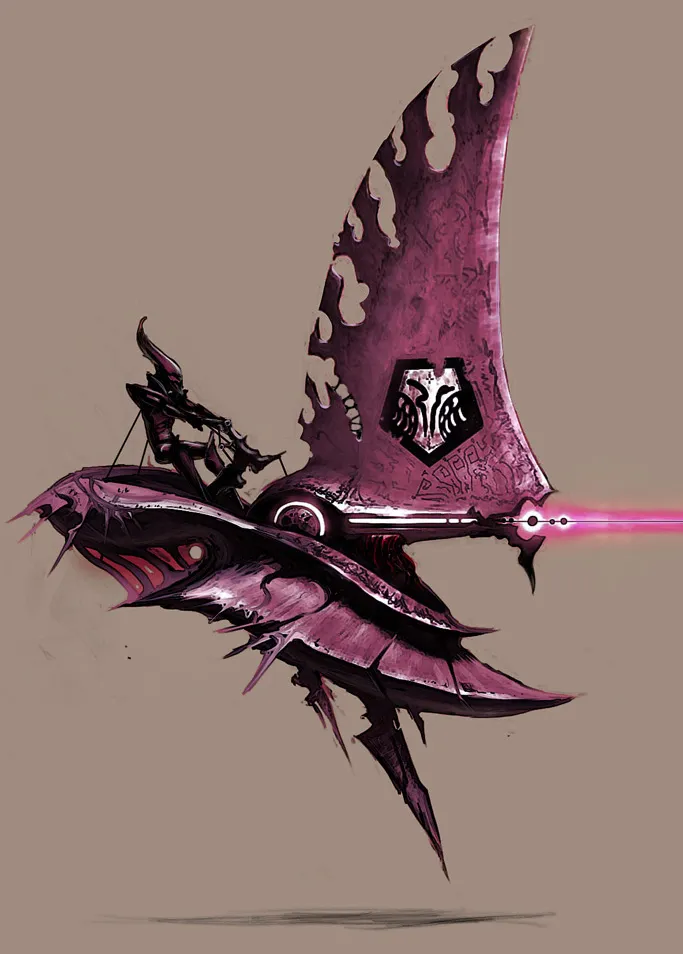
The weaponsmiths of Commorragh are notoriously known for their ability to defy the laws of physics in order to create the most effective and visually thrilling methods of killing. Exemplifying this are the blasters and dark lances, which employ not standard lasers but a particle stream known poetically as "darklight". Where this substance comes from is unknown, although there are theories positing that it is harvested from black holes, storms in the Warp, and other celestial phenomena of colossal scale. Darklight interacts destructively with its target, creating an explosion that can punch a massive hole through armored plating regardless of its thickness or vaporize an infantryman in the blink of an eye. Even simple observation of a darklight beam without suitable protective lenses leaves unhealing scars upon the retina.
Shard Weapons
Shard weapons fire shards of crystal that are sliced off by a powerful magneto-electric wave. These shards are coated with extremely lethal and fast-acting toxins to make the death of the victim more agonizing. The favored weapon of the kabalite warriors is the shard rifle, from which they often fire directly from the decks of the "Raider" or the "Poison". A smaller variant of the rifle, the shard pistol, is a graceful weapon preferred by assassins and street fighters throughout the Galaxy; although it is designed with a focus on accuracy at short ranges, the toxins in its ammo capsule are no less lethal than those found in the rifle. Some dark eldar take such pleasure in the grimaces of their agonizing victims that they employ heavy models of shard rifles. Among these, the most prominent is the shard carbine, popular among winged Scourges, and the shard cannon, capable of mowing down multiple compartments with a single volley.
The Black Arts of Shaimesh
Dark eldar are masters of the use of poisons. Entire districts of Commorragh are dedicated solely to the production of the most potent necro-elixirs and corrosive compounds, capable of eroding duralumin with the same ease as flesh. Many types of syringe and needle weaponry utilized by the dark eldar contain mixtures of the most lethal poisons, as kabalites admire such compounds like an esthete admires the hues of a sunset.
Homunculi are the most experienced in the matters of agonizing death, and whoever approaches them quickly discovers that their sting is never without venom. Their poisonous weaponry, the most well-known example being the liquifier gun, fires organic acid mixtures capable of causing rupture or collapse of blood vessels, pharyngeal spasms, extensive hemolysis, destruction of bones, sclerotic decomposition, intercostal spasms, hyper-stimulation of thermoreceptors, subcutaneous necrosis, collapse of the eustachian tube, heart or respiratory failure, or extensive blood loss — and sometimes all at once. The poison merchants of Commorragh thrive, and even though antidotes do exist, they are difficult to obtain and their use is generally frowned upon as the province of the weak.
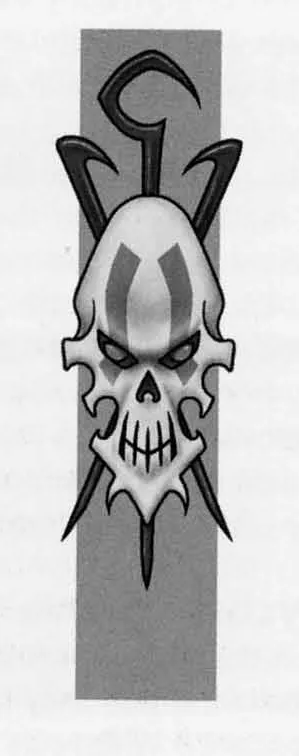
The Cabal of the Flayed Skull
The Cabal of the Flayed Skull can easily be identified by the ritual bloody markings on the grinning faces.
In terms of military power, this cabal ranks only below the Black Heart cabal led by Asdrubael Vect. The archon of the cabal, Lord Vresk, began his long and dishonorable career as a Raider and subsequently became a master of aerial attacks. As such, the cabal deploys numerous Raiders, "Cutting Wing" reactive fighters, and "Ravens of Void" bombers, competing for the first blood in every raid. The Cabal of the Flayed Skull once conquered the planet Trandee while stepping not once on its surface.
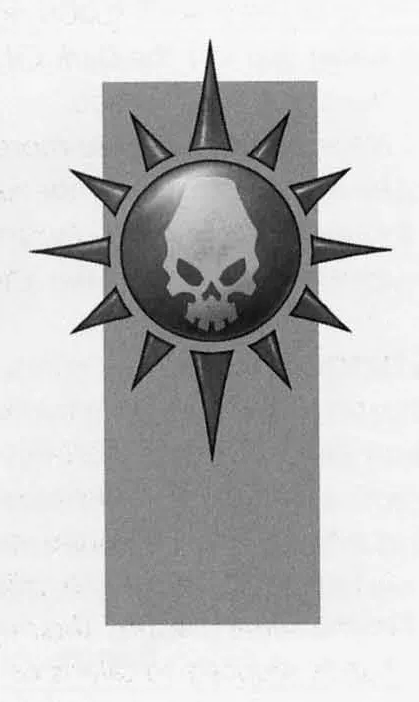
The Cabal of the Setting Sun
The warriors who march into battle under the banner of the Setting Sun belong to one of the oldest cabals, renowned for their excessive pride and disdain for everything not tested by millennia. They prefer to attack at sunset, as their lord, archon Vorl-Kselant, is unsettled by a change from light and hope to darkness and despair. The boast of this cabal that they can extinguish stars is widely known, though their opponents have never found an explanation for the dimming star Echillos during the Aleutian Trailing.
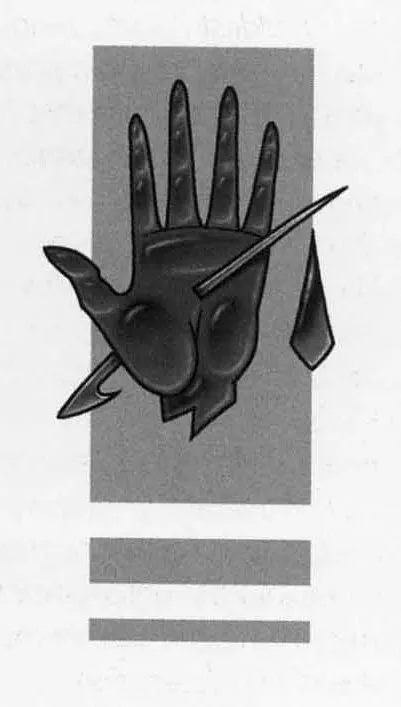
The Severed
The Severed are a space cabal that left the Dark City several centuries ago. Nevertheless, they are well known to the Imperium, as they have long hunted the Goroid Path systems. Their archon, S’aorany Arienzis, once lost his position in the Dark City due to a failed coup and much of his left hand. He stubbornly refuses to heal the injury, and his warriors often bear similar mutilations, replacing their right hands with claws or metal limbs.
The Seals of Homunculus Covenants
The seals of the homunculi are a common sight in Lower Commorragh. They are drawn in chalk on the walls and arches of the Dark City, tattooed on the skins of each servitor-abomination of the coven, and burned onto the grotesques.

Black Sting
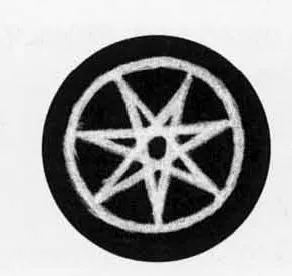
Malefice
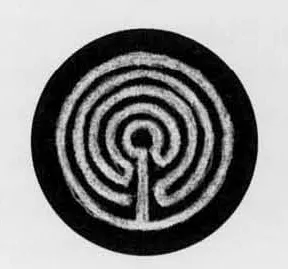
Black Descent
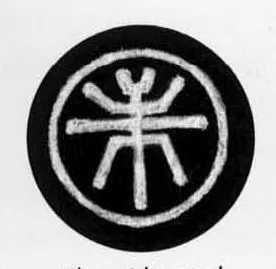
Altered
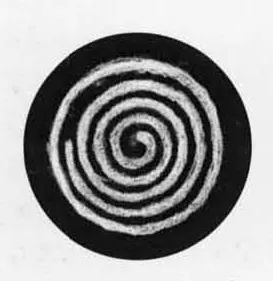
Spiral of the Abyss
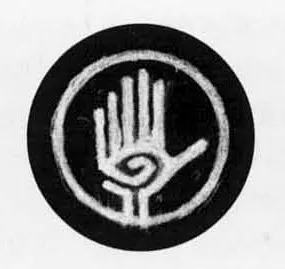
Prophets of Flesh
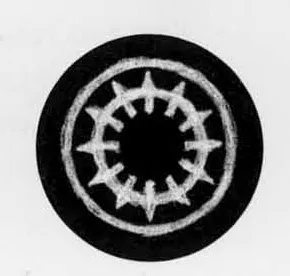
Coven of the Dozen
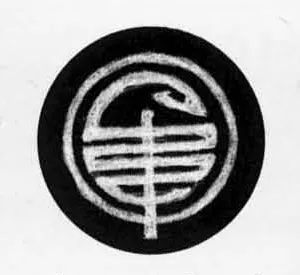
The Dark Faith
The Symbols of Great Cabals
Each of the cabals of Upper Commorragh has its own symbol, a kind of banner or coat of arms, proudly waving above the highest spires. These heraldic images are often transferred in simplified form onto the banners, armor, and war machines of the warriors of the cabal; behind each symbol lies a legend, often rooted in the depths of time, back to the days of the Fall.
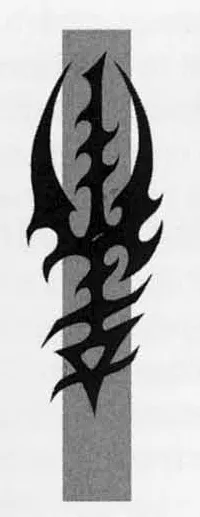
The Black Multitude
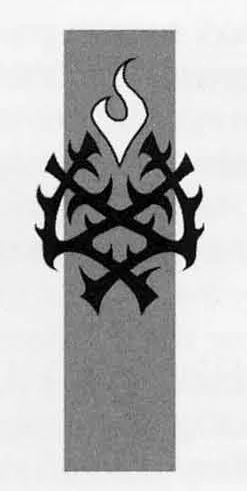
Lords of the Iron Spike
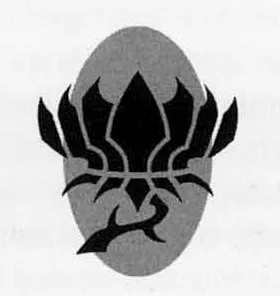
The Shattered Lotus

The Cruel Brotherhood
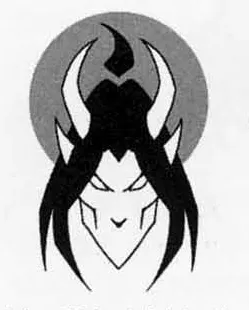
Soul-Devouring

Malicious Gaze
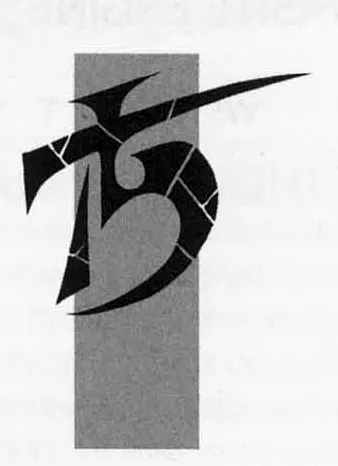
Broken Seal
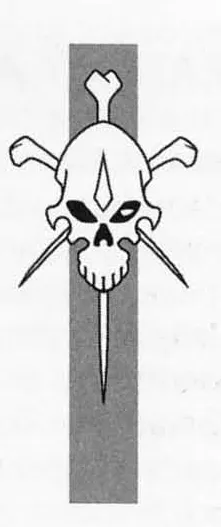
The Last Hatred
For dark eldar, the other inhabitants of the Galaxy are nothing more than cattle to be herded into a pen or slaughtered when necessary. However, they do not feed on flesh, but rather on the despair and horror of the weak. The dark eldar do indeed drink blood, but along with tears, and are sustained by a concentrate of pain that they extract from their captives.
— Inquisitor-Lord Chevak
The oozing, gangrenous Dark City swells in the ether like an unimaginably vast and wicked parasite, its jagged jaws clenching the soft underbelly of reality. A black vampire, bereft of all warmth, it drains the lifeblood of the Galaxy, returning only hatred and fear.
— "Of the Concealed", Eyerulian
Source: "Codex: Dark Eldar" (2010).
Author's translation.
Thanks for the stunning art featuring dark eldar — Beckjann.
Thanks for the proofreading — Kavem.
Thanks for the support — Sinmara.