
Gamer Times No. 3
Caution! Traffic!
[cut]

Hello, dear readers!
The release of our magazine has smoothly shifted to Tuesday. First of all, it's more convenient in terms of producing an issue — we also have weekends, no matter what. Secondly, we decided not to interfere with 1C-SoftClub, which has decided to release its weekly magazine on Mondays, right alongside us. It would be unfair to completely overshadow the main page for honest authors, wouldn't it?
This issue turned out to be noticeably smaller than the previous one. The absence of various GamesCom events contributed significantly to this, and overall, the last two weeks were poor in both releases and news.
There are almost no new sections either. It's the beginning of the school year, after all. As we promised, the section "The Games of the Future" has appeared, featuring interviews and previews, as well as "Founding Fathers," where we recall the path of the most famous people related to video games. This time we will discuss Sid Meier, by the way.
We are still continuing our recruitment. Don't be shy, we don't bite. We're thoroughly positive.
Oh, I almost forgot: follow us (hit the "Follow" button) or follow us on Twitter.

Dragon Age: Ultimate edition
The release of Dragon Age: Ultimate edition has been officially confirmed. The new version of the game will include: the original game, the Awakening expansion, and all paid DLC that has been released for the game. Which means, the story of Origins has finally come to an end.
The release date and the price of the edition remain unknown for now.
Dragon Age: Origins — DLC The Witch hunt
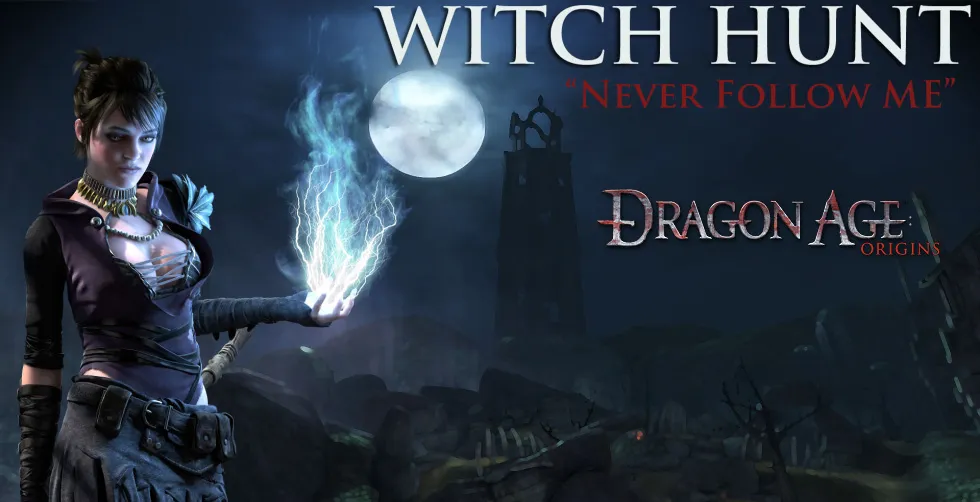
The official website of Dragon Age: Origins has announced the release of the last DLC for this project. The Witch hunt concluded the storyline related to Morrigan and her child.
DLC Trailer
The cost of the DLC is PSN), available on Xbox, PC, and PS3.
Mafia 2 – DLC Jimmy's Vendetta
On September 7, the release of the first of many DLC for Mafia 2 – Jimmy's Vendetta took place.
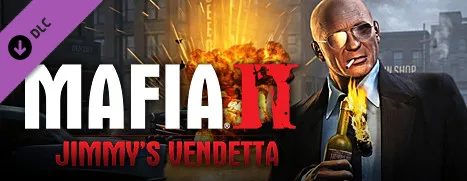
This add-on allows players to see Empire Bay through the eyes of Jimmy, a hired gun primarily working on a specialty of "finishing other people’s unfinished business".
Everything would be just wonderful, but Jimmy's Vendetta is not available for download in Russia. 1C commented on this issue:
"To allow our game buyers to access additional content, we plan to release several major DLCs (like Jimmy's Vendetta) and several upgrade packs (like Vegas Pack) on a single disc. The price of the disk containing such a set of additions will naturally be substantially lower than buying them separately, for example, on Steam. The details of such a release will be announced later, stay tuned for our news".
Mass Effect 2 — DLC Lair of the Shadow broker
On September 7, the release of the Lair of the Shadow broker DLC for the role-playing game Mass Effect 2.
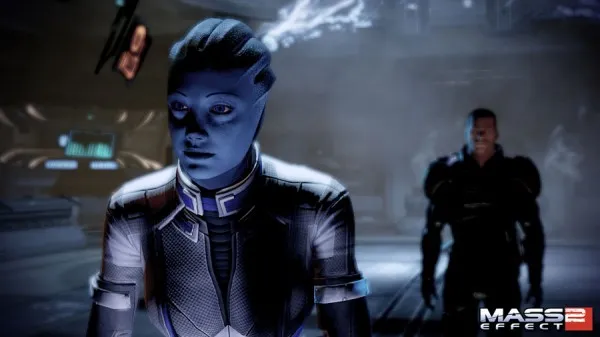
One of the characters from the original game, archaeologist Liara T'Soni, is trying to track down a mysterious information broker named the Shadow broker. And you will have to help her. This DLC will be the first in a series of expansions whose storylines will affect the plot of Mass Effect 3.
DLC Trailer:
The cost is 800 BW Points.
Duke Nukem Forever — pigs flew
Yes, they really flew. Duke Nukem is back in development! Damn, will this ever end? It seems that finally yes — the game will be released in 2011 for PlayStation 3, Xbox 360, and PC. Place your bets — will our poor pigs make it?
ATI must die
AMD announced that it plans to retire the ATI brand (which it acquired in 2006). The reason is that the first abbreviation is more recognizable to the public than the second. However, the red color in the logo will remain.

Release and localization dates.
Calendar
**Game**
Genre
Date
Halo Reach [Xbox360]
FPS
September 14
Strategy
September 14
Star Wars: Clone Wars Adventures
MMORPG
September 15
Lionheart: Kings' Crusade
Strategy
September 17
King's Bounty: Crossroads of Worlds
RPG/turn-based strategy
September 17
Action
September 17
RPG
September 17
Strategy
September 21
Racing
September 21
Action
September 24
Action
September 24
Localization Corner
By the time this issue is released, the adventure horror **"Amnesia: The Dark Descent"** has already gone on sale. The protagonist, who has lost his memory, is set to explore numerous corridors and dungeons of the mysterious Prussian castle, which guards many secrets, to find out how he ended up there. If you haven't managed to buy it yet or for some reason have hesitated to do so, you can download a small demo version of the game to assess its strengths: specifically, the atmosphere of constant tension and fear. Foreign critics have also rated the game soberly and give it mostly positive reviews.
On September 16, Buka Publishing will delight us with localized versions of two sports projects. The games are far from the best in the genre, but I believe they will still find their fans. The first of them is "SuperStars® V8 Next Challenge" – a new version of last year's racing simulator from Milestone, created under the license of the European Superstars championship. It differs from the old version with the presence of new tracks, cars, and game modes. The second game – "SBK® X" – is a continuation of the not the best, but quite decent motorcycle racing simulators, as they say, when there are no fish, a crab is a pike. Again a slightly improved graphic, a revised damage model, and multiple game modes. If desired, you can compete against someone in multiplayer mode, supporting up to 16 players.
Good news for fans of role-playing games. On September 17, a large-scale expansion to the famous role-playing game "King's Bounty: Princess in Armor" under the name "King’s Bounty: Crossroads of Worlds" will go on sale. The project includes the add-on “Orc’s March,” continuing the main storyline, two independent campaigns - “Arena Champion” and “Crown Defender,” as well as an editor for creating new gaming materials. In addition to the campaigns, we can expect numerous various upgrades, including new spells, creatures, opportunities, and skills for various classes.
Very soon, PC owners will be able to play a long-awaited racing simulator "Formula 1™". On September 23, the localized version of the game will be released. The series has broken free from the grips of Sony and is available for nearly all platforms. In F1 2010, we will face off against the most famous racers from around the world, including Michael Schumacher, Lewis Hamilton, Jenson Button, and Fernando Alonso. In addition to the races themselves, players will have to participate in press conferences and undertake all the responsibilities inherent in participants of this sport. A realistic damage model, dynamic weather changes, and multiplayer – is already enough to pay attention to the game. Don't miss out!

Preliminary review of Shogun II: Total War campaign
*Intrigues, matrimonial ties, and seppuku – just some of the tools available to you as an ambitious ruler of Japan*
The Total War series is known for its massive and beautiful battles and our recent meeting with Shogun II: Total War showed that the game doesn't intend to break from tradition. What we didn’t know until now is the other side of the game – the campaign mode. Most of the life of a ruler in feudal Japan revolved around family honor, relationships with other aristocrats, and, inevitably, efforts directed at achieving superiority over opponents in case conflict became unavoidable. And all this hasn’t escaped the attention of Creative Assembly – Shogun II will include a complex political and family system, which appears to be as engaging, if not more so, than the battles.
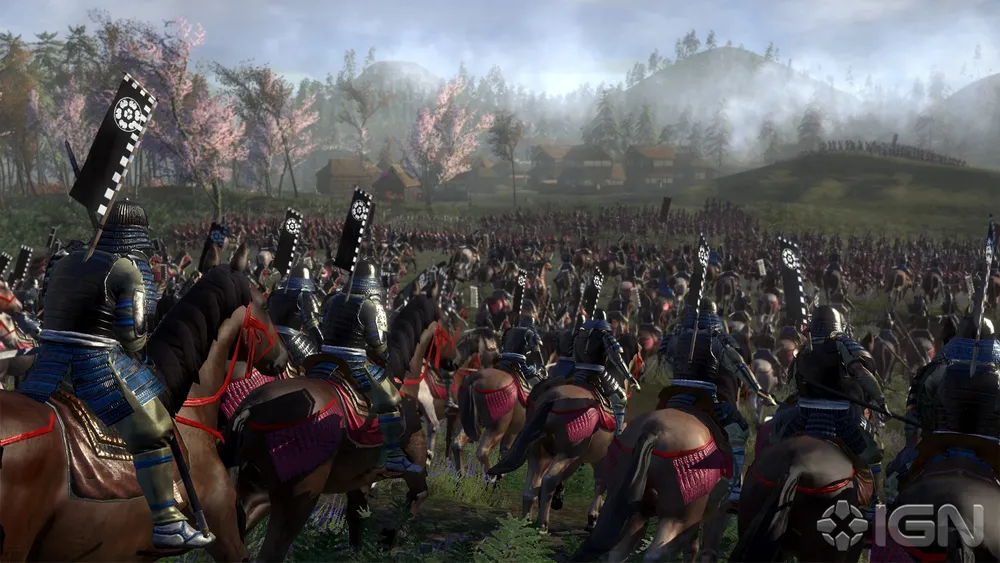
For those who, for some reason, have been skipping the Total War games all these years, let me elaborate. The campaign in Shogun II takes place on a huge, detailed map of Japan, and players take control of one of nine clans and strive to unite Japan under their leadership. Players face both military actions and political battles between clans, and when it comes down to actual combat, they participate in enormous real-time battles. Essentially, we are getting two games in one: a tense RTS combined with a leisurely turn-based political simulator.
Real-time combat is an extremely important part of Shogun II, but more subtle confrontations take place on the campaign map using agents. Agents are important figures whom you can send into rival clans to harm them in a particular way. In addition to generals, which I’ll elaborate on shortly, players can use geishas, ninjas, metsuké, and monks. Ninjas and geishas are assassins and players can use them to eliminate enemy generals.
In Shogun II, a great thing about assassination attempts is that they trigger a cutscene, the content of which depends on the skill of the participating agent. For instance, a clumsy ninja might stumble over a sleeping soldier, while a more experienced one may bypass him but still might be too noisy and awaken the general. Such episodes were present in the original game, but in Shogun II, many more options are planned to keep the player on edge until the conclusion.
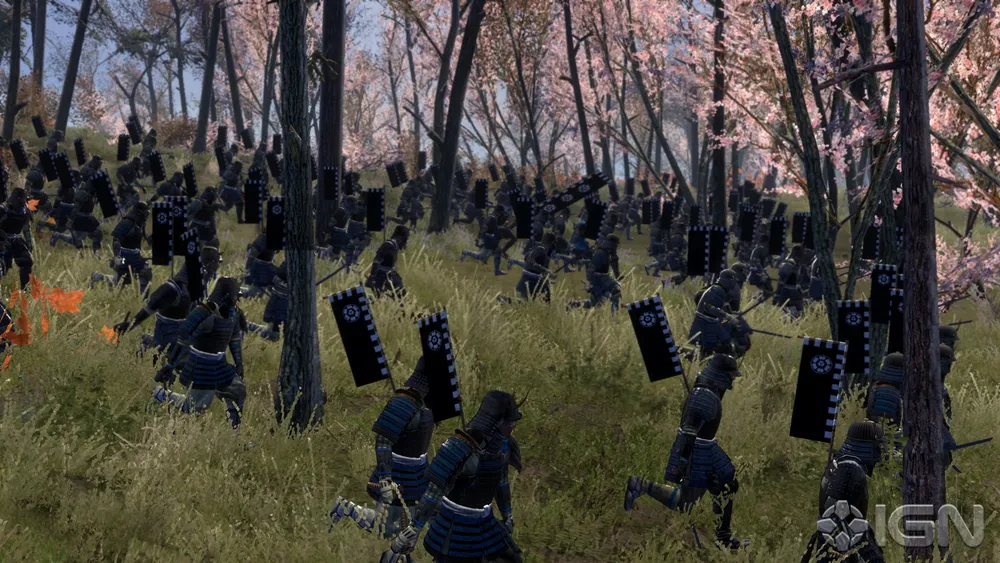
If covert assassinations are too much for you, then on the campaign map, players can attempt to sway enemy generals using metsuké. These secret police operatives will infiltrate enemy armies and attempt to lure away the general, and if successful, a portion of the army (depending on their loyalty to the general) will follow. In response to metsuké, clans can send out monks, who, upon encountering metsuké, sternly criticize them for being too worldly, hoping that the metsuké will renounce their sinful ways. Agents provide players with effective tools for influencing the game outside of battle, making the turn-based aspect more tense.
Despite their importance, the backbone of a clan consists of generals. Generals are not just units produced by the player with the same traits, but individuals who can level up and turn into unique commanders. Generals have a branching talent tree that grants them greater capabilities in battle. The main thing is that choosing one branch of the talent tree permanently blocks the alternative option, which makes specialization very important. The loyalty of generals to your clan affects the loyalty of the warriors under their command, and a treacherous general can become a thorn in your side if he decides he has had enough of obeying you.
If a general goes rogue, he is essentially lost to you, but you can take some preventive measures. You can tie the general to the clan through family ties, which will boost his loyalty (marriage is also useful in inter-clan relations). If you have no relatives available, you can demand that the general commit ritual suicide, also known as seppuku. Seppuku, however, is a double-edged sword, as it can either free you from a rebellious general (as well as provide a bonus to your honor), or conversely, lead to the general immediately rebelling.
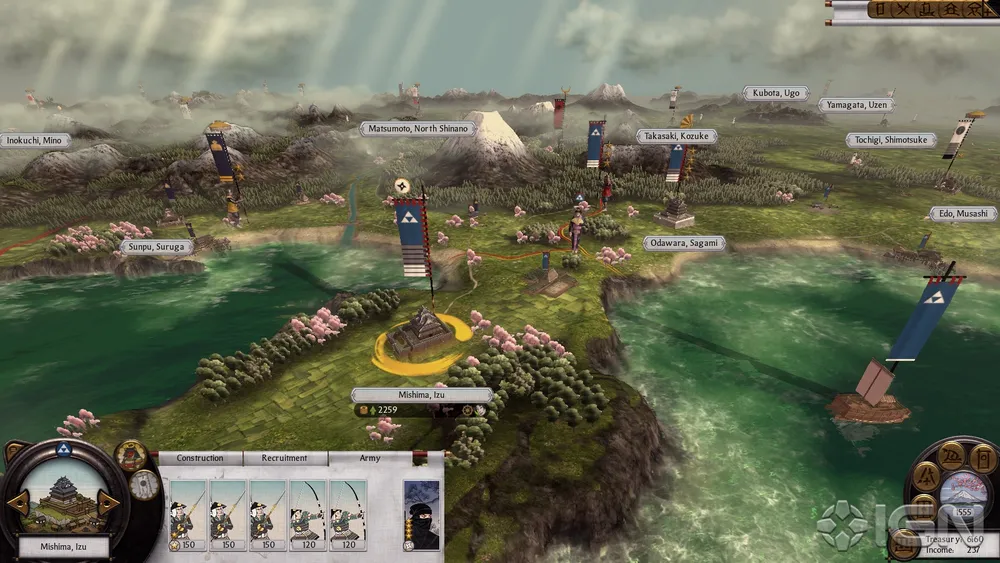
Politics is crucial, but battles are inevitable. To better showcase how wars were waged in Japan, Creative Assembly added a new element: naval battles. No, you won’t be using large sailing ships (and you certainly won’t be exchanging broadsides with your opponent), you will send small boats filled with warriors against similar vessels to protect or capture the coastline. Naval battles occur when two ships meet, and warriors aboard them fight each other, or when archers fire flaming arrows at approaching ships. This provides a more realistic set of options for players when it comes to invasions, as naval conflicts are rather common, given Japan's island nature.
The combat aspect of the game is up to expectations from a company with years of experience creating complex, large-scale battles on PC, but the development of the campaign has also shown successes. Let’s hope that the turn-based aspect of Shogun II will draw the deserved attention, as casual players often only see the beautiful battle scenes and assume the game is merely an RTS. At least you, reader, are now better informed and have gained some insight into just how impressively the game’s political element is shaping up.
Interview with the lead artist of BioShock Infinite, Shawn Robertson
How does the studio plan to surpass the original BioShock?
How will you surpass Rapture? This was the first question we asked Shawn Robertson, the lead artist of the recently announced BioShock Infinite from Irrational Games. He promptly answered:
– We always try to surpass our previous projects. That drives us.
This usual phrase took on new meaning when Robertson added:
– When working on Infinite, we threw away more ideas than we used in BioShock. That’s a standard we adhere to.
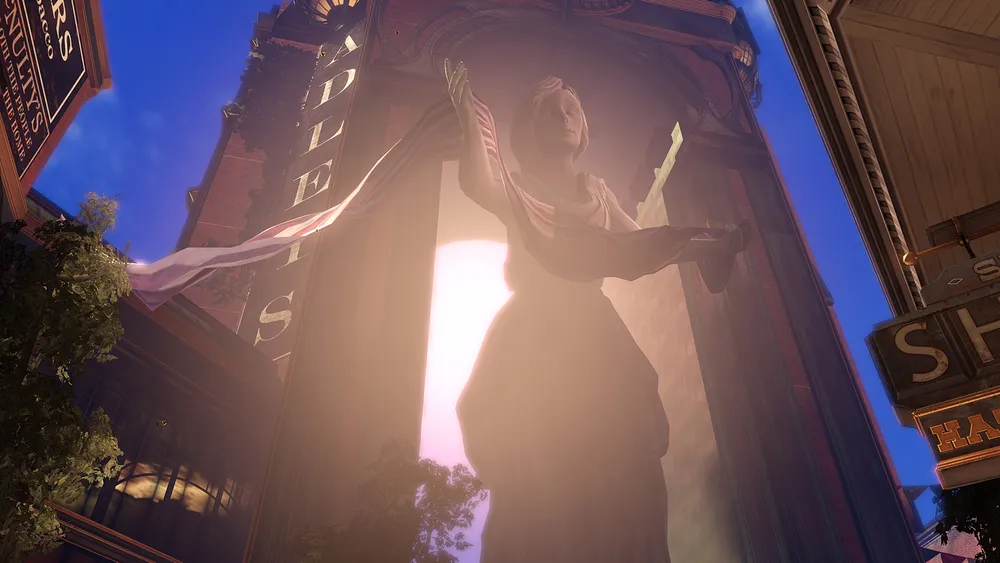
For those who have ever felt during their exploration of Rapture – the underwater dystopia of “art deco” – that spatial boundaries were closing in on them, Robertson's phrase speaks volumes. BioShock quietly crept up on fans and critics back in 2007, immediately earning a place among the extensive list of “greatest games of all time.” This time, there will be no element of surprise. Whatever game Irrational takes on, everyone in the studio knows it will be compared to BioShock. The bar has been set, and Irrational is working tirelessly to exceed it.
The significance of BioShock
After three years of keeping details of the new project under wraps, Irrational finally revealed their cards on August 11, at a press event at the Plaza Hotel in New York. Art director Ken Levine took to the stage and introduced the BioShock Infinite trailer like a proud dad showing off a video of his child’s first steps.
The trailer, which featured the already famous city in the clouds, Columbia, was breathtaking, but immediately raised questions among many journalists about why yet again BioShock. Robertson, a dead ringer for Lost's writer and executive producer Damon Lindelof, explained:
– BioShock has always been about much more than the city of Rapture. When we finished the original game, we realized we still had more stories to tell. We decided almost immediately that we would make another BioShock.
But if it’s not Rapture, big daddies, and little sisters, what does “BioShock” mean? According to Robertson, it’s those elements that made the original game a landmark: a fantastical, mysterious world; memorable characters; moral choices; first-person gameplay combining weapons and powers; a convoluted plot; extremist ideology. This is what BioShock means, and it’s what fans can expect from Infinite.

The Columbia Style
BioShock Infinite is neither a sequel nor a prequel to the original game; the action takes place in the early 20th century, at a time when America is beginning to seek its footing on the world stage. A group of wealthy individuals decides to present the world with the promising technologies, arts, and culture of the nation through a flying city — Columbia.
Something dreadful happens, and Columbia turns from a flying world’s fair into the “Death Star.” The city disappears without a trace. And then, one day, a stranger appears on the doorstep of our protagonist — Booker DeWitt. A former employee of the National Detective Agency of Pinkerton, now a private investigator, he is offered a job: to find and rescue a girl trapped in Columbia. The stranger knows where Columbia is and how to get there. DeWitt accepts, and from this moment the game begins.
And how does Irrational create an integrated feeling of a city in the clouds that players, as DeWitt, will explore? Robertson noted that it was a long process with many successes and failures. At first, the creative team attempted to adopt an Art Nouveau style, but since that historical period featured a different set of styles, it wasn't quite fitting.
The team returned to research, intensively studying photographs of San Francisco taken before and after the devastating 1906 earthquake. Reading through catalogs of Sears and Roebuck became a must, and photographs and depictions of the famous Chicago “White City,” built for the 1893 World’s Fair, turned out to be perfect for Columbia.
– We are not going to focus on a particular style, as was the case with Art Deco in Rapture, – Robertson noted. – Columbia is more historical, and it needs to convey the sense of early 20th century America.

From Objectivism to Patriotism
In Rapture, amidst an objectivist population, civil wars erupted, turning Ayn Rand's dream into a nightmare. In Columbia, the inhabitants again succumb to the influence of extremist ideology — American jingoism.
Levine mentioned that the idea came from a statement attributed to the 25th President of the United States, William McKinley. After the Spanish-American War, Spain sold the rights to the Philippines to the USA, putting McKinley in the position of deciding what to do with the island nation. Reportedly, McKinley detailed in his diary how he came to his decision. This excerpt, Levine said, played a part in the creation of BioShock Infinite:
"Every evening until midnight, I would pace back and forth in the White House, and I am not ashamed to confess to you, gentlemen, that I have often dropped to my knees and prayed to Almighty God for enlightenment and guidance. One night, I came up with the following thoughts – I don’t even know how:
We cannot return the Philippine Islands to Spain – that would be a cowardly and dishonorable thing to do.
We cannot hand the Philippines over to France or Germany, our commercial competitors in the East, – that would be a bad and disadvantageous economic policy.
We cannot allow the Filipinos to govern themselves, as they are not prepared for self-government and their independence would soon lead to such anarchy and abuses as would be worse than the Spanish war.
For us, there is nothing left to do but take all of the Philippine Islands, educate, uplift, and civilize the Filipinos, and instill Christian ideals in them, for they are our brothers in humanity, for whom Christ also died. After that, I went to bed and fell into a deep sleep."
Robertson described that embedding this ideology into the image of Columbia was tricky, until the creative team focused on the iconic American symbol – the gazebo. This simple structure helped the designers transform Columbia into a city floating in the skies, eternally celebrating the 4th of July, America's Independence Day.
Moreover, propaganda is pervasive. Throughout Columbia, players will find posters and slogans promoting the idea of American superiority. Robertson remarked that it was tough to work on the dubious words and images, as they encapsulate fully racist, sexist, and extremist viewpoints.
In one such image, the legendary George Washington holds the Liberty Bell in one hand and the Ten Commandments in the other. Under his foot hunker terrible caricatures of all other races, regions, and nations.
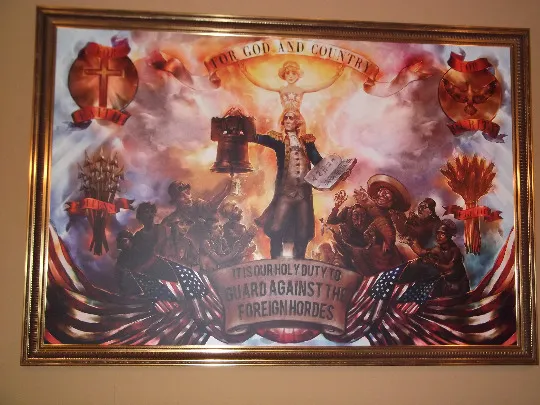
– We feel uneasy about this poster, – said Robertson. – But it's a powerful image encapsulating the essence of Columbia.
The Task Ahead
All the elements described by Robertson — BioShock ideals, early 20th-century architecture, and propaganda — can be seen in the first trailer for the game. And while the clip elicits excitement among franchise fans, it ends with a bittersweet note: the release in 2012.
Robertson agreed that it’s a long development cycle, but promised that they will make good use of it. After all, Irrational is trying to exceed themselves, and that means the new project should surpass one of the most successful games of all time, both commercially and critically.
– The same team that worked on BioShock is working on Infinite, – he said. – Having a game like this in our portfolio increases our trust in each other and our capabilities. And that means we want the game to succeed even more. We know what is expected of us and we are working hard to meet those expectations.

The analytical section of the third issue will be devoted to achievements in video games, in simpler terms – achievements. This concept can be characterized as a mark in your profile indicating that you have met specific conditions within the game. Whether or not achievements are necessary in games has already been decided for us: on PS3 and Xbox 360, every game must include them. Therefore, the discussion will focus on something else: which platforms currently support achievements, which one is the best, and ideally, how achievements in games should be arranged.

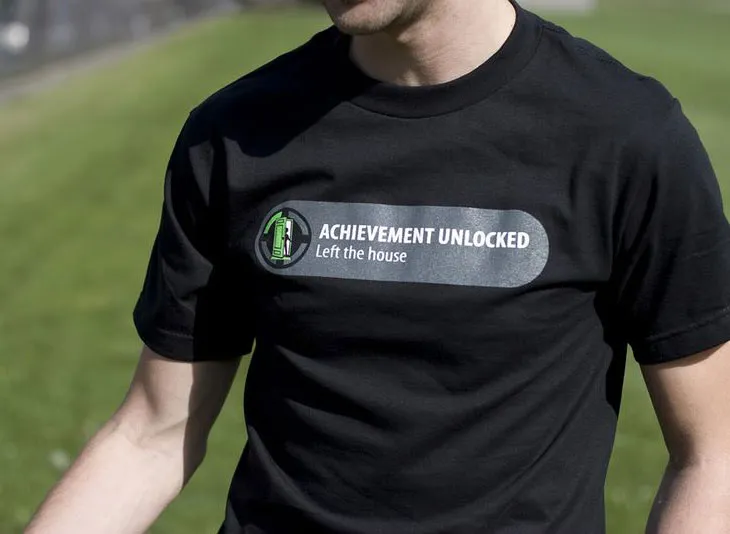
But first, a bit of history: achievements made their debut in 2005 with the launch of Xbox 360. Where did Microsoft get this idea? Until the first Xbox, consoles were purely single-player experiences, and online technology and gaming were vanishingly rare. After launching Xbox Live on the first Xbox, it became clear that the online aspect held immense potential but needed to inject social aspects based on games into the console environment. By creating a system of “achievements,” Microsoft birthed a new type of gamer, the “achievement hunter,” for whom completing a game means hitting 100% achievements. The main platforms supporting achievements include:
Xbox Live!/Windows Live!
PlayStation Network
Steam
Battle.Net
Let’s examine each of them.
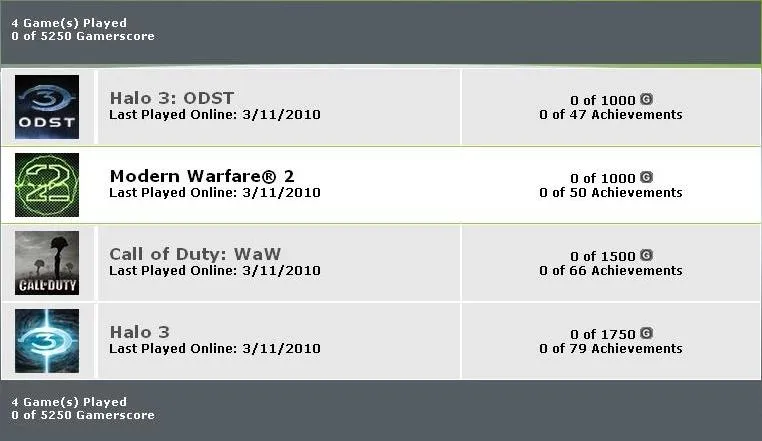
Xbox Live!/Windows Live! Historically the first platform, the achievements are quite simple: every game contains a set of achievements worth a total of 1000 points for “big” games and 200 points for downloadable content. The total number of accumulated points is displayed in the profile, and based on it, ratings are assigned.
*Cons of the system: all games are evaluated equally, so 100%, where you spent 10 hours is equal to 100% spent on a slow 100 hour game. There is no quality measure for comparison; completing one game at 100% earns you as many points as someone who has completed 20% of five games. Achievement points don’t provide bonuses or opportunities.*

PlayStation Network Here, achievements were launched in 2008, under the term “Trophies.” Sony took from the Xbox Live system only one thing: the platinum trophy is awarded for collecting all other achievements (excluding expansions). You can measure yourself by your total points, as on Xbox Live, but it’s better to pride yourself on how many platinum trophies you own.
Cons of the system: A ten-hour platinum is still worth the same as a 100-hour one, and the points offer no advantages.
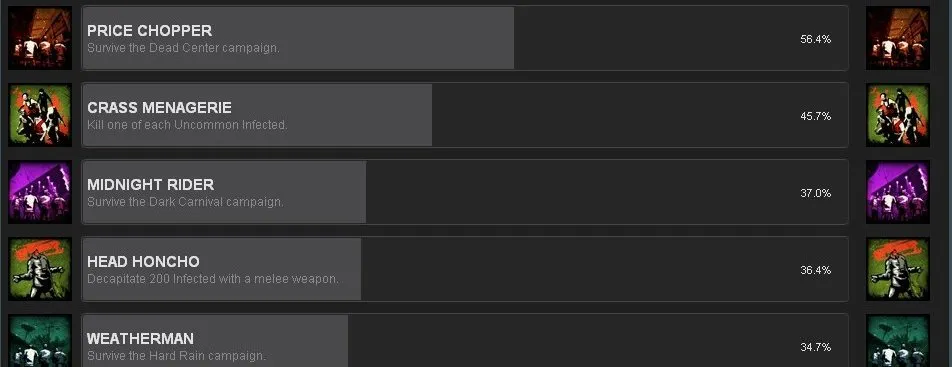
Steam achievements launched in late 2007 with the release of Orange Box. They have no digital equivalents and the number inside a game is unlimited. There is no rating per se; you can only see what percentage of players who bought the game earned that achievement. It’s worth noting Team Fortress 2. Currently, the game has 364(!) achievements and that number continues to grow. A certain number of achievements unlocks new weapons, which makes gameplay heavily revolve around them.
Cons of the system: Ratings are only within a single game, there is no global comparison.
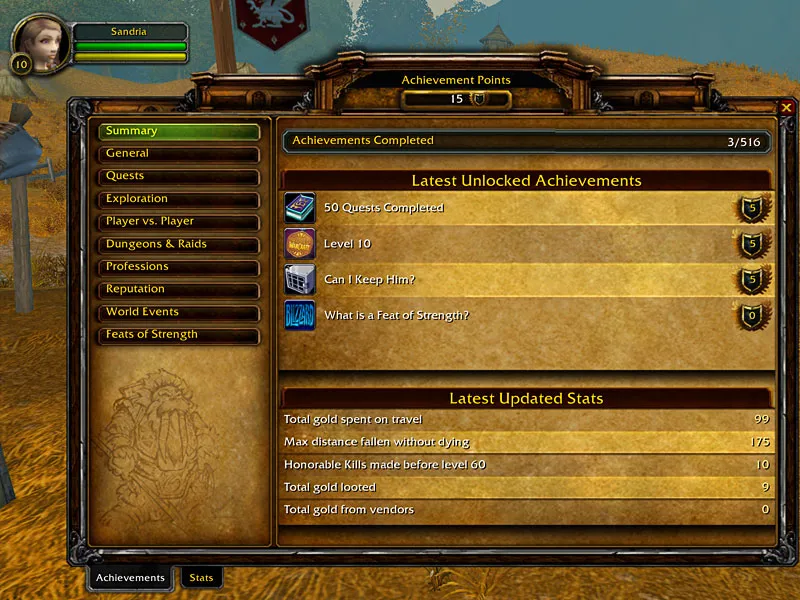
The achievement zone of Battle.Net currently consists of two games: World of Warcraft and StarCraft II. Both games have an enormous number of achievements, each with a digital value and some provide special rewards: in WoW this includes various in-game items, while in StarCraft II – profile avatars.
Cons: No ratings

The overall picture is clear. On consoles, there’s a centralized system, making ratings mostly global. On PC, however, that isn’t possible, as there is no platform holder and unified profile service; thus, the emphasis is on competitions within specific games. It’s obvious that an ideal system should support both types of rankings: total points and success within each game. Some publishers layer their own achievement conditions on top of the platforms. Bioware transmits achievements from their games across all platforms in a separate profile on their website, Uplay from Ubisoft allows special DLC to be purchased for some achievements, and Rockstar Games has Social Club, where only those who have fully completed GTA IV or Red Dead Redemption can enter the “100% Club”... But the system should be unified, so that the achievement machine works at full capacity. There are countless places and ways to gain achievements, but the next question is: what form should they take to benefit the game?

That, of course, depends on the game itself. The publisher must understand that few will enjoy killing 10,000 enemies in a dull and empty multiplayer mode. After nearly a year of regular gaming in PS3 games with trophy support, several rules for what trophies should optimally be for an average gamer aiming to enjoy the game while also earning a couple hundred achievement points have emerged. The main rule: in narrative-driven games, the first playthrough should not require the player to know something specific they must do during that playthrough to achieve 100%, or risk wasting their playthrough. Therefore, here are some suggestions:
The option to replay specific game stages to unlock remaining achievements. This is convenient for games like Resident Evil 5 or Uncharted, where collectible items need to be gathered.
The option to continue the game after the finale to focus solely on trophies. This is possible in open-world games, like Red Dead Redemption.
After the first playthrough, a new difficulty level should be unlocked that allows the game to be completed again specifically for trophies.

Uncharted 2 is an excellent example. To achieve 100%, you need to complete the game twice, and the highest difficulty level unlocks only after completing the game on the previous difficulty. This allows players to collect treasures, rack up necessary headshots, and kill from specific weapon types in the second playthrough peacefully. In extreme cases, the missing treasures can be acquired by replaying the necessary chapter. A bad example is Prince of Persia: The Forgotten Sands, where you need to kill both bosses using a specially leveled character. It also lacks the option to replay the game, so if you miss a collectible sarcophagus or fail to meet special conditions during battles with the bosses, you’ll have to start over.
If a game is designed for prolonged engagement, especially online, there should be plenty of achievements of various types: from honed skills to pure luck. StarCraft II, Team Fortress 2 are great examples. The developers’ main error is trying to artificially draw people into multiplayer modes that aren’t intended for prolonged engagement. For instance, Chronicles of Riddick contains achievements like “kill 10,000 people in multiplayer” and “win 1000 matches”. This should never be done; such numbers frighten those who purchase the game only for single-player experiences but who still want to earn a platinum trophy. Games that focus on a single-player campaign should generally require minimal online trophies for completion. Again, take Uncharted 2 as an example: to obtain a platinum, you need only play one cooperative match and one deathmatch, and then not need to touch the online mode again. In contrast, DLC adds numerous online trophies that do not affect the platinum but are pleasing for those who are comfortable in the multiplayer aspect of the game.
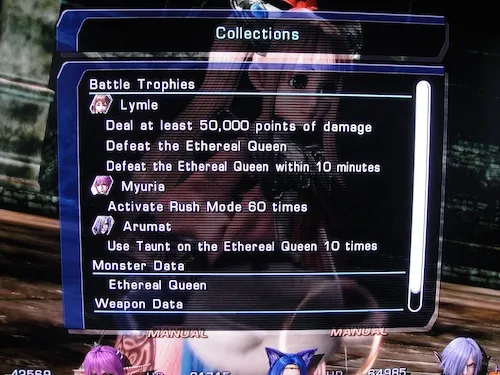
Particular attention should be paid to Japanese games. Since achievements are purely a Western invention, they have been reimagined in Japan. You know the standard practice in Eastern games of granting special bonuses for meeting some outlandish requirements? In the case of achievements, there will be no concessions either: in an average Japanese game, trophies are ten times harder than those in Western games. Demon's Souls, Final Fantasy XIII, Ninja Gaiden Sigma – if you see someone with a platinum in such a game, that person surely deserves respect. And if you find someone with a platinum in Star Ocean: the Last Hope, hold onto them — there are no more than a hundred such individuals in the world!
Also, no game should have achievements for speed runs. Typically, in such races against the clock, it’s not possible to enjoy the game, nor can you collect any other trophies. It’s a pointless completion and a waste of time, sometimes significant. Why? Someone might respond, “Well, why achievements at all?” The objective plus is that they provide an opportunity for creating games like Burnout Paradise or Crackdown, where without achievements, much of the meaning and fun would be lost. But they certainly don’t impede the process. The main negative aspect of achievements is that some players are entirely uninterested in games without them (let me remind you that they only appeared in PS3 in 2008). Sometimes you see threads about buying or trading discs stating,