One Day in the Wasteland: The Fallout Series Through the Years.
I’ll say it right away - not everything fit. Some bugs, so read the rest here
One Day in the Wasteland
Today, like always, the moon had no reason to be sad alone, the sky was filled with stars. Clouds and just plain clouds are rare guests in the wasteland. Only those who managed to survive the war and its aftermath remember the rain. Nuclear bombs turned what was once a thriving country into a lifeless desert. Rarely do you meet a stranger at a camp, exchange a few phrases — and forget them forever.
This night was no exception. The moon illuminated the camp, along with it two completely different... people?
A lonely traveler sat on a stone, poking at the ground in front of the fire with a stick. He had chosen a very suitable place for his night camp. A pile of stones, like a natural fort, protected his back. A hunting rifle lay across his knees, and a revolver hung from his belt. He looked somewhat disheveled and nervous: the effect of combat stimulants. A rustling sound came from the darkness. The seated man raised his revolver and aimed in the direction of the sound: “Who’s there?” The rustling sounded again, followed by a gunshot in the air.
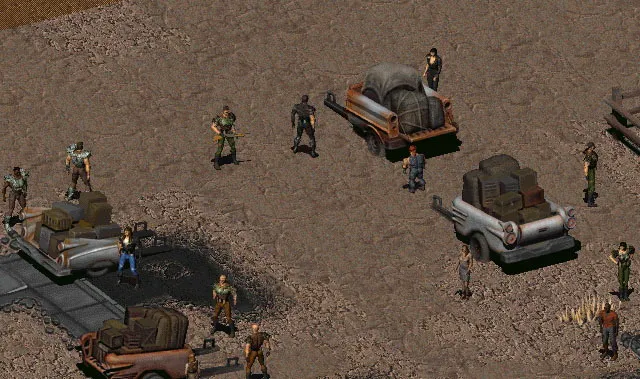
— Stop, stop, don’t shoot, I’m just an old man... — He stepped into the circle of light. A dead man. One of the creatures spawned by the war.
— Allow me to pass the night by your fire, — without waiting for an answer, the dead man sat on a stone on the other side of the fire. The traveler put his pistol in the holster, tossed the stick into the fire, and rested his hands on the rifle. The old man looked at the traveler and spoke
— Listen, listen,
[cough] forgive the old dead man for his annoying stories, but this one is special, you must hear it...
[The interlocutor turns toward the dead man and tries to show interest, but he grips the rifle so tightly and looks around so suspiciously that he is likely more concerned about the safety of the camp than the silly tales of the dead.]
— Oh! This story has become a true legend of the wasteland, you don’t believe it? If you don’t believe it, then go ahead with the next caravan to the New California Republic and...
— Cool it, and let’s hear your story, I didn’t give you 5 for nothing.
— Alright, listen...
It all began over two hundred years ago... What? Smooth-skinned, are you surprised how long I’ve lived? We, the dead, are resilient, even though we look like ruins, yes, damn it!
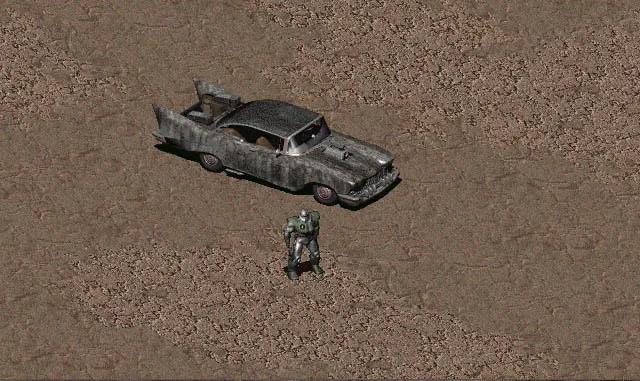
...So, if it’s now 2307... then [mumbling to himself] 2307 minus 2051, about 250 years ago the USA, that’s what this damned desert was called, realized that expensive fuel wouldn’t lead to good. Damn it, if I had known what it would lead to, I would’ve walked... What was I saying? Oh yes, I never liked Mexicans, smooth-skinned, do you know who Mexicans are? And you won’t find out. [Laughter.] In general, the government bigwigs ordered that Mexico come under the influence of the USA, they knew how to do that, for crying out loud! They blamed Mexico for environmental pollution and made them guilty of the riots in America... Eventually, our brave boys entered Mexican territory with entirely friendly intentions and friendly ensured that the oil refineries didn’t remain idle, the environment stopped polluting itself, and fuel flowed straight into the States!
[Rubs palm over face and apathetically looks at the dead man.] — Uh-huh... and that’s how it all ended? — The host of the fire spasmodically gripped the hunting rifle. — There’s no telling what you can find in the wasteland, especially at night.
[The dead man sighs and drops his gaze.] — Seems like it, I even remember how I refueled my car back then, and gasoline wasn’t too expensive; ah, I can’t say for sure. Yeah, what cars there were, damn it!..
— What do cars have to do with it?
[Looks disdainfully at the wanderer.] — Alright, alright.
Prices went down again, but it didn’t last long, within a year or so gasoline began to rise again. To drive across the country in my jalopy, I had to work for several months. Of course, nobody was thrilled about that! And after they showed on the “boob tube” that Texas was running out of oil, the mood shifted from outrage to belligerence. We were ready to do anything for low diesel prices, an American — and without a car! Such a thing couldn’t even be thought of before! Damn it!
— Well, what about the other countries? Life didn’t just exist on the damned North American continent, did it? Why do you look at me like that? I’m not less intelligent than a ninth grader!
— No, it wasn’t just in America that things were crazy; Europe was in even worse shape! But their nerves gave way first, and do you know what those clods came up with? They declared war on each other, yeah, yeah, exactly war! They landed their troops right in the Middle East. How do you think this benefited the world? Not at all, damn it! [Indignantly.] The price of oil only went up because of the war, and a bunch of countries, seeing the tricks of the European confederation, also took to arms. There are no small states left on the map; the big boys crushed them. And where was the UN looking? Oh yes. They were disbanded for redundancy, the whole world sneered at their calls for “peace and friendship.” It was completely closed down in 2052.
Oh, I got a bit heated there, forgive the sick dead man, I have moments like that. But you tell me, do you believe in God?
— We have enough problems without him.
— So I don’t believe either, but in 2053, a New Plague descended upon the world, sparing neither the old nor the young. Well, so the story went that it was God punishing people for greed. But I didn’t believe that, and the bigwigs didn’t either. They thought they could keep the disease out of the country simply by closing the borders. But not a damn thing came of it; the borders were closed, and people still died like flies. They rolled out another tale: the Plague was a new genetic or biological or whatever kind of weapon. But again, there was no evidence, just chatter in thin air.
— Oh yeah, it was a brutal time.

— Yeah, 2053 was a year to forget, damn them all, we prayed for it to end quickly. The terrorists decided to celebrate the end of the fifty-third year with a grand fireworks display, and the firecracker was a nuclear bomb that leveled Tel Aviv, witnesses say... they don’t say anything anymore. [Laughter.]
— Keep going, your chatter is making it hard to sleep.
— We were scared; we didn’t know what to expect the next day, damn it. Whether a bomb would drop on us or whether the plague would infect us. Everything was driving us crazy, I’ll tell you. And that’s when Project “Fortress” came into being, which led to the construction of those very Shelters. “Vault-Tec” trumpeted about its underground shelters all over America: “With a Shelter into the Future.” We bought into it: you had to believe in your safety somehow, or you’d drive yourself mad. The government also caught the idea: they carried out drills there, organized alarms, but there wasn’t a damn thing threatening America. And then after a few years, everyone got so used to these alarms that they ignored them completely.
— Not surprising. And what about oil? That’s what everything revolved around, right?
— During the years of Shelter construction, the oil in Texas finally ran out, and the entire country was fed by the fields in Alaska. Of course, it was heavily guarded. Because of this pipe, America got into a strong spat with Canada; they didn’t want our military in Alaska, and look where that got them! The States opened the Anchorage front; although there were no hostilities, they frightened the Canadians quite a bit. And a year later, in 2060, gasoline became so expensive that it would have been cheaper to refuel a car with gold. Traffic came to a standstill, damn it, I’ve never seen so many cars sitting idle.
Yeah, after 2060, I never saw gas-powered cars again. Electric and even nuclear-powered “rides” started appearing, but they cost so much that I started walking, heh heh, and not just me. [Laughter.]
By the way, that same year the war in the Middle East ended. Whose benefit? You could say friendship won out — both sides in ruins. [Evil laughter.] Although the Europeans still had enough strength to continue the war; they finally returned home because the oil in the east ran out, meaning there was nothing left to fight for.
While Europe was at war, the New Plague took more and more lives, damn it, people were losing their minds over it; mental hospitals were overflowing. No, no — it wasn’t the contagion acting like that, the people were just so freaked out that the Plague saw monstrous visions everywhere. The only thing that kept us afloat was faith in the Shelters; they were just finishing construction, all... all except for one — the thirteenth. Remember this Shelter, man, I’ll get back to it, probably not once. And finally, the insane drills ceased; the folks in the government finally caught on that the constantly blaring sirens should be canceled. They did the right thing; at least they had some common sense, damn it.
But it turned out that our troubles were just starting. Without diesel, many power plants shut down. All the load fell on the nuclear ones. As a result of reactor overloads, we almost tested the efficiency of the Shelters. [Laughter.]
A year later, the USA refused to sell oil to the Chinese. I’ve always been curious about what was going on with the narrow-eyed ones at that time. I think it was tough for them too. Just when the people calmed down — bam! The paranoids marched back to the hospitals. Damn it, we were living on a powder keg; who knows what’s on the minds of those communists? By Christmas, the Reds made us a gift — they landed in Alaska. Yes, I’ll tell you, it was hot on the Anchorage front. Plus, the Canadians debated; could our guys march through their territory or not! But by the end of the year, they finally raised the white flag and opened the borders, and that’s when the Chinese were in for a surprise. Our brave soldiers in energy armor crushed, no, obliterated the Reds in Alaska. We showed them, smooth-skinned. By the way, the military remained in Canada — just in case. [Smirks cunningly.]
Some time passed — and Canada began to be called “Little America”; their government tried to protest, but our bosses didn’t care about them. The entire American nation celebrated its first victory in Alaska, and nuclear batteries found more and more use, replacing the fuel of the twentieth century. Here’s one of them. [The dead man shows the wanderer a battery with a radiation symbol on the side.] I use it as a heater. [Laughter.] That’s what “Corvega” ran on; yes, “Corvega” was a proper American car. Damn it, “Chrysler Motors” sold it at an insane price, but about a week later there was only advertising left; the cars were sold out.
— Did everything normalize? Did everyone live happily ever after again? If so, I’m disappointed; I need bread, I need spectacles...
— No, this was still just the beginning of the story. For a couple of years everything was more or less calm, electricity was appearing everywhere. Nuclear power plants were being built, nuclear batteries were being produced; several states were fully provided with the new fuel. But in 2072 troubles began. First, disgruntled Canadians nearly blew up the oil pipeline, then riots and uprisings started. Our guys quickly suppressed the uprisings and took power into their own hands.
Canada was now part of the United States, though nobody said so aloud. Moreover, the American army landed in China, pretending to free Alaska; we hadn’t heard from them for a long time, probably they hadn’t achieved anything special. However, in Canada, our soldiers distinguished themselves, so much that they were shown on the “boob tube” — the recording showed how they shot rioters in a Canadian town. Canada was just Canada on the map. [Sighs.]
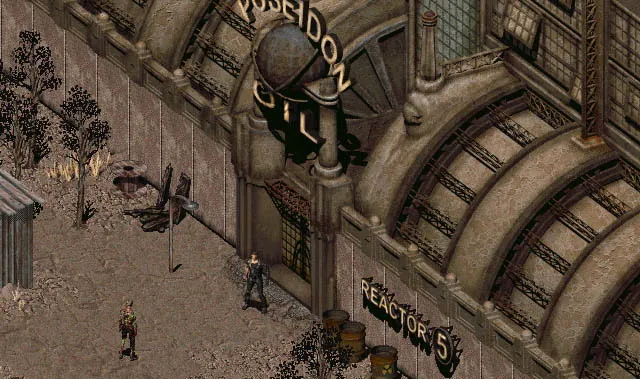
People took to the streets, and thousands of rioters gathered in protests. Damn it, that was the last thing we needed then. A small spark of protest instantly grew into a rebellious flame (hmm... I’ve heard that phrase somewhere), engulfing the whole country. The police couldn’t handle it; the military appeared in cities, and many of the rebels were promptly shoved into temporary jails. I realized this smelled fishy, so I grabbed all my savings and fled to Bakersfield. In 2077, the military finally kicked the Reds out of Alaska and returned home... to fight against Americans. Yes, to fight, although it was called guarding or controlling, call it what you will.
The last straw was the rumor about the F.E.V. Forced Evolution Virus; heard of it, smooth-skinned? It’s thanks to it that I turned into this handsome fellow, damn it! Politicians, those damned politicians of the world, expressed discontent. Saying the USA was a threat to all humanity. And on October 23, 2077, all the protesters suddenly calmed down; the dead don’t argue. [Loud laughter.] Nobody knew who launched the missiles first, but later we found out it was the Chinese. They unleashed everything... everything they had, but we (what good sports!) managed to shoot back and knock the Red threat back to the Stone Age. And very little was left of us as well. Practically all life was wiped off the face of the Earth. Many Americans died from those damn sirens; they thought it was a drill, a training alert...
And then it turned out that my Shelter wasn’t airtight. Once we learned this, all anti-radiation medications were used up. That’s probably why none of us died from radiation; we began to mutate. Very many living creatures were changed by the war. When we emerged to the surface, the first thing we saw was rats... the size of dogs!
On the ruins of Bakersfield, we founded our city, Necropolis. Named in our honor, heh-heh.
[Laughs.] —
So that’s why you have that stick protruding from your head; oh, I just can’t look at it. Either listen or look.

[Offended.] — Can I continue, please? The destroyed world began to gradually emerge from the ashes; settlements were established, merchants appeared, and of course, bandits. There turned out to be many more survivors than I expected. And then the Shelters began to open. On one of my journeys to the northern lands, I stumbled upon a city, the Shelter City, as they called it. I must say, I was quite tired and decided to stop for a day or two. They welcomed me warmly, with two lines in the air and one at me; thankfully, they didn’t hit me. After such a cold reception in the Shelter City, I headed back to my city; strangely enough, I was beginning to consider the scorched Bakersfield my home.
Returning to Necropolis, I learned that Seth, one of the dead men, had become the leader of the settlement. He was a good guy. The former overseer of the Shelter didn’t want to stay in Necropolis as a laborer and left; I went with him for a while; then we parted ways. I headed toward Los Angeles, while the overseer went who knows where. I never heard from him again. In the Boneyard, as they now called LA, I got a job working with a caravan. Damn it, I could shoot well then and still can, you can’t avoid that, smooth-skinned! [Laughter.] Besides, it was a good chance to wander around the world without fear of being eaten, at least not immediately. [Laughter.]
But over time, creatures appeared that didn’t think about food at all. Huge ones, with green skin, they attacked even during the day. They kidnapped people, killed some, left others alive. Always smooth-skinned. They didn’t care about me, so I survived.
— You left Necropolis for Los Angeles, didn’t stay there long, and set off to travel with caravans, but there must be a city where you found caravans and girls; with that stick on your head, any one would be yours...
— I settled in Hub just when Angus was killed. It was a hellish place, let me tell you. A struggle for survival; damn them all. It was that easy to die in Hub.
My looks saved my life many times. [Laughter.] You could lean against the wall, and they wouldn’t even check if I was alive or not. [Laughter.] Then Roy Green, a good guy, put an end to the chaos in Hub. Under his leadership, the city council was created, and police organized. Now you couldn’t just blow someone’s brains out right in the middle of the city. [Smirks.] Hub actually became quite a decent place to live. I continued traveling with caravans; when I returned, I lived in the old city. There I lived with a guy named Harold. He looked just like me, but he didn’t come from my Shelter.
Remember I told you about the mutants? Harold was one of those who went on an expedition to the northern lands. In short, no one besides him returned. He was found in the desert, already mutated. He lost everything. His own caravan, all his friends, partners, and subordinates. But you know, we dead men know how to survive. Harold is still alive; I should visit him. [Cough.]
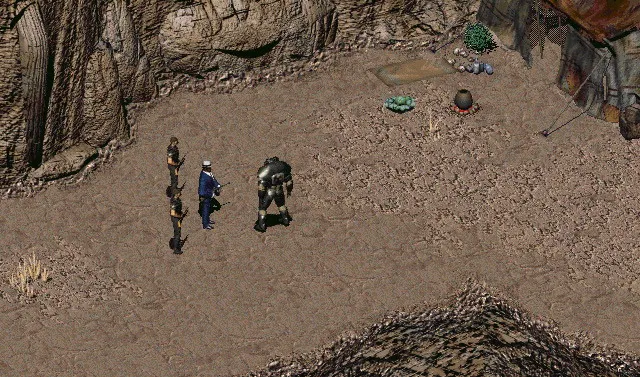
Mutants kept kidnapping more and more caravans, although many thought they were just wild beasts. There were even rumors that it was the Deathclaws. Have you seen a Deathclaw? Damn it! If you see one — run right away. Huge, half as tall as a man, with huge claws and teeth. The claws of a Deathclaw turn any armor into swiss cheese; yep. That’s the most nightmarish creature resurrected from the ashes of war.
— Old man, I’ve been sitting on psycho for months, and I’ll tell you your Deathclaw is a Brahmin in a pen compared to what I’ve seen. Alright, tell me about your travels.
— Travels? In December 2160, I went out with a caravan to the distant northern lands. Who would’ve thought that the fate of our entire world was being decided during my journey... I learned about the Vault Dweller from Harold. Yes, that one. Many legends were crafted about his feats. As always, it was not without exaggeration. But few know what actually happened.
How it Happened
Welcome to a not too distant future. The world is scorched, but not everyone has died. Disparate groups of survivors gather into communities, founding cities and settlements. Part of the population of the USA, preserved in underground bunkers — “Vaults” — survived the hellish fire of nuclear bombs. The “Vaults” are supposed to protect people so that one day they can emerge onto the war-ravaged earth and restore it...
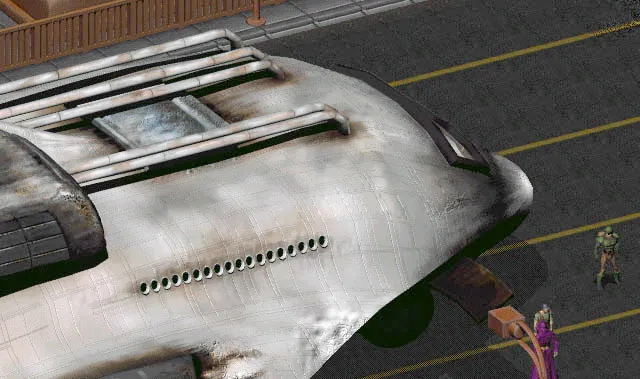
In one of those “Vaults” lives our hero. One fine day, a shadow fell on a great mission. A phantom shadow of death, threatening all the residents of the underground fortress. The water purification system chip broke. Naturally, only you can save everyone. But the question is, who are you? The game conveniently offers several initial hero options, as well as a character builder.
This is interesting: to this day, any game with even the slightest resemblance to the role-playing system of Fallout is insultingly labeled as a “clone.”
Strength, agility, wisdom, intelligence, endurance, charisma, and luck, a whole heap of available skills and countless character traits. There’s a lot to think about. And you’ll have to think hard because choosing your character's inclination towards raw strength or, say, diplomacy will affect the entire game.

Our subject gets thrown
out of the “Vault” with a pistol, a few rounds, some junk, and best wishes, saying “without you, we’re finished, do your best to save us.” The main hero finds himself somewhere in the wasteland; the only marked location on the map is the neighboring Vault, where they offer to search for the necessary gadget. The cave where the entrance to the bunker is located is crawling with rats; this is basically the tutorial. The rats are weak opponents, and the player will get to learn the mechanics of combat before being bitten. And there’s nothing complicated about it. Everyone takes turns, each has what are called action points, which are spent to perform actions. If you want to shoot, that will cost you 5 action points. Reloading will cost two; stabbing with a knife — three. Just remember that melee weapons can only be used when the opponent is nearby, you’ll have to spend one action point for every step taken towards them (and any other direction), and so on. Out of action points? Pass your turn to the next; everyone wants to take their turn. The combat system is simple and beautiful, hotkeys, by the way, are also provided.
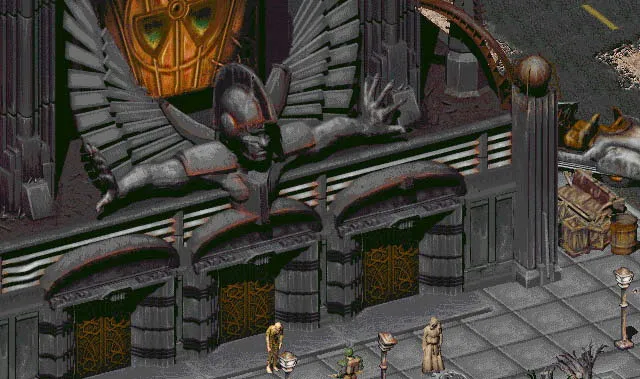
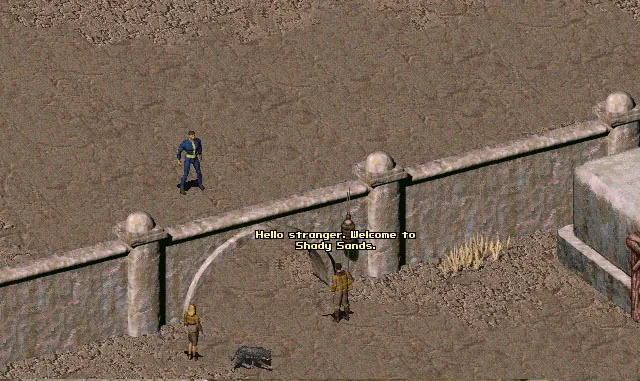
The Vault Dweller sees sunlight for the first time in their life, breathing in real, unconditioned air. There’s nowhere to go but to “Vault 15,” and that’s where they head. Along the way, they encounter a settlement, Shady Sands; you help (or don’t help, that’s allowed too) the locals, uncovering new cities on the world map and heading toward “Vault 15,” but then there was a cave-in, and there’s no way to get the chip.
In essence, the game really starts only after this news. The player is provided with a large map and, if you can believe it, 150 days to search. Is it worth mentioning that along with saving your home, the main hero will save the whole world?
A small step for man, but...
Back in the distant 80s, when gasoline in the USA cost mere cents and “Star Wars” was raging on theater screens, the game Wastelands was born.
The reader might ask what relation this game has to the article about Fallout. The most direct. The thing is that Wastelands is a role-playing game set in a post-apocalyptic world from Interplay; it laid the concept of a post-nuclear world. When Black Isle Studios — an Interplay division — began work on a new game in the series, the rights holder, Electronic Arts, forbade the use of the Wastelands name. That’s how the new title — Fallout — was born. If it weren’t for EA, it’s quite likely that the game industry’s legend would have been Wastelands 2, but it turned out differently.
The main concept was slightly changed; thus, instead of the USSR, China came into play, and the time of events was pushed back a little; otherwise, everything was recognizable: nuclear bombs rained down on the USA and the rest of the world, creating vast wastelands that the main hero travels through. Even the embryonic role-playing system was borrowed from Wastelands. And how many kinds of references to that game were made in the Fallout series... In general, Wastelands can be considered the official father of the series. Incidentally, there’s also a rather amusing fact related to the role-playing system. Initially, the developers wanted to base the game on GURPS, but its owners, upon seeing the opening sequence of Fallout, where a soldier in energy armor executes a captive, refused to provide the system, claiming there was too much violence in the game. Who knows what could have resulted from that, but as a result of this refusal, the S.P.E.C.I.A.L. system came to light, and what a light it was!
This is interesting: Interplay had to invent its role-playing system because it didn’t have a license for the popular (second to D&D) GURPS. And what if it had? Virtually nothing would have changed. The ideology of S.P.E.C.I.A.L. was taken from GURPS; only “action points” were invented from scratch, but they would have had to be invented anyway.
Timothy Cain is generally considered the father of Fallout, and for good reason. Despite the fact that Interplay had begun to doubt the project, he continued to create The Game with a capital G. He took artist Jason Anderson, programmer Jason Taylor, artist and art director Leonard Boyarsky (yes, we owe the creation of the “Vault Boy” to him) and two programmers, Scott Campbell and Christopher Robin Taylor. These are the main people; around 20-30 more worked on the project later.
Interplay assigned a “B” rating to the project, meaning no one expected good sales; they thought, “let them make it, whatever.” This affected Cain and the entire development team. Further work on Fallout went ahead under the banner of “We’ll show them.” Also, no Interplay manager was particularly interested in Cain’s affairs; there were more important projects.
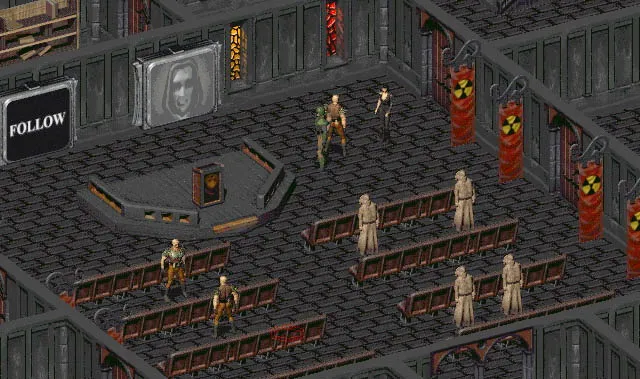
Much, as mentioned above, was borrowed from Wastelands. The role-playing system underwent serious polishing; the time of action was changed; the graphics were written from scratch. The game was filled with a vast number of dialogues, information, little jokes, and references to films and literature. It was all going on, still without the attention of Interplay. And so, on June 15, 1997, the game went to print.
It’s not hard to guess that once the boxes hit the shelves, the world went crazy. A wild success, the top of the charts, noisy titles, rave reviews, and so on. Tim Cain really created his masterpiece.
One Day in the Wasteland
...And I’m not one of the few. [Laughs.] The Wasteland was filled with rumors. Starting from the fact that the Vault Dweller was to blame for the nuclear war, and ending with the notion that he was abducted by aliens, who he then defeated. But rumors are rumors, and if it weren’t for Harold, no one would have ever learned the truth of how it all happened.
Remember I mentioned his expedition to the northern lands? He was accompanied by a man named Richard Gray. A simple man who somehow appeared in Hub. He was a doctor, and doctors in our world aren't asked questions; there are too few left. Harold and Gray's expedition was a success. They found an old military base — a den of mutants, even penetrated inside.
After that, Harold woke up somewhere in the wasteland. The last thing he remembered was Gray falling into some kind of vat.
Many years passed; mutants occasionally attacked caravans. At least, that’s what the rumors said. One day, a man came to Harold. He was dressed in the blue uniform of Vault dwellers. My rotting friend was surprised, but didn’t let on. The man asked about the expedition. Then he disappeared, and after a little while, the attacks by mutants stopped. Harold and I collected all the rumors about that man; the only thing we knew was he had come from some Vault, and not that long ago, but Harold didn’t see the number on his back...
Rumors about him were coming from everywhere. In the Boneyard, he helped the Blades; in Hub, he paid for a caravan of water. Someone saw him heading to the Cathedral, and after that, the sky in that direction lit up with hellfire. Some went there, but none returned; they say the place was cursed by the gods. But I suspect it was the old good atom. For many years, we gathered bits and pieces of stories about the Vault Dweller.
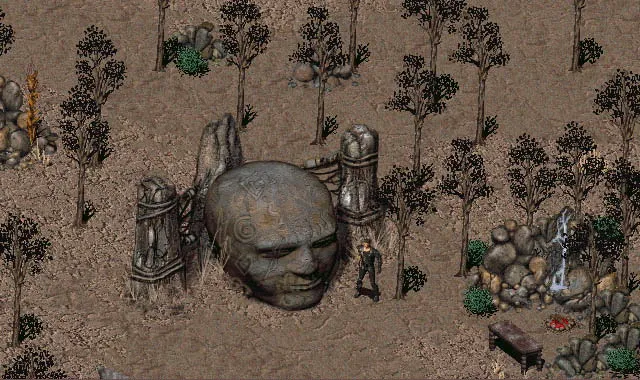
In 2192, we came to Broken Hills. The local sheriff, Marcus, was a mutant, and Broken Hills was full of mutants. An island of justice for all, regardless of skin color and smell, hehe. He told us about the Master. About his plans for peace and equality on the planet. Marcus mentioned that the Master resided in the Cathedral, what happened to him, you already know. The Unknown Vault Dweller saved us all, all the inhabitants of the wasteland; of course, many don’t even know this, but in the NCR, he is still remembered and revered. No one has seen him again, but his story is far from over.
— I won’t sleep now; you’re telling interesting things, continue. But first, tell me, how did Marcus end up in Broken Hills?
— Yes, I remember that story.
Once, around 2185, the super mutant Marcus and the Brotherhood paladin Jacob met. Damn it, they tried to kill each other for three days, but to no avail. Eventually, the opponents wore themselves out and came to what could be called a truce. After a short rest, they set off on a journey, where — even they didn’t know. Because Marcus and Jacob were following the trail of super mutants. Along the way, they argued about the Brotherhood of Steel’s politics and the Master’s cunning plans; I wouldn’t have been surprised if one of those arguments turned into a fight, but they had become too good friends. After almost a year of wanderings, they stumbled upon a small settlement, Broken Hills. Marcus decided to stay; Jacob’s trail disappears into the wasteland.
— And what about the Enclave? You’ve been omitting that. Just know I won’t pay extra for it.
[Frowning.] — I don’t need any more money from you; I was just about to tell you.
The 23rd century is coming to an end, the Enclave is throwing all its forces into developing new types of weapons. Special attention is paid to the F.E.V., but fortunately, they are failing miserable; otherwise, I’m afraid they would have been testing it far from macaques. But what the scientists couldn’t do, politicians could, and the first shift from the dead center happened not in laboratories, but on the political arena. In 2215, Congressman Richardson became the head of the Enclave, though not without the help of his daddy, the president. Under his auspices, the F.E.V. II was developed. Naturally, everything was kept under the strictest secrecy, and as usual, no one told the civilians anything. Nobody knew what was happening in the laboratories, where people died; you can’t put armor on Brahmins, and you can’t evaluate its efficiency; you catch my drift? But these mad professors and their assistants were not only making armor; they were hatching an insane idea — to tame the Deathclaws and create units that could be used anywhere since they didn’t give a damn about radiation and could survive in the wasteland, and of course, their substantial strength shouldn’t be underestimated.
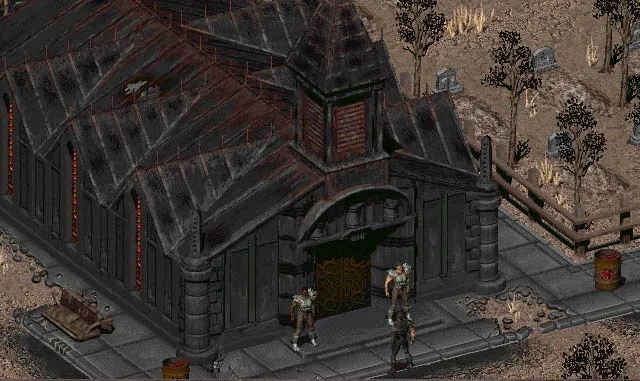
But all that was small potatoes compared to what awaited us ahead. Damn it, I curse the day those damned Enclave scouts discovered the remnants of the Mariposa military base; after all, scientists are never satisfied, just let them rummage around in the ruins, maybe they’ll find something. They found... But how they found it! While those bastards in white coats were fumbling around the base, assault teams prowled the desert, searching for both intelligent and less-than-intelligent beings to infiltrate the heart of Mariposa — the vats. Frank Horrigan was part of the group; he had recently been discharged from the secret service; they say due to some mental trauma. It took them just four months to find the required amount of slaves; by the way, super mutants were the best labor force for the Enclave; they dug well, so well that they unearthed the F.E.V. virus! Anyone who came into contact with this filth — mutated. Frank Horrigan was no exception. Truth be told, after he was taken, the mutants revolted and destroyed a part of the Enclave’s divisions at the base. Horrigan changed more and more every day, they pumped him full of medicines and studied the virus’s influence. And, you know, they realized that the virus was dangerous; probably, it was their first correct conclusion, damn it. After brief discussions, all work in Mariposa was halted, and the remaining Enclave squads vacated the base.
[Scratches head.] — So, what happened to the slaves; were they shot?
— They wanted to, but couldn’t.
One Enclave squad was left for the cleanup of the base, and when it was time to put a period in history, the super mutants pulled out weapons they had hidden at the base and incinerated the soldiers; they could do that, yes. And since the virus didn’t pose a threat to them, they remained in Mariposa.
— Oh, good lord! And what happened to Horrigan? Did he die?
— To my great regret — no. He gradually became a mutant, just not like the others. Doctors tried to stop the mutation, but in vain, damn it. For three long years they experimented on him, and in thirty-nine, the first test of Frank as an Enclave combat machine occurred. A new version of the power armor was specifically developed for him; it became like a second skin, consider it Darth Vader, damn it! Oh, you don’t know who he is; that was a great movie, what a movie...
— Alright, let’s move on. Tell me something else; after all, the wasteland lived not only by the Enclave in those days, right?
— Yeah, you're right; there is another interesting story. While those crazy scientists were digging up the virus, a new city was forming not far from the Vault Dweller City — Gecko. It was populated by dead men. Someone from our side decided to restore a nuclear power plant, around which the settlement grew. A small peaceful community of guys like me. Harold and I decided to move there. He’s still working at that station...

Fallout 2
A year later, we are invited back to the post-apocalyptic world of the future. The story continues. The Vault Dweller, after his heroic odyssey, was expelled from his home. He gathered like-minded people and headed north, where he founded a settlement. Our hero is his descendant. Again, as in the first part, you create the personality of the descendant at the beginning of the game or choose one of the prepared characters. The combat system remains the same, one-for-one, the same action points, the same ways of combat. And why change an originally successful scheme? The role-playing system hasn’t changed either, but it has become more balanced.
Our hero is sent to the Temple of Trials, where he must prove his right to be called The Chosen One: after all, you can’t trust such a great mission to just anyone. “Training” rats have been replaced with ants and scorpions. The harmoniously integrated tutorial in the game added the ability to use skills and various items, clearly showing how this can come in handy in the wasteland.
This is interesting:gosh, in the cave of Vault 15, you couldn’t apply lockpicking, for example. The Temple, however, vividly demonstrates how to use skills and various items.
Compared to the first part, the main hero has become a bit poorer. No one will give you a gun at the beginning of the game, and in general, no one will give you anything for free. In your arsenal are your fists and... whatever you manage to “steal” from the pockets of your tribesmen.
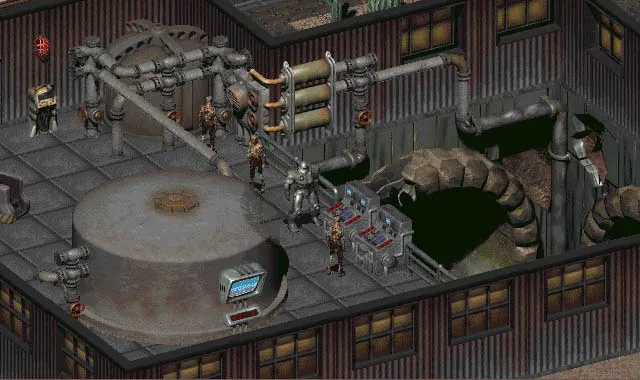
After a brief conversation with the elder, we learn that the village is dying. Diseases, constant droughts, in general, once again, it’s all because of the water, or rather, its absence. Only the Chosen One can help the hopeless situation of the village. With best wishes and 152 coins in his pocket, the Chosen One sets out into the wasteland in search of a life-saving briefcase that will turn the barren land into a paradise oasis. The story is repeating itself; apparently, the ancestor’s genes played a role. While saving the ancestral home, the Chosen One will also save the entire world.
Polishing to a Diamond
Naturally,
after such success, Interplay demanded a sequel. Kane, as the project leader, chose the path of improvement and polishing everything that can be improved. The role-playing system did not undergo significant changes. New features were added, and skills acquired more applications. The interface also remained largely unchanged, but it became much more convenient to use. The amount of text in the game increased dramatically. The story was worked out in more detail, and the game itself grew significantly. As a result, the sequel delivered what players wanted — the familiar atmosphere, the familiar interface, and a vast new expanse of scorched California desert, full of mysteries.
On October 31, the second part of the game went to print. The world went crazy once more. The second part surpassed the original in all parameters. Even higher ratings, louder titles, and a huge number of fans and fan sites. Fallout cult. The Fallout series took its well-deserved place on the throne of the RPG genre, where it still sits today.
However, Fallout 2 was finished without Timothy Cain. He left Interplay and started his studio. Boyarsky and Anderson left with him. The trio of creative forces left the walls of Interplay.
One Day in the Wasteland
The night was ending. The dead man poked the fire with a stick.
— It’s almost out, it’s so cold in the morning.
— Old man, toss me something, we’ll get you a fire. [The wanderer swiftly pulls out a flamethrower from behind his back. You have no idea where he pulled it from. The flamethrower was much bigger than his backpack. The pre-dawn wasteland ignited with flames. A pile of rubbish, bearing the proud name of “fire,” flared up.]
— Now that’s much better.
[The dead man moved closer to the fire.] The story of the Vault Dweller is not yet finished, sit down, listen.
After searching for the water chip, battling mutants, disposing of the Master, in general, saving our radioactive world, he returned home. But the house rejected him. In fighting against the outside world, he himself became different. The legendary, but former Vault Dweller gathered the people and left. He left for the wasteland. Far in the north, in the canyons, he and the dwellers from Vault 13 founded a small village. Oh, Arroyo has now turned into a big city. In those times, the village was dying from drought. Yeah, but who knows, if it hadn’t been for the drought of 2241, where would we be?
It seems there was something in the Vault Dweller that manifested in his descendants and saved us once more.
The Chosen One, they called him. The descendant of the Vault Dweller, clad in the suit of his glorious ancestor, set out seeking the G.E.C.K., but it was harder for him than for the Vault Dweller since everyone considered him a savage, hehe, and this savage saved the whole world, damn it.
Gradually, the Chosen One learned to live in the Wasteland, found friends, and made enemies. But the Wasteland did not devour him. He, like his ancestor, marched towards a goal — saving his kin, saving his home. Do you think, wanderer, he knew he would have to save not just a tiny tribe, but the whole world, damn it?