Samurai and Armadillo. Preview of Total War: Shogun 2 - Fall of the Samurai
“Everything in this world has a beginning and an end,” loved to say the unknown philosopher in the introduction to [Total War: Shogun 2](/games?search=Total War: Shogun 2). It's hard to disagree with him, as over the past year we have witnessed numerous changes in Japan[cut]: the Taira clan, ruling on behalf of the emperor, was overthrown during the "Rise of the Samurai" campaign, and the Ashikaga shogunate, established centuries later, was destroyed by Tokugawa (if you’re not confused, it means you’ve played or studied it; I respect that). Seemingly, after so many years of incessant conflicts, the Japanese should have at least been somewhat worn out and thought about ballet with ceramics, but no: peace lasted only 200 years. The blame lies with Asian cunning, resentment, and a thirst for power.
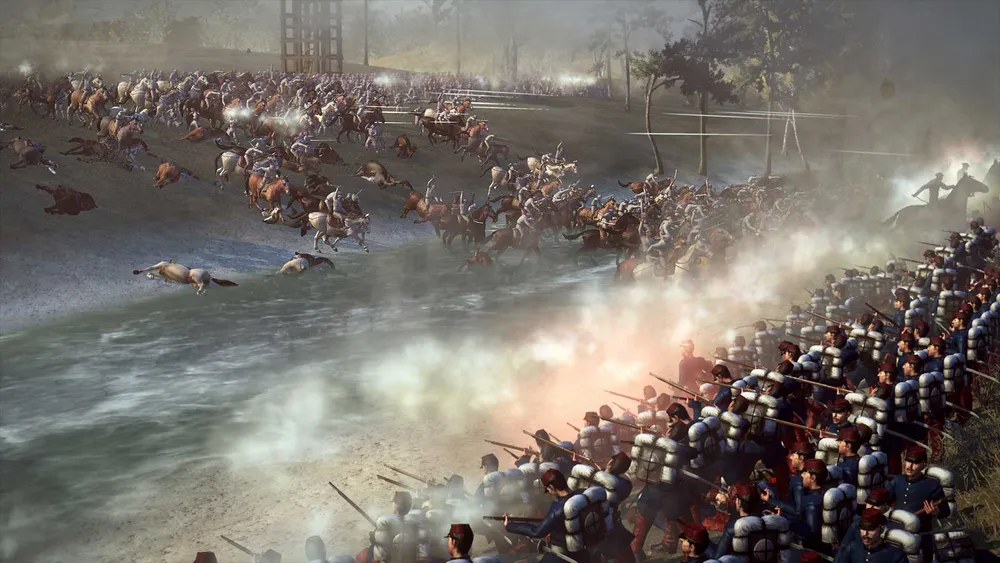
Thanks to the press version of [Total War: Shogun 2 - Fall of the Samurai](/games?search=Total War: Shogun 2 - Fall of the Samurai), received in a secret parcel from colleagues at "1C", I managed to lead the Satsuma Province - the main disturbers of peace in rapidly modernizing Japan. Don't think this is an entirely new figure on the political scene of the Land of the Rising Sun: upon closer acquaintance, you will immediately recognize your old friends - the Shimadzu clan.
According to the built-in encyclopedia, you can play "Fall of the Samurai" as 10 clans. Six of them will be available to everyone, let’s count them: supporters of the emperor - Satsuma, Tosa, and Choshu (don’t get confused!), as well as the shogun's fan club - Aizu, Nagaoka, and Jozei. Three more will be given to those who pre-order: Saga, Tsu, and Obama (ironically, only Obama - for the dictatorial shogun). The last, the tenth clan - Sendai, is also a shogun supporter; how to acquire them is still unknown.

Let’s return to our Shimadzu. The rulers of Satsuma spent two centuries sharpening their teeth on the Tokugawa shogunate, waiting for the moment to stage a coup. By the mid-19th century, the weak-willed shogun had lost the remnants of his authority among all strata of society by allowing gaijin - foreigners, that is - to trade with Japan on humiliatingly degrading terms for the Japanese, and the moment of opportunity arrived: hiding behind slogans about restoring imperial power, the provinces of Satsuma and Choshu (also old acquaintances - the Mori clan) unleashed yet another civil war.
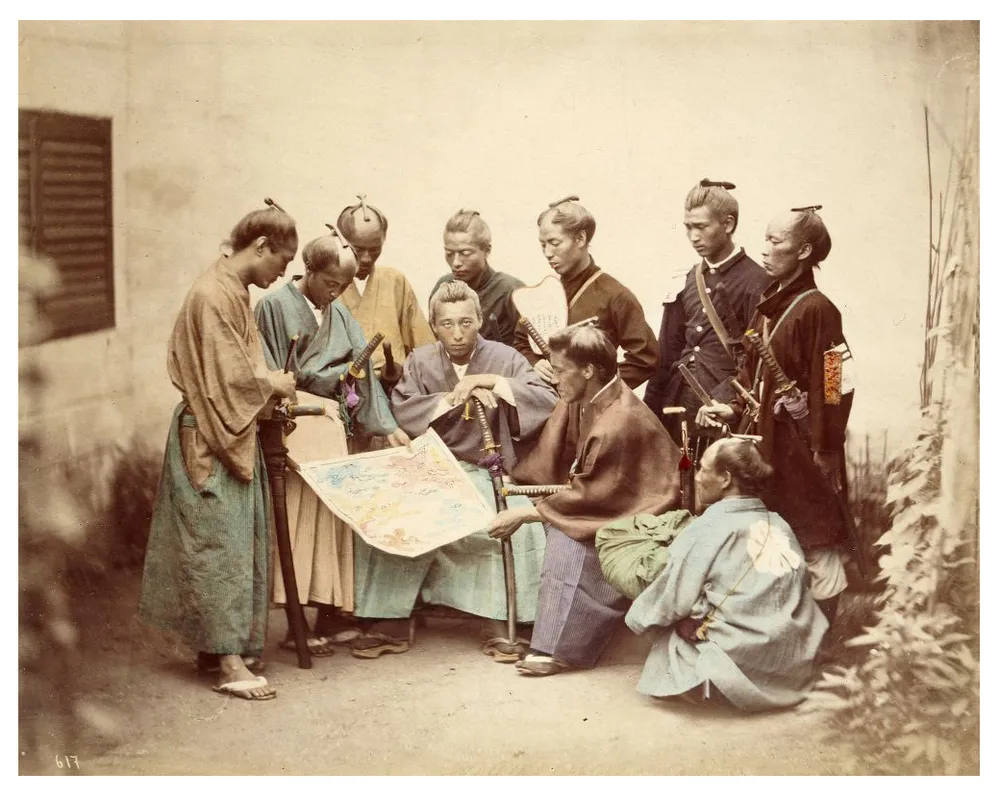
Choshu and Satsuma plot. Authentic photo from 1860.
The true aim of the turmoil was a banal power grab, but the common people believed the tale about restoring the sacred rule of the emperor - and it all began. The country immediately split into two camps; the first chanted, “For the emperor!”, while the second roared, “The shogun is our candidate!”. There were also third parties, republicans, but hardly anyone listened to them, as everyone was very skeptical about the tales of democratic miracles.
At this fateful moment, I was handed Satsuma: here, take control and achieve success. Success is defined as conquering 12 provinces (out of 75) and having a majority of supporters of the emperor on the political map; the toolkit for achieving this goal is standard for the [Total War](/games?search=Total War) series: economy, diplomacy, army. You can apply them in any order and in arbitrary proportions.
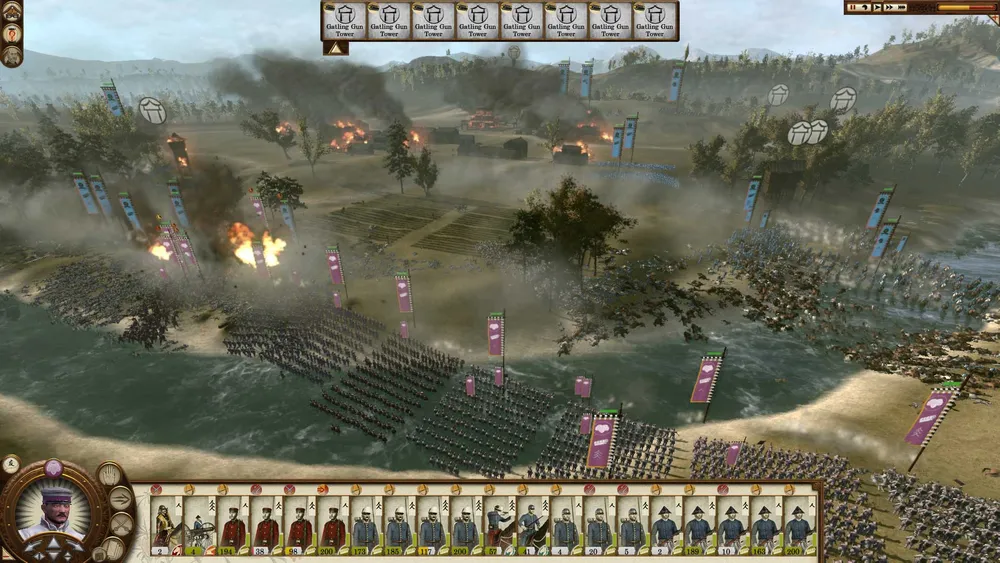
Unit icons are styled after 19th-century photographs. The devil is in the details, right?
You should probably start with politics and diplomacy. As mentioned, “declining” Japan has gained several new provinces, located on Hokkaido, Tsushima, and other minor islands that apparently rose to the surface after the Sengoku period (see the original [Total War: Shogun 2](/games?search=Total War: Shogun 2), where these islands were completely absent). 75 provinces became home to over 70 small principalities, more than half of which will not survive until the second winter of the campaign. It is with them that you will have to negotiate a mutually beneficial coexistence.
In fact, diplomacy over the last 200 game years has hardly changed: interlocutors are still stubborn and only offer absurd cooperation options, not at all embarrassed about the state of their own economy and the strength of the enemy (that is, my) army. Everybody is ultimately hampered by the national idea - specifically two ideas: the supporters of the emperor have tremendous sympathy for each other, just as do the shogun supporters, which allows the global clan confrontation to take a rather orderly form; a knife in the back (or anywhere lower) from a like-minded person can only be received if you thoroughly and persistently irritate them.
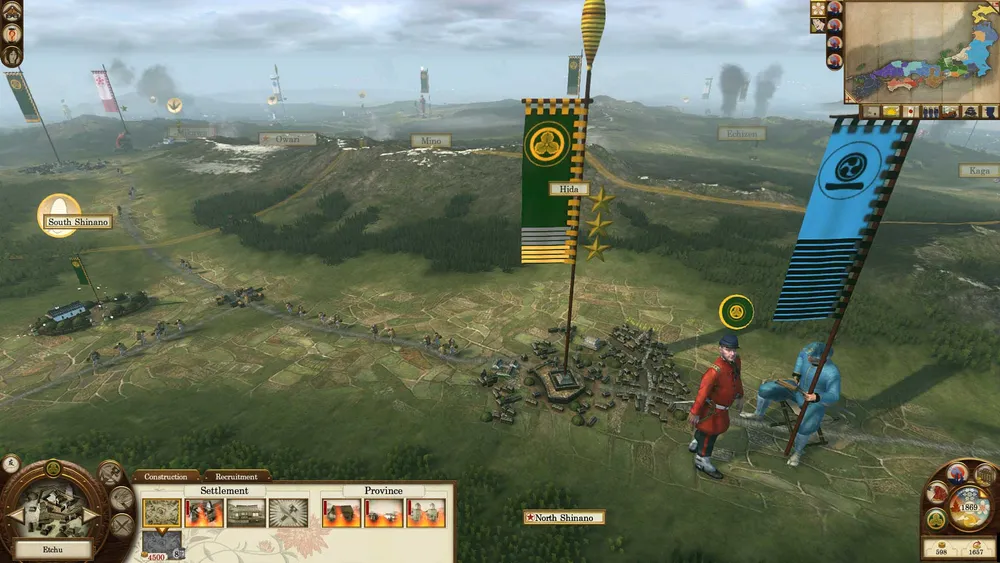
What’s most remarkable in this local political system is that one lord can be replaced by another: Satsuma can easily switch sides to the shogun, deeply disappointing the emperor. The next change of "political orientation" can only happen after the death of the daimyo.
Besides compatriots, superpowers are actively involved in Japan's economic life: the USA and Great Britain support the supporters of the Emperor, while France helps the shogun maintain power in his shogunate hands. All three countries are happy to supply the Japanese with weapons and buy exotic goods, so cunning Satsuma can, essentially, evade friendship with any local tyrants, trading exclusively with overseas partners and acquiring state-of-the-art ironclad ships and Gatling guns at the incredibly advantageous price of three state budgets.
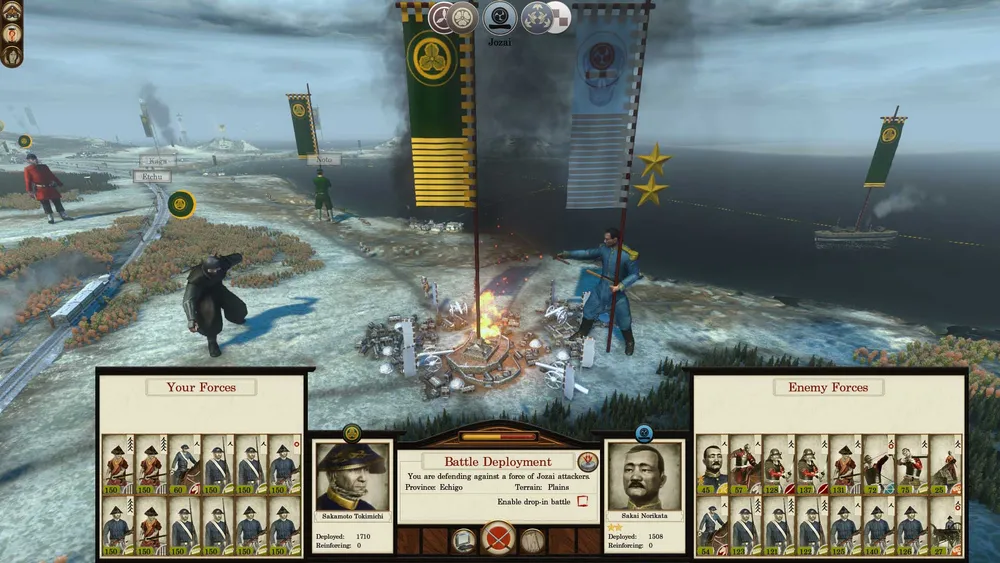
But not everything at once. To gain access to the wonders of Western technology, Satsuma must embark on the path of innovation modernization and build an efficient economy. Modernization is a new concept in [Total War](/games?search=Total War), defining the level of development of a faction. Simply put, the more modern structures are built by the clan, the higher it ascends the ladder of scientific and technological evolution. There are a total of 4 levels of modernization: upon reaching each level, the combat effectiveness of traditional troops (swordsmen, archers, etc.) diminishes, but the clan gains access to new military and industrial technologies, some of which also increase the clan's level of modernization.
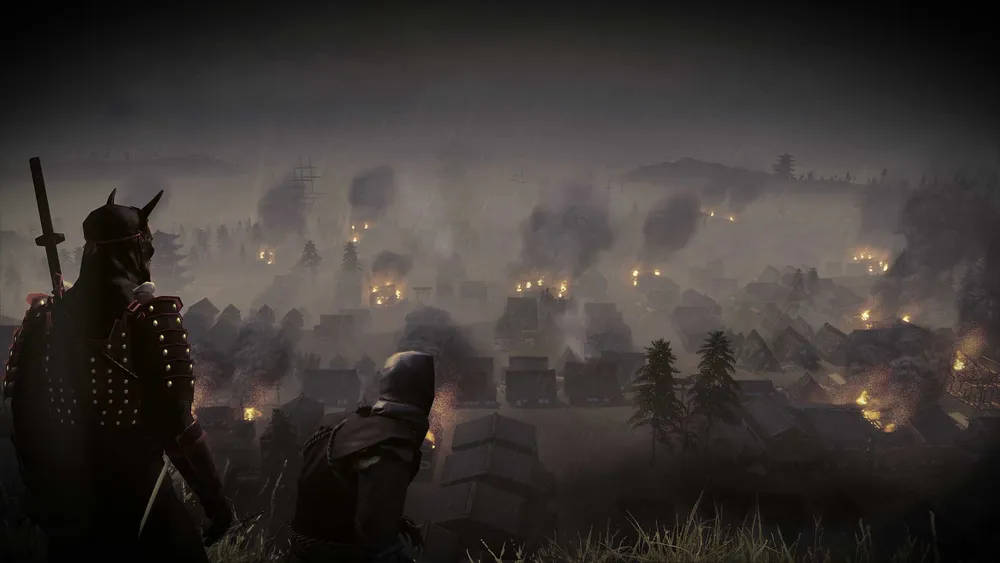
In addition to paddle screws, water closets, and other useful devices in the household, modernization brings unrest among the populace: they simply cannot bear the sight of smoking factory chimneys and rumbling railways, even though residents of “advanced” provinces are much wealthier than their “Neanderthal” neighbors. The wider progress strides across the country, the stronger the reaction of the Luddites – they might easily rise up if they do not encounter a recreational establishment and a police station in their rampage. Of course, it is possible to build an economy without factories and steamships, but do not expect to receive large incomes under such circumstances, nor a strong army - there will be no funds to pay the soldiers.
In "Fall of the Samurai", the Japanese year is divided into 4 seasons, each lasting 6 turns and providing certain bonuses: for example, in spring, subjects experience an additional surge of joy (and loyalty), and in summer, the replenishment speed of armies increases. Thus, it is more prudent to start a military campaign in spring and finish it before the onset of cold weather, when soldiers, jangling their frozen mustaches, start to desert en masse: they still haven’t come up with winter uniforms.
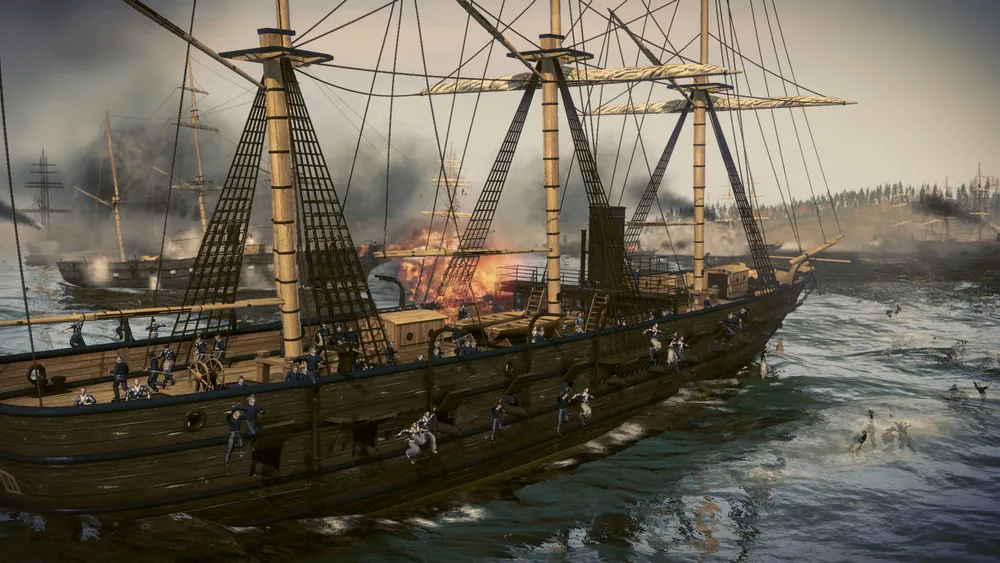
The morale of the troops will be boosted by overseas military veterans, arriving to teach the natives military skills. Additionally, foreign soldiers can cheaply recruit new fighters into the army, challenge enemy agents to duels, and perform sabotage, thus taking bread away from the ninjas. As for agents, the conversation is short: religious figures (Christian missionaries and Buddhist monks) have been replaced by political figures, urging the people to vote for the shogun or the emperor; geishas have turned to philanthropy, ceased killing clients, and now merely seduce enemy characters, forcing them to side with us.
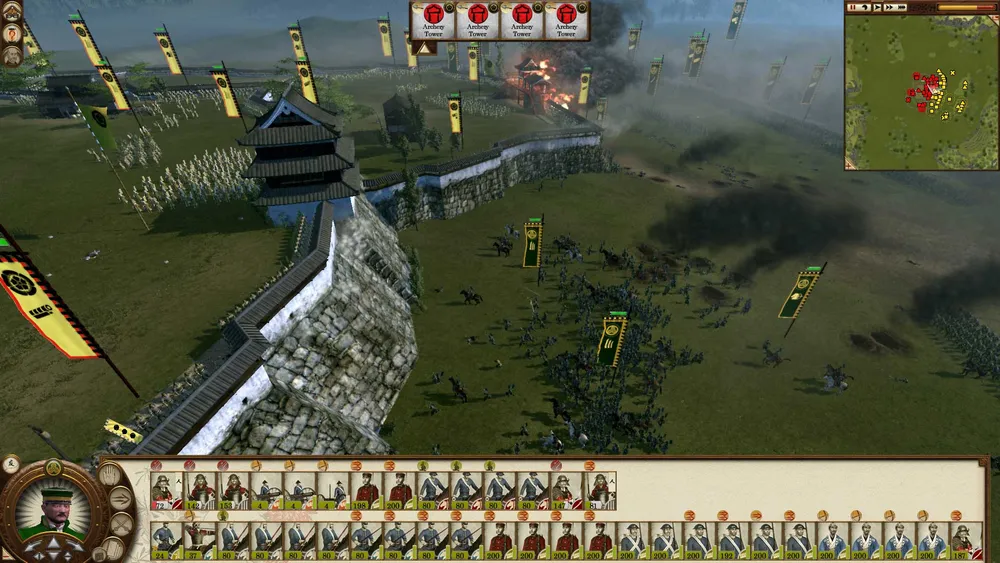
Reinforcements can be managed just like your own army; up to 40 units can be under the player's command in battle.
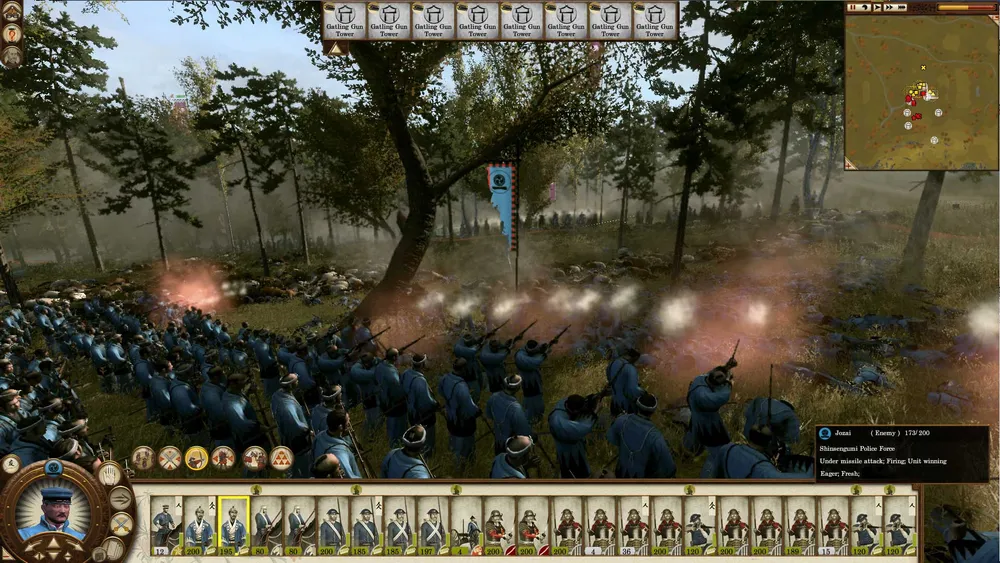
However, neither the economy nor diplomacy will allow you to capture the infamous 12 provinces. The only way out is war. Initially, under the player's command are only cowardly, frail militia armed with spears and muskets, but this is only at first. The local arms race will take its toll, and standard European troop types will become available to us: line infantry, sharpshooters, dragoons, artillery firing shrapnel - in short, if you’ve played [Napoleon: Total War](/games?search=Napoleon: Total War), you won’t be lost. And yes - a successful hit from large-caliber firearms combined with the Blood Pack DLC looks incredibly spectacular.
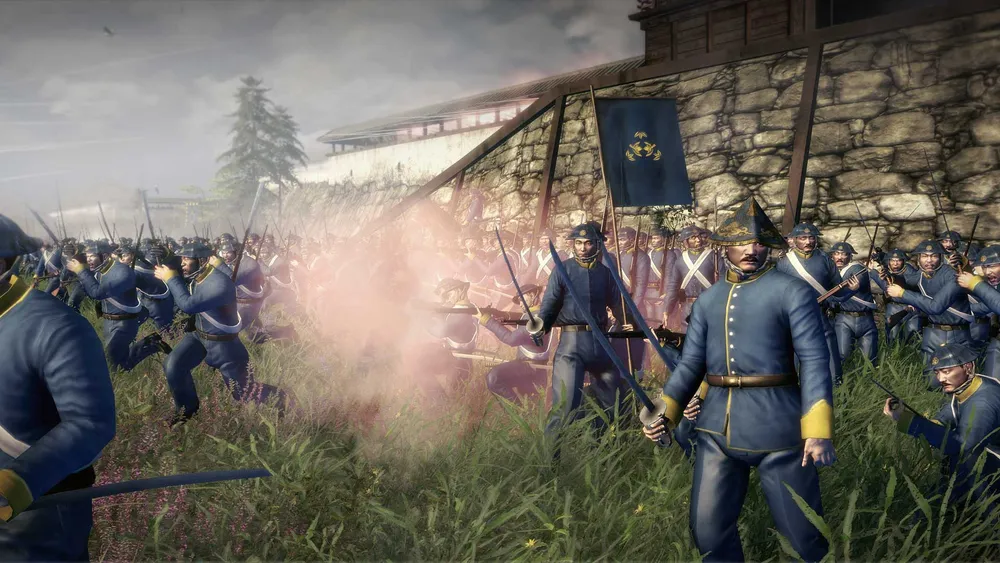
The troop types and the speed of development are generally the same for all factions, so the debate over swords versus firearms is moot - unless, of course, you are keen on playing "traditionalists" and refuse modern weapons. This is not prohibited: hire spearmen, swordsmen, archers, build wooden cannons (no joke!) - there is a certain romance to this. The effectiveness of such an army, however, will be somewhat conditional, so I personally advocate for line infantry and shrapnel.
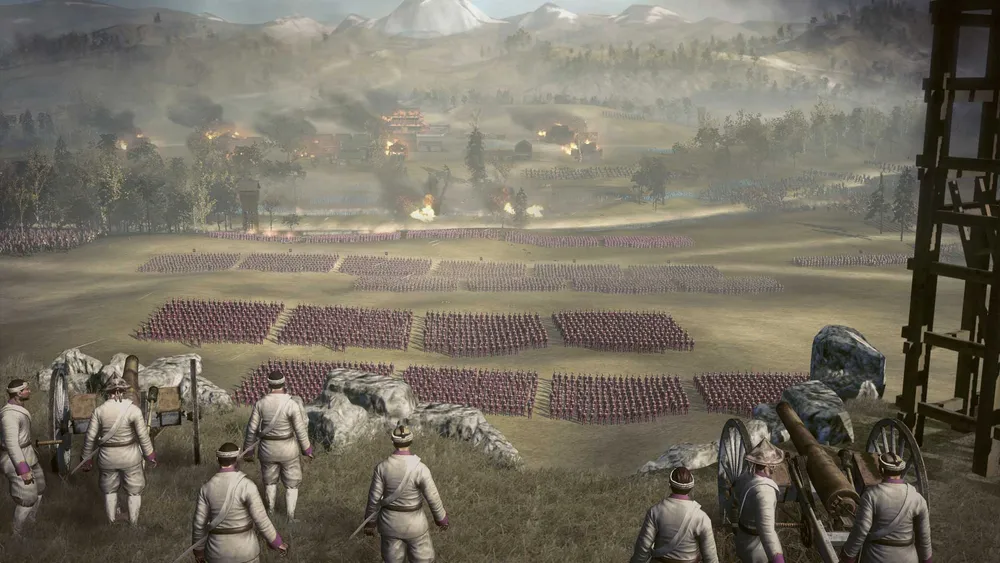

You can’t hear it, but the battle is going under the tooth-crushing Japanese industrial.
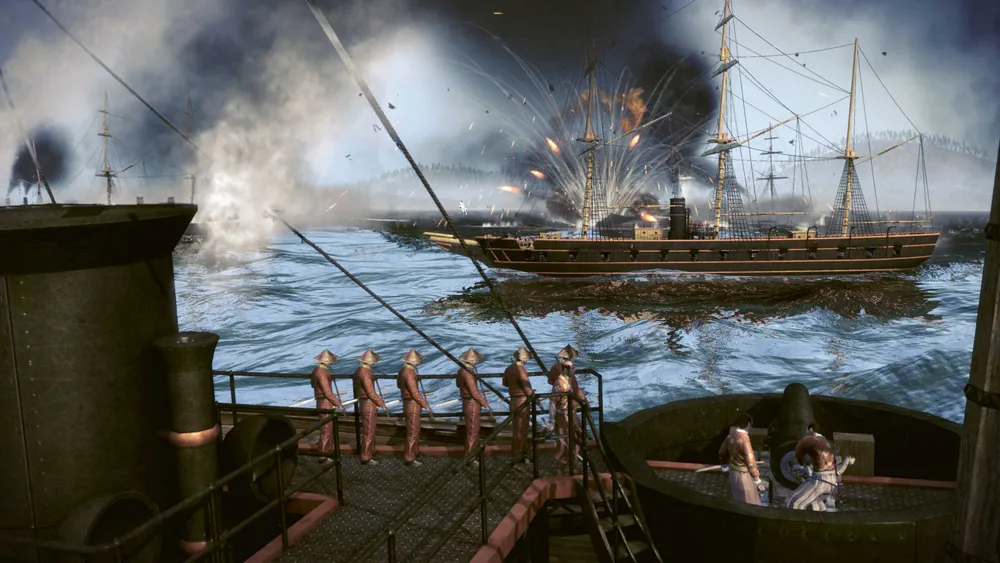
Besides the already familiar naval battles in open sea, the new “Shogun” entertains us with port battles, where several coastal artillery batteries can be at the commander’s disposal to significantly influence the outcome of the battle. Of course, with certain conditions: before any battery can do something, it needs to be "captured", so the initial phase of the battle resembles a regatta rather than an actual fight. But then - just continuous cannonade.
The overall value of the fleet in neo-Japan is highlighted by another essential detail: by bringing a couple of ships to the shore on the global map, one can shoot at the enemy army or city without consequence. Moreover, during combat, the general has the ability to call in artillery support from the nearby fleet. This weapon is extremely imprecise, but with a lucky hit, it can destroy about 50 enemy soldiers or punch several holes in the besieged fortress.
Ultimately, the reward for the persistent general, pleasing the emperor (or the shogun - whichever you find more interesting), will be an offer to become, ahem, the right hand: the head of the armed forces with the right to bear the imperial standard (or shogun standard, again). After this, all clans from the opposing camp will declare war on you, while allies will form military alliances, and a grand finale of the civil war will unfold in Japan - roughly 30 versus 30 clans.
However, there is a third option, already mentioned: you can establish your own republic, and then your enemies will include both the shogun, the emperor, and all their hangers-on. One against all - can you manage it?
After a week of participating in the Meiji Restoration, I can admit: I liked it. Scientific and technological progress did not spoil the "shogunal" atmosphere at all, and the invisible presence of superpowers only emphasizes the intimacy of events. Observing how swiftly the country’s appearance changes can keep one captivated for hours: the emerald greenery of Japanese forests is pierced by iron railways, among the mountains rises a stockade of factory chimneys, waves are cut by steamers - farewell, pastoral, hello, techno landscapes. I eagerly await the release of the full version to help the shogun stay in power or - heaven forbid - plunge into reckless separatism, flood the entire country with blood, and found my own independent republic.