Game Overview
Introduction
Hello, today I will tell you about an old but good game, I hope this post will help you get acquainted with or play this game again for the N-th time.
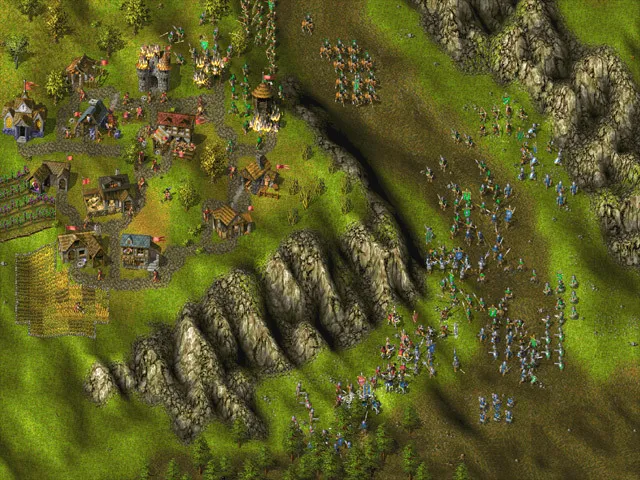
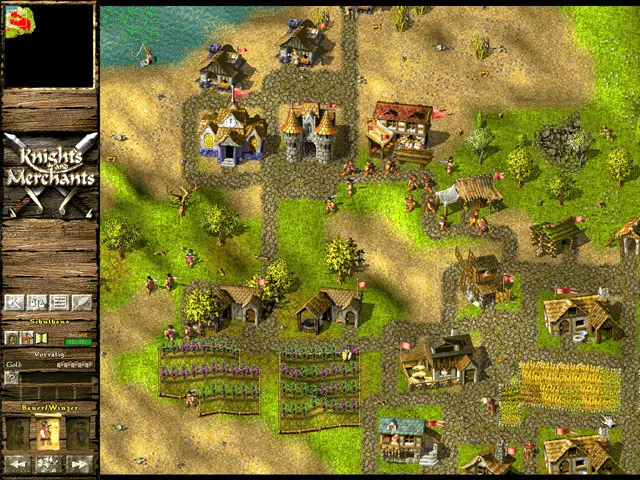
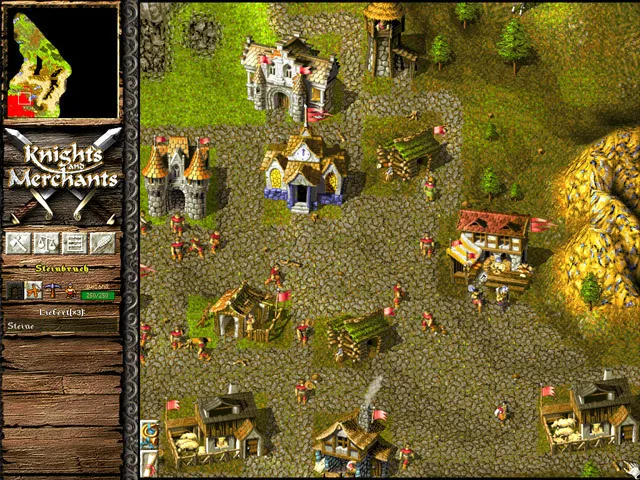
The game War and Peace (originally titled Knights and Merchants) was released back in 1998, and I got my hands on it in 2003. In Russia, the localization is handled by 1C, and in 2007 a port for Linux was released; it is this port that I played, and the review will be based on it. Unfortunately, the version from 1C (like many other good old games) is either lost or given to someone to play. Unfortunately, I couldn't capture any screenshots, so they are taken from the internet, from the site pc.ogl.ru. I will say right away that the screenshots do not look great and do not convey the charm of the game.
What is it about
The action of War and Peace takes place in the medieval era, there are no fairies or dragons, but there is hunger and defeats.
The game has a storyline that is presented in text form between missions. All missions are divided into two types: Military, where you are given several squads and must use tactics to defeat superior enemy forces, and Regular, where you generally need to develop first and then go fight the enemy (if they do not come to you first).
You have direct control over the soldiers, which by modern standards is inconvenient, and the soldiers often act stupidly (like all NPCs). You cannot control any other units. You only build the city and observe the life in this anthill.
How it plays
In gameplay, the game resembles Settlers 2 the most, but it has (in my humble opinion) a flawed military system and is also an older game from 1992; the graphics make it apparent. In War and Peace, time flies at the speed of light; it's certainly not Crisis, but the graphics do not scare you; on the contrary, they draw you into the whirlpool of the game (and in the buildings, you can even see the amount of resources, which helps the gameplay). Over time, the game only becomes more interesting. The main thing is not to overplay yourself and not to let your city die of hunger.
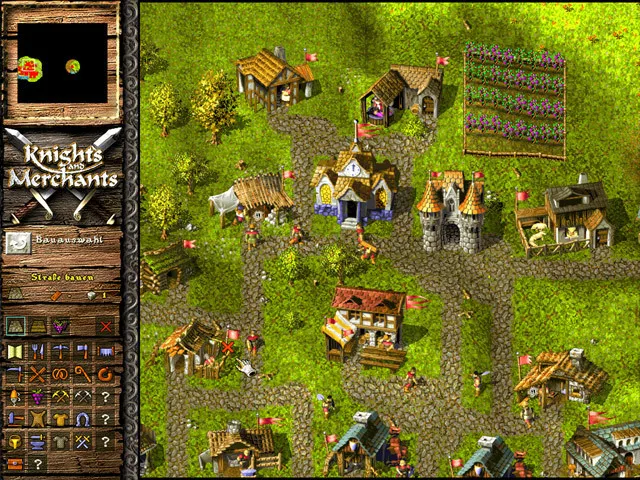
About the economy
There aren't just 2 or 3 resources in the game, but a total of 27.
The foundation of the city consists of a warehouse (where resources are stored, and if necessary, additional warehouses can be built), a tavern (where regular units eat and from which food is taken to the soldiers), and a school (where all units regenerate).
All buildings are made from: stones (which are obtained at the quarry) and boards (forester's hut - logs, sawmill - boards).
After building these initial structures, you need to construct buildings for food (there are 3 types of food: wine (winery), pork (farm => pigsty => pig processing plant), and bread (farm => mill => bakery) which produce 1 wine, 2 loaves of bread, and 3 portions of pork at the end).
Then you build mines (for smelting gold, one unit equals one gold), and finally, buildings for weapon production. This is a standard tactic against the computer; playing against real players is much more complicated (by the way, there is online play, but I haven't tried it yet).
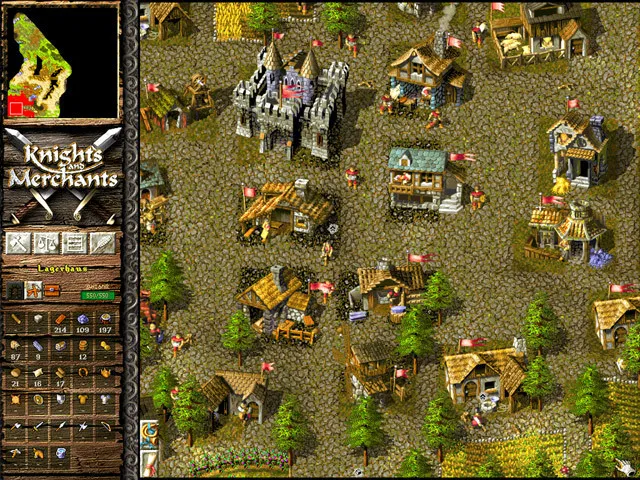
About war
The game features 9 military units, and to build them you need: all the equipment (weapons, armor, shield, horse) and a recruit, which you can build in the school. Soldiers are built in a separate building, where attendants bring all the weapons. Additionally, there are military towers from which recruits can throw stones (maximum 6 stones); 1 stone equals 1 corpse, but when the enemy is moving, the recruit might miss (the main thing is not to kill your own, although archers tend to do that, as the game is realistic).
Additionally, the terrain is utilized. All of this results in a powerful and, most importantly, interesting military component.
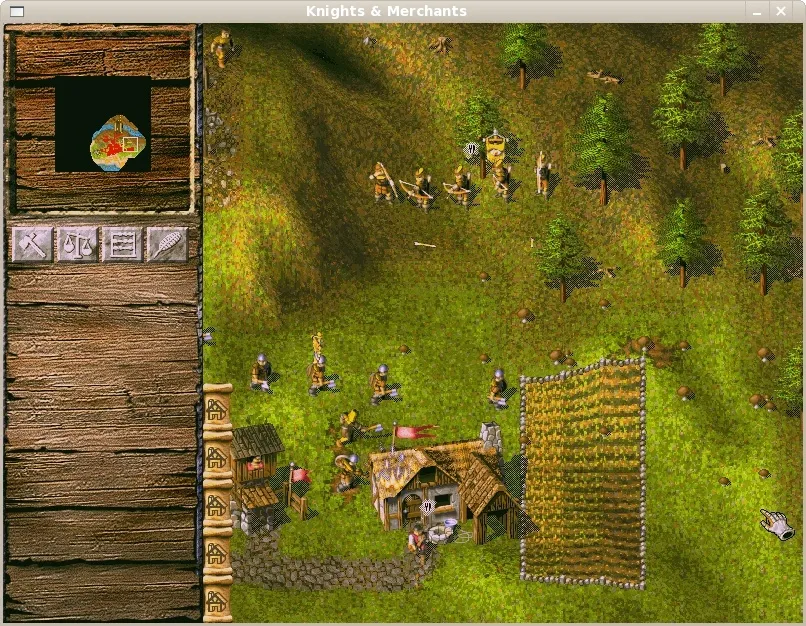
About bugs in the Linux version
Firstly, in the standard version, not all buildings are initially available; their number increases gradually; the game has multiple levels, and just one tutorial is not enough.
Conclusion
Pros:
*Varied military tactics
*Well-developed economic component.
*Pleasant graphics that enhance gameplay.
*The game itself is not fast-paced but allows you to change the game speed.
Cons:
*Glitchy computer opponent.
*Long duration of online battles.