
Gnomes: The History and Culture of the Underground People
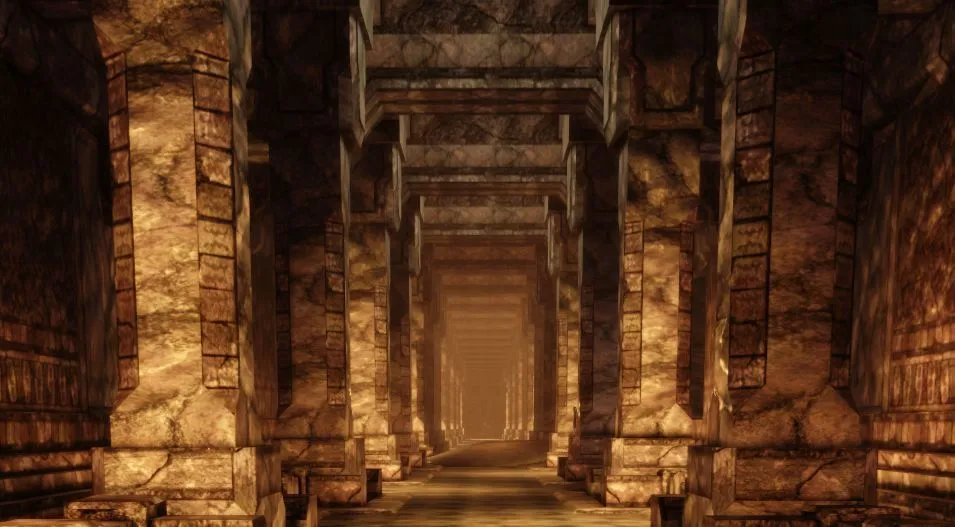
Dwarves - once a great race, have long been on the brink of complete annihilation. Once, they were a very numerous people, rivaling humans and elves in number. Their underground kingdom, covering much of the dungeons beneath Thedas, included twelve cities and countless teigs (small settlements or colonies).
But the First Blight struck, and the golden age of the underground empire came to an end. The dwarves fiercely defended their lands against the countless Darkspawn that emerged from every crevice, but they were too numerous to count. Finally, in a desperate bid to save the capital of the empire - Orzammar, the underground lords had to seal off almost all Deep Roads, cutting off a large part of the teigs and even some cities from the rest of the world. Losing most of their state, the dwarves were now doomed to a constant struggle for survival, losing teig after teig in countless battles with the Darkspawn and retreating further...
Dwarven Religion
Unlike most other cultures, dwarves do not worship gods. Instead, they venerate the stone that surrounds them throughout their lives, their ancestors, and the Paragons.
Not every dead dwarf is considered an ancestor. Only those who lived worthy lives and met noble deaths belong to this category. Upon death, they return to the stone, thus strengthening it. The weak or unworthy are forever rejected by the stone.
If the dwarves need to know the will of their ancestors, they hold brutal duels known as Trials. No one dares challenge a victory gained in such a duel, for the judges are the ancestors who hand down their verdict.
On par with the ancestors and even above the kings are the Paragons - dwarves who, while still alive, ascended almost to the level of deities.
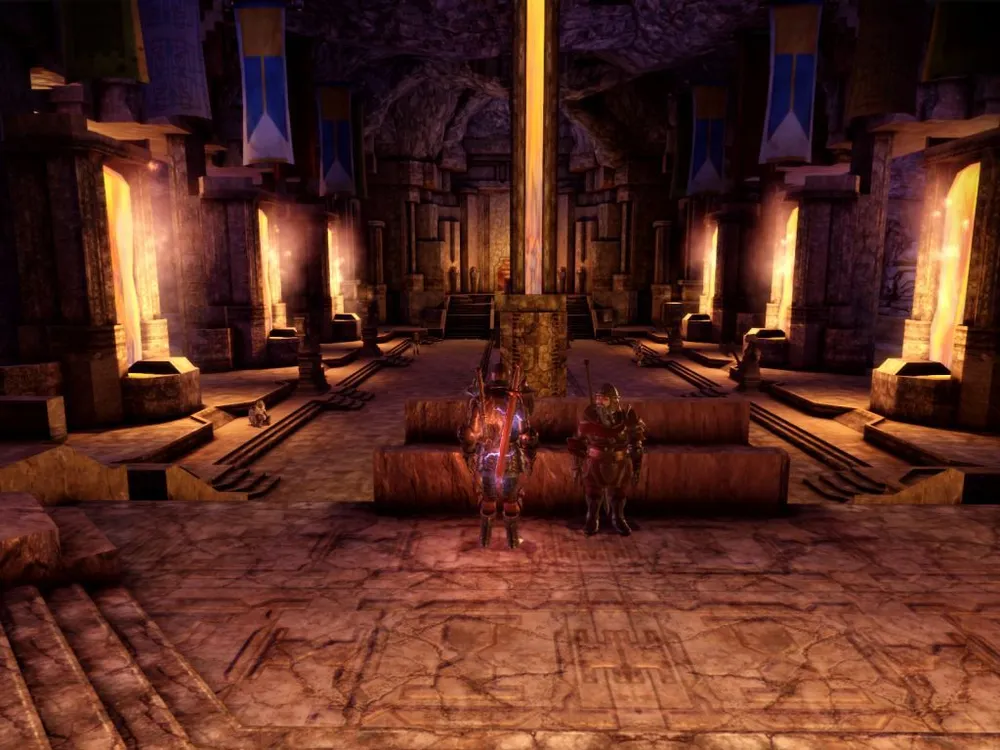
The Hall of Heroes, where statues of the Paragons stand.
Despite all the strict hierarchy of underground society, any dwarf who achieves something remarkable and important can be proclaimed a Paragon. Having gained such status, they essentially become a living ancestor. Every word they speak is sacred, and they are respected and revered by all. The family of the Paragon - those they have elevated alongside themselves - becomes a new noble House. Thus, almost every noble House of dwarves can trace its lineage back to a founding Paragon. However, dwarves are rarely bestowed this title - only once every few generations.
Paragons are the elite of dwarven society. They are skilled warriors, great politicians, and masterful smiths whom all aspire to emulate. The Council of Orzammar selects the Paragons, and their names, deeds, and actions are recorded in chronicles by the Keepers. All cities and teigs of the dwarves are adorned with large and small statues depicting the great Paragons of the past.
List of known Paragons:
Astit - the first female warrior. Founder of the Order of the Silent Sisters.
Bemoth - caste unknown. Became king while already being a Paragon.
Branka - smith. Invented smokeless coal.
Varen - caste unknown. Discovered that nagas are edible.
Volneigh - caste unknown. Deeds unknown.
Gharal - caste unknown. Moved the capital from Kal-Sharok to Orzammar.
Gerlon - untouchable. Unbelievably managed to become king.
Karidin - smith. Became a Paragon due to the invention of golems.
Lynchar - caste unknown. Had a poetic gift.
Ortan - caste unknown. Deeds unknown.
Swess - caste unknown. Composed many poems.
Hirrol - warrior. Had excellent knowledge of blacksmithing and politics.
Edokan - warrior. Stopped the Darkspawn hordes during the First Blight.
Golems
Golems are perhaps the greatest invention of the dwarves. Created by the Paragon Karidin from steel or stone, they once constituted the most vital part of Orzammar's defense. Practically eternal and completely obedient, capable of hurling massive stones and breaking enemy formations, these gigantic creatures were worth the lives of dozens of warriors and became a terrifying, destructive weapon during war.
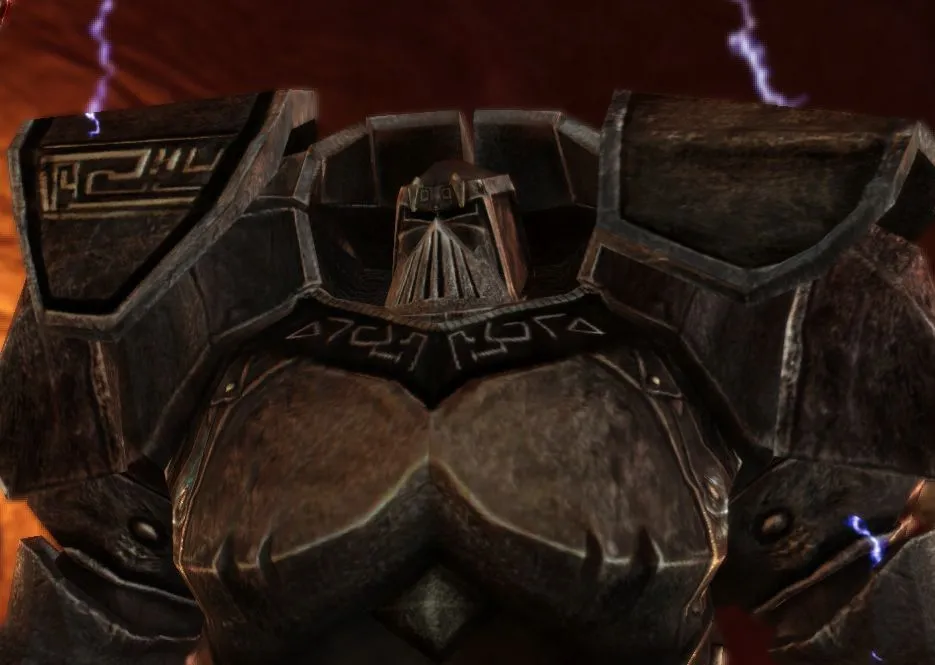
Karidin - creator of the golems.
Once, they were the last hope for the dwarves, who nearly managed to reclaim all their dominions with their help. But in the midst of the war, Karidin suddenly disappeared, and along with him, the secret of creating golems was lost. Several expeditions were sent to find him, but were invariably repelled by Darkspawn. Ultimately, Queen Geta, who had only recently ascended to the throne, sent an entire Steel Legion, consisting of one hundred and twenty-six golems, in search of the Paragon. Not a single golem returned, and the queen was soon overthrown.
Losing the secret of crafting, the dwarves became very protective of the remaining golems. Now they were only sent into battle in cases where fights with Darkspawn went terribly wrong. By the time of the Fifth Blight, the dwarves had no more than two dozen golems left.
However, around this time, the mystery of Karidin's disappearance was revealed. Using the Anvil of the Void - the invention that had brought him fame and honor, he could forge golems, but to animate each of them, the soul of a dwarf was required. The first golems were animated using the souls of volunteers who responded to the call of the Paragon and were willing to sacrifice themselves for the salvation of their people. But there were few such heroes, which is why King Valtor began sending criminals, untouchables, and his political opponents to Karidin...
The Paragon, wishing to work only with those who wanted to become golems of their own volition, defied the king's will and found himself on the Anvil. Only by becoming like his creations did Karidin finally realize how terrible his invention truly was. Shutting himself in the forge and activating deadly traps at the approaches to it, he sought a way to destroy his greatest and most terrible invention...
Castes
All dwarven society is divided into castes according to a strict hierarchy. There are seven of them - nobility, warriors, smiths, miners, merchants, servants, and untouchables. At first glance, one might think that a similar division exists among humans - but this impression is misleading. Indeed, there is a division among humans into nobles, artisans, merchants, who inherit their social status from their parents. However, younger sons of nobles often become artisans or soldiers. A son of an artisan can join the army, become a servant, or apprentice to a smith. Humans always have a choice, even if limited from birth.
But what many humans choose, dwarves receive at birth and forever. No one can become a smith unless born into the smith caste. A servant who marries a noblewoman will never become noble himself. Though his daughters will be noble ladies, his sons will remain servants, as daughters inherit their mother's caste, and sons their father's.
Noble Caste
All noble dwarves are involved in investing money. They patronize capable warriors, miners, and smiths. By investing in the shops of merchants or the workshops of artisans, the nobility receives a portion of the profits and a solid credit in return. If a warrior excels in battles and Trials, the supporting House receives its share of honor and respect. All this is part of the great political game of Orzammar, where noble Houses compete for the right to sponsor promising warriors or talented masters, to gain an advantage over their rivals.
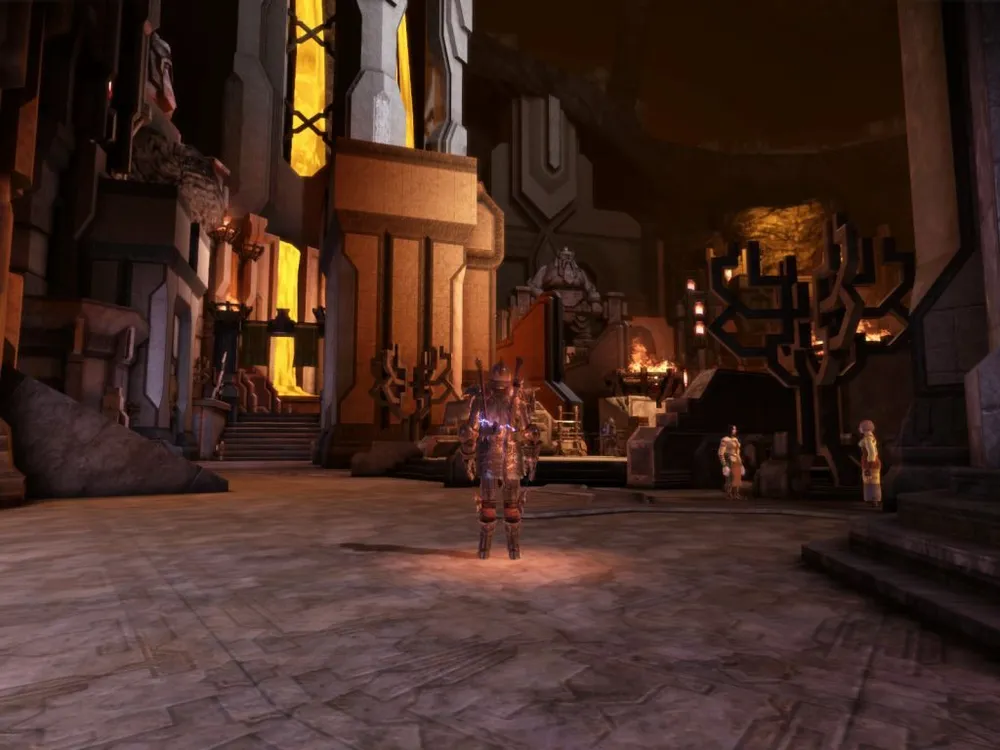
Diamond Halls - the place where the noble houses, the royal palace, and Council building are located.
Warrior Caste
The dwarven armies consist of various Houses of the warrior caste. Each warrior House serves one of the noble Houses.
For example, the ruling royal family in Orzammar is the Edokans. A dozen or more warrior Houses have sworn loyalty to them. The king, as the head of the Edokan House, appoints family members to command the warriors who serve him.
The Medra House is one of the warrior Houses that has pledged allegiance to the Edokans. The Medra has its own head - the oldest matriarch or patriarch of the family. They decide which of their kin’s warriors will serve under the new commander. Since the Medra House serves the royal family, it is considered one of the most privileged. Its members receive the best weapons and armor from renowned smiths. Warriors of lesser Houses strive with all their might to join the Medra House.
However, should something happen to the Edokan House - for instance, if it is disgraced or loses the throne, then the Medra House will fall with it.
Smith Caste
Smiths are highly respected. Children born into this caste are required to learn their parents' craft just as their ancestors did.
Women can also become smiths, although for them, marriage and childbirth are more acceptable for their caste.
Servant Caste
Most members of the servant caste take pride in their position and look down on untouchables.
Surface Dwarves Caste
Truth be told, dwarves living on the surface stand outside the dwarven hierarchy. Leaving for the surface means losing the caste, House, and ancestral ties. For Orzammar, they are now outcasts.
Yet, in recent times, many dwarves have moved to the surface. Some of them are untouchables - they have nothing to lose. Others believe they can achieve something here. Still, others think that sooner or later, the remnants of dwarven lands will be claimed by the Darkspawn.
Untouchable Caste
Untouchables are the lowest caste of underground society. The unfortunate members of this caste, considered descendants of criminals and other scoundrels, are despised by all other dwarves. For ages, they have inhabited the Dusty City - the dilapidated ruins at the very edge of Orzammar.
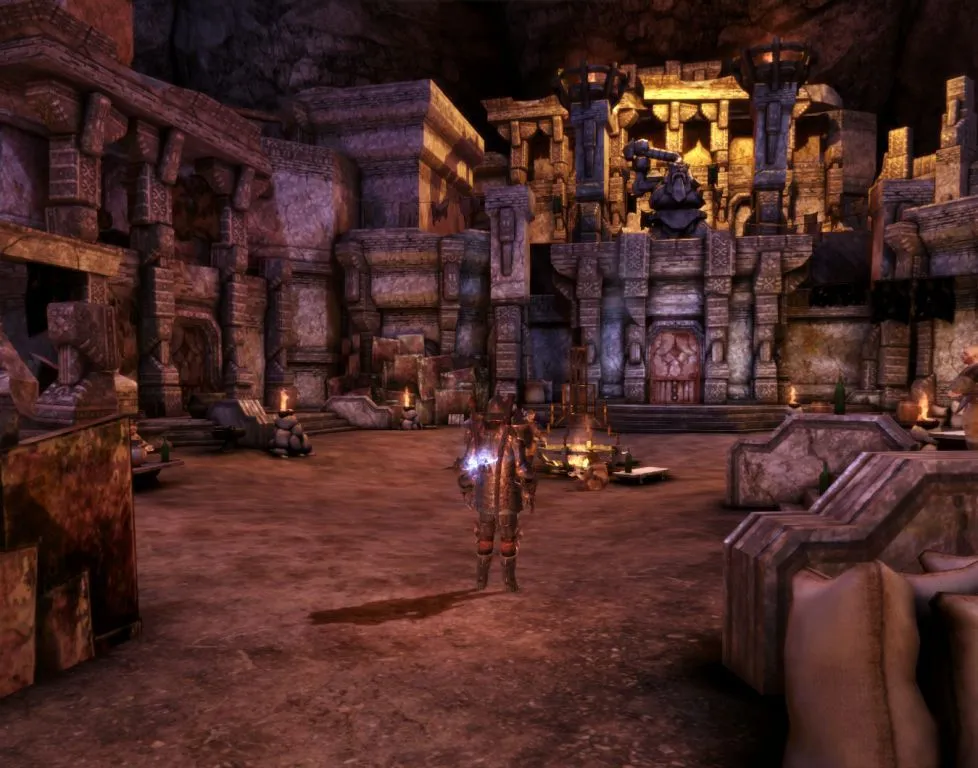
The Dusty City, where untouchables lead their miserable existence.
In dwarven society, untouchables stand even below servants and are regarded as little better than animals. Their faces are branded at birth to signify their outcast status. The slums in which they live are a haven for crime, and the guards do not even consider it necessary to send their patrols there. The best that an untouchable can hope for is a life in the service of the leader of the local gang. A life that ends either in murder or the abuse of a toxic lemon ale.
But, despite the horrors of their situation, untouchables still have a chance to rise to higher tiers of underground society. Since the caste of a dwarf is determined by the parent of the same sex, a boy conceived by a noble father is considered to belong to his father's House. For many untouchable women, it is quite acceptable to learn courtly arts to better entice nobles and warriors. Considering the low birth rate among dwarves, the birth of a child from such a union is regarded as a joyful event. The mother and all her family become members of the caste to which the child belongs - to not tarnish its lineage.
Politics
Politics is an inseparable part of daily life in Orzammar. Everything in this city is connected to someone - by blood or verbal agreements. Noble Houses actively compete for the right to support a warrior, smith, or merchant.
Meanwhile, the power of each House is quite relative. The most influential is the House whose representative sits on the throne, but a step below, chaos reigns. Houses form alliances through marriage, and honor and respect are gained through their loyal warriors, artisans, and merchants. A warrior who wins in the Trials, an artisan whose goods become fashionable, a wealthy merchant - all of them praise and support the House that invested in them.
However, the degree of power acquired through these achievements is so vague even for the dwarves themselves, that the nobility often challenges one another in Trials to determine whose smiths make the best belt buckles or whose servants are better trained. Warriors, artisans, and merchants also frequently argue over which noble House has gained more popularity, for the success of the patron is the success of their protégé.
This is most evident in the Council, where the deshirs - representatives of all noble Houses - gather. Although Orzammar is formally ruled by a king, he is elected by the Council. For this reason, kings are forced to work constantly to earn the support of the deshirs. An unpopular king may find that the Council does not consider his heir worthy of the throne, in which case power passes to another house.
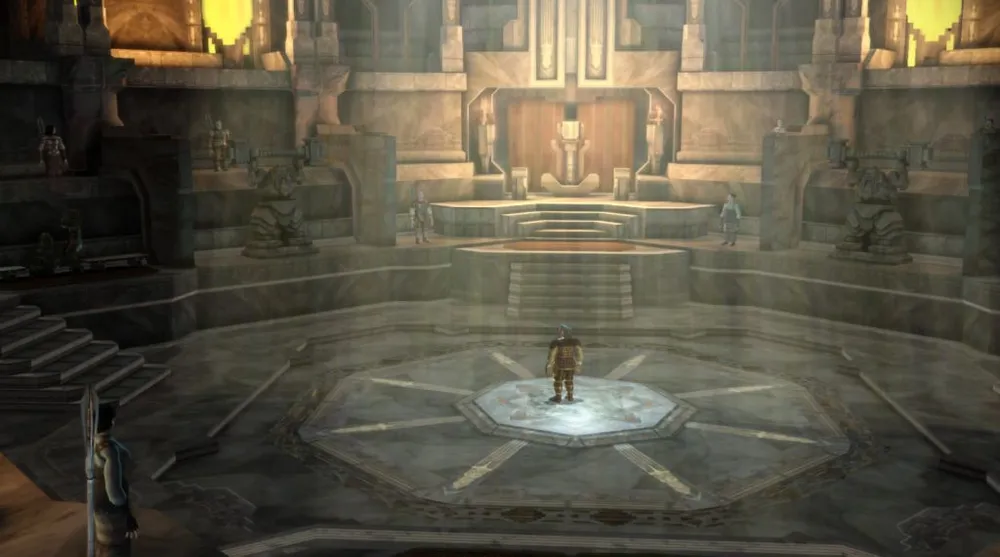
The Council of Orzammar.
Despite the fact that life in Orzammar is steeped in politics, there exists an organization in dwarven society known for its apolitical stance. The Keepers - historians, scholars, genealogists, and philosophers. All of them are absorbed in their work and are practically uninterested in the life of their people.
The Chief Chronicler is one of these Keepers. The task of this sage is to maintain chronicles of immense value for all dwarves.
The chronicles are archives and records of the underground people. The chronicles narrate the history of the dwarves and have been kept for over a thousand years. The archives contain records of every inhabitant of Orzammar and detailed reports of all significant events that have occurred since the city's founding.
Trials
Trials are deadly arena battles watched by numerous spectators. Someone might think that this is merely another name for gladiatorial fights that came from ancient Tevinter. However, this is not entirely true. The primary purpose of the Trials is to resolve disputes between noble Houses, which send their champions - warrior-champions. Dwarves believe that their ancestors watch over the Trials, and thus, victory in such a duel is sacred. Often, these duels end in the death of one of the participants, but one death is preferable to bloody slaughter between Houses.
Duels are arranged not only between noble opponents. Almost any offended dwarf (with the exception of untouchables) can challenge their offender to a fight, whoever they may be.
Recently, Trials have begun to be arranged due to various celebrations or simply for the entertainment of the people. Each year, the best fighters of Orzammar meet in a great tournament to engage in deadly duels.
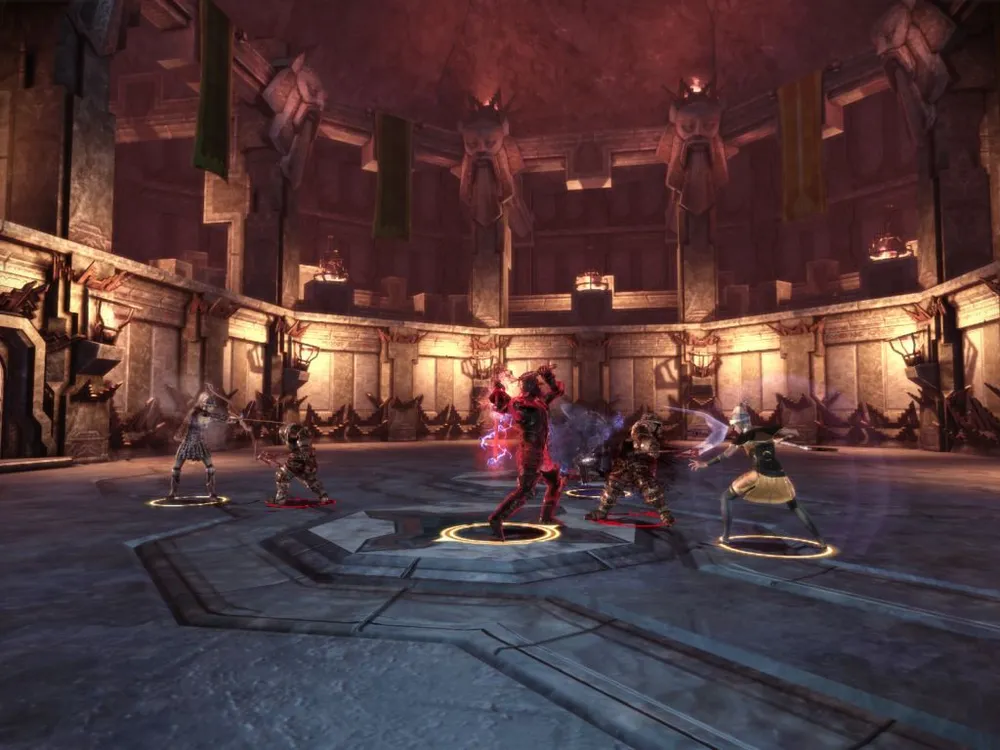
A fight in the arena.
Trade
Dwarves are unmatched smiths, whose armor and weapons are valued at a premium. However, despite this, Orzammar's main income comes not from metal products but from lyrium - a very rare mineral. Only a few mining families dare to extract it. In its raw form, lyrium sings, so attentive dwarves search for veins in the rock by sound.
Despite the natural resistance of the underground people to this substance, processing raw lyrium is extremely dangerous for all but the most experienced and skilled members of the mining caste. Contact with unrefined mineral can lead to deafness or memory loss for some dwarves, while for elves and humans, it causes nausea, blisters on the skin, and madness. Mages dare not approach unprocessed lyrium - for them, it is certain death.
However, lyrium is not only the most dangerous but also the most valuable mineral known. In Tevinter, for example, it is valued higher than diamonds. Dwarves sell only a small amount of processed material to the surface - the majority is supplied to their own smiths, who use it during forging. Lyrium destined for the surface is given only to the Church, which monitors its distribution closely. The mineral is then distributed among templars and mages. The former can use it to find and eliminate maleficar, while the latter can visit the Fade in full consciousness and rapidly regain their magical strength.
Some of the mineral transferred to the mages goes towards creating items imbued with unusual properties - ranging from specially tempered stone for constructions to the silver armor of king Kalenthe.
Military Organizations
Stonecrushers - this was the name of the legion from Kal Sharok, a sister city to Orzammar. It was somewhat similar to the Legion of the Dead - it also consisted of dwarves doomed to perish in battle.
Silent Sisters - an order of female warriors founded by Astit the Mournful, who later became a Paragon.
Astit was a woman from the warrior caste who became the first to fight for women's right to be soldiers. When they would not listen to her, she cut out her own tongue and practiced diligently until she won the Great Trials unarmed. In her memory, all Silent Sisters cut out their tongues.
Legion of the Dead - a legendary military unit of dwarves. The essence of the Legion is that all its warriors are dead. Any dwarf may join if they are willing to voluntarily renounce everything they have. A burial rite is conducted according to all rules: the recruit bids farewell to their family, bequeaths all their property to their heirs. A wake is then held for them as for the deceased, and items deemed useful in the afterlife (usually military gear - the only thing a member of the Legion of the Dead needs) are placed on their grave. At the end, the departing speaks their last words. After that, everything is finished - the warrior goes into the Deep Roads and does not return. From then on, their fate is to fight to the last drop of blood against the monsters that have taken almost all their ancient homeland from the dwarves.
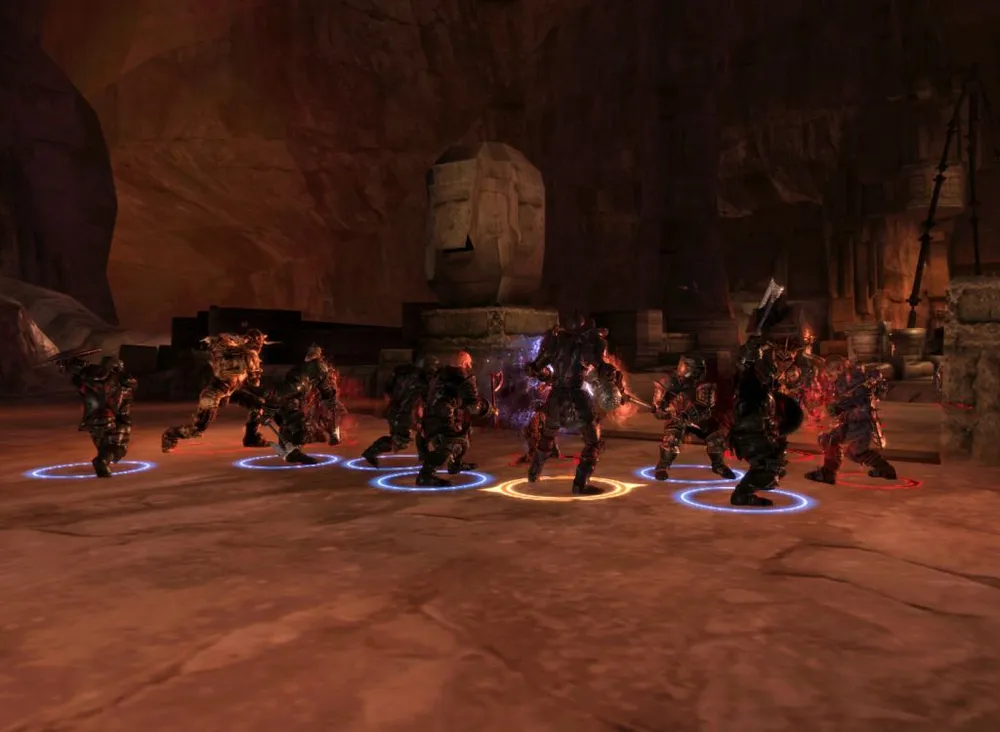
Everyday life of the Legion of the Dead.
Many join the Legion to redeem their reputation. Criminals wish to escape punishment, disgraced individuals try to save their homes and families, and bankrupts want to escape their debts. Some join for the glory, but the Legion accepts even such.
The only one who can command the Legion is the king of the dwarves. The legionnaires obey him and only him.
Legionnaires have nothing to lose; their fate is eternal battle, and thus they are known to be incredibly resilient, ruthless, and skilled fighters. The distinguishing mark of each warrior is black-gray armor painted with grim patterns.
In the storming of Kal-Hirrol fortress, almost all legionnaires perished without capturing it. Only one scout survived the awful slaughter. It remains unclear whether this tragic event will be the end of the history of the Legion of the Dead or whether the dwarves will manage to revive its glorious traditions...
Cities and Fortresses
Orzammar - the current capital of the dwarves, once only serving as a refuge for the mining and smithing castes. Everything changed during the Tevinter Empire when the Paragon Gharal moved all supreme power to Orzammar to oversee the newly started trade with the upper world. Of all known cities and settlements of dwarves, this is the only one with an exit to the surface.
Orzammar is located deep underground, in the very heart of the Frostback Mountains. The city, curving in an arc, branches off from the royal palace, which is built around the natural lava outlet. Molten rock continually erupts from there, illuminating and heating the entire cavern.
The upper tier of Orzammar is the Diamond Halls, home to the noble warrior caste, whose houses rise in rows on either side of the royal palace, as well as the Keepers, who maintain chronicles and protect dwarven knowledge.
The lower tier is the Commons, dominated by the merchant caste, where the best products of Orzammar artisans are displayed for sale. In the center of the lava river is the Arena of Trials, connected by a dam to the Commons. This is a sacred place where dwarves resolve disputes according to ancient tradition.
On one bank of the fiery river lie the ruins of ancient dwarven palaces, long decayed and fallen into disrepair. The residents of Orzammar refer to this place as the Dusty City, where the untouchables live.
On the other side of the river begin the Deep Roads, once connecting the farthest corners of the underground empire. Do not consider them dark and grim tunnels - they are true works of art. The geometry of the walls reflects centuries of careful planning, statues of the Paragons stand along the entire route, and streams of lava provide warmth and light.
Sadly, almost all of them were sealed during the First Blight to protect Orzammar from the invasion of Darkspawn. Today, almost all knowledge of this labyrinth of underground roads is lost even to their creators.
Kal-Sharok - the first capital of the underground empire, located under the Hunting Horn Mountains. The city lost its status soon after trade began with Tevinter, as it had no exit to the surface unlike Orzammar.
Connection with Kal-Sharok was lost in 1155 by Tevinter's reckoning when the Second Blight raged on the surface. Considering this city and many other dwarven settlements to be lost, the ruling king Triston ordered most of the Deep Roads sealed to save Orzammar.
But Kal-Sharok did not perish. Having no exit to the surface and lost all hope of assistance, it managed to survive. Connection with it was reestablished relatively recently - during the reign of King Endrin Edokan. However, the dwarves of Kal-Sharok are extremely reluctant to engage with their kin - they harbor hatred and disdain for the descendants of those who once left them to die under the onslaught of monsters.
Kal-Hirrol - a fortress built by the Paragon Hirrol. Over time, it became known as a center for training smiths. It was within its walls that Hirrol created many of his famous inventions, and his favorite pupil devised a way to store refined lyrium, which is still used today.
These great inventions brought wealth and prosperity to Kal-Hirrol, but this settlement was among the first to come under attack by the Darkspawn. A handful of warriors and a few hundred untouchables, who took up arms, held the fortress for five days, giving all other inhabitants time to reach Orzammar.
Kal-Hirrol fell, and with it, many secrets of the smithing craft were lost, but even today, the spirits of dwarves and monsters who perished there centuries ago still battle on its streets.
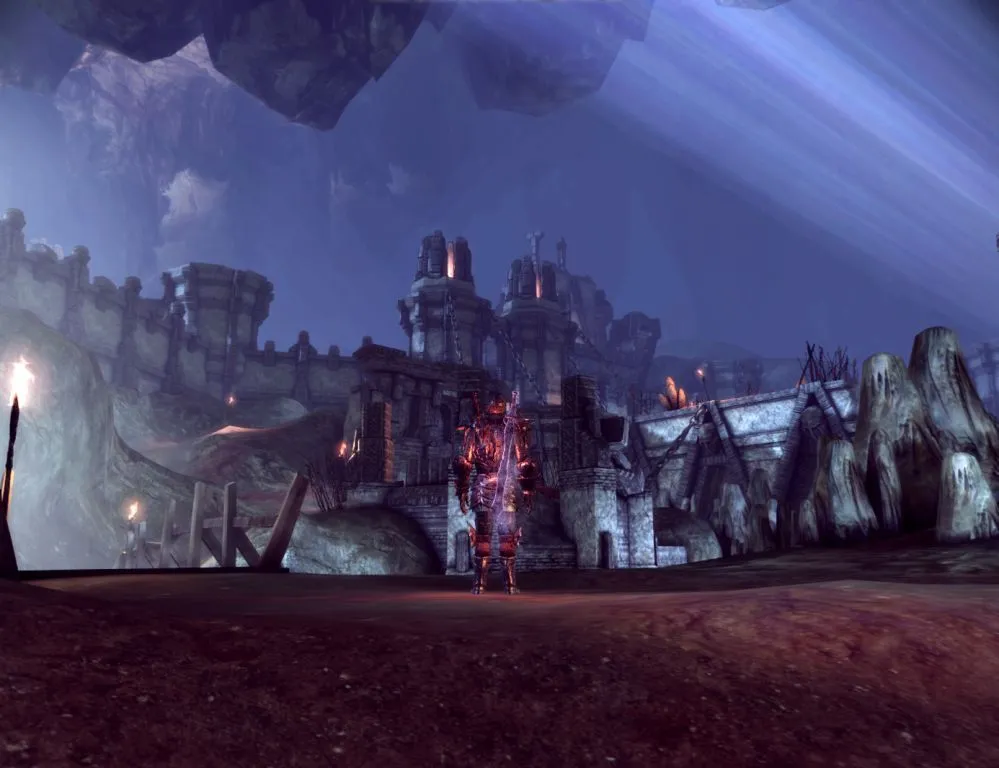
The Dead Fortress of Kal-Hirrol.
Bonammar - a legendary fortress-mausoleum built by Karidin - the greatest of the Paragons and long serving as the abode of the Legion of the Dead. Inside this sacred place for all dwarves lie numerous sarcophagi containing the remains of ancient warriors.
In the 13th year of the Dragon Age - 17 years before the start of the Fifth Blight, this stronghold was captured by the Darkspawn. The loss of Bonammar was the most severe blow to the remnants of the dwarven state in recent decades. Over time, the fortress and all surrounding territories received a new name - the Dead Trenches.
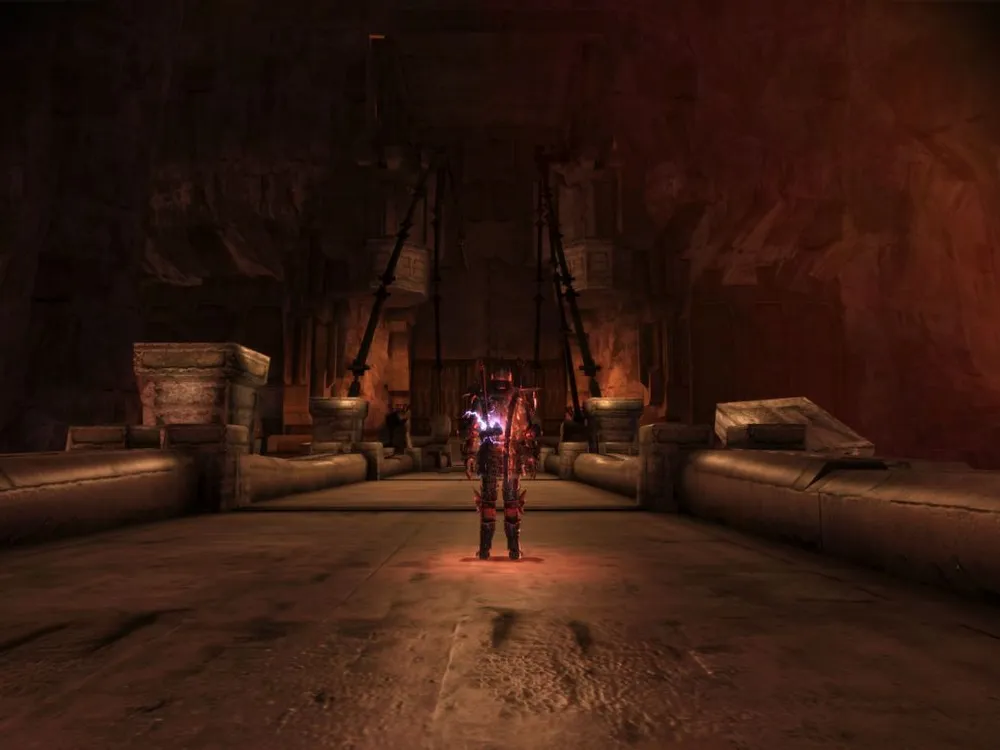
Bonammar - the lost sanctuary of the dwarves.
Hormak and Gundaar - connection with these cities and Kal-Sharok was lost around the same time. Nothing more is known about them.
A thousand years of continuous battles, hundreds of destroyed settlements, countless dead... Dwarves desperately cling to the remnants of their once great empire and do not lose hope of returning their lost lands. The fate of an entire people depends on who will take the royal throne of Orzammar...
Main source - in-game Codex.
Some material was taken from the site dragonage.wikia.com and translated.