
Undead. Basic Classification
Recently, in this thread, I had the chance to witness the spectacular ignorance of some people regarding what constitutes the undead, specifically zombies. Unable to hold back, I gave a brief educational introduction, but later decided that it was not enough. So here is a brief classification of the most common types of undead, constructed based on quite extensive research. You will not find rare creatures like bodaks or mohrgs that are specific to certain worlds here – the discussion will center around fairly well-known and frequently encountered beings. I should immediately note that all of the following are just my reflections and do not represent the final truth. If you have a differing, reasoned opinion, I would be happy to hear it. So, let’s get started.
To begin with, we need to determine what undead actually means. Speaking as broadly as possible, it refers to that which, after ceasing its normal existence, continues some form of active activity in one way or another. I insist on this formulation and consider the popular definition, "undead are those who died but cannot rest in graves," to be incorrect. The fact is that not all undead were once alive. However, simplifying it, undead are the living dead. And nothing more.
For the convenience of classification, it makes sense to divide the undead into two categories – corporeal undead and incorporeal undead. The division is quite conditional because some types of undead can be either flesh-bound to varying degrees or represent something ethereal.
Corporeal Undead
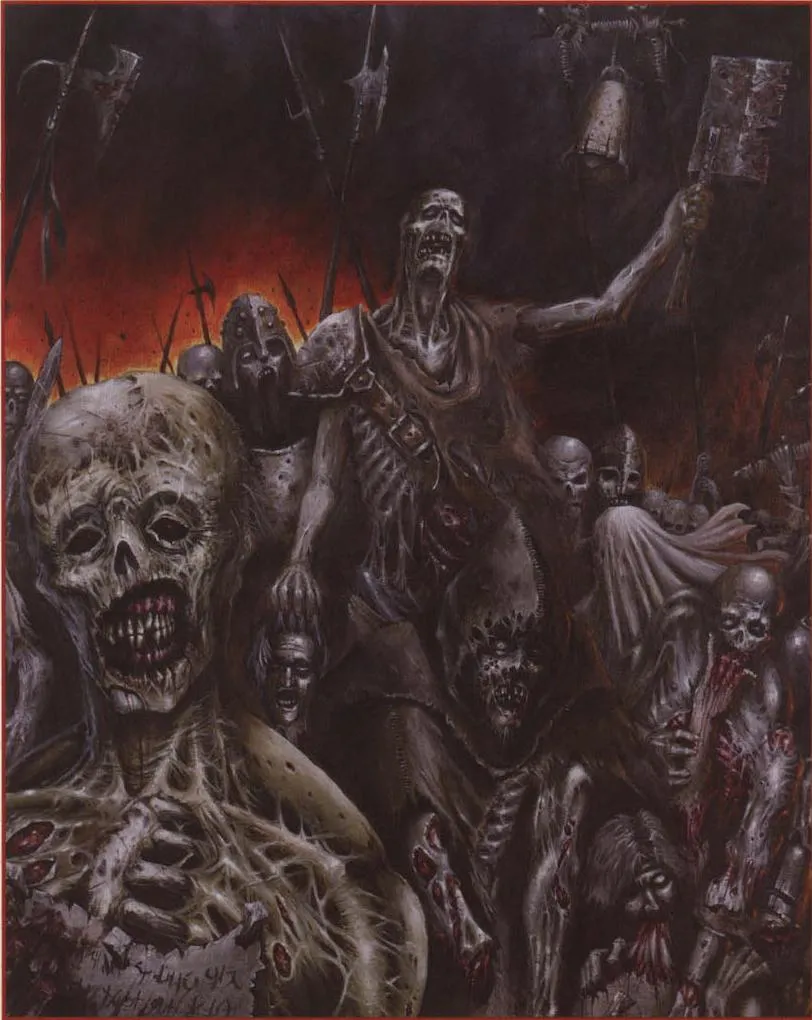
- Zombies – sometimes also referred to as cadavers, dead ones, and walking corpses, zombies are the most well-known and widely encountered type of undead. Essentially, a zombie is simply a corpse of varying degrees of decay, which, for some reason (see below), cannot rest in the ground. Mandatory characteristics include lack of full self-awareness and intellect, and a very high "survivability." Sometimes severed limbs from a zombie continue to move purposefully, making dismemberment not a particularly attractive method for destroying the undead. Depending on how they are raised, zombies can be either aggressive killers of all that is alive or obedient servants. These undead can be divided into two main categories:
Magic Zombies - a corpse revived by a necromancer or one that spontaneously rises in a cemetery or another burial place. Magic zombies can differ greatly, being fast or slow, strong or weak, almost eternal or falling apart in a couple of days, but the aforementioned conditions are characteristic for all.
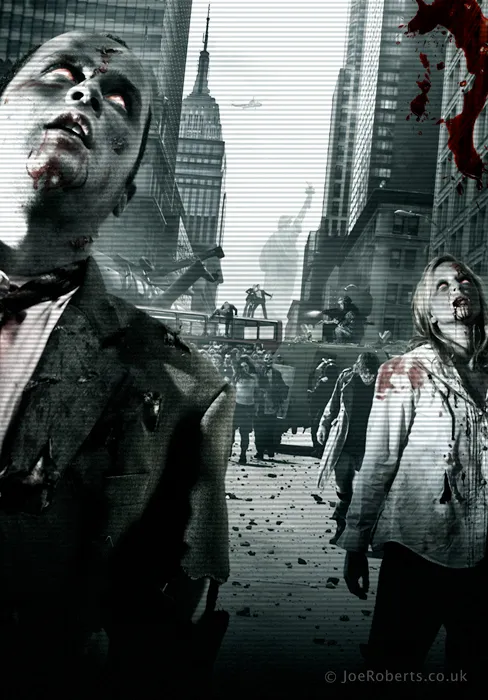
Viral Zombies - a corpse animated by a malevolent virus. Different types of viral zombies vary greatly from one another; further evolution with significant changes in appearance and physical parameters is possible, as well as an increase in intelligence. A common characteristic: they were all once alive, died, and were returned to life. Even if a person was infected with the virus and turned into a zombie, it still implies death and subsequent resurrection.
General recommendations when encountering: zombies generally fear fire and the severing of the head from the body, as well as the destruction of their spine and joints. If you are lucky enough to meet the undead with severed arms running toward you on their fingers, a detached head trying to bite your heel, and a blindly wandering body stubbornly refusing to burn… just run. Fast zombies are extremely rare.
- Skeletons – also known as bones and necris, animated skeletons present greater interest than the banal zombies. At least because there is no universally accepted explanation of how bare bones fit together. The most logical explanation seems to be the following theory: the magic that animates the skeleton forms a kind of energy framework that binds the bones and allows them to move. This easily explains the fact that scattered bones of a living skeleton often reassemble after some time, rejoining their places. An important clarification: do not confuse animated skeletons with skeletal constructs. A skeleton, essentially, used to be the skeleton of a living being, and then it was just animated one way or another. A skeletal construct is a creation assembled from bones and animated by magic. It may outwardly resemble, for example, the skeleton of a dragon or even a human but is fundamentally a different type of monster. Skeletons can be divided into two main groups:
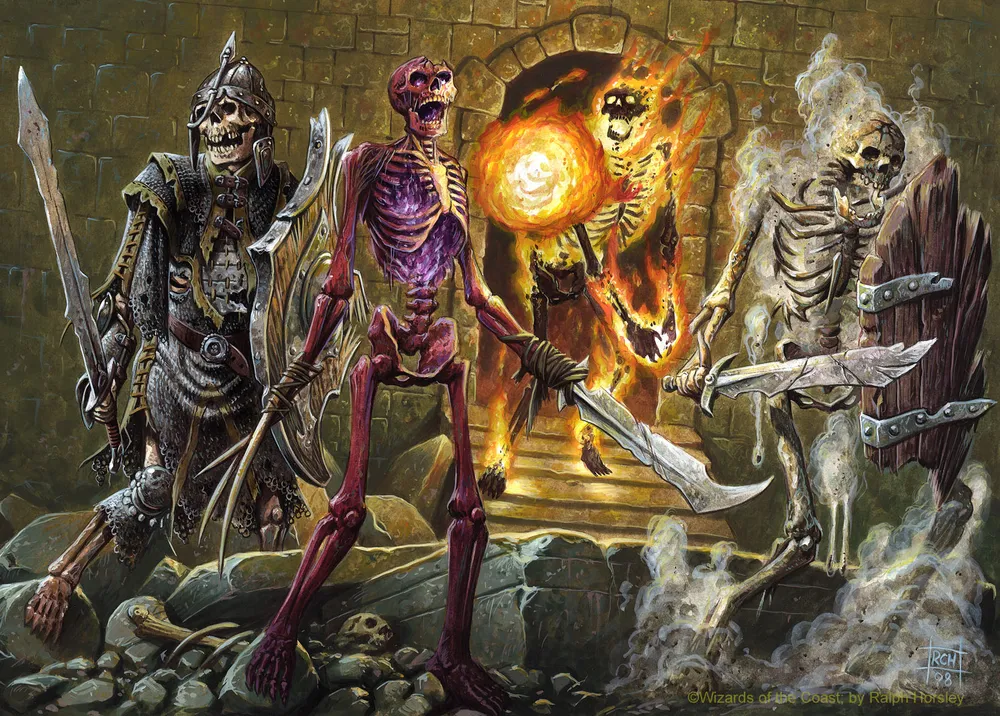
Skeleton-Warriors – this is a conditional designation; similar creations do not necessarily have to fight. They can, for example, sweep the floor in a necromancer's house. I've simply named them that for convenience. Since skeletons are not encumbered by kilograms of rotting flesh and muscles, they usually move much faster than zombies. Arrows, bullets, and other ranged weapons are practically not a threat to them. Plus, clean skeletons simply look more aesthetically pleasing than zombies. All of this makes them excellent candidates for soldiers and servants, especially if some of their prior living skills can be preserved. Teams of skeleton-mounted knights and skeleton-archers are often encountered, implying a fairly complex organization of labor.
Skeleton-Mages – this is quite an amusing group that consists of ordinary skeletons that, however, can cast two or three simple spells like fireballs. They do not possess any particular intelligence, remaining the same dull lower undead. This peculiarity can be easily explained by recalling the theory of the energy framework binding skeletons together. In the case of mage-skeletons, the energy framework is simply made much stronger and more saturated with energy, thus providing mana reserves for the spells that a necromancer imbues in the empty skull. It results in a kind of artillery combat robot.
General recommendations when encountering: it is logical that using a sword, gun, spear, or bow against a skeleton is utterly pointless (unless you hit it with the butt or handle). However, no matter how much you strengthen them with magic, bones are still just bones, so a good blow from a mace or something heavy and crushing (even a bench) will simply smash the skeleton to pieces. By the way, I wouldn't recommend running away from this type of undead – I mentioned that they move quite quickly. And like any undead, they do not tire.
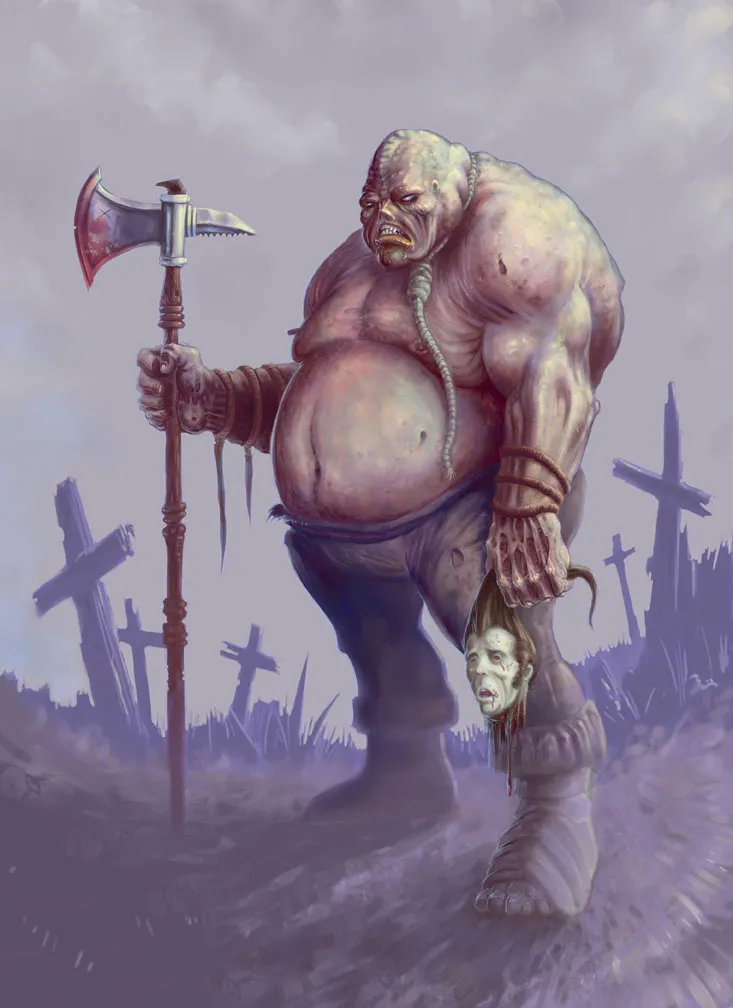
- Ghouls – these undead are also known as ghouls, and they belong to a more serious type of undead compared to zombies and skeletons. The defining feature: they are corpse-eaters, preferably human flesh. Ghouls typically become criminals buried not on holy ground or even left unburied, as well as fanatical cannibals who do not hesitate to devour still-living humans. They usually appear as tall and thin humanoids with elongated heads and very powerful jaws, ideally suited for crunching bones.
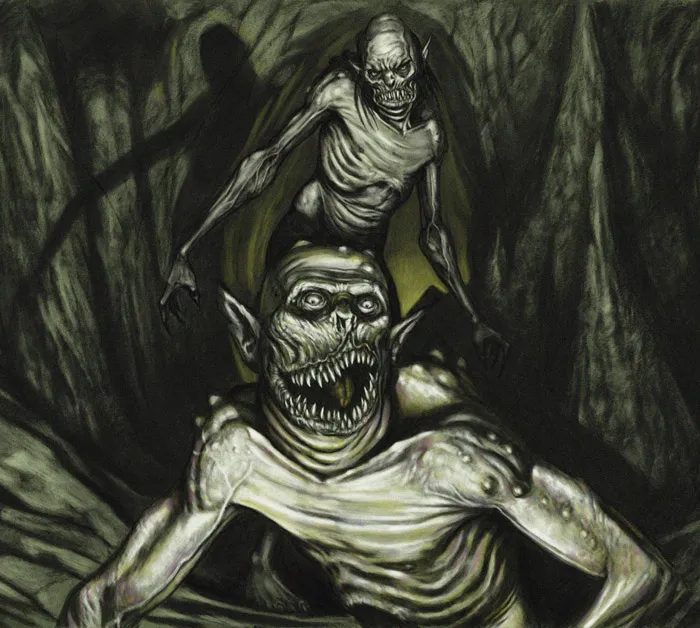
Their claws are not too long but are sharp and strong – ghouls use them to tear through graves and rip apart bodies. Because of this (as well as the habit of bathing once every few hundred years after accidentally falling into a river), you can usually find an entire bouquet of various poisons and pathogenic bacteria under their claws. However, they do not clean their teeth either. And they smell… to put it mildly, not like roses. Usually, the stench emitted by a ghoul is enough for even the most stout-hearted individuals to visibly see what they had for breakfast. The worst part is that more or less intact corpses that have not been fully devoured by ghouls will eventually rise and start looking for a snack themselves. So a pair or trio of ghouls that have gotten hold of, for example, a battlefield will very quickly turn into a pair or trio of hundred ghouls. And this is already a very serious threat, though individually, a ghoul is not that scary to well-armed people. It’s just good that these creatures possess very little brains – just enough to occasionally leave some for reproduction.
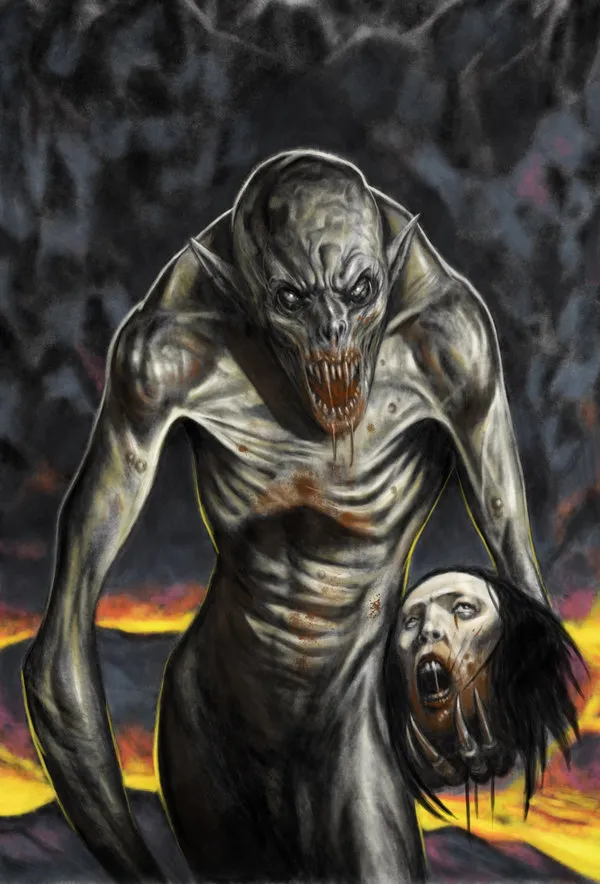
General recommendations when encountering: it is important to remember that a ghoul is much stronger than a regular human but is also quite vulnerable. Lost limbs will not grow back, and a severed head will put it to rest with a hundred percent guarantee. It also does not excel in agility during combat. The main thing is not to allow them to bite or scratch you, and to cover your nose with something so you don't suffocate from the stench. Furthermore, if a ghoul is not too hungry, it will typically not attack a ready-to-defend person first – these creatures possess some instinct for self-preservation, and they prefer to consume already rotting meat. So try not to look like a corpse.
- Mummies – these delightful fellows resemble zombies in some ways but are much more dangerous. I believe everyone knows what mummies are. However, why their undead versions, often encountered as guardians of various tombs, are dangerous needs to be explained. First, the bodies of mummies are well preserved thanks to embalming compounds and other burial features, so they do not lag behind a typical person in speed of movement and accuracy of actions, greatly exceeding them in strength. Second, encountering a mummy can lead to serious infectious diseases or curses – aristocrats and priests usually approach the guarding of their valuables with creativity. Third, mummies are often quite intelligent (how sane they are is another question) and are therefore capable of unexpected tricks and tactically sound actions. And you can't dismiss their life skills, whether it be weapon skills or magic. Fourth, because of the magic permeating their bodies, mummies have power over lower undead, so you can expect to encounter battle squads of skeletons under their command. And fifth, sometimes particularly ancient and powerful mummies can disperse into a cloud of sand, a swarm of scarabs, or scorpions, and similar debris, which works well for both attacking and rapid retreating.
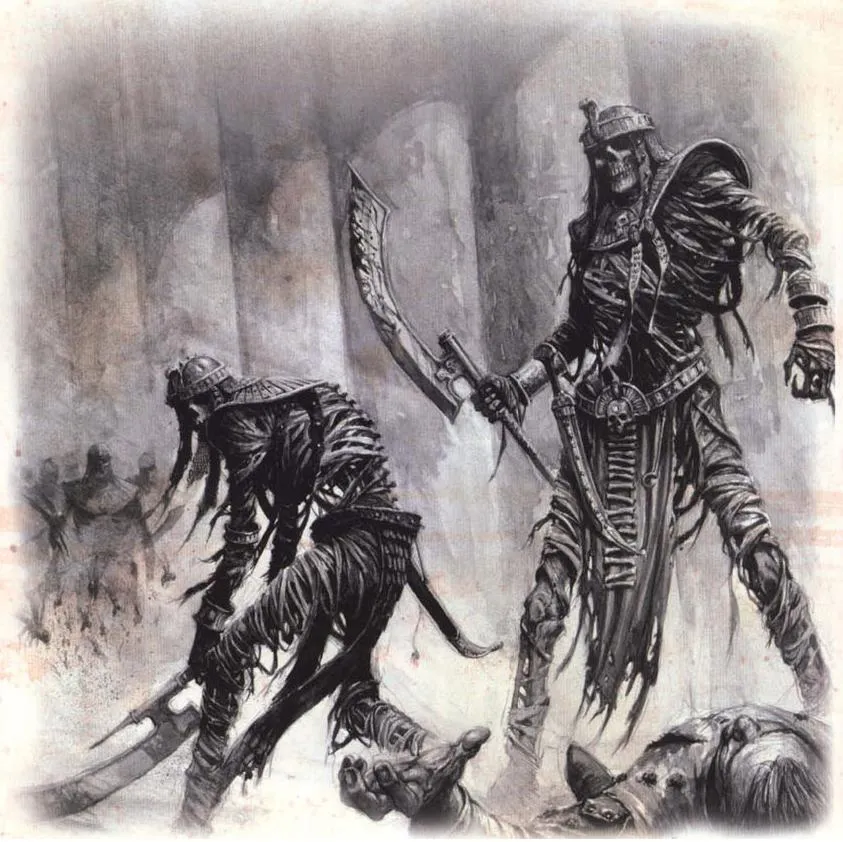
General recommendations when encountering: if you are unfortunate enough to face a living mummy, remember – for all its strength, it is physically just a dried corpse wrapped in bandages. Consequently, it should burn well. Also, not all mummies aim to kill everyone who disturbs them. Sometimes you can negotiate with them and quickly flee.
- Wights – when a necromancer requires elite warriors for their army, they raise wights. These are the risen mighty warriors and ancient kings who have preserved their skills and at least a significant portion of their intellect. However, they usually lack free will, becoming very clever, initiative-driven, yet still servants of the mage who created them. The defining characteristic: preserved life skills, high intelligence, and completely or partially returned self-awareness. They typically appear as skeletons in good armor and with excellent weapons, serving as personal bodyguards for the necromancer, elite fighters, and officers. There is information about wight mages, but it is too contradictory and unreliable.
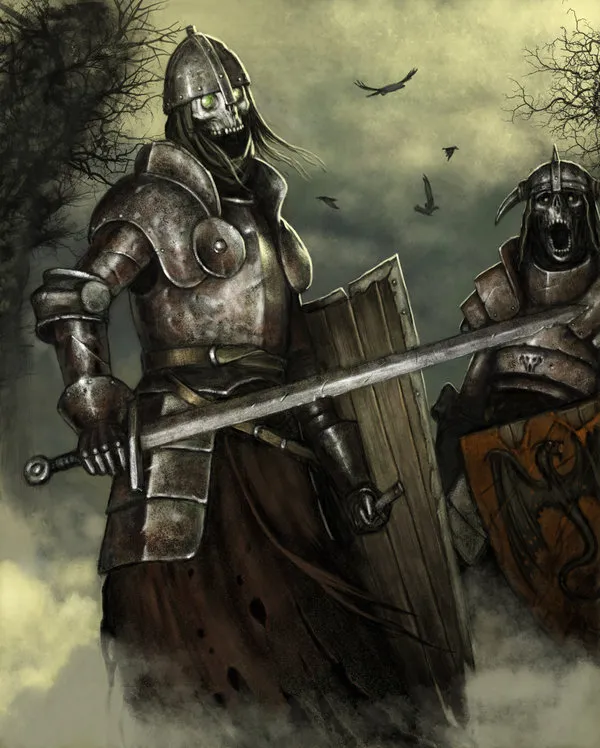
General recommendations when encountering: wights can often be mistaken for ordinary skeletons, fortunately, old bones look quite similar. However, all resemblance vanishes as soon as you cross blades with one. A wight fights very, very skillfully, considering its immense strength, invulnerability to piercing and ranged weapons, speed, and lack of need for rest, sleep, and food, making it a truly terrifying opponent. Additionally, a non-material, yet functional mind resides within its empty skull, and all of its knowledge is aimed at a single goal: fulfilling its master's command. The vulnerability of old bones to crushing weapons is usually compensated by good armor – good luck trying to strike them. Therefore, unless you are a skilled fighter or powerful mage, facing a wight leaves you with only one option: hope for numerical superiority. And pray earnestly as well.
- Revenants – this is quite an unusual type of undead, representing a vivid embodiment of the idea that revenge should be served cold. Here it comes, quite cold and slightly rotting, but quite specific. In simpler terms, a revenant is a vengeful dead person. Traditionally, they come from a murdered person whose desire for vengeance against their killers has granted them the ability to temporarily cheat death. This results in an analogy of a wight, having in its mind a single goal – to destroy those who sent them to the afterlife. Or their descendants or relatives – basically, those associated with them. This is in cases where too much time has passed between the death and resurrection of the revenant. A typical example of a revenant can vividly be seen in the popular film "The Crow." Usually, a revenant remembers and retains all that it knew in life, but its mental faculties are completely focused on revenge. There is often mention of a mystical connection between the dead and their killers, enabling the revenant to locate its targets anywhere. After its mission is completed, the revenant rests for good.
General recommendations when encountering: if you are not at all related to the death of a revenant, you can usually avoid trouble – maturing undead rarely harms outsiders. The main thing is not to try to intervene or protect those it is targeting – otherwise, you will not fare well. And if its target is you, see recommendations for encountering wights, considering the fact that revenants are typically armed and protected with what they wore at the moment of death. And don’t try to hide; it usually doesn’t help.
- Vampires – oh, how I dislike them… Nowadays, the image of bloodsuckers has become so glamorized and adorned with frills thanks to movies, books, and other nonsense that they no longer resemble undead but instead appear akin to succubi/incubi depending on gender. However, if we abstract from this and try to pinpoint some rational grain among modern knowledge about vampires, we can divide them into three categories. Each of them shares a few common traits: to varying degrees, they are all sensitive to sunlight and silver, they possess innate abilities for hypnosis, metamorphosis, and control over animals and weather, grow stronger with age, and must "feed off the living," to put it dramatically. In other words, they are parasitic.
Lower Vampires – most of the well-known creatures from popular culture belong to this category. These vampires are visually only slightly different from ordinary people, barring their sharp fangs, pale skin, and red eyes. They are in a state of panic when it comes to sunlight, either burning them on the spot or leaving them with serious burns. They can be killed by ordinary weapons, but it is difficult – for instance, by severing their head or simply blowing them up. Silver is deadly for them, and some cannot enter a house without an invitation, swim through flowing water, and do not reflect in mirrors. A wooden stake in the heart means instant death. Furthermore, the holy symbol of one church in the hands of a sincerely devout person can severely disrupt a vampire’s digestion. And most importantly – they must feed on blood, preferably human, though animal blood is also acceptable. They do not need blood too much, but it is the easiest way to obtain what they really need – the life energy that gives the dead body the illusion of life. As you can see, they have plenty of disadvantages.
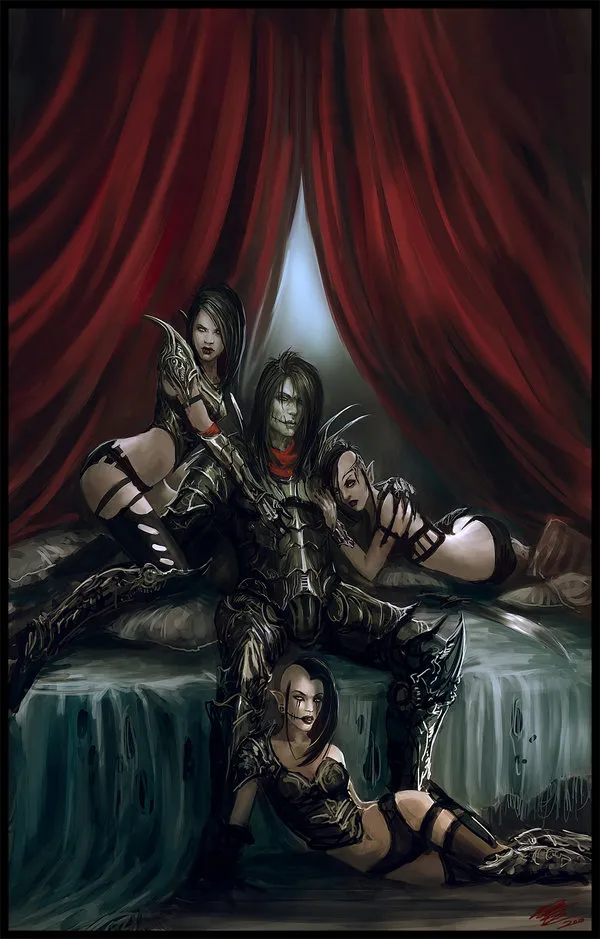
As for advantages, one could mention their theoretically infinite lifespan, supernatural speed and strength, budding abilities for hypnosis (which allow vampires to appear irresistibly beautiful to their victims or simply convince them to do something), the ability to control packs of animals like rats, wolves, and bats, as well as the unique ability to experience bodily pleasures unavailable to most undead. Apparently, the last point provided them with such widespread popularity in mass culture. Reproduction among lower vampires is unclear – the mythical version of transformation via a bite does not withstand scrutiny, so the main belief is that they can turn a bitten person by having them drink their blood. A lower vampire who has lived for 300-400 years, provided regular feeding and constant honing of their vampiric abilities, can reach the upper category. However, it is fortunate if even one in a hundred lower vampires lives long enough – they die like flies. This is quite logical considering that vampires are made from people. Imagine – a person suddenly receives practically eternal life and a bunch of superpowers. Moreover, they did nothing for it; it was handed to them on a plate. And they are also faced with the fact that previously they ate veal and drank wine, but now they will consume human blood. They are now classified as livestock for you. How many ordinary, non-heroic, and non-saintly people will manage to retain their humanity under such conditions? And thus begins the bloody orgies, intrigues, and squabbles among the bloodsucking… humans.
Upper Vampires – this is a completely different matter. Upper vampires are rid of most of the weaknesses of lower ones – sunlight is virtually harmless, so are holy symbols; they can burst into any house whenever they want. Ordinary weapons pose no danger – an upper vampire can be dismembered and burned and they will still rise. Silver can injure them, but it’s not guaranteed to kill. A wooden stake through the heart might just paralyze them. They don’t even necessarily need blood – they draw the necessary life energy directly, and they do so in a way that even their victims do not notice. After a while, dozens of people in a square might suddenly feel tired – who would that concern? Also, upper vampires can often survive years or even centuries without such sustenance. There’s a belief that they don’t need it at all for their existence.

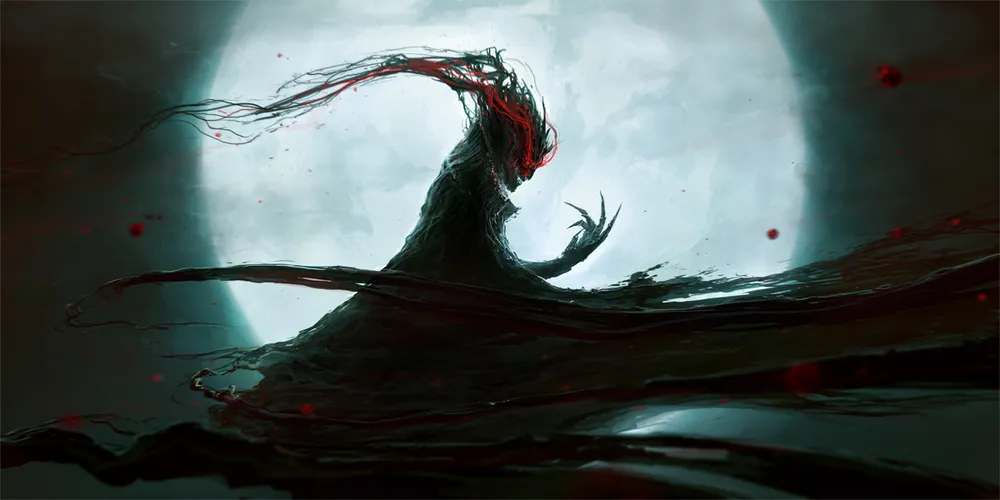
Their strength and speed are immense – an upper vampire can easily catch up with a racing car and lift it with one hand. Their magical abilities also grow – they can summon storms or fog, put entire cities to sleep, or raise a graveyard with a wave of their hand. Their metamorphic abilities deserve special mention – an upper vampire can, for example, turn their hand into a steel blade or grow wings, disperse into a swarm of bats, dissolve into a cloud of fog, or explode with bloody tentacles. Teleportation, control over shadows and sounds, cold and wind – the powers of upper vampires are immense and continue to grow with age. Fortunately for mortals, most of these ancient monsters have lost interest in the world of the short-lived and indulge themselves in the company of their kind. As for reproduction among upper vampires, it is similar to that of lower ones, with one exception – a newly converted upper vampire becomes physically dependent on their creator, forming a special connection that allows the "master" to know at any time exactly where their pet is, what they are doing, and what they are thinking. Given the power of even a young upper vampire, it is a sensible precaution.
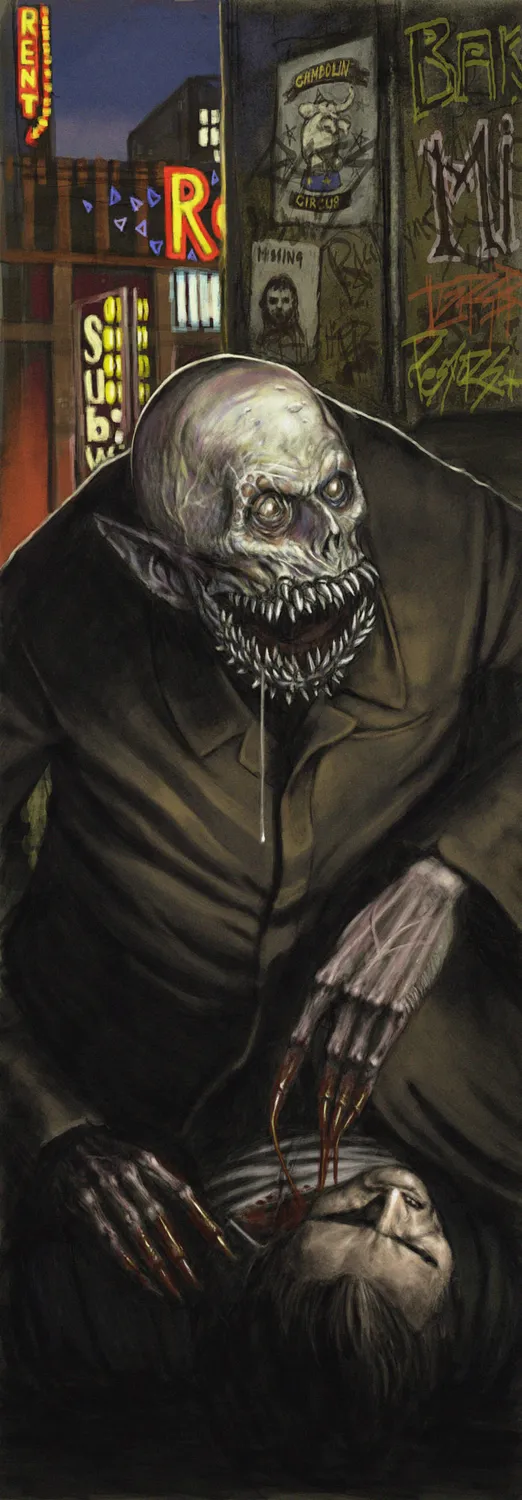
Strigoi – otherwise known as strigoi. This special group of vampires ideologically aligns closely with ghouls – they not only drink blood but also consume their victims. There is a theory that those who become strigoi are lower vampires who have abused animal blood too much. Their appearance is rather unpleasant – they can still pass for humans if they want, but hiding long claws and rows of sharp teeth is quite difficult. They are theoretically immortal and do not fear silver or flowing water, but sunlight is deadly for them. Their regeneration is not great, even compared to lower vampires – for example, they may be able to regrow a lost limb, but only after very ample feeding and not for a long time. Losing their head means death. Their magical capabilities aren’t particularly great either – the one thing they excel at is illusions. With their looks, this is simply invaluable. However, strigoi possess noticeably greater strength than lower vampires, approaching the level of younger upper vampires.
General recommendations when encountering: lower vampires are unpleasant opponents, but entirely manageable. Just equip yourself with silver weapons and holy water from a devout priest, and try not to engage in hand-to-hand combat – they will tear you apart. If you can lure them into sunlight – it will be perfect. The same recommendations apply for fighting a strigoi, except that instead of silver, you can use ordinary steel. And regarding encounters with upper vampires… Are you a powerful mage or a warrior decked out in artifacts from head to toe? If not, politely greet them and try not to irritate them. You might just survive.
- Death Knights – if wights are the officers of the undead army, then death knights serve as commanders. Once great heroes and legendary warlords turned into upper undead, they have not lost either their combat or strategic skills, having retained both free will and their personality. Death knights arise either under the influence of a powerful curse or through the efforts of a great necromancer.
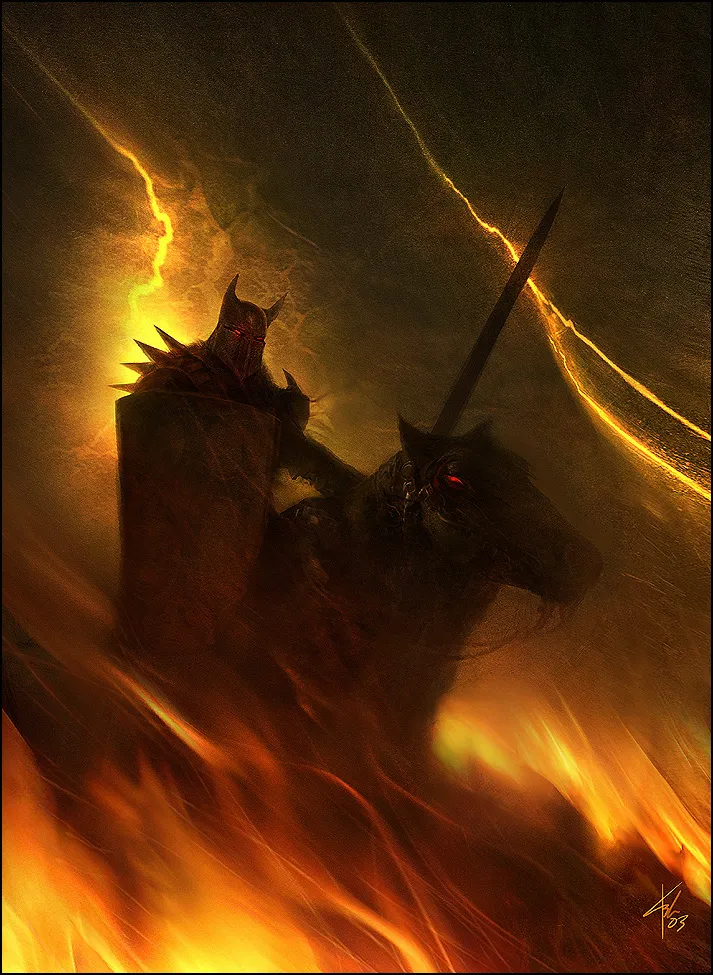
To understand what a death knight is, take a wight and add free will to it, making it invulnerable to non-magical weapons, providing excellent protection against magic, a number of spells they can invoke at will (fireball, ice wall, blizzard, raising undead, etc.), the ability to kill with just a word or gesture, the power to become temporarily immaterial and pass through walls, and control over lower undead such as zombies and skeletons. In hand-to-hand combat, a death knight has no equal, and thanks to their magical talents, they can contend even with quite formidable mages.
Plus, a death knight usually never appears alone. They are frequently at the head of entire armies of the undead, possibly shielded by even more powerful forces.
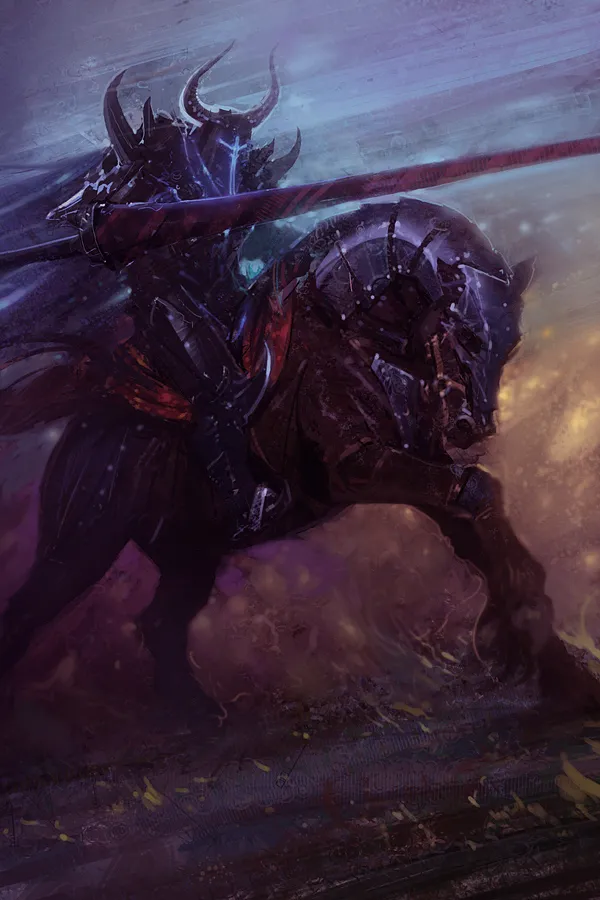
General recommendations when encountering: you might be able to negotiate with them – death knights are quite rational beings, though most of them are hard to classify as mentally stable. If negotiations fail, be sure to greet your patron deity; you will be meeting them soon.
- Liches – here we are at the top of the hierarchy. In a nutshell, a lich is an undead mage. But this dry definition does not convey the horror that a lich represents. When a powerful necromancer realizes that they have lived for many years but are reluctant to die, they begin preparations for the ritual of lichdom – the transformation into a lich. The ritual can vary; it may not affect the mind and consciousness of the lich at all, or it may distort it beyond recognition, but the outcome always results in two things: the creation of a phylactery and the transformation of the mage into undead. During the ritual, the mage separates their soul from their body and binds it to the phylactery, after which they become incapable of dying. At all. If the body of the lich is destroyed, the soul inhabits a nearby corpse and the lich is back in the game. If there’s not a single corpse near the phylactery, then in a couple of weeks, particles of dust, which are everywhere, will form a new body for the lich, which the soul will inhabit. Therefore, as long as the phylactery is intact, the lich is indestructible.
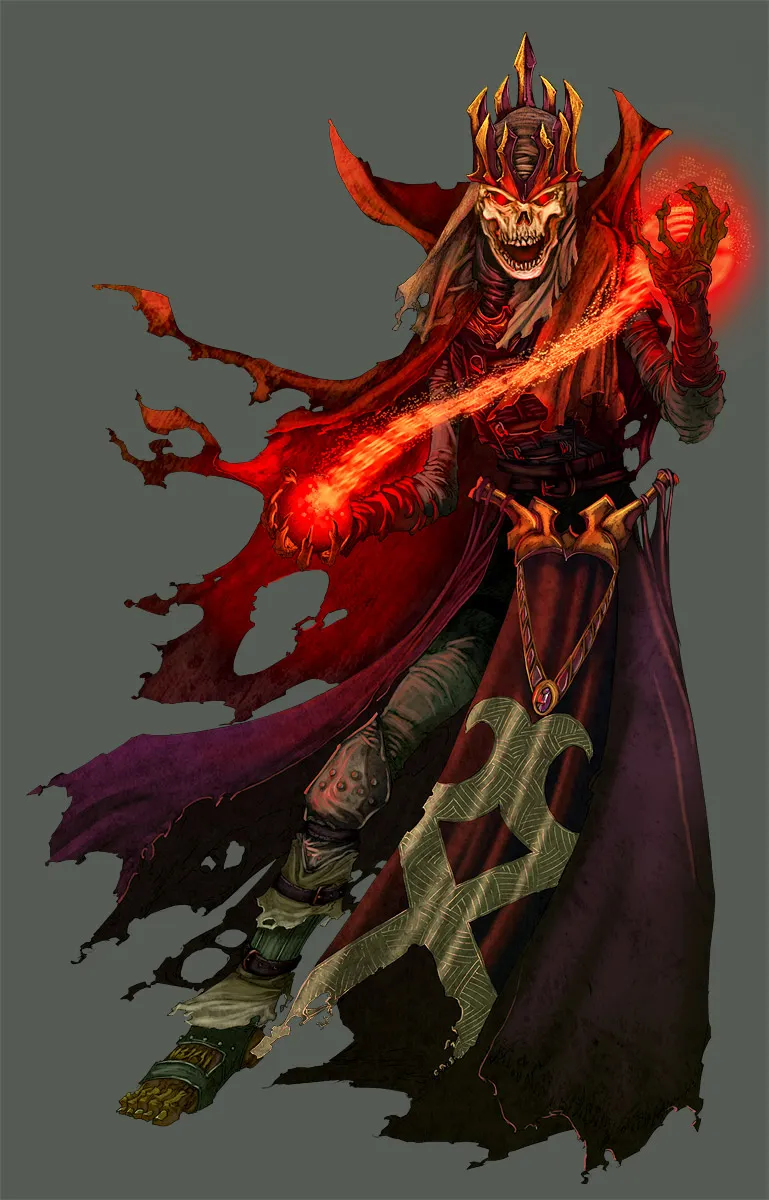
However, even destroying the body is practically an impossible task. Yes, besides immortality, there is not much else that the state of being a lich gives – the ability to paralyze by touch, insensitivity to pain and cold, invulnerability to non-magical weapons, and a few other trifles. However, this is quite sufficient. Imagine: just to go through the ritual of lichdom, a necromancer must possess immense knowledge and rare power. And after becoming a lich, they have eternity at their disposal for self-perfection. Eternity during which they do not need to be distracted by food, sleep, and other annoying interruptions. If you are searching for the most powerful mage in the world, there is a good chance they will turn out to be a lich. Furthermore, considering the specifics of the magical school required to conduct the ritual, a lich will always be surrounded by an army of the most powerful undead imaginable – vampires, death knights, spirits, legions of wights, necroconstructs, and so on. The only unclear aspect is whether a lich perishes if their phylactery is destroyed while their body remains intact. According to my calculations, it does not. I believe that the phylactery (which, by the way, can be any object – yes, even that dusty cobblestone in the far corner of the dining room) serves merely as an anchor that, when necessary, catches the soul that has fled from the destroyed body and prevents it from crossing over, ensuring its relocation into a new host body. Destroy the body, phylactery intact – the lich will be reborn. Destroy the phylactery, body intact – they will create a new one. Thus, to finally put a lich to rest, you need to destroy both, which is practically impossible.
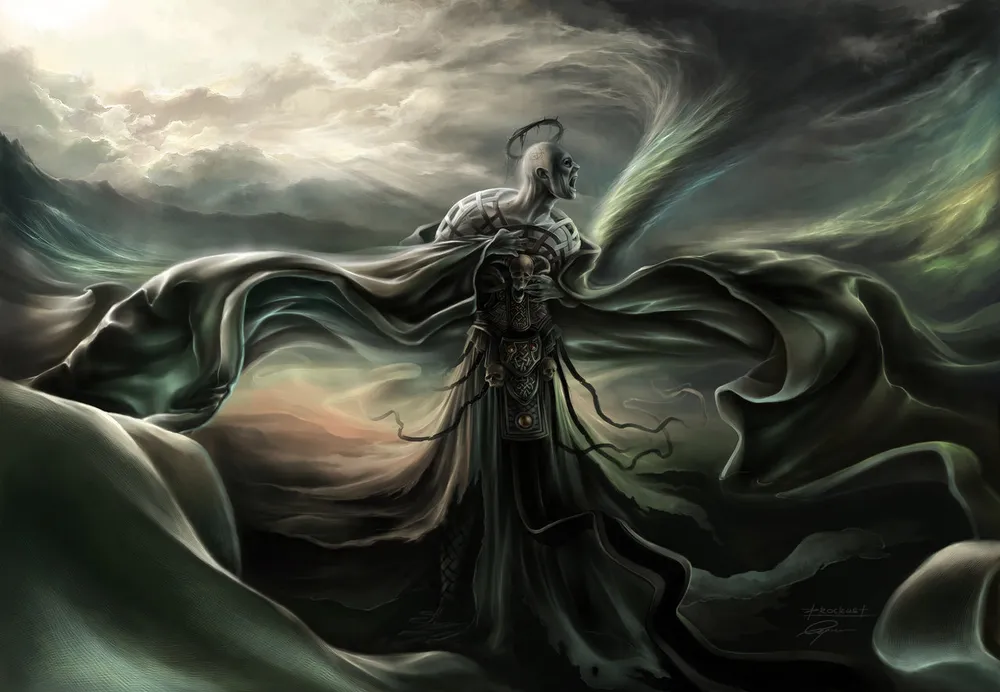
Usually, liches become mortal mages – humans, orcs, dwarves… Sometimes elves, in those worlds where they are not burdened by immortality. However, theoretically, anyone can become a lich – as long as they are a sufficiently skilled mage. For instance, I know of liches who are nagas, demon liches, and even illithid brain liches. However, two categories of unusual liches emerge that starkly differ from the prototype.
Dracolich – dragons inherently live forever, and they grow stronger with age. Therefore, they require significant reasons to become liches. Such a reason exists – a dracolich retains all the original properties of a dragon (intelligence, ability to fly, breath weapon, inherent magical abilities, etc.) while acquiring a set of unique qualities. In particular, the breath of a dracolich drains life from all it touches, serving as an extremely formidable weapon.
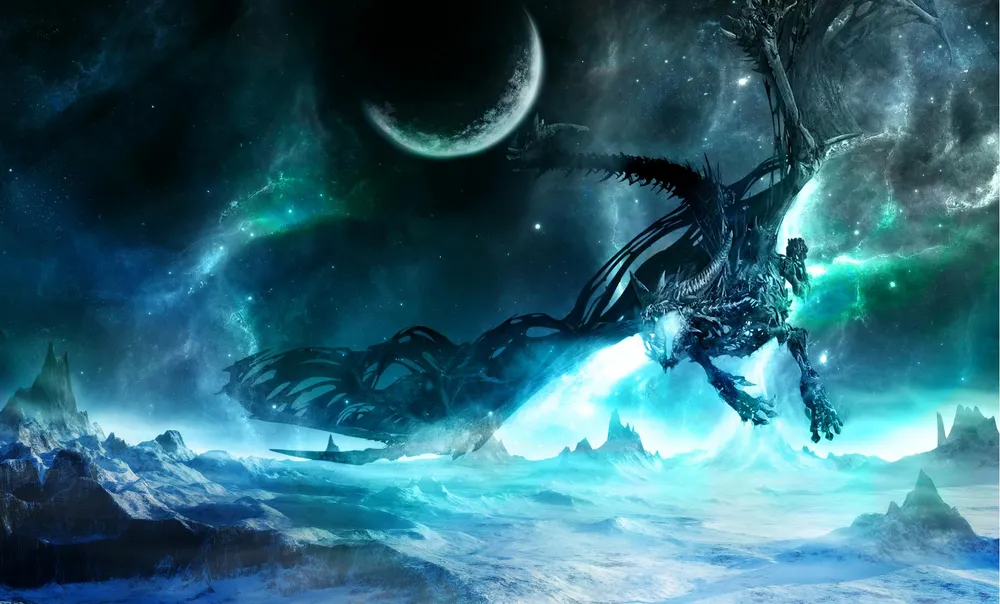
Transforming into a dracolich greatly enhances its already significant magical power. And let’s not forget about the phylactery, providing additional guarantees that a dragon will not be killed in its sleep by wandering treasure hunters. All of this cumulatively makes the dracolich one of the most terrifying beings inhabiting magical worlds. However, there is someone even scarier than a dracolich. This is…
Demilich – mistaken for a half-lich, which will be discussed later. The name of this type of undead is derived from the term demi-god, and not without reason. Visually, a demilich represents very poorly preserved remains – usually, just a skull, though it may also be another body part, such as an arm. However, these remains will always be adorned with at least a couple of large gemstones, which provide one of the most terrifying abilities of a demilich – soul-draining, which forever traps the soul in the gem without hope of release. It is erased from existence, waiting for neither hell nor heaven, only eternal imprisonment.
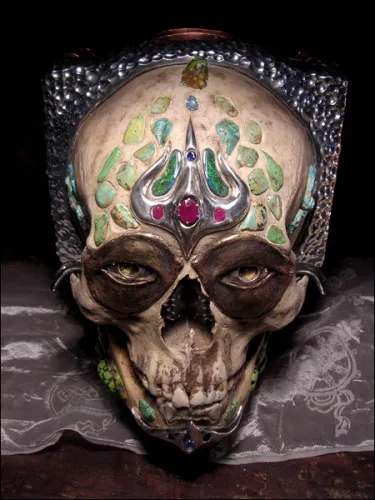
But this is just one of the many frightening powers of a demilich. With a mere effort of will, it can engulf a square of several kilometers in fire or cold, raise legions of the dead, stop time, and do much more. Essentially, a demilich is no longer undead but something more – an entity of almost divine power, freely traveling between worlds, capable of inhabiting any corpse in the desired world to gain the ability to act freely. They seldom return to what remains of their actual body – and woe betide anyone who disturbs the skull quietly lying on a dusty pedestal!
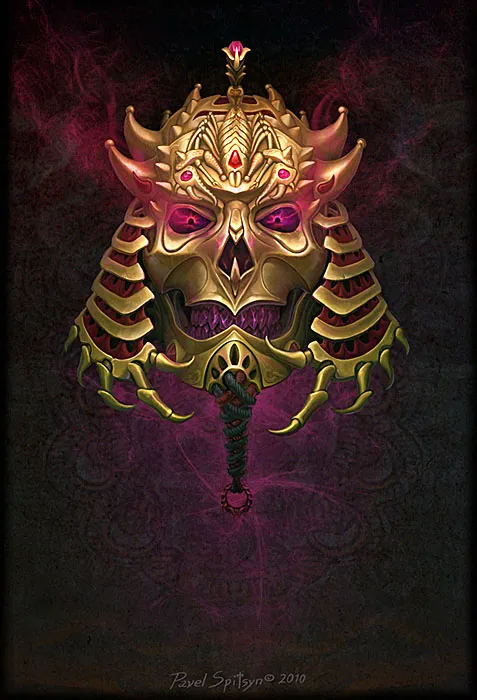
There is a small uncertainty here – what about the phylactery of the demilich? Judging by its soul's travels, a demilich has no phylactery, and the only thing that soul is even slightly bound to are the remains of its body. It follows that if one destroys these remains while the demilich’s soul is inside and actively resisting, it will perish along with the demilich. But do not assume this is its weakness – inflicting even a scratch will require magically powerful weapons. And of course, such items are not found casually lying around.
Halflich – this creature is what a mage may become if they perform the lichdom ritual incorrectly. Their soul is torn to pieces, and the wretched shards of yesteryear will forever be bound to a desiccated shell that wanders aimlessly through the world. Fragments of reason, fragments of memory, fragments of power and magic… A pitiful, frankly speaking, sight – yet do not underestimate them; this absurd, shuffling corpse can still unleash something like chain lightning or soul intrusion. Just out of old reflexes.
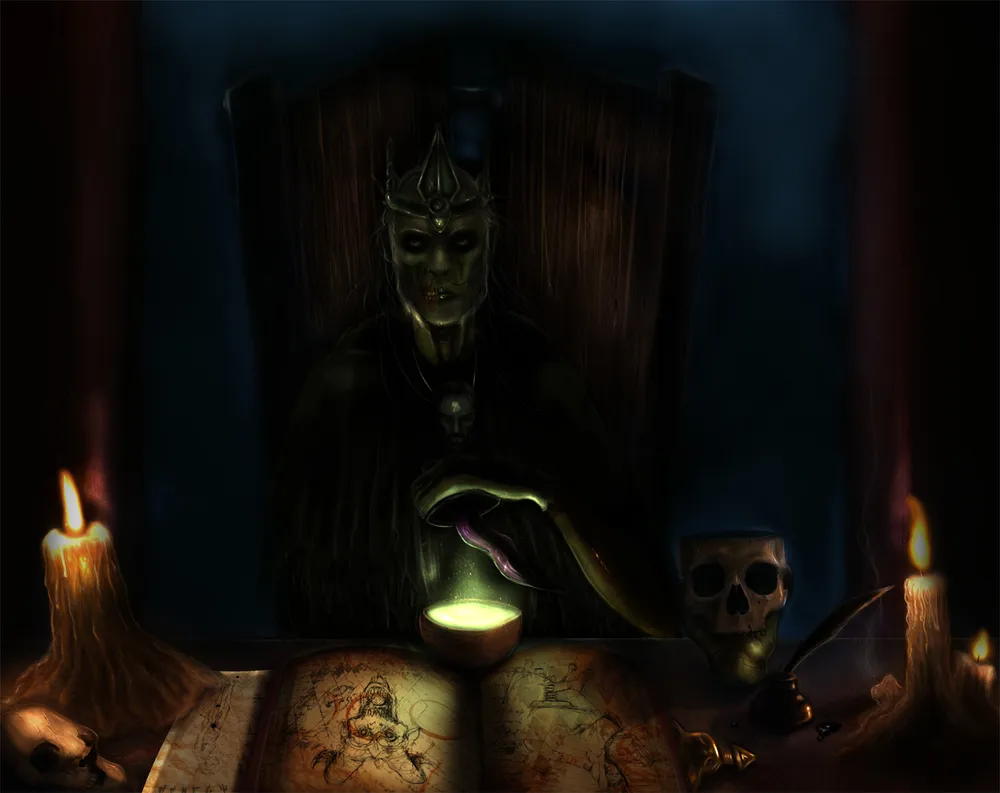
General recommendations when encountering: it is best to run away from a halflich. When encountering the others, try to negotiate; after all, they are intelligent beings. If that fails – it’s not a certainty that you will even get to say hello to your patron deity, because when encountering a demilich, you may find that you have no afterlife.
Incorporeal Undead
- Ghosts - this is a very broad category that includes everything representing an imprint of a personality, event, or item that no longer exists. A semi-transparent train speeds through a tunnel? A ghost of an object. The sounds of weapons clash and commands resonate on the field of an ancient battle? A ghost of an event. In an old castle, people die at the sound of a dreadful banshee's scream? A ghost of a personality. In this section, I lump together a whole array of ghosts, starting from harmless phenomena that can scare only by their appearance and ending with lethally dangerous banshees. They are united by one defining characteristic: they once were, but now they are no longer, and they became ghosts not through their own efforts but through circumstance. Yes, some ghosts can be artificially created – such as banshees, for example, but the primary method of their emergence is natural. Somewhere, something hasn’t clicked, someone hasn’t been allowed to proceed, someone has unfinished business – and voila, a ghost is ready.
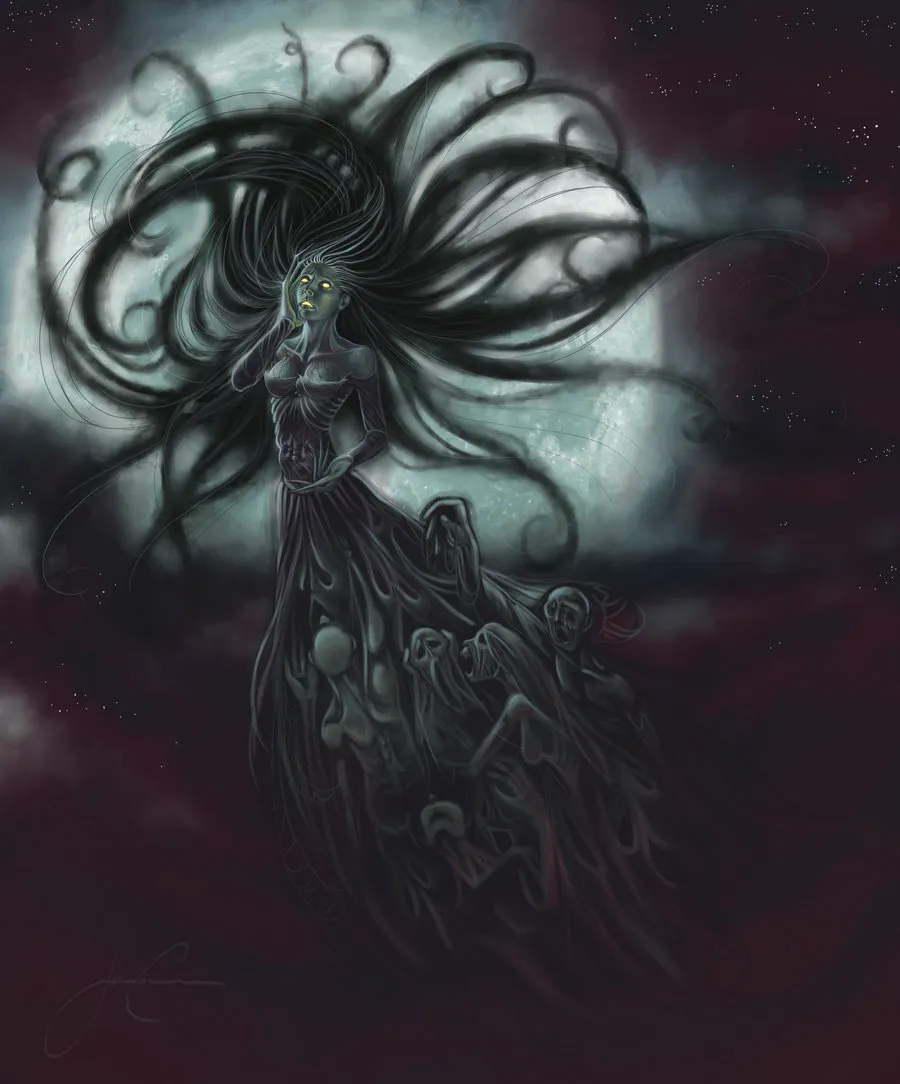
General recommendations when encountering: since ghosts are incorporeal, in most cases, you can’t do anything with them. Besides, usually there is no need to. If you have to fend off a banshee or something of a lower rank but equally aggressive, it’s very desirable to have magical weapons, someone familiar with battle magic or necromancy, or, as a last resort, a staunchly pious priest. And earplugs.
- Shadows – have you ever wondered if your shadow has grown tired of obediently mimicking your movements? And why does it often hide behind you? Ah, the light is just hitting it… Perhaps, perhaps. But it could also be that your shadow may one day open its eyes and sink its claws into your throat. This undead, a manifestation of the primordial Darkness, is particularly dangerous because there it seems to not exist – and yet there it is. I found no clear explanation for their emergence; it is simply that sometimes, on the darkest nights, the light goes out in certain houses – and in the morning no living soul remains.
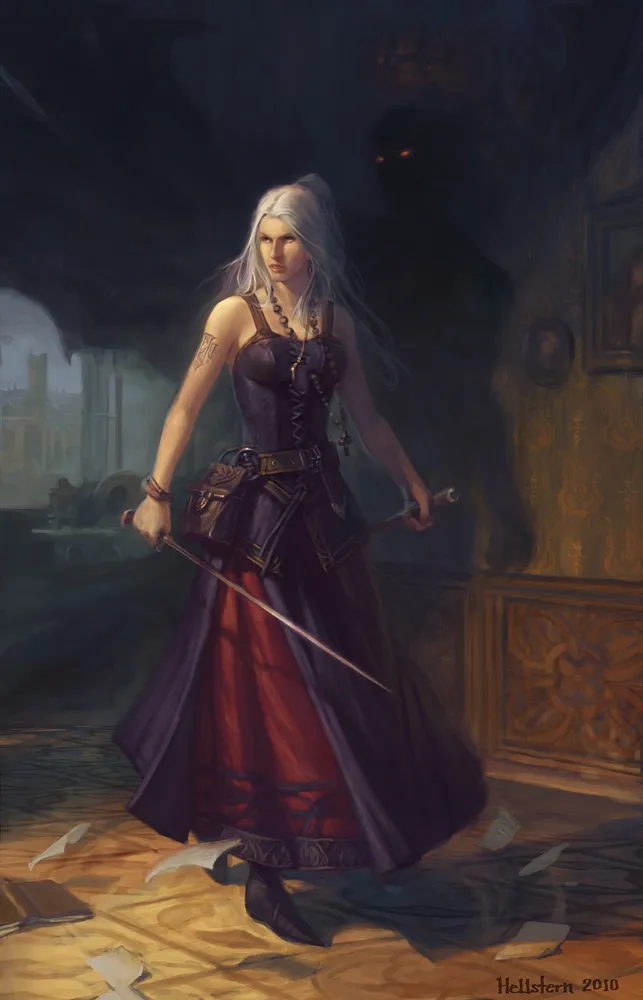
General recommendations when encountering: these creatures fear direct light, so sometimes just turning on a flashlight in time is enough. But the worst part is that you might not have time to turn on the flashlight, or even to realize what’s happening.
- Wraiths – some of the most powerful incorporeal undead, distinguished from most others by the fact that they are intentionally created and possess almost complete freedom of action in the material world while remaining immaterial. This means a wraith can grab a person by the throat and choke them, and any attempt to push them away will cause the victim's hands to plunge into emptiness. But, naturally, wraiths do not act so crudely – they can literally drain the life energy from mortals, leaving only empty husks, command powerful magic including necromancy, can pass through walls, and turn shadows into weapons.
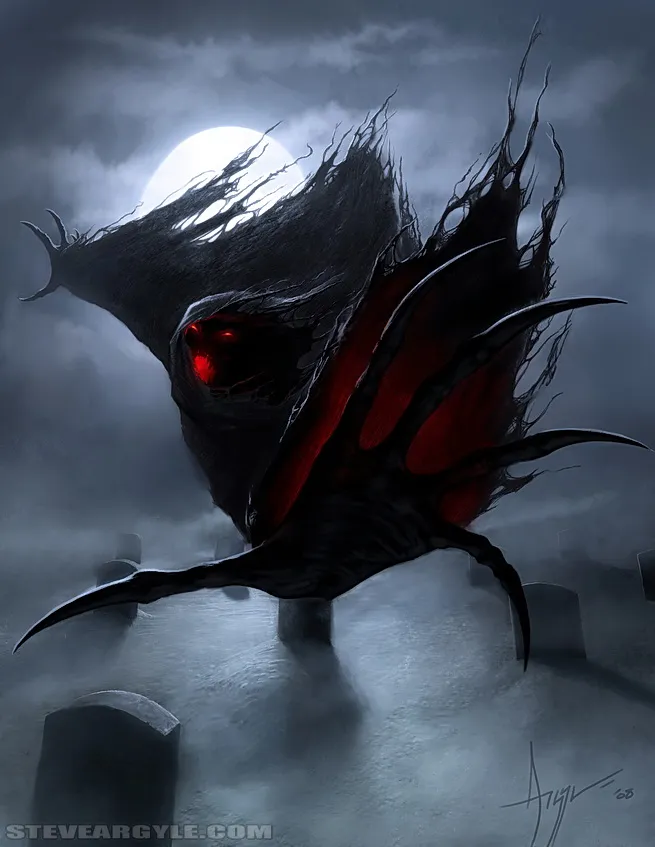
They are usually intentionally created from living people with the aim of obtaining a powerful servant, and some necromancers, unable to execute the lichdom ritual, may even transform themselves into wraiths. Often, wraiths wear quite earthly clothes (armor, robes, etc.) and wield material weapons (enchanted swords, scythes), but they can easily do without. Furthermore, it is extremely difficult to destroy a wraith – they are quite intelligent and vulnerable only to very strong magic. In most cases, they can only be temporarily dematerialized, depriving them of the ability to interact with the material world.
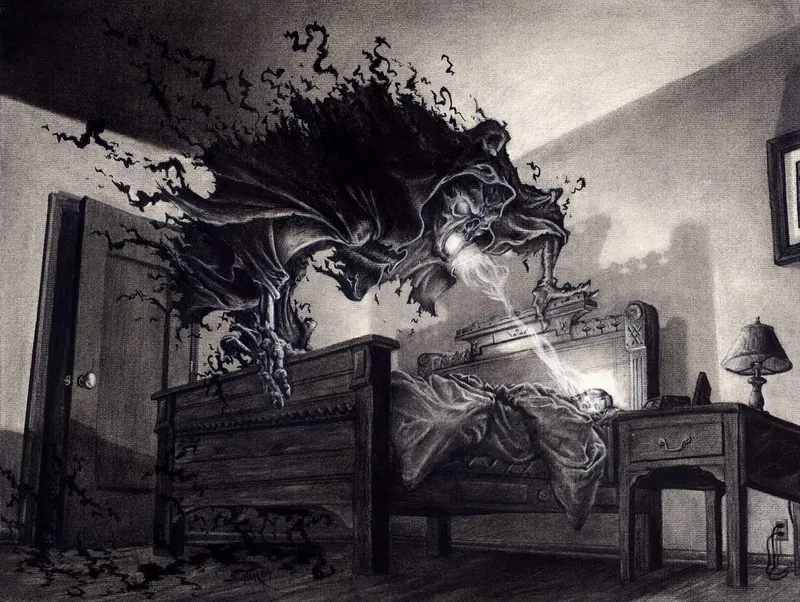
General recommendations when encountering: if you do not possess strong magic or magical weapons – you are a corpse, whatever you do.
I hope my article appealed to you, and you managed to learn something new. The world of the undead holds many more secrets, and perhaps I will return with a story about less common yet equally sinister creatures.