The Difficulty of Choice. Key Points of the Game.
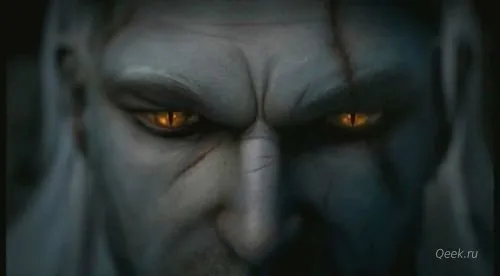
During the game, after capturing Yorveth in Flotsam and choosing to travel with Roche, I prevented him from a bloody massacre against Henselt and eventually set out to save Foltest's daughter (later kindly handing her over to Radovid). Without experiencing a shred of compassion for Sheala, who was torn apart by the megascope, I spared the life of the dragon-Saskia and Letho.
Strangely enough, it was Skyrim that forced me to replay [The Witcher 2](/games?search=Ведьмак 2) a second time after getting bored with the monotonous gameplay in the northern province of Cyrodiil after three weeks of running around, 'herded' by the designer's hand into dungeons and seasoned with repetitive quests lacking the necessary story motivation. Although I must admit: before the hero was leveled down below a certain threshold, and the set of quests didn’t seem monotonous, the game was unbelievably captivating and didn't let go.
In the end, for leisure, I chose [The Witcher 2](/games?search=Ведьмак 2), which provided an A MASSIVE amount of positive emotions the second time around. And, without a doubt, for me, it became Game of the Year, naturally pushing the fifth iteration of the Elder Scrolls saga and, accordingly, the Dragonborn (which also brought about a lot of wonderful experiences).
After completing the game a second time down Yorveth's path, its story revealed itself from a somewhat different perspective, all the 'pieces of the puzzle' fell into place, and misunderstandings of certain details were eliminated.
Below I will provide several comments on various endings and intermediate moments of the game:
To save Triss or not?

In any case, Geralt faces a choice: to save Triss or attend to something 'more important.' Essentially, there is always someone else to take the alternative route (Roche or Yorveth), but no one but Geralt will help Triss escape from captivity. One cannot initially count on Letho's heroic deed.
After playing through the game and learning of Triss's happy release regardless of Geralt's decision, I find it interesting to participate in scenarios that involve direct engagement in state affairs. However, the decision to save Triss also strongly influences the balance of power in the north.
Roche's Path:

Vernon Roche repeatedly backs up his friendship with Geralt with actions, even if the witcher chooses an alternative path and joins Yorveth (which, in my view, is a betrayal):
Vernon hints at how to enter the Kaedwen camp;
He saves Geralt from imminent death at the hands of the Nilfgaards.
Thus, choosing Roche's path and capturing Yorveth (resulting in a celebration in Flotsam, rather than a beat-down of non-humans) seemed much more correct to me.
To kill Henselt or to spare him?
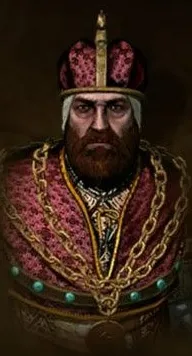
Next on Roche's path is a principled choice - to kill Henselt or spare him. Looking into the future with a time machine and learning about the imminent war with the Nilfgaardians, one can certainly say: 'Killing is not an option!' I don't know how it is in the books, but in the game Henselt seemed to me the most normal king, a real man, straightforward and honest. I don't understand why Geralt disapproves of him in his judgments... Perhaps just because the prototype of Kaedwen is Russia, and Henselt, in essence, is 'Tsar of All Rus,' leading, with the choice of Roche's path and the king's pardon, a very successful policy. The fair outcome is that Upper Aedirn is annexed to Kaedwen.
To whom to give Anais - Foltest's daughter?
The next serious choice awaits the witcher in the third chapter. Knowing that Triss will be saved anyway, I choose to help my dear friend Roche. But who to give Foltest's daughter to?
• The choice in favor of Radovid: 'Radovid's boots are heavy.' Yes, in case of choosing the king of Redania, one can hope for the preservation of Temeria’s integrity, the end of the civil war, and a good chance to provide worthy resistance to Nilfgaard. Moreover, the girl will undoubtedly face less danger than in Temeria: there is no threat from the nobility of Temeria; she will be taken directly from the front of the new war with the Nilfgaardians.
This decision has a very serious potential downside: after the annexation of Temeria, Radovid may secretly divide the whole north with the emperor of Nilfgaard, using his position as the most powerful lord in the north. Only the annexation of Upper Aedirn by Kaedwen allows to somewhat balance the power dynamics.
However, the positive outcome of this decision is more likely.
• The choice in favor of the Temerians: Torn by infighting, Temeria will quickly fall to Nilfgaard's blows and open the way for further incursions into the north. The only hope remains that Roche manages to protect the future queen.
It is worth noting that if we choose to save Triss, this also impacts the balance of power on the northern map: besides Upper Aedirn, Henselt acquires half of Temeria, which, considering Radovid's positions, undoubtedly balances the situation of the major northern kingdoms. The other matter is that with such a setup, the decline of the divided Temeria in the first years is inevitable.
Moreover, after saving Triss, we see a scene where Roche single-handedly defends Anais from a group of Kaedweners. He is declared an outlaw. Anais's fate remains extremely uncertain.
/Something similar, but in a different historical context, happened in the last episodes of the second season of the series Rome (highly recommended!)./
Based on the above, the choice to give Anais to Radovid seems the most advantageous and gentle for the peoples of the north as a whole.
Yorveth's Path:

If you choose Yorveth's path, we will have to fight for Aedirn's freedom.
Speaking of Upper Aedirn: I do not believe in Saskia's words about a 'free' state; she is too naive and ultimately falls 'under the thumb' of Philippa Eilhart. I think in the end, Upper Aedirn will either fall under Stennis's jurisdiction or will succumb to blows from Kaedwen (which is more likely). So, it is unnecessary to spill blood where it shouldn’t be spilled.
Moreover, Saskia's foolishness is evidenced by her attack on Foltest's forces, suppressing the split in her own domain. Saskia, supposedly sympathetic to Arianna La Valette and her company, fighting for 'freedom' from their own king and homeland (of course, how else to interpret the reluctance to hand over the king's children?). By her logic – all kingdoms should be divided into 'free' principalities ('A bad lord doesn't dream of becoming king...'). And it doesn't matter that internecine wars will soon erupt.
What to do with Prince Stennis?
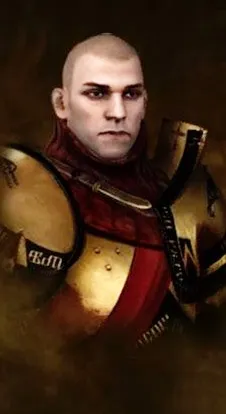
In the case of choosing Yorveth's path, the Witcher faces the question of Prince Stennis's fate, a weak and cowardly heir to the ruler of Aedirn. Based on the situation, on one hand, Stennis will most likely be a worthless ruler under whose leadership Aedirn's decline will continue (even the ghosts of soldiers during the battle of Vergan speak of Aedirn's decline under Demavend). On the other hand, it would be extremely cruel to treat Stennis that way, especially since his guilt is not definitively proven.
Since there are no reasonably capable replacements for Stennis (Saskia is clueless, despite her nobility, and the nobles are unlikely to easily accept her), let him live; otherwise, yet another civil war threatens the northern kingdoms – in the wake of the Nilfgaardian invasion.
Heal Saskia or save Triss?
With Triss, everything is clear: her rescue, in this case, does not particularly influence anything – she will be saved regardless of us. But saving Saskia makes sense, especially since at this point in the game, many lives of humans and non-humans depend on her sanity. Trusting the management of Upper Aedirn to Philippa Eilhart is certainly not an option. Furthermore, in the case of saving Triss, Yorveth will suffer greatly at Philippa's hands.
Although it is worth noting that Philippa herself remarks: Saskia will never be the same again. After her 'healing' in this ending, it seemed to me that something about Saskia is still off. At the same time, in conversation, Saskia also points out that she merely used Yorveth and that this is not a war for the freedom and rights of the Scoia'tael. Their gang will find a place in Upper Aedirn for their part in the slaughter… And, yes, she might need a person at her side...
Choices not related to Roche's and Yorveth's paths:
// With one exception - healing Saskia on Yorveth's path
Pardon Sheala?
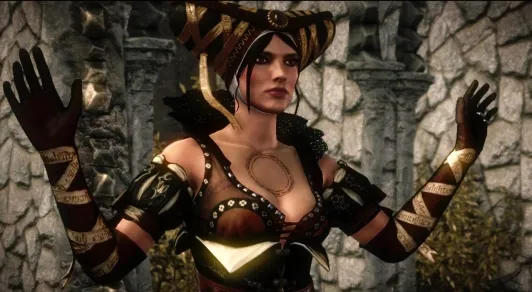
The sorceress has shed a lot of blood of worthy people. Moreover, not only did her attempt to plunge Aedirn into a state of war succeed. Still, the Lodge's plans served as an excellent breeding ground for the king's assassin and helped Nilfgaard's plans.
Before being sent to the afterlife, Sheala effectively bids farewell to Geralt, hoping for his swift demise.
Verdict: death.
/If Sheala is pardoned, in gratitude she will tell Geralt that Yennefer is to be sought in Nilfgaard and teleports away. Later we learn the same from Letho./
Finish off Saskia or not?
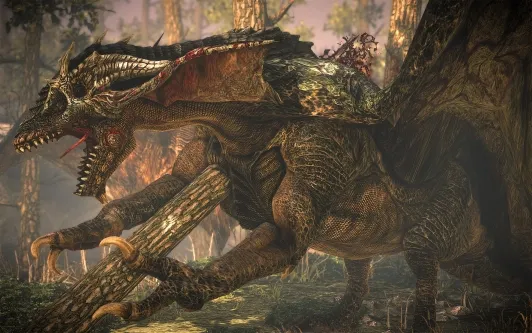
At the very least, I would like to see her in the third part. In general, Roche rightly notes that it’s a good choice – to spare the dragon. We must first fight the cause of the disaster – Philippa Eilhart. Yes, and in Radovid's service, he will have much more resources for hunting the witch...
So, in my opinion, it’s better to leave Saskia alive, even though this option harbors many dangers for ordinary people in the north.
Should Letho live?
'You are not my enemy.'
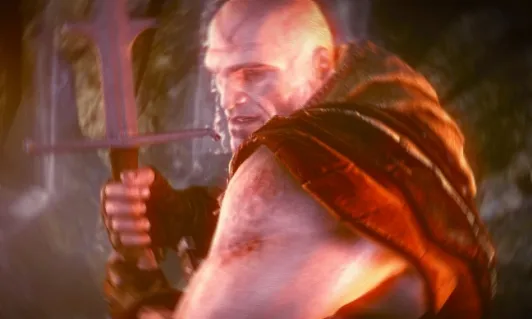
Letho was a tool in the hands of the Nilfgaardian emperor. Moreover, he spares Geralt's life in the first chapter and saves Triss – in the third. Additionally, the revival of the School of the Snake may be significant in light of the currently phantom threat – the invasion of elves, who bring the Wild Hunt.
Letho must live.
So, the above is simply my opinion on the events in The Witcher 2 and the decisions that are offered to us.
Supplement: On the import of saves from the first part.
Despite imported saves, during the game many noticed some discrepancies between the events of The Witcher 2 and the decisions made earlier in the first part.
Indeed, there was an unpleasant bug related to save imports.
The patch 1.2 announced corrections to the import of saves from the first part. The thing is, most people imported their saves while still on version 1.0. So installing the patch 1.2 on events from a game started in an earlier version did not affect anything.
Noted - imported from the first part:
1) Consequences of the development of relations with Ziegfried:
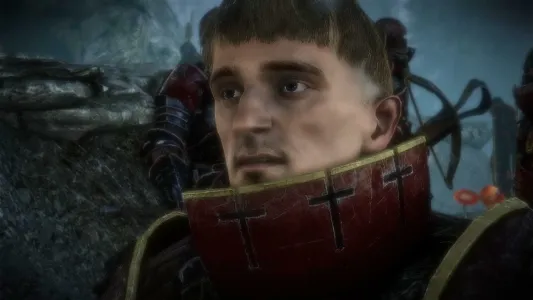
a) The ability to communicate with Ziegfried if a friendship was formed in the first part:
* Upon entering the camp of the order of the burning rose;
* On Roche's path - when choosing to save Foltest's daughter from the Kaedwen camp. Ziegfried arrives with a detachment of Redanian soldiers as a forced escort from Radovid. If at this point the decision is made to hand over the child to the Temerians, Ziegfried will still let the witcher and Roche go peacefully.
b) If Ziegfried was killed by Geralt, the order's soldiers call the witcher a murderer, and someone among them tries to take revenge if he strolls through the order's camp;
2) When choosing Yorveth's path:
a) If Adda was saved in the first game, one can meet a deranged priest in Vergan accusing Geralt of saving the beast born of incest.
b) In Vergan, a conversation with Yorveth about Yaevinn, the leader of the Scoia'tael from the first part, can take place and discuss Geralt's deeds depending on the decisions of the witcher made in the original game.
c) If resistance is offered to squirrels during the robbery of Vivaldi's bank in the first part, one can expect to meet a dwarf in Vergan who wants to grant Geralt 'credit' (in fact, a simple monetary reward).
3) In Flotsam, you can receive help from one of Tyler's agents if his innocence is proven in one of the quests from the first part.
4) Foltest's words about Adda's fate must correspond to the choice made by the witcher in the first part.
P.S. I wanted to note for a long time that the game is excellently tailored for gamepads. And the experience of playing on a gamepad in front of a widescreen TV is quite different, mainly because of the incomparable higher contrast of the image and the size of the screen. The only thing is, it is necessary to set larger fonts.
P.P.S. Starting from version 2.0, a strange bug has once again emerged when playing dice when controlling with a gamepad: the 're-roll' button doesn’t function. It’s as if it has not been assigned at all. The solution is quite simple: at the beginning of each chapter, I switch to keyboard control and completely finish the quest involving dice. Then I switch back to my usual gamepad controls.
P.P.P.S. I hope that next time the developers don't mess up the save imports from the previous part... Some of my decisions made in the first part did not find their reflection in the second – for example, Geralt is accused of killing Ziegfried, who was not there. Moreover, in my version, Ziegfried was a friend of Geralt for a while (until the Order of the Burning Rose went insane at the end of the first part), and I would have loved to see him in the sequel... In general, let’s hope for an adequate utility from the game developers that allows changing significant events for the third part at the wave of a hand.