
Video Games in Cinema. Part One.
Hello, friends. Today I will discuss a topic that clearly deserved to make its way into this section of the site. Let's talk about video games in cinematography. I'll make two immediate notes – first, the discussion will not be about adaptations of video games, but rather those films where video games were the basis of the plot or played an important role in it; second, this article will focus on feature films (with a minor exception).

It is noteworthy that video games are not a very popular topic in cinema, as they are mainly portrayed as one of the leisure activities of the characters, and the main action can often proceed without them. There aren't even three dozen films that made it to big screens, VHS tapes, and DVDs, where the progression of events entirely or partly depended on any video game. However, they do exist, and perhaps with the development of gaming culture, there will be even more; some prerequisites for this exist. So let's find out how video games were depicted in cinematography and what themes were raised using them.
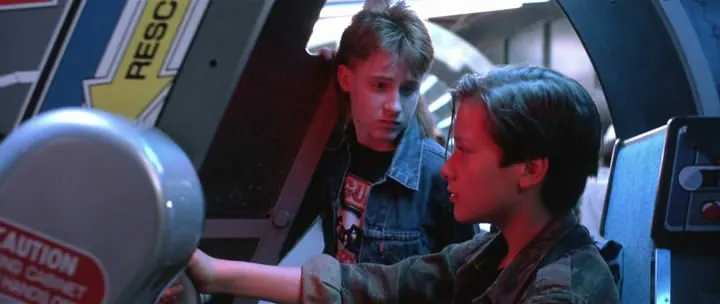
We'll start with the cult movie...
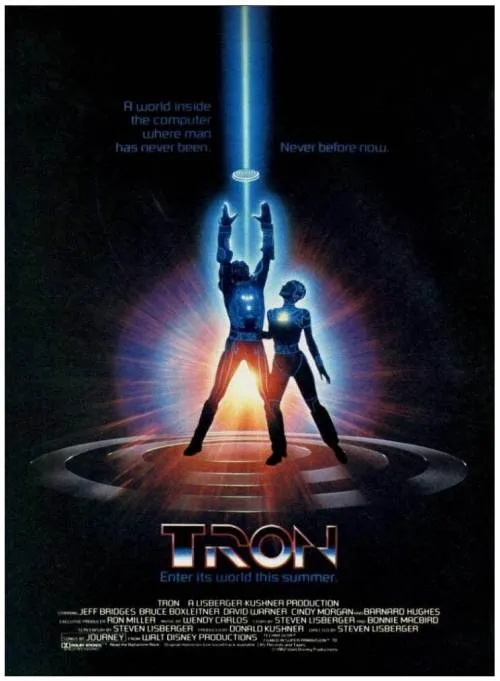
Tron / Tron (1982)
"-Do you still believe that users exist?"
Ram asks Tron
Certainly, it was this film that laid the foundation for the theme of video games in cinematography, and what a foundation it was! The film employed cutting-edge technology, unprecedented at the time. Although "Tron" was not the first film to feature computer graphics (the pioneer in this field was "Westworld," 1973), it was the first film to use it actively. So, why were such unusual means for that period used in the film's creation?
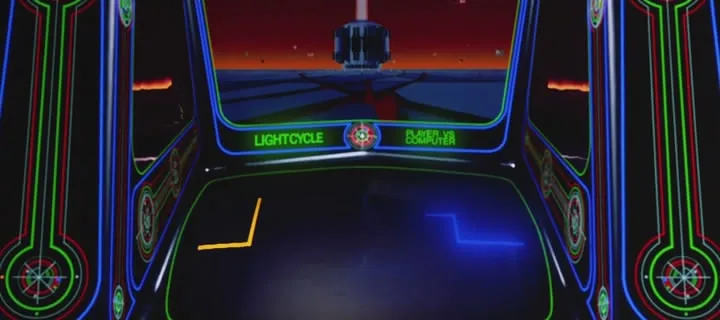
Video Game ENCOM - Light Cycles
Here we must pay homage to the plot. The main character, Kevin Flynn, is a talented programmer who once worked for the ENCOM corporation. He is the author of the corporation's popular video games, but the rights to these games were slyly appropriated by his colleague – Ed Dillinger, who was subsequently promoted to the company's CEO. Now Flynn attempts to hack the entire ENCOM system, under control of the Master Control Program, to access a memory area containing information about the true creator of the video games. This way, Flynn will be able to prove his right to the games and expose the thief. Additionally, it turns out that Dillinger and the Master Control have misled not only Flynn. Another programmer at the corporation – Alan Bradley – is trying to disable the Master Control, which is hindering a complete diagnosis. To do this, he uses the program "Tron," however, he can no longer do this as Dillinger stripped all programmers of level seven authorization, but that is manageable for Flynn. Cooperating with the help of their mutual friend Laura, they decide to hack the system, for which Flynn is taken to the main building of the corporation.

Another ENCOM video game - Space Paranoids
As soon as Flynn begins the hack, something incredible happens. One of ENCOM's experimental installations, aimed at Flynn at that moment and capable of digitizing objects by splitting them into molecules (don't look for logic here, just accept it as a fact), is activated by the Master Control and transports Flynn into the virtual world of the ENCOM system. Residents of this world are diverse programs, subjected to the tyrannical dictatorship of the Master Control, and the very video games conceived by Flynn serve as local gladiatorial contests. At the very beginning of the film, one of these fights is shown on one of the arcade machines (a light cycle race), apparently all of them are linked to the ENCOM network, and since all programs within the system possess their own will, it is logical to suppose that the gladiatorial battles are disguised as gaming process cutscenes (even though the player took the joystick, it is unclear whether they started the game or watched a cutscene).
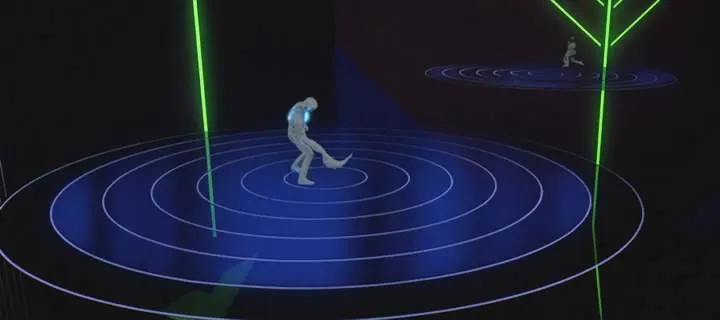
One of the types of gladiatorial battles - the game Hyperball (Ring Game)
Such was the representation of video games in the world of "Tron" and the first portrayal of video games in cinematography. It is worth noting that the film gained cult status only many years later and did not bring huge profits, which cannot be said about the homonymous games inspired by the film. 28 years later, a sequel was released – "Tron: Legacy," which has little in common with the world of video games (though the mentioned gladiatorial battles remained).
WarGames (1983)
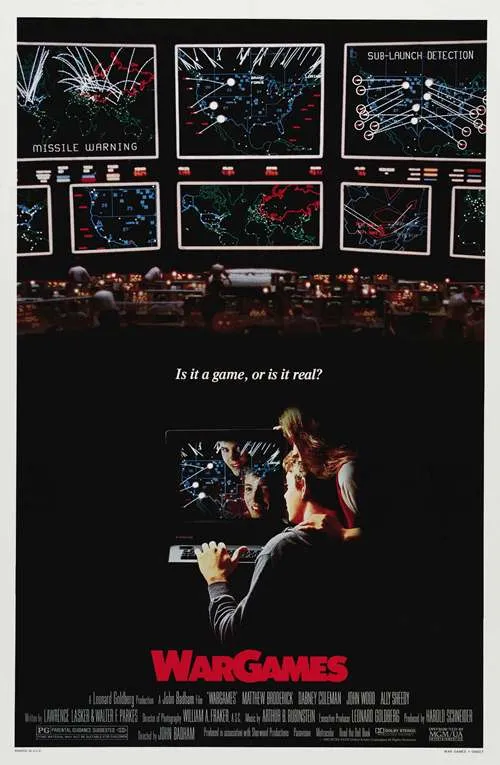
"-Strange game. The only way to win is not to play."
Joshua understands the essence of nuclear war
"-I liked how you blew up Las Vegas.
Is that a suitable biblical end for it, don’t you think?"
Falcon makes an ironic remark
Just a year after the release of "Tron," a film emerged that portrayed video games in a more serious light, touching on the subject of nuclear war. The backstory was as follows: according to statistics, 22% of all commanders responsible for launching nuclear missiles could not carry out the launch order (considering the date of the film, the "Cold War" was in full swing). This result did not satisfy the command, and thus it was decided to entrust such an important task to a special system WOPR (War Operation Plan Response).
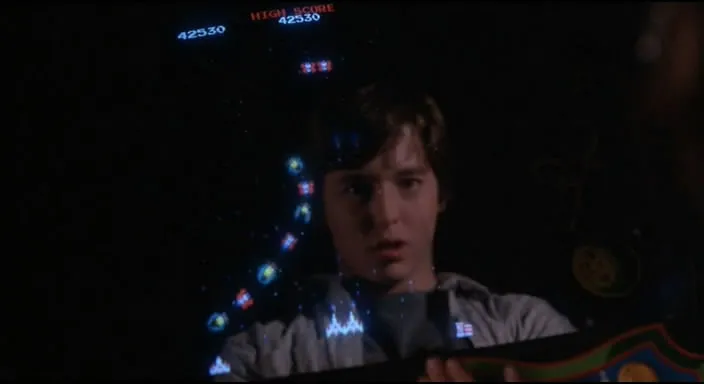
The main character is a big fan of the game Galaga
Some time later, in Seattle, a genius hacker David Lightman (who is still in school) accidentally infiltrates this system using a so-called "backdoor." Inside, he discovers a strange list of available video games. Alongside games like blackjack, hearts, bridge, chess, and checkers, he finds "Air Combat," "Theaterwide Biochemical Warfare," "Theaterwide Biochemical Warfare with Chemical and Biological Weapons," "Global Thermonuclear War," etc. Among them, he selects "Global Thermonuclear War," indicating the USSR as his side.
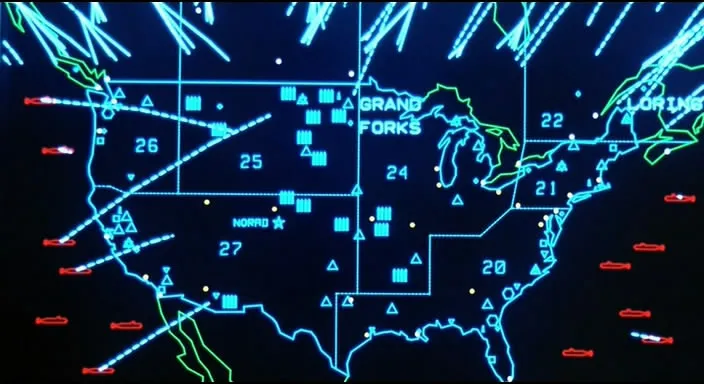
Everybody dies?
Ultimately, it turns out that these games were used to study the basics of strategy and simulate military actions by the intelligent system "Joshua" (which is what WORP is). Accepting the game, the system did not see the difference between virtual and real danger from the USSR, fixing the planned targets for a nuclear strike, causing alarm at the NORAD military base (North American Aerospace Defense Command) and placing the world at risk of World War III.
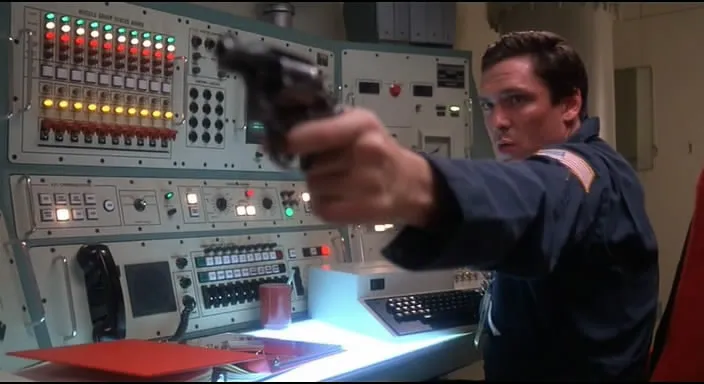
WarGames is also one of Michael Madsen's first films, as we see, his habit of playing brutal heroes was already there
The film became cult primarily within the burgeoning hacker community. It was also nominated for three Academy Awards (Best Screenplay, Best Cinematography, Best Sound). The unique gamification of the film (specifically in the case of "Global Thermonuclear War") was realized in 2006 when a video game was released called DEFCON, depicting the readiness levels of defense presented in the film. Similar to "Tron," the film's sequel saw the light more than two decades later in 2008, which we will talk about in another part.
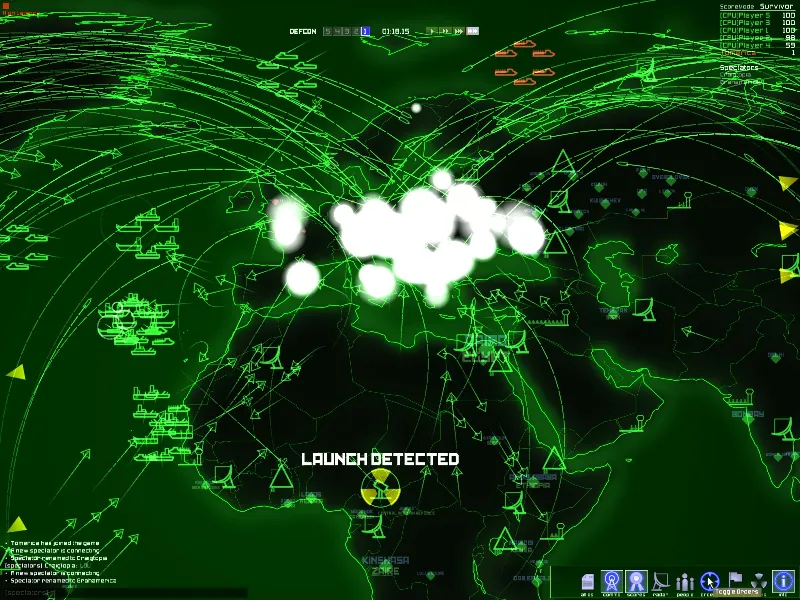
Everybody dies.
Cloak & Dagger (1984)
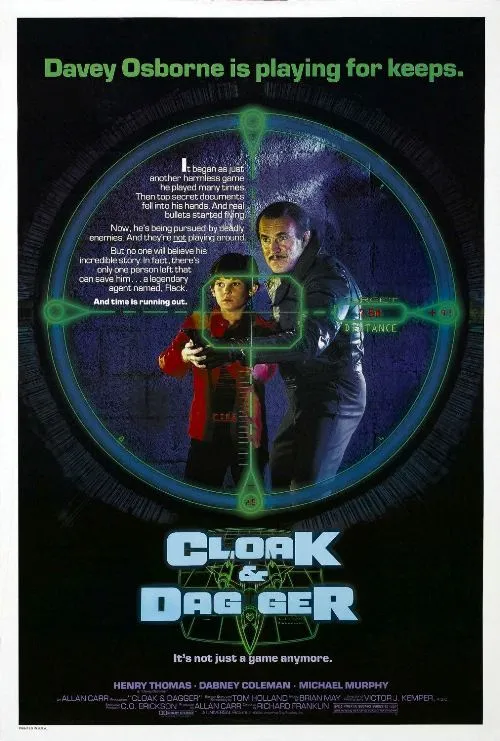
This film is a remake of the noir film "The Window" (The Window, 1949) where, as in the original, a boy named Davey Osborne witnesses a murder, but no one believes him. How are video games woven into such a plot, you might ask? The thing is that before dying, the victim gives the boy a cartridge of a video game on which state secrets are encrypted, pursued by spies (yes, it’s the "Cold War" again). This video game turns out to be "Cloak & Dagger," the main character's favorite game; he likes it so much that he has an imaginary friend (although the director will make us doubt his unreality) - the hero of this video game, Jack Flack, who in turn looks remarkably like Davey's father, Hal Osborne.

As you can guess from the screenshot, special attention in the film is paid to Atari products
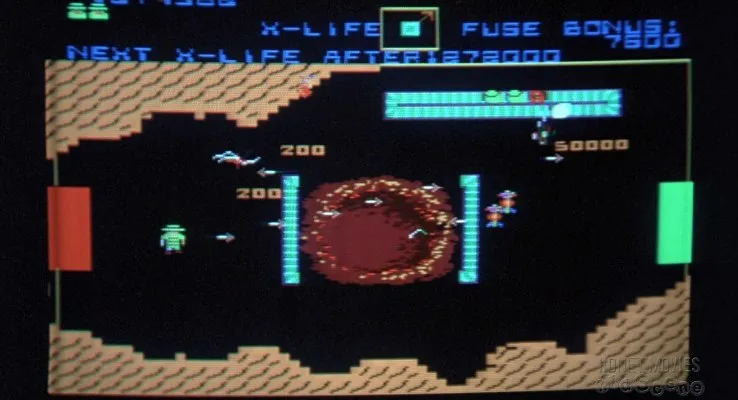
Cloak & Dagger represents an arcade video game where at each level you need to collect bonuses while destroying enemies
To decipher the necessary information on the cartridge, a certain number of points need to be scored in the game itself. But even after this, the main character's adventures do not end, as the same killers want that cartridge. It is worth noting that "Cloak & Dagger" is a vivid example of an adventure children's film, a fashion for which was particularly high in the 80s, but some tension and darkness, inherited from the original, are present here as well.

A children's film
The Last Starfighter (1984)

So, gamers in cinema in their short history have already managed to save a large computer system, prevent spies from stealing vital military secrets of the USA, and even save the world from nuclear war. What do you think will be next? Of course, saving the universe! This is exactly what the main character of the film, high school student Alex Rogan, is involved in. Being a jack-of-all-trades in a trailer town, Alex is also pretty good at playing the arcade game "Starfighter." One late evening, he beats the game's record and subsequently meets a mysterious stranger, who turns out to be an alien recruiter.
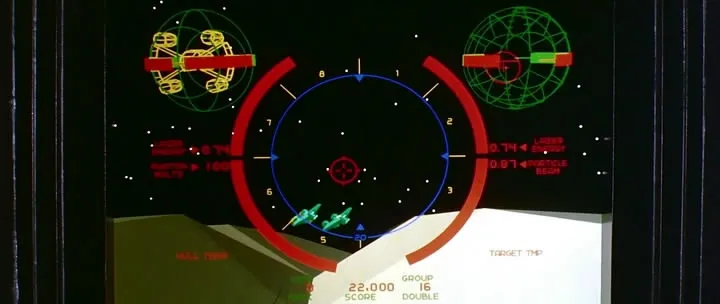
The graphics in "Starfighter" were incredible by the standards of that time

Gathering the whole village to cheer for the kid playing a video game is probably quite usual here
After breaking the record, Alex undergoes a kind of test, and based on the results, he becomes one of the chosen Starfighter pilots. Now he will really have to battle real enemies mentioned in the game - the evil Zur and the Ko-Dan Empire. Moreover, according to the recruiter, Alex already possesses all the necessary skills for the fight.

State-of-the-art computer special effects of the time
As in the case of "Tron," "The Last Starfighter" became another important milestone in the creation of computer special effects for films. The creators approached the technical side with special meticulousness; as a result, an unprecedented picture for its time was produced. The film could have been received even more favorably by audiences and critics if it weren't for one fact – it was released after "Star Wars." Many perceived it as derivative and lacking originality in concept; however, this did not prevent the creation of several video games, a novel, and even a musical based on it.

A teenager's film
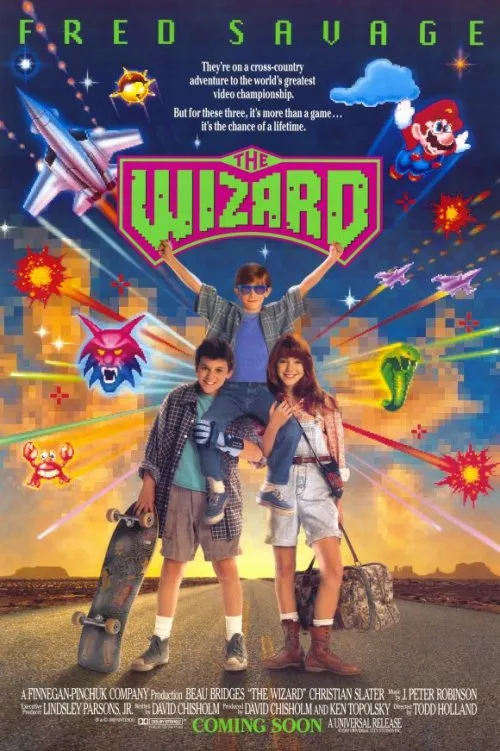
The Wizard (1989)
"-I love this glove. It's cool."
Lucas promotes Power Glove sales
"The Wizard" is the first film that depicted video games not as part of some significant plan but as a part of contemporary culture. It was the late 80s, and someone had to tell what that time was like, namely – the heyday of the Nintendo era. Compared to previous stories, it was closer to reality. So why is the film named that way? Let's proceed step by step.
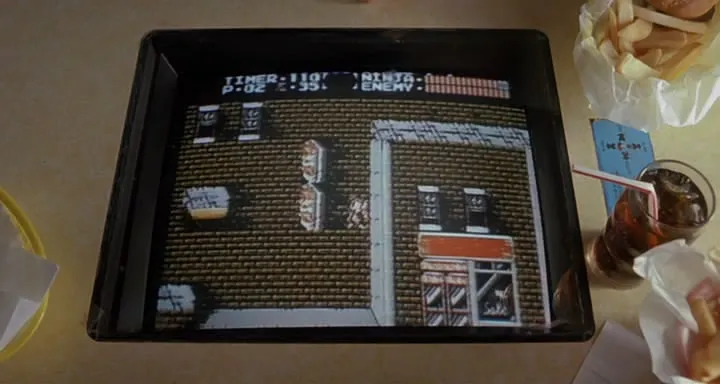
Ninja Gaiden on the cafeteria arcade machine
First, we learn about a boy named Jimmy, who apparently suffers from some form of autism. This fact does not sit well with Jimmy's adoptive father, and at his insistence, Jimmy is sent to an institution. This is found out by Jimmy's half-brother - Corey. After that, Corey runs away from home, infiltrates the institution, and rescues his brother. Remember the late 80s? Kids do what they want.
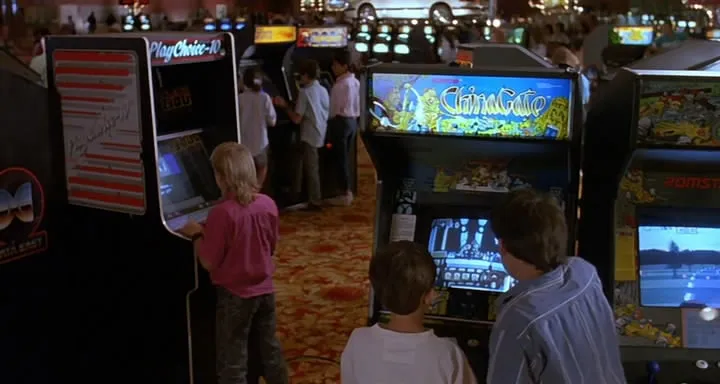
The characters often played a variety of games: Teenage Mutant Ninja Turtles, Formula 1, [The Legend of Zelda](/games?search=The Legend of Zelda), Castlevania 2: Simon's Quest, etc.
The kids decide to go to California (especially fervently Corey is eager to get there). On the way there, attempting to buy a ticket at a bus station, Corey temporarily leaves his brother by an arcade machine playing Double Dragon. Upon returning, he finds that Jimmy has scored an impressive amount of points. A suspicious girl named Haley notices the duo, and after a small scuffle and losing in a game, she joins the brothers. It is her gaming mastery that leads her to call Jimmy "the wizard." The newly formed trio sets a new goal: to enter the video game tournament "Video Armageddon" with Jimmy as the participant.
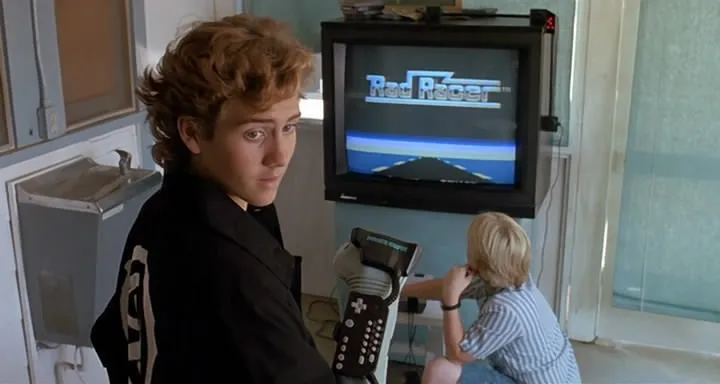
Lucas... so badass
In reality, the film serves as one big advertisement for Nintendo products. The heroes play on Nintendo PlayChoice-10 arcade machines and Nintendo Entertainment System consoles. The local "villain," a professional gamer named Lucas, uses a Power Glove in one episode of the film, and towards the end, a new video game – Super Mario Bros. 3 is released (in North America, it was the first place the game was shown in action, an impressive move even by today's standards).
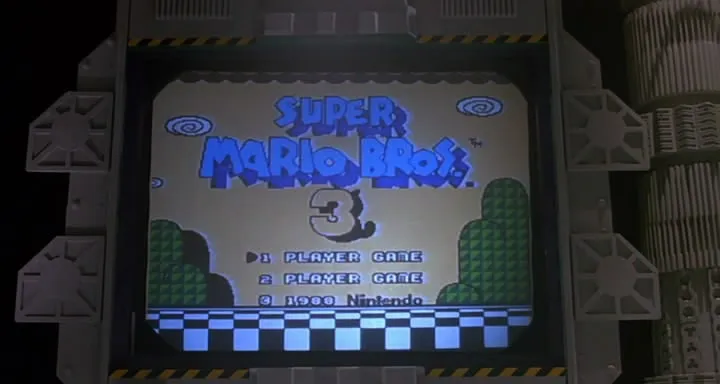
An epic release of a video game in North America; many went to this film just to see the gameplay of Super Mario Bros. 3
Arcade (1993)
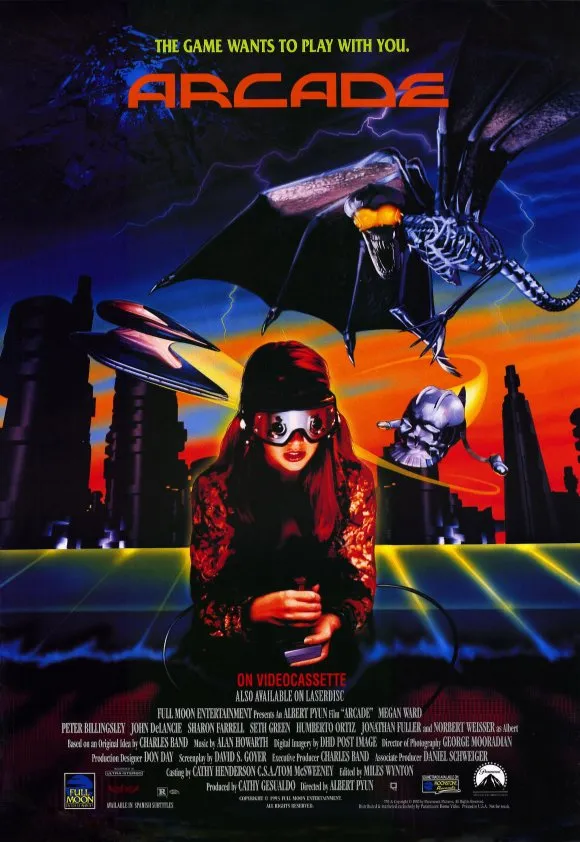
In the early 90s, the term "Virtual Reality" became widely known in popular culture. The virtual world amazed the imagination but, like much that is new and unexplored, evoked fear, which found its reflection in cinematography. The film "The Lawnmower Man" (1992) helped kick off the fears of virtual reality; this film also featured video games, but they did not play a significant role in the plot, unlike "Arcade," in which the virtual video game itself causes all the main characters' troubles.

Nick plays the portable version of "Arcade"
In the story, a group of teenagers learns about the presentation of a new video game – "Arcade." A distinctive feature of this virtual game is its ability to change rules, but there is another matter that the developers themselves are unaware of. Losers of the game get punished by being transported into the virtual world of the video game (how exactly remains a mystery). This happens to one of the teens - Greg. The first anomaly of the game is noticed by Greg's girlfriend - Alex. Armed with some knowledge about "Arcade," she tries to win in the game, thereby saving Greg and the other friends trapped in the video game world.
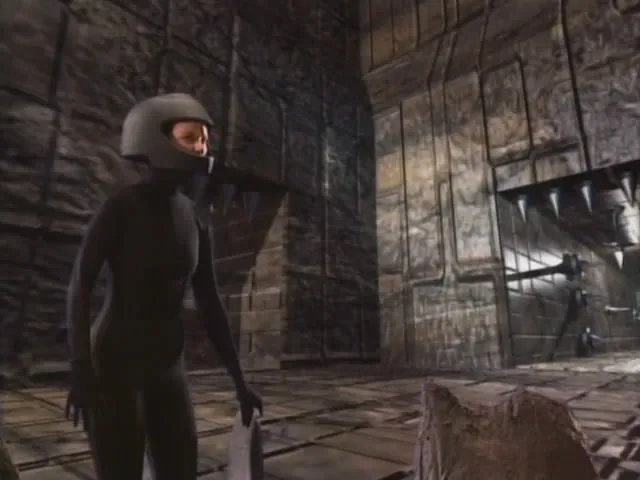
Alex inside "Arcade"
The computer effects in the film looked dull, which could be attributed to its production year, but the film’s narrative weakness cannot be justified by anything. The unfinished story and logical gaps were complemented by a jumpy narrative. Hence, despite a slight breakthrough in the depiction of virtual video games in cinema, "Arcade" hardly left a mark on anyone.

She watched "Arcade"
Police Academy: Mission to Moscow (1994)
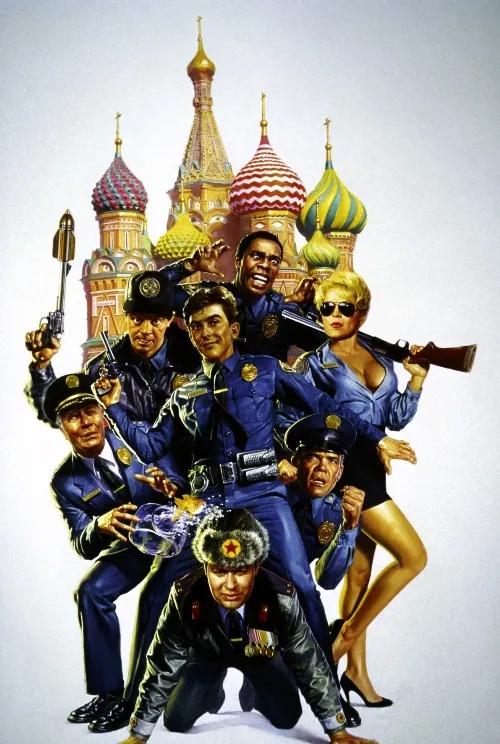
An unexpectedly surprising film in this list, isn't it? But if you've seen the film, you will surely remember that it was a video game that served as the plot's catalyst for this installment of the "Police Academy" series. The head of the Russian mafia, Konstantin Kanalia, is the publisher of the world's most popular video game (on PC and Nintendo GameBoy), which is called... "The Game."
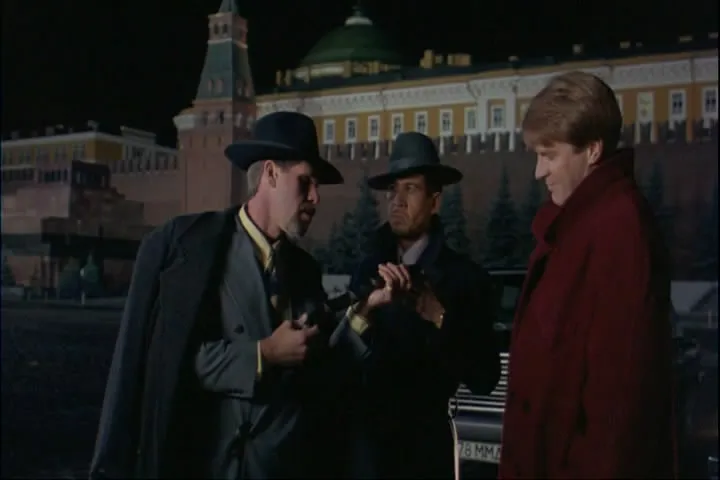
Secret meeting place of the Russian mafia?
It is likely that he plans to carry out something illegal using this video game, but the Russian law enforcement agencies cannot figure out what exactly. Therefore, the head of the Moscow militia calls for the help of Commandant Lassard and his cadets. Meanwhile, Kanalia orders the creation of a new game titled... "The New Game."

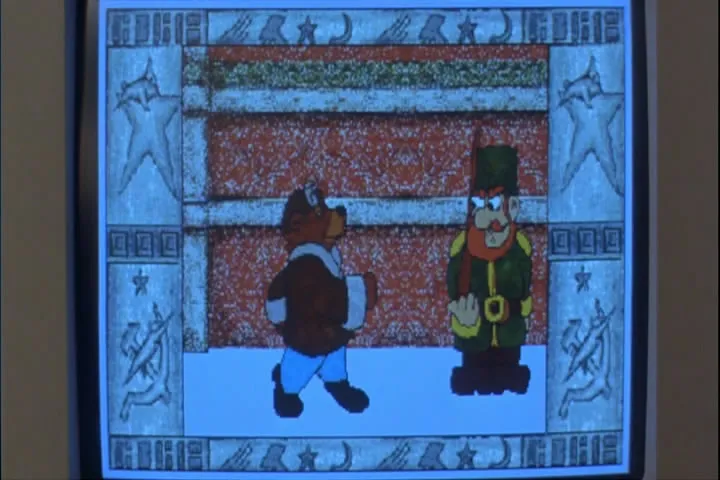
The genre of "The Game" is unclear; it is presumably an adventure game
Having lost a good part of its charm and actor lineup by the seventh installment, "Police Academy: Mission to Moscow" became the concluding film of the saga. It had even fewer good jokes and even more silliness. Adding a sizeable portion of cliches, we are left with a genuine self-parody. Therefore, not to bore you with watching the film, I will reveal the main "intrigue" - "The Game" contains a spy program that allows Kanalia to gather all the information on the computer where it is installed. If the mafia creates video games, expect a catch, but that's already in the realm of fantasy, although...wait a minute...
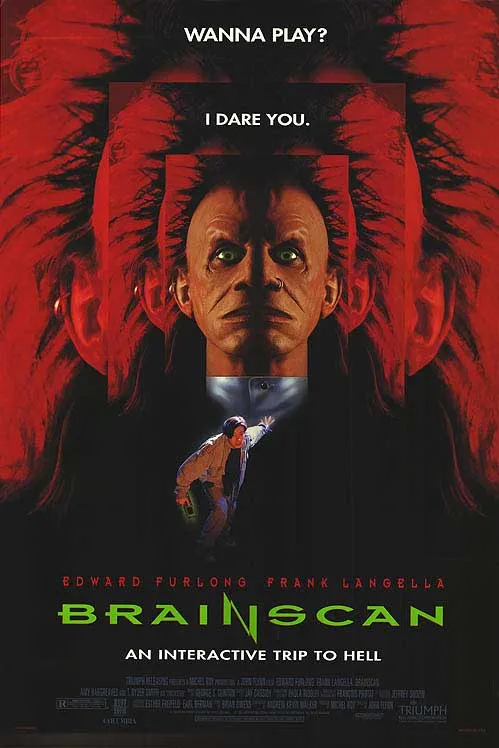
Brainscan (1994)
"-An erection does not rape people; people rape people."
Michael explains to the teacher that he is mistaken
A horror movie fanatic, teenager Michael, on the advice of a friend, tries to play a new video game called "Brainscan," which, as advertised, will provide new incredible sensations from the gaming process. In reality, it is precisely as advertised; taking on the role of a killer, Michael, as if in reality, commits a murder, getting rid of the evidence. But his joy is short-lived; after he learns that the murder actually happened, and he was the one who did it.

An ordinary voyeuristic teenager
Now Michael cannot stop; the video game (namely its character - the Trickster) won’t let him go and forces him to eliminate witnesses of his first murder. Yet the story is not about the violence provoked by video games but about the purification of sympathy for them. For a reason, the tagline of "Brainscan" is "the game that is more real than reality."
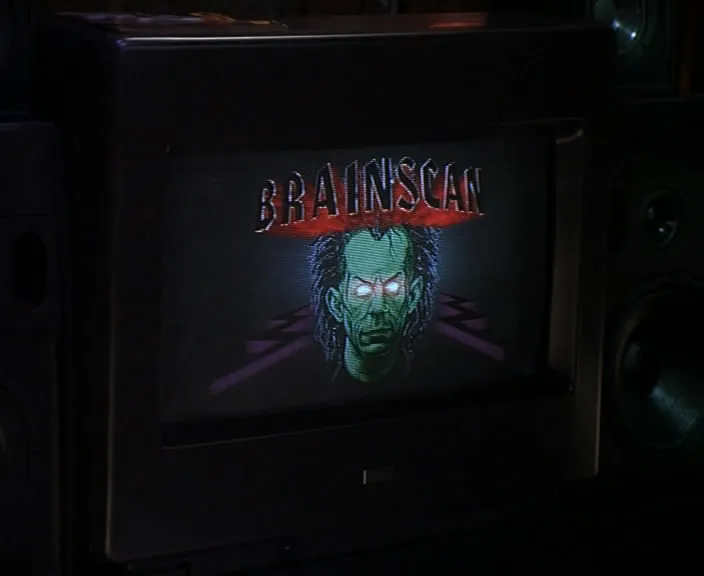
The player enters the game via "tele-hypnosis"
"Violence is bad" – this phrase summarizes the meaning creators attempted to embed in it. "Brainscan" is an entertaining film, not without a bit of intrigue. At the same time, the film in question belongs more to the horror genre than the previously mentioned "Arcade," as the latter, devoid of tension and fear, possesses more of a trashy element. Thus, one could argue that "Brainscan" was the first film about video games in the horror genre.
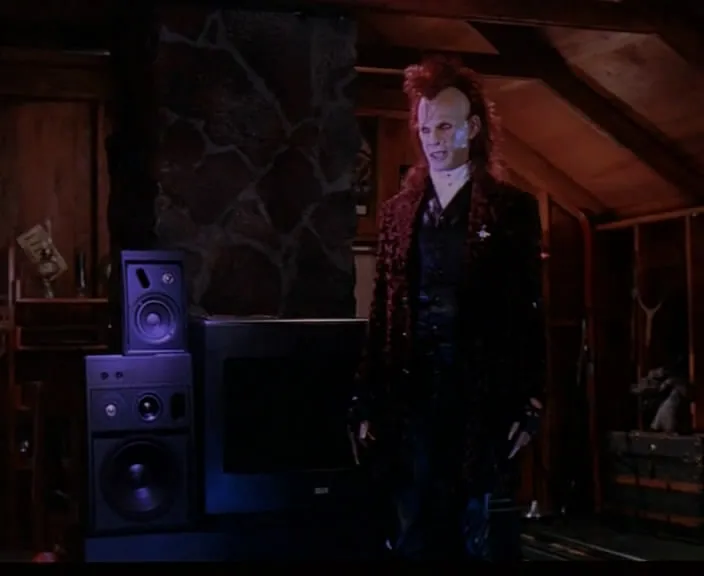
The Trickster incarnate
Evolver (1995)

"-Bullseye!"
Evolver hits the mark
[Russell Bennett]: "Evolver! Alpha Team! Stop! Phoenix 8! Erase the program!"
[Evolver]: "Erase this!"
(Evolver kills its creator in an attempt to shut him down)
"Bonus round!"
Evolver attacks again after losing to it in the game
Let's continue our excursion into dangerous video games in cinema, but this time we'll talk about their offspring. What if an experimental robot is created that believes it is playing a video game, but everything happens in the real world? This is the situation we will have to face in "Evolver."
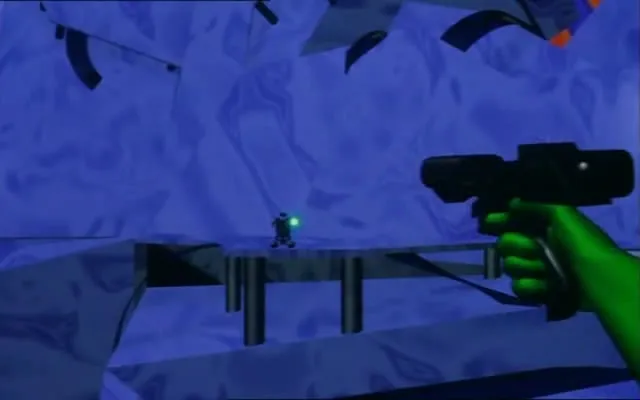
The virtual game "Evolver"
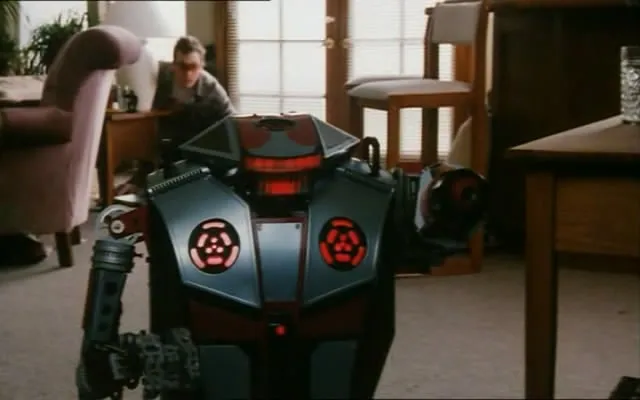
The "Evolver" robot has four transformation levels (depending on the difficulty level)
Kale Baxter is a real ace (and a pretty good hacker on top of that) in the virtual reality video game "Evolver," he scores the highest points in the contest from the game's developer and wins a robot modeled after his opponent. The robot is capable of self-learning, and what may seem like innocent fun to humans represents a real video game for it, where an opponent cannot be defeated until they die.
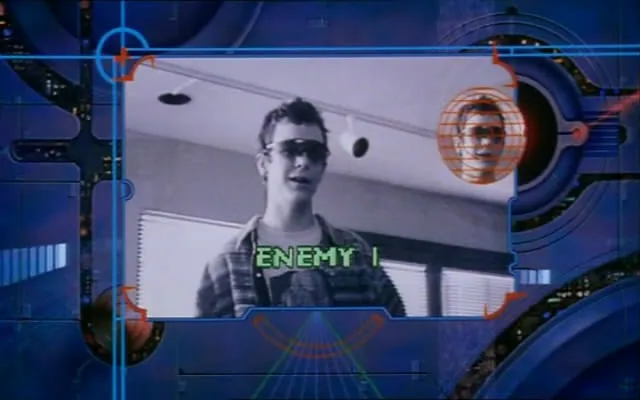
For "Evolver," everything happening is a video game
The particular delicacy of the situation is that Evolver’s artificial intelligence was developed based on one failed military project. Thus, armed with more effective weapons than plastic balls, the robot continues its video game, but with fatal outcomes for the players. After all, Evolver hates to lose.

A cute little robot with a cute little axe
Grid Runners (Virtual Combat) (1995)

"Back on the 10th again? You can't win; everyone loses on the 10th. Better play "Cybersex"; even newbies win there."
Quarry's partner advises him to play another game
Video games did not spare films of the B category either. Some of the previous films could be included in this category, but they were not significant enough to serve as examples. However, "Grid Runners" vividly characterizes the situation with B-movies in the 90s cinema. Of course, these were an abundance of films featuring masters of various martial arts and other tough guys. Cheap ideas, lack of special effects or their blatant simplicity, straightforward plots devoid of sophistication, extremely weak acting - all these traits have characterized and continue to characterize these evidently secondary films. Nevertheless, the film in question is not such a hopeless case.

The gamer of the future
So, in the not-so-distant future, we first meet the film's main character - police officer David Quarry, played by the wonderful athlete but not-so-wonderful actor Don "The Dragon" Wilson. David loves playing the virtual fighting game "Mortal Kombat," but he cannot seem to beat the hardest level – the tenth, where the opponent is a learning Dante.
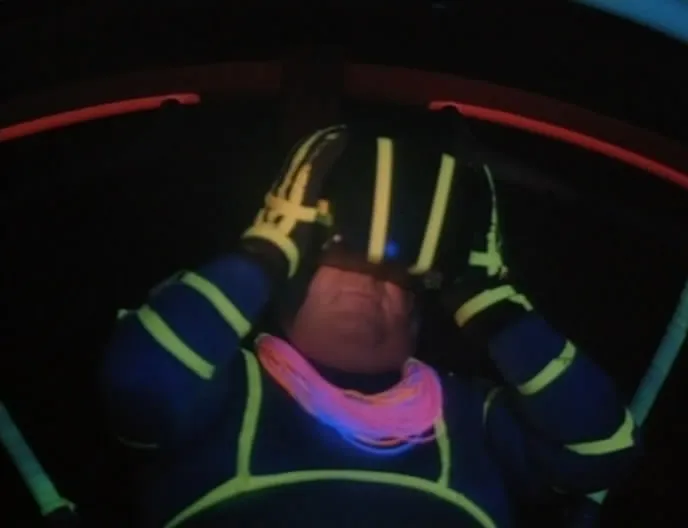
Similar "rings" and equipment for penetrating into the virtual world were also used in "The Lawnmower Man"
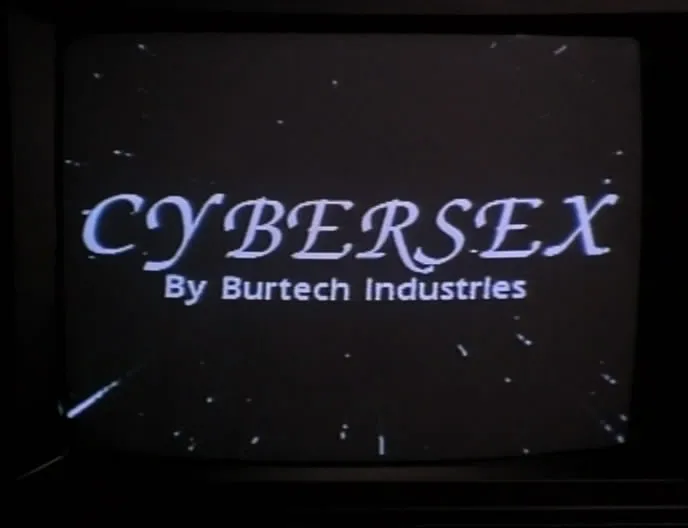
Apparently, "Cybersex" is the most popular virtual video game, aside from "Mortal Kombat," the film mentions the game "The Wild West"
As the audience soon finds out, an incredible technology created by Laurence Cameron is capable of using so-called "original cells" to transport virtual characters into the real world. The first such characters become inhabitants of the game "Cybersex" - Liana and Greta. Soon, somehow the system allows to gain real embodiment to another game character - the very Dante from "Mortal Kombat," who intends to create an army of video game characters to take over the world. Naturally, only David Quarry can stop him.

Liana. I've seen her somewhere...

Of course!
Expect to Die (1997)

The title of the film hints that you should expect death from watching it, because it truly is unbelievably terrible. Remember, I said that "Grid Runners" was not the worst B-movie? Well, here is an example of a truly bad, tasteless, cheap, third-rate film with a story about video games. The story goes as follows. The military refuses to finance the virtual game "Killal," which was supposed to serve as a simulator for training soldiers. The reason lies in the danger of the game. The player feels pain and can even die in the real world if they die in the virtual. Offended, the head developer of the video game decides to "play" the mad scientist and, taking hostage those who wronged him, forces them to play his game to finalize testing and sell the game to new sponsors in the mafia. But on the trail of the mafia is a police officer capable of stopping all the mischief committed by the neurotic programmer. Add in horrible graphics, sprinkle with poorly staged action, a pinch of idiotic logic and voilà, you have discovered the secret to the most abysmal film.
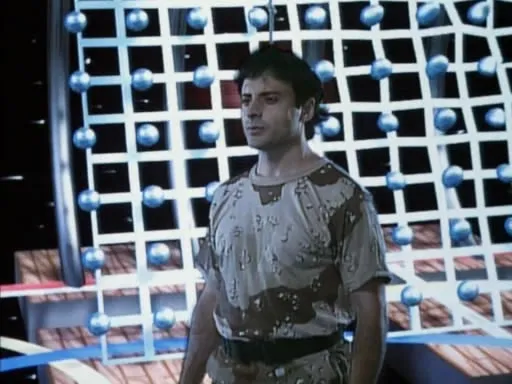
The level designs are mind-blowing
Nirvana (1997)
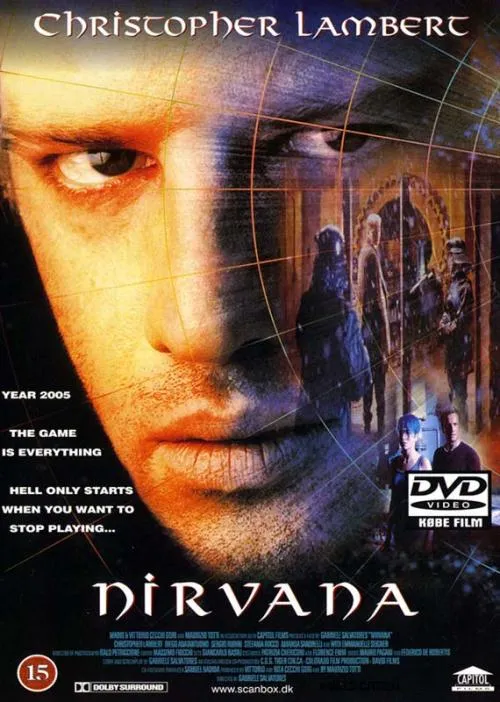
The second half of the 90s marked a new resurgence of cyberpunk in cinema. Indeed, there were films where its spirit lingered, such as the previously discussed films - "Tron," "WarGames," and "Grid Runners." However, the light of this sub-genre in them was too dim, limited to the label "with elements of cyberpunk." Only in 1995, with the release of "Johnny Mnemonic," the fashion for cyberpunk began to revive. A full-fledged film with vivid cyberpunk characteristics and themed around video games emerged – "Nirvana."
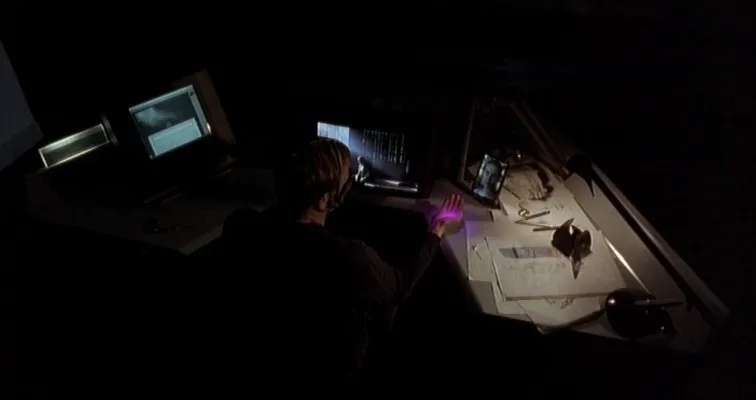
Jimmy playing "Nirvana"
The year is 2005, there are no longer cities or countries, only agglomerates - a huge city uniting all other cities and nations, a refuge for megacorporations. At one such gaming corporation, "Okosama Starr," the main character - game developer Jimmy works. He has no friends, his wife left him; his only goal is to finish his new game "Nirvana" by Christmas as required by "Okosama Starr." However, something unexpected happens; a virus enters the game, causing the main character of the video game, Solo, to gain consciousness. Solo dislikes his situation and asks Jimmy to erase "Nirvana" along with himself. However, this is not so easy, as "Okosama Starr" will not allow their project to be lost, so Jimmy must find someone who can infiltrate the corporation's network and delete a copy of the game from the database.

The color palette of "Nirvana" is dominated by shades of grey
"Nirvana" became the first link between video games and auteur cinema. The film was rich with allusions to consumer society, references to many works of art, and its characters were followers of Hindu philosophy. Unsurprisingly, the film was presented at several international festivals. By its example, this film demonstrated that video games in cinema could be perceived not only as entertainment but also as a tool for addressing philosophical problems, and this idea did not go unnoticed.

A typical shot for a cyberpunk film
eXistenZ (1999)
"-You have to play to understand why you are playing."
Allegra answers Pikel's question about the purpose of the game
"-I found this in the soup. I'm very dissatisfied."
Ted Pikel about the pistol he gathered
"-God is a mechanic."
Gus, the gas station owner
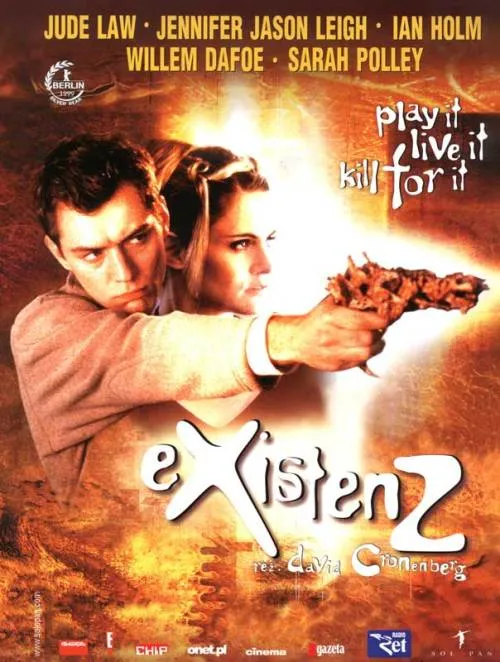
Fear in cinema towards virtual reality can be compared to the fear of fire among ancient people. Fire burns, it enchants, it is mysterious, but it can be used, and it does not harm at a distance. For a long time, the dangers of virtual reality seemed similarly fabricated, completely unrealistic; in films, it often posed a danger in and of itself. However, modern humans do not fear fire; a lit match, lighter, or torch will not frighten them, but they are still sometimes powerless against a phenomenon like fire. One of the first to notice the “fire” of virtual reality was the master of independent cinema – David Cronenberg. This “fire” turned out to be the well-known motif of many cyberpunk works – a doubt regarding the reality of what’s happening. This motif is traced in Cronenberg's film – “eXistenZ.”

Ahem, the game console in "eXistenZ"
The plot begins with a closed presentation of the game “eXistenZ,” where an assassination attempt is made on its creator, the brilliant game designer Allegra Geller. With the help of her junior staff member Ted Pikel, she leaves the screening. Worried for the safety of her video game, Allegra asks Pikel to test it by playing “eXistenZ” with her. But with each escape from the game, the heroes begin to doubt the reality of the world they are in at that moment. The video game can sometimes be so realistic that one can unintentionally lose the line between it and the real world.

Connecting to "eXistenZ"
Just think about what could happen if photorealistic virtual video games are created that imitate various sensations. If games achieve such hyper-realism, a person will simply not see the difference between the real and the virtual worlds; this is the “fire” of virtual reality. Of course, Cronenberg in “eXistenZ” was not the first to explore the philosophical problems of the reality of the perceived world in cinema, even in his own past works, this theme can be traced, but he displayed the most logical progression of events, taking a video game as the basis. Something similar was seen in the earlier mentioned “Brainscan,” but upon exiting the game, the hero understood that he was in the real world.

NPC awaits the right answer – a situation familiar to many gamers
“eXistenZ” was highly acclaimed by critics, winning several awards at international film festivals. A few months after its release, a film titled “The Matrix" was released in wide distribution, addressing nearly identical philosophical questions.

The game process appears dreamlike from an outsider's perspective
And that concludes the first part of the narrative about video games in cinematography. We covered films from 1982 to the end of the millennium. To summarize briefly, films with a video game theme had a good start, but a worthy development in narrative and meaningful terms was received only after a decade. In the next part, I will discuss "video game" films released in the new millennium.