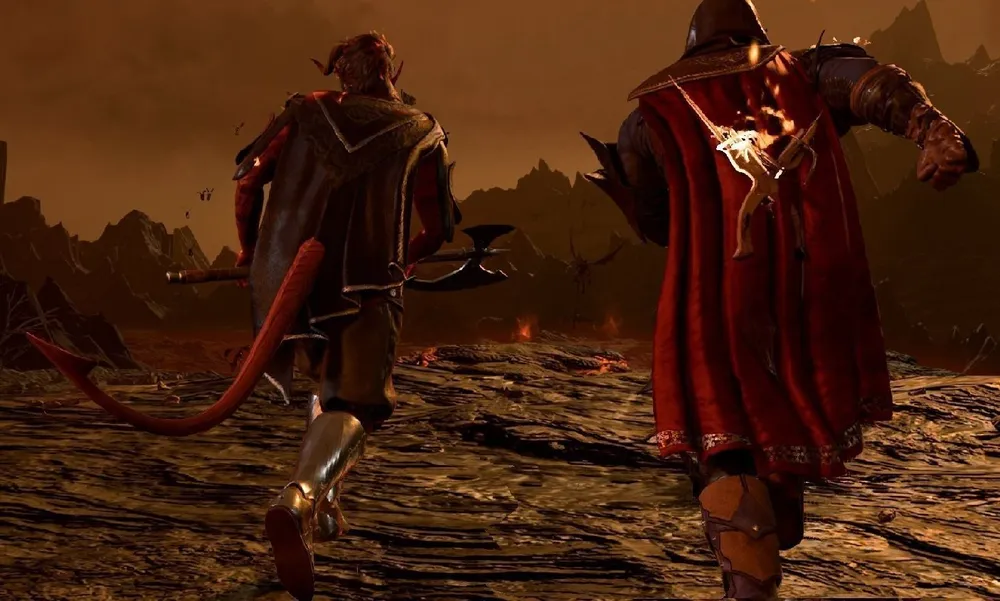
"Baldur’s Gate" (1998) and "Baldur’s Gate – III" (2023): Is it comparable? Absolutely!
Dedicated to Ilya Dekhtiar, Yulia Guseva, and Radoslav Romanov.
"I've played many times over twenty years, for 2000 it's madness, not a game. For the gaming genre, it's a benchmark and an era. The game is beautiful in its imperfections, its thoughtfulness, and the plot that you live through... I know no better game... BG is not just a game. It's a part of my heart... I'm glad it was with me."
28.09.2022, Txtt
"The turn-based combat model brings nothing new to the game and drags the process. The role-playing model through die rolling doesn't make the game more interesting, it just turns the project into one big random mess that forces you to restart saves upon unsuccessful plays."
28.08.2023, DanyaShepard
Dear readers, before you begin familiarizing yourselves with the material, allow me to address board game lovers: gentlemen and ladies, youths and girls, boys and girls, I absolutely do not care which edition of the [Dungeons & Dragons](/games?search=Dungeons & Dragons) rules the computer games are made from; I am comparing not the rules, but the good or bad they brought into each game. I repeat: we are discussing computer games, not board games; please refrain from "waving" rulebooks in the comments!
One more thing: I have been playing "[Baldur’s Gate](/games?search=Baldur’s Gate)" since it came to our market, I have completed the game dozens of times, and thus, I can compare the first to the third part: I will try to be impartial. (For convenience, I will refer to the discussed games as "the first" and "the third.") So, let's get started!
CREATING A HERO
In the first there are only six races, in the third - eleven, plus twenty-eight subraces: a huge choice! In the first, there are nine main classes; in the third, twelve, which isn’t such a huge difference; however, in the third, there are a vast number of subclasses, mostly available not immediately but as the hero progresses.
And also, the third has "Origins" providing surprising combinations. For example, a "pure" paladin - a knight of light and good! - being a "wanderer" by origin can perfectly go into the shadows and sneak into the pockets of those he should protect and save. Moreover, without losing his status! Isn’t that strange?
"The most delicious" and important aspect of hero creation is the generation of attribute scores. Strength, dexterity, constitution, and other characteristics of the hero in the first part depend solely on the persistence of its creator sitting in front of the monitor and "clicking" with a mouse: the total sum of characteristics changes with every "click." Like the obtained result? Save it and continue further - who knows, you might get luckier?
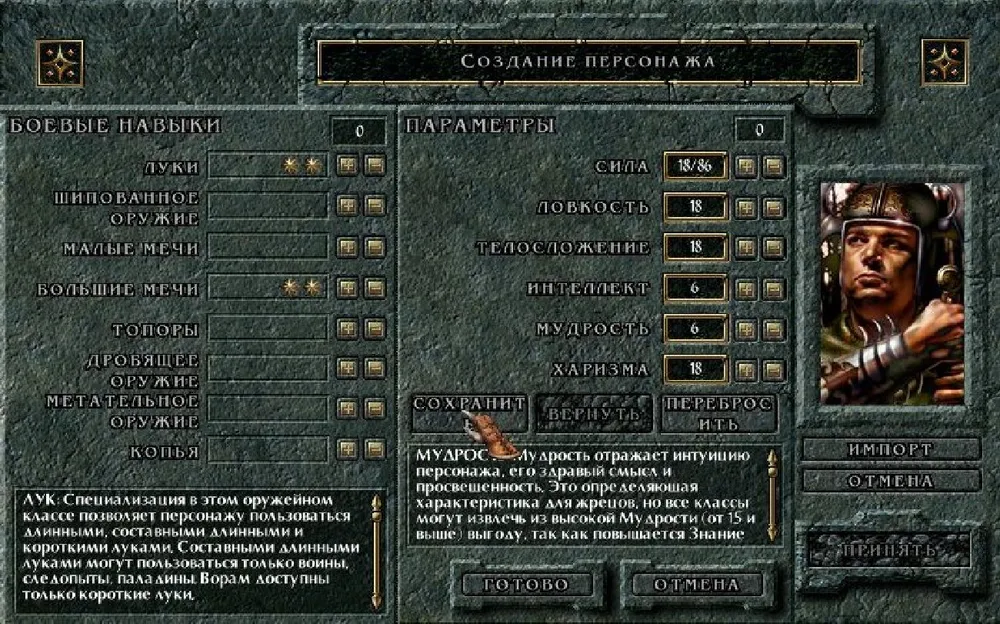
Alas and alack: heroes in the third part are deprived of such magnificence - regardless of race and gender, everyone is given the same amount of points. Moreover, if you "deduct" a couple of points from one of the scores, that does not mean the leading characteristic will increase by those same two, as it was in the first part. As if that weren't enough, the maximum scores for some initial characteristics are not odd, as in the first part, but only even ones bring a visible effect.
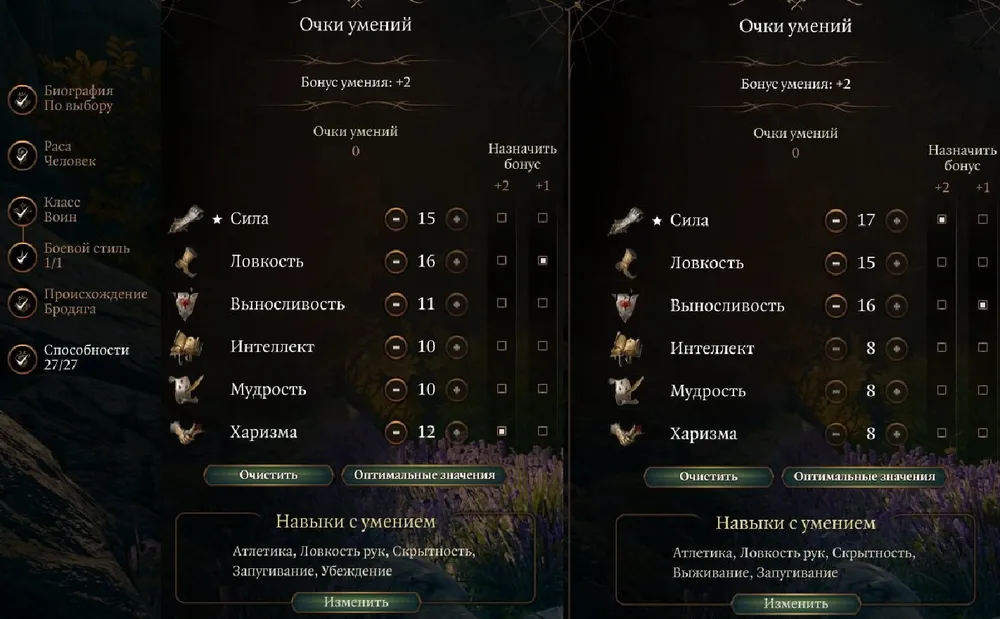
Is this... interesting?
By the way, in the first part, there were racial bonuses to characteristics: elves and halflings started the game with dexterity 19, dwarves with constitution at the same 19. A dwarf hero could find a book within an hour of starting the game that permanently increased his constitution by one, boosting his score to twenty - and achieve permanent regeneration. Quite good, especially in the absence of a cleric or druid in the party. Alas, heroes in the third part are deprived of racial bonuses to characteristics...
Of course, in the third part, you can increase attributes later: for example, after reaching the fourth level, when the option to choose "Traits" appears. But you can only choose a "trait" three times during the game — out of a total of forty-three possible choices! So decide what you need, and be careful not to make a mistake! Especially if you're playing the game for the first time...
And what about the first? If everything is available right away, isn't it possible to increase characteristics during the game? Yes, in the first there are books of charisma, strength, dexterity, constitution, intelligence — and three books of wisdom; reading these will permanently increase the respective characteristic of any character by one point. (Thus, for example, you can raise the intelligence of the thief Safana and "dual-class" her into a mage: we get a thief-mage, a good combination.) True, not all books can be found at the beginning of the game, but nothing prevents you from exporting the character and starting the game over: all the contents of his "backpack" (except for gold) will be saved. (In the third part of the game, there is no option to export the hero.)
Creating a hero: one-zero in favor of the first part of "[Baldur’s Gate](/games?search=Baldur’s Gate)".
MULTICLASSING
You can create a multiclass hero in each of the games, but there are two significant differences: in the first, there are only twenty-two multiclass characters, whereas in the third, there are as many as you want (for some reason, only from the second difficulty level onward), which sometimes leads to slight bewilderment. In the first, the multiclass is determined immediately, during the generation of the hero, its levels increase sequentially; in the third, after reaching the first level, the distribution of multi-levels can be controlled, and there are no restrictions on the choice of the second "profession."
Is this... interesting?
For example: starting the game as a thief immediately after the first level-up, the hero can become... a paladin?! A knight of light and good pockets the wallets of passersby, robs merchants, picks locks on strangers' chests, and delivers sneaky blows from the shadows?! Without losing his status?! Seriously?! For the first part, those were absolutely incompatible classes, not only due to the difference in alignments; not to mention that in the first, only humans could become paladins, this class was not available to other races.
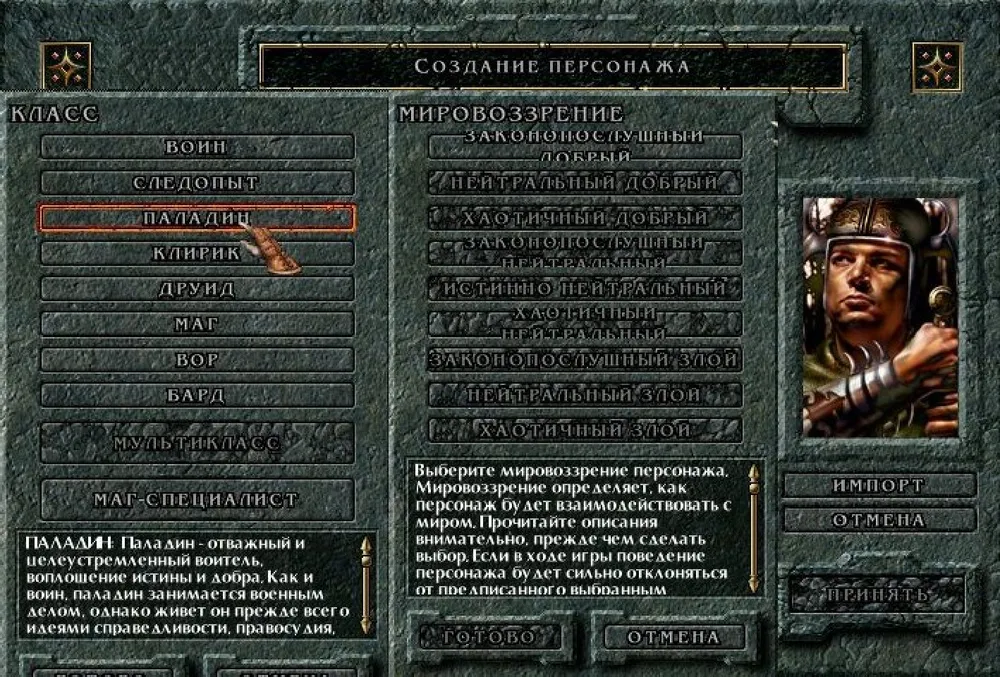
Moreover, the third part lacks the magnificent "feature" of the first: dual-classing. This joy was available only to humans (in return for which they were deprived of the not-so-necessary multiclassing): upon reaching the second level, a hero, meeting certain conditions, could switch his class to another, so as to apply abilities from both specialties after gaining a third level in a new class.
This is interesting!
Unfamiliar with the system, readers might say: "Isn't that the same as multiclassing?" "Nothing of the sort!" - I will reply. Classic multiclassing does not allow reaching the maximum level in any chosen class, while a dual-class hero (dual class) becomes a professional in the second chosen specialty. Example: a warrior becomes a thief after the third level, gaining four levels on a new path, transforming into a warrior-thief. Such a hero, outside of thieving actions, wears heavy armor, a shield, and a helmet; uses a long sword in close combat three times better than a thief (accordingly, sneak attacks also deal greater damage); shoots a bow twice better than a plain thief, has a greater hit point pool, and is much stronger. At the same time, he will reach almost the maximum level in the chosen thieving specialization! Magnificent! However, there are restrictions: a warrior who chooses the "lawful good" alignment cannot become a thief, his alignment is unsuitable! He also cannot become a thief if his dexterity is below seventeen: a clumsy thief is no use to anyone!
The saddest thing is that even if a dual-classing option were introduced in the third, it would not give any advantages to representatives of the human race, and here’s why. All classes in the first require different amounts of experience to reach the next level: the least points are required for a thief, the most for a mage.
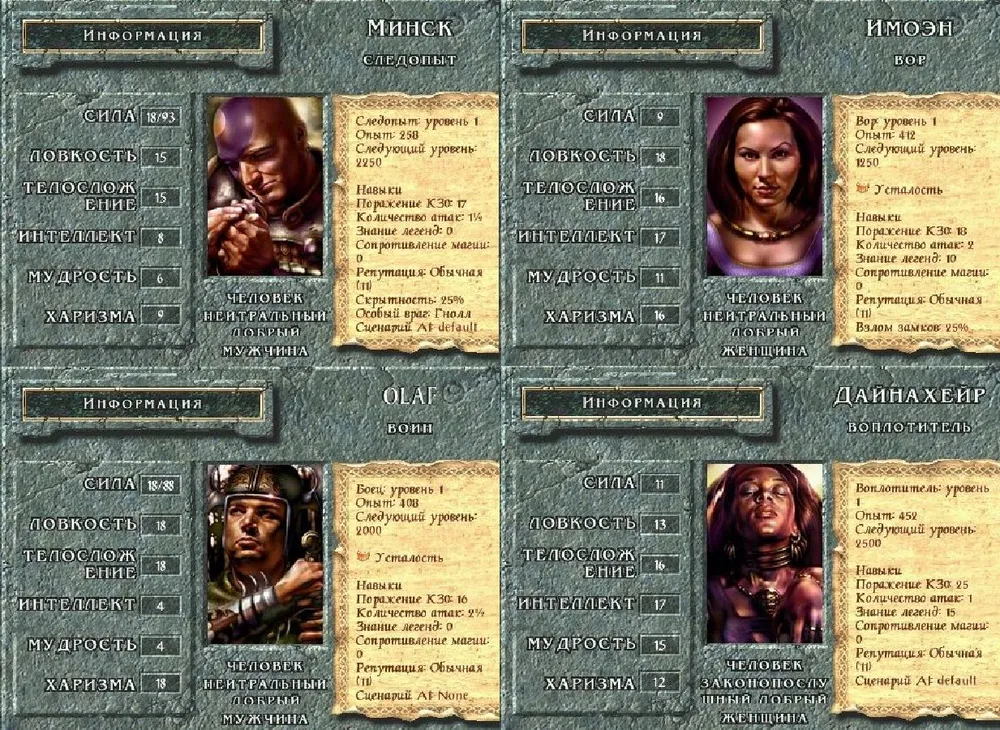
Thus, a thief dual-classed into a mage at third level would reach the same skill level by the end of the game as a mage – ninth, but his total level would become twelfth; a thief-mage would have decent thieving abilities and would understand weaponry much better than a mage. An even greater advantage will be found in a warrior dual-classed into a mage...
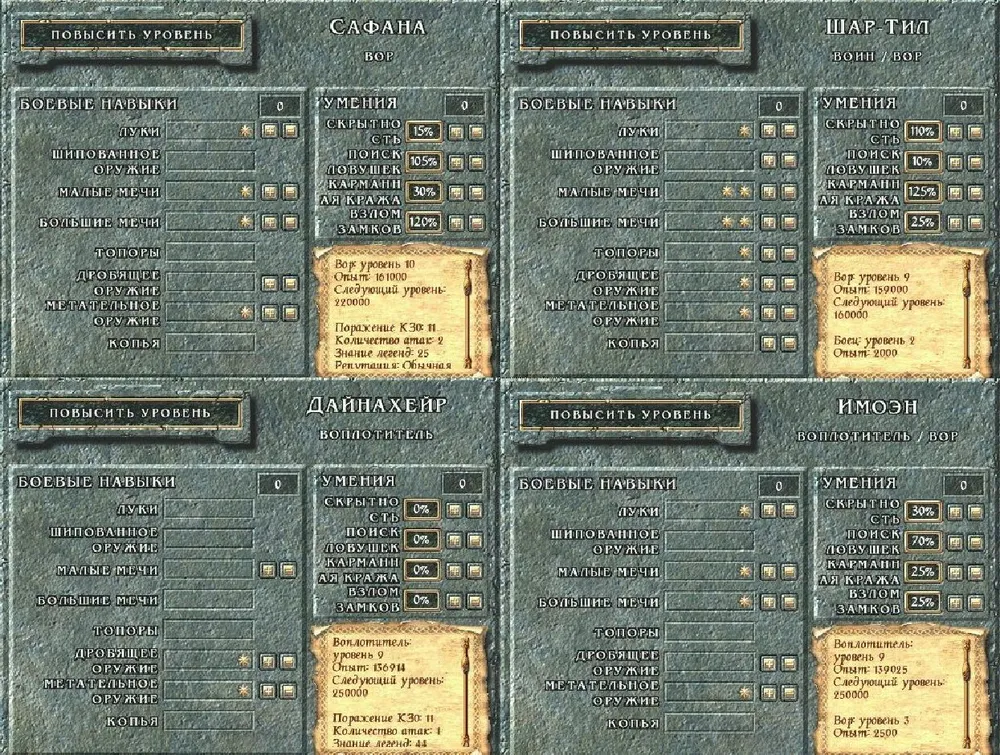
For heroes in the third, leveling up requires the same amount of experience: be it a mage or a thief... Because of this peculiarity, dual-classing loses all sense: for the total number of hero levels will remain the same. In fact, multiclassing in the third does not bring any significant benefits either, for the same reason.
So, in multiclassing: one-zero in favor of the first part of "[Baldur’s Gate](/games?search=Baldur’s Gate)".
HERO ALIGNMENT, HIS COMPANIONS AND SQUAD REPUTATION
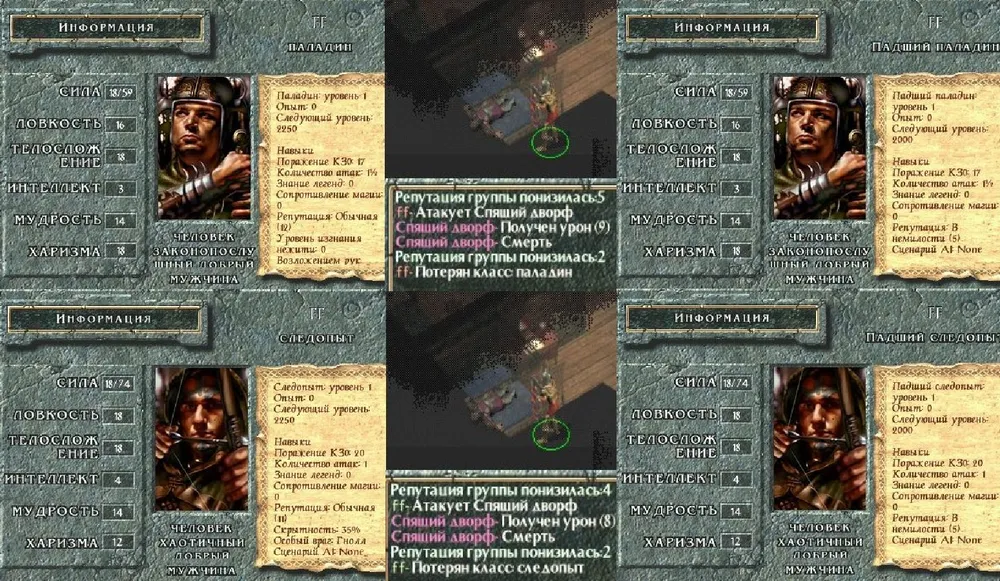
For some reason, the third part lacks such a useful feature of heroes as alignment... It was precisely due to his alignment that the main paladin hero in the first could not commit criminal or evil acts: if he irresponsibly applied an exploding potion, injuring a peaceful passerby – he immediately and permanently lost his status, turning into an ordinary warrior. (The same applies to the main ranger hero.)
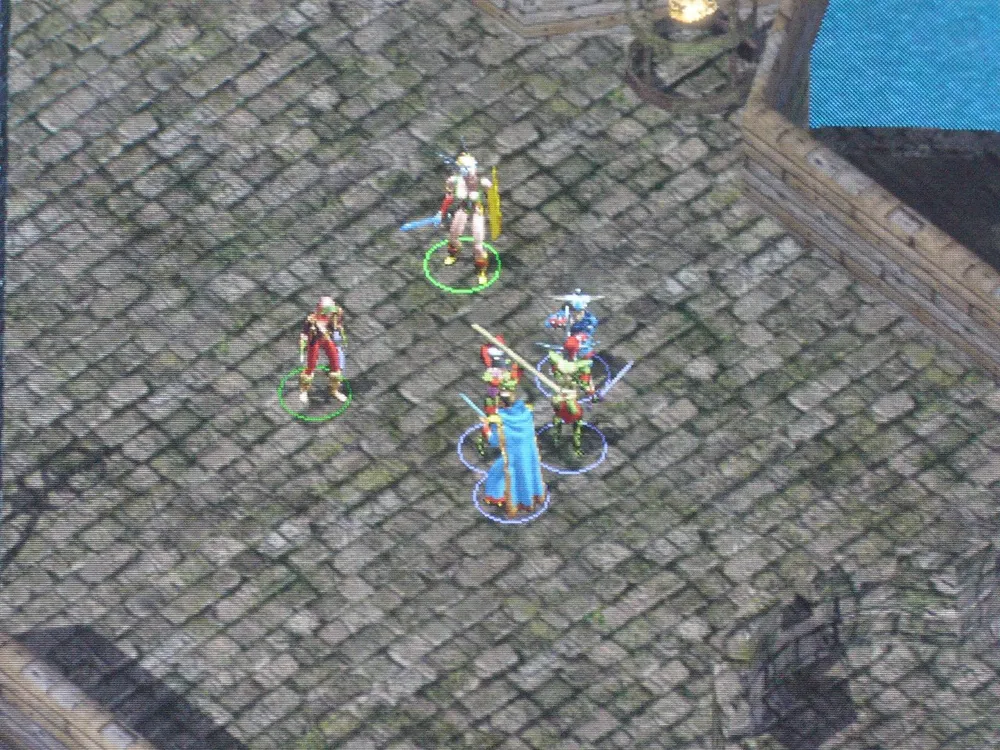
Alignment also played a role in dual-classing: a warrior who chose "lawful good" would not be allowed to become a thief; a thief can be "neutral good" or worse. Moreover, alignment was significant when assembling a squad: "evil" and "good" companions of the hero did not coexist well together, sooner or later, the conflict would escalate into a deadly duel. (During one of my playthroughs of the first part, Khalid and Jaheira fought with Kzar and Montaron right after they joined the squad!)
This is interesting!
Perhaps the hidden alignment in the third part depends on the hero's race. Orcs, duergar, and drow are evil by definition. However, Zaknafain, Drizzt Do'Urden, Jarlaxle, and Solaufein would not agree with this statement.
In the first part, the squad has a reputation: the higher it is, the lower the prices in shops (and they are much higher in the first part than in the third!). Reputation can be increased by bringing light and goodness to the people, or by making donations in temples. But it is very easy to lose it by committing unintentional murder of a peaceful resident; destroying a guard that caught a thief in the act; retrieving Drizzt's gear or accepting Viconia into the party.
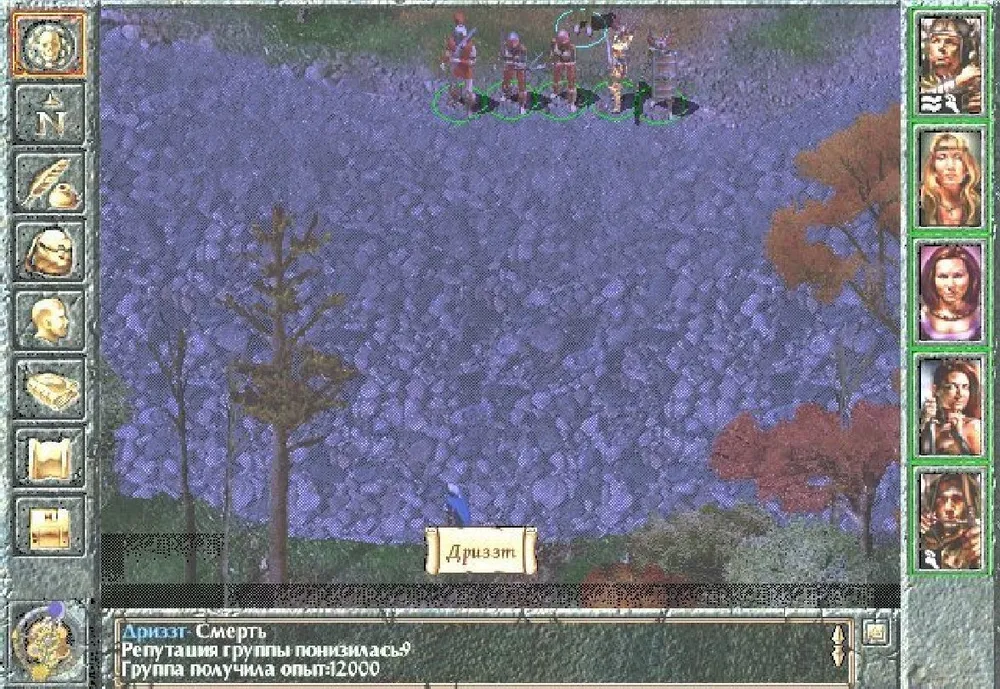
Moreover, evil companions of the hero dislike increases in the squad's reputation and may leave it when it becomes too high; while good allies will abandon the hero in the event of a fatal drop in reputation.
By the way, dropping the squad's reputation to "Hated" may lead to the appearance of endless punitive forces, which will eventually wipe out the entire group.
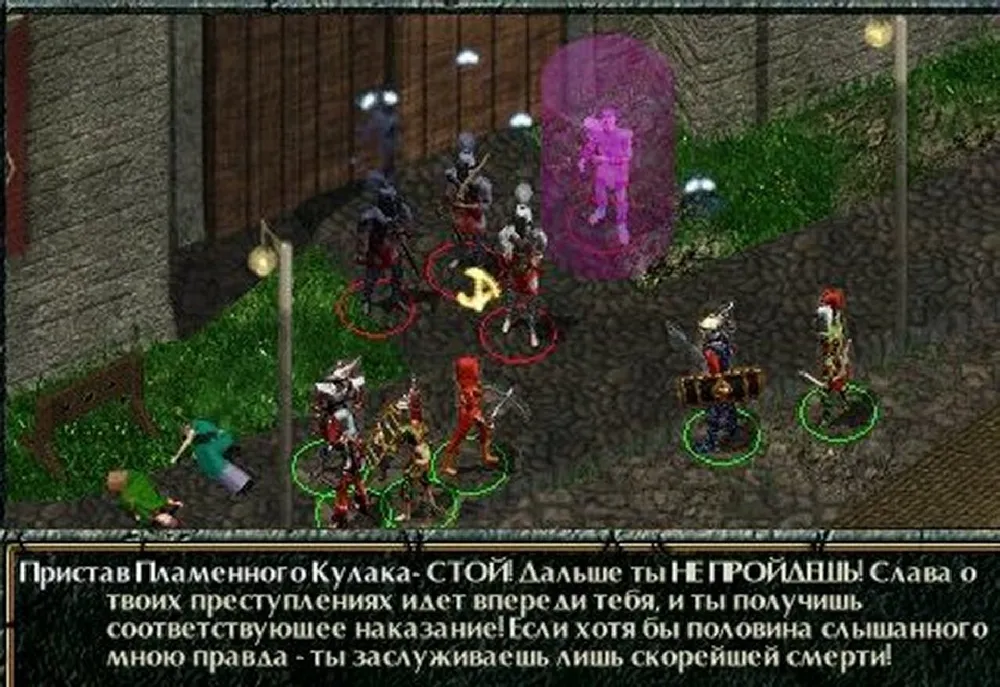
On the other hand, the third part's squad is free in its actions: kill whoever you want, as long as it’s not in front of a large number of witnesses. And if someone is offended – you can simply bribe them. Thus: heroes in the first lower prices through good deeds; while in the third, by bribing merchants (only to then steal back the bribe amount.)
This is interesting!
High reputation of the squad in the first part sometimes plays a role in encounters with enemies: it is possible not only to avoid combat but also to convince them to escort your party through a dangerous area.
Alignment and reputation: one-zero in favor of the first part of "[Baldur’s Gate](/games?search=Baldur’s Gate)".
With that, the discussion about creating a hero can be considered finished, let us move on to his combat companions.
HERO’S COMPANIONS
In RPG, a hero is defined by his entourage, which is fairly numerous and diverse. In the first part of the game, there are no issues in this area: a full twenty-five potential companions, to suit every taste.
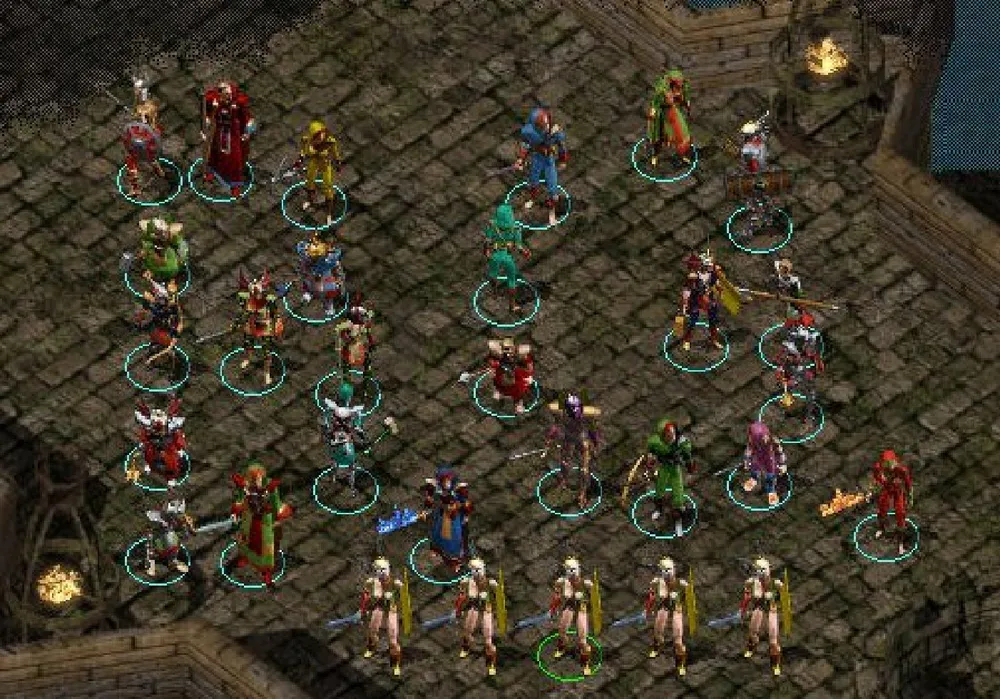
You can create a purely thieving, female, magical, or warrior party. However, among the candidates are four pairs, and not every member of such a pair is equally useful, but they can easily be separated in several ways.
The protagonist in the first part has five companions, and the best, most necessary for a young hero and the most devoted of them joins at the very beginning of the game: Imoen. Not all candidates have personal quests, but it’s best not to argue about those: after the third reminder of their problem, they will leave the squad, taking with them the loot that was painstakingly earned and the gear given to them.
Is this... interesting?
Any companion of the hero in the first part of "[Baldur’s Gate](/games?search=Baldur’s Gate)" joins the squad without harsh conditions, only mentioning their problem. A companion in the third, the druid Halsin, being rescued from prison, does not rush to express gratitude: I will stay in your camp and wait until you complete my personal quest, and then we'll see...
Three companions are ready to join the hero in the third part. Those who have played the first part may immediately wonder: "How three? Only three permanent companions?!" Alas: yes, indeed only three. Few, exceedingly few! True, all potential candidates are in the camp after the introduction and are ready to join at any moment, but is it worth swapping party members?
No matter who you started the game with, you don’t want to part with those who initially helped the protagonist: with Shadowheart and Lae'zel. There’s only one spot left... It would be good to take Karlach for her charisma (What?! Only ten points?! I would have given her twenty!) and unique story. It would be nice to invite a mage and druid, a thief is also needed. They say there’s an old acquaintance up ahead – Minsk, it would be good to leave a spot for him... Counting: a warrior, cleric, druid, mage, thief, ranger, barbarian – seven; and spaces in the squad total four... It seems like a subpar party!
Moreover, it turns out unexpectedly that at certain moments you will still have to change the party composition: the Call of the Absolute cannot be completed without Shadowheart; rumor has it that Minsk cannot be taken into the party if Jaheira is not present; it’s only possible to save Taniael with Halsin included; from the Illithid colony beneath the Moon Towers, you cannot return to the camp to switch companions, and the released Mizora will only give the unique weapon to Will if he is present in the party; it is here that Gale can fulfill Mister's quest: to blow up the Absolute. But what to do if none of those listed are in the party? And how does one learn about these subtleties for someone playing for the first time?
I personally really dislike "switching" companions; I would have preferred a permanent party composition of six adventurers. And if a need arises to temporarily take someone else to complete their personal quest – let it be a "pet," like Jaheira during the battle with Keterik Torm.
Honestly, I was hoping that I would meet characters from the first in the third part: Kivan and Koraan – elves, could very well have survived, especially since Koraan had been to Baldur's Gate before he met the hero of the first part. Additionally, cleric Branwen (and not just her!) was freed from petrification by the hero: why couldn't some of the "old" companions wait for the new hero in such a form? And finally – Imoen! Surely I expected to meet her: the daughter of a god must live for at least a few hundred years.
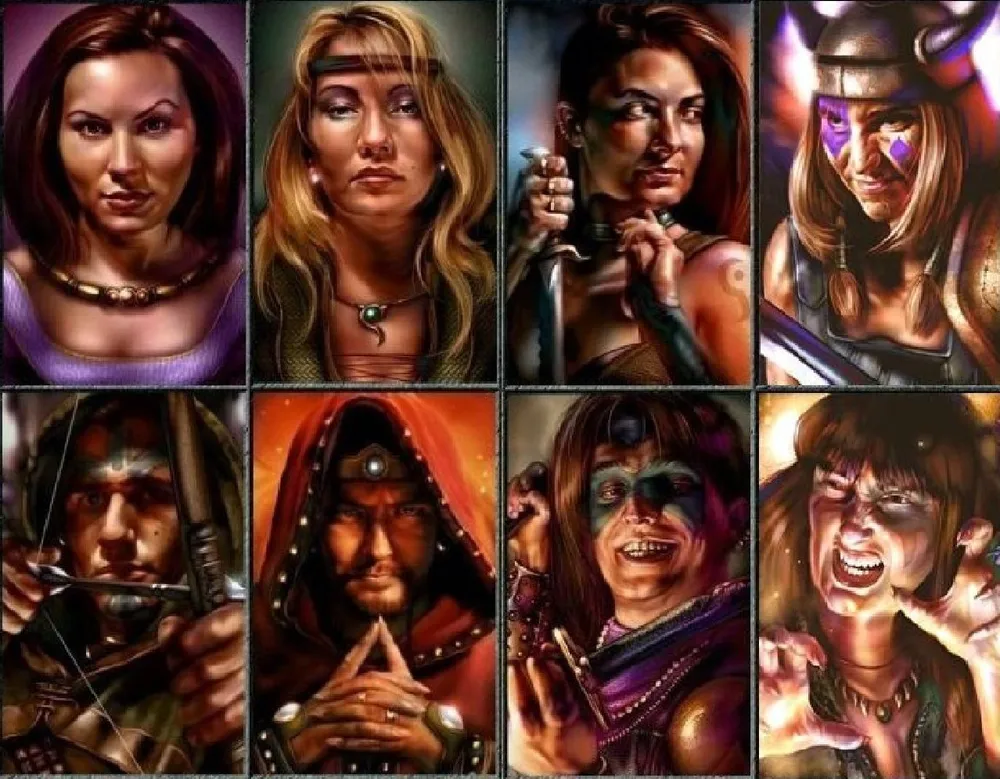
And yet: there’s Jaheira... Arguably one of the most useless characters at the start of the first part of the game; she is no warrior, a weak druid: due to her multiclass and characteristics, she cannot achieve either outstanding martial skills or the best druid spells. The very same Jaheira, who in the second part twice abandoned the party, going off on her own, and whose friends, the Harpers, nearly killed the main hero.
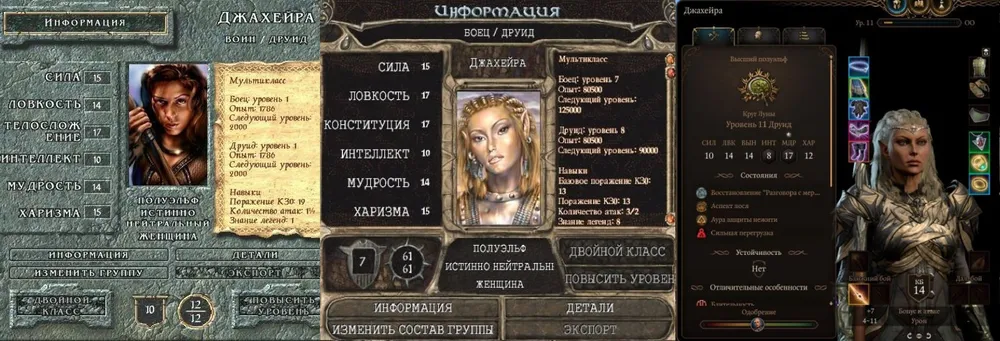
I would have been happier had Imoen, Safana, Branwen, or Shar-Til been in her place, but Jaheira?! What’s more: she dares to call herself a friend of Minsk! After having continuously insulted and belittled him in the second part!
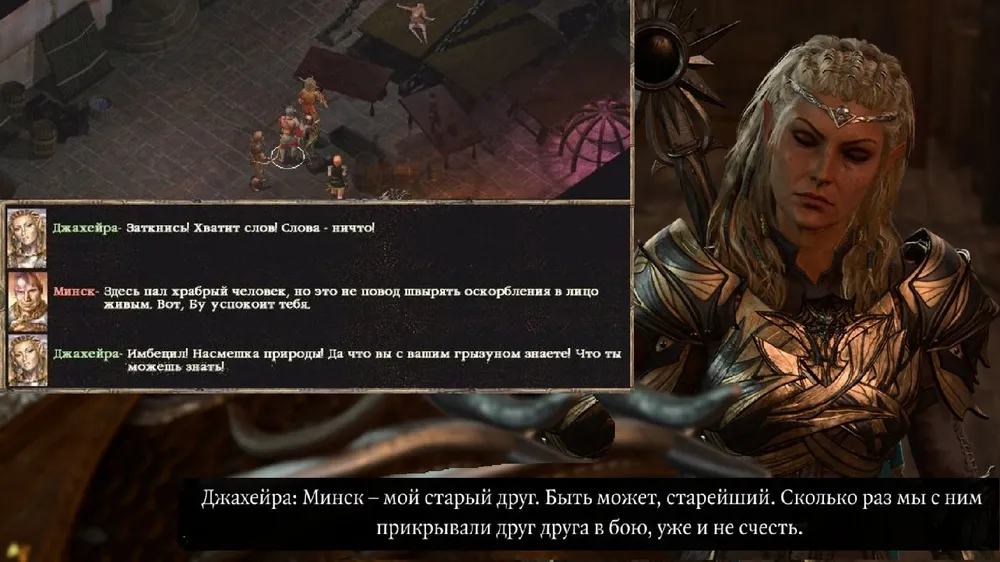
And what’s worse: Minsk cannot be invited into the party if Jaheira is not there. Moreover, in the first part, Minsk was a "paired" hero, but they both joined the squad even after the death of the other half.
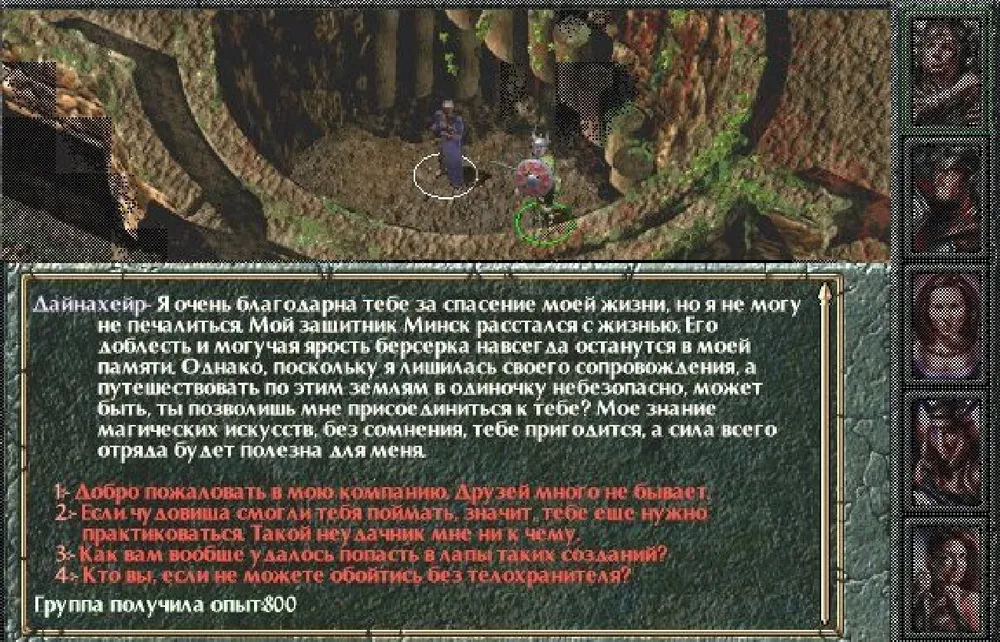
By the way, the creators of the third part of the game have unfairly offended both Minsk and those who had known him before. Judge for yourself: the strongest companion in the first and second parts of the game is now deprived of strength (which cannot be said about his appearance);
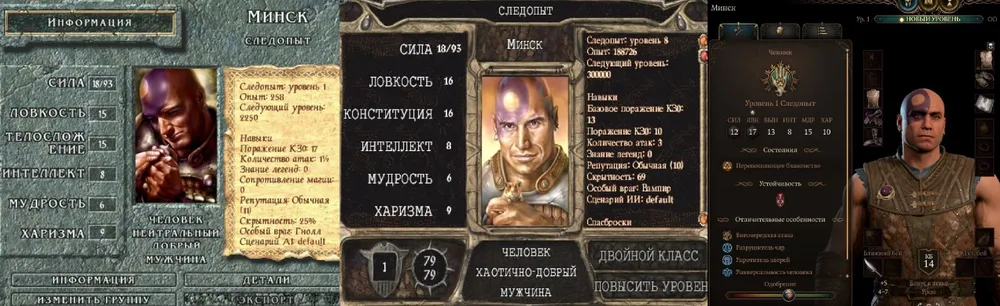
he lost the ability to fly into a berserker rage; he has lost his famous battle cry (now he only occasionally summons Boo to attack, without then letting out a thunderous roar accompanied by a hamster’s squeak).
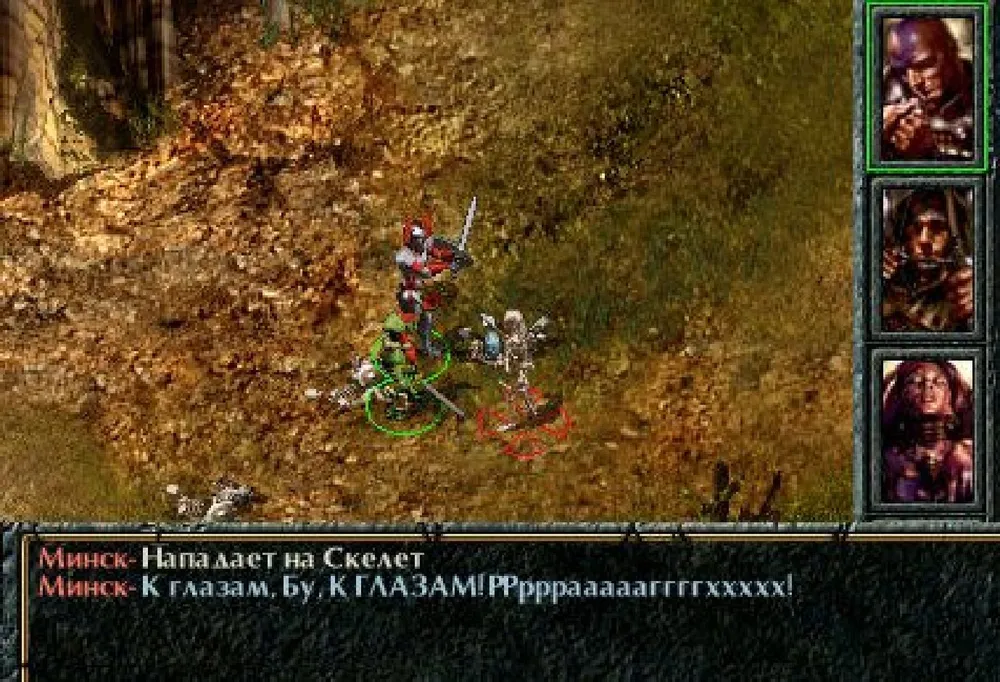
As for Boo, his inseparable companion, he now seems to be in another dimension and needs summoning...

I won’t discuss the other companions of the hero in the third part of the game, but I will note that in my humble opinion, Karlach is worth more than all of them put together. By the way, companions in the third part can be invited into the party - as well as expelled from it - as many times as you wish; companions in the first part are endowed with a strong sense of pride: you can dismiss them from the party no more than three times, after which they will refuse to join (except for Imoen).
On the other hand, the creators of the third part calmly returned the annoying Nuber (or his equally annoying descendant) to it.
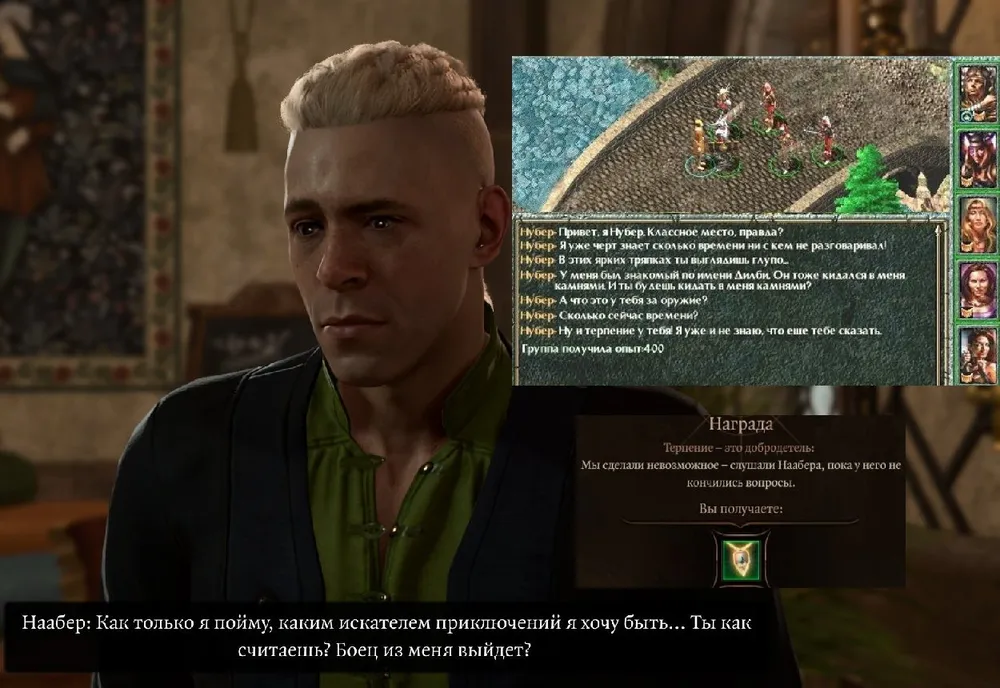
As one journalist wrote in a review at that time after encountering Nuber in the second part: "The next encounter makes you think poorly of the developers. No, very poorly!"
Hero’s companions: one-zero in favor of the first part of "[Baldur’s Gate](/games?search=Baldur’s Gate)".
GAME EXPERIENCE AND SOLO PLAY
After playing a bit in the first part, one could - despite the ominous warnings from reviews at that time! - complete the game with a single character. Of course, dual-class heroes suited this purpose best: warrior-thief, warrior-mage, warrior-cleric and mage-warrior (the first and last are a real nightmare for enemies of both parts: well, yes, the hero of the first could be exported into the second).
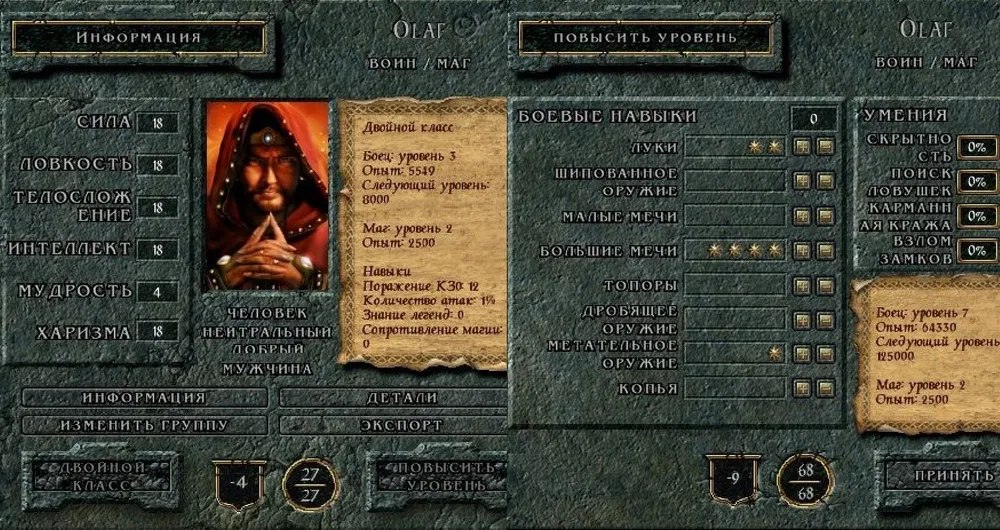
And the first part of the game had a tremendous premise for solo play: experience from completing quests or defeating enemies was divided among the number of companions in the party.
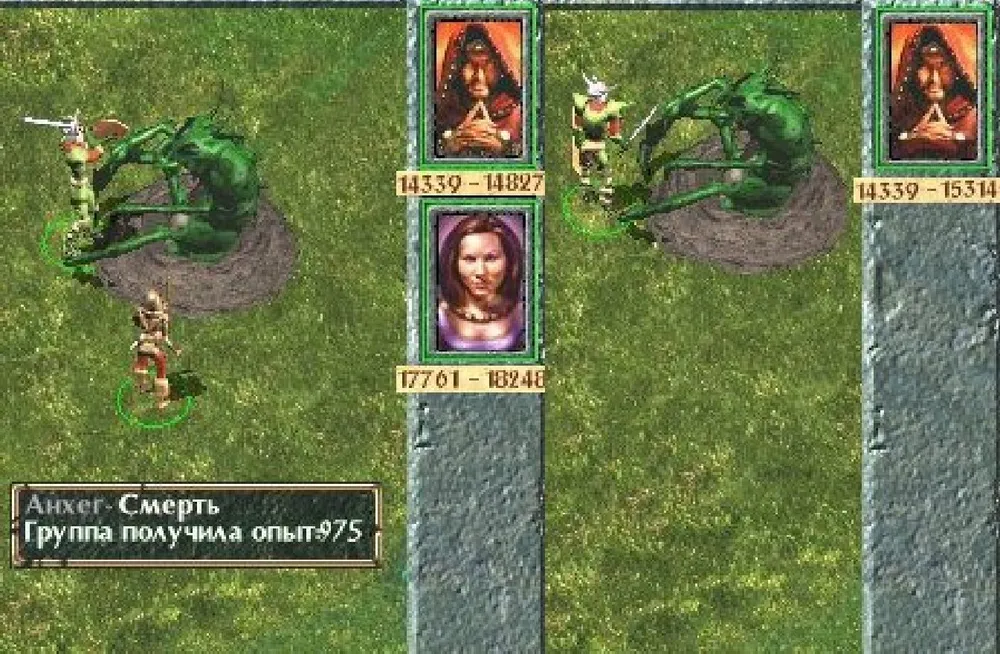
In simple terms, a solitary hero defeating a basilisk would earn four thousand experience points; paired with Imoen – each two; in a party of five – eight hundred each. If a party from the third part occupied their place – each would still receive their four thousand experience points. Good?
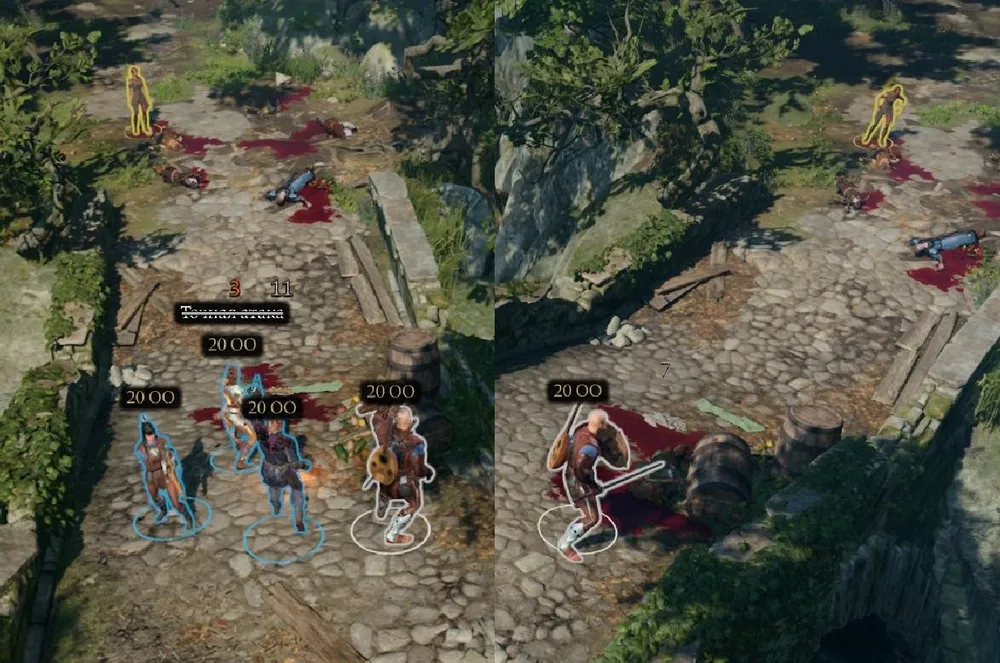
No, not good: the experience distribution from the first part encourages gamers to play the game with an incomplete party or even as a solitary hero: leveling up will be gained much faster! The third part lacks this incentive: difficulties increase, but there is no meaning, the same amount of experience. Only perhaps proving to oneself that one can complete the game alone...
Regarding experience gain in the third part, there is another unpleasant aspect: the disappearance of enemies. For example, if you leave the zone of falling Nautiloids, it is unknown where the illithid that infected the main character would disappear; sneak onto the ceiling beams in the goblin camp and move forward – the warehouse guards, Volo, and some other NPCs vanish. If in Grimforge you climb onto the suspension bridges and attack enemies behind the barricade where Nere is, the duergar trying to excavate the other barricade will disappear as well; the harbor guards, the spider merchant, and several other enemies will also vanish.
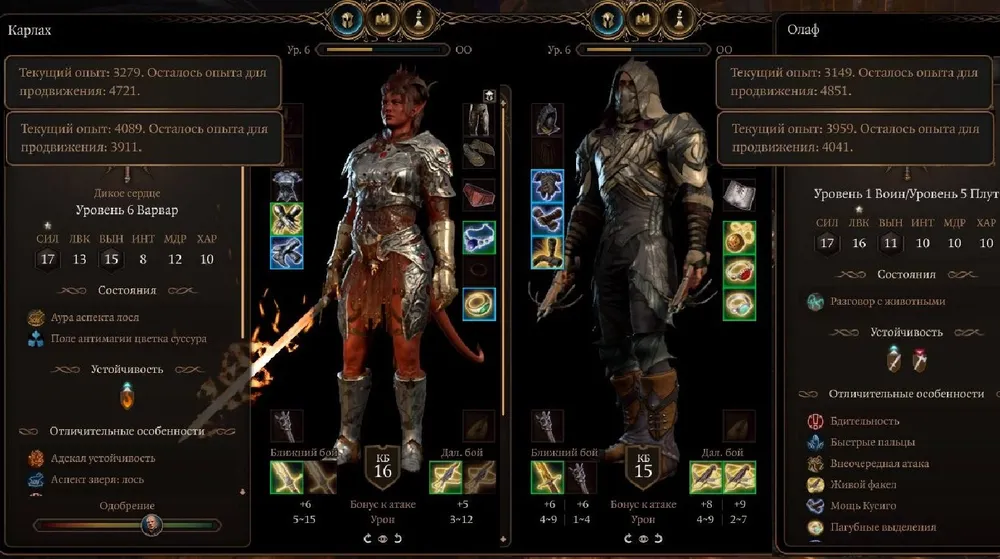
Tables show how much more experience heroes gained when no "disappearances" of the duergar occurred.
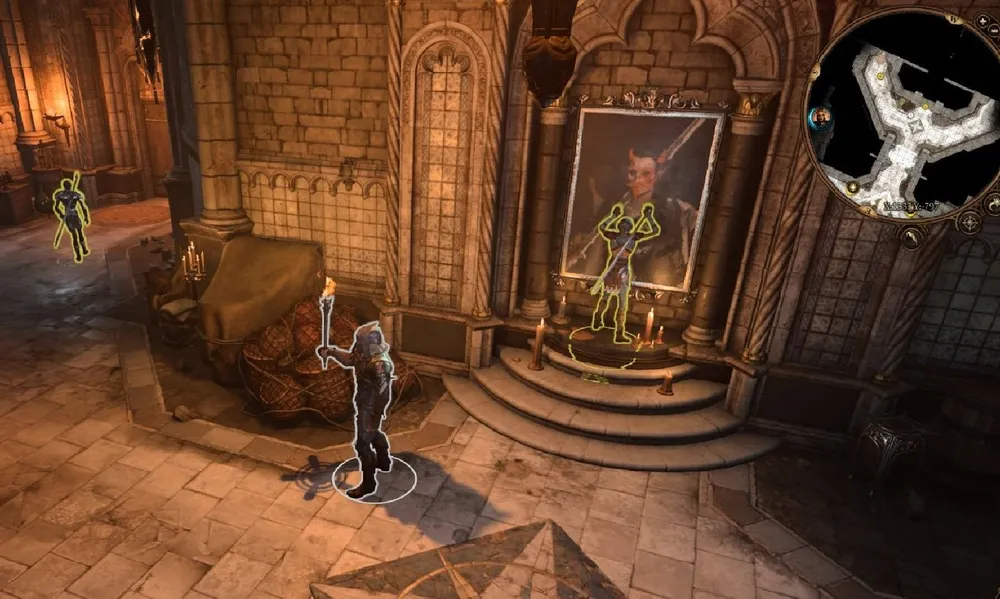
The same occurs in the Illec Nursery after defeating the Inquisitor: guards in the corridor disappear, a teenager cleaning the painting we painted over – although small, still experience loss!
Enemies in the first part do not just vanish into nowhere: the levels of the Cloakwood Mines (if you don’t hasten their flooding) are still filled with guards even after the death of Davaeorn; the same applies to the Nashkel Mines, the bandit camp, and many other places. And yes: you can return to almost any location in the first part, while the third does not offer such an opportunity. A trivial detail? No: the difference between a professional and an amateur lies in attention to detail!
Solo play and game experience: one-zero in favor of the first part of "[Baldur’s Gate](/games?search=Baldur’s Gate)".
"LINEARITY" AND "NON-LINEARITY"
In the first part, of the fifty-two locations, thirty-seven are immediately available for exploration. And in practically every previously examined location you can return at any stage of the game (the exception is Candlekeep).

In the third part, even starting locations are relatively linear; sooner or later, there comes a moment when returning to starting locations is blocked.
In short, the third is very similar to "Divinity Original Sin - 2": it seems you’re moving freely, but in reality - in a confined space, albeit a quite large one; it’s impossible to return to it.
"Linearity" and "Non-linearity": one-zero in favor of the first part of "[Baldur’s Gate](/games?search=Baldur’s Gate)".
GRAPHICS
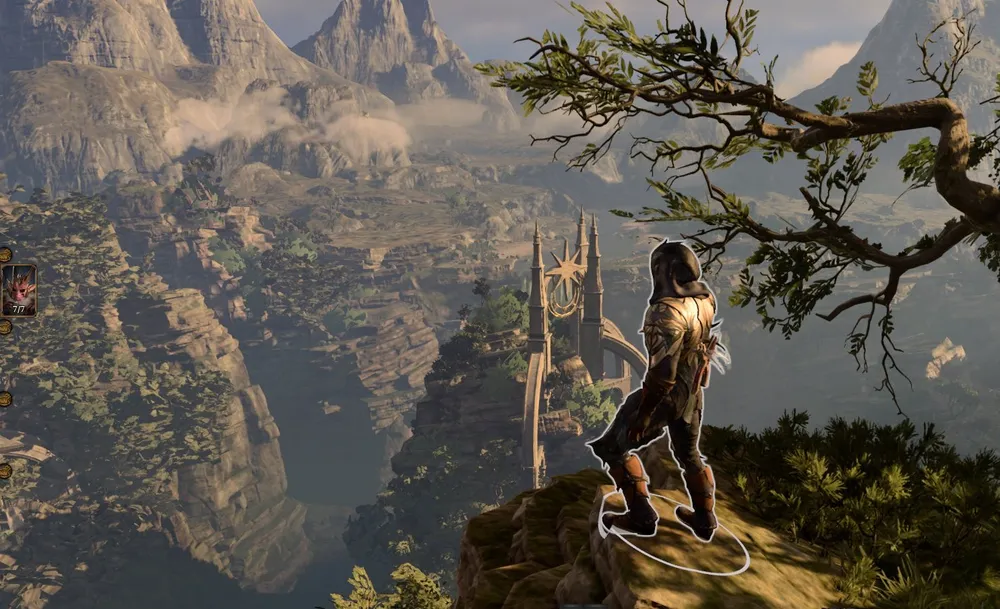
Essentially, there’s no need to discuss this: the graphics in the third part are almost always better than those in the first. (Especially it looks stunning from high viewpoints!)
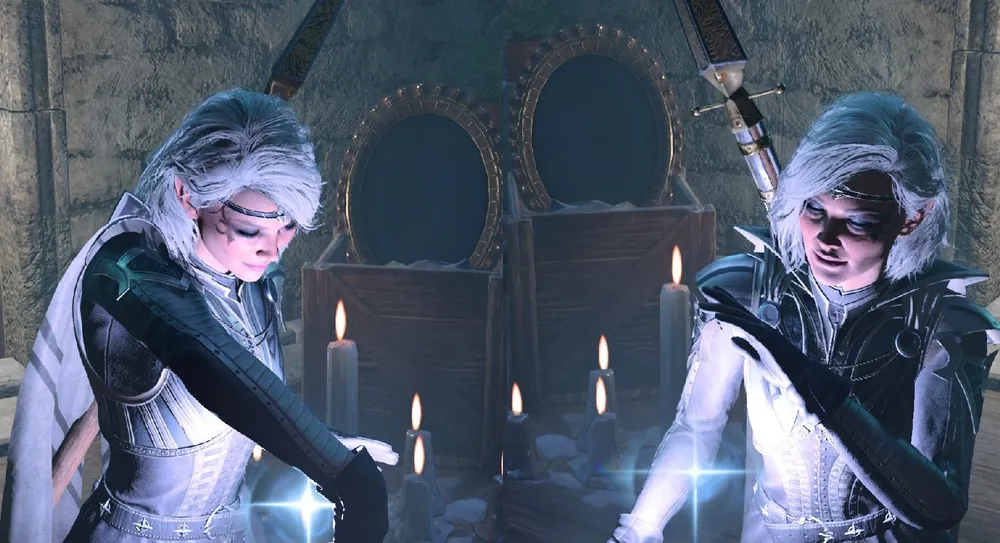
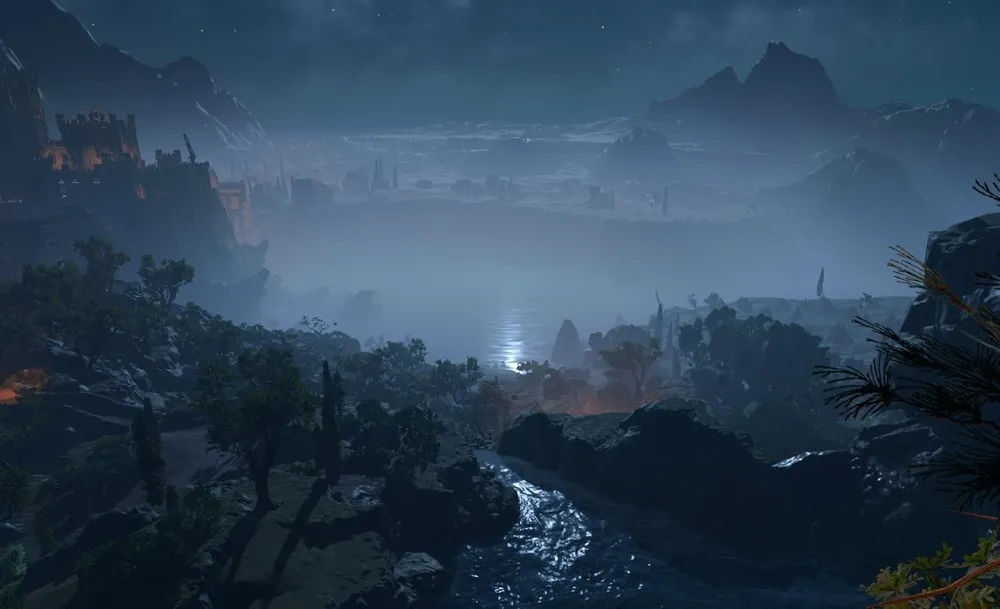
However, in many cases, the graphics in the third, in my humble opinion - and I do not shy away from this term! - is excessive. The third is overly saturated with secondary objects that hold no significance. In cutscenes and major dialogues, it excels; but showing a close-up of a minor character (and there are not dozens of them, but hundreds!) that the heroes are conversing with… Why? What’s the point of such a detailed nature: wind in the branches of trees, falling leaves, twitching shadows on the ground from the same trees, swaying grass, "flocks" of butterflies?
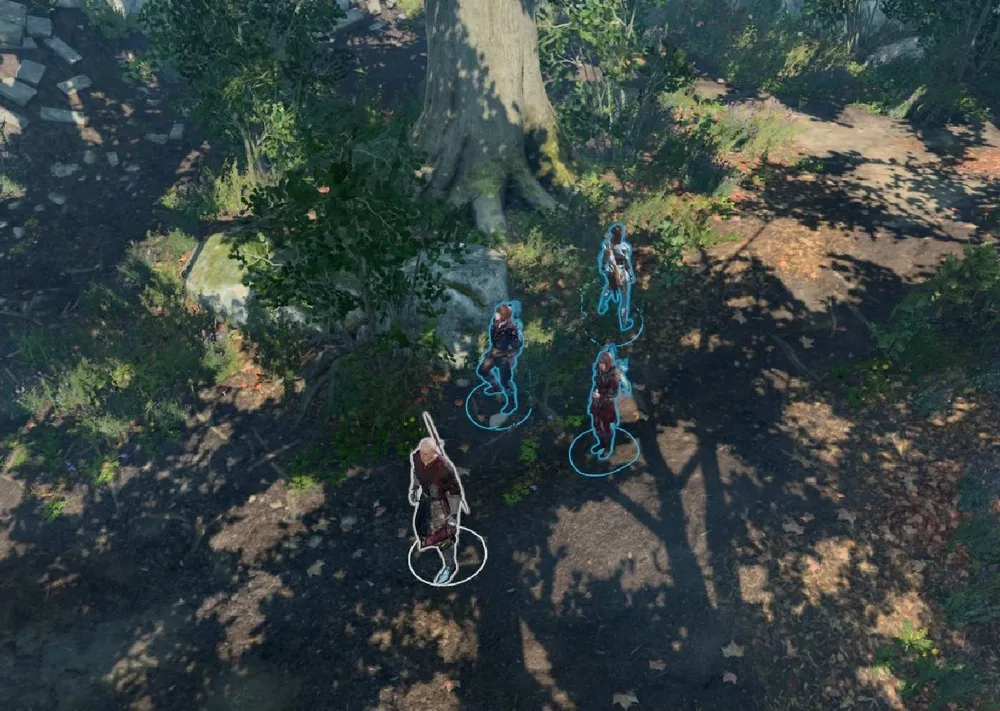
(At the same time, you can’t "disable" wind, moving shadows, grass, as was possible, for example, in "[Drakensang: The River of Time](/games?search=Drakensang: The River of Time)" or even in "[Allods: Seal of Mystery](/games?search=Allods: Seal of Mystery)".)
This is interesting!
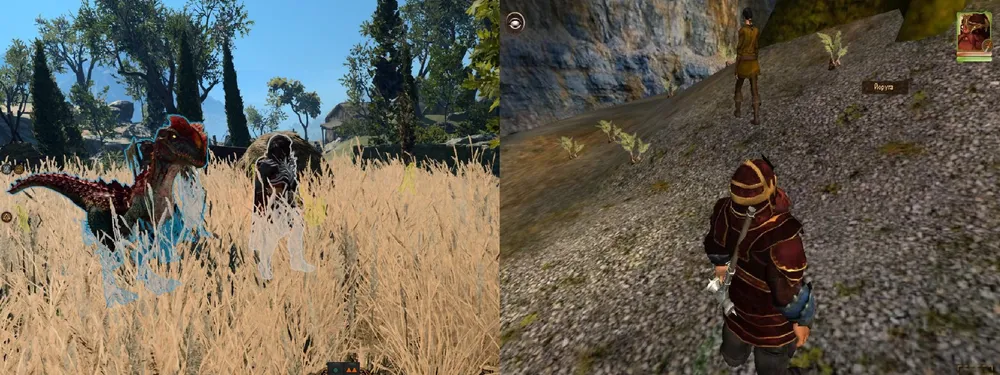
Take a look at the screenshot: trees in the first part also cast shadows, and heroes caught in the shadow of a tree become slightly less visible, as is right for those who have entered the shadow!
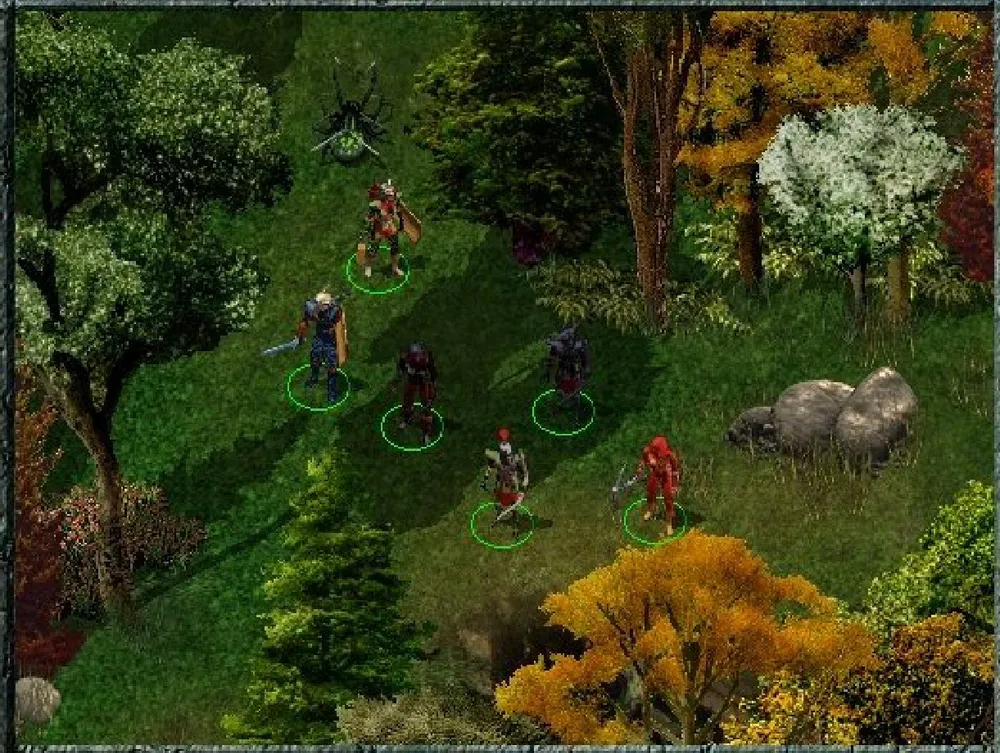
Were the shadows not moving? That didn’t hinder the gameplay! Butterflies also flitted over flowers; it would rain from time to time, and in the mountains near Nashkel – snow; the time of day and night changed as well. By the way, there are no weather changes or nightfall transitions in the third part!
What’s the use of visualizing rolling a twenty-sided die? (Sixteen seconds of time!) Especially since during dialogue this roll is often not shown. Why do they show the message: "This door is opened by such-and-such a key"? It’s opened – well, fine, it doesn’t matter what kind of key, it wasn’t worth spending game resources and time on it.
Why is there almost absolute darkness in some of the dungeons in the third, only dispelled by torchlight?
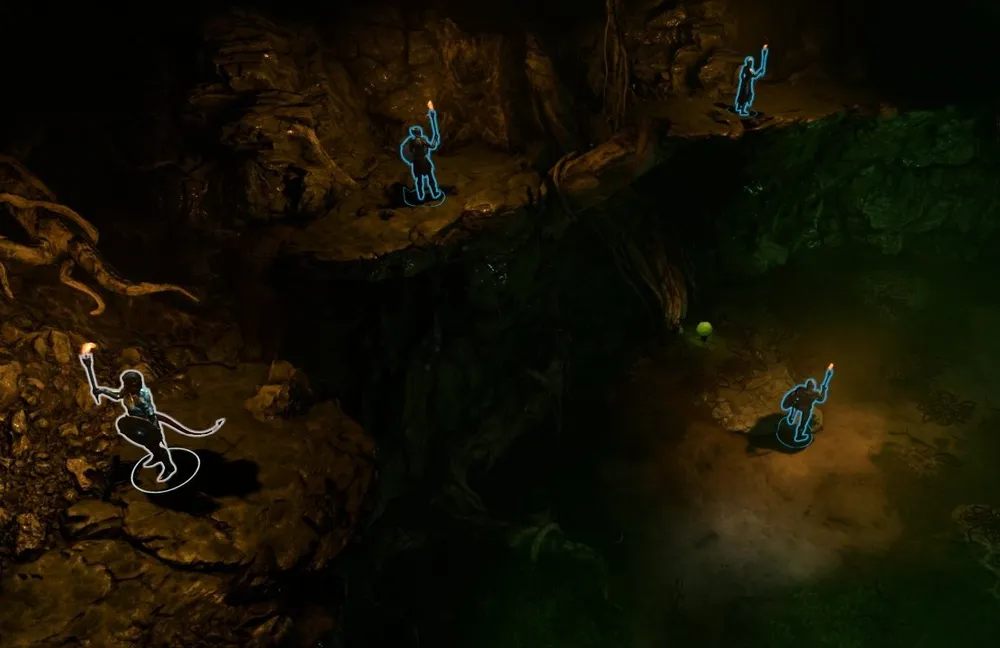
Realism? Is it really needed in such volume? In the first, dungeons were sufficient, yet still illuminated. However, in the latter, without a torch, it’s easy to miss something important, not to mention that in case of a surprise attack, part of the turn will have to be lost by switching weapons.
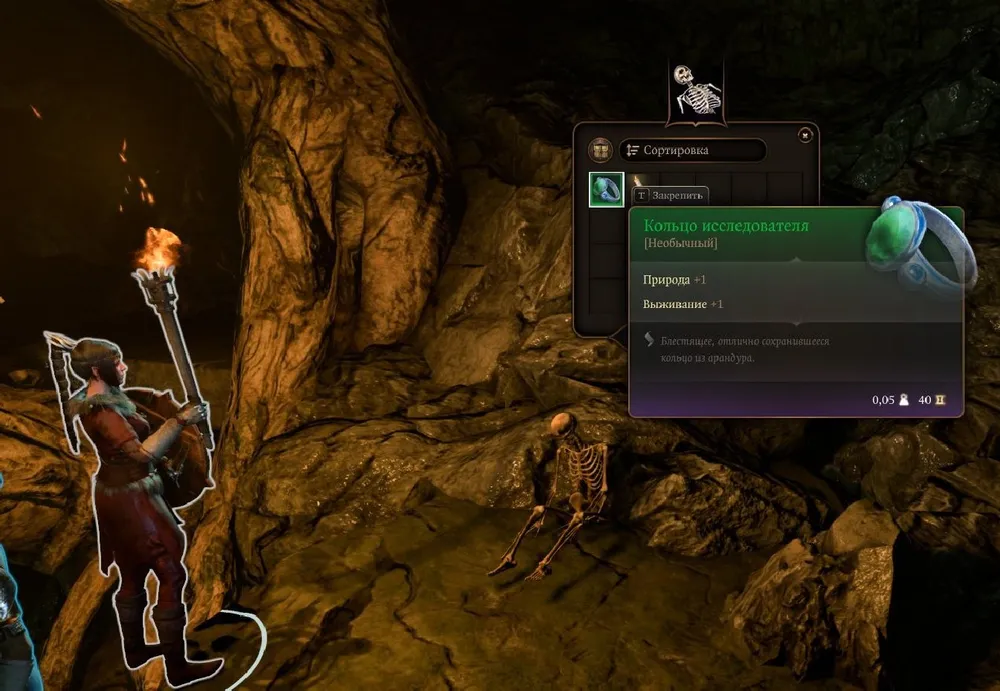
And at the same time, the large maps of locations look dreary compared to the maps of the first part.
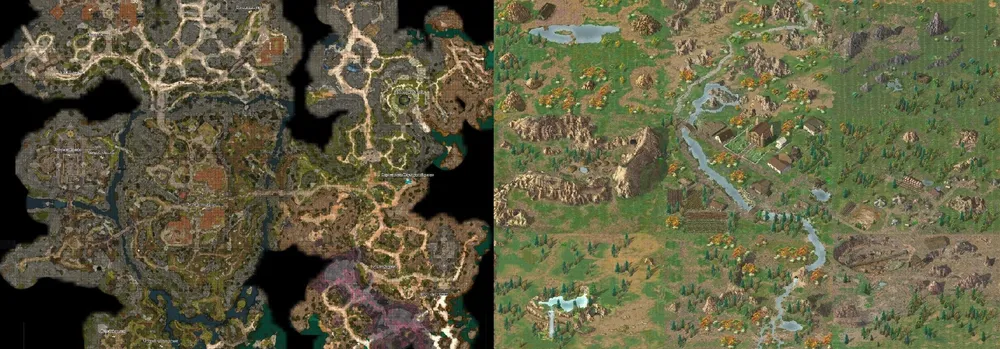
"Beauty, in my humble opinion, depends not on detailing but on the skills of the artist. Ancient artists knew how to gather beauty from pixels."
Necrolord_Zorg
Graphics: one-zero in favor of the third part of "[Baldur’s Gate](/games?search=Baldur’s Gate)".
MERCHANTS
Merchants in the first part resemble "Swiss bankers" - they have an endless supply of invisible money and insane prices for unique equipment items. They cannot be bribed: Want lower prices – improve your personal charisma score and raise the reputation of your party. Not all of them buy and sell everything; not everyone can be pickpocketed, and stolen goods cannot be sold in the shop.
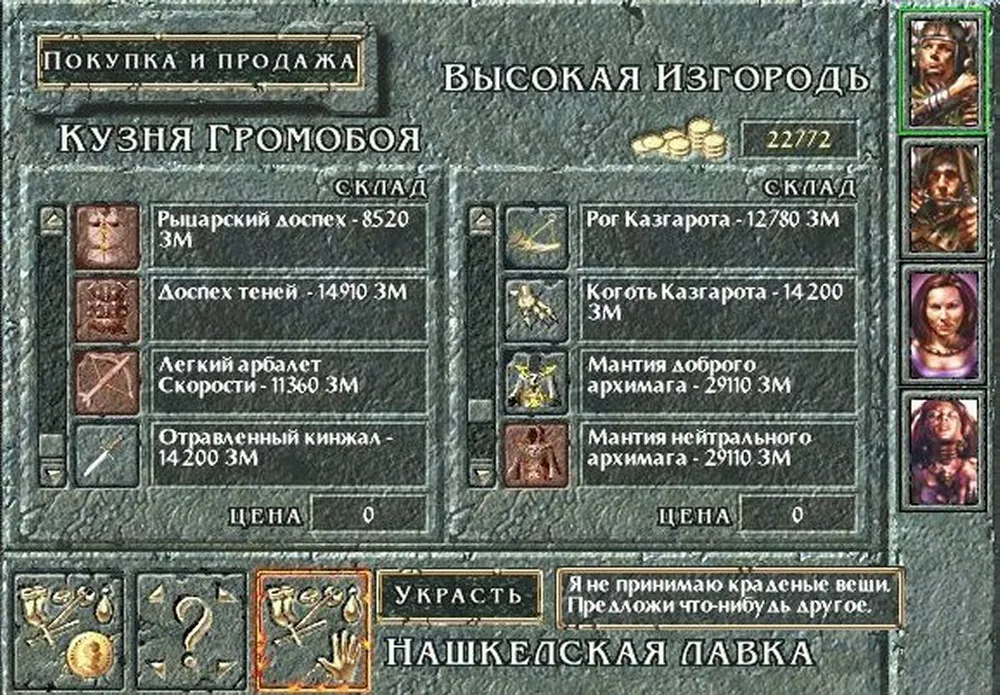
Almost all goods are finite, a limited number of "consumables" forces careful planning of your actions, requiring vigilance in using arrows, potions, staves, and rare scrolls. They inhabit houses, tents, and temples; only two trade outside buildings (but they can be easily "detected"); most have unique names. Buy prices lessen with each subsequent batch of identical trophies, including magical ones. Gold does not weigh anything.
Merchants in the third: gold replenishes and can be stolen, anyone can be pickpocketed, stolen goods can be sold back to the same merchant, they all buy everything, and goods are replenished. They can be bribed and then immediately pickpocketed that bribe; they often stand openly and do not differ from the crowd. Prices for each subsequent batch of identical goods do not decrease; prices drop by bribing the merchant and having high charisma. Gold weighs quite a bit.
Merchants: one-one, a draw. (Though I prefer the merchants in the first part more.)
THIEVES
I can’t stand the word "Rogue"! It immediately conjures up associations with a cunning, shifty type who deceives people for personal gain. But one who picks pockets, picks locks, disarms traps, and delivers devastating blows from the shadows: now that’s a thief! Sorry, I got sidetracked.
The thief in the first part is extremely powerful: if only because, when leveling up, he decides for himself in which skill to invest most points. If a skill is maximally developed, he has potions exceeding that limit and equipment that enhances stealth.
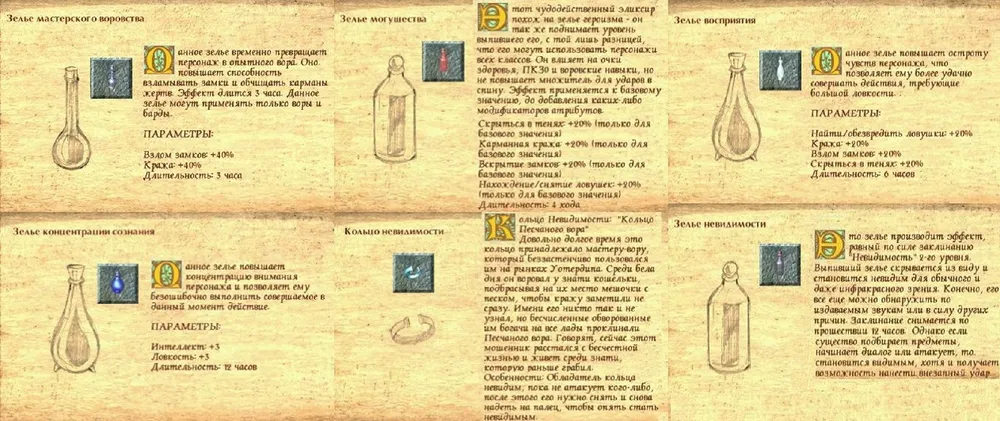
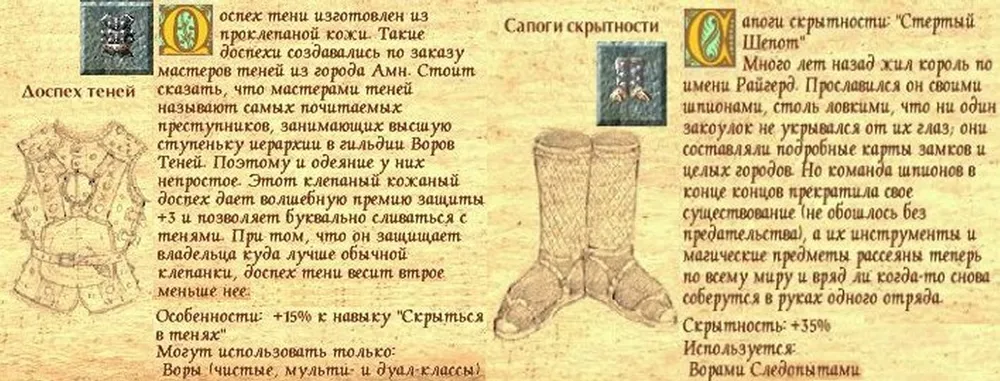
By the way, a thief who has gone into hiding doesn’t have to worry about watchful eyes, no one will be able to see him until invisibility drops for natural reasons or as a result of an active action.
Similarly, a thief does not fear the consequences of theft: if he was not caught red-handed at the moment – it means he will never be caught, even if he stands directly in front of everyone. Although, things are not as well with breaking into other people’s chests, the owner may call the guards. This can be remedied: knock the owner out (reputation does not drop!) and calmly pick locks, as no lockpicks are needed, only nimble hands.
Who said that a backstab can only be delivered with a short-bladed weapon?! Both a long sword and a scimitar will do. However, there’s no way to enter the shadows by ordinary means after such a blow, unless aided by a potion or a special ring.
Is this... interesting?
When a thief in the first part made a backstab, a message appeared indicating three or four times the damage and its value.
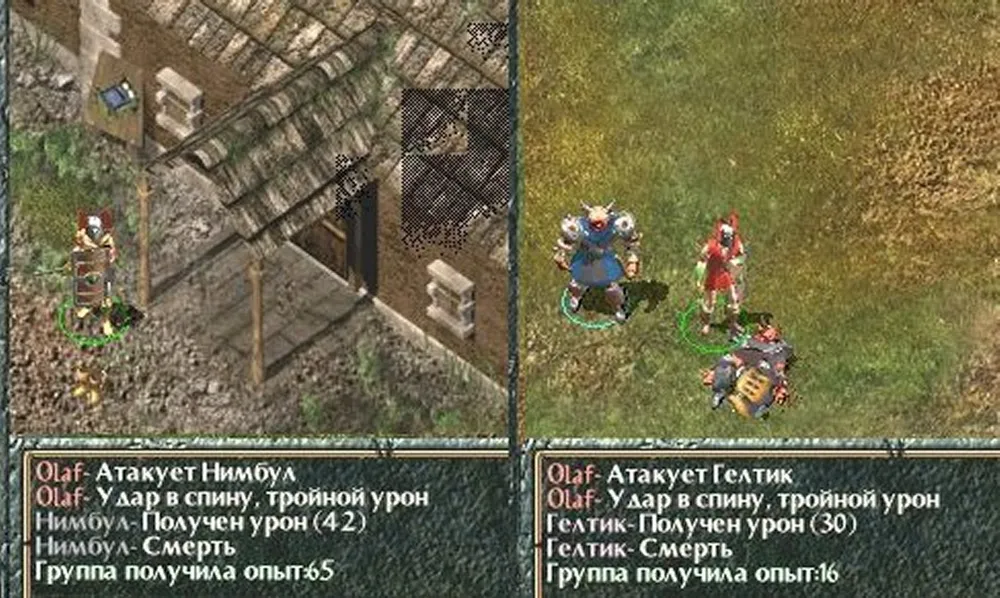
The thief in the third part also delivers backstabs, and, judging by the tables, the damage from them is not small...
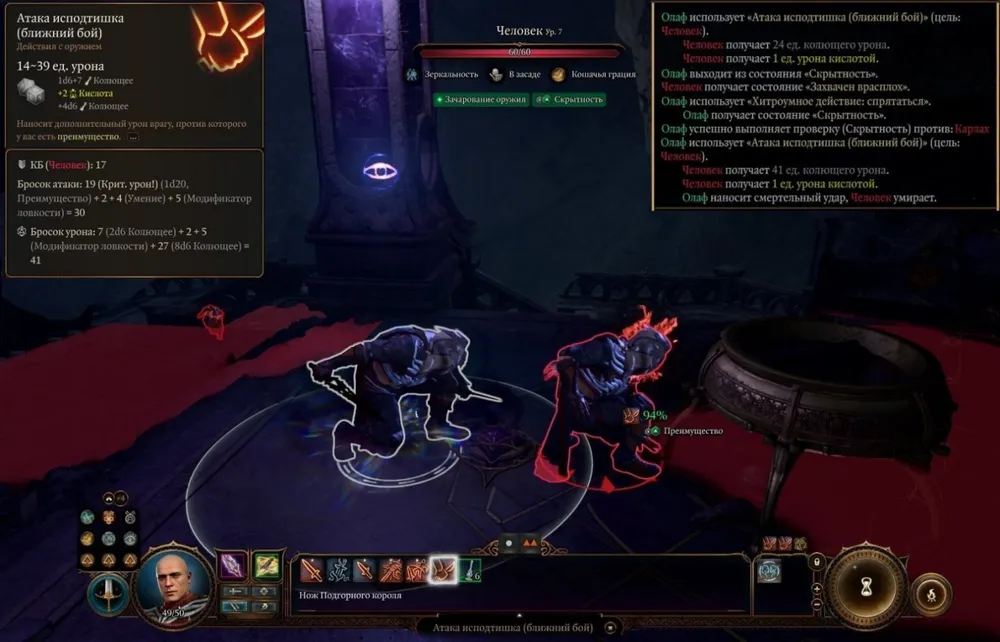
But I would prefer to see the old good message about four times the damage!
Dealing with traps is more complicated than with theft and breaking in, very few of them in the first part can be bypassed, most block passages entirely. Some traps cannot be detected even by a master thief, especially if he is the only one in the party and forced to evenly develop all his skills; then there come druids and clerics who can detect traps of any complexity to help.
Their counterpart in the third part lacks most of the mentioned advantages... It is extremely hard for him to approach a victim from behind, especially in a crowd – he will be noticed!

After a successful theft, the poor lad is quickly being hunted for: thankfully, it doesn’t last long. As if that weren’t enough, he cannot calmly pass the stolen goods to his companions for selling: not only do guards work without fail, but so do merchants, mysteriously noting the handoffs and either attacking or demanding the return of what was stolen.
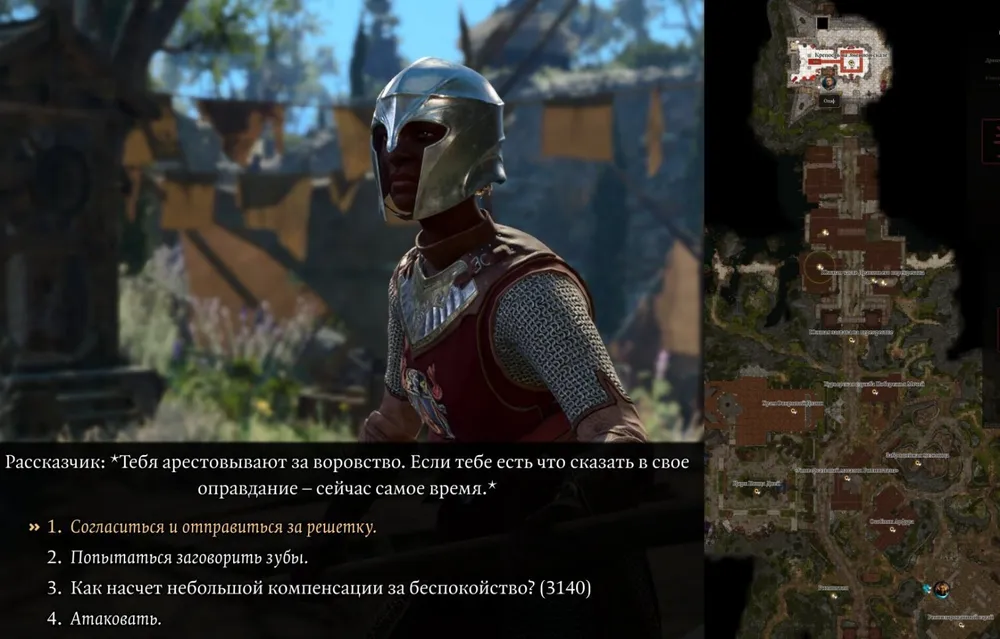
Companions cannot see the thief at that distance, but the guard noticed something foreign that suddenly appeared in Karlach’s backpack!
Persistent city guards tend to throw anyone in prison if caught in the act of breaking in. And the attempt to improve skills upon level-up ends in nothing: neither sleight of hand nor stealth simply do not allow increases beyond a certain level.
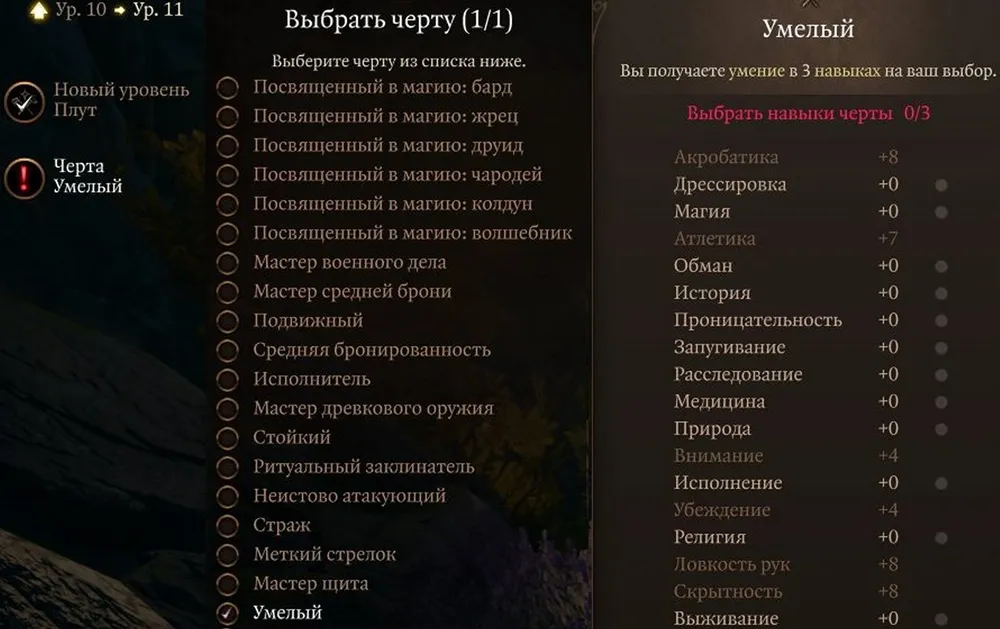
I need sleight of hand and stealth, but they are exactly what can’t be raised!
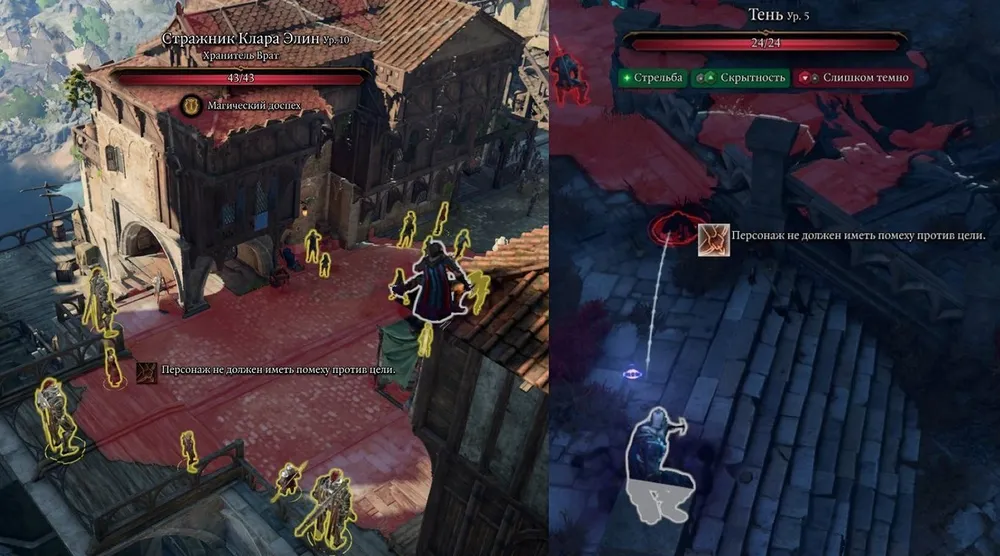
Truthfully, there are positive aspects! For example, foolish merchants buy anything, just stolen from them. And they keep their gold not in safes, but right on display—what thief could resist such temptation? Traps? Ha! They can be jumped over or bypassed, as long as they're detected in time. Unable to deliver a backstab? But you can almost do the same using a bow and arrows! However, there are also unpleasant moments: the damage is a bit low, and too many obstacles.
Is this... interesting?
In the third part, the visualization of disarming traps and lockpicking is extremely irritating; you have to witness a useless die roll over and over again, wasting time on it. In the first part, a die was also rolled, but invisibly and instantaneously: just click several times on the lock or trap and voilà! (I tell you—excessive graphics!)
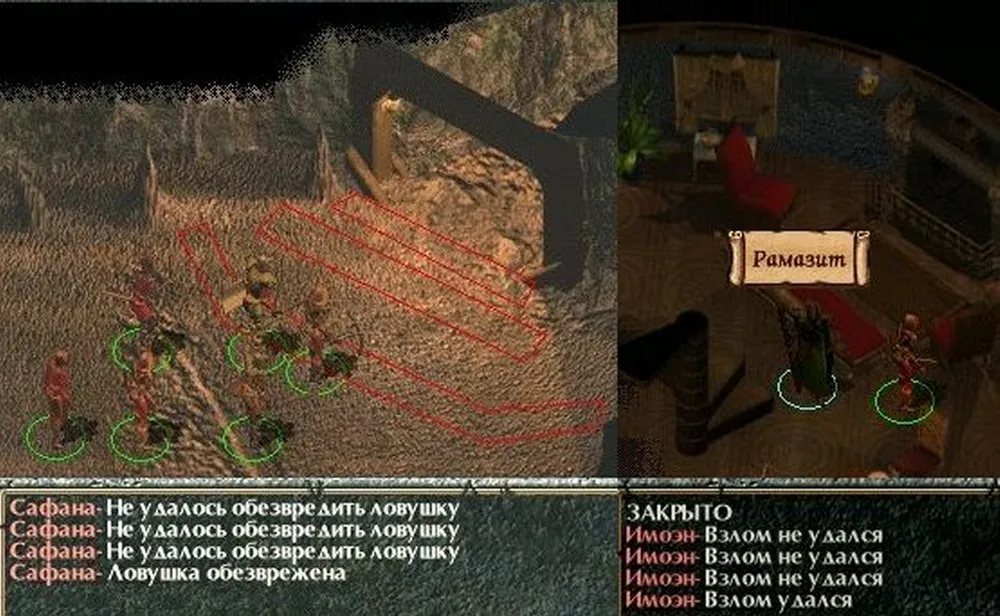
Overall, the thief in the third part looks enviously at his counterpart from the first: he had it much easier.
The thief: one-zero in favor of the first part of "[Baldur’s Gate](/games?search=Baldur’s Gate)".
MAGIC
What does a mage need in the first part of the game? Spells of item recognition, invisibility, and haste. That’s it! A rod of monster summoning allows him to fill the entire field of view;
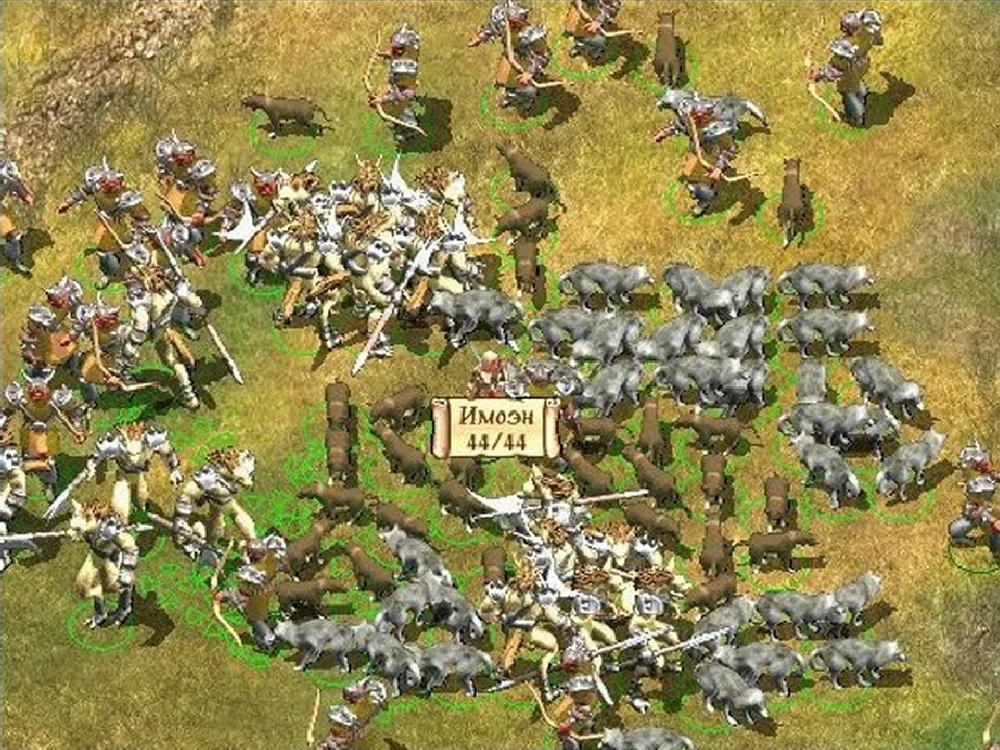
a rod of fireballs is nearly absolute weaponry.

Perhaps sometimes using rare scrolls of "Cloud Kill"...
This is interesting!
I don't understand why there’s no item recognition spell in the third part. You found a chest, pulled out an unknown item - and immediately knew all about its properties? In the first part, this could cost a lot: scrolls and potions turned out to be very different from what they seemed; holding unidentified weapons would make you attack your companions (only a curse could be removed in a temple, but how to reach one when Minsk is chopping everyone down with all his might?!); one very beautiful belt, if equipped without recognition, led to amusing consequences: the one wearing it would change genders!
By the way, a young mage in the first part initially received two-three spells, and all others he had to find or buy and learn - without any guarantee of success! Only he and the bard could read magical scrolls with offensive spells; the others relied on rare defensive scrolls.
The mage in the third part lacks rods, but he doesn’t seek or learn spells, instead learning new ones with every level-up. And what spells are these! "Feather Fall", "Enhanced Jump", "Ice Storm", "Greater Invisibility" (which the thief simply adores!), "Telekinesis", "Sphere of Invulnerability", "Disintegration". Moreover, anyone can read any magical scroll – an undeniable plus for the third part of the game.
Overall, the mage from the first part has enough of what they already have, but he and his companions look at the wealth of magic in the third part with undisguised envy.
Magic: one-zero in favor of the third part of "[Baldur’s Gate](/games?search=Baldur’s Gate)".
EQUIPMENT AND WEAPONS
The gear of heroes in the first part isn't as varied as in the third, but it is far more practical and doesn’t raise too many questions about "what's best to use"? Items are rare, expensive, and limited in class usage.
Is this... interesting?
Indeed, a pure druid in the first part simply cannot equip something more powerful than leather armor (or ankheg shell armor - a natural material!), while a mage can wear nothing heavier than a robe: the game simply won’t allow this. The same goes for weapons: a thief cannot pick up a two-handed sword, nor can a cleric wield an axe. In the third part, anyone wears anything, and weapons can be taken as one wishes, requiring close monitoring of how the gear affects characteristics and abilities.
Furthermore, the number of items of gear and weapons in the third part is utterly insane, and it nearly never happens to sort out this chaos right away. Especially since the characteristics of some items with descriptions "if..." and "when..." evoke genuine surprise... For example: "When you kill a creature, your next attack roll becomes a critical hit. When this effect is used, it resets after a long rest." Now that’s a joy – to deal a guaranteed critical hit once a day. If only someone could manage to kill before that. In short, from my perspective, exceedingly useless items.
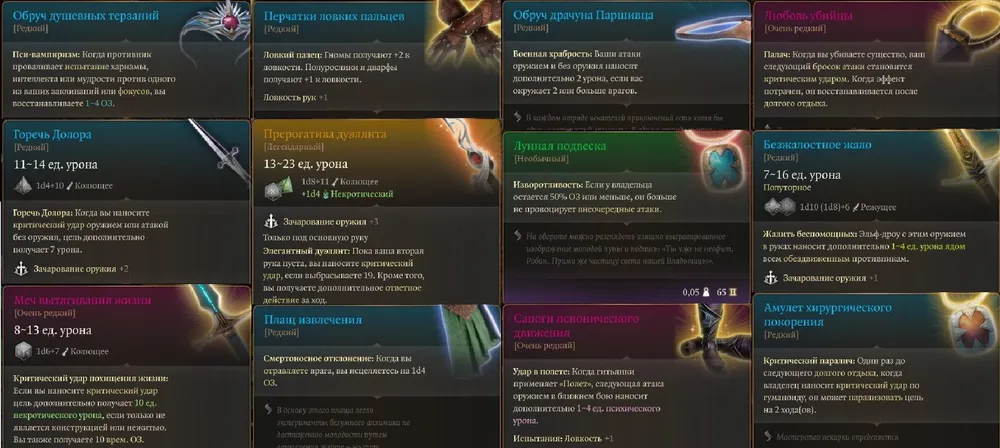
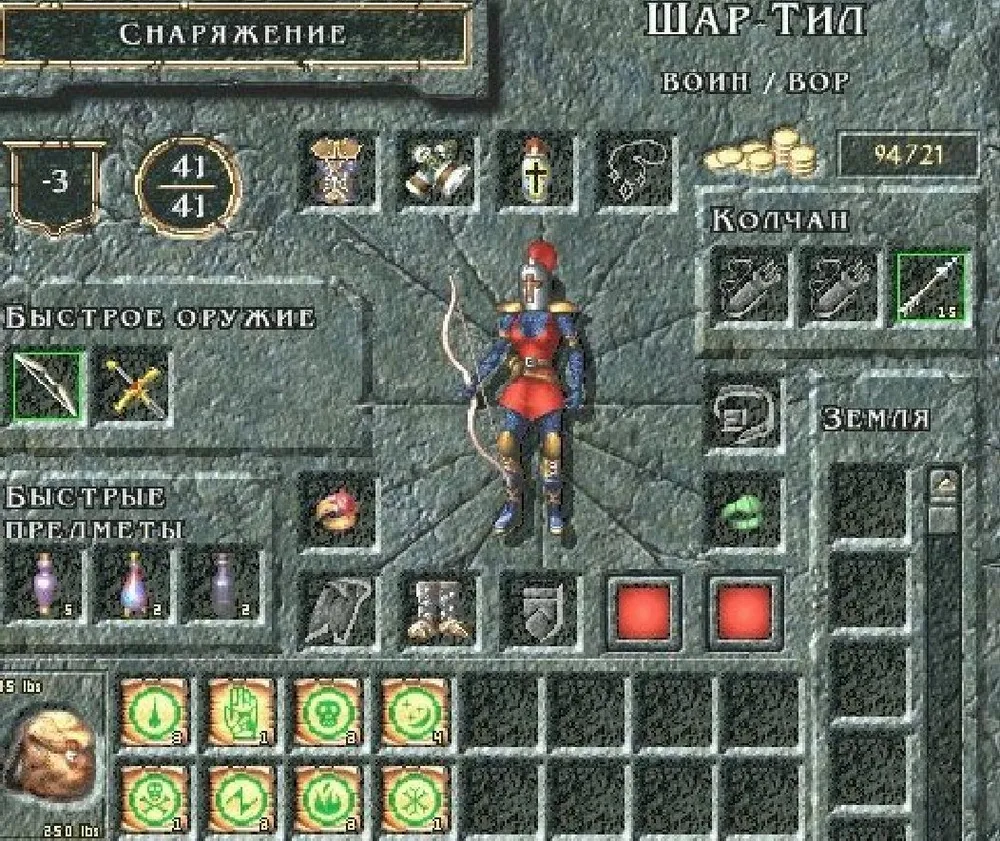
For some inexplicable reason, among the equipment items in the third part, there are no belts, which were very helpful in the first part of the game: a major deficiency!
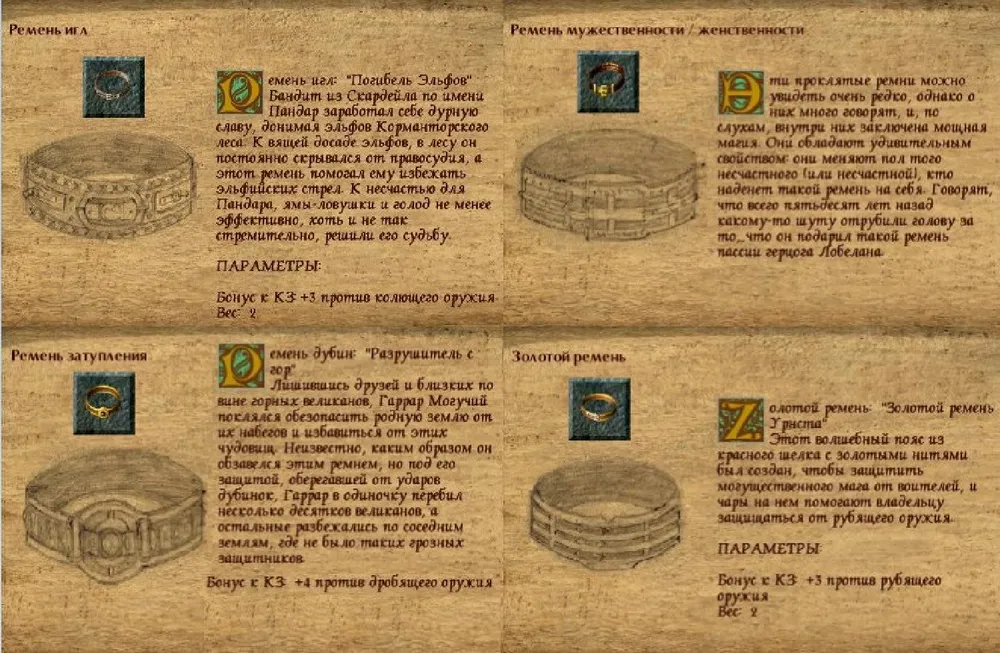
Additionally, the third part has few items that provide a permanent increase in characteristics and protection, not merely "during an ordeal".
As for legendary items, the cloak of Balduran is absent in the third part, and his helmet, which came through the second part intact, was simply mangled in the third, ruining both its appearance and characteristics.
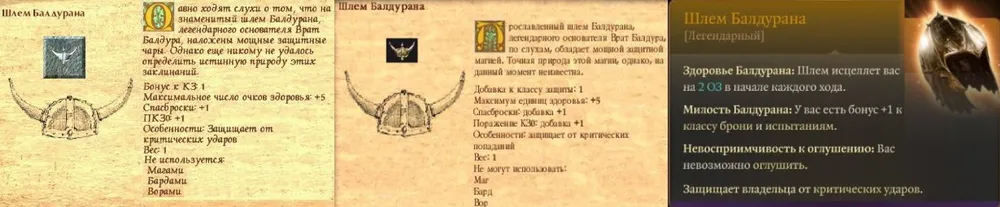
(Two health points at the beginning of a turn? Seriously?! Given that the damage received during that turn can exceed dozens of points.)
A slight consolation is that two of the best blades in the game can be obtained at the start of the third part.

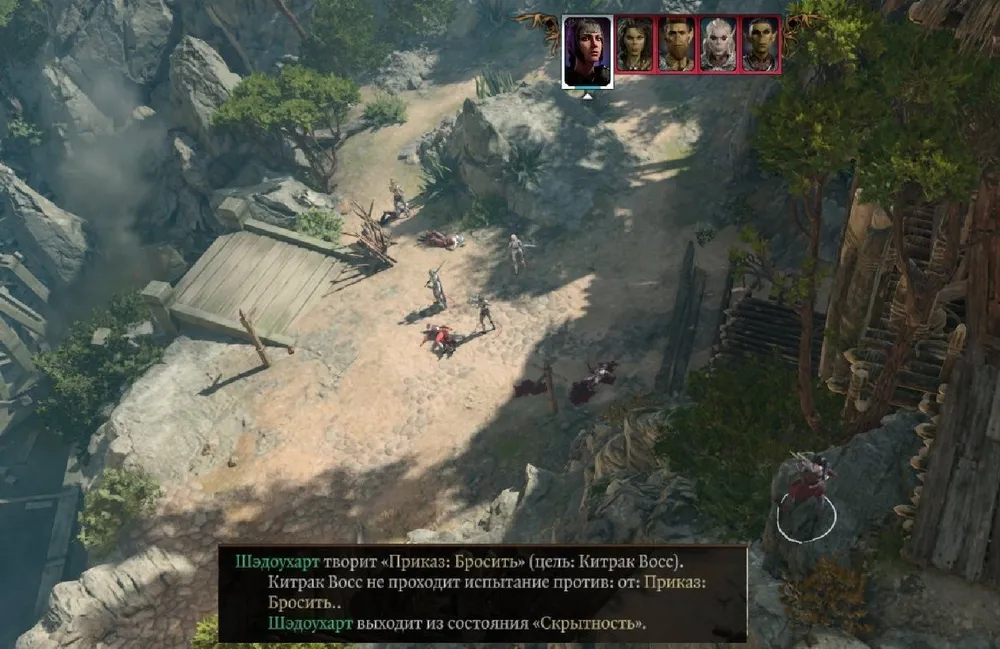
However, the same is possible in the first part (Drizzt’s scimitars).
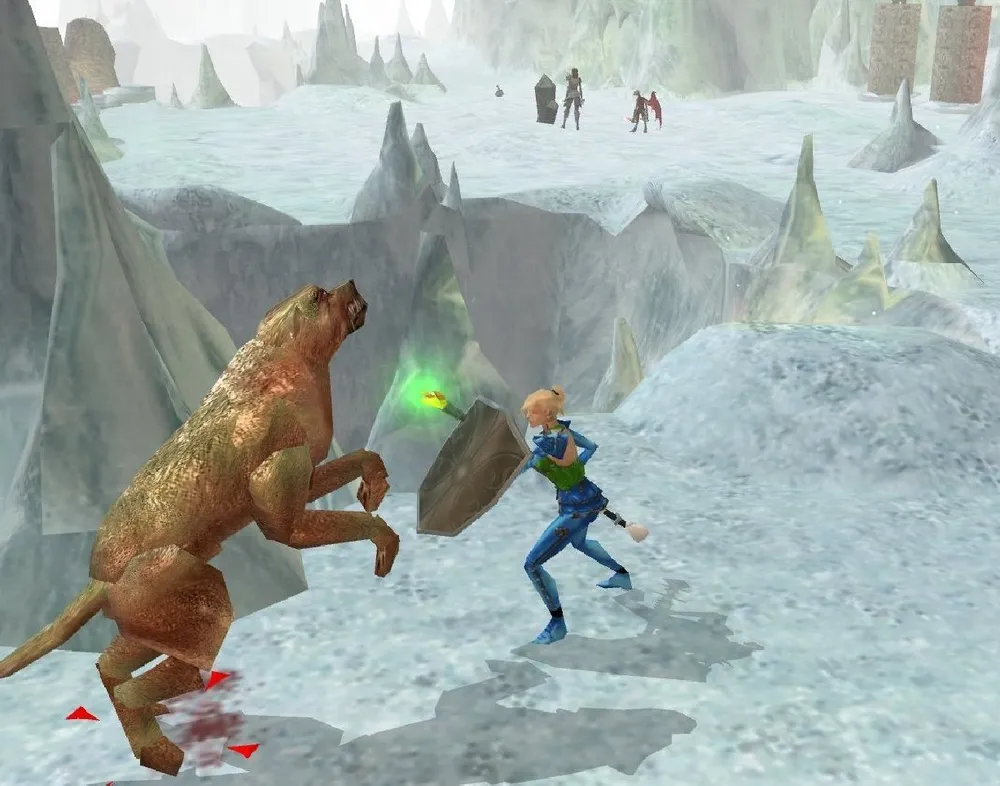
And here’s another bonus of the third: spears and staffs allow holding a shield in the free hand – just like in "Neverwinter Nights". (Although the shield still provides little benefit.)
Equipment and weapons: one-zero in favor of the first part of "[Baldur’s Gate](/games?search=Baldur’s Gate)".
DIALOGUES
While playing the third, I could not shake the impression that I am deciding nothing in dialogues consisting of several different sentences - everything depends on rolling the die. Therefore, I had to save the game both before and during the conversation; and load, and load...
Furthermore, the dialogues themselves... how can I phrase this... are rather fragmentary, perhaps? "The warrior sat on the horse. The warrior took the reins. The warrior rode into the forest." Something like that. And most NPCs - who have their own names and are chatting vigorously with each other! – take care of only a single neutral phrase when addressed.
Conversations in the first part are rich with content even if you talk to the simplest of passersby.

Dialogs with quest-relevant, named characters require the utmost attention and... saving the game!
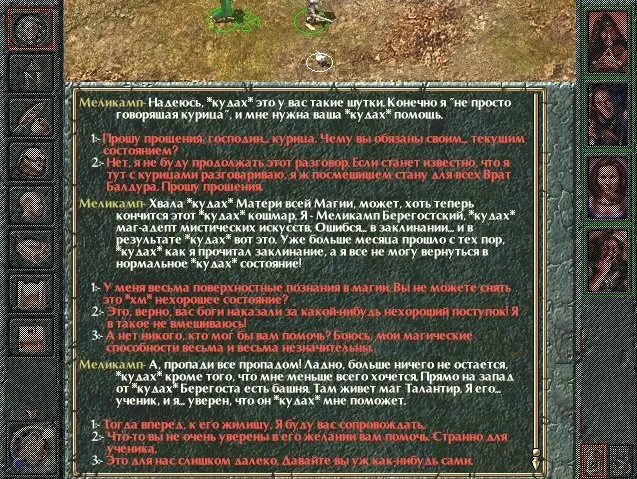
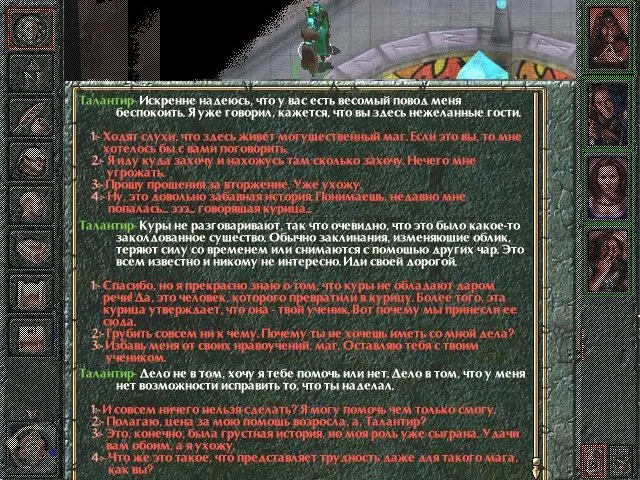
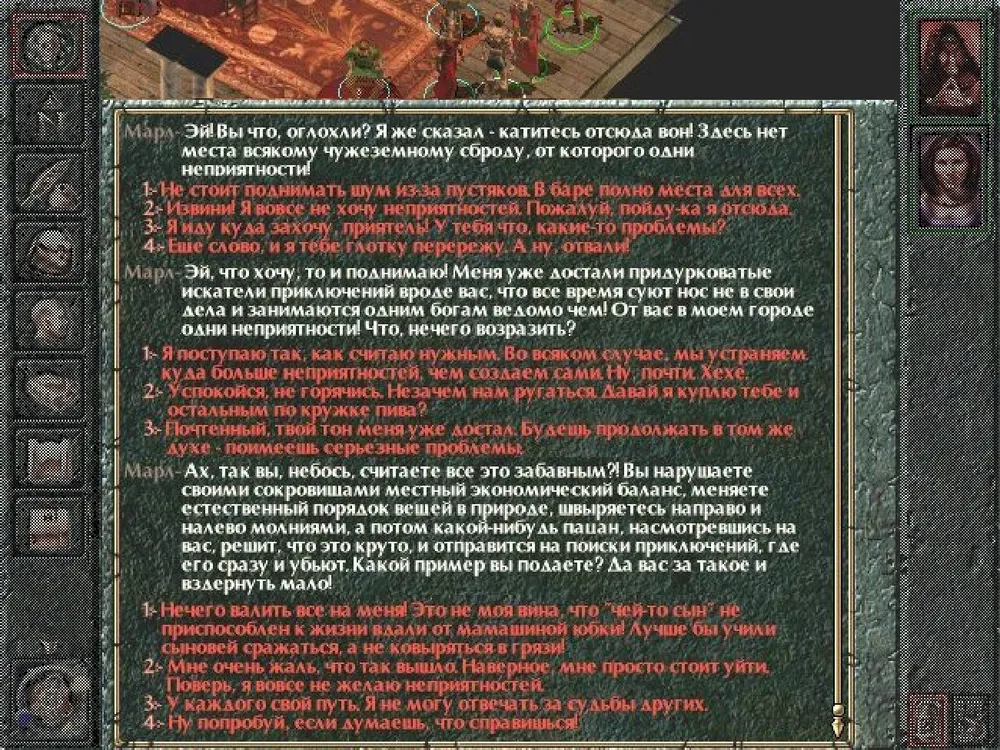
Before the conversation, of course, not during it – the latter is impossible.
Dialogues: one-zero in favor of the first part of "[Baldur’s Gate](/games?search=Baldur’s Gate)".
MEDICINE
Perhaps the shortest part of the material. At first, I didn’t understand why the health of heroes in the third part recovers so chaotically and slowly. It turned out that the effect of potions and healing spells also depends on the roll of the die! (By the way, a big thank you to the person who suggested creating the "Amulet of Healing Wounds".)

In the first part of the game, this... erm... nonsense does not exist, the patient heals for the predetermined amount of health by the potion or spell. (However, the cloak of Balduran can reflect a healing spell - it has a 25% chance to reflect any magic. But this doesn't happen very often.)
Medicine: one-zero in favor of the first part of "[Baldur’s Gate](/games?search=Baldur’s Gate)".
BATTLES
Oh no, who, oh who thought of turn-based battles without the option to turn off that mode, as it was in **"[Fallout Tactics: Brotherhood of Steel](/games?search=Fallout Tactics: Brotherhood of Steel)"?! In fact, one of the gamers already expressed the opinion of players regarding such a decision by the creators of the third part of the game:
"Such rules, where the chance of rolling each side of the die is always 5%, turn an ordinary tactical RPG into a shameless casino, where we are continuously betting our time to avoid the die ruining our game! The consequence of this is a total reluctance to tolerate unfair rolls. This, in turn, provokes players to create a ton of saves... before every strike in combat..."
DanyaShepard
In the first part of the game, the die is also rolled, and how! But it happens instantly! A miss, and another miss? No matter, with the third strike, it will hit!
This is interesting!
By the way, in the first part of the game, you cannot save while in combat, or even if an enemy is simply nearby, not in the field of view of the party. Lost the battle and lost a companion (who can be resurrected only in a temple)? Load the nearest save and try again, that's how it goes!
The difference in the development of fighters matters too. The warrior of the first part improves his ability to hit and deal damage to enemies by increasing his weapon proficiency. Moreover, a weapon with the characteristic “+2” was faster than “+1” and so on - meaning it allowed for more hits per unit of time. Even more accelerated attack frequency is produced by the consumed "Haste Potion": in simple terms, even the most difficult battle in the first part was completed in less time than the easiest battle in the third.
This is... interesting?
It’s rare for a fight to be completed without using all sorts of potions. Fighters of the first and second parts could consume them, let’s say, "up to their brows" – and each one had a positive effect. To my deep disappointment, the elixirs of the third part cancel each other out: you could only consume one... Another round of the balance struggle?
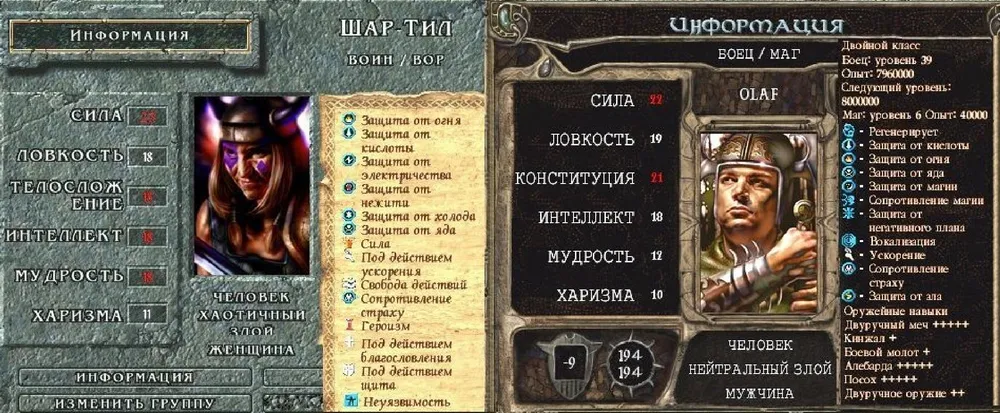
Additionally, due to their weapon specialization, high-level warriors in the first part almost never miss their enemies, often killing weaker opponents with a single strike. In the third part, a level twelve warrior can easily miss a level four enemy, and when an aasimar missed a goblin at level one, I completely lost my speech.
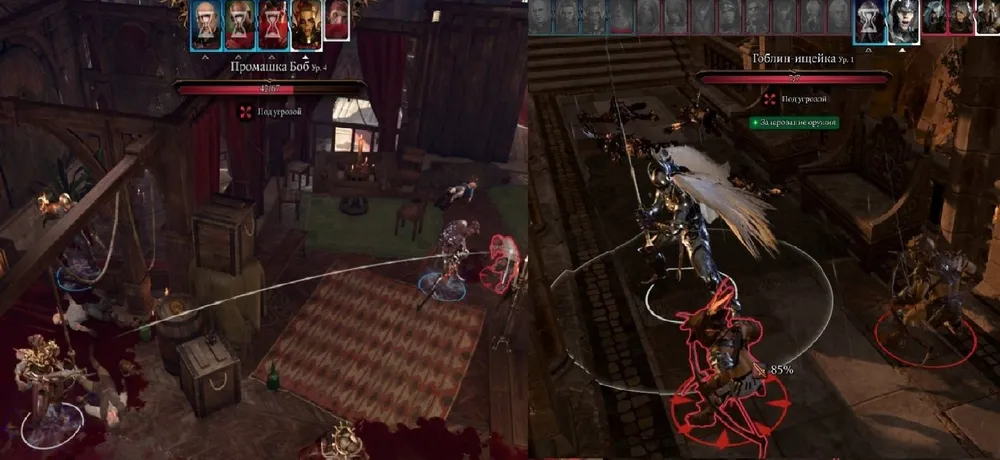
This is interesting!
A little aside: the best system for weapon handling, in my opinion, was in the game "The Fall: Last Days of Gaia". There, the hero found a pistol with the characteristic "unknown weapon"; destroyed a number of enemies with it - and the weapon became "known"; later on - "beloved": the rate of fire from that pistol became continuous, and misses were excluded.
In contrast to the heroes of the first part, warriors in the third part cannot choose weapon specialization and deal the same number of attacks in a round with any weapon: long or short. (The knives in the first part have a speed factor of "0"; two-handed swords – "9".)
This is interesting!
Any heroes of the first part always hold their weapons in their hands, waving blades as they move, which gives them a touch of comicality: surely, the passing characters should not look kindly at a party continuously brandishing sharp metal.
And what happens to the slain enemies in the first part? The enemy was wearing a helmet, artifact chain mail, held an exquisite blade (the latter, like the chain mail, shines a color)? Then all of it will appear on his corpse after death! Hobgoblins leave leather jackets, helmets, and longswords; gnolls drop halberds, kobolds drop short bows and arrows, flinds drop two-handed swords, and ogres drop clubs. This doesn't include the random small stuff like gold, scrolls, potions, rings, amulets, and precious stones.
By the way, there are significantly more battles in the first part than in the third: enemies set ambushes during transitions between locations; they attack at night while the party is resting
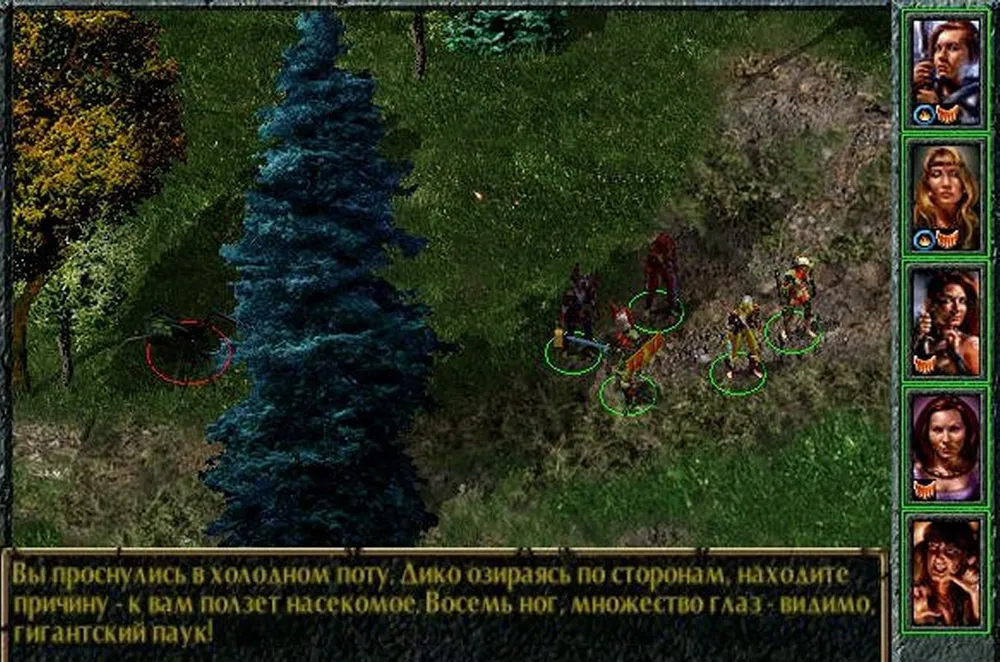
and restore their numbers in many locations after the heroes leave.
Enemies in the third part often disintegrate weapons after their death – it’s there in their hands-claws, and after a second, it’s gone from the corpse. True, you can knock weapons from enemies' hands – a wonderful warrior "feature" of the third part! – but you need to pick it up right away; otherwise, an enemy will take it!
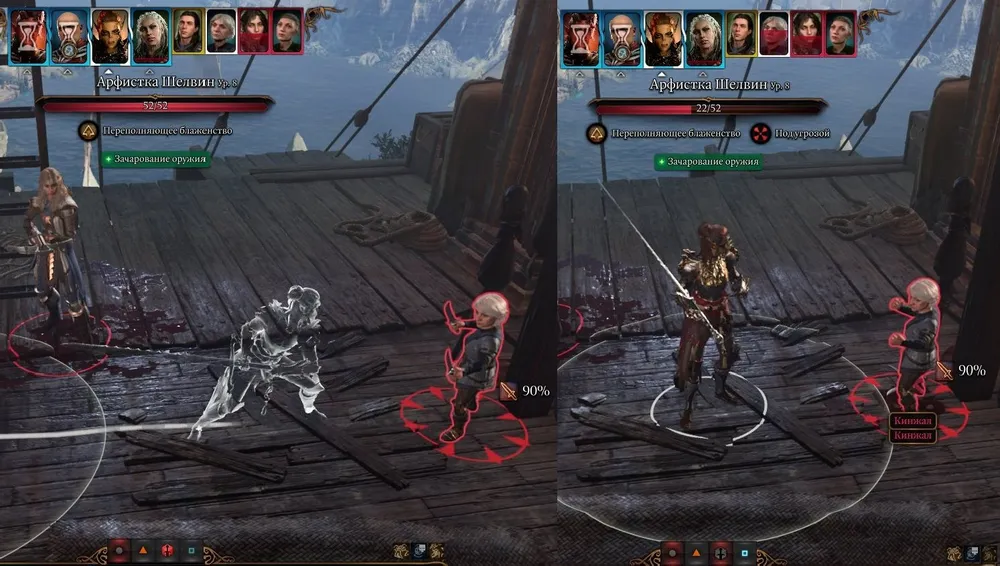
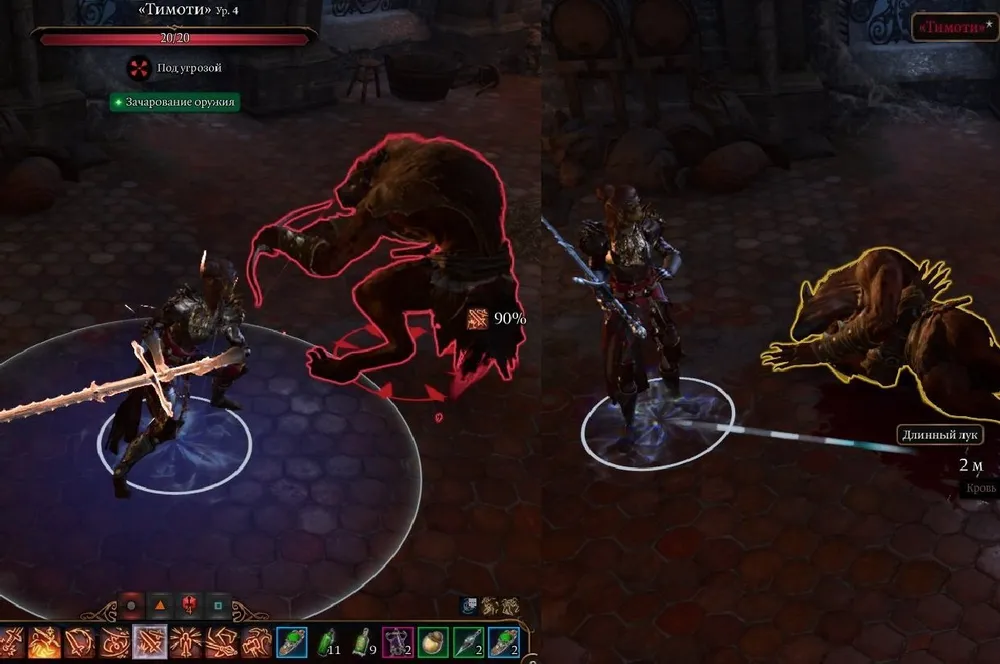
The weapon falls on the ground. And if you don’t knock it out, there won’t be any on these enemies’ corpses.
This is interesting!
*One could not have thought whether or not weaponry of the steel guard was knocked out? It is, and can be picked up, but here’s the catch: the only time you can use it, alas! - is not allowed ... By the way, I spent quite a few cheerful moments watching hero companions in * "Sacred" battle against enemies with gigantic weapons!
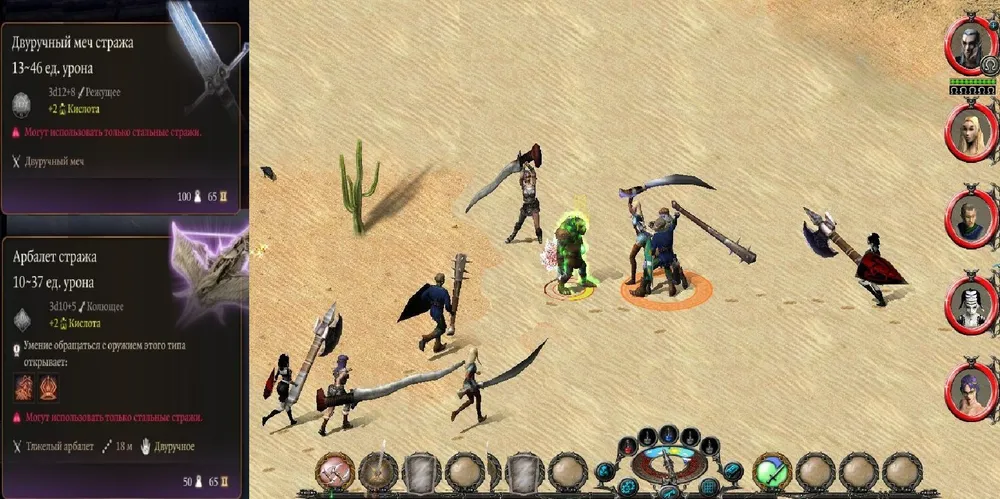
*It’s a real shame that such is impossible in the third part of * "Baldur’s Gate" ... (For instance, this weapon would have a limited expiration date until it decays when not in the hands of its owner; a giant crossbow would explode after a period after beginning its use by a mortal. Or the steel guard, upon seeing a gigantic blade in human hands, would start pursuing the new owner...)
Of course, there are pleasant bonuses in the battles in the third part. You can blow up an enemy by carefully placing explosive barrels; shorten distances with a jump; knock an invulnerable opponent into a chasm with a shock wave; drown the "iron lumberjack" using "Lightning Arrow";
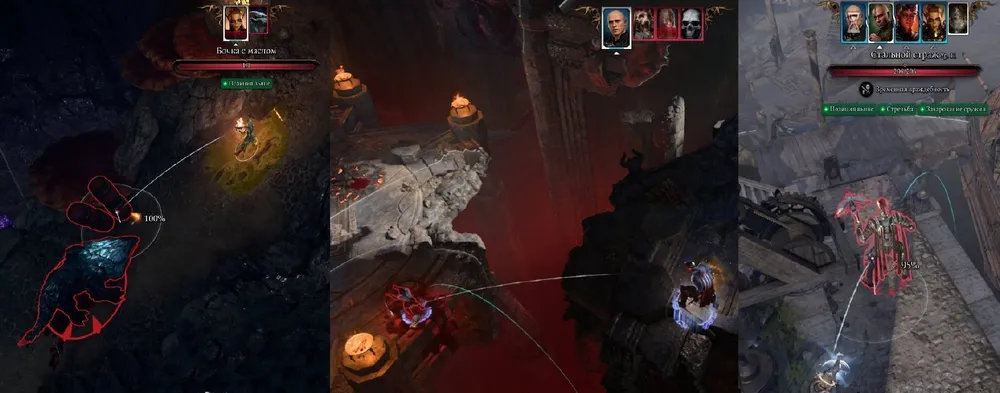
heal an ally during battle by throwing a healing potion (or, conversely, provoke him to attack you). This is very cool, but it pales in comparison to the insane turn-based battles that obliterated all bonuses of the third part's combat system...
Battles: one-zero in favor of the first part of "[Baldur’s Gate](/games?search=Baldur’s Gate)".
BALDUR’S GATE AND MAPS
We visited the main city in the first part; we will do so again in the third. However... what on earth happened to Baldur's Gate over a hundred years? Judging by the abundance of ruined buildings, enormous chasms, and unexpected mountains - a terrible tectonic catastrophe!
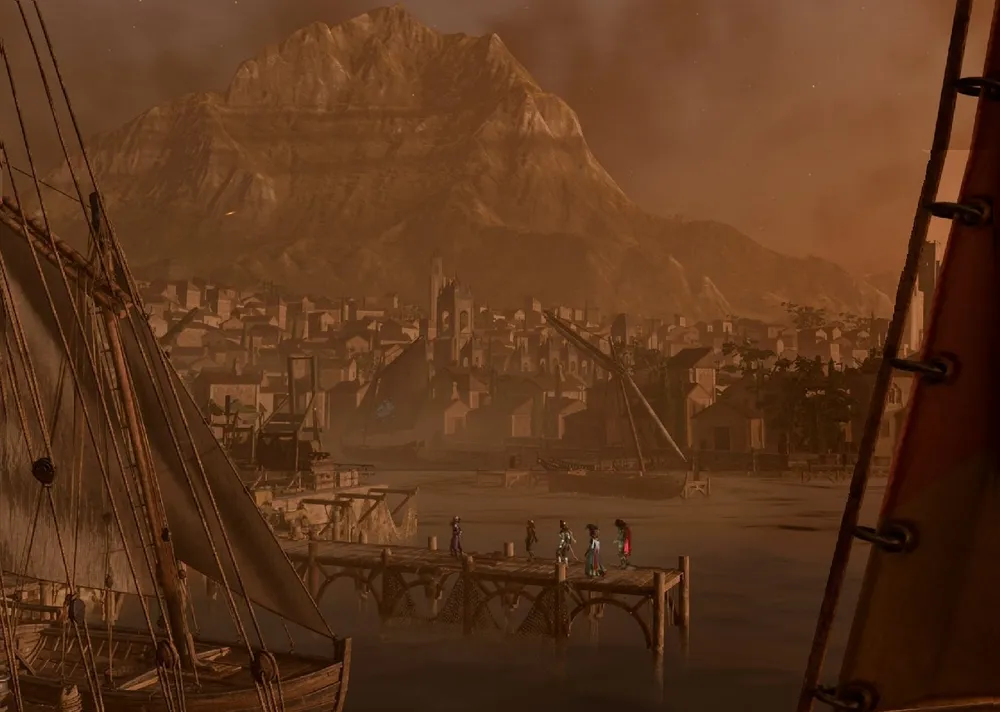
Would you believe: on maps of Toril and in the first part of the game, Baldur's Gate lies in a lowland area.
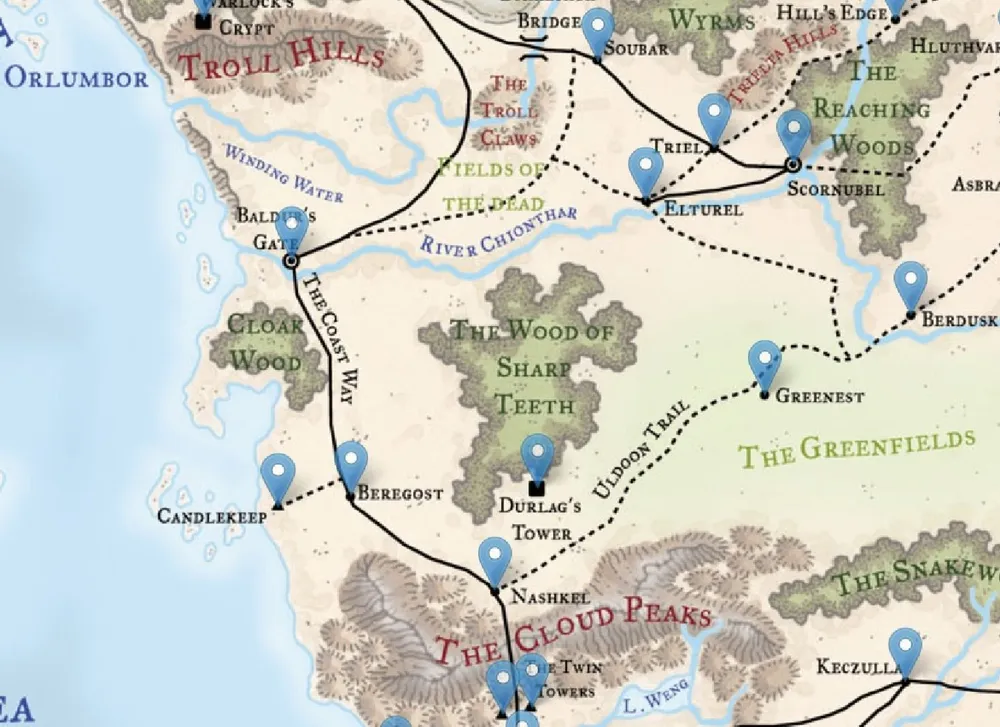
Now the city has found itself on very steep shores,
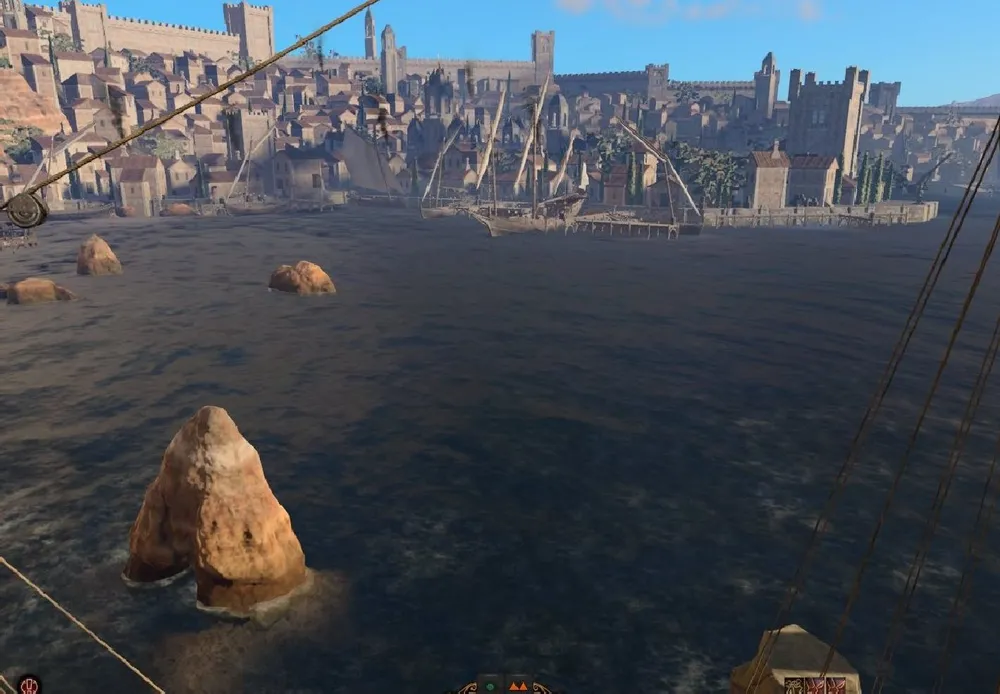
while before, the low-lying bridge over the river Chiontar has transformed into a high one: for the river flows down what seems like a gorge.
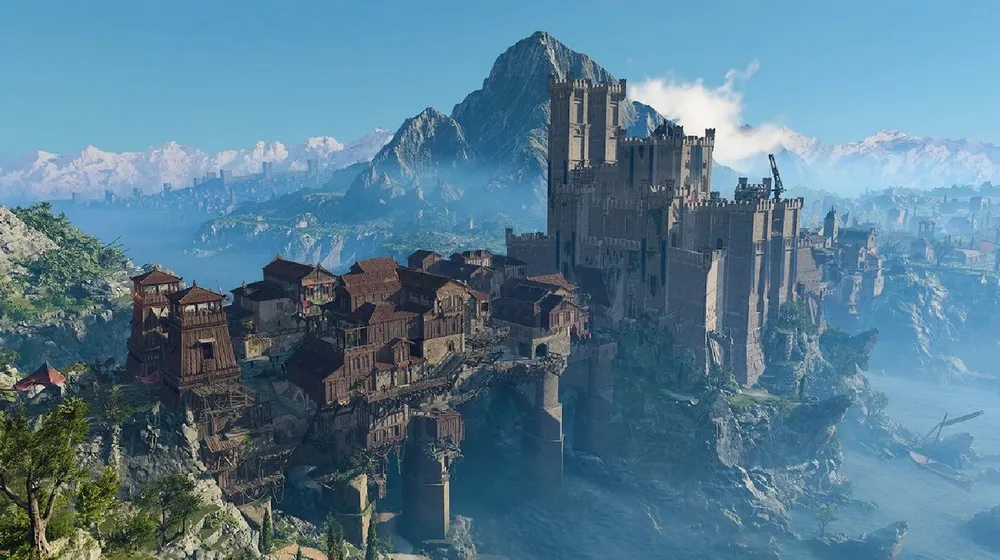
The city in the third part seems simply huge; but if you look closer and open the map, it will turn out that it is smaller than the city in the first part.
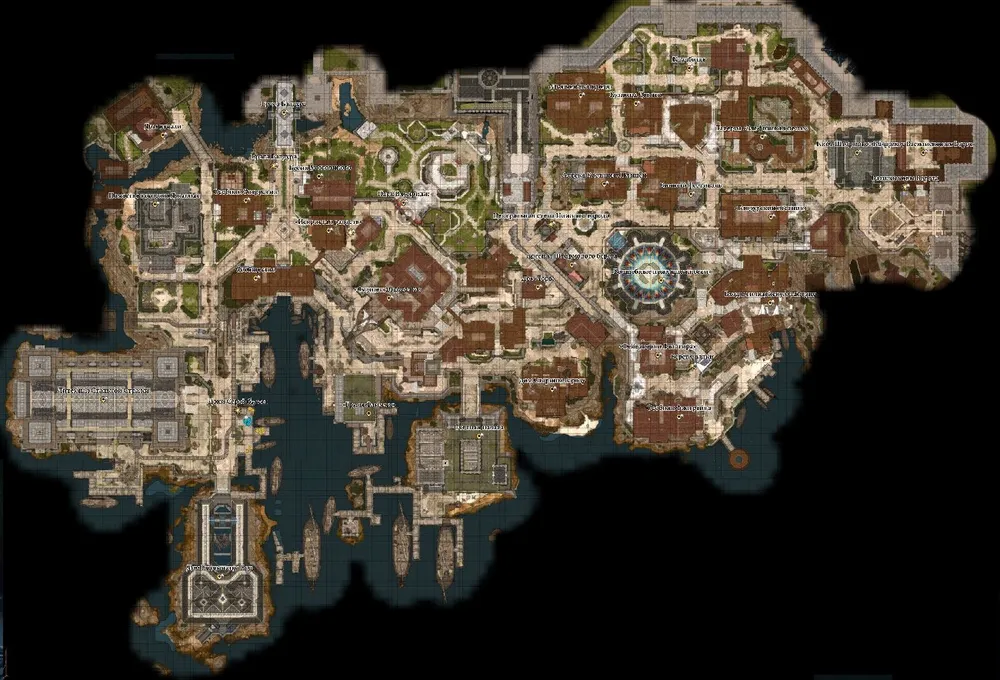
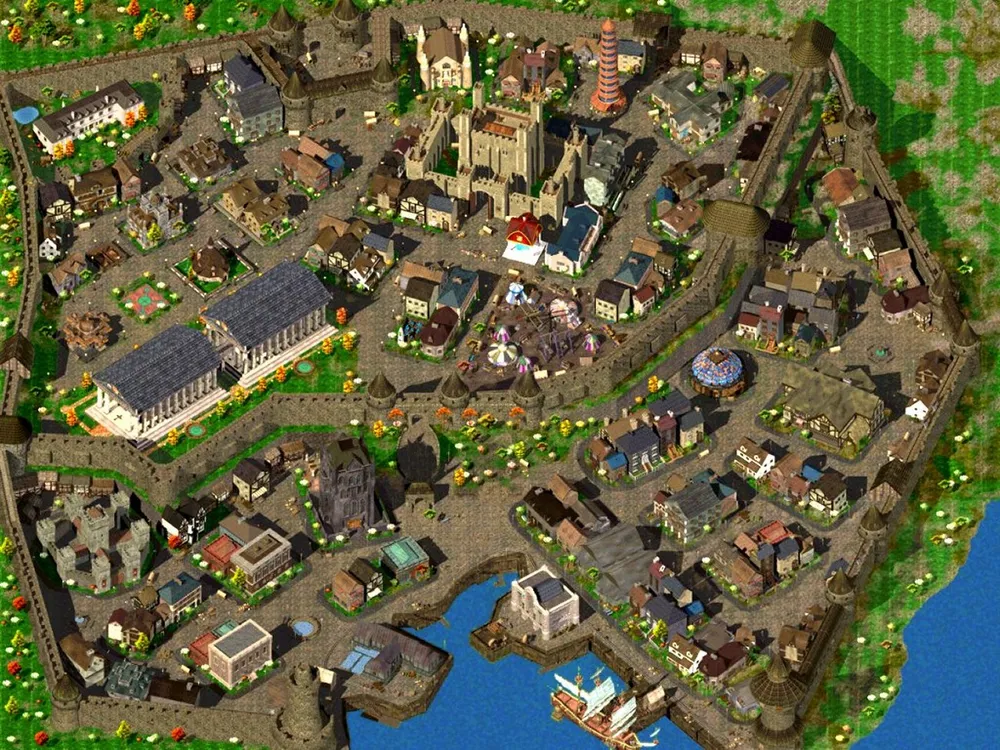
(The same applies to the Call of the Absolute: just a monstrous building turns out not to be larger than the Tower of Durthlag from the first part of the game.)

What’s this all about? It’s simply that I don’t like the carefree handling of the creators of the third part with the classic appearance of the city and its surroundings; but it doesn’t matter for evaluation.
SIGNIFICANT ADVANTAGES OF THE THIRD PART
Above all else, it's the possibility to develop a romance with one of the companions (or companions, if you are playing as a female character). However, in the case of romance for male heroes, there is a "catch": to fall in love with Shadowheart or Lae'zel, only to watch Karlach burn or, worse – turn into an illithid in the end... Perhaps foreseeing such a situation, it’s absolutely not wise to find her and invite her into the squad. (By the way, has anyone tested this option?)

"The concept of above and below": it also exists in the first part, but it cannot be used – for example, to jump from the upper tiers of the Tower of Durthlag down onto the enemies' heads. The ability to move along the rooftops of the city, ambushing enemies from beneath the roofs of buildings, dealing increased damage, tossing adversaries into the abyss, and simply admiring the views while standing at the edge of a cliff are undeniable advantages of the third part.
A massive... no – a boundless backpack! A constant headache for the first part's party: there are many enemies, even more trophies to carry, but how to carry everything, while the sizes of backpacks are limited?! Especially since trophies disappear after three days of game time. The heroes in the third part face no such problems: if only there’s enough strength, and the backpack can hold whatever you want! Moreover, you can exchange items between backpacks at any distance, which isn’t possible in the first part of the game.
The ability to individually maneuver between locations: three remaining in one place, while the fourth goes off for a stealthy solo search – what's ahead? The first part didn’t allow leaving the location without companions, while the third does. Not that it’s fantastic, but it’s not too bad either.
Four-zero in favor of the third part of "[Baldur’s Gate](/games?search=Baldur’s Gate)"!
CONCLUSION
I don’t know how many hours I spent on repeated playthroughs of "[Baldur’s Gate](/games?search=Baldur’s Gate)" - there is no game time counter on the compact disc (and it never occurred to me to count it); I only know that I could pass the first part in a solo playthrough in an hour of real time: from the moment of creating the hero to the finish; and that I have completed the game more than a hundred times – with unyielding interest!
For a single playthrough of "[Baldur’s Gate](/games?search=Baldur’s Gate) – III" on the second difficulty level, I took almost four hundred hours of real game time and five months of calendar time (I wasn’t able to play every day and not for very long): despite not having completed all quests, especially in the city. Yes, it was interesting, although I sometimes had to grit my teeth: due to the "dice". Yes, I want to complete the game again: now that I have learned a little about its intricacies and complexities. No, I won't go on "Valor" – because of the "dice" and turn-based battles; for the same reason, I won't go alone.
Yes, in general, the game is not bad, but to call it a "masterpiece" is completely unjustified. (Is it due to the graphics that it is deemed so? Because the gameplay mechanics are definitely better in the first part!)
However, here’s the conclusion of my comparison: twelve-seven in favor of the first part of "[Baldur’s Gate](/games?search=Baldur’s Gate)"!
I will gladly listen to well-grounded opinions from opponents; I will try not to pay attention to various crude outbursts.
Good luck to all of you!