
"Maximum Epicness" - Review of Crysis 2
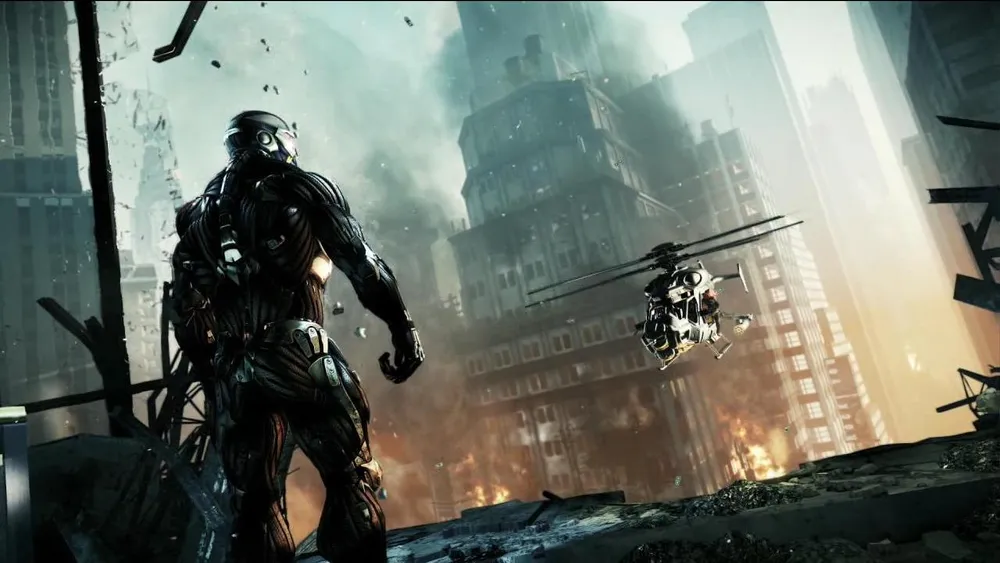
Something terrible has happened in New York. Rumors suggest that an Ebola* fever epidemic (a highly dangerous virus originating from Africa; in nine out of ten cases the result is fatal) has broken out in the city, threatening not only the citizens of America but the entire world. The main character, named Alcatraz (who thought it was a good idea to name the main character of the game Alcatraz, which translates from Spanish as ‘pelican’?), finds himself part of the first reconnaissance unit. As they head to the city on a submarine, the marines doubt they can competently act as doctors, given that fighting a virus with assault rifles (even before zombification) is at least strange. And rightly so, as a minute later some projectile hits the vessel, and calm goes to hell. Once on the surface, we find the metropolis in a dire state. Welcome to New York, bro.*
Let’s recall the plot of the original Crysis. The one presented in the game, not in Wiki. Prophet, the leader of the Predator squad, gives his soldiers a short briefing. Essentially, saying the Koreans have become brazen, and the Americans need to resolve the situation as quickly as possible. This is followed by a jump from an airplane, a brief free fall over LingSha Island, and a plunge into the water. Next comes the death of a comrade we hardly knew. The aliens, supposedly, were meant to be one of the main highlights of the project. So, we are actively engaged in combat with the army of North Korea, then something happens, and horrid-looking alien creatures appear on the scene. But no, it doesn't become a surprise, which is why it’s not surprising that, essentially, the only intriguing moment in Crysis is its ending. Prophet’s suit signals from the island, and Nomad and his comrades turn the Vtol towards the unfortunate tropics. Everything that happened thereafter remains behind the curtain.
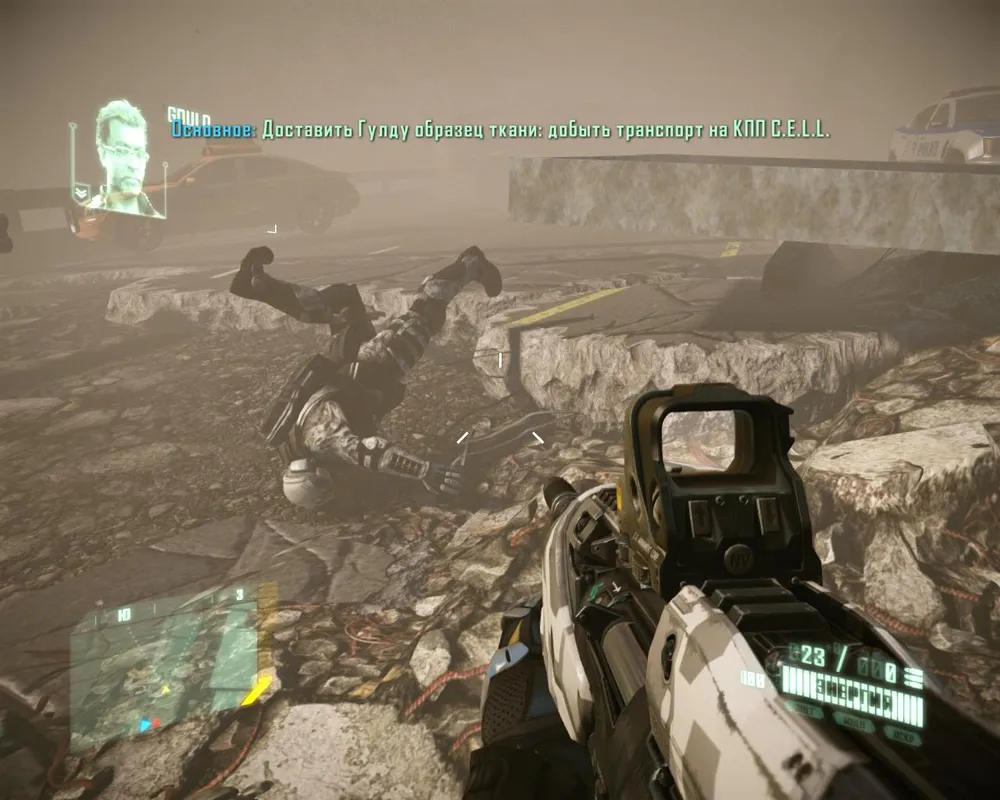
Absolutely all versions of CryEngine produce such tricks
Platoon of squids
The handful of plot presented in the first part is nothing compared to the full-bodied script featured in Crysis 2. Crytek sat down, thought, and instead of a self-taught amateur, hired a real writer and, indeed, a master of his craft – Richard Morgan (after which, if you remember, the old game writer was imprisoned). He not only can combine disparate words into a readable mass but also connect, forgive the pun, the unconnectable. Richard managed to tie both games together with unified narrative threads, which, I assure you, the author did excellently. On the other hand, perhaps he just expanded on the groundwork left by the former writer.
In any case, the plot is clearly thicker than that previous porridge. Alcatraz receives the second version of the nano-suit, meets several characters, gradually gets to the essence of the mess he has gotten himself into, and in the end becomes humanity’s only chance of salvation. It’s worth noting the role of that very Prophet, who was brutally abducted by aliens in the original: the soldier has a direct relationship with the suit. It's no wonder the creators gave him such a nickname (his real name is Lawrence Barnes), after all, a prophet is a person who presumably contacts supernatural or divine forces, serving as a mediator between them and humanity (Wiki). If you decide to delve even deeper into the plot, you might find a certain philosophical subtext.
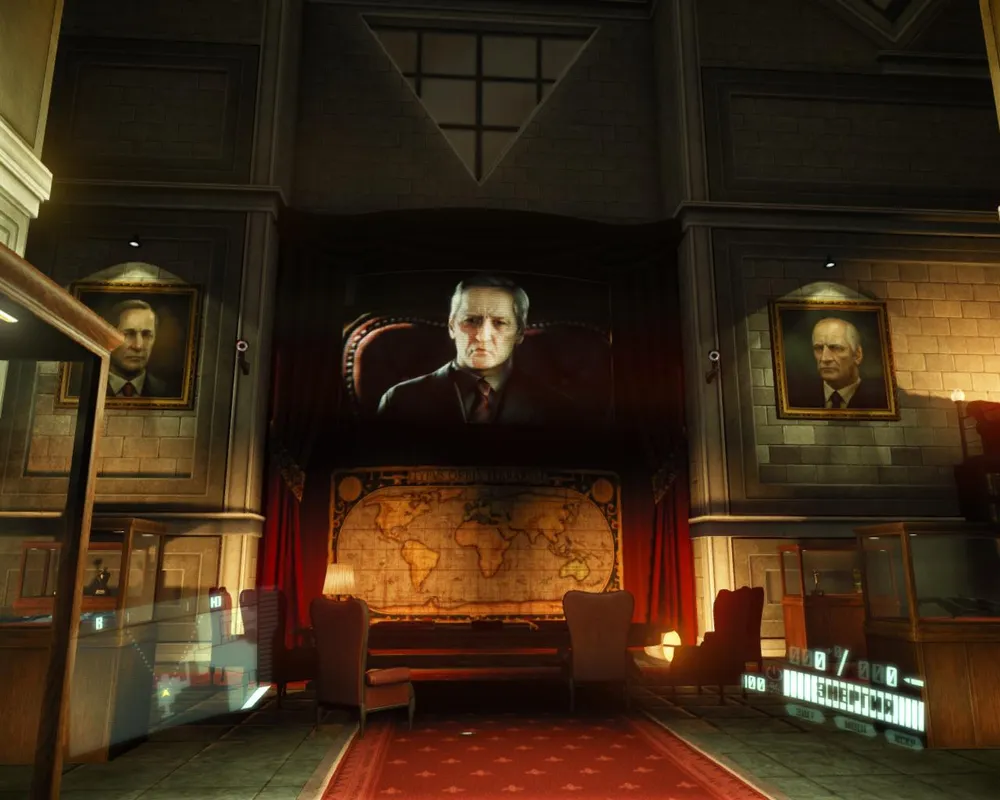
In the heart of the company Hargreave-Rasch
What is characteristic of Crysis 2 is usually not characteristic for Crysis. For example, the sequel’s plot can be spoiled for someone and thus kill their desire to go through the single-player campaign. The same goes for the characters with whom Alcatraz will have various dealings, especially take Tara Strickland, daughter of General Strickland who died on LingSha. Tara Strickland followed her father into the British armed forces and showed her best side there. She then went to serve in the U.S. Navy SEALs, but upon learning of her father’s death, she