
Retro Review of the Game "Planescape: Torment" Supported by Razer

Developer
Black Isle Studios
Publisher
Interplay Entertainment
Release Date
1999
Platform
Windows
Engine
Infinity Engine
Genre
cRPG
Game Mode
Single-player
How much guilt must one feel for their actions to completely renounce oneself in search of redemption? As much as the human act is terrible, the price of which cannot even be repaid in an entire lifetime. Your relatives and loved ones grow old, get lost, die, and you… you don't even remember that. You don't remember anything at all. Not even your own name.
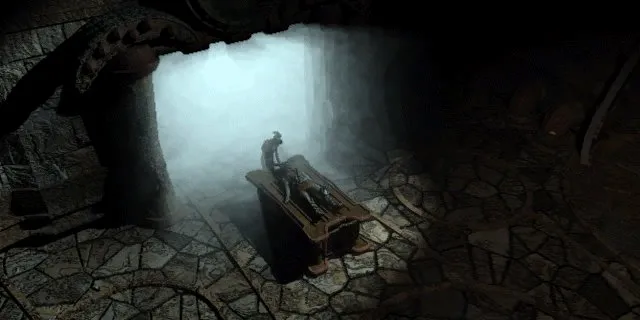
What could be scarier than waking up one day to find yourself in a coffin, buried under six feet of raw, heavy earth? Apparently, nothing, and your choices are not particularly rich. But what if one day you wake up instead on a morgue slab? Dismembered corpses, torn bodies, gaping muscles and bones, strange orderlies leaving a trail of cemetery rot and decay, and upon a second glance, not particularly alive… semi-darkness, dampness, stale air, shadows, and danger. A macabre setting, to say the least.
The only but questionable advantage over the first situation is that now you have a choice. But it's worth mentioning: this is a “choice without a choice,” you can only quickly “make your legs” since you cannot succumb to despair and die. However, no, succumbing to despair, even panic, is quite possible, but the latter – alas, or fortunately, no way, despite the fact that those around you will make every effort to help you with this.
My condolences: You're alive
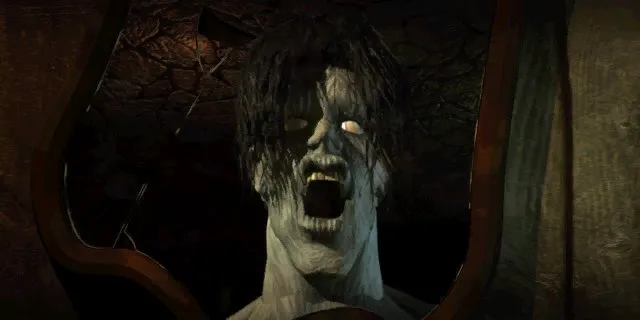
Hands, feet, head – all in place. Pain in the body – still with you. Primary inventory check done, now it's time for introductions. Nameless, that's you. You, that's Nameless. Nameless, restless, immortal, fearless, perhaps even unscrupulous, and many other similar epithets – these may all refer to you, but in your history, there is another quite important and plot-forming “without” – “amnesiac.”
Planescape: Torment begins just this way, in an atmosphere of gothic horror, with the awakening of the main character on a stone slab in the local morgue. The entire body is covered in horrific scars, while the hero's memory is as blank as a white sheet. He doesn't even remember his name. To us, he is Nameless. Upon waking, he finds himself in the company of a strange creature – a flying, talking skull named Morte. A conversation with his new companion helps Nameless figure out his immediate tasks: in order to remember who he is, the hero must find his journal, but first – he needs to escape the morgue. A long journey awaits Nameless, filled with terrifying secrets and revelations from his past.
Alice, this is pudding. Pudding, this is Alice
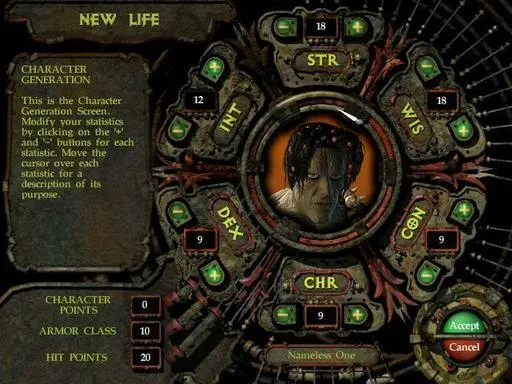
To get to know Nameless better, some interesting points should be shed light upon.
When creating a character, you don’t have much space to stretch your legs, and you won't encounter such a vast wealth of choices as we have in Baldur’s Gate, Icewind Dale, or Neverwinter Nights, where we write the whole life of our ward from scratch. Fact is fact: before you is a hero who has already lived many lives and seen a lot. He is as he is. However, during the game, it will become clear that all the excess pondering is from the cunning.
Just distributing skill points for Nameless is an intriguing puzzle in which there are almost no wrong solutions. The game is designed under the D&D system, where practically everything is linked to numbers, and creating a strong, agile character will not let you down, but low wisdom and intelligence scores will have consequences: a massive block of information will escape your grasp, and most of the information about your hero's past will remain forever in obscurity. A weak character endowed with a developed mind will also not go far: as charming, cunning, and intelligent as Nameless may be, when encountering a pack of rats, a well-crafted tongue won’t save him: they are certainly quite smart, but not to the degree that they can hold soul-saving conversations.
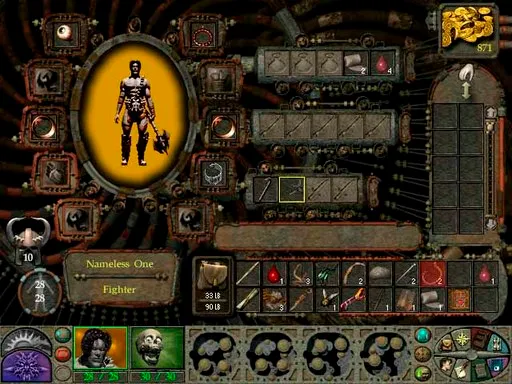
In the game, three classes are available for selection. Interestingly, unlike many other games, Nameless's class can be changed during gameplay. The character always starts as a warrior, but later has the opportunity to learn thieving skills or magic.
Each class has its advantages over the others. The warrior – a classic option, non-binding, and playing as such a character does not require any supernatural skills from you. Whoever is stronger, is right.
Playing as a rogue opens up a range of interesting options for the player. In particular, in case Nameless doesn't have a sharp mind and can't keep his tongue in check, the thieving skill of stealth is an excellent alternative method for peacefully resolving conflicts. Several speedrun gamers prefer the rogue class in their competitions, as it allows them to avoid many unwanted discussions.
Playing as a mage also has its pitfalls: the variety of spells in the game isn't that great, and as a result – Nameless remains the same warrior, but gains the opportunity to wield special weapons and occasionally release a swarm of flies on his opponents or slightly harm them in the intervals between strikes.
Nonetheless, all three classes have their incomparable objective advantages and deserve attention.
In this world, I am merely a passerby
I’m dreadfully bored, I’m just out of strength,
And thoughts come to me, troubling me,
For someone to invite me somewhere,
And there I saw something like this...
V. Vysotsky
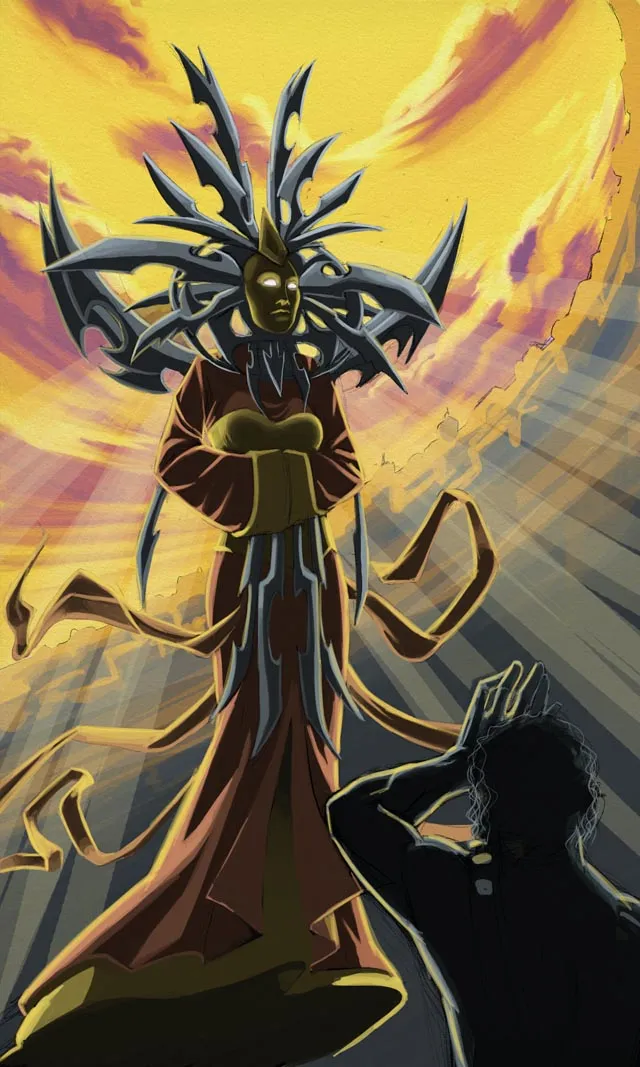
The events of Planescape: Torment take place in Sigil. This place is a kind of center of the Planescape setting of D&D’s second edition. A peculiar entity named The Lady of Pain controls all the affairs of the city. She is the unchanging ruler of Sigil and holds absolute power there, thus being particularly intolerant not only toward gods but also to all outsiders in her domain. It should be noted that entering the Lady of Pain's domain is no easy task, but if one manages to do it once, getting back is also difficult. Sigil is a unique city full of portals to other planes, and even a door in your own home, under unfortunate circumstances, could throw you anywhere, not just into the next room. One of the game characters, Ingress, has suffered from planar shifts so severely that for many years she has feared entering any door at all!... This city possesses a dangerous essence. A gloomy gray city of doors and shadows, where people and non-humans are locked up, who are already mad enough to tolerate this world.
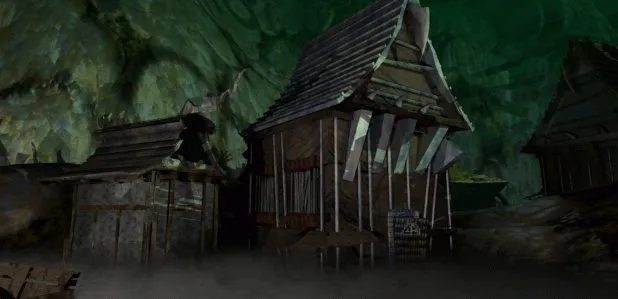
However, everyone in Sigil has their problems, which might not seem so serious and could be quite manageable if the residents weren't trapped by stereotypes and did not fear the Lady of Pain’s wrath. At the outset, you will have to perform several good deeds by interacting with members of the Scrappers faction, and at this stage, you will already begin to grasp the amount of effort put into the thorough development of the game’s philosophy. When a person must voluntarily turn themselves into an empty, soulless shell to achieve their goal, it is indeed frightening. To reach True Death, a scrapper must renounce everything, discard all feelings and emotions, completely cleanse themselves from the inside, and, in fact, lose their soul: for a restless soul is the main obstacle preventing a person from finally dying, without being reborn again and suffering endless torment. Religious sects have always been dangerous due to how blind their followers can be in following the internal philosophy, and this is well illustrated by Planescape. But even the most devoted members of the faction may sooner or later face a crisis of faith, experience confusing aspirations, or harbor deep, hidden fears and doubts. Of course, helping their souls free themselves from heavy burdens is a direct task for Nameless and you, as their guide throughout the game.
A real man always has something to say!
Let's talk, I will leave soon,
Further, further to wander through the world.
And, bidding farewell, dawn will happen
Most tender, without any signs.
A. Shaganov
A part of the game worthy of separate description is the dialogues. It has been calculated that the total amount of “bare” text in the game is about 6 megabytes! Indeed, the well-constructed dialogues determine the outcome of almost all events. Your attentiveness and perseverance can work wonders, as if you do not give up and continue to try to engage with a being who is insanely busy and seemingly not only ignoring you but simply does not perceive you as a conversation partner, the result can be surprisingly pleasant. Of course, this pleasantness is only moral, as there is little physical satisfaction from someone carving into your body almost live, and such intriguing moments will be abundant in the early game. To this aspect of the game, developers approached with a certain amount of dark humor. For various illusory benefits, you will allow yourself to be subjected to all sorts of torture: pulling pieces of flesh from yourself, twisting your neck, and even extracting your own entrails! But the crux is not at all that… Once you choose the path of least resistance, you may easily and effortlessly deprive Nameless of new important memories, invaluable experience, or something more materially tangible, but if you don't hesitate to choose the best answer option, pleasant bonuses “for harm” will await you ahead.
To strive and seek, to find and hide
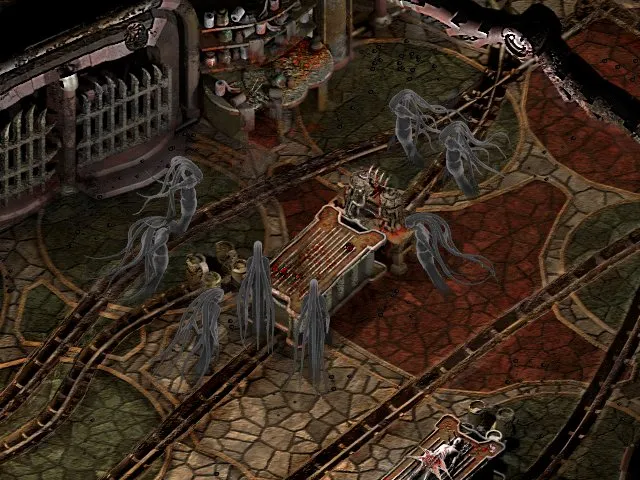
“Don't be lazy” - two words that can be considered the main advice for completing the game. Planescape is a game where you cannot be lazy and rush! A miser, as is known, pays twice. Just a couple of times being slightly lazy in exploring the Mortuary at the beginning of the game will force you to return there again mid-game and waste time searching. Once you decide to quickly dash through the Catacombs, you will also miss a huge and significant block of not only valuable but also extremely interesting information and tasty bonuses. Do not be lazy and practice speed against an invisible opponent; spend a little more time exploring the game world and your character's abilities. Keeping order in your own belongings is also among the things worth considering: Nameless and his companions' bags are by no means bottomless (although even Morte manages to carry something!), and cramming the inventory, as you might be used to in many other games, will no longer work. Your backpack should always have a few slots allocated for quest items, and only God knows what you can safely throw away right in the middle of the street, and what will come in handy literally in five minutes (and you may have just forgotten that item in the Mortuary and haven’t approached it at all – what a problem!).
For workers of the knife and axe

Speaking of items… Here it is, the cruel world! A world where you have absolutely nothing to shield yourself from an enemy's strike, but where you can freely wield practically any object in combat, even one completely unsuited for fighting, be it some incomprehensible wooden stick that for some reason is called an axe, or – oh, God… – a cynically severed arm from an unfortunate corpse. You can even stab an opponent with a fork.
There isn't actually any armor for Nameless, while nearly all his companions in the game can find two or three outfits. Still, contrary to this, you can proudly display the character in a Scrapper robe inside the Mortuary, or later, throughout the game, see how charming Nameless looks in Harmonium armor. It adds nobility and weight to our ordinary dead man, and the latter, in particular, forces him to walk slowly. These armors are divinely beautiful and certainly dramatically increase the character's defense, yet his mobility decreases. But just for experimental purposes and a smile – why not?
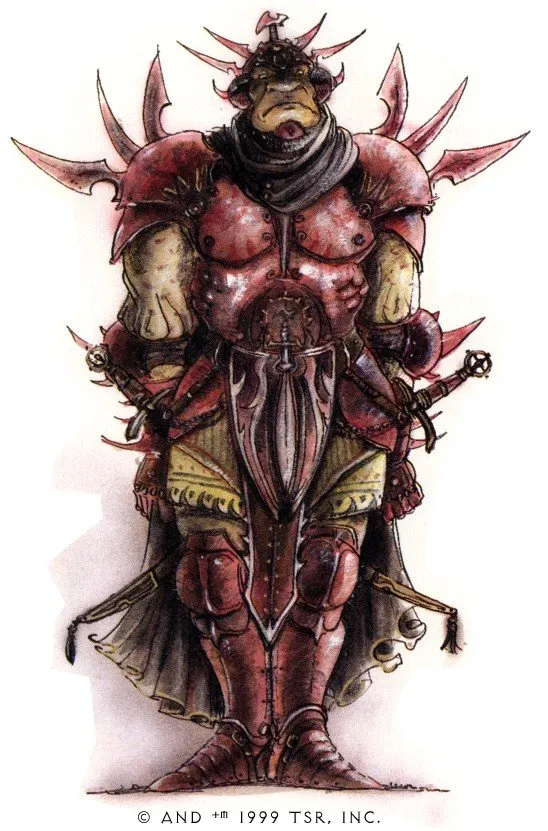
However, the choice of weapons is truly abundant. There are over 40 types of piercing and cutting weapons in the game alone! Nearly three dozen melee combat tools (including teeth that can be inserted into Morte), more than 20 varieties of maces, 18 axes, and a good dozen hammers. In total – around 150 names! This is everything that one can use to “color” the lives of anyone daring to stand in your way. Quite impressive, I must say. Although you won’t have enough inventory space or time for all this splendor, you will definitely be able to find the most fitting and weighty argument against any claims to the persona of Nameless.
On the vicissitudes of personal relationships
You are my angel you are my ideal
My little star, berry, fish.
Your teeth are pearls, and your lips corals
Your chest and smile are also lovely
I have never met anyone like this
Let this mistake be corrected
Yu. Kim
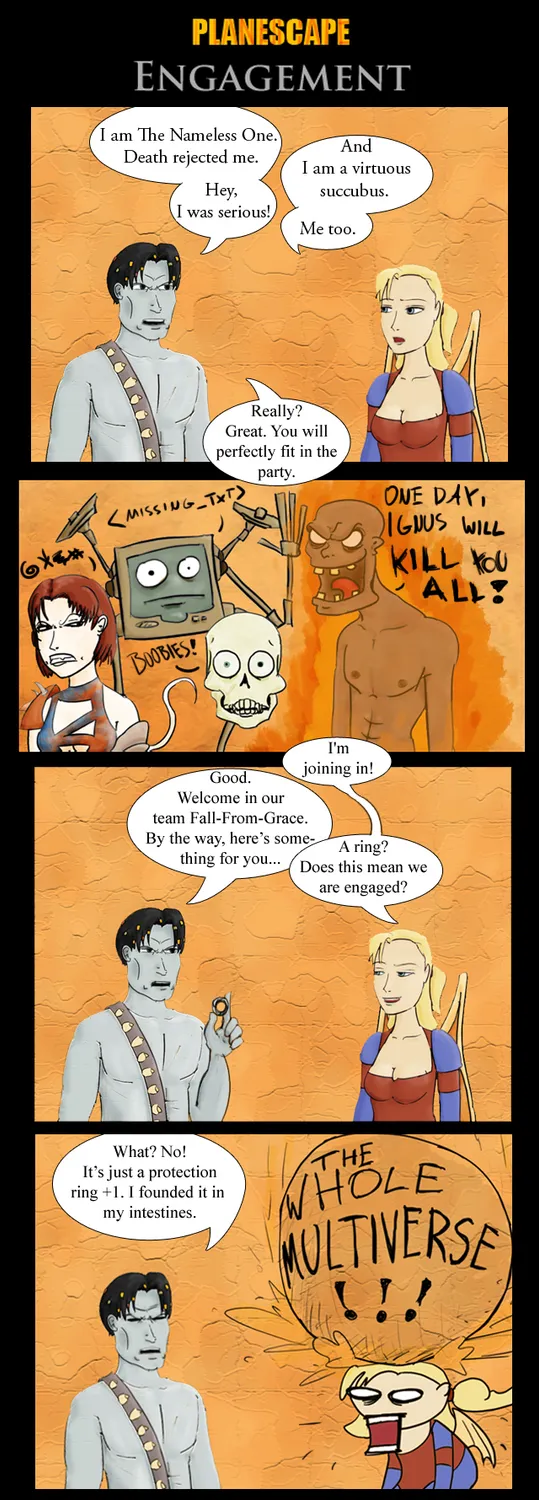
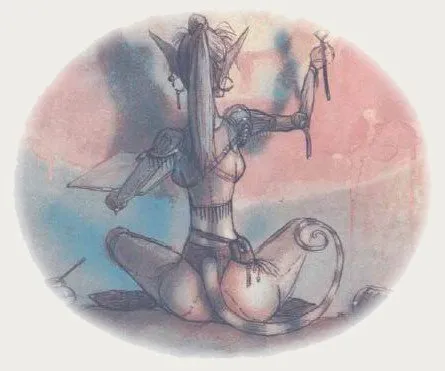
As Nameless progresses through the storyline, new companions will join the party. Unfortunately, not every companion can be said to possess a fundamentally unique character and their own quirks, but all have their own life philosophy that you will have to consider in one way or another, and you will endure the presence in your team of the ever sarcastic and troubled Morte, who has a unique knack for unsettling not just you but any enemy. Or the alluring tailed Anna, who is madly in love with Nameless but will not utter a kind word – she is just that way, a real toughie! Or the iron Nordom, the only gunner in the team, who in the original version of the game speaks in the voice of Homer Simpson.

Meanwhile, Nameless, terrifying in appearance but unusually kind inside, turns out to be the object of intense romantic feelings for any woman. Besides Anna, he is destined to experience all the nuances of relationships with the succubus Grace – the madam of a harmless brothel where nothing is situated as it should be. One cannot forget the promise to return that you made to Deionarra in the Mortuary. You need to remember who that woman was with whom Nameless traveled before he died and lived again. And finally, you must endure the exceedingly painful encounter with one important and very interesting old woman – Ravel, the Gray Witch, punished by the Lady of Pain.

Step by step, word by word, the story of Nameless will unveil, as well as the deed for which he paid with his mortality. The game has several endings, and among them – not a single one that can be labeled as a “good ending.” In this story, there can be no good ending, and everything that occurs during the game leads to one moral: there will be a heavy price to pay for everything. In this spirit of doom and futility, Planescape is maintained from start to finish.

It seemed that after the release of Baldur’s Gate, the genre had reached its “ceiling,” but the emergence of Planescape: Torment, created on the same Infinity engine, raised the bar even higher. Now it can be said that the cup of the best RPG, which still resides in the hands of Black Isle, is firmly secured for another product, one that until now has had no competitors, and in the RPG genre, Planescape: Torment stands unparalleled.