
Sengoku Jidai. Clan Wars on GAMER.ru
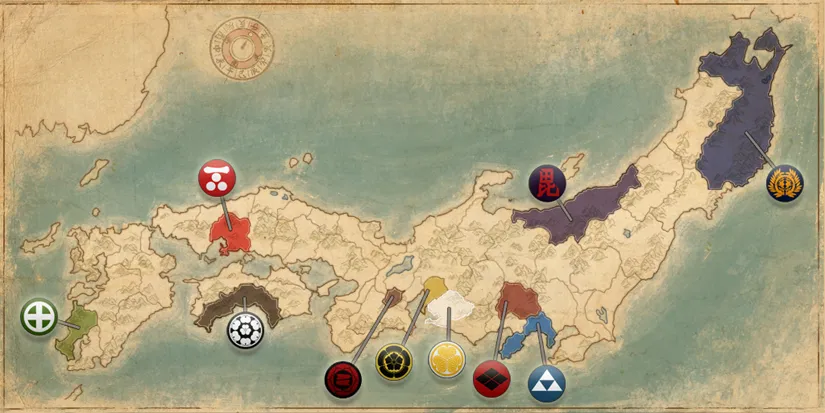
Feudal Japan, mid-16th century. The Sengoku period, also known as the Era of Warring States - a turbulent time. Ambitious daimyo, sensing the emperor's weakness, plunged the country into a lengthy and bloody civil war. [cut]
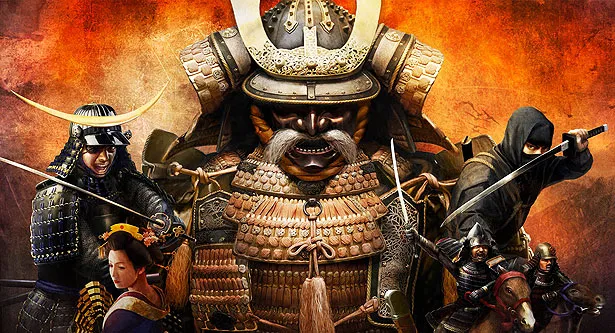
Each of the rebellious feudal lords dreams of usurping supreme power, becoming shogun; each is willing to do anything for victory: samurai die by the hundreds, peasants by the thousands, military expenses exceed all conceivable limits, and the country is filled with saboteurs and spies, while allies easily become sworn enemies. You can save Japan from years of strife by becoming the shogun to whom all rebellious clans will submit. The time for decisive battle has come!

General Provisions
Participants of the War
The war for power is fought between clans. To participate in “Sengoku Jidai”, you must create your own clan or join an existing one.
Clans: Creation and Joining
To create a clan, go to your profile and click on the hyperlink “Create your clan”. Clans can be created starting from level 3. To join a clan, go to the clan's profile and click on the hyperlink “Apply”.
Users who use the name and mon of a historically existing Japanese clan for their clan will receive a reward of 15 battle glory units. Requests for bonuses should be left in the comments to this text. Information about the clans of Japan can be found on the Network.
Clan Hierarchy
The leader of the clan is called “daimyo”. Their vassals are samurai (officers), under whom are ashigaru (rank and file). The lowest tier in the hierarchy is occupied by peasants (recruits), but let them not despair – history knows cases where an unknown vagabond became a general and even a ruler.
Peaceful Clans
A clan is considered peaceful if its daimyo (clan leader) has chosen not to engage in civil war. Attacking a peaceful clan and sending agents against it is prohibited.
Declaring War
The daimyo (clan leader) must declare the clan's entry into the war for dominance over Japan by clicking the “Join clan war” button in the clan profile or on the “Sengoku Jidai” page. Once involved in the war, you must fight until the very end. The conclusion is scheduled for March 23, 2011.
Conditions for Victory
The winner of the “Sengoku Jidai” is the clan that earns the highest number of battle glory units during the war. The daimyo of that clan is declared shogun, and all samurai and ashigaru of the clan are appointed as ministers. The titles will remain until the next civil war.
Interface
Basic information about the progress of the war, as well as the actions available to you, can be found on the “Sengoku Jidai” page.
Panel “My Clan”
The panel contains information about the clan’s status: ranking position, battle glory, attack and defense parameters (indicating all currently active positive and negative effects), treasury status, and a list of available agents. Additionally, there is a “Build Fort” button here.
Ranking of Warring Clans
A universal section that displays the ranking of clans. You can attack any clan here or send your agents against an enemy.
Chronicle of War
As the name implies, the chronicle records the events of “Sengoku Jidai”: clan battles and reports of enemy agent actions.
Panel “Clan War. Statistics” (clan profile)
The panel “Clan War. Statistics” contains information about the clan's status: ranking position, battle glory, attack and defense parameters (indicating all currently active positive and negative effects), treasury status, and a list of available agents. Additionally, there is a “Build Fort” button here.
Panel “Clan War. Event Chronicle” (clan profile)
Here you will find the full chronicle of the clan's military activities with all actions listed and descriptions of consequences, both successful and unsuccessful. The full chronicle of the clan is visible only to its members.
Clan Parameters
Battle Glory (BG)
Used to build the clan ranking. Earned only through military victories. Lost due to defeats in battle and unsuccessful actions by agents. For every day of inactivity, a warring clan loses 1 BG. Minimum value: 0. Starting value: 5.
Treasury (TR)
Measured in koku. Spent on military needs and hiring agents. Replenished over time at a rate of 5 koku per hour. Each clan member of level 5+ increases the treasury replenishment by 0.2 koku per hour. Minimum value: 0 koku. Maximum value: 100 koku (excess is spent on state needs and gambling). A destitute clan cannot conduct military operations or hire agents – thus becoming easy prey for enemies.
Clan Attack (CA)
An abstract parameter that determines the success of attacks on enemies. Base value: 10. Depending on the level, the clan receives bonuses: levels 2-4: CA+1, level 5+: CA+2. The parameter may be worsened by successful enemy sabotage.
Clan Defense (CD)
An abstract parameter that determines the success of repelling enemy attacks. Base value: 10. Depending on the level, the clan receives bonuses: levels 3-5: CD+1, level 6+: CD+2. The parameter may be worsened by successful enemy sabotage.
All these parameters are displayed in the clan profile (in the “Clan Battle” section) and on the “Sengoku Jidai” page (in the “My Clan” panel), visible only to clan members and – if successful – to enemy agents.
Open and Covert War
Having entered into the war for dominance over Japan, the clan can resort to a number of options.
Attack an Enemy Clan
Only the daimyo has the right to give such orders.
Activated in the “Ranking of Warring Clans” on the “Sengoku Jidai” page.
Costs: the attacking clan spends 40 koku, the defending clan spends 20 koku.
Frequency of use: unlimited.
The greater the discrepancy between the attack of the attacker and the defense of the defender, the higher the likelihood of victory. However, luck can smile on a weaker clan: bad weather, stomach upset of the commander's horse, and other circumstances can lead to the weaker clan becoming the victor.
In the event of a successful attack, the attacker gains battle glory, while the defender loses it.
In the event of an unsuccessful attack, the defending clan counterattacks.
If the counterattack is successful, the defender gains battle glory, while the attacker loses it. A failed counterattack incurs no negative consequences.
It is considered dishonorable to attack a clan that has been exhausted from battles (i.e., has been attacked 3 times within 1 day). Attacking a weakened clan results in serious damage to reputation, regardless of the battle's outcome.
Build Fort
Only the daimyo and samurai have the right to give such orders.
Activated in the “My Clan” panel on the “Sengoku Jidai” page or in the clan profile.
Costs: 30 koku.
Frequency of use: once per day.
The clan builds a fort: improves defense by 3 points for 1 day. Sheltering in a fort, the clan cannot attack.
Send a Ninja
Only the daimyo and samurai have the right to give such orders.
Activated in the “Ranking of Warring Clans” on the “Sengoku Jidai” page.
Costs: 20 koku.
Frequency of use: once per day.
Additional requirement: the clan must have at least 5 players of level 3+.
The ninja conducts sabotage in the enemy camp.
Possible outcomes:
• Sabotage is successful, the attacked clan suffers a minor decrease in attack and defense characteristics for 1 day;
• The ninja fails, damaging the reputation of the employing clan.
Send a Geisha
Only the daimyo and samurai have the right to give such orders.
Activated in the “Ranking of Warring Clans” on the “Sengoku Jidai” page.
Costs: 10 koku.
Frequency of use: unlimited.
The geisha infiltrates the enemy camp and attempts to gather information about its state: defense and attack parameters, what agents are currently available, whether a fort has been built. The gathered data is published in the internal log of the clan.
Possible outcomes:
• The geisha obtains accurate data;
• The geisha obtains inaccurate data, misleading her employer;
• The geisha learns nothing.
It is impossible to tell whether the geisha was mistaken.
Send a Kunoichi
Only the daimyo and samurai have the right to give such orders.
Activated in the “Ranking of Warring Clans” on the “Sengoku Jidai” page.
Costs: 15 koku.
Frequency of use: twice per day.
Additional requirement: the clan must have at least 3 players of level 3+.
The kunoichi stealthily infiltrates the enemy camp and attempts to cause trouble.
Possible outcomes:
• Neutralizes enemy geishas for 1 day;
• Neutralizes enemy kunoichis for 1 day;
• Neutralizes enemy ninjas for 1 day;
• Neutralizes one of the enemy fighters, slightly reducing the clan's attack for 2 days;
• Causes a fire, slightly reducing the clan's defense for 2 days;
• Neutralizes the daimyo - the clan cannot attack for 1 day;
• The clan cannot build forts for 1 day;
• Steals 30 koku from the enemy treasury and returns it to the owner;
• Fails the assignment, causing damage to the employer's reputation.
Diplomacy
Diplomacy during the war should be used alongside agents and the army. Joint attacks against the enemy or prolonged terror through sabotage will yield far more results than solo skirmishes. Arrange alliances and coordinate actions via messaging systems, messengers, or email. Nothing and no one, except your conscience, controls your actions: only you can decide whether to fulfill the agreements reached or betray an ally and stab them in the back. Nevertheless, do not forget: the most vicious enemies are your former friends.
Code of Honor
Having entered into war, warriors must strictly adhere to the code of honor – bushido. It prescribes, in particular, not to create false entities (twinks), to be sincere in front of the Heavenly Office (administration), and not to use the imperfection of the world (bugs) for personal gain. Violators of the order will be punished with a fine of 300 koku and a decrease in the ranking of warring clans by 100 units. Notorious recidivists will be sent to a shameful exile on Ban Island.
Glossary
The Sengoku period (Sengoku Jidai - “Era of Warring States”) is a period in Japanese history from the second half of the 15th to the beginning of the 17th century, during which the country was engulfed in civil war unleashed by rival clans.
Shogun (a shortened name from seii tai-shogun, literally - great general who conquers barbarians), originally a military title awarded to commanders of troops. Later, shoguns became the military-feudal rulers of Japan who governed the country on behalf of the emperor.
Emperor - the supreme ruler of Japan. During the Sengoku period, the emperor did not hold actual power, being merely a spiritual leader and embodiment of gods on earth. However, it was the emperor who declared who would be the shogun and tried to choose outstanding military leaders capable of establishing iron order in the country. Sometimes, an especially outstanding daimyo would storm the emperor's residence to vividly demonstrate his truly exceptional abilities and help in choosing a worthy shogun.
Daimyo - feudal lords in Japan. They regularly unleashed numerous and bloody conflicts for power over the provinces of Japan.
Samurai - the military class in feudal Japan, consisting of the “cream” of the army.
Ashigaru - a type of light infantry in medieval Japan, recruited from non-samurai (i.e., peasants, artisans). Ashigaru were the most numerous part of samurai armies, and their actions on battlefields largely determined the outcomes of confrontations between rival daimyo.
Ninja - a reconnaissance-saboteur and hired assassin in medieval Japan.
Kunoichi - a term referring to female ninjas. Kunoichi were trained differently from male ninjas. Their training was more focused on stealth, knowledge of poisons, and the use of feminine charm.
Geisha - a girl who entertains her clients with dance, singing, conducting tea ceremonies, and conversation. Geishas were regularly used for espionage.
Mon - a clan symbol of Japanese families.
Koku - a traditional Japanese measure of volume. One koku is approximately equal to 180.39 liters. Historically, koku was defined as the average amount of rice consumed by one adult person over a year. The weight of 1 koku of rice is approximately 150 kg. The number of koku of rice was the primary measure of wealth and served as a monetary equivalent in medieval Japan. For example, the salary of a samurai was determined in koku, as well as the profitability of provinces.