
Witcher Easter Eggs (Updated)
From the Translator. The article, the translation of which is presented for your attention, is a rather impressive collection of 'Easter eggs' from our beloved The Witcher, and, in my opinion, could very well be named The Encyclopedia of Witcher Easter Eggs.
The source material for this article consisted of messages from the [official English-language game forum](http://www.thewitcher.com/forum/index.php?topic=2878.msg146995#msg146995), which the author attempted to organize and systematize as much as possible. Acknowledging that some Easter eggs could be classified into multiple sections, he encouraged readers not to hesitate to participate in improving the suggested systematization, which I did. Moreover, I decided to support the author's good initiative and supplemented his collection with posts from the [RPGArea forum](http://forum.rpgarea.ru/index.php?showtopic=15979) that appeared to me as the most interesting.
I would like to warn readers that not all of the 'finds' presented here were verified for their presence in the game or for their semantic adequacy. Neither the author of the original article, by his own admission, nor your humble servant possess the level of knowledge that would allow this to be done. Therefore, if any reference, hint, or association seems incorrect to you, feel free to inform us in the comments.
Visual Easter Eggs
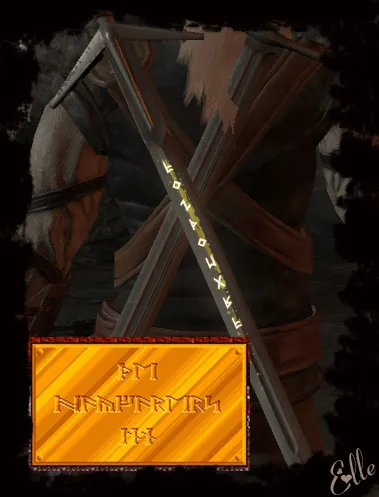
Some players felt that the runes appearing on the sword after applying a rune stone, which temporarily fills the blade with magical power, resemble runic inscriptions from Ultima (a series of computer RPGs), based on the oldest runic alphabet of Futhark (Elder futhark).
In some houses and rooms, there hangs a portrait of a man resembling Leonardo da Vinci (at least, he looks very much like him).
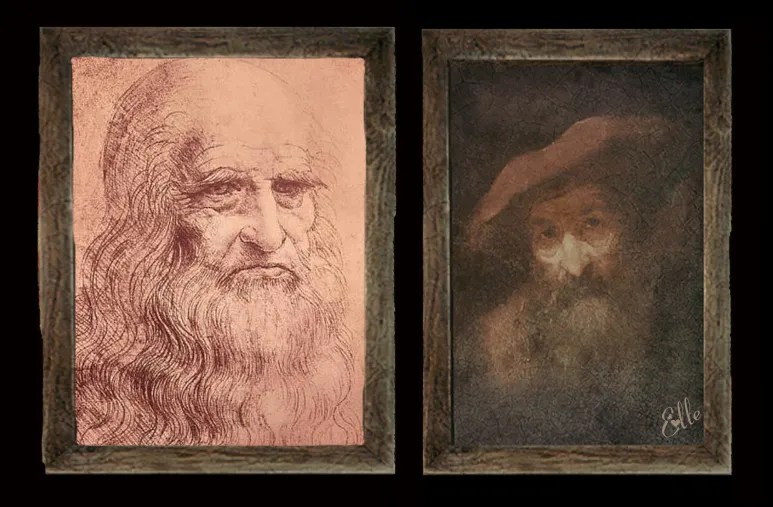
On the wall of the first floor of Kaer Morhen, there is a painting that Geralt refers to as: