
Pelaaja-aika №4

Hei, rakkaat lukijat!
[cut]
Ennen kuin kysytte: ei, kellomme tikittävät normaalisti, ja kyllä, olemme tietoisia siitä, että edellisestä julkaisusta on kulunut kolme viikkoa. Tämä on kertaluonteista... mutta aloitetaan alusta.
Aiemman numeron viimeistelyn ja erityisesti sen hetkisen työskentelyn aikana sen parissa, mitä nyt näette, nousi jälleen esiin joukko virheitä, jotka tehtiin alussa. Erityisesti: a) suunnittelu b) toimintajärjestelmä ei ottanut huomioon, että olemme ajankohtainen julkaisu c) "samanaikaisen käännöksen ongelmat" hallituksen kanssa.
Viimeinen asia on hiljattain kuitenkin ratkennut, mutta perusongelman — siirtymisen "ajankohtaiseksi" järjestelmäksi, jossa kaikki voivat työskennellä rauhassa riippumatta muiden toimista, ei onnistunut ratkaisemaan. Yhteensä oli kaksi vaihtoehtoa: siirtyä hitaasti mutta varmasti "niin kuin on", tai ottaa pieni tauko, jotta voimme normalisoitua tarpeeksi nopeasti. Valitsimme jälkimmäisen vaihtoehdon. Uskon, että seuraava julkaisu on myös hieman normaalia pienempi, mutta kuukausi myöhemmin odotamme voivamme päästä "kruiserinopeuteen".
Tässä numerossa on vain kaksi "uudistusta". Ensinnäkin, olemme luopuneet tekstin ympäröimisen käyttämisestä kuvilla (kuka näki aiemmat julkaisut, ymmärtää). Se ei ollut kannattavaa — se ei herätä "wow-efektiä", niiden kanssa työskentely vie paljon aikaa, ne kuluttavat valtavasti liikennettä, luovat rajoituksen 100 kuvaa, eivät näy haussa... Jo seuraavassa numerossa toteutamme uusia saavutuksia suunnittelussa ja tekniikassa, joihin emme aikaisemmin pystyneet siirtymään.
Toinen uudistus on "Uutiset"-osion täydellinen uudistus. Voisin jopa sanoa, että radikaali. Jos aiemmin tarkastelimme kunkin tapahtuman yksityiskohtaisesti, nyt olemme siirtyneet järjestelmään, jonka laajuus on "kaksi riviä". Älä unohda äänestystä tästä aiheesta postauksen lopussa.
Lopuksi "alkusanoissa" muistutan perinteisesti erittäin hyödyllisestä "seuraa"-napista profiilissamme. Tämä auttaa sinua olemaan missaamatta ainuttakaan julkaisua.

Devil May Cry 5 (by Capcom) on julkistettu. Yhteisön reaktio tähän uutiseen oli melko skeptinen, ei vähiten, hmmm, "päähenkilön uudelleensuunnittelun" vuoksi.
- lokakuuta Allods Online juhlii syntymäpäiväänsä "Barkhat"-klubissa (Moskova, tietenkin, mitä muuta olisit odottanut?). Ikäraja on 18 vuotta, mikä ei ole mikään sattuma. Meillä on 80-tason alastomia اورфольк!
Bobby Kotick, Activision Blizzardin päällikkö sai päähänsä hullun ajatuksen - yhdistää kaikki Starcraft II:n katsojanäytöt, nimittää se "elokuvaksi" ja myydä. Kaksikymmentä dollaria. Tai jopa kolmekymmentä. Toivomme, että tätä ei kuitenkaan toteuteta.
Ilmoitettu uusi DLC Mafia II:lle - Joe's Adventures. Myöhemmin lähes kaikki olemassa olevat DLC:t ilmoitettiin Steamiin. Ja kaikki tämä – kolme dollaria kappaleelta. Jokaisessa paketissa on kaksi tai kolme pukua ja kaksi autoa. Miten tämä... onko se liian kallista?
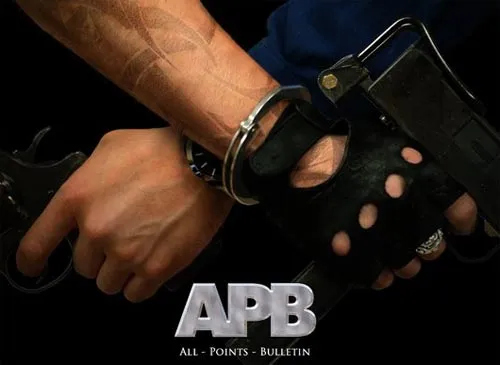
APB on suljettu. Ottaen huomioon, että julkaisusta on kulunut vain kaksi kuukautta, on oikeampaa sanoa, että se "murtui rajusti". Palvelimet suljettiin, "korvaukset" (lähes mikä tahansa EA Storen peli) saatiin. Kuitenkin, niitä saivat vain ne, jotka ostivat pelin Steamin kautta, kaikki muut saivat vain heikon toivon siitä, että APB kuitenkin julkaistaan ja ”uudelleenkäynnistetään".
- syyskuuta iPhone 4 saapui Venäjälle... jotta se heti loppuisi. Ei, tietenkään asiat eivät olleet niin huonot kuin silloin, kun iPhonet myytiin loppuun ennen myynnin alkamista (ennakkotilausten myötä), mutta meilläkin ne loppuivat melko nopeasti. Vaikka ne ovat nyt taas saatavilla, ja tällä kertaa kohtuullisessa määrässä.

Steam ikuisesti! Mitä? Vihaatko sitä? Valitettavasti amerikkalaiset "näppäimistökaverit" siirtyvät jo voimakkaasti digitaaliseen jakeluun. Tarkemmin sanottuna se ohitti ensimmäistä kertaa laatikkolaadun myynnin.
Päivitys 1.1.0. julkaistiin Starcraft II:lle. Tässä päivityksessä kuvauksen kokoaminen vie enemmän tilaa kuin kaksi riviä. Ja valmistautumaan on aloitettu 1.2.. Tällä vauhdilla voimme ehkä päästä 2.0:aan muutaman vuoden kuluttua.
Julkaistiin Polycount Pack - päivitys Team Fortress 2:lle, joka avasi uskomattoman paljon aseita ja pelaajien kauan odottaman "kaupan". Ah, melkein unohtin että, nyt lähes kaikkea pelissä voi ostaa oikealla rahalla.
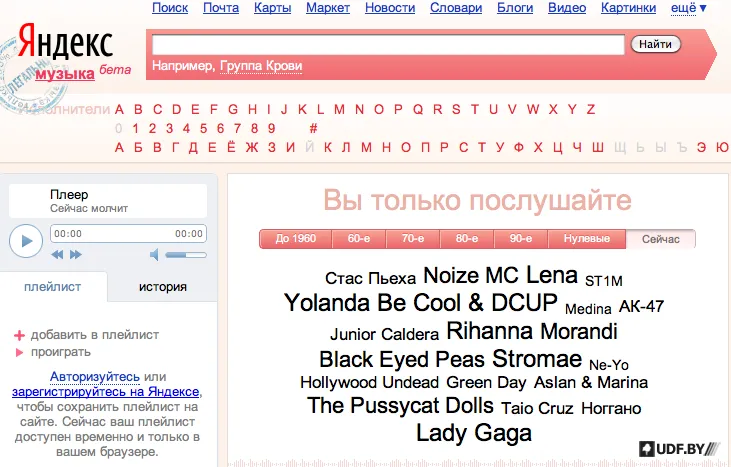
Yandex aloitti uuden musiikkipalvelun (linkki). Erityisesti ilahduttaa, että soitin ilmestyy myös oikeiden hakutoiveiden yhteydessä. Musiikkipohja, vaikka ei rajaton, herättää kunnioitusta. Musiikkia ei voi ladata (ainakaan laillisesti, heh-heh...), sitä voi vain kuunnella verkossa.
EA vs Kotick. Viime aikoina Bobby Kotickin nimi on ollut poikkeuksellisen yleisessä uutisvirrassa. Onko tämä kyynistä PR:ää? Joka tapauksessa, Activisionin johtaja "hyökkäsi" EA:ta vastaan (kuulemma, etteivät he osaa työskennellä ja ylipäätään ovat huonoja julkaisijoita). Seuraavana päivänä EA esitti vastahyökkäyksen (mutta jo henkilökohtaisesti Kotickia vastaan), joka oli huomattavasti vakuuttavampi.

- The First Gaming -kanava lopetti lähetyksensä syyskuun lopussa. Online-lähetyksen yhä yrittää lähettää, mutta on selvää, että kaikki on ohi - Gameland.tv on nimetty uudelleen Man.tv:ksi ja lähettää jo ohjelmaa. Se oli pelaajille suunnattu kanava, mutta nyt kanava "miesten kanavaksi". Kaiken syyn – ei kannattavuus ja tarpeettomuus. No... Hetki hiljaisuutta.

Julkaisujen ja lokalisointien päivämäärät.
Kalenteri
**Nimi** **Genre** **Julkaisupäivämäärä**
NBA 2K11 Koripallo/Sportti 5. lokakuuta
Left 4 Dead 1/2: The Sacrifice Lisäosa 5. lokakuuta
Lionheart: Kings' Crusader Strategia 8. lokakuuta
Pro Evolution Soccer 2011 Jalkapallo/Sportti 8. lokakuuta
Arcania: Gothic 4 Roolipeli 12. lokakuuta
Medal of Honor Sotilaallinen FPS 12. lokakuuta
EverQuest: House of Thule Lisäosa/MMORPG 12. lokakuuta
Lost Planet 2 Futuristinen toimintapeli 15. lokakuuta
Fallout: New Vegas Roolipeli 19. lokakuuta
* Toimitus ei ota vastuuta mahdollisista julkaisupäivämäärien siirroista.
Lokalisointikulma
Hei kaikille. Tänään kerron jälleen teille lähitulevaisuuden julkaisuista maassamme. Voin sanoa varmasti - emme varmasti kyllästy, sillä myyntiin tulee runsaasti odotettuja (ja ei niin odotettuja) projekteja. Löytyy pelattavaa niin seikkailupelien ystäville, roolipelin fanille kuin myös niille, jotka eivät voi elää ilman toiminta- ja räiskintäpelejä.
**Nimi****Genre****Päivämäärä****Julkaisija**[Uskollinen maailmankuuntelija](http://www.gamer.ru/games/1492-uskolzayuschiy-mir) Seikkailu 8. lokakuuta 1С-SoftClub /
Snowball StudiosGoTikka 4: Arkania Roolipeli 12. lokakuuta AkellaMedal of Honor Sotilaallinen FPS 14. lokakuuta Electronic ArtsFront Mission Evolved Robotti-toiminta 14. lokakuuta Nova-DiskLost Planet 2 Futuristinen toimintapeli 15. lokakuuta 1С-SoftClubSid Meier's Civilization 5 Strategia 22. lokakuuta 1С-SoftClub
* Toimitus ei ota vastuuta mahdollisista julkaisupäivämäärien siirroista.

8. lokakuuta myyntiin tulee venäjänkielinen versio melko uudesta seikkailupelistä nimeltä Uskollinen maailmankuuntelija (alkuperäinen nimi — The Whispered World; kehittäjä ja ulkomainen julkaisija — Daedalic; "1С-SoftClub" ja Snowball Studios). Pelin juoni kertoo nuoresta klovnista Cedrikistä, joka rakastaa tutkia salaperäistä maailmaa. Unessaan poika näki, että maailmalle uhkaa vaara, ja vain hän voi estää tämän kauhean katastrofin. Pelissä odottaa hieno, tyylikäs grafiikka, satumaisen maailman tunnelma, kiehtova juoni ja paljon muuta. Suosittelen lämpimästi kaikille.
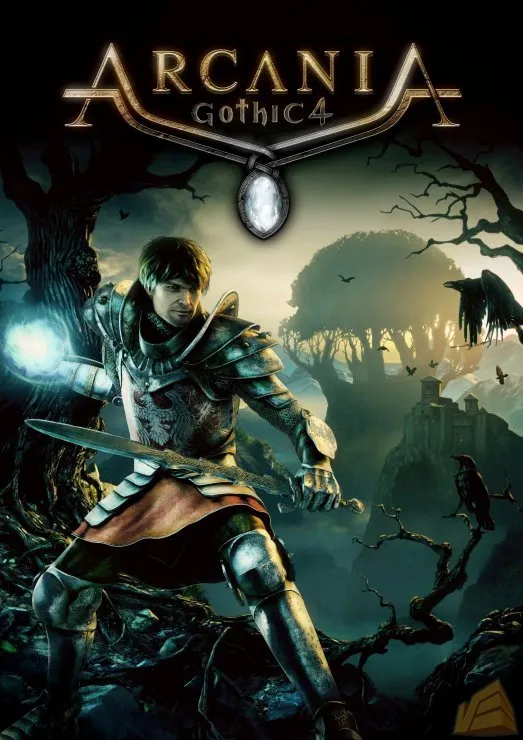
Roolipelifanit voivat iloitsevat, sillä 12. lokakuuta kauppojen hyllyillä saa näkyä aiemmin suuren roolipelisarjan "GoTikka" neljäs osa. Sarjan uusin osa on nimeltään "GoTikka 4: Arkania". Pelin tapahtumat sijoittuvat Feshirin kaupunkiin, missä meidän uudella nimettömällä sankarilla, jota ajaa kostontavoittelu, on etsittävä niitä, jotka ovat vastuussa hyökkäyksestä hänen kotikyläänsä. Perinteisesti lupaa upeaa grafiikkaa, kiehtovaa juonta edellisten osien hengessä, valtavaa, elävää maailmaa ja niin edelleen. Pitävätkö he lupauksensa? Ja kyllä, voit nyt jo ladata demoversion pienestä saaresta ja useista tehtävistä.
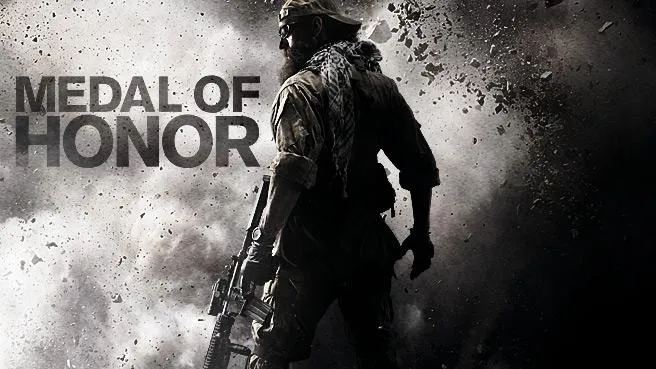
Et voi elää ilman räiskintäpelejä? Hyvin, teilläkin on juhlan aikaa. 14. lokakuuta jännittävistä taisteluista nauttivat voivat hankkia uuden osan suositusta franchiseista ["Medal of Honor"].(http://www.gamer.ru/games/2136-medal-of-honor-2010) Tällä kertaa emme odota enää perinteisiä seikkailuja toisen maailmansodan aikakaudella, vaan nykypäivän sotaa nykypäivän Afganistanissa. Yksinpelikampanjan perustana ovat oikeat tapahtumat, joita Tier 1 -osaston jäsenet ovat kertoneet. Elitisssön Tier 1 -sotilaan roolissa pelaajan on taisteltava "Talibanin" ja "Al-Qaidan" joukkoja vastaan. Multiplayer -tila Medal of Honor on kehitetty studiossa DICE, joka tunnetaan "Battlefield" -sarjasta. Muuten melkein eilen alkoi uusi beta-testaus, johon kaikki halukkaat voivat osallistua.

Syksy iskee peliharrastajien kukkaroihin kaikilta genre-fantomeilta. Ja olihan vasta syyskuu!
Lähettääkseen pian kaksikymmentä vuotta täyttävän Civilization on yhä elinvoimainen. Sen jälkeen kun se selviytyi siirtymisestä kolmanteen ulottuvuuteen Civilization IV:ssä, viides osa kokeilee sosiaalisuutta, saavutuksia ja DLC:tä. Salliessaan kuitenkin vain nauttia huolettomasti niiden kymmeniä vuosikymmeniä hioitunutta pelattavuutta, jonka kuvaaminen mini-arvosteluissa on täysin turhaa. “Civilization” on kaunis ja ikuinen.
Metatarkistus:
Lehdistön mielipide: 91/100,
Pelaajien mielipide: 7.5
Historia – kiinnostava asia. Vuonna 2000 kehittäjä Bungie ostettiin Microsoft:ilta. Ostettiin Halo:sta, mutta tiimille annettiin mahdollisuus viimeistellä kulttihyppy Oni:lle Take-Two:lle. Lähtiessään MS::stä kymmenen vuoden kuluttua Bungie tekee lopuksi parhaimman osan Halo:sta Reach -osa, - esiosa sarjasta, joka tapahtuu muutama viikko ennen Halo: Combat Evolved -tapahtumia. Kanoninen ensimmäisen persoonan ampuja sekoittuu syvään co-opin ja jopa avaruus-simulaation elementteihin. Tämän kaiken todellisia suuria budjetteja ja kymmeniä moninpelimuotoja, jotka on räätälöity moneen makuun. Halo -taiteilija on tunnettu parhaana “fanipoikien” sarjana, joidenko arvioja nostetaan vain nimen vuoksi. Joitakin edellisiä osia on todella pidetty ylikalliina, erityisesti Halo 3. Mutta Reach - mestariteos, joka kilpailee vain ensimmäisen osan, Combat Evolved:in kanssa. Vain kohtuudella mahtava, kohtuudella dramaattinen tarina ihmiskunnan tärkeimmän maailman tuhoutumisesta vaatii sekä ampumistaitoja että taktista ajattelua. Ja uskokaa, tunnin pelin jälkeen unohdat, että sinulla on peliohjain käsissäsi, etkä hiirtä. Todellakin, Remember Reach.
Metatarkistus:
Lehdistön mielipide: 92/100,
Pelaajien mielipide: 7.2
2010 vuosi merkitsi sitä, että myyntiin tuli heti kaksi numeerista Final Fantasy -peliä. Kolmastoista osa valloitti PS3:ta huhtikuussa, mutta neljästoista alkoi hiljaa PC:llä syyskuun lopussa. Pelin toinen alusta on edelleen PS3, mutta teknisten ongelmien vuoksi sen julkaiseminen tapahtuu vasta ensi vuonna. Sarjan toisen saapumisen online-peleihin ei ole tapahtunut melkein ensimmäisellä tasolla seitsemän vuotta sitten. Peli ei vie suurempia mullistuksia genreenä eikä yritä houkutella pelaajia arvostettujen kilpailijoiden puolelle, - tämä teos on ainutlaatuisen korkeakulttuurin arvostajille, ja samalla myös pelaajille, jotka haluavat kokea epätavallista online-kokemusta samalla korkealla tasolla kuin WoW tai Aion. On huomattava, että pelin tekninen osuus vaatii vielä muutamia kuukausia työstämistä, niin kuin melkein jokaisella suurilla MMO:illa. Siksi on parempi olla käyttämättä rahaa ennakkoon tai odottaa trial-tilien avautumista tai PS3:n julkaisua. Siihen mennessä Final Fantasy XIV voi varmasti esiintyä sen kaikessa loistossa.
Metatarkistus:
Lehdistön mielipide: 84/100,
Pelaajien mielipide: 5.0
Zombit ovat yksi modernin peliteollisuuden keskeisistä hahmoista. Tietokoneet ja konsolit mahdollistavat vihdoin satojen kuolleiden alkuperäisten ytimien visualisoinnin suorassa ajassa, ja Dead Rising 2 - on japanilainen variaatio zombien vyörystä suurkaupunkiin. Peli keskittyy satoihin aseisiin ja pukuun joka käsitykset, ja avoimeen maailmaan, jossa seikkailuja rajoittaa liikkuva aikaraja. Vaikka tekninen taso on jäänyt vuoden 2006 ensimmäiseen osaan, niin jatko-osa on todellinen lahja zombifaneille ja lukemattomille niiden eliminoinnista. Ja niin, älä sure, että olet menettänyt ensimmäisen osan - ero on suunnilleen sama kuin osien Left 4 Dead välillä. Zombeja riittää kaikille.
Metatarkistus:
Lehdistön mielipide: 76/100,
Pelaajien mielipide: 7.5
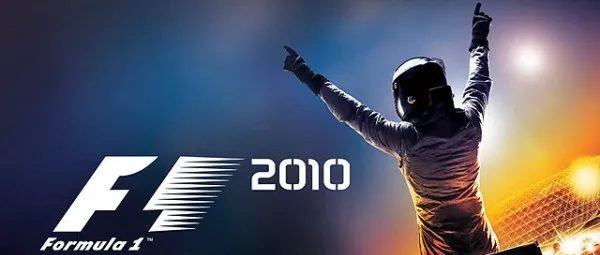
Enfinally, the exclusive contract between Sony has expired, and for the first time since 2002, a true big project dedicated to Formula 1 has entered our platform. It is doubly pleasant that this comeback has happened under the sign of Codemasters, which has breathed new life into the racing genre in the past couple of years. Chic urban GRID, rally DiRT 2, and now the insane speeds of F1– all in a unique manner of combining arcade-like gameplay and realism just enough to feel like driving while not hitting your head on the wall at every turn. Just be aware that in order to enjoy F1 2010, you need to know about real Formula 1 championship, as 50 laps here is no joke, but sometimes a harsh reality. And yes, it has already been officially confirmed that this series will become annual.
Metatarkistus:
Lehdistön mielipide: 84/100,
Pelaajien mielipide: 6.8
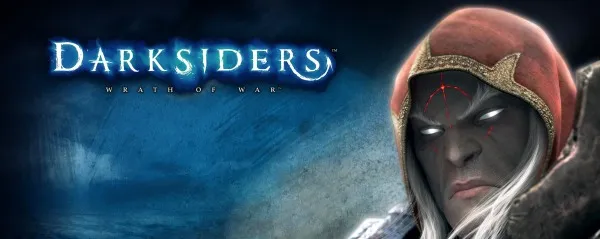
Having been released on consoles in January of this year, Darksiders reached computers in September. The epic slasher tells the story of the Horseman of the Apocalypse named War, who tries to learn the reasons behind the destruction of the human realm without his knowledge. A hundred years after the Day of Judgment, he must explore the devastated demon-infested Earth and reclaim his former power. The main thing to emphasize in Darksiders is the very high quality of the port. Its keyboard and mouse controls feel native here. In general, the game is reminiscent of a high-budget version of the Ukrainian Collapse, not a cross-platform epic from the creators who are now working on Warhammer 40k: Dark Millenium Online. The game certainly turned out great, and given the genre deficiency - absolutely essential to try. But it looks from a very Russian perspective since the developers, possessing great technology and narrative, do not have a clear understanding of the balance in gameplay and fail to feel the player's desires, swinging from one extreme to another. However, the first half of the game contains enough interesting content for Darksiders to remain in players' memories for a long time. Perhaps in a couple of years, you'll want to finish it and find out what the ending was all about...
Metatarkistus:
Lehdistön mielipide: 84/100,
Pelaajien mielipide: 8.6

A wild marketing creation that cast a shadow over Katauri and presented 1C as an evil corporation. “Crossroads of Worlds” – a collection of modifications comparable in scale to “KR2: Reboot”. However, while the latter was presented as a collectible compilation, here the cover shamelessly promises a grand expansion. Considering that “Princess in Armor” was also a massive expansion, the average buyer expected a new chapter in the series. However, included is an editor, and fans will surely create quite a number of intriguing things that will eventually justify the costs. But I advise all fans of the series to wait for the collection edition of the whole King's Bounty “trilogy.” However, unfortunately, its release is a big question mark. If you missed Princess in Armor, you can safely buy Crossroads - it’s worth it.
Metatarkistus:
Lehdistön mielipide: 75/100,
Pelaajien mielipide: None
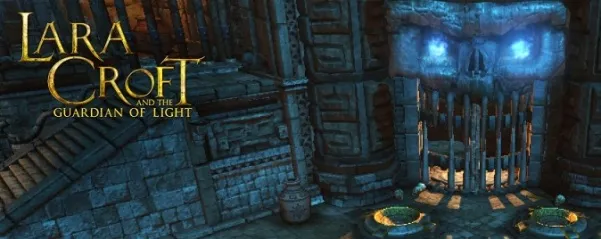
Laura Croft's new adventure has shed the Tomb Raider prefix and is in a different genre than the main series. Guardians of Light is an isometric cooperative platformer. It's isometric – because the view is from above, and cooperative – because the game is designed for two players, similar to the recent Alien Swarm, although the single-player campaign also turned out to be sufficiently lengthy and detailed. Lara's partner will be the same Guardian of Light, a millennia-old guardian of light (no, not Light, he's black). However, the patch with the online cooperative mode has not been released yet, and for now, there's only the mode for two players on one computer. It's nice to see that the developers are not limited by traditional gameplay frames of the series, but come up with new ideas that work well and please gamers.
Metatarkistus:
Lehdistön mielipide: 81/100,
Pelaajien mielipide: None
Once again, Activision tries to regain the former popularity of the Guitar Hero series, but unfortunately, Warriors of Rock turned out to be too similar to the fifth installment. The campaign mode became unremarkable, and there is a severe lack of the rest of the innovations needed to make players rush to stores as they did five years ago. The positions of the series look particularly dismal in the age of Move and Kinect - the trend is shifting towards these devices, and if they don't come up with ways to integrate these technologies into Guitar Hero, the future of music games could be quite bleak.
Metatarkistus:
Lehdistön mielipide: 72/100,
Pelaajien mielipide: 5.6
It wanted to be the Japanese version of Gears of War, but it was born as a man from Saratov. Walk past it.
Metatarkistus:
Lehdistön mielipide: 40/100,
Pelaajien mielipide: 1.0
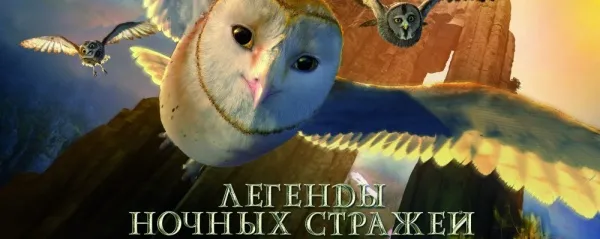
Every full-length three-dimensional animated film must be accompanied by a game based on its motifs – a marketing rule of recent years. Such games are made in a short time, often under intense licensing pressure, which binds developers hand and foot. Usually aiming to encompass all possible platforms, this time PC was bypassed. What a pity - the game turned out to be quite worthy as a... appendix. Detached from the movie, Legend of Guardians represents nothing valuable, but if you visited the cinema and fell in love with the film, the game is the ideal option.
Metatarkistus:
Lehdistön mielipide: 66/100,
Pelaajien mielipide: None
The most curious indie release of the past two weeks. Hydrophobia was announced back in 2008, and just now has made it to the player (so far only on Xbox 360). As the name suggests, the game is all about water. A unique engine was created specifically for the game, managing the water streams at an unprecedented level in real-time. In the decorations of this physical beauty, the main character can solve no less physical puzzles and, of course, save the world. The critics' response to the project has been extremely varied (from 20 to 90 out of a hundred), so we are waiting impatiently for the PC version.
Metatarkistus:
Lehdistön mielipide: 60/100,
Pelaajien mielipide: 6.1
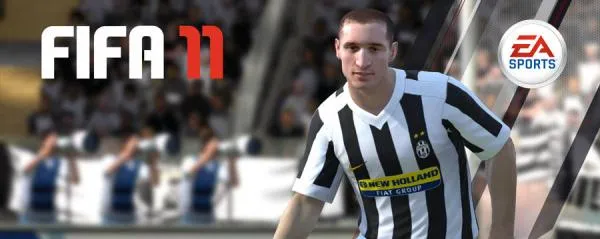
The new incarnation of the annual soccer simulator by EA Sports. It's worth mentioning only two important things: this year, the computer version of FIFA has finally started looking as great as on consoles, and the Russian Premier League has appeared in versions for PS3 and Xbox 360. The other innovations are so niche that it feels awkward to mention them here.
Metatarkistus:
Lehdistön mielipide: 89/100,
Pelaajien mielipide: 8.6

We will skip the unnecessary preambles. Today we have many flash games — good and various. Flash games take a lot of time, so the sooner you start, the better for your sleep ;)
[**When the bomb goes off**](http://coolmoose.net/games/flash/wtbgo.php)

The end of the world is near. In five seconds, a nuclear bomb will fall on the planet. No one will survive. Who dropped the bomb, with what aims... When the bomb goes off won't give you answers to these questions, but will provide an opportunity to make a couple of hundred miserable humans happy. You need to help people finish their last business. However, if you fail, it won't matter to anyone - everyone is dead.
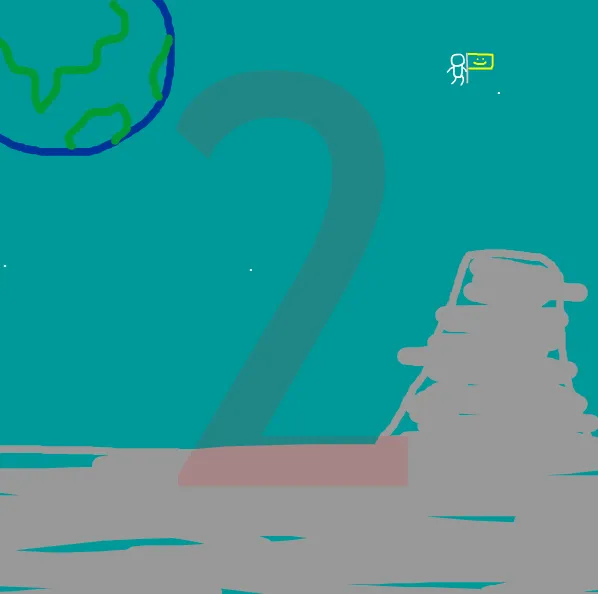
This flash game is essentially a set of various mini-games. In some of them, you’ll have to break your head, while in others - just react quickly. For example, one person has a dream - to jump from a skyscraper on a flying bird (note that this bird is rather large). Let’s fulfill the dream - awesome, if not, no worries, let's concentrate on the next miserable person. You have five seconds to perform the task, and in the end the game will provide you with the result and suggest starting over. At times incomprehensible, When the bomb goes off still deserves a couple of minutes of your free time.

Many believe that casual games, including flash games, should be simple. Well, under this definition, our second "guest" completely fits - Poto & Cabenga, which is controlled with just one key, the spacebar. What’s the catch and how does it play?
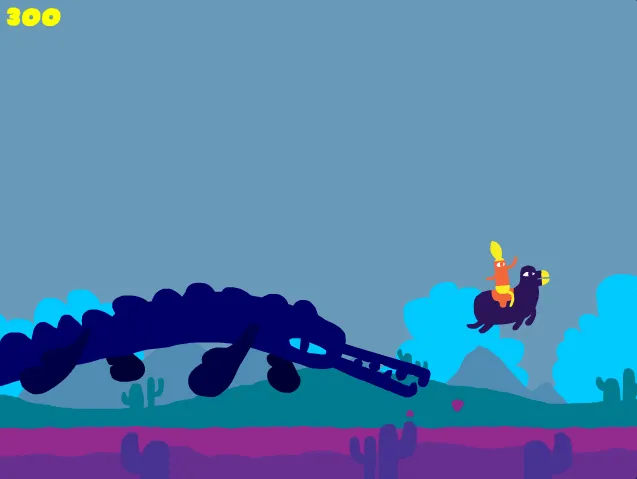
At one bleak moment, our main characters - a weird amigo with a feather on his head and an equally strange "horse" – are separated. The game's action moves across two screens: in one of them, our humanoid dependent, in the other - his faithful steed. The difficulty comes from the fact that a sort of mental connection formed between the friends, causing them to replicate each other’s actions, thus a jump by one means a jump from the other. As you can guess, the space key is responsible for this jump, around which the entire gameplay of Poto & Cabenga is centered. Specifically, we need to overcome various obstacles (with nice music), while continually keeping an eye on both the amigo and the steed (recalling a scene from "Taxi 4"). In the end, the pair will happily reunite.

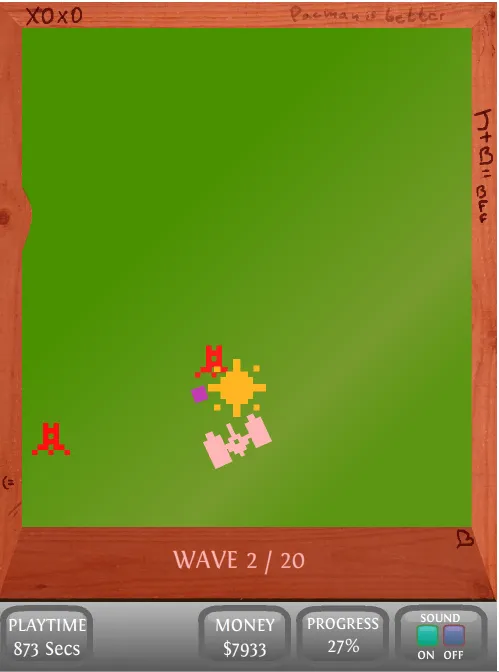
The idea of the next flash game is probably the most original in today’s selection. The authors of Upgrade complete, in essence, are just having fun with the leveling system that is present in almost every second game. As a friend of mine once said, "this is a joke, pure entertainment". Indeed, where else would you find a flash game where you can upgrade almost everything? Seriously, here you can even buy music, and to make sure it doesn't become annoying, there’s even a switch for it. The menu, graphics, timer, and much more can all be purchased with earned money. You'll earn money by destroying enemies with your spaceship... or tank. Graphically, Upgrade complete is deliberately pixelated, the music is three-bit, but that's not the main thing. The main thing is upgrade!
Tiny castle is a platformer, but not a simple one - medieval. A tiny knight must save his beloved from a tiny wizard. To do this, he (that is, you) will have to take all the blows of the villain's mysterious castle (in short - zz). And despite its simple controls (movement – arrow keys, sword strike – space), Tiny castle is far from an easy game - the castle is magical, and the closer the knight comes to the princess, the more changeable the castle becomes: walls collapse, floors crumble, and monsters take on new, even more dangerous forms. Overall, TC is a great distraction for ten minutes, and its sound design is listenable.
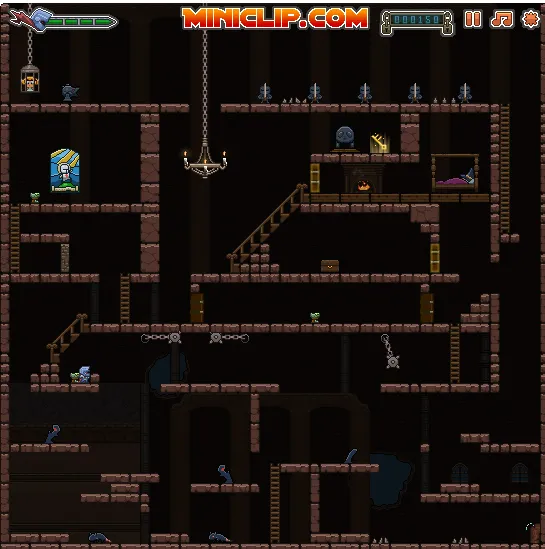
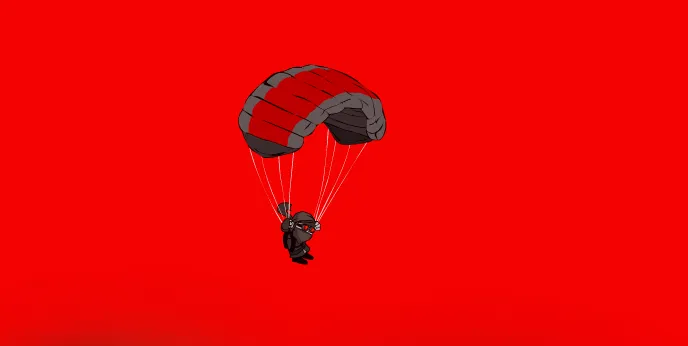
Another intriguing development. A game where the exact calculation of time and place decides. The genre can be defined as tactical-logical action. Each game level is divided into two stages: planning and observing the plan's execution. For the initial few levels, you will be able to plan on the first go. Soon you'll have to carefully study enemy behavior and precisely calculate timing. Especially on boss levels. An excellently planned and completed mission earns bonus points that you can spend on upgrades. There aren't too many of these upgrades, nor are there many missions, but the idea is excellent. Definitely worth the time spent.

In this issue, the collection section will be devoted to the game By Fire and Sword. This title refers not only to the add-on for Mount&Blade but also to the strategy game Tzar: The Burden of the Crown, released in 1999 and localized by studio Snowball in 2000, more than ten years ago. Interestingly, I bought this edition last week in an ordinary disc shop at one of Moscow's radio markets.
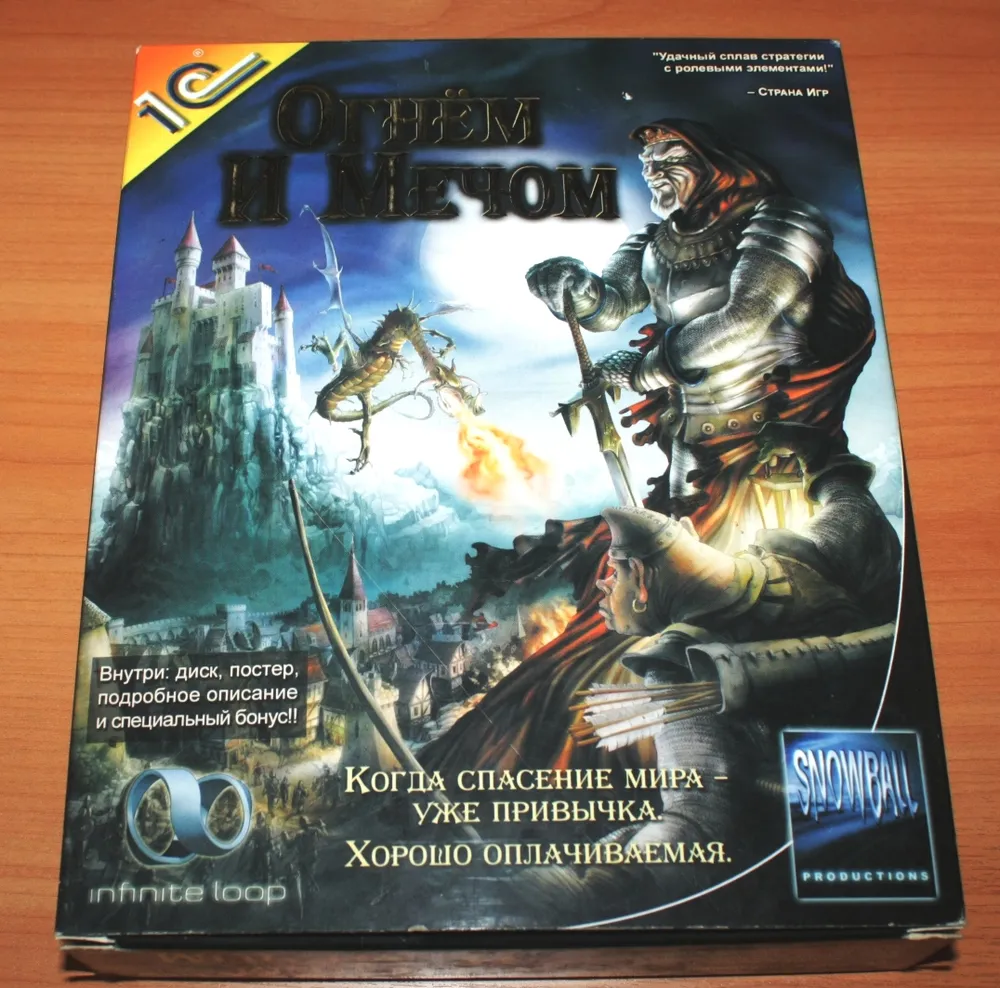
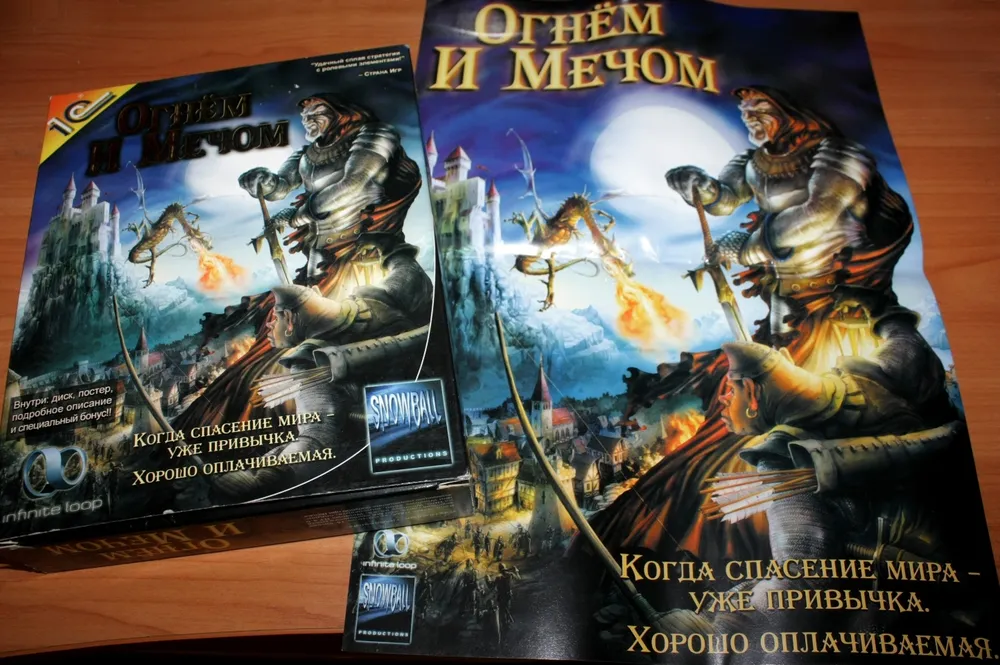
The most distinctive feature on the front cover – the ancient logo of Snowball Productions, reminiscent of Blizzard. I wasn't aware of its existence before, as more modern label Snowball.ru was already used in collectible items in 2001. However, it is quite possible that that blue logo is not the first in the studio’s history.
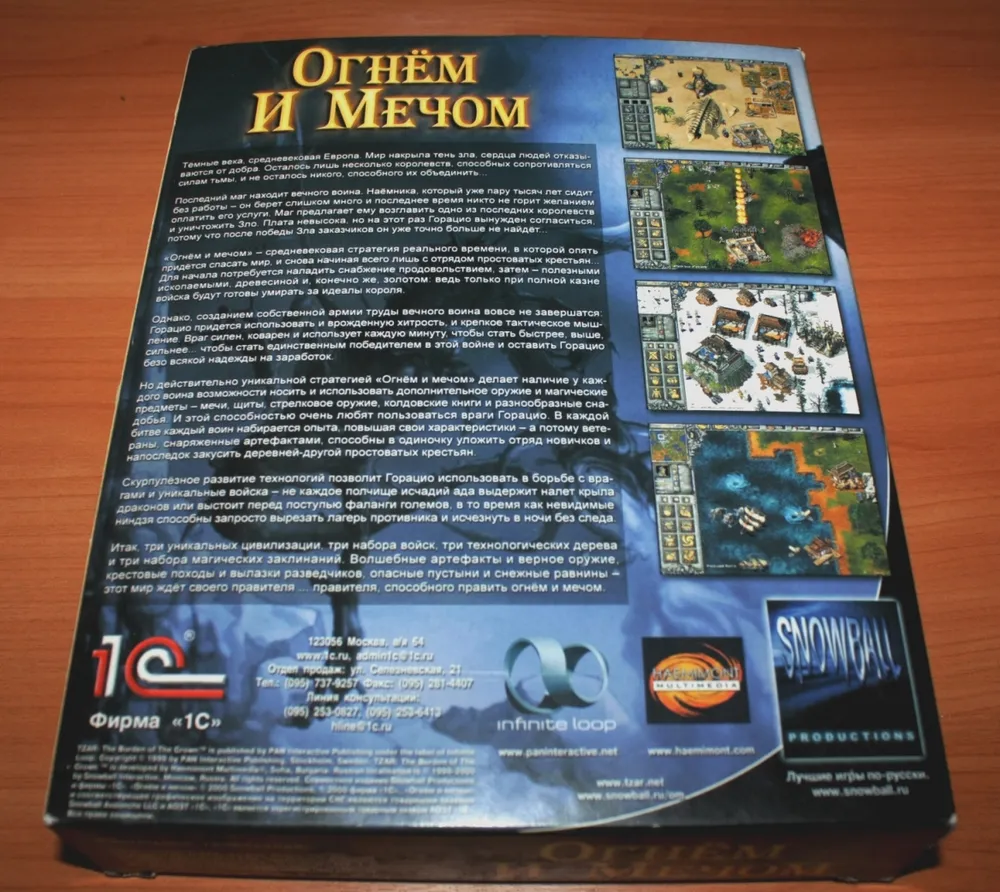
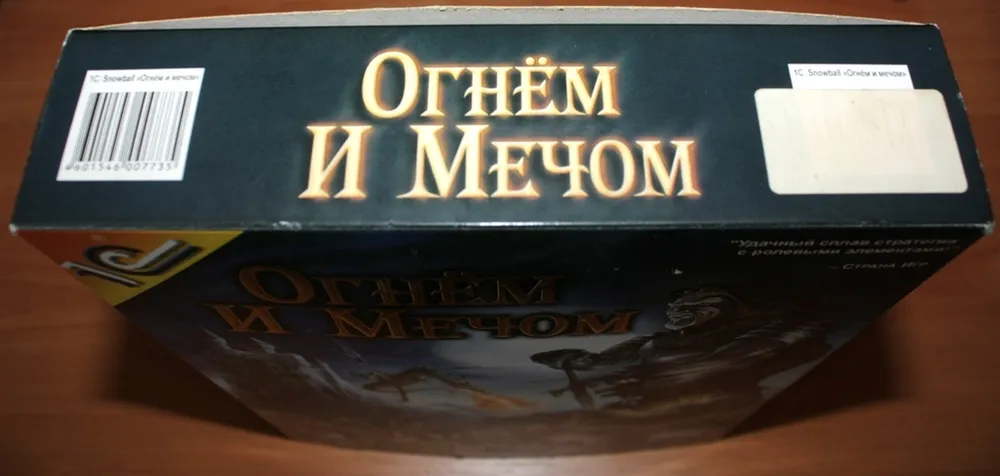
The wall of text on the back, the faded barcode on the top edge. And another interesting tradition from those years: a greeting under the lid.
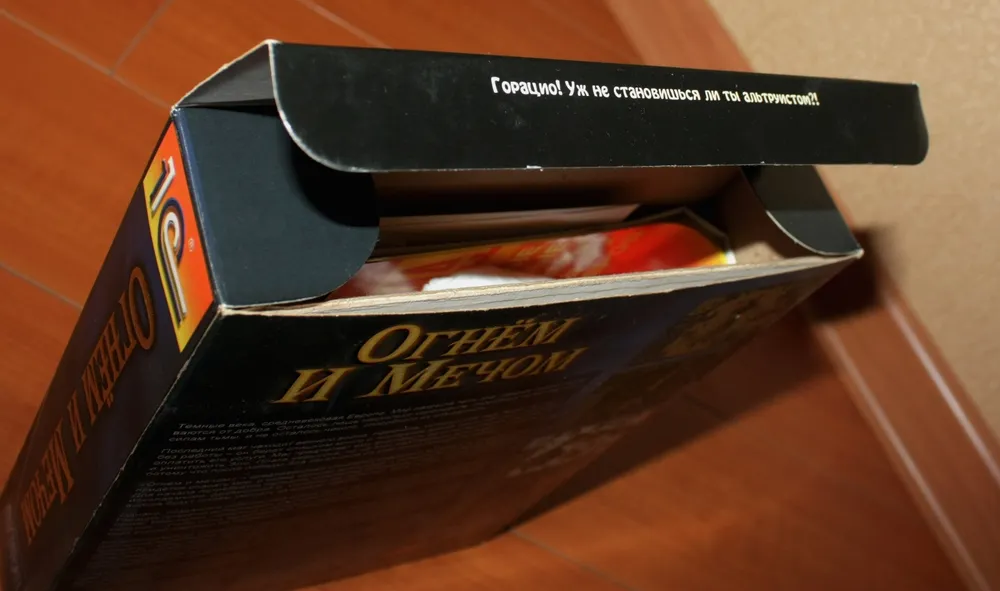
Also, if you open the box from the bottom, on the same tongue you can find an easter egg: “Open from the other side ;)”. Inside, there’s a traditional cardboard framework and a lot of interesting items – a complete list of contents written on the front cover. Let’s start with a poster, which repeats the cover art but isn’t as huge as in **The Prince**.
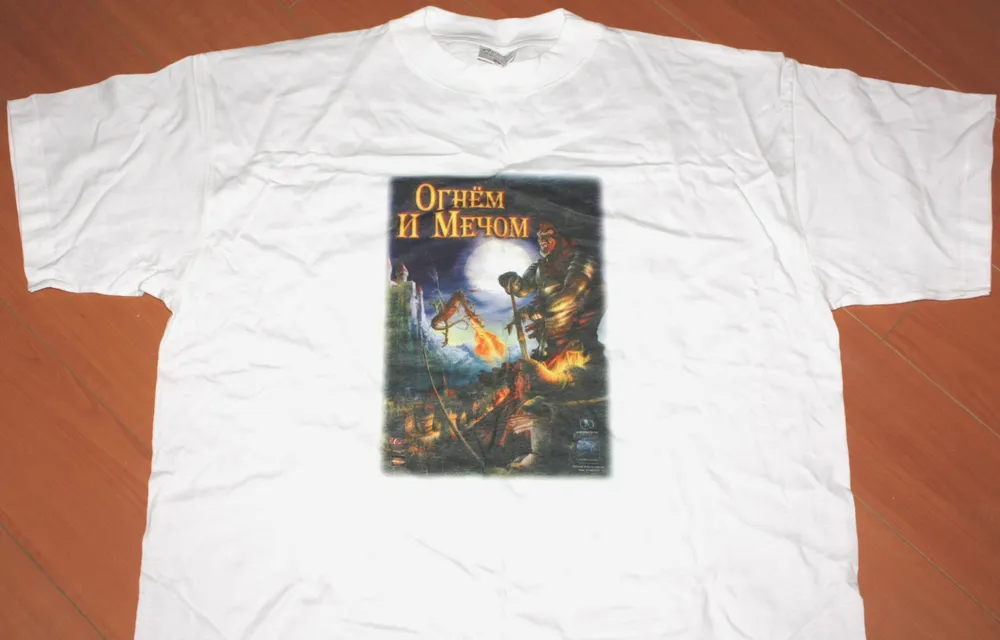
An obligatory element of those years' editions – a craftsman t-shirt. The photo is specially taken in high resolution to show off its craftsmanship and unreadable logos. Old school!
And the rest of the set – a manual, a form with an envelope, and a disc with the game in a thin jewel case without a cover:
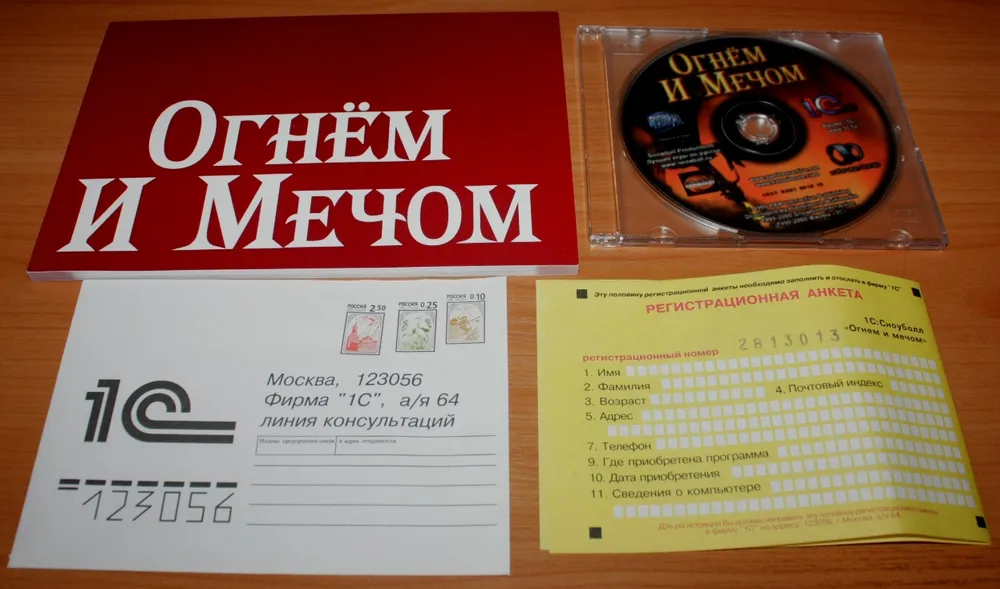

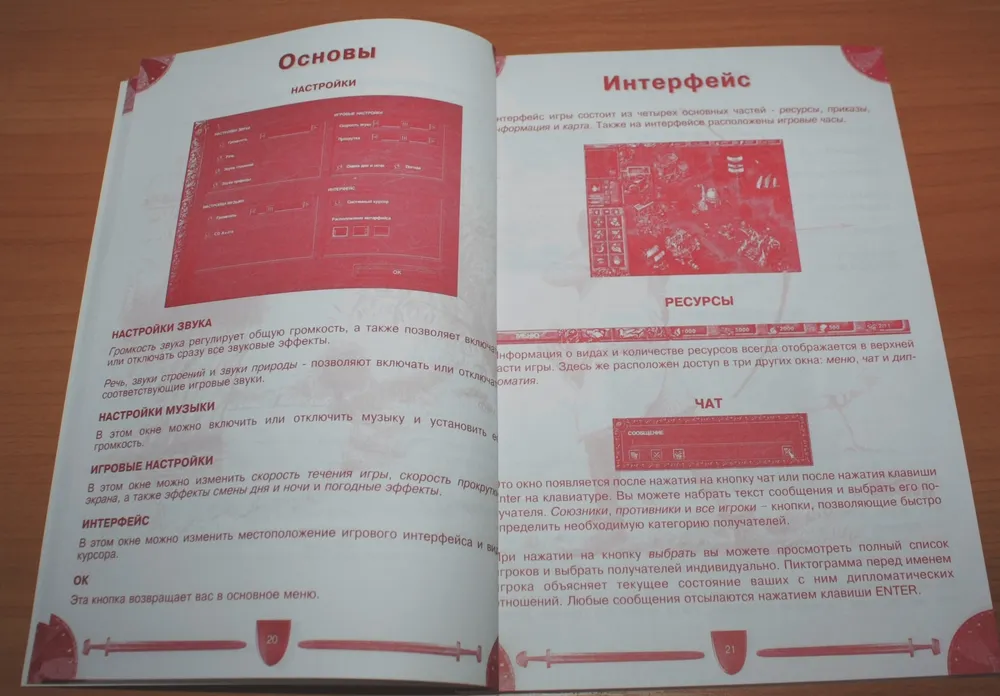
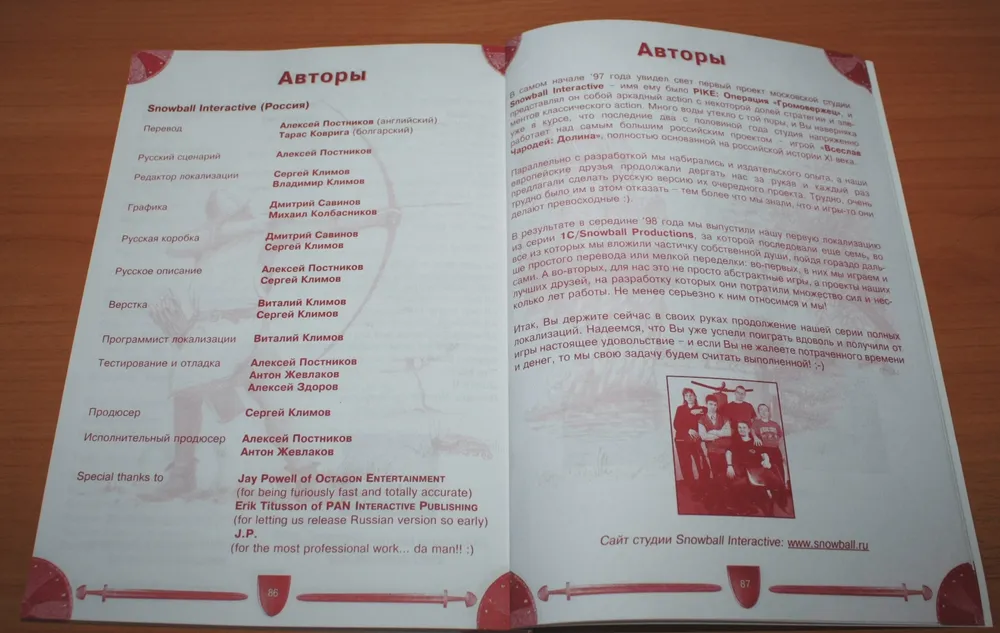
Yes, at the end of the manual, there is such a message from the localizers. SnowballStudios, greetings from 2000!
And all together:
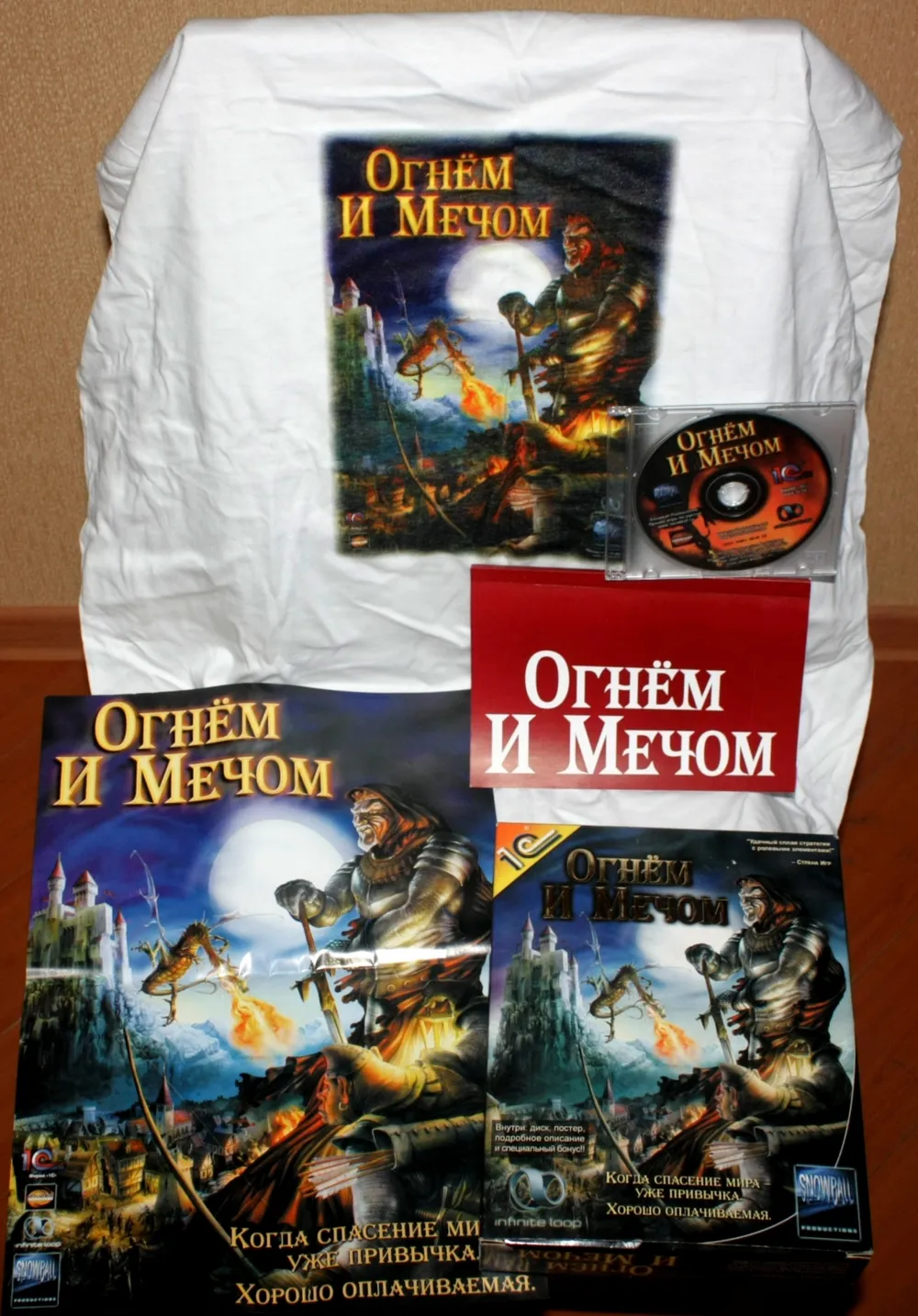
It’s hardest to talk about such editions because they were made rather template-like back then, but one shouldn’t say “soulless” by any means. It’s a pity that the charm of these editions can’t be expressed in words. I just hope that one of you, looking at the photos, will understand what I mean.

We continue to develop the topic of the history of computer games started in the second issue. However, now we decided to “slow down” a bit and examine this very history more thoroughly. In this issue — the early eighties.
Readiness for Technological Development.
In the 80-s, video games firmly proved they have earned their place in the entertainment industry well and for a long time. Although during those years many experts argued that the era of arcade machines had passed, citing the growing popularity of consoles, they continued to develop, growing new features… like better palettes and even human speech, for instance.
Original article with some supplementary material
Now also in wonderful 8-bit color!
In 1955, the Nakamura Manufacturing Company was established in Japan, initially intended to produce carousels. Later it changed its name to Namco, and in 1974 began developing video games together with the recently acquired Japanese company Atari. By 1979, they started designing the first color arcade game called Galaxian (Previously, colors would be indicated by special markers on the screen, as in Space Invaders, for instance). Just like in Invaders, players have a spaceship to shoot at aliens located at the top of the screen, but now the enemies do not behave like immovable targets. They formed various formations and rushed down towards the player, dropping bombs along the way. Namco created one of the most popular arcade series of all time. Naturally, following Galaxian, numerous sequels emerged, including Galaga in 1983. It gained even greater popularity and spawned many sequels, including Galpus (Galaga 3).
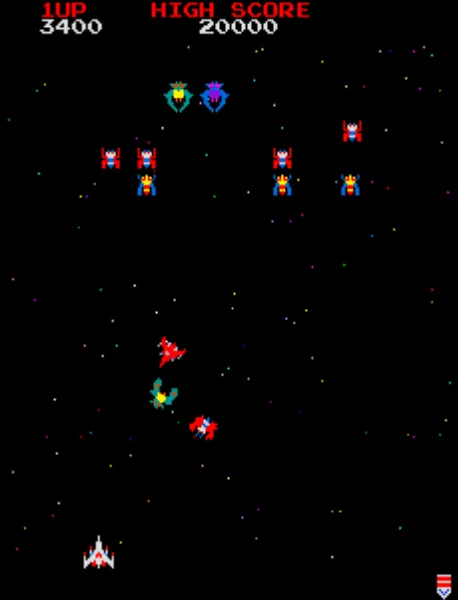
The main enhancement in Galaga, besides better graphics, was the introduction of the tractor beam, which enables aliens to capture the player’s ship. Shooting down the captor returns the player’s vessel, doubling its firepower. Additionally, Galaga is arguably the first video game in which bonuses and hidden levels were scattered throughout the main action.
Due to licensing agreements with the Japanese company, the western publisher, Midway, made vast profits from selling Namco's popular games – Galaxian and Galaga, and then clones and continuations of Space Invaders plummeted onto the North American market. Even now, Namco remains one of the few companies that still creates arcade games while managing to maintain their independence.
Video Games - Mute Sound.
We will focus on Stratovox, an arcade machine by Taito, which overshadowed Galaxian in 1980. The essence of the game is to prevent rapacious aliens, flying for some unknown reason in sombrero-shaped ships, from abducting planetary colonists.
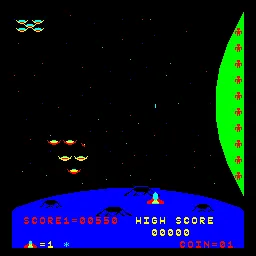
Synthesis of speech required vast amounts of memory and hardware resources, so a whole 1.5 MHz chip (about half the power of the Z-80, with the rest directed towards visuals) was utilized to simulate voice, and let me tell you, all of the aliens' mockeries and the colonists' plea for help were heavily distorted and limited to four phrases. A cry of "Help!" resounds if an alien abducts one of the colonists. If you manage to destroy the ship and save a person from capture - you will be congratulated with, "Great job!" During level results counting, every saved person is accompanied by a shout of "Luck!" and when all the alien ships are eliminated, a phrase is uttered: "We'll be back!", quite similar to the famous phrase known to all from California’s governor. I remember being lucky enough to play that thing in my childhood — that seems to be quite rare since Taito did not have much success in North America.
Building the Genre
The arcade by Universal (not to be confused with the movie studio) gave birth to a new genre of games, and it is worth noting that it is one of the most respected in all of gaming history. This genre was born during Space Panic in 1981, the first platformer in history.
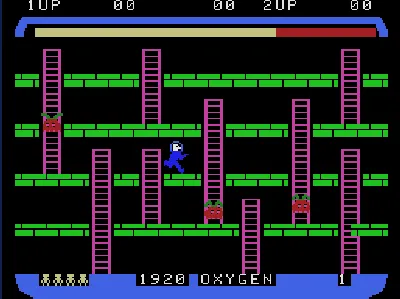
In platform games, players are generally required to dash up and down via ladders through levels composed of platforms while trying to avoid bad guys and keep out of trouble. In Space Panic our enemies are evil cosmic apples trying to bite our hero in the rear. Thankfully, our hero is armed with a shovel that allows him to set crafty traps from which enemies cannot escape, all one needs to do is lure them in. It is also important that the hero must monitor the oxygen level, as if it runs out - the hero will suffocate. Apple Panic is primarily a game for Apple II, but it opened the way for hundreds of other platformers, including the cheerful Donkey Kong by Nintendo and a million other console games. Universal was extremely prolific in producing games until its collapse in 1985. Their biggest success can be considered the Mr. Do series, which started with the original Mr. Do! from 1982. The series includes five games, including Mr. Do's Castle (In Asia: Mr. Do Vs. the Unicorns) and Mr. Do's Wild Ride, known for its most intense gameplay never before seen.
Welcome the Gorfians Empire!
Jay Fenton was a designer at Bally/Midway and worked on the home console Astrocade. He made gaming history with his first arcade Gorf in 1981 - the future basis for Astrocade. One cannot claim that the gaming levels were particularly original, but they were new enough for that time’s projects. The distinguishing feature of Gorf was the introduction of a Quartz Laser, allowing players to cancel poorly aimed shots and shoot again, as well as allowing the player’s ship to navigate across the third gaming field.

The story revolves around an invasion by the Gorfians, an aggressive race of robots set to capture Earth. The player has to protect their planet from invading enemy forces across five levels. Gorf left Space Invaders and two clones of Galaxian behind thanks to the flickering protective barrier around the player’s ship. The basic enemy patterns appear from the void, circling towards the player while during the final level waits a confrontation with the terrible Gorfians’ flagship. Once the flagship is destroyed, the game refreshes but at a higher level of difficulty. Additionally, Gorf was one of the first games to use the Votrax chip for speech synthesis. Emulating human voice using speech models uses significantly less memory and resources than just digitized phrases. Votrax afforded better voice quality than Stratovox and had almost 25 accessible phrases. Indeed, many mockeries are quite interesting and amusing, such as, "I shall devour the coins!", "Here you will meet your end!", "You shall perish at the hands of Gorfians!". Jay Fenton smoothly created a sequel, Ms. Gorf, in 1982, but the game was shunned due to its too small distribution. Another big hit from Midway noticed in a sea of Gorf ports on home consoles is from ColecoVision. This particularly outstanding port nearly perfectly reproduces the game, albeit without the screen Galaxian and human speech.
Player 2 Stage 4: Two Superstars
Video games had nearly reached critical mass. Players were tired of directing nameless space pilots to annihilate hordes of extraterrestrial ink splotches. But two Japanese designers were soon about to give arcade games individual character.
Original article with some supplementary material
The Dot Eater
In 1980, Namco game designer Torū Iwatani grew tired of all these "kill-em-all" games overflowing the arcades. He wanted to create an arcade that would feel less like a video game and more like a cartoon, appealing to women as much as men. The original design called for an animated pizza missing one triangular slice to move in a maze gobbling everything in its path. Technological limitations forced simplifying its appearance to a simple yellow circle, but the triangle mouth remained. The game was named Puckman, from a Japanese phrase "pakupaku", meaning “to flap one’s mouth.” After listening to a characteristic theme, players took control of Puckman and guided him around a maze eating dots while avoiding four ghosts – Blinky, Pinky, Inky, and Clyde (all had various hunting skills) – emerging from the cell at the center of the screen and would snuff the life out of our little yellow friend should they touch him.
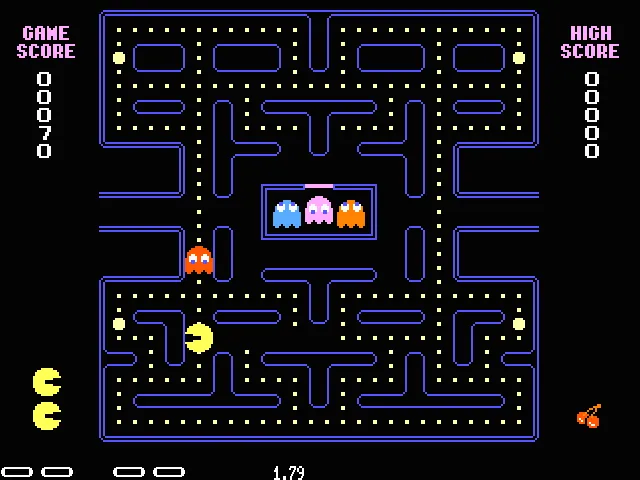
In each corner of the rectangular field, a large dot awaits, which colors the ghosts blue for a short while, changing roles; and Puck may then consume ghosts, who will only leave their clearly inedible eyes behind as they return to their cell for revival. In every screen, beneath the ghost cell, a treat awaits the player in the form of fruit, or a bell, or something else. The game deceptively appears simple, since Puckman requires only a four-position joystick to control, but with each level, ghosts gain speed and the time of their “blue” vulnerability diminishes. Tension grows under a monotonous wailing sound that increases as one plays.
The game achieved absolute success in Japan, immediately after Space Invaders’ reign, which led to a yen shortage throughout the country, as tens of thousands of Puckman machines began devouring the streets. By distributor agreement with Namco, Bally/Midway gained exclusive rights to license the game for North America, but the new president of the company, Robert Molleur, surprisingly tried to reject the offer, unimpressed by the game’s “stupidity”, forcing the rest of the firm’s leadership to practically corner him into accepting the North American licensing of Puckman. Changing its name to Pac-Man, so punks could not switch the P to F, Bally/Midway launched the game in North America. In spite of Molleur's indifference, the game sold over a hundred-thousand units in the U.S. alone (not counting countless unofficial versions), breaking the previous sales record of 70,000 established by Asteroids by Atari. It was also the first video game to market all sorts of merchandise with Pac-Man’s face on them - T-shirts, jackets, sweaters, mugs, bedding, toys, cereals, board games, books, towels...
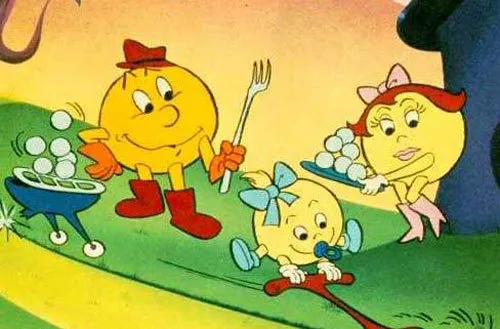
There was even a cartoon series!
…anything, as long as it featured Pac-Man’s face. It is also the first video game to penetrate pop culture so much that it appeared on the covers of magazines like Time and Mad. Buckner & Garcia, a pair of little-known performers, released Pac-Man Fever in 1981, and the song of the same name went gold, reaching number 9 (and the album - number 46) in the charts that year. Among the other songs on the album were Do the Donkey Kong and Froggy's Lament. In 1982, ABC aired a half-hour animated series from Hanna-Barbera (the creators of The Flintstones, The Jetsons, among others), titled The Pac-Man Show. It was on air for one year, during which Pac and his pals battled the ordinary cartoon villain named Mezmaron, who sought to steal all the pellets in Pac-Land. In 1983, a new show premiered called The Pac-Man/Rubik, the Amazing Cube Hour, but our yellow celebrity had to share an hour of airtime with the animated rubik's cube, another viral craze of the early '80s.
Following the original game, ten arcade sequels emerged, the first being Ms. Pac-man which came out in 1982. It was developed by Midway in the U.S. and was a more apparent attempt to attract women to the arcade.
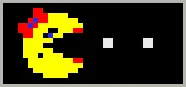
Rather than having just one maze, the female counterpart of Pac-Man (her gender is indicated by her red ribbon and lipstick... and even a mole) saw four options, and special treats could move around the maze rather than being stationary beneath the ghost cell. The game sold 115,000 copies and became the largest American arcade hit at that time, and Ms. Pac-Man machines can still be found today. Other sequels include titles such as Pac-Man Plus (1982), Super Pac-Man (1982), Baby Pac-Man (1982), Jr. Pac-Man (1983), Professor Pac-Man (1983), Pac & Pal (1983), Pac-Land (1984), Pac-Mania (1986), Pac-Attack (1993), and Pac-Man VR (1996), a 3D virtual reality game created by Virtuality Ltd. and appearing in several major entertainment centers. The number of console, computer variants and versions for handheld devices are impossible to count. Likely it is the largest gaming license for Atari for their flagship console Atari 2600 in 1982. It was clearly made in a hurry to make it into stores in time for Christmas that year, and this game broke sales records, but critics deemed it a creative disaster. Owing to a budding interest in classic arcade games, the “yellow one” was remade into the obligatory 3D, plus in the translated third dimension the original maze was featured in the game Pac-Man 3D from Namco, released for Sony Playstation in February 1999.
Plumbing Issues
1889 was a very important year for the video game industry. No, not 1989, but indeed 1889. That year, Fusajiro Yamauchi established a firm in the Japanese town of Kyoto called Nintendo Koppai. Its name translated means “Work hard but ultimately, everything is in the hands of God,” and they produced lovingly handcrafted Hanafuda playing cards made from mulberry tree bark. Cards were adorned with a variety of symbols unique to every region where they were sold. Hanafuda-based games were an immensely popular way of passing time in Japan, and the cards found favor with the Yakuza organizations, the Japanese mafia, who intended to use them for their original purpose – gambling. Their demand for new playing cards remained high. Following the introduction of Western-style playing cards in 1907, Nintendo became the largest manufacturer of playing cards in Japan. In 1933, the firm changed its name to Yamauchi Nintendo & Company, and in 1951, under the directive of its third director (Hiroshi Yamauchi) – to Nintendo Playing Cards. True success arrived in 1959 when Nintendo struck a deal with Walt Disney Co. to produce a series of playing cards featuring characters from Disney animated films. That series sold 600,000 packs that year. Again changing the name – the firm was now called Nintendo Co. Ltd., the Japanese began to delve into electronics, releasing toy robots, light gun games, and even love tests. Following their significant success with laser tetras, which started being installed in bowling alleys left unused after the decline in interest in bowling, the then-president of Nintendo – Hiroshi Yamauchi, noticed that new arcade and home video game systems, like PONG and Magnavox's Odyssey have been selling well in America. After striking a deal with Magnavox for the distribution of their system in Japan, Nintendo started working with Mitsubishi Electric to develop their own system. In 1977, they unveiled their first home video game, a clone of PONG with six modes of play, amusingly dubbed The Color TV Game 6. “The Color Game” flew off the shelves in Japan, selling over a million units. That same year, Shigeru Miyamoto joined Nintendo after graduating from college with a degree in industrial design. Within Nintendo, he was responsible for creating in-game graphics and console designs.
During the development of more advanced gaming TV systems and the successful series of portable LCD games, Game & Watch, Nintendo publicly entered the arcade game market with as unreleased projects like Othello, Helifire, and Sheriff. In 1981, Radarscope was released - a clone of Taito’s Galaxian and an intriguing, albeit ordinary attempt to delve into a new genre. While working on the graphics for the project, Miyamoto gradually lost interest in it. He was much more intrigued by another idea for an arcade game inspired by the classic film King Kong. He began by sketching a portly little plumber with a potato nose and thick mustache. The game’s events revolved around characters named Donkey Kong and Jumpman, who wandered back and forth across three different screens resembling an unfinished construction site, leaping over various obstacles in a quest to save his girlfriend from the evil gorilla Kong.
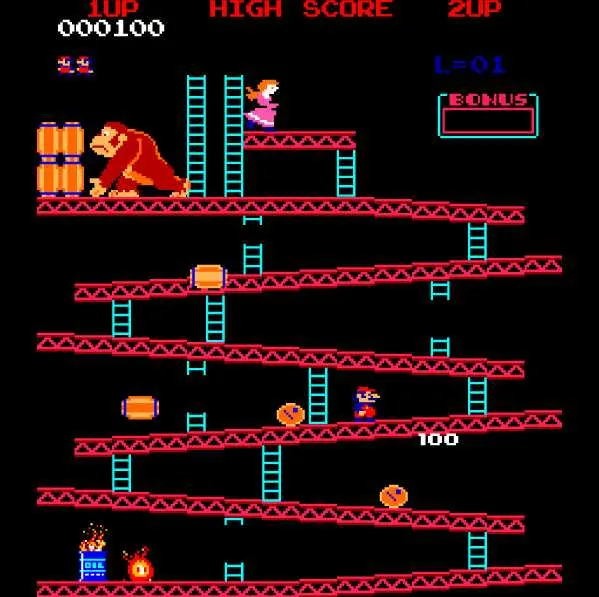
The name of the big gorilla was derived from the film while the name suggests that he was quite short on bananas. Alongside Miyamoto, well-known arcade designer Gumpei Yokoi, who worked on the hardware, collaborated on the game. Considering that the arcade market was filled with nearly nothing but cosmic “kill em all” games, Nintendo's management met the development of Donkey Kong with indifference. But Shigeru insisted on releasing the game, and since it utilized the same “hardware” that the faltering Radarscope had, it was cheap to convert roughly 20,000 Radarscope units that Nintendo had managed to produce. Donkey Kong became the highest-selling arcade of 1981; over 65,000 units were sold in North America alone, even overshadowing “the yellow one.” Nintendo of America, Nintendo’s subsidiary in the U.S. developed in 1980, granted Jumpman a new name - Mario - after the man who rented warehouse space from the Seattle company. Donkey Kong gave rise to the second successful campaign in selling all kinds of merchandise (even of low quality) featuring the faces of Mario and his friends on them.
Two direct arcade sequels swiftly followed, the first one being Donkey Kong Jr., released in 1982. In a sudden role reversal, Mario became the villain who captured and jailed the poor gorilla, with the only hope being the brave young Junior Kong. Mario does not turn up at all in the abominable Donkey Kong 3, which appeared in 1983. The protagonist this time was Stanley the Bug Man, protecting his plants from the furious Kong, who was once again deemed the villain, but now with a friend bee. The next game emerged when Mario was partnered with his brother Luigi (named after the pizza place owner next to Nintendo of America’s Seattle headquarters), in the 1983 game Mario Bros. Two players could play simultaneously, working together or competing to outdo each other for points at Mario's new job as a plumber, trying to shield themselves from dangerous creatures crawling out of the pipes. This led to the release of the Super Mario Bros. platformer in 1985 (a year after the release of Pac-Land), which showed missions not confined to a single screen, as the screen moved along with the character’s advancement (the so-called side-scrolling). Many portable, console ports and sequels arose alongside it, some breaking sales records for the ColecoVision and, of course, for the NES. Mario, Donkey Kong, and little Junior made appearances on television in the Saturday Supercade show on CBS, which aired for two years, from 1983 to 1985, featuring characters like Pitfall Harry, Frogger, and Q*Bert. In 1989, Mario and Luigi featured in their own show, The Super Mario Bros. Super Show!, an animated series with live action inserts, starring wrestler “Captain” Lou Albano as America’s favorite plumber.
It released 52 episodes, where Mario and Luigi constantly saved Princess Toadstool from King Koopa and his henchmen. In 1993, Warner Brothers invested heavily in a Hollywood adaptation of the movie Super Mario Bros., with Bob Hoskins as Mario, John Leguizamo as Luigi, with the regular Hollywood “bad guy” Dennis Hopper portraying King Koopa. In spite of the considerable amount of money poured into its absurd design and computer graphics, the film flopped in theaters. Nonetheless, the creator of Mario, Shigeru Miyamoto, remained a keystone of Nintendo's success throughout the '80s and '90s, partaking in every Mario game, which made sure that each following installment proved more successful than the last. Given his immeasurably popular series Zelda, the question remains whether Nintendo would be as successful in the video game industry as it is today without it.
To be continued...

[Pegazs](/@Pegazs): editing, news, final layout
Alto: proofreading, translation help
Arkanus: proofreading
Ganondorf: article proofreading
Setarms: “Evolution”
Midest: “Evolution”, layout assistance
LiveSaifer: “Release Calendar”, “Localization Corner”
R0ndO: logos
serick: flash section assistance
werat: helped with flash section
AQuaRity: “Gaming Block”, “Collections”
The rest are diligently preparing for the next release :P
\**