
Review of the DLC "The Missing Link" from gamebanshee.com (no spoilers) [translation]
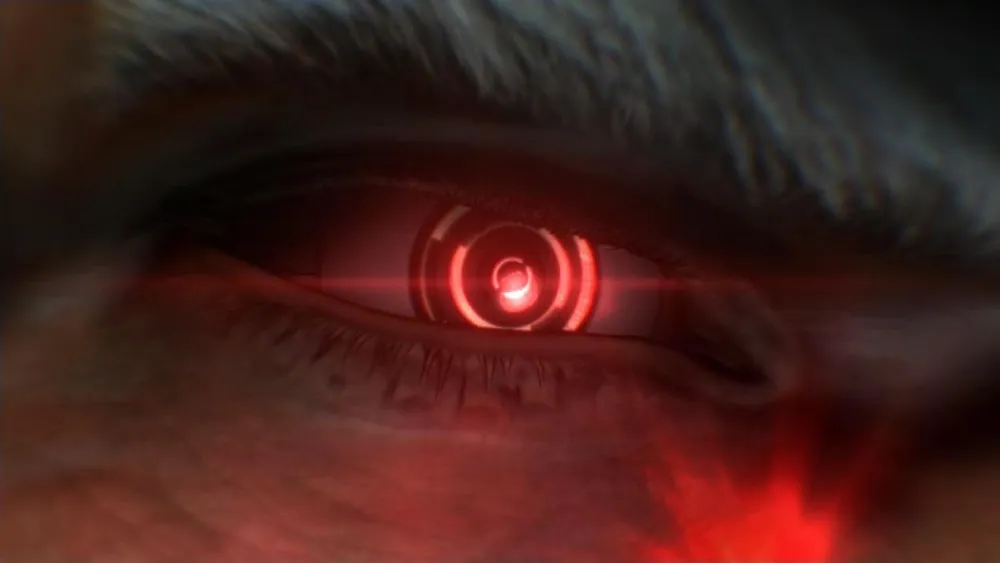
Review of "Deus Ex: Human Revolution" by the same author.
Review of "Deus Ex: Human Revolution: The Missing Link"
Eric Schwartz, 10/14/2011
Less than two months after the game’s release, the first major downloadable content for "Deus Ex: Human Revolution" titled "The Missing Link" became available for download. It is not so much a side storyline as it is a fantastic narrative that, when integrated into the broader plot of "Human Revolution," becomes almost a necessary part of it. New interesting characters, levels, significantly surpassing the design of those in the main campaign, and even the philosophical musings and whispered conspiracies for which many cherish "Deus Ex". At the same time, although the gameplay in "The Missing Link" matches the quality of the best moments in "Human Revolution," the DLC itself is not too long, and there aren’t any new implants, weapons, upgrades, enemies, or other diversions. Players who want to delve deeper into the world and understand how "Human Revolution" connects to other parts of the series will appreciate what "The Missing Link" offers; however, considering the price of fifteen dollars, those seeking something more substantial may find it lacking.
"The Missing Link" begins aboard the cargo ship "Belltower," which Adam Jensen boards during the main storyline of "Human Revolution." In the "original" version, Adam's journey in one of the stasis pods aboard is described as unremarkable, but "The Missing Link" developed it into a full storyline. As it turns out, Adam Jensen is quickly found and strapped to an EMP chair, where he is roughly interrogated by the wonderfully repugnant Commander Burke. Due to electrical malfunctions, Adam soon breaks free, but the mysterious hacker’s orders cool his urge to escape the ship. Thus, step by step, Adam comes to stealthily infiltrate some kind of underwater facility, which turns out to be far more than a mere refueling station, as one might presume from its appearance.
Delving into the plot details would spoil your enjoyment of "The Missing Link," so I'll simply say that as the story unfolds, Adam has to make difficult choices, meet new interesting allies, and encounter more references to the original "Deus Ex" than in the entire campaign of "Human Revolution." Honestly, it seemed to me that even the script for the DLC is written with much more confidence and interest. Perhaps this is because of the self-contained storyline, but I think it’s also because "Eidos Montreal" clearly understood what it wanted to achieve this time, resulting in a story that fits well into the fabric of both "Human Revolution" and "Deus Ex" as a whole.
For fans of "Deus Ex," this is the most significant element of "The Missing Link." If you felt that "Human Revolution" had too few secret laboratories and high-tech military facilities, in "The Missing Link," you will feel right at home—very characteristic for the series locales, from the cargo ship to expansive warehouses and to the corridors of a rather creepy lab. Many of these places resemble, at least in spirit, some of the most memorable locations in "Deus Ex," and I personally found them quite fascinating to navigate. Despite this, "The Missing Link" remains an interesting standalone game, not too heavily reliant on or distancing itself from the characteristic artistic style of "Human Revolution," its atmosphere, character interactions, and other strengths of the original.
Moreover, the level design in "The Missing Link" is noticeably better than in "Human Revolution." Although the DLC does not feature huge open areas and the early sections aboard the cargo ship are somewhat linear, the platform in the open sea is perfect for exploration, with its multitude of levels and successful balance between open spaces, corridors, and offices. Considering that you will be poorly armed, and the new "Praxis" kits for restoring implants and ammunition and weapons for firefights will need to be sought, scouring the locales became much more important than before, and I never encountered problems of "too many supplies" or "too few opportunities to use them."
The tactical choices offered by the levels have also become richer than in "Human Revolution," effectively eradicating the "stealth, combat, conversation" scheme that many levels of the game were based upon. Instead, the locations have become less "game-like," and the gameplay now gravitates towards a diversity of approaches, still allowing the player to choose their preferred style. As a result, the choices made during the playthrough have more serious consequences. Unlike "Human Revolution," here I varied my playstyle more whenever possible, rather than sticking to the direction outlined by the designers. In short, the gameplay has become closer to the first "Deus Ex"; the developers entrusted the player with the choices of actions rather than scripting them in a design document.
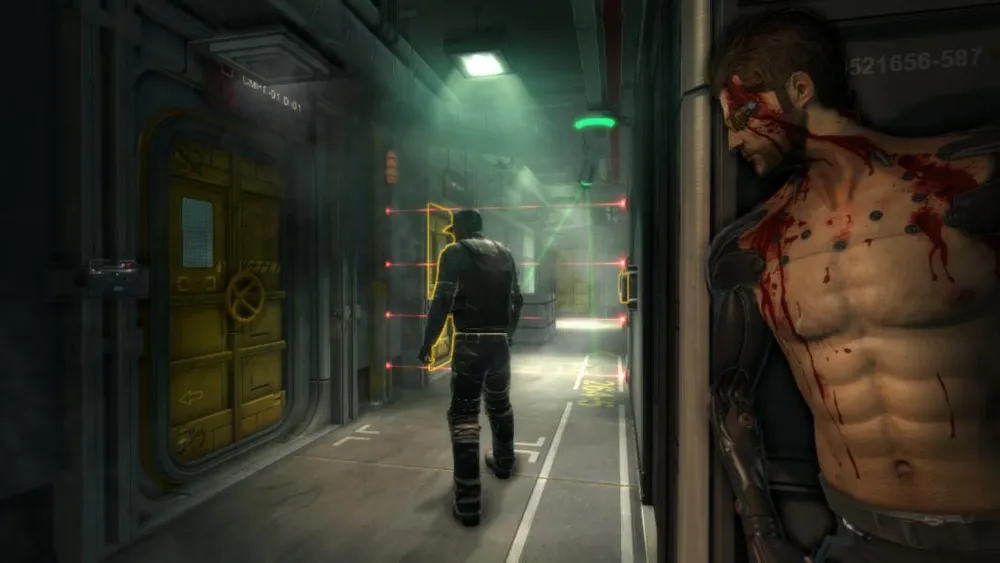
When it comes to the visuals and sound of the game, everything in "The Missing Link" is of the highest quality and easily stands alongside "Human Revolution." Considerable effort was put into the new environment, from the constant downpour over the ocean to the interiors of the cargo ship and the secret lab deep underwater—this all gives "The Missing Link" freshness and independence. Little details, such as photographs in offices and workers' stash spots under the stairs, create the same realism that "Human Revolution" could boast of. The artists and level designers at "Eidos Montreal" deserve all accolades for crafting such a detailed and coherent world without falling into the madness of "copy-pasting" like some other developers.
The new voice actors performed excellently in their roles, lending the characters vitality and personality. The sound effects were just as good as in "Human Revolution," conveying tension and dynamism where necessary. Unfortunately, "Eidos" did nothing to improve the character animations during dialogues, so they still resemble puppets. This is especially unfortunate considering that everything else is executed to the highest level.
So, having discussed the positives, what could possibly make a "Deus Ex" fan skip "The Missing Link"? Honestly, not much, which is quite unusual for a DLC released almost immediately after the main game. First and foremost, there is a lack of new weapons, new enemies, or new items. Personally, I don’t mind; I was more occupied with the question of "How to recover lost gear and implants?" as well as grappling with difficulties using the little I had at my disposal, but some players may desire more than just a new storyline and slightly improved gameplay. Secondly, there are few side quests, and the main storyline is linear, even though the locations are nonlinear; that is, some areas are sometimes cut off through clearly artificial means like closed doors. Additionally, not all side quests are equally well integrated into the story; a couple even feel like a mandatory prologue for earning achievements. I wish they had a stronger impact on the narrative.
Thirdly, there’s the issue of length and price. "The Missing Link" isn’t particularly short, but it can be completed in four to five hours. Given the fifteen-dollar price tag, some players may hesitate. I personally feel that the quality of "The Missing Link" and its importance to the entire "Deus Ex" universe justify the inflated price. Honestly, it’s rare to find a DLC without simplifications, and "The Missing Link" is the most polished, bug-free, and well-integrated expansion in a long time. However, if it were priced at ten dollars, nearly everyone would buy it without a second thought; with the current price, it transitions into the category of "Only for Fans."
Finally, unfortunately, "The Missing Link" is not incorporated into the main storyline. Instead, it is available for selection in the menu. Consequently, your vision of Jensen, along with any gear and implants obtained in "The Missing Link," will not carry over to the last stage of the main game. I personally find this disappointing. Had "The Missing Link" been included in the campaign, it would have significantly smoothed out the pace and evolution of the gameplay. As it stands, it resembles an additional mission more, which is disheartening. The ability to download it from the main menu and start it automatically during the storyline would have been ideal for everyone, but I suppose "Eidos Montreal" refrained from doing so due to technical limitations.
In summary, "The Missing Link" provides the same wonderful gameplay as "Human Revolution," and even enhances it through new interesting locations, better-designed levels, and gameplay situations, along with a narrative that, frankly, is necessary to understand the overall picture of the "Deus Ex" world. At the same time, this expansion is overtly linear and constructed around a chain of missions, not integrated into the overarching plot, and the perceived lack of content may deter some players. Overall, the positives greatly outweigh the negatives. "The Missing Link" certainly deserves to bear the name "Deus Ex," and whether through new DLCs, a full expansion, or even a sequel to "Human Revolution," I am already intrigued by the future that "Eidos Montreal" has in store for "Deus Ex."
Translation by the author.
Thanks for proofreading — Soth.
Thanks for the support — Sinmara.