
BlizzCon 2011. Panel "Soulstone"
Hello, my darlings! Last week, I got overloaded with posts, plus work and chores piled up, so it led to a brief silence. But now I'm back with you and ready to delight you with new information.
BlizzCon is over, and we're continuing the gradual cleanup of the aftermath. We discussed two large information sections and are slowly moving on to others that are less intense but no less interesting.
The second day of BlizzCon. Apparently, anticipating that people would be impressed by the wonderful trailer for Diablo III, Blizzard included a one-hour section in the exhibition program titled "Creating the Black Soulstone." In it, the developers talk about how they worked on this trailer, what techniques they used, and share a wealth of interesting information.
Warning! Lots of pictures!
MOVIE, MOVIE, MOVIE!
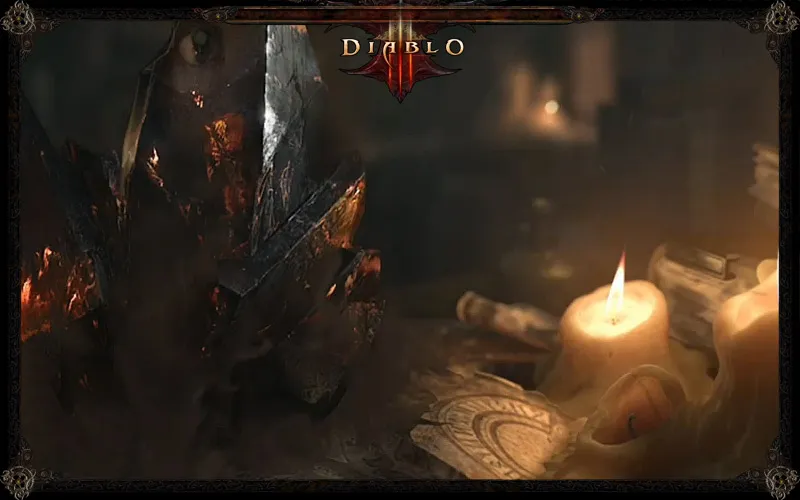
Once upon a time, there was a Black Soulstone...
I think it's no secret that Blizzard has always been famous for its stunningly beautiful and realistic trailers. Fans of the series surely remember the atmospheric opening movie for Diablo. I've watched the trailer showcasing the villain Baal in Lord of Destruction many times. And now we have the third installment: the cinematics in it are as atmospheric and well-crafted as their predecessors, and in terms of realism, they leave the older ones far behind.
Of course, not always do these trailers receive the praise they deserve: many players skip them or fast-forward, ignoring the hard work of the developers. And that's a shame: to this day, each such trailer from Blizzard is a true short film masterpiece. To pack something exciting into a couple of hundred seconds is a task few can accomplish, but the developers do it exceptionally well.
The trailer showcased at BlizzCon 2011 called "The Black Soulstone" [The Black Soulstone] lasts about 3 minutes, and a total of around 27 minutes of beautiful and realistic visuals are planned for the game. But before we go further and learn about the principles of creating game "movies," let me briefly tell you about the trailer itself. It was shown on the first day of the exhibition during the opening (you can read more about it here). In the trailer, Leah [Leah] is flipping through a book about various demonica and struggling to understand what she is missing.
- Uncle, I missed something.. - she says into the air, then blissfully disconnects. And she opens her eyes in a charming little place, a sort of tomb, where she meets Azmodan [Azmodan]. The Lord of Sin, acting 100% in the bad guy style, gives a short speech. Something like:
- Heroes have laid out all demons, but not me. I am as smart as a rock, so you get a skosh of oil, not Azmodan. And to make it fun for you all, I will blow on the search for the Black Soulstone and when I find it, I will be the boss of all the little dishes! Mwa-ha-ha!!
The Evil's monologue ends with colorful scenes of the demon invasion. If you missed it, I highly recommend checking it out. Meanwhile, I will start my story on the theme of "How we made the Azmi and Leah trailer."
STICK, STICK, CUCUMBER..
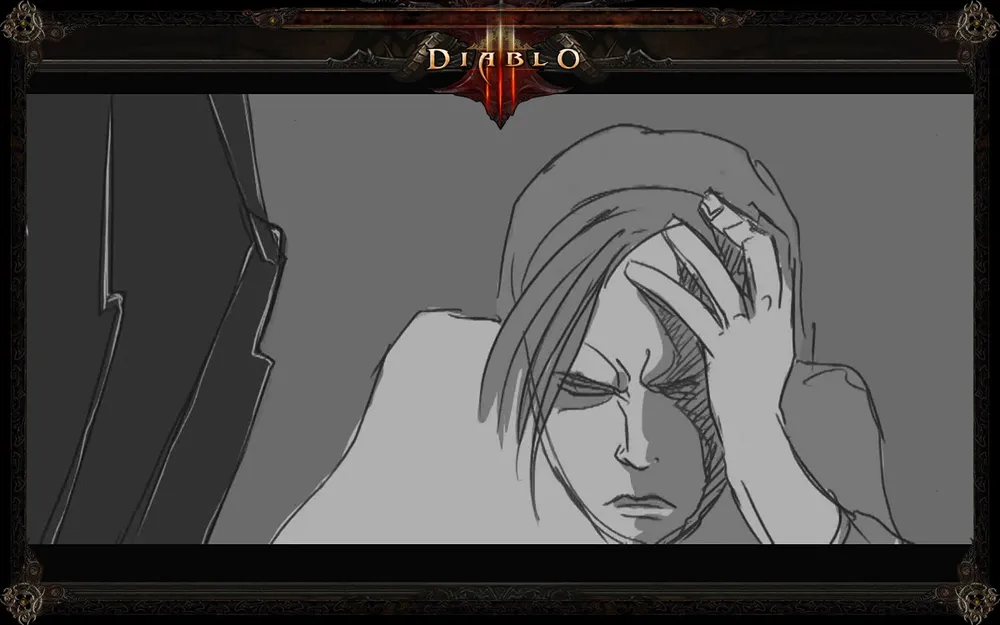
Leah woke up one day with a wild hangover..
.. and that’s how the sketch turned out. The basis of any trailer is the plot, which is the cornerstone. Therefore, the first task that artists need to solve is storyboarding the future trailer. It's important to understand how the story will be told, what moments are key, and where to place emphasis. To solve these and many other tasks, many basic sketches are created. They are quite raw in terms of technique but allow one to understand the direction in which to work further. Artists choose the most expressive frames and angles that allow them to achieve maximum drama in what happens on screen. No matter which version the creators ultimately settle on, storyboarding always comes first. This way of developing the plot's foundation is not only simple and effective but also economical: artists don't have to redo tons of work; they just need to tweak a few basic sketches to make the trailer