
No Country for the Old Ways. Review
Spring has come, the harvesters have arrived and are actively building their nests. Meanwhile, the concluding part of the military-historical epic about the samurais' way of life has landed on my quite sturdy hard drive.
The preview version of "The Dawn of the Samurai" differed from the final version of the game only in that it allowed access to just one clan, limited the single-player campaign to 50 turns, and lacked the multiplayer frenzy, so there’s no point in retelling what’s already been described earlier in the article "Samurai and the Armadillo" – just refresh your memory on it and then return to this paragraph.
Rather, to this one.
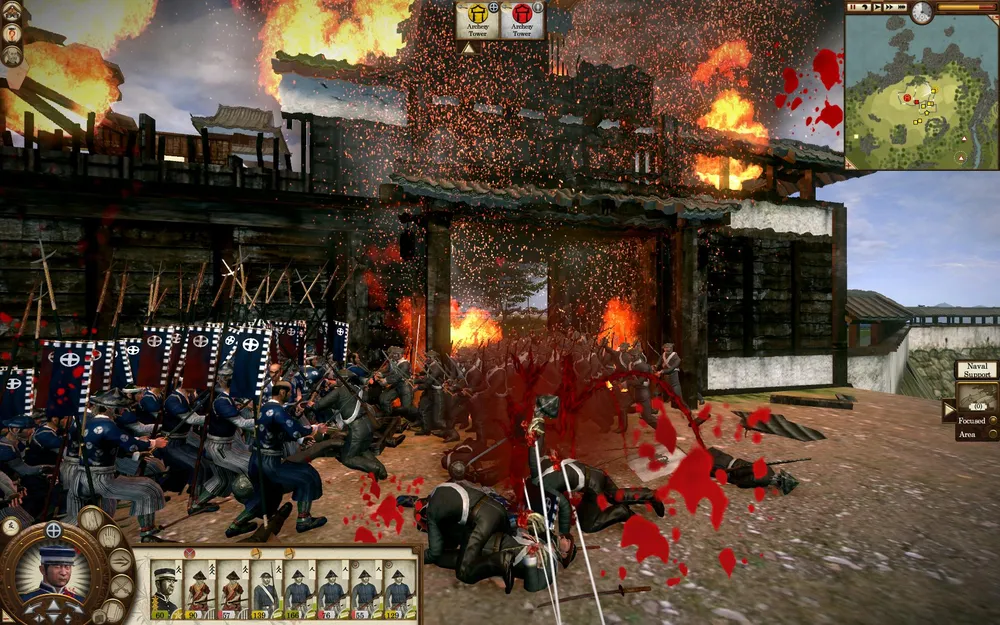
Blood, fire, dismemberment. The good old Japanese war.
Or even this one. In the full version, "The Dawn of the Samurai" showcased itself in all its glory: samurais are fully committed to the fight. The long-anticipated land battles of 40x40 have indeed been successfully integrated into Japanese military life - both in campaigns and in single battles; they appear (hello, arithmetic!) to be twice as large as anything you might have witnessed on the battlefield before.
Along with modern weapons of mass destruction and a "bloody" DLC, the scenes unfold before the monitor in truly epic fashion. A fellow countryman, Vereshchagin, would surely appreciate both the battle scenes and the consistently high (at least, as per the reviewer’s PC) FPS value.
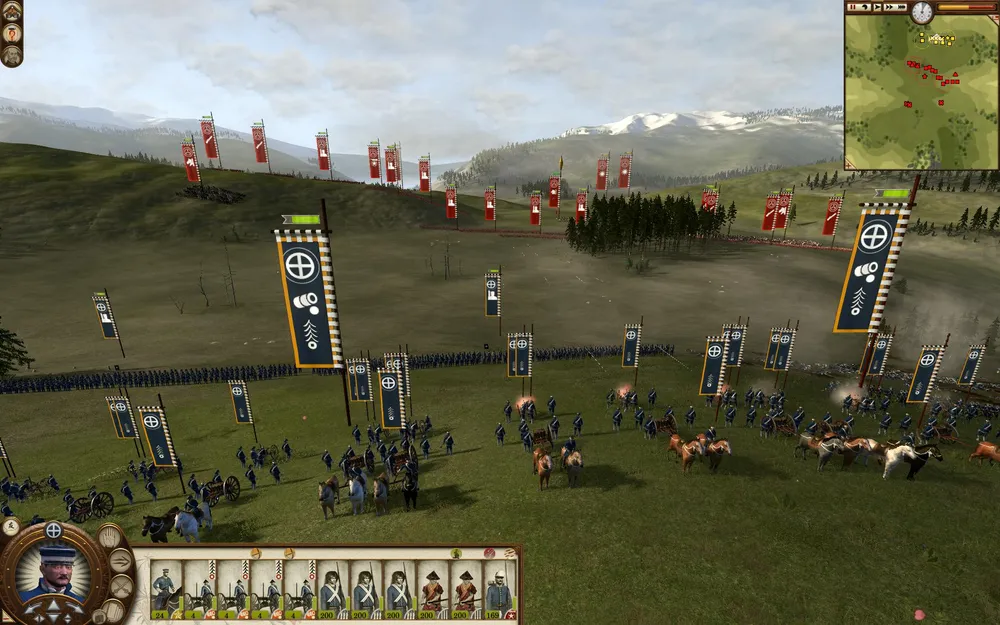
You are offered to overpower and destroy the enemy, as before, not so much by numbers but by skill, although the greatest contribution to victory is still made by scientific and technological progress. Access, for example, to ultra-accurate imported artillery and shrapnel shells enables one to storm practically any castle: even if the enemy has managed to set up machine-gun towers, you will be able to destroy them from a safe distance while making short work of the garrison.
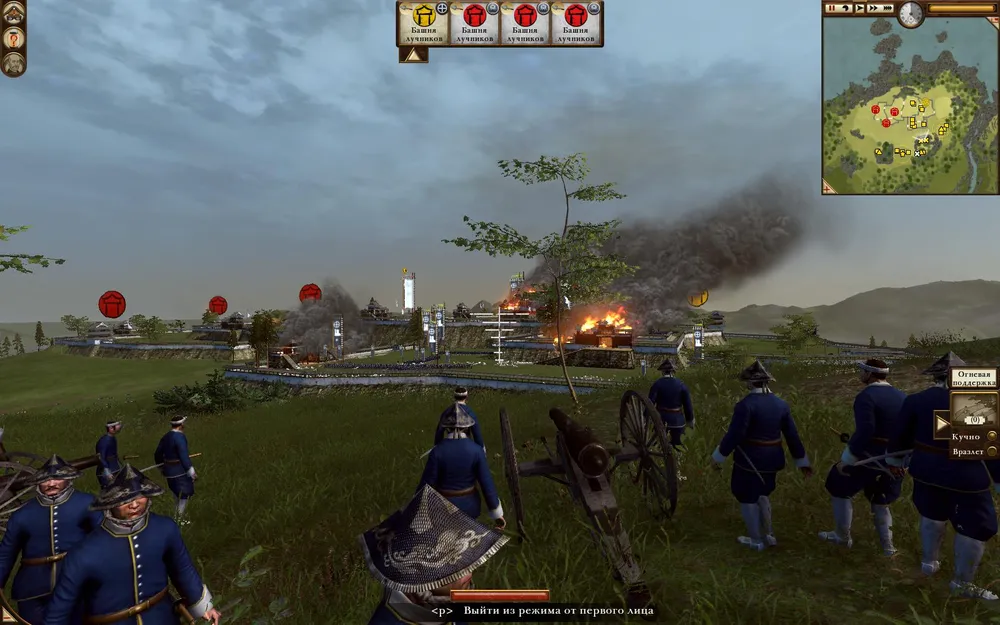
First-person artillery control mode. Useless but fun.
Line infantry, having learned to shoot in two ranks, begins to mow down enemy ranks just as well as the infamous "Gatlings". The further things go, the more pronounced the fruits of modernization and nanotechnology become, and the greater the disparity in combat casualties between "enlightened" clans and warlike retrogrades.
The navy of the nation that gifted the world wasabi is flourishing (it primarily smells of fuel oil, but that’s a detail); it is necessary and irreplaceable, as is proper for an island nation. Rapid troop deployment, artillery support, raids on enemy trade routes, and intercepting enemy landings dispatched to the homeland – wherever you look, it’s impossible to do without a significant amount of naval forces.
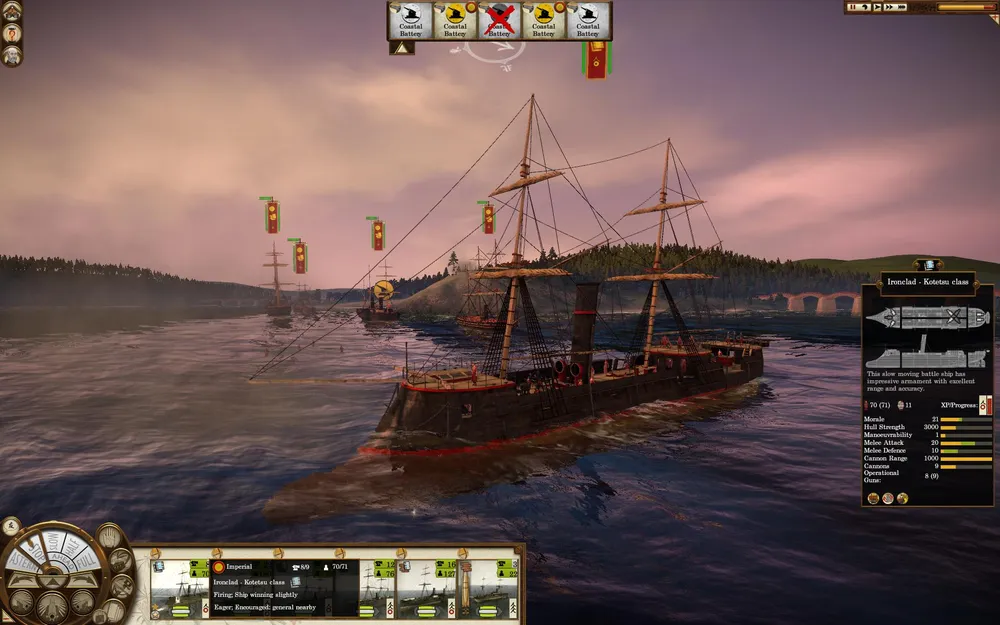
"Kotezu," the flagship of the imperial fleet. In one of the historical scenarios, it will play a key role.
But really, why should one do without? Thanks to the widespread use of steamships, large-caliber guns, and torpedoes, every encounter between two fleets comes with such a cacophony of noise, flashes, roars of turbines, and pieces of metal flying everywhere that any land battle pales in comparison to this fireworks parade. As they say, I never thought it would turn out this way.
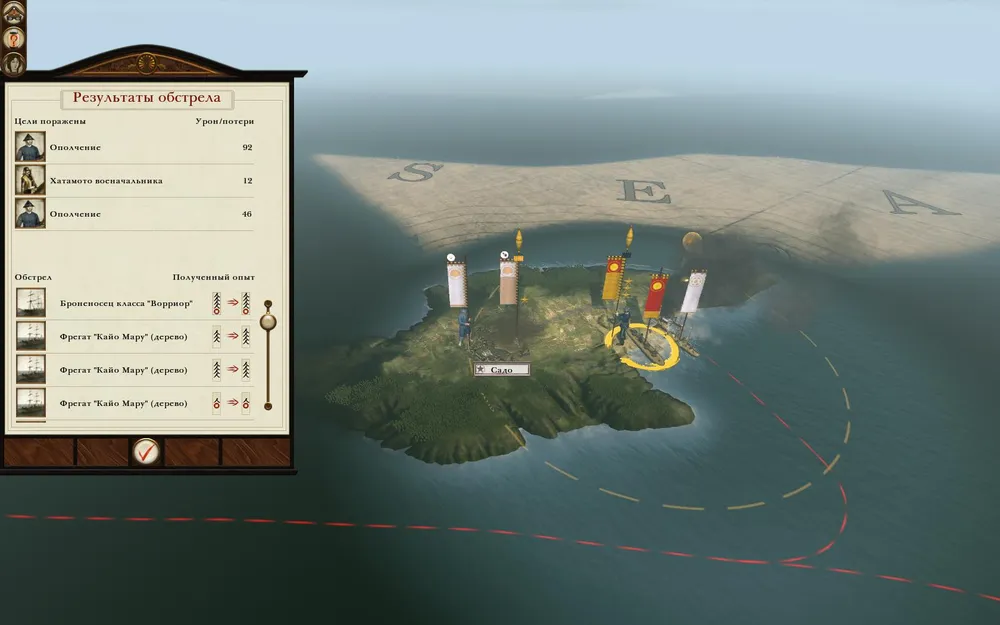
Results of a bombardment of a fortified castle. It’s nice to harm the enemy from a safe distance.
On the pleasant side – truly high-speed railways. Building stations costs an immense amount of money, but the rapid movement of troops overland is indeed worth the expense and is the only chance for clans that haven't thought to develop their own capable navy to receive reinforcements promptly.
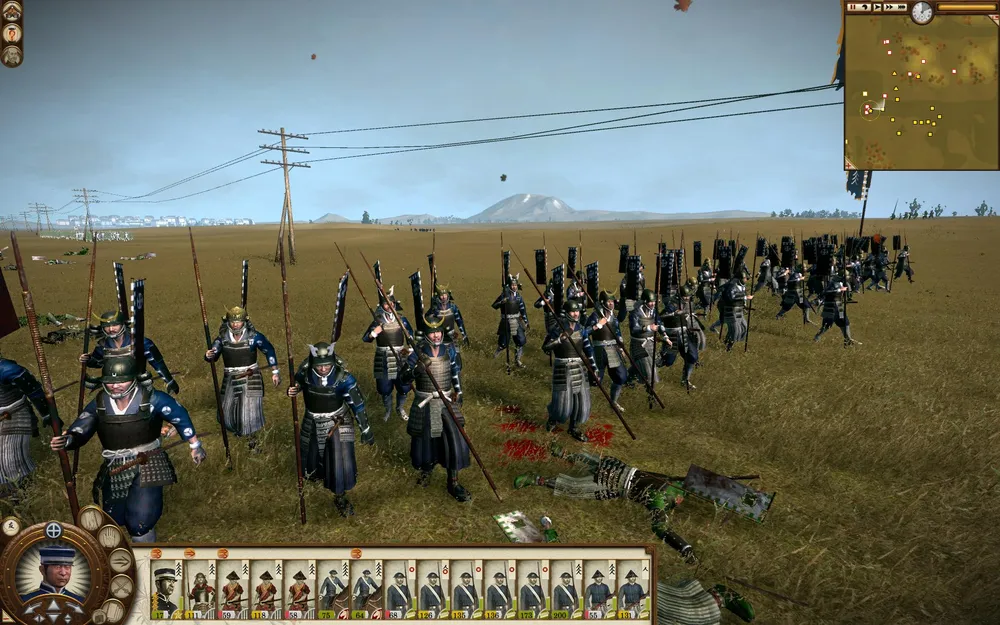
Signs of the times: samurais attack the enemy against the backdrop of a telegraph line.
The only hitch is that computer players aren’t particularly eager to spend a couple of government budgets on rails and ties, and therefore the only way to gain a functional transport system is to capture the majority of provinces suitable for laying railway tracks.
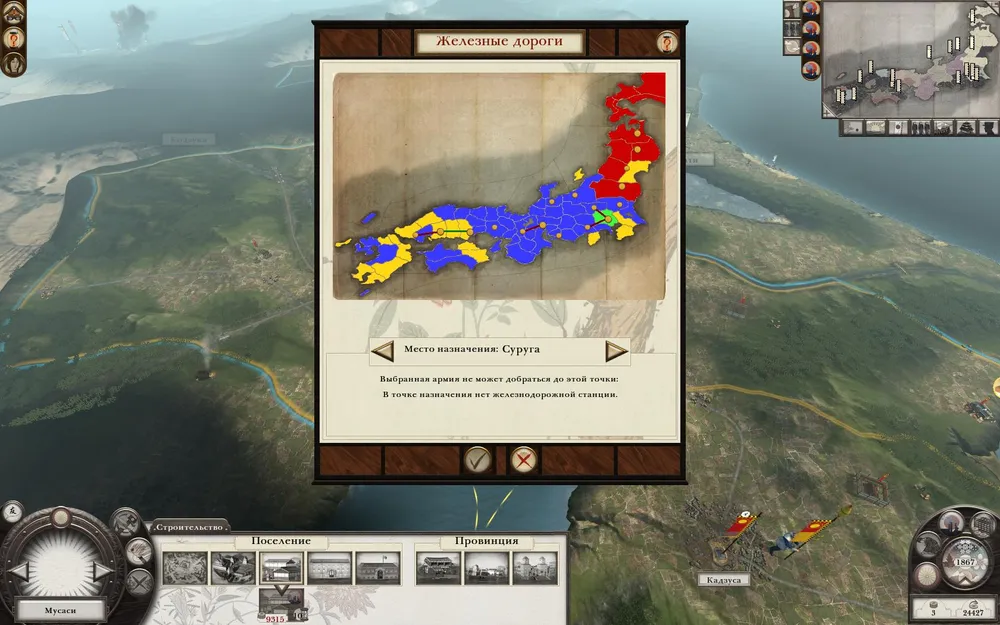
Half a year after the first campaign ended, the railway network looked like scattered scraps of wire. The yellow provinces are mine, the red ones are enemy territory, the blue ones are allies' territory.
It would seem that capturing a number of provinces is a task quite ordinary and not difficult for the [Total War](/games?search=Total War) series. However, upon closer acquaintance with neighboring factions, it becomes clear that they are quite reasonable people. They can be trusted, they honor agreements, don't try to kill each other without reason, and actively conduct military operations against a common enemy. In other words, there is no hard necessity to be an aggressor and capture all regions on the map, destroying peaceful neighbors before they attempt to destroy you.
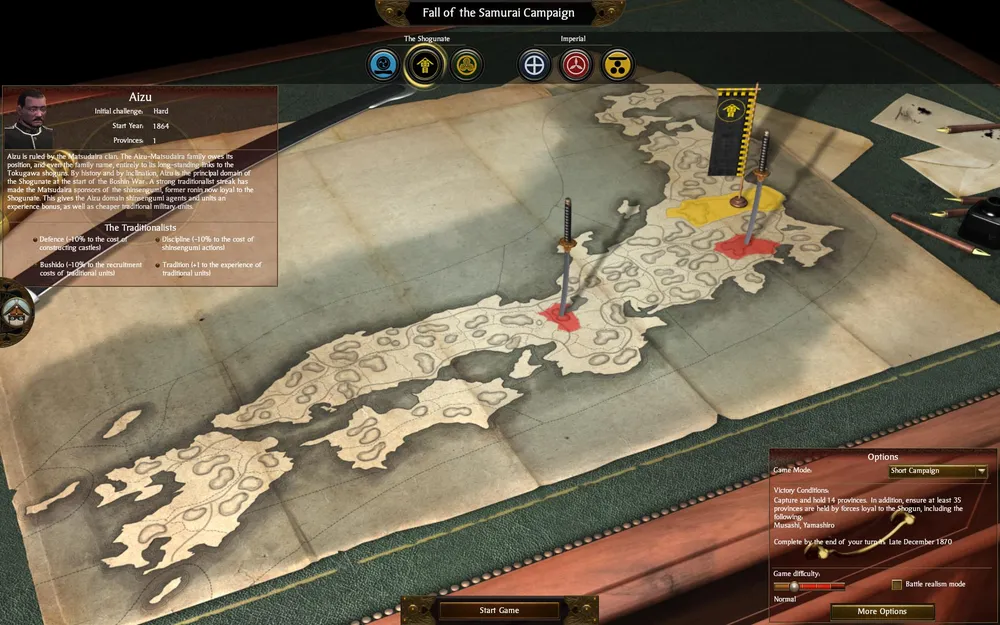
The objectives of the short campaign are incredibly simple: capture 14 provinces (out of 75) and re-educate half the country.
Having found myself in such a "diplomatic paradise," during the first campaign I captured only 12 provinces, and only those whose owners were unwilling to be re-educated and switch to my suzerain's side. The campaign was completed in record time - on the 60th turn (the limit is 200); all in all, it took 28 hours.
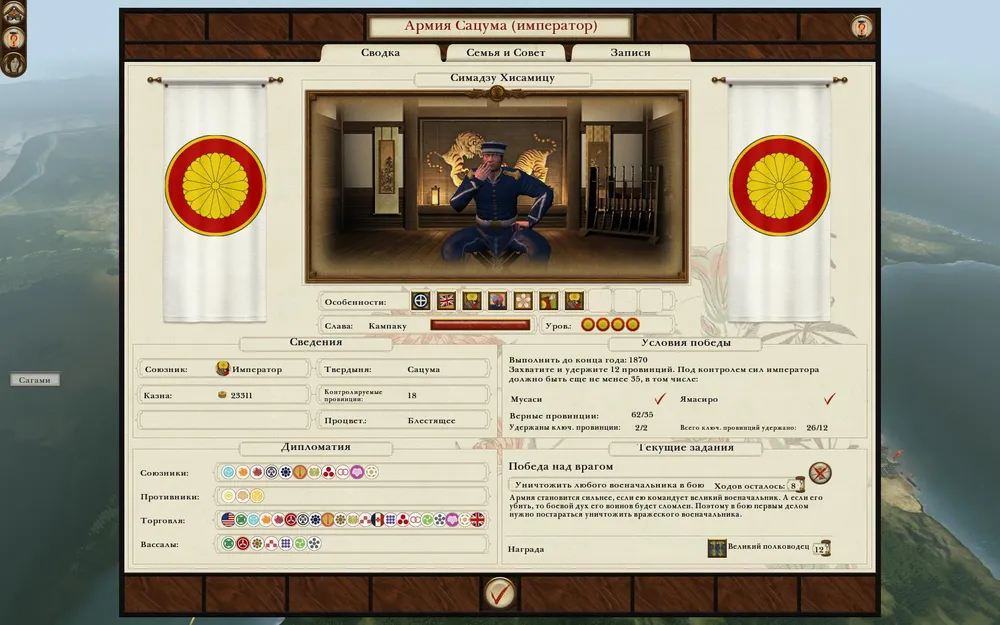
Having gained fame, the Satsuma troops earned the right to fight under the imperial flag.
The most unexpected revelation for me personally was the complete absence of bayonets in the equipment of the 19th-century army. In the case of the Japanese infantry, neglecting European military doctrines can be somewhat attributed to national color and reluctance to completely abandon the military traditions established by the samurai class; however, the local warriors were not the only ones lacking bayonets, as even the elite expeditionary corps of "foreign barbarians" lacked them.
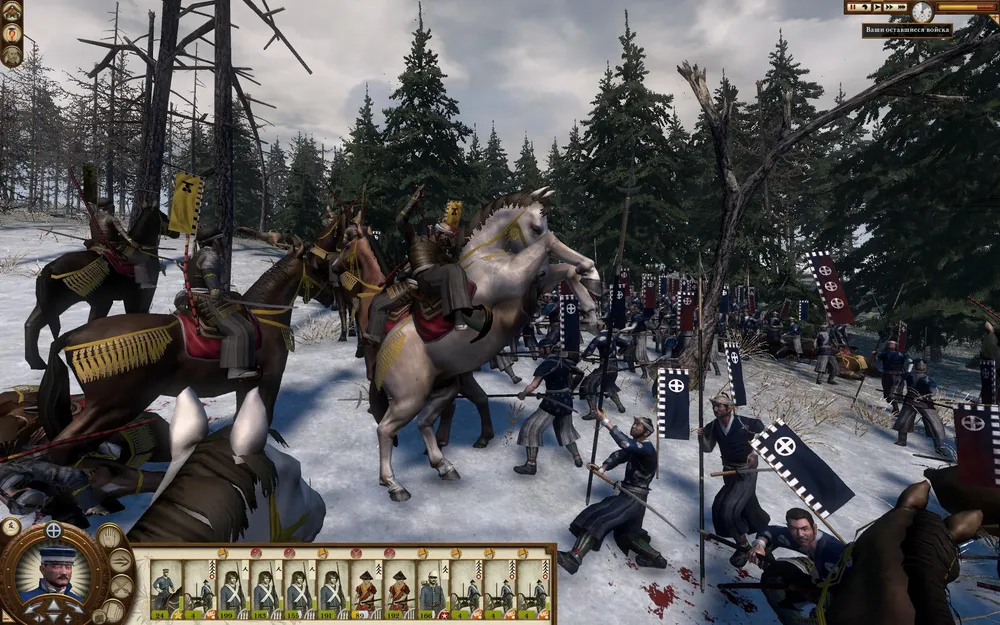
Watching the Royal Marines wearily fend off cavalry attacks with sabers is difficult – much like maintaining icy calm during a football match where the goalkeeper scores an own goal in the last minute. You want to grab a megaphone and shout into the monitor: "Fix bayonets, form up, you numbskulls!" Meanwhile, the numbskulls are losing half their personnel and scattering in disarray.
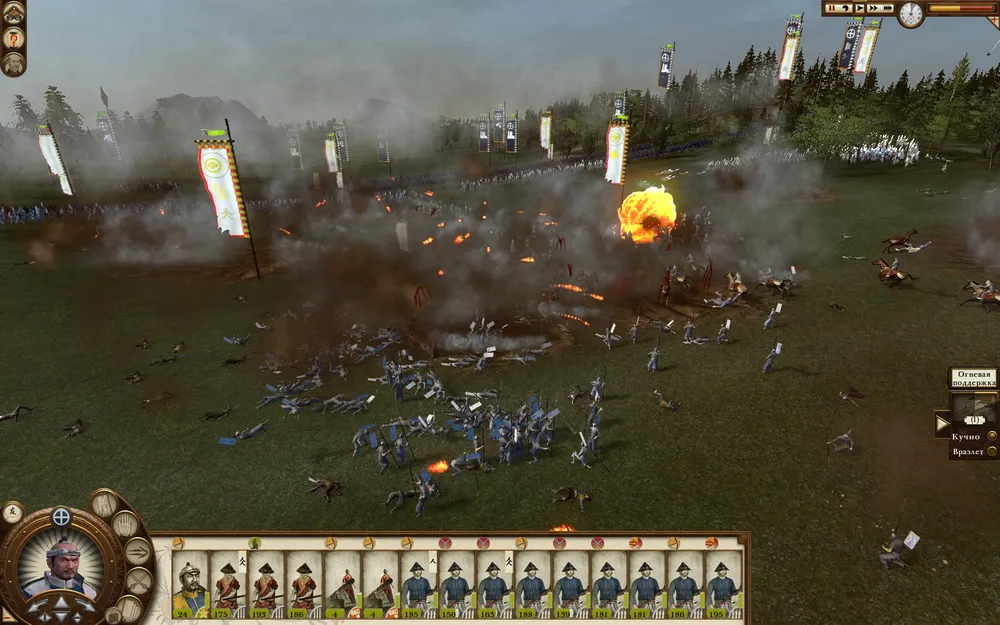
As a result of an ambiguous game design decision, the "dusk" commanders, wishing to reliably shield their troops from cavalry attacks, are forced to drag along at least a couple of squads of "old-fashioned" spearmen, as if it were the sixteenth century - the era of pikes and muskets. Spearmen, which is as astonishing as the bayonet deficit, have completely forgotten the "pike wall" formation over the past centuries and are significantly inferior in effectiveness to their Sengoku-era ancestors. It must be acknowledged that the historical accuracy of all that’s happening on the battlefield bears much less relation to what it could have had, had Creative Assembly disposed of its production assets differently. Given that public figures in the company have responsibly stated that it is impossible to release "DLC with bayonets," the hope rests solely on the modding community, which regularly fine-tunes the series with varying degrees of success.
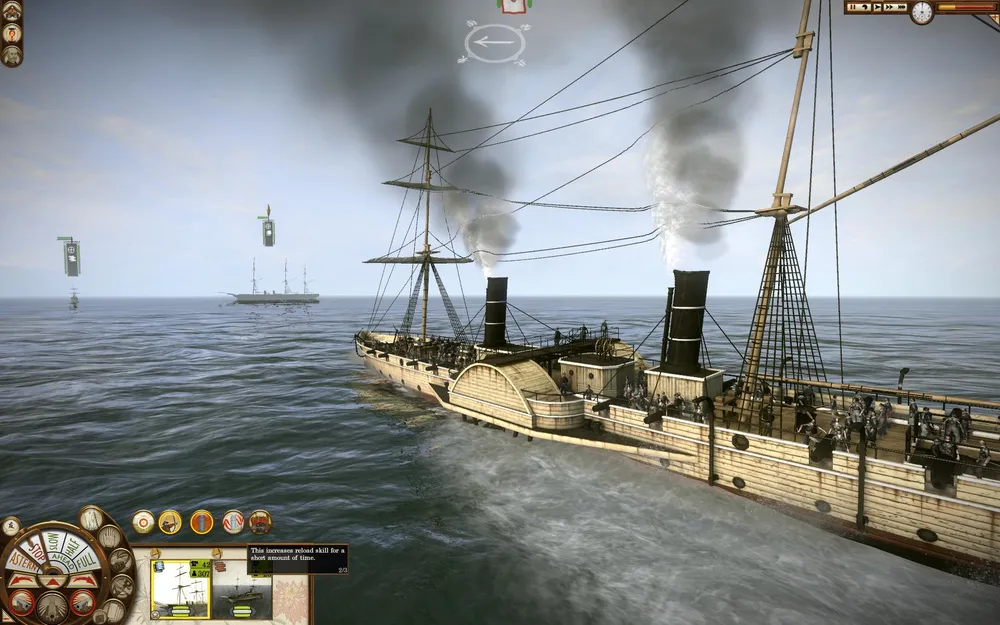
In each ship's arsenal, there are three types of ammunition: standard, explosive (ideal against wooden ships), and armor-piercing (designed to combat battleships). Furthermore, battleships can ram enemy vessels.
Fortunately, with this, the surprises end, and after a minor "adjustment," the peculiarities of the local army organization do not raise any questions. After training against computer opponents during the campaign, one can step into the online den, where the disputes between the shogun’s and emperor's supporters escalate to an international level: a daimyo from Sumatra is attacking a Russian commander in a clash for the shipyards where "Lesion" class battleships are being built (not a joke! Ask the French why they name their ships this way).
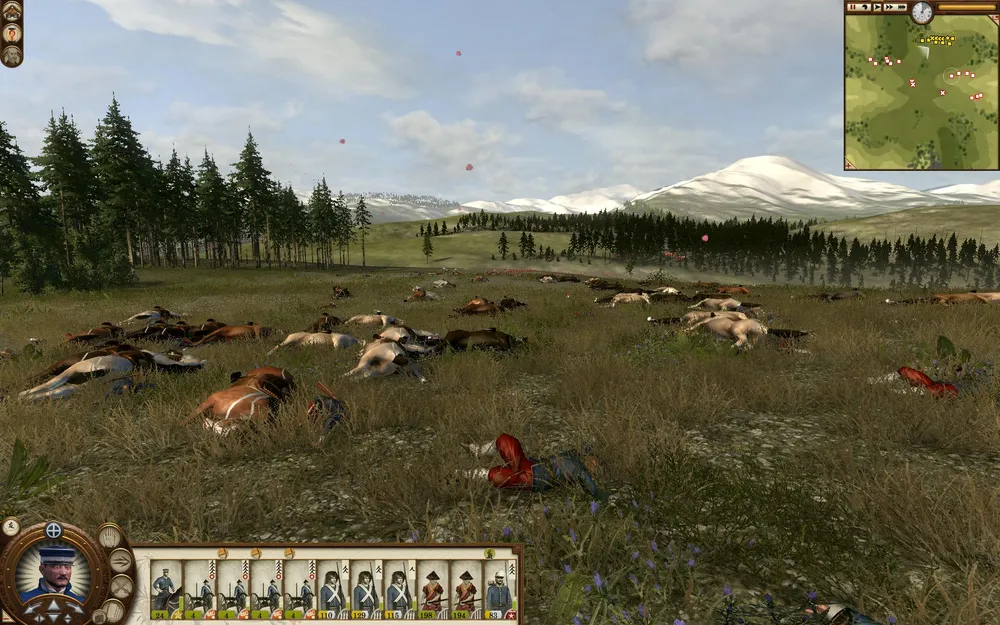
The apotheosis of war, the Japanese variant.
Each of the two opposing sides possesses its own set of unique units – there’s reason to carefully study the built-in encyclopedia and figure out which unit is better - the "Red Bears" or, say, the "White Tigers." The difference lies more in the names than in the specs, so the choice can be made solely based on personal feelings; in the end, linear infantry and artillery, equally accessible to both sides, will play a decisive role in battle.
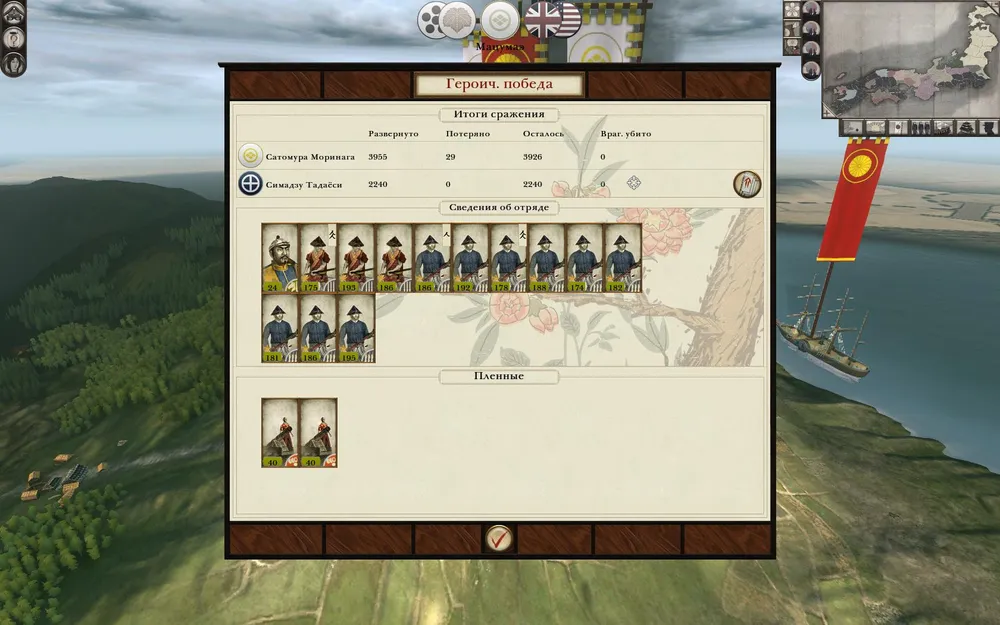
During the battle, you can capture the enemy artillery and use it against the foe. After the battle, the cannons will be fully at your disposal.
Achievements from the Sengoku period do not count in online warfare, so all conquests will have to start from scratch with a new general avatar. The old one will patiently await its turn in one of the four slots reserved for user avatars; sooner or later, the 19th century will grow tiresome, and you’ll return to the Warring States period, where it all began in the relic year of 2000.
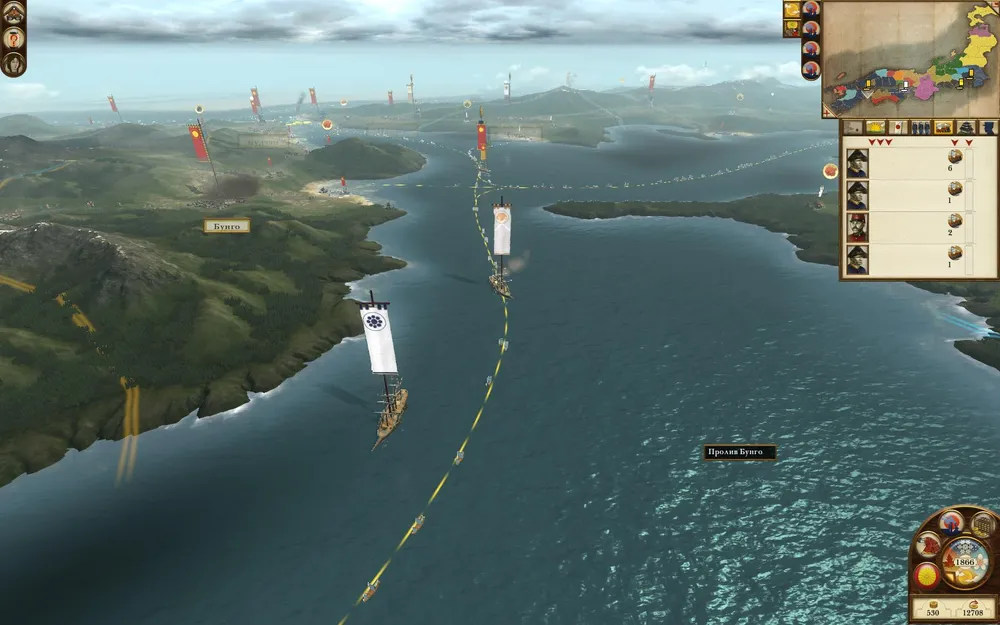
"Shogun 2: The Dawn of the Samurai" is a practically flawless conclusion to the trilogy about tough Japanese men who chopped each other's heads off and slit their own bellies at the first opportunity. It’s a vivid, fast-paced, blood-soaked strategy filled with industrial smoke, which will not only bring you joy from military victories and geopolitical triumphs but will also provide a clear understanding of why, in a rapidly changing world under the weight of industrialization, there was no room for those who preferred bushido to capitalism.
Rating: 9 out of 10
Bonus track:
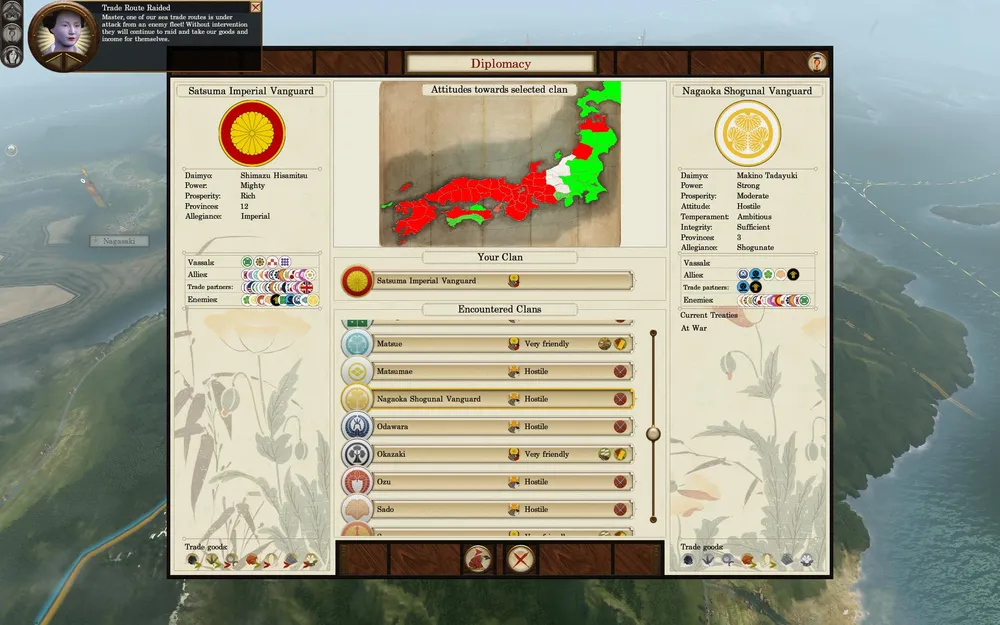
The emperor against the shogun!
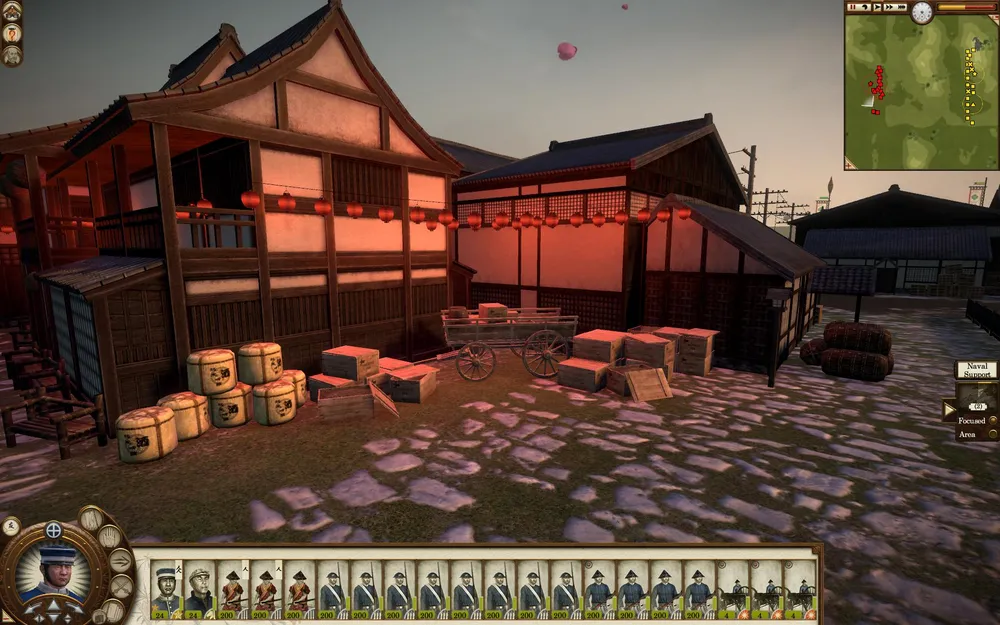
The battle took place near the red-light district.
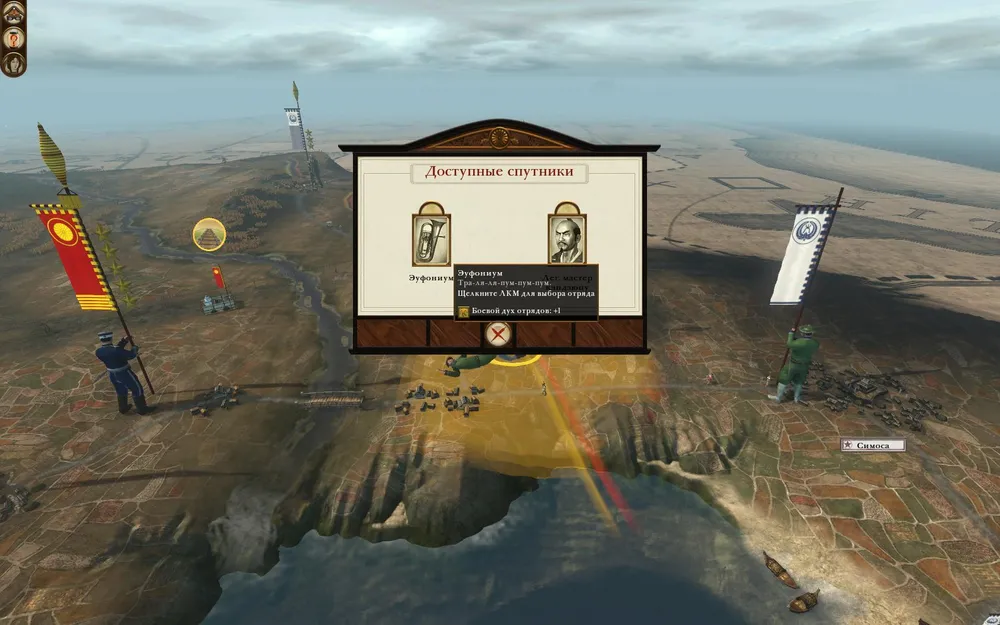
This general was particularly lucky: now he has an inspiring tub.
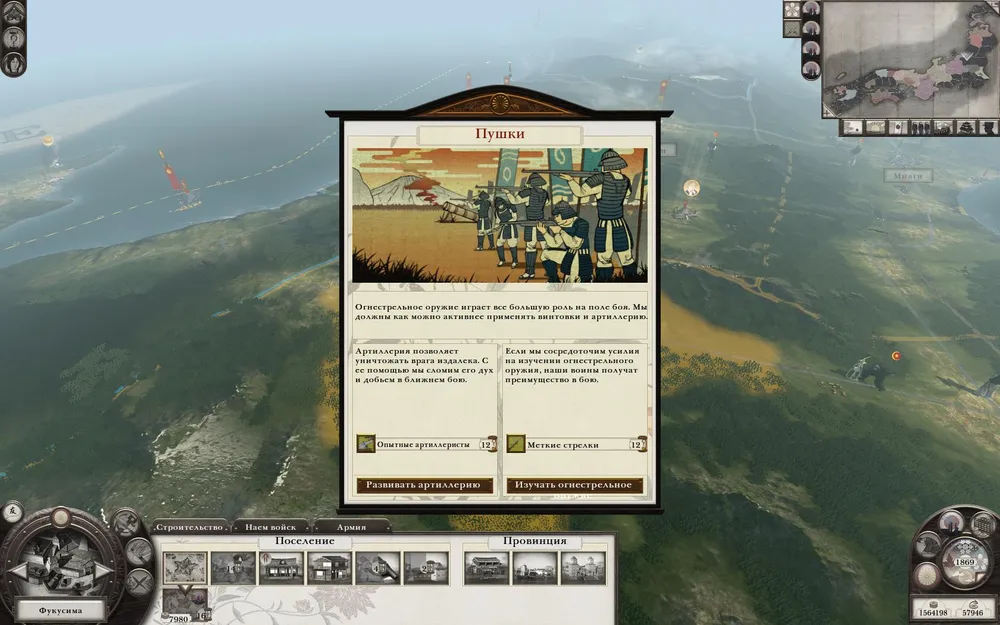
Dilemmas haven't gone away: sometimes it’s hard to choose.