
Role-playing system, its heroes and features
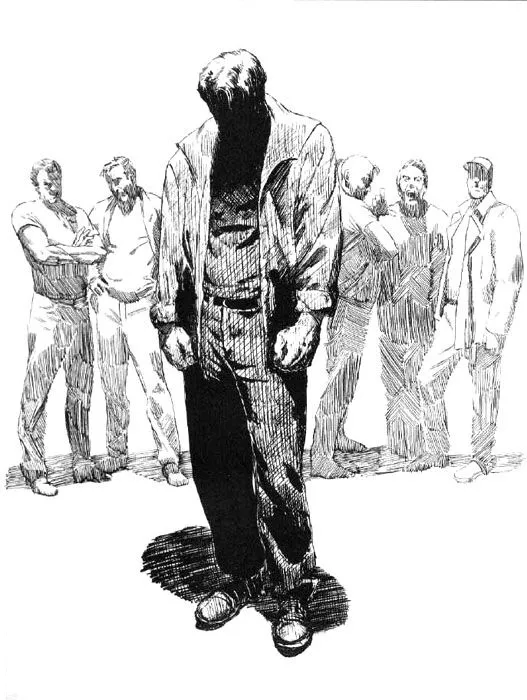
In this article, we will start our acquaintance with the role-playing system World of Darkness. Why "start"? It contains several subsystems, all of which are very interesting, but today we are focusing on vampires and the role-playing system Vampire: The Masquerade. It is less known than D&D or GURPS, but many players prefer it. There are many reasons for this: a unique world and a completely different approach to gameplay. However, we will discuss everything in this article.
Further on, we will not refer to VtM as a “system,” and will only talk about the World of Darkness as a world to avoid confusion in role-playing systems and worlds.
World of Darkness
Unlike D&D and GURPS, the role-playing system VtM is not universal and is intended for only one world, the World of Darkness. In this world, there are also several other role-playing systems — for example, Werewolf: The Apocalypse and Mage: The Ascension. They interweave closely, and their stories complement one another, allowing players to better understand WoD.
This is interesting: If you strip it of all the vampiric features, you get a system that looks very similar to GURPS. However, all the charm would disappear. Therefore, with a living GURPS, there is no need to torture VtM so much.
Every year, the World of Darkness expanded, new stories appeared, role-playing systems intertwined even more, and contradictions began to arise, sometimes very serious. By the end of the twentieth century, everything became so tangled that the creators of the World of Darkness decided to... destroy it. Yes, officially the old World of Darkness is dead. And all the role-playing systems in it too. No new editions are being released, and there’s no point in expecting any supplements or corrections. The developers have long been busy with a new World of Darkness. Almost all role-playing systems have moved there but with significant changes. Even the style of gameplay has changed. The old WoD was based on gothic-punk, while the new one is based on dark mystery.
In this article, I will not talk any further about the new World of Darkness. This may mislead or confuse the reader. The old World of Darkness is officially dead, but players are not rushing to switch to the new one — it is too ambiguous, and in Russia, very few have accepted it. Vampire: The Masquerade is significantly more popular than its counterpart Vampire: The Requiem.
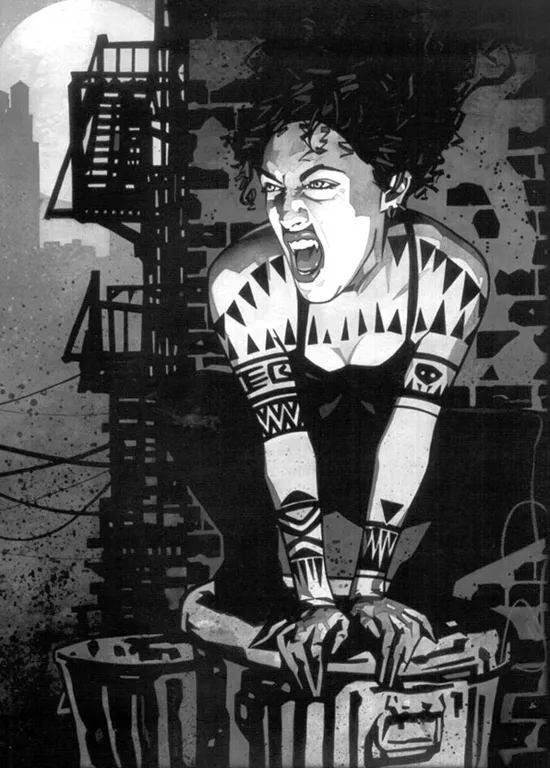
This is important: Some believe that the role-playing systems of the new World of Darkness are merely new editions of the old. There are many references and allusions to the previous world, and if you compare Vampire: The Masquerade with Vampire: The Requiem, there will be fewer differences than between the second and third editions of D&D.
World of Darkness
Unlike D&D and GURPS, the role-playing system VtM is not universal and is intended for only one world, the World of Darkness. In this world, there are also several other role-playing systems — for example, Werewolf: The Apocalypse and Mage: The Ascension. They interweave closely, and their stories complement one another, allowing players to better understand WoD.
This is interesting: If you strip it of all the vampiric features, you get a system that looks very similar to GURPS. However, all the charm would disappear. Therefore, with a living GURPS, there is no need to torture VtM so much.
Every year, the World of Darkness expanded, new stories appeared, role-playing systems intertwined even more, and contradictions began to arise, sometimes very serious. By the end of the twentieth century, everything became so tangled that the creators of the World of Darkness decided to... destroy it. Yes, officially the old World of Darkness is dead. And all the role-playing systems in it too. No new editions are being released, and there’s no point in expecting any supplements or corrections. The developers have long been busy with a new World of Darkness. Almost all role-playing systems have moved there but with significant changes. Even the style of gameplay has changed. The old WoD was based on gothic-punk, while the new one is based on dark mystery.
In this article, I will not talk any further about the new World of Darkness. This may mislead or confuse the reader. The old World of Darkness is officially dead, but players are not rushing to switch to the new one — it is too ambiguous, and in Russia, very few have accepted it. Vampire: The Masquerade is significantly more popular than its counterpart Vampire: The Requiem.
This is important: Some believe that the role-playing systems of the new World of Darkness are merely new editions of the old. There are many references and allusions to the previous world, and if you compare Vampire: The Masquerade with Vampire: The Requiem, there will be fewer differences than between the second and third editions of D&D.
History
The history of the World of Darkness is based on the real history of humanity, but all significant events are accompanied by the intervention of vampires. For example, let’s take the October Revolution. Vampires claim that the turmoil began due to the enmity of two clans: one consisted of educated and diplomatic vampires, and the other — of strong, authority-defying ones. Unfortunately, the first did not win.

There are also just amusing personalities and dates in history. Thus, in the year two thousand, they awakened... Vasilisa and made her kill Baba Yaga.
In this article, we will only briefly touch on the history of the world — we will mention the first Vampire and the beginning of the Masquerade. Other aspects are best discussed within the context of "Legends and Myths."
The story presented below is taken from "The Book of Worship." It is written by vampires and reflects only their perspective. For example, werewolves have their own history, and fairies — theirs. In the World of Darkness, a kind of unsaid quality is deliberately created, which gives the story a certain uniqueness.
The First Vampire
If vampires are to be believed, Eve was not Adam's first wife. Before her, there was Lilith, whom the Lord cast out of Eden first. And when Adam asked for a second wife, God created Eve.
But before being on Earth, Lilith managed to bear Adam four children. A few years later, God commanded two of them, Cain and Abel: “Bring me a sacrifice worthy of me.” Then Cain gathered the fruits of the harvest and offered them to the Lord, while Abel slaughtered a lamb. And when Cain saw that God was pleased with the bloody sacrifice, he killed Abel to please the Creator. The Lord became angry and cast Cain into the Wastes.
Cain wandered the world for many years and was ready to die, but one day angels descended to him. They told Cain to plead with the Lord for forgiveness. Cain dismissively refused — he did not need forgiveness. He did not consider himself guilty. And then God became angry and cursed the murderer. He granted him eternal life in which he would be constantly pursued by the thirst for blood. And his greatest enemy became the sun.
The only person who pitied Cain and set out with him on his journey was his mother, Lilith. She wandered with him across the world, teaching him various disciplines (a special magic of vampires). And after years, Cain acquired immense power.
It was only after acquiring this power that Cain became a true vampire. As many believe — the first. But some clans do not recognize Abel's murderer as the first and strongest night predator. After all, if his mother taught him all the wisdom, isn’t she the first vampire? No one has yet figured out how the Lord cursed her and exactly why he expelled her. Therefore, the vampires of the True Black Hand sect devote their eternal lives to finding proof of Lilith's primacy.
The Masquerade
After Cain vanished forever into the desert, his thirteen grandchildren (the so-called Patriarchs, or in other translations — Pre-Flood) spread across the world. They turned humans into vampires in droves and created their own empires. The number of Cainites grew, and each formed new and new individuals. By the middle ages, the earth was simply teeming with vampires.
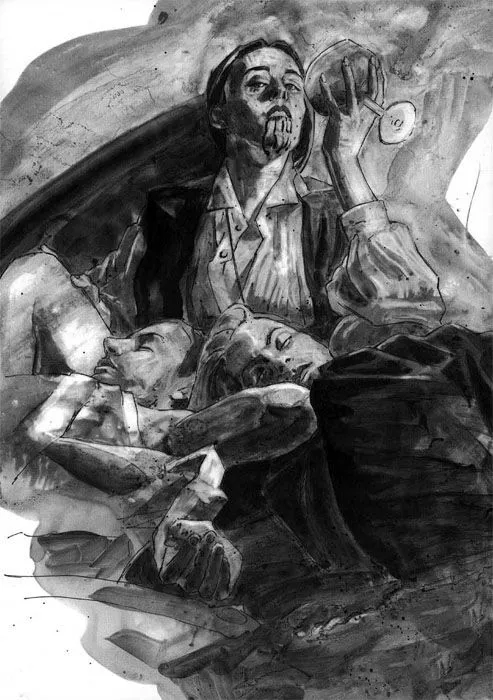
Using their power, Cainites subdued humans and secretly ruled many powerful states for a long time. But as the years passed, they stopped hiding. In some countries, not pretend human kings sat on thrones, but vampires.
People were afraid. And the more the children of Cain allowed themselves, the louder the discontent of the common people became. The Church, which had been silent for a long time, spoke up. It cursed vampires and created an inquisition to cleanse the world of terrible monsters.
Vampires were much stronger than mere mortals, but they faltered before huge crowds. Mortals burned and dragged their former masters into the light. Cainites had to hide, conceal themselves, flee from their established territories. Additionally, a rebellion of the newly embraced began — elders had long used them to secure themselves. Young vampires were no longer willing to tolerate it — what’s the difference, to die by the hand of a powerful vampire or to be burned alive in the sun?
It seemed that Cainites would disappear forever. But seven out of thirteen clans formed an alliance, which later led to the establishment of the Camarilla. Its members vowed to uphold the Masquerade — a set of rules that prevents vampires from revealing their true nature to humans. However, even within the Camarilla at first, there was unease — struggles for power, uprisings, and violations of the Masquerade. All the rebels were expelled from the sect. They organized the Sabbat (in another translation — the Shabbat). Nowadays, these two sects are fierce enemies, and while the Camarilla still honors the Masquerade, the Sabbat is a pack that recognizes only power and has long forgotten about humanity.
Our Days
Since the formation of the Camarilla, not much has changed. Mortals have long believed vampires to be a fairy tale, and Cainites still sit in the shadows and uphold the Masquerade — even more strongly than before. People do not believe in vampires, but there are hunters who hate the children of Cain and travel the world to cleanse the earth. What they are counting on is unclear.
However, more and more conversations are heard about the coming Gehenna — the end of the world. Wars among vampires are becoming even more terrible. Cities and even some streets are divided. Nights see entire battles of vampires. And within the very structure of the Camarilla, all is not well: clans do not like each other and constantly fight for power, sometimes even using force, although it is forbidden...
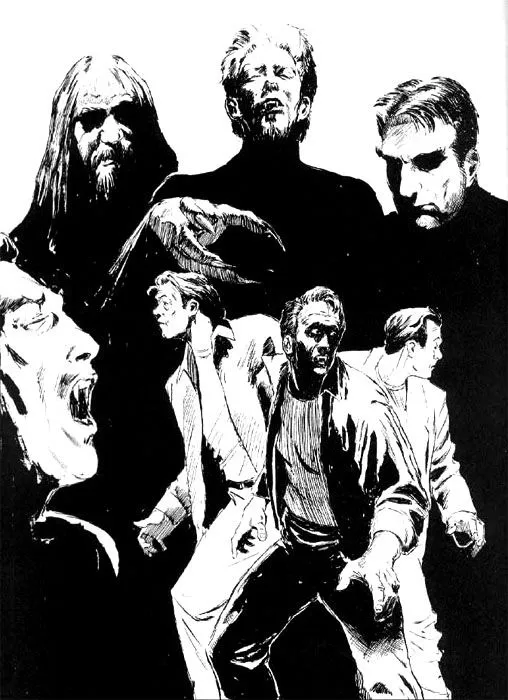
Vampire Glossary
As we have already discussed some terms in the article, but simply named some without explaining their meanings, in this chapter the reader can become acquainted with the main concepts.
The Beast. Since vampires are inherently monstrous creations, within each dwells the Beast. Should it awaken, the vampire loses control of themselves and completely succumbs to their animal nature. In such a state, a Cainite can easily violate the Masquerade or kill a mortal, and not just one.
Madness. A state in which a vampire is possessed by the Beast.
Final Death. Death after which a vampire can no longer exist. Completely killing a vampire is difficult, and sometimes almost impossible. Silver bullets or crosses do not affect it; only the sun and fire are a sure method.
Torpor. Essentially, a vampire's lethargic sleep. A stake through the heart, for example, leads to torpor rather than final death. A vampire can fall into this state due to a lack of blood or strong shock.
Gehenna. The end of the world, during which the thirteen Patriarchs will awaken from torpor and kill all vampires, and then destroy the entire world. By the end of the twentieth century, Gehenna was predicted more and more frequently. Many vampires were unable to find peace because of it. Eventually, Gehenna came, and the story of the old World of Darkness ended.
Ghoul. A person who has drunk a vampire's blood. If you feed a mortal blood three times, they become your servant and are ready to do anything for their master. A ghoul is stronger than a human, as some vampire blood is already boiling within them. Contrary to mortal misconceptions, a person who drinks Cainite blood does not become a vampire. The process of becoming one is somewhat different.
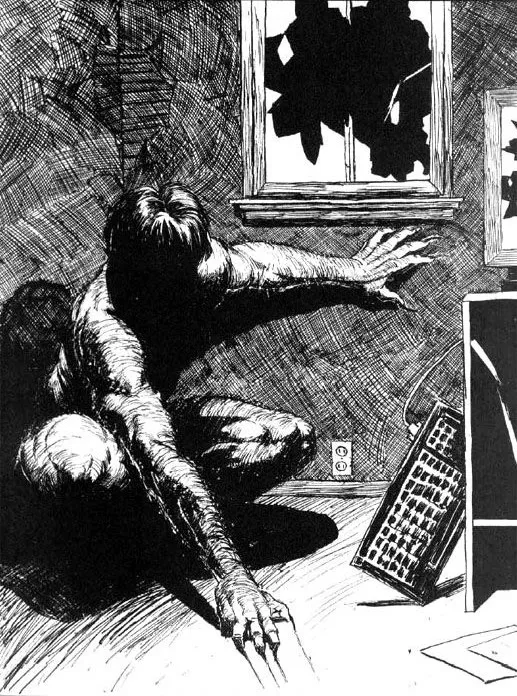
Becoming. The process of turning a mortal into a vampire. To make a human immortal, you must fully drink their blood and then feed them yours. Thus, the person is completely cleansed of human blood and receives vampire blood. A newly embraced Cainite acquires many traits from their clan and often from their sire.
Elysium. A neutral place where hunting is forbidden (and it is considered bad form to enter Elysium hungry), carrying weapons, or resolving disputes. Often an Elysium is declared in the receptions of princes or in places where elders gather.
Jihad. A holy war among vampires. Previously, Jihad referred to the confrontation of the Patriarchs, and now — the war between the Camarilla and the Sabbat.
Generation. Indicates how far a vampire is from Cain. The lower the generation of a Cainite, the stronger they are. Elder clan members are usually of the fifth-sixth generation, while newly embraced vampires are of the thirteenth.
Diablerie. The process when one vampire drinks the blood of another down to the last drop. Some do this to reduce their generation, while others simply find human blood distasteful — happily, only old vampires are picky. Diablerie is punished with death in the Camarilla.
Sire. A vampire refers to their maker as sire.
Prince. The head of a city. A highly respected vampire who assigns tasks, resolves the problems of vampires, and governs the city.
Narrative System
All role-playing systems of the World of Darkness differ somewhat from any others. No, not in that vampires and werewolves live here. And, of course, not due to any special character skills. Honestly, it’s all secondary. The key difference lies elsewhere. VtM is alien to "leveling" — it is simply impossible; there are no people trying to earn experience by constantly killing monsters.
This is interesting: For the sake of truth, this is practically nonexistent in tabletop RPGs—experience in D&D, for example, comes not in battles, but only in between adventures; and senselessly beating monsters shouldn't grant experience at all. Experience gained from defeating monsters as the primary reason for character growth is a byproduct of the computerization of roleplaying games.
The main task is to create a story. And every player must always remember this. Even the masters are called Storytellers here because they create the story, not merely ensure rule compliance.
In VtM, there remain many gaps in balance, but they were never intended to be corrected. It was assumed that the Storyteller would somehow manage and not allow the creation of a character that surpasses others. In other role-playing systems, the final decision is also entrusted to the GM, but here it is intentionally emphasized that rules are always less important than the story. Often, there is no need to roll the dice: the Storyteller is free to decide how events will unfold, naturally favoring the plot.
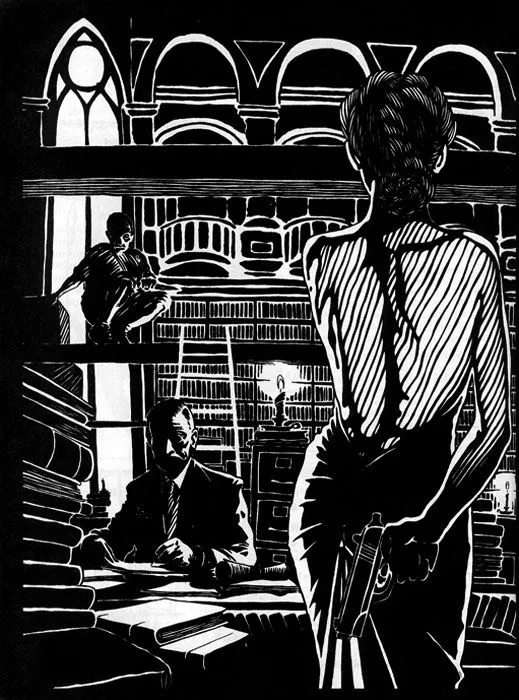
Imagine two vampires trying to guess a password while no one is even hindering them. They fail three times but repeatedly attempt to hack the system. The standard Storyteller move would be to have the system prevent further attempts. But if they guess the password, the players can advance their story significantly, and it is, after all, more interesting. No problem — the Storyteller declares that the system has been hacked.
This play style strongly resembles "freeform" — a tabletop role-playing game without rules. Everything depends only on the players’ skills: how well they can play their roles and how skilled they are as orators (including how successfully they persuade the Storyteller). But VtM has an impressive role system, which is not inferior to, for example, D&D. We will discuss it below.
Some may find all of this naive — arguing that there will always be those who play for victory and experience. However, the latter in VtM is credited only for completing tasks and performing role enrichment — and only at the end of a chapter. And the more interestingly a player acts, the more experience they gain. You can wipe out all of humanity with your own hands, but neither strength nor smarts will be added to your character.
The Curse of the Clans
There are no classes, but...
In VtM, there’s no division into classes; everyone is free to choose any parameters, attributes, traits, and advantages at the game's outset. The role in the group is determined solely by the player. However, clans have great significance. Each has its own strengths and weaknesses. For example, vampires of the Nosferatu clan are so grotesque that they simply cannot show themselves to mortals — otherwise, they will break the Masquerade. But no one else is better at sneaking around than them. Ventrue are excellent diplomats but cannot feed on the dregs of society or animals — it repulses them.
In addition to the main virtues and flaws, there are specific traits that are solely ours. And when a player picks a certain type of vampire, they must match the image. Embracing is not that easy; it must also resemble the vampire of a given clan during their human life. A sane person will never become a Malkavian. Ventrue are chosen to continue the lineage of nobility. A Torreador’s appearance is extremely important.
So, while there are no classes in the game, a certain division still exists. Interestingly, in VtM there are characters who provide almost no benefits and are unnecessary to the team. For D&D, this is absurd, but in "Vampires" it’s quite natural. For instance, why does a group need a Torreador who leaves society at the first opportunity to go to an art gallery or theater? Discussing business seems boring to them when beauty surrounds them! And how should one respond when a party member dies admiring a magnificent sunset?
But the thing is, such characters are essential for the story. It’s more interesting to see heroes who live within the game rather than just act for the sake of achieving goals. Game mechanics play no role here — only Nosferatu lack appearance, while Malkavians are created with one of the psychoses from the start. Otherwise, everything lies in the hands of the Storyteller and players.
A Bit of Specifics
Let’s proceed directly to the clans. There are a total of thirteen in VtM (not counting the Sabbat renegades). In addition to clans, there are also Bloodlines, but we will not discuss them in detail. Each clan has its own curse imposed by Cain for betrayal. Thousands of years ago, thirteen of his grandchildren — Patriarchs — conspired to kill three of his sons. Cain learned of this and decided to take cruel revenge. The progenitor of the Nosferatu clan, Absimiliard — the main conspirator — was most severely punished. Cain horrifically disfigured him, and now representatives of this clan cannot even appear to mortals.
Camarilla
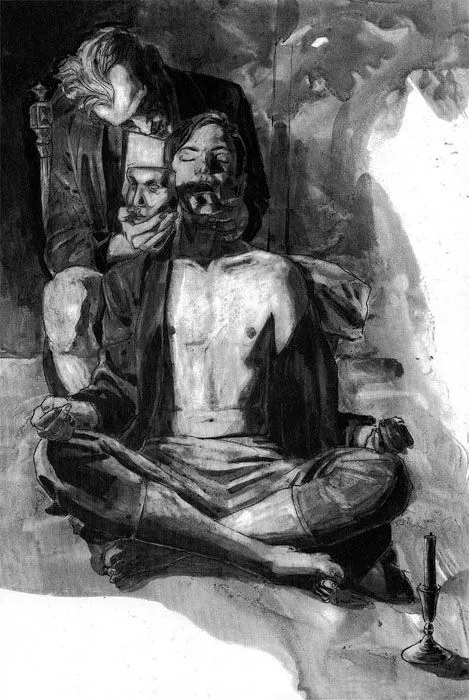
After 1999, six clans joined the Camarilla. Some strictly follow all the sect’s orders, others are merely nominally a part of it, but in reality, weakly obey anyone. Some don’t even understand what is happening.
Any newly embraced vampire in the Camarilla first learns from their sire about their responsibilities and rights — everything is very strict. The Camarilla still exists thanks to its clear hierarchy and adherence to laws. Below, we will discuss the Sabbat and compare their structures.
Ventrue. The elite and foundation of the Camarilla. Without Ventrue, it may not have lasted even a hundred years, as only this clan is willing (or more accurately, ready) to bear the burden of power. The others are either too disorganized or do not fully comprehend what that entails.
Ventrue are very elegant, intelligent, and cultured Cainites. They mingle in the upper echelons of humanity and often manipulate them. Many politicians and merchants follow their lead. They secretly govern cities (though not exclusively so). Because they create politicians, businessmen, and prominent figures, their positions are passed on to the clan.
All Ventrue are very conservative and try to live as though the embrace never happened — not altering their habits and doing the same things as in their human lives, even dressing as they did during their time of becoming. However, the Ventrue prefer to consider themselves a very liberal and progressive clan.
Ventrue have one weakness — they only drink a certain type of blood. For example, there are vampires who prefer the blood of kings or nobility, and others who need only virgins. But even the most omnivorous are repelled by the blood of animals or the poor. For them, this is also a huge blow to their self-esteem. Ventrue can fall into depression after such an experience.
Nosferatu. Perhaps one of the most famous clans. Mortals have long concocted legends about them and whatever else they can think of regarding these vampires. In reality, Nosferatu are very unfortunate due to their ugliness. They live among rats in the sewers and constantly endure mockery from their kin.
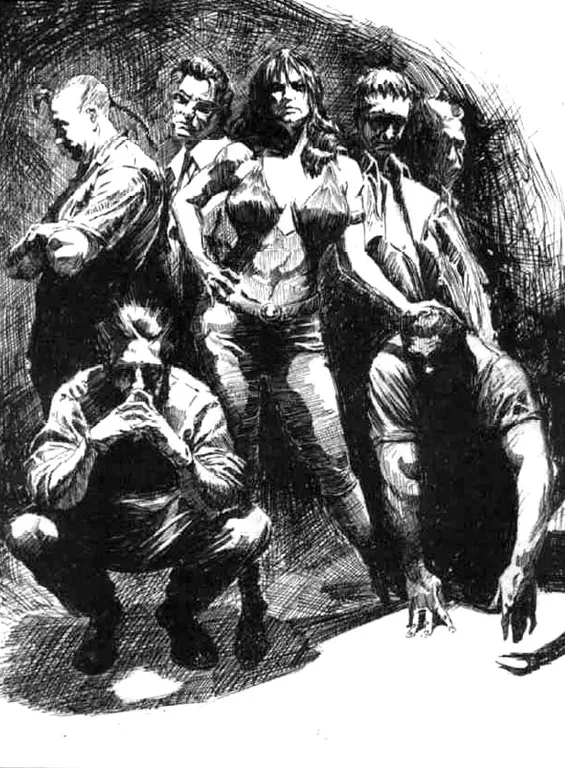
Nevertheless, other clans sometimes seek the help of Nosferatu. They possess disciplines that allow them to remain completely unnoticed — an indispensable quality for a spy. Old Nosferatu are exceptionally well-informed. Even princes rely on their services.
All Nosferatu stand firmly behind one another. This is simply explained — other clans prefer to avoid dealings with them, leaving them to rely solely on their own kind.
Nosferatu are very reluctant to give mortals the embrace, considering their appearance incredibly awful and unwilling to deprive humans of their normal lives. Only those who are severely mutilated, go insane, or die become one of them. Wealthy people or nobility never receive the embrace from these vampires. Nosferatu turn into vampires those from the lowest echelons of society — the homeless, prostitutes, and beggars.
Torreador. Troubadours, artists, creators. The entire Torreador clan consists of creative individuals who serve beauty and artistry. They love mortals more than any other vampire and often live among them while revealing their secret.
Ventrue, perhaps, are the only ones who truly respect this clan. Others either relate to them with indifference or openly dislike them. For example, Nosferatu outright curse all Torreadors. This is hardly surprising.
It’s easy to distinguish a Torreador from other vampires: all of them, men and women, are stunningly beautiful and exquisitely dressed. This clan cherishes beauty and, because of this, grants certain mortals eternal life.
This life is exceedingly valuable to Torreador. They dedicate it to creating great works. Many paint; not one vampire has perished while painting a sunrise. They are thrilled by all that is beautiful — if a Torreador sees a painting of unprecedented beauty, they may fall into a stupor for hours. Due to their passion for beauty, Torreador often fall in love with mortals but then abandon them.
Currently, far from all Torreador are deeply creative individuals. Many have become simply easily impressed vampires who seek not beauty but merriment. Yet this still remains the minority. Stepan Trofimovich from Dostoevsky's novel "Demons" would fit well with this clan. One could endlessly speak of higher matters while, in general, doing nothing...
Brujah. Anarchists and rebels. In the distant past, Brujah were a great clan, and legends about their history still circulate, but now everything is different. These Cainites despise any system, scorn elders and princes, wanting to live purely for pleasure.
Influential vampires of the Camarilla regard them with some caution, as Brujah recognize no authorities. They are often forbidden to embrace (i.e., create progeny). They don’t care — they create a vampire and then vanish from that maker’s life. However, exceptions exist, though they are extremely rare. Brujah frequently embrace several mortals at once — it’s easier to survive in a pack, as the illegitimate offspring are hunted by the prince’s soldiers.
They resemble human "nonconformists" in appearance. They adopt any rebellious fashion style and often combine various styles of clothing. For example, one might see a vampire with a huge green mohawk, dressed in a biker leather jacket and army boots. And this is by no means the limit.
Brujah's behavior resembles that of human rebels. Each of them harbors an anarchist revolutionary.
However, Brujah are valued for their combat effectiveness. They are the first soldiers of the Camarilla, and legends abound regarding their fury. The same fury also serves as their main curse. Brujah are so volatile that it takes little for them to fall into Madness. They contemplate suicide almost daily.
Gangrel. If you see a vampire transforming into a bat or wolf, know you have encountered a Gangrel. This is the only clan whose members can shift into beasts. They live in the woods, preferring communication with animals over conversing with humans. Gangrel rarely enter cities; noisy streets repulse them. A reader might ask, where do Gangrel hide from the sun? The answer is simple — they have long learned to merge with the earth. Somewhere near dawn, a vampire "enters" the ground and lies there until nightfall. Young and weak Cainites must seek refuge in cities — the sewers and zoos are the best options.
Gangrel, by their nature, are solitary creatures. They lack any interior clan structure. Their elders are merely respected vampires — they cannot command.
The embrace from a Gangrel can only be given to a person capable of surviving alone. Scouts, rangers, and foresters are the ideal candidates. The sire instructs the newly turned vampire or, conversely, tries not to obstruct their learning of vampire life.
Members of this clan, like Brujah, are famed for their strength, but Gangrel are feral by nature — they are almost beasts. Perhaps that is why they seldom recognize weapons — it’s easier to fight barehanded. Additionally, they possess numerous skills appropriate for hand-to-hand combat; for instance, claws that inflict wounds that do not heal, while mortals are felled instantly. Gangrel elders seem to resemble animals. Older vampires gradually acquire more animal traits: cat-like eyes, wolf-like ears. Thankfully, they have not yet taken on swine features...

In 1999, the clan exited the Camarilla due to false accusations from the Ventrue. However, many vampires continue to serve the sect, but the clan is officially considered independent.
Malkavian. Many are surprised to learn that even among vampires, there are the insane. But there is a whole clan where all vampires are mad. They only share this attribute, as Malkavians embrace completely different people, regardless of age, race, mental makeup, and character.
Of course, they do not embrace just any random stranger. Only aqueles who stand on the brink of death or are already so mad they do not know who they are can become Malkavian. The reason is that vampires from this clan permit mortals to fully experience their earthly lives — they do not have the right to take it away.
Malkavian are often seen as clowns. They revel in this, as being jesters is their main role. They pride themselves on being able to entertain other vampires. But do not think them simpletons; their madness sometimes conceals wisdom. Were it not for their insanity, the primary thinkers of the Camarilla might well be Malkavian. Yet, on the one hand, they are very rarely sane, and on the other hand, powerful vampires have long made them their errand boys.
Tremere. The only vampires who truly possess magic. Yes, other clans also have various magical abilities, but only Tremere have learned to cast spells as such.
This clan has traditionally been disliked by others, as nearly all first Tremere received their embrace through cunning and deception. They persuaded disillusioned vampires to grant them the embrace in exchange for some service. However, this is no longer frequently discussed — Tremere have achieved quite a bit in the Camarilla.
They possess the strictest structure and organization of power. All clan vampires must obey the laws and not deviate from them by even a step. If an elder gives an order, it is practically impossible to disobey. Newly embraced Tremere are completely devoted to their sire, who teaches them that very magic of vampirism for years.
This clan has its building — a chapel — in almost every reasonably large city. There, any Tremere can stay overnight, as well as receive information or assignments. If any of these vampires arrives in a city with a chapel, they must inform the custodian. The system resembles registration — all vampires are accounted for.
Tremere consider themselves superior to other vampires because they possess abilities inaccessible to anyone else. They are probably also disliked due to their arrogance. However, they must be reckoned with — they are the primary competitors of Ventrue in the struggle for power within the Camarilla.
Sabbat
At first glance, the Sabbat appears entirely disorganized. Vampires roam chaotically around the world, doing as they please, and have long forgotten humanity. Where the Camarilla preaches tranquility and a peaceful existence, to the Sabbat, that is nonsense.
However, in reality, a structure and hierarchy have emerged in this sect over hundreds of years. They have borrowed something from the church and something from the organization structures of ancient civilizations. Now, the Sabbat resembles a pack with powerful leaders guiding the rest. Rituals still exist within the Sabbat. They are used during the embracing of a human into a vampire, before a major battle, or on the celebration of an event or date. All this helps unite the pack of vampires and strengthen them.

At the heart of the Sabbat are two clans — Lasombra and Tzimisce. They can be said to have founded the pack. Later, some vampires from the clans of the Camarilla joined them. They are called defectors (Ventrue defectors, Brujah defectors, etc.) and do not differ significantly from their Camarilla counterparts, but the Sabbat has changed them in some aspects.
Lasombra. A cruel and unscrupulous clan. Its members do not understand why they should limit their vampiric essence, and therefore easily kill humans and do not fear succumbing to Madness. They do not preach humanity, and their path to Enlightenment allows for the most heinous atrocities against humans.
Lasombra somewhat resemble Ventrue — they both love and hunger for power. They do not recognize authorities, and they are nearly impossible to command — especially by other clans. For this reason, these Cainites rarely work together. In the past, Lasombra were very closely linked to the church and even propagated Christianity. Many of the Sabbat’s rituals they have borrowed from the church — albeit distorted and mocked.
Cainites from this clan can control... darkness. Their clan disciplines allow them to call forth shadows and shape them into any desired object. For this, many Lasombra consider themselves superior to others (which is somewhat similar to Tremere). They also believe that vampires are the superior beings while humans are merely food. Lasombra seek to enslave humankind and hand the world over to vampires.
Identifying members of the Lasombra clan is quite easy. If you notice someone who does not reflect in mirrors, shop windows, or water, and is also invisible in photographs, that is almost always a Lasombra.
Tzimisce. On one hand, they are great scholars. They occupy many high-ranking positions (if you can call them that) in the Sabbat, and even Lasombra vampires are at times willing to serve them. Members of the Camarilla respect them and sometimes pay them political visits (Tzimisce are extremely hospitable). But if you catch them in the midst of their experiments... They torture, transform, and simply kill humans. No one has shed as much blood for the sake of science as they have. Even ordinary vampires feel uncomfortable around them — Tzimisce have a sinister appearance, although they can transform into painted beauties (and change anyone's appearance). But some things cannot be hidden...
For many years, discussions have raged over whether Tzimisce could lift the curse from Nosferatu and make them beautiful. Some claim it is impossible because Nosferatu have been cursed for a long time, while others believe that for Tzimisce, even this poses no obstacle. Still, some assert that a Nosferatu can be turned into a beauty, but only for one night. The author of this text believes that it is impossible to lift the curse. It was imposed by Cain, who is the most powerful vampire. No one possesses such power as he does. So how could one lift his curse? I believe Tzimisce have not denied this rumor simply because it flatters them too much...
Tzimisce essentially leads the Sabbat, but they despise authority as such. Not like Brujah. The anarchism of Tzimisce manifests in that they serve no one at all. Quietly, calmly — without dethroning anyone and yielding nothing. Almost half of these vampires do not belong to either the Sabbat or the Camarilla.
Interestingly, when giving an embrace to a new vampire, a Cainite from this clan acquires certain traits of character from the newly embraced. Hence, Tzimisce is highly selective in choosing new members. The sire watches over the person for a long time and only after being completely convinced of the correctness of their choice grants the embrace.

The goals of this clan are horrifically ambitious. Perhaps one day, it will be at their hands that all the Patriarchs will fall. At the very least, that is what Tzimisce would like.
Independent Clans
Not all clans have joined the war between the Sabbat and the Camarilla; four of thirteen have remained independent and assist the two sects equally. These are the Assamite, Giovanni, Nosferatu, and Followers of Seth.
Mechanics
While VtM asserts that rules matter little since everything is decided by the Storyteller, the game mechanics are quite intriguing. It has many unique features, and creating a character is somewhat different from D&D or GURPS.
Experience and Character Development
How Much Experience Do We Need?
VtM has its own, very interesting system of experience distribution, and it is also rather unusual. A character can never earn hundreds or thousands of experience points — only a few dozen, and like in GURPS, each unit is used directly. To raise most characteristics (skills, attributes, etc.), it requires between two to seven points.
The concept of “level” does not exist. Throughout the game, a character simply becomes a bit stronger (smarter, faster) without being fundamentally altered. In VtM, very little attention is paid to character improvement — due to its unique distribution of experience. We will talk about it.
Working with the Mind
Players can receive about five experience points per chapter, and it often does not matter how many enemies the hero slain, NPCs they convinced, or how much money they earned. Experience is credited for good roleplaying; if the character genuinely learned something during the episode (for example, they had never shot a pistol before but managed to kill several police officers and even win a stuffed bear at a shooting range); for heroic, uncharacteristic deeds for a vampire (for example, the hero was willing to die to save group members); and one experience point is given to each participant merely for completing a chapter.
The Storyteller may alter this system and even credit each of the heroes experience individually. The key point is that players should not think that the Storyteller has favorites.
Since even after finishing one game, heroes often transition to the next, they also receive experience at the end of the adventure. How much depends on the Storyteller, but usually players receive three additional points.
Attributes and Abilities
These two groups of characteristics do not differ significantly from those found in classic role-playing systems. Many are similar or completely duplicated, while some aspects are unique.
In VtM, physical (strength, agility, stamina), social (charm, appearance, manipulation), and mental (perception, wits, intelligence) attributes are clearly divided. The player chooses initially what is more important for their character. If we are creating a strong Brujah, then we prioritize physical attributes first, then mental, and lastly social attributes. This way, we get more points for increasing strength initially, and later it will be easier to improve physical attributes — requiring less experience.
The same applies to abilities, which are divided into talents, skills, and knowledges. For instance, Torreadors are more about skills (including music and painting) rather than talents. Ventrue, on the other hand, must prioritize knowledges, as there are politics, law, natural sciences among them.
The level of an attribute and an ability determines the number of ten-sided dice (there are no others in the game, only d10) that the player rolls when performing some action. For example, if a Torreador, walking through a hall, spots a piano, the vampire wishes to impress everyone with a melody of their own composition. Many have heard their old works — they need to write a new one. If they want to write something like “Chizhik-Pyzhik,” the roll's difficulty will be 2-3, and if it’s a genius melody worthy of Bach or Mozart, then 9-10. Let’s say they choose a middling difficulty, set at 6. To write the melody, perception and music must be used. The vampire has perception equal to 3 and music equal to 4. Thus, they roll 4+3=7 dice. The results are 2, 4, 1, 7, 7, 8, 4.
We have three successful rolls (7, 7, 8 — all above 6), three failed rolls (2, 4, 4 — all below 6), and a critical failure — a one. Because of one “failure,” we lose one “success,” resulting in the character achieving two successful rolls. If the Storyteller deems that two “successes” are sufficient (the more “successes,” the better the outcome of the action), the vampire sits down at the piano and begins to play their own melody. The audience applauds.
Had the player rolled no