
Six Glitches That Shaped the Future of Gaming
This post is a loose translation of an article from Cracked.com 6 Glitches That Accidentally Invented Modern Gaming. Authors: Karl Smallwood, M. Asher Cantrell. Enjoy reading.[cut]
6. A Random Mouse Click and Lara Croft
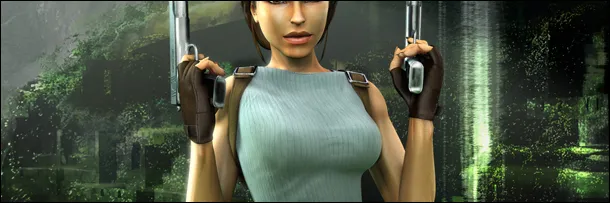
It would be unfair to claim that Lara Croft is famous for only one reason (or rather, two). The series has had many great, critically acclaimed games. However, it must be acknowledged that they would likely not have sold as well if the main character did not have such a chest.
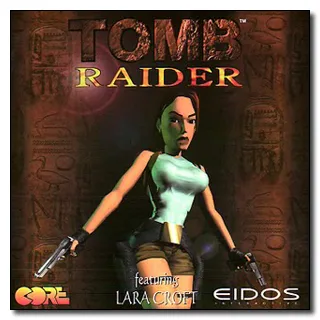
As it turns out, Lara Croft's bust became what we know it as today due to a mistake. Toby Gard, one of the artists responsible for Lara's appearance, was experimenting with the heroine's shapes, and when he entered the breast size, his mouse accidentally slipped down, increasing the girl's chest by one and a half times.
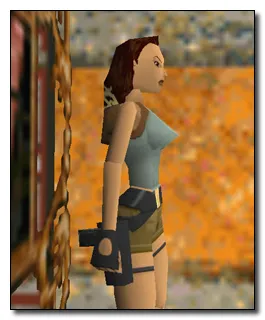
The rest of the team (men, of course) tearfully begged Toby to leave everything as it was. As they later noted, “Due to this mistake, the choice of marketing strategy became easier than ever.”
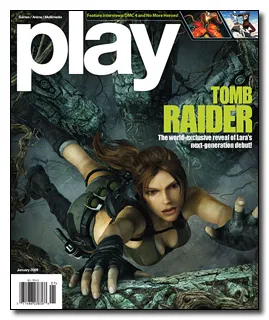
Lara Croft and her franchise paved the way for all female characters in the gaming industry. Lara is considered the first gaming sex symbol and frequently appears on various lists of gaming beauties.
And before you say that this is a glaring manifestation of sexism in video games, you should consider that before Lara Croft, female characters appeared in games either as hostages or not at all. So this was a definite step forward.
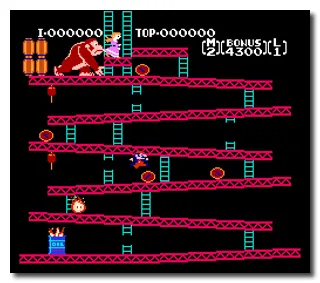
Of course, Samus Aran from Metroid existed earlier, but her gender was revealed only at the end – she was in a metal suit throughout the game.
Lara is strong, independent, beautiful, smart, and amazing at everything she does. And if her success required a 50% increase in breast size, so be it. The first [Tomb Raider](/games?search=Tomb Raider) sold millions of copies, reviving the platformer genre. And all thanks to a random mouse movement.
5. A Glitch in a Racing Game Led to the Creation of [Grand Theft Auto](/games?search=Grand Theft Auto)

Long before [Grand Theft Auto](/games?search=Grand Theft Auto) became the gold standard of madness simulators, Rockstar Games (then known as DMA Design) were working on a racing game called Race’n’Chase. The idea was simple – “fun and frantic multiplayer racing with lots of explosions and crashes.” And it looked like this:
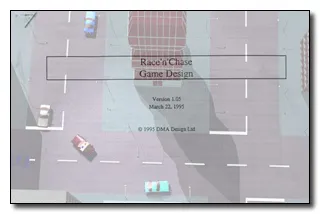
Observant readers will notice the obvious similarity to the first GTA games. And indeed, it’s not a mere coincidence. The more testers played, the more they realized that the game was terrible. Except for one tiny detail: the police behaved like crazies for no apparent reason. Instead of carefully stopping and arresting the player, they recklessly crashed into the protagonist (a flaw in the AI led the cops to try and drive through the player). In reality, everyone just collided with each other.
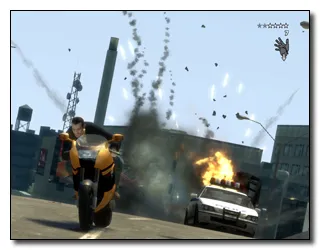
Testers loved this “feature.” They ignored the mission and just drove around the city, spreading fear and destruction. Game designers decided not only to keep the crazy cops in the game but also redesigned all the other mechanics. Now the gameplay was all about chases and destruction.
Thus, the game transformed into [Grand Theft Auto](/games?search=Grand Theft Auto). By the time GTA3 was released, the gaming series had a massive impact on the industry. It introduced the “open world” concept that now nearly half the games on the market try to imitate. And all because someone long ago didn't know how to program AI.
4. Space Invaders Accidentally Invented Dynamic Difficulty

Do you also picture this image when you hear “retro arcade”?
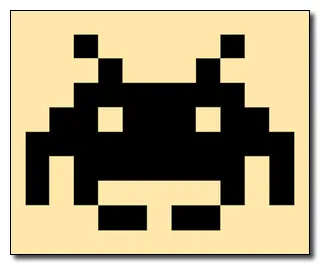
Space Invaders from 1987 had such a significant impact on the industry that even Shigeru Miyamoto noted its revolutionary nature.
Like many retro games, Space Invaders applies the principle of “Easy to learn, hard to master.” At first, alien ships fly slowly in front of you. Shoot as you please, right? Only there’s one problem: once you damage the neatly arranged rows of aliens a bit, they speed up.
It was simply the perfect mechanic. Success was rewarded with an even tougher challenge. The more aliens you killed, the harder the game became. And to kill the last two or three, you needed lightning-fast reflexes.

The catch is that this difficulty wasn’t intentional at all. The whole game was written and assembled by one person: Tomohiro Nishikado. “Assembled” because he spent an entire year developing his own hardware for the game. All existing hardware in Japan at that time was insufficiently powerful for the game. It was like [Crysis 2](/games?search=Crysis 2) in 1978.

And when everything was ready, Nishikado discovered that his hardware was still not powerful enough for Space Invaders. Nishikado wanted the ships to always move at one speed. But during testing, he found that the aliens flew significantly slower than expected. There were just too many on the screen, so the whole game slowed down.
However, the more Nishikado played, the faster everything became. The fewer ships were on the screen, the easier they were to process, and the faster the game ran. The developer liked this so much that he decided to leave it that way, saying later that “it added sharpness to the game.”

Basically, you could say that this alone made players want to play the game again and again. It was the first game that became increasingly difficult as you progressed. It was also the first game with a high score table. Thus, the machines with the game became mere repositories of quarters.
3. A Resentful Employee Invented the Easter Egg

Most people think that the Action/RPG genre starts with [The Legend of Zelda](/games?search=The Legend of Zelda). However, this is not true. In 1979, its predecessor was released, a game simply titled Adventure. Adventure was very similar to [The Legend of Zelda](/games?search=The Legend of Zelda): the player similarly collected various items and traveled through dungeons, defeating different monsters. The game was quite linear and relatively popular.

At that time, Atari was quite a company. Most games were made by a single person, and these people weren't even credited on the box. And then Warren Robinett decided to immortalize himself by hiding his name in the game.
Robinett, as the sole programmer of Adventure, knew perfectly well that the game contained a very unpleasant graphical bug caused by hardware limitations. When too many objects appeared on the screen, the image began to flicker rapidly – this effect is called sprite flickering (if you’ve played the old [Mega Man](/games?search=Mega Man), you probably understand what I'm talking about).
Robinett decided to take advantage of this bug and added a secret item in the game: a tiny 1x1 pixel square. It matched the floor in color, making it easy to hide. If the player found this artifact and took it to another part of the dungeon, the sprite flickering would trigger. As a result, one of the dungeon walls began to flicker. The player could pass through it and enter a secret purple room with the inscription “CREATED BY WARREN ROBINETT.”
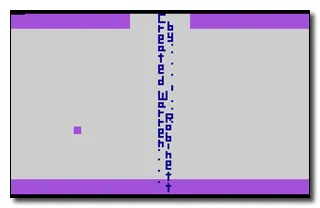
And this was the first Easter Egg in video game history. By the time Atari found it, it was already too late to recall the cartridges, so they called it a “special bonus.” To Robinett's happiness, by this time he was no longer working at Atari.
Today, if a game lacks secret levels or hidden items, we feel simply cheated.
2. [Street Fighter](/games?search=Street Fighter) Accidentally Invented Combos
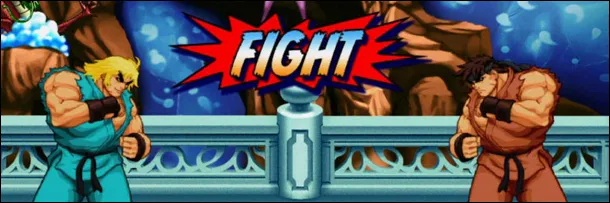
[Street Fighter](/games?search=Street Fighter) defined the development of fighting games for the next 20 years. It is still played in tournaments. Well, if not this one, then in Hyper [Street Fighter II](/games?search=Street Fighter II) Alpha Turbo Mega HD, but still.

During the development of [Street Fighter 2](/games?search=Street Fighter 2), the game's producer Noritaka Funamizu noticed a bug that allowed for two hits instead of one. To reproduce the bug, one had to time it extremely precisely. However, it allowed for multiple additional hits on the enemy, which was very useful in multiplayer.

Noritaka decided to leave the bug in the game. He thought players would find it too difficult to reproduce (the rest of the team didn't even know about the bug). But the producer underestimated gamers' skills. Soon after the game's release, this combo was being used everywhere.
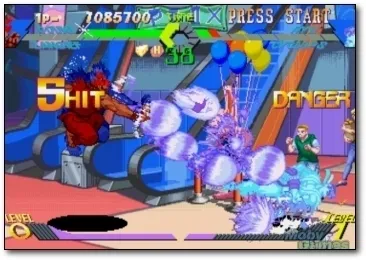
Starting with Super [Street Fighter II](/games?search=Street Fighter II) (one of many, many remakes of the game), the bug became a feature. Now combos became official and encouraged by the game. This drastically changed the gameplay – even in the most hopeless situations, you could emerge victorious if you had good finger skills and knew all the combos by heart:
Now, a fighting game without combos is like [Tomb Raider](/games?search=Tomb Raider) without breasts. And all thanks to a producer's mistake in Street Fighter.
1. An Unskilled Programmer Gave Us the Konami Code

If you’ve ever played Gradius, there’s no need to describe it. If you haven’t, it can be summed up in one word: LASERS!
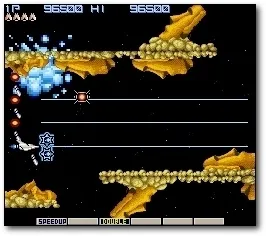
This game and all its sequels are known for their hellish difficulty. There are always plenty of “danger zones” on the screen. And by “danger zone,” I mean a place where you instantly die. And then you start over without any of the bonuses you fought so hard for.
You’re not alone in struggling with this game: Kazuhisa Hashimoto, one of the game's developers, couldn’t get through it either. After his ship exploded yet again, he exclaimed, “Damn it, I'm a programmer!” And he added a special code (up, up, down, down, left, right, left, right, B, A) that gave him a full set of bonuses.
Why was this a glitch? Kazuhisa forgot to remove the code from the game.
This code is now known as the Konami Code, and every old-school gamer knows it by heart (after all, with it, they could complete at least half of Contra). This code has appeared not only in Konami projects but also as Easter Eggs in many other projects. For example, in [Resident Evil 2](/games?search=Resident Evil 2) it gives you infinite ammo, and in [Tony Hawk](/games?search=Tony Hawk) it turns your character into Spider-Man.
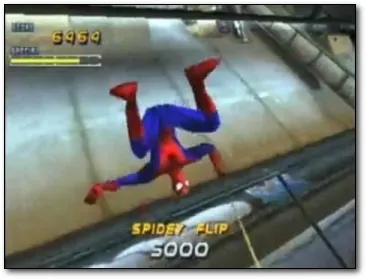
Moreover, the Konami Code has become a true meme. On dozens of sites, the code triggers all sorts of funny things. Try entering it, for example, here. What’s frustrating is that on the Konami website, there’s nothing like that. Surprising, considering that even on the ESPN website, it once triggered a bunch of rainbow unicorns.