
6 Most Sinister Trends in Modern Games
Translation of The 6 Most Ominous Trends in Video Games from cracked.com by David Wong
Our generation will be remembered for its games. Each generation is marked by the popular art form of its time. When you think of the 60s, you think of Woodstock and hippie music. When you think of the 80s, you think of Miami Vice and the birth of music videos. What image will your grandchildren conjure when they think of the 2010s? It will look something like this:
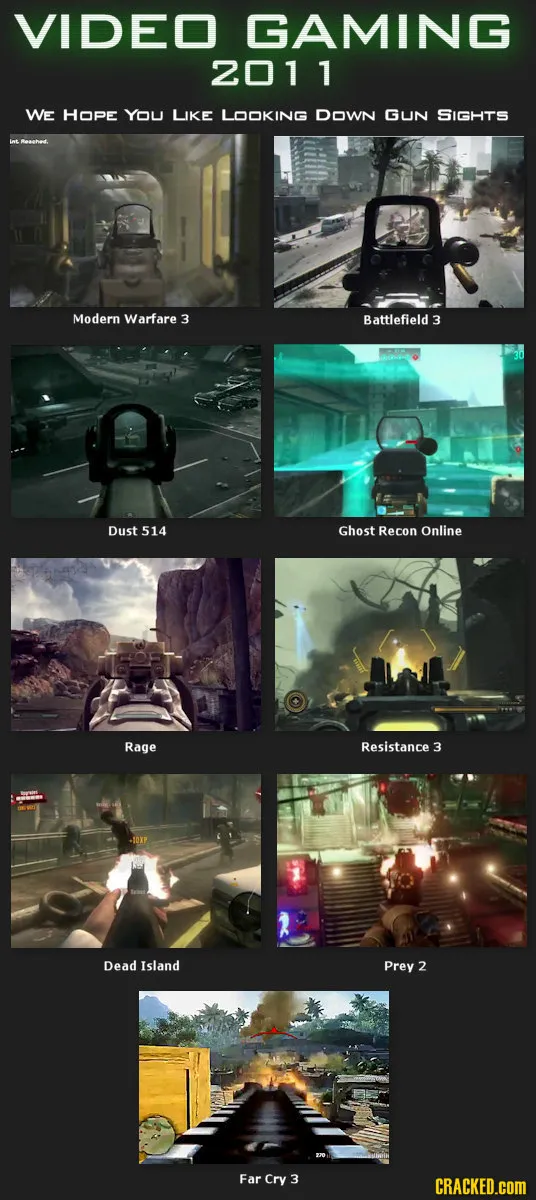
Seriously. God forbid...
Our regular readers know that I made a similar image last year.
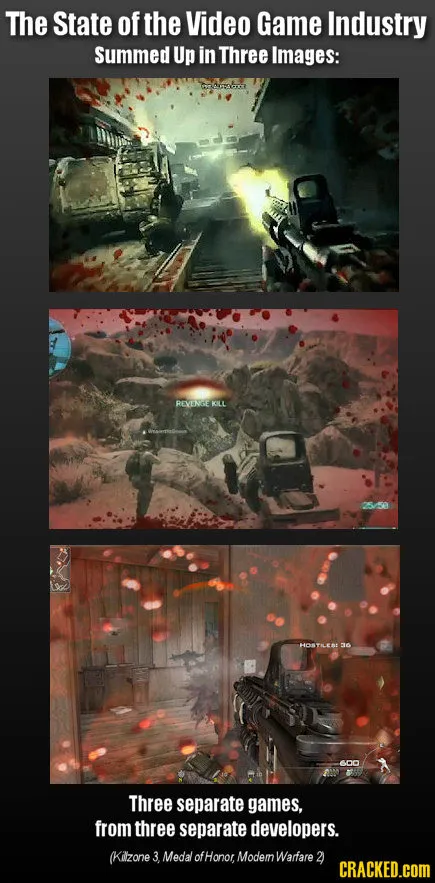
I think things haven't improved since then. Don’t get me wrong, I love shooting heads off various characters, and private islands where you pay for the same thing in real life are too expensive. But, come on, people! Those futuristic arcade machines I dreamed of in 1986 as a kid - they’ve long been surpassed by the real thing. To be precise - they are ten times better. And this is the result?
However, the problems with modern games do not stop at every blockbuster game next year featuring terrorists or zombies seen through the sight of a facially close weapon. There are many more...
#6. Technology is going backward

I remember a time when I was not worried at all about the future of games. That time lasted about 4 hours when I played Wii Sports Bowling all night with friends in 2007.

"Games are saved and the world economy won't collapse, woohoo!"
It is one of the most ridiculous yet perfect games I have ever played. I played it more hours than Red Dead Redemption and Dead or Alive Xtreme 2 combined.

The way my movements were translated into the game, how I waved my hand throwing an imaginary ball, instead of pressing a boring outdated button... Somehow it was more interesting than real bowling (if you think about it, I hate bowling). This, I decided, was what games had been trying to achieve for decades. But, four years later, nothing on the Wii has surpassed it (Bowling). The technology was perfect for bowling, and nothing more. Well, okay, it was decent for shooting games (like House of the Dead - translator's note), but by the 10th time I was told to shake the controller to remove a leech from the screen, I had my epiphany:
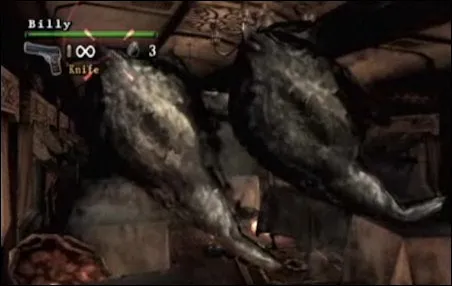
"Wait a minute, this is nonsense!"
Moreover, the last two big hits on the Wii (Donkey Kong Country Returns and Mario Bros Wii) ignored motion control and simply used the turned sideways controller as a very uncomfortable joystick straight out of 1991. Now, as the 6th anniversary of the Wii’s debut approaches, Microsoft is preparing to show us the lowest point in motion control (controlling games with your movements): Star Wars Kinect.
You see, Kinect has no buttons at all. You just move your hands. This means you lose about 90% of the ability to interact with the game. For example, the ability to move freely. No, seriously, just look for yourself:
Since you have no joystick or gamepad, you cannot move at all in the game world (the character just moves from fight to fight). So for most of the game, your Jedi just stands there like an idiot while stormtroopers stupidly run straight into lightsaber reach.

"Kill me next!"
We’ve been waiting for a game with full lightsabers since the moment motion control was invented, and they give us this?! Fuck you! In 1979, games were more interactive than this!
Meanwhile, competitors Microsoft are trying to compete with another genre of buttonless games: smartphone and iPad games. At the recent E3, Sony, showcasing their new console PS Vita, proudly showed us how. You don’t need any complicated "button presses," "timing," or "skill" to get your character to jump to another platform. You just tap your finger on the next obstacle! Well you know, just like on iPhone!
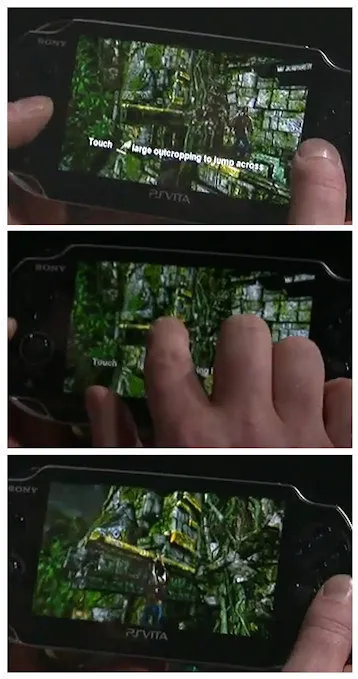
"Yes, it’s way* easier"*
Nintendo just said, "to hell with it" and decided to simply include an iPad clone with their next home console, Wii U:
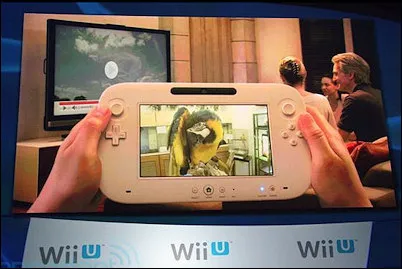
At first glance, it seems that you get all the best in one package, but then you realize that the technology is so imperfect that you can only use one such controller at a time on the new console - no multiplayer with multiple gamepads is possible. Instead, we were told that you could draw members on character faces using the stylus and this controller.
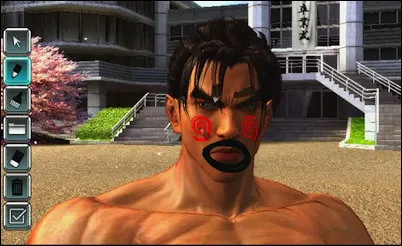
Uh huh, exactly so
#5. Hackers and DRM turn gameplay into hell, nightmare, and hassle

Imagine that every time you need to go somewhere, you have to contact the car manufacturer to confirm that it is you driving. Suppose this is done over the Internet, and if there is no connection - you cannot use your car. Essentially, this is the situation in games right now. But more on that in a moment.
At E3, a major annual event where all gaming companies show us amazing technologies and software of the future, Sony started with a "surprising, breathtaking, ahead of its time" apology for their 3-week online service outage. Oh, and for allowing personal information of 77 million subscribers to be stolen from their servers.
It will happen again. And in the future, you will not have the ability to play single player offline. The tying of all games to online accounts is already underway. And with this come inconveniences.

"If you want to see the future - imagine that SecuROM is constantly hitting you in the face... All the time" - George Orwell
The thing is, publishers want you to be constantly connected to their servers in the end. This way they can continuously verify the legitimacy of your copy, sell additional content, and a monthly subscription for multiplayer. Furthermore, they want all games to be purchased digitally so you can’t sell the disc at GameStop (where it will be sold as a pre-owned game and not a cent will go to the publisher). Eventually, we will move to a model like OnLive, where you don’t have a personal copy of the game at all - you play on their machines, and the video is streamed to you over the Internet. For this, you will be required to pay a monthly fee, and, as the publishers hope, for the rest of your life.
All this requires a constant Internet connection. Which requires constant protection of your information. Which leads to constant headaches and inconveniences. Ask any PC gamer; they have been struggling with this.
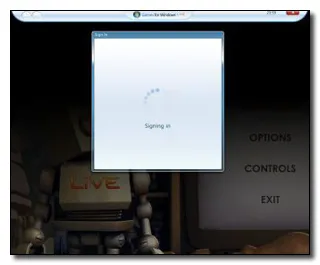
Ah, the scary scene of connection from Fuck Gamers 3
This again leads us to the analogy with the car. Let’s say you want to play Starcraft II campaign, and a few weeks later you turn the game on to play the 20th level. First, you connect to the server on battle.net and request a password. If the connection fails or you can’t enter the password, you won’t be able to continue your single player campaign. The only option available is to start over. The same thing will happen if you pick up your laptop to play on a plane or at grandma's house.
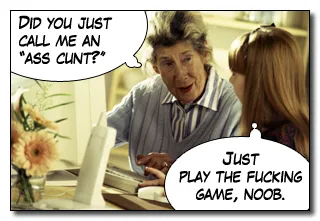
In other cases, you won’t be able to play a game until you create a GFWL account and provide Microsoft your contact details. It comes with SO MANY glitches and inconveniences, that if you Google “GFWL” right now, the first suggested result will be “GFWL offline” - people are looking for ways to turn this crap off.
Here’s the problem - it’s not about privacy or Big Brother, it’s about the fact that these online services constantly screw things up. Even before PSN was down, hmm, nobody was getting in online; there were cases like EA banned someone, not letting them play their single games just because they were complaining on EA’s forums.
My Xbox Live account was suspended (couldn’t buy anything or watch videos) for 72 hours for “suspicious behavior”. What kind? I bought 3 episodes of Battlestar: Galactica at 2 am, then returned at 5 to buy more. Whose behavior could that possibly be other than a decent citizen? Maybe they somehow sensed I was naked at the time? And that I was yelling at the TV that I wanted "one of those Asian robot girls that light up red when they touch my boner"?

Whatever it was, tech support couldn’t lift the ban even after I called and assured them it was indeed me and that the purchases were made intentionally. This was during the height of the PSN crash, and they were very suspicious. They couldn’t risk a repeat of Sony’s nightmare.
This is your future, gamers. Take a good look, it will look like this:
A. Sooner or later, all games will have to be online for the publisher to make money
B. It’s practically impossible to keep player data safe online without numerous annoying security measures.
Thus,
C. All games in the future will use numerous annoying security measures.
Their well-being depends on this. Which brings us to the next problem.
#4. Endless payments

The difference between the games you played as a child and the games you will play in the future is roughly the same as between owning your own car and ordering a taxi every time you leave the house.

From a business perspective, this is turning the game sales mechanism from an “all-inclusive” model to a “service provision” model. So instead of buying something and freely enjoying it at home, you will have to pay small amounts every month throughout your life.
This comes with several problems:
A. Instead of making games with a large world open for exploration and new ideas, all design focuses on repetition and familiarity. Games emerge that force players to grind endlessly for items whose only purpose is to help get even more items. And so it goes.

B. Most of what you will be charged for, you used to get for free. Like some features and maps that the new Call of Duty allows only subscribers to its “elite” service for a monthly fee. This while Microsoft is already charging for using the online service for Xbox 360, and you already paid $60 for the game itself. They are clearly testing how far they can go.
C. Thus, over time, companies will have no incentive to spend money on games that cannot be stretched through multiplayer or downloadable episodes. How can single-player narrative games be justified? It’s like refusing money.
That’s the point: there’s nothing wrong with multiplayer online games in themselves, or that a publisher sells me a little more of the game I liked. It just narrows our choices even further. Not every game is suited for those things. This leads to an even bigger problem...
#3 We are on the brink of a crisis of ideas

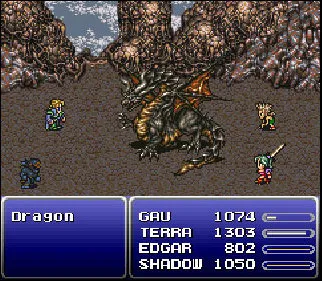
Let’s return to that image at the very beginning. The reason that all major games (that don’t have dragons) look alike is the Modern Warfare series. So far we have two games and a spinoff, each of which made as much money in the states as the movie Avatar. We already know which game will be the best-selling game of 2011 - Modern Warfare 3, which was first shown at E3.
Don’t get me wrong: what we were shown was cooler than eggs. You dive right into the action, starting underwater...

...then surfacing to find that, oh my God, New York is under attack!
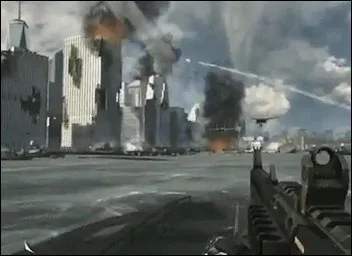
Ships are burning in the harbor!
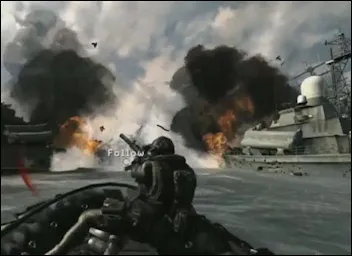
Oh, oh, look! The Statue of Liberty on the horizon to show us what’s at stake!

I can’t wait to play it. But Modern Warfare 3 has serious competitors in the market. Earlier this year, Crysis 2 came out, possibly the most beautiful console game of all time. In the first level of Crysis, you are thrown right into the thick of it, starting underwater...
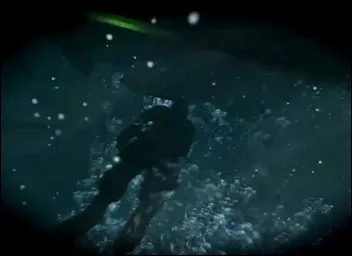
...then surfacing to find that New York, holy moly, is under attack!
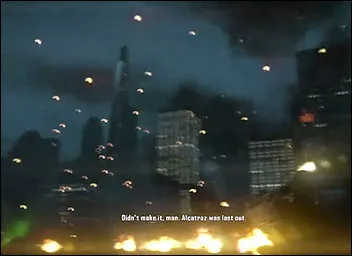
SHIPS ARE BURNING IN THE HARBOR!
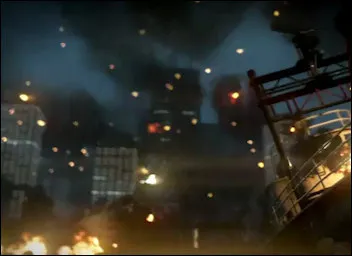
And on the horizon is the Statue of Liberty, to show us how much is at stake!

Don’t get me wrong. I’m not trying to insult game developers. I have friends in the industry, each of them smarter and more talented than I am. I wrote a novel about a man with a split personality who, in an unexpected twist, finds out he has raped himself, so I’m not here to judge.
But it’s not about a lack of imagination on the part of developers, writers, or artists. It’s about money and how the market has trapped games in a damn ideological coffin (developers will confirm it). Everyone complains about the dominance of sequels and reboots in Hollywood, but hell, it’s nothing compared to the situation in games.
For instance, each member of the Big Three Console Developers presented their showcases at E3, displaying their most anticipated games for the coming year. Microsoft started with Modern Warfare 3, which is actually Call of Duty 8 (developers love changing the names of games so the numbers don’t get crazy). Then came Tomb Raider 10 (renamed simply as Tomb Raider, because of the reboot). Then Mass Effect 3 and Ghost Recon 11 (titled Ghost Recon: Future Soldier). Following were Gears of War 3, Forza 4 and Fable 4 (also known as Fable: The Journey).
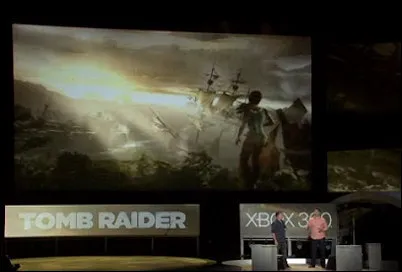
"We have no idea which part this is. So let's just reset."
Then 2 new games based on existing brands, and both for kids (Disneyland Adventure - a Kinect game allowing little ones to visit Disneyland without the need to buy a ticket, and Sesame Street featuring Elmo).
In the end, we waited for the big announcement at the end (they always save the “super” announcement for last, a Steve Jobs-style), during which it was said that we are pleased to present the “beginning of a new trilogy.” Yay! Finally something new, damn it! After which the screen flashed this:

Surprised? The audience was surprised too. The “new trilogy” meant 3 new Halo games. Did I mention this is actually Halo 7? This means they plan to release 9 Halo before finishing the series. Oh, and there was also an announcement for a remake of a ten-year-old game, Halo: Combat Evolved, so ultimately we will have exactly 10 parts.
Then it was Sony’s turn, with announcements for a sequel, another sequel, and a reboot. Then a sequel, a sequel, an ex-sequel, a new FPS, a sequel, a new FPS, a sequel, an ex-sequel, a new game based on an existing brand (Star Trek), a sequel, a sequel, and a sequel. Then they introduced a new system (PS Vita), and for its games showed 4 sequels.
Nintendo's game list looked like this: sequel, sequel, sequel, sequel, sequel, sequel, sequel, sequel, sequel and (wait, I need to double-check) sequel. And you already know what those games were, even if you haven’t touched consoles in the last 15 years: Mario Kart, Mario World, Luigi, Zelda, Kirby, etc. Then they demonstrated their new system (Wii U) with a demo promising that one day you could play sequels like Arkham Asylum 2, Darksiders II, and Ninja Gaiden 3 on it.
Think about the situation in Hollywood - movies have become more expensive than a wagon of human kidneys, so studios are terrified to take risks in terms of ideas, giving us new "Transformers" every 2 years. Now multiply that situation by 5 and you get what’s happening with games now. A game costs 5 times more than a movie ticket, so buyers are 5 times more selective about unfamiliar games that might turn out to be crap. Publishers are reacting accordingly.
And yes, we are ultimately to blame. We don't even notice how much our choices have narrowed. For instance, at every gaming forum on the Internet, there’s bound to be a thread about which game is better, Modern Warfare 3 or Battlefield 3.
Seriously, people are almost fighting over them. Remind you, here are those two games:
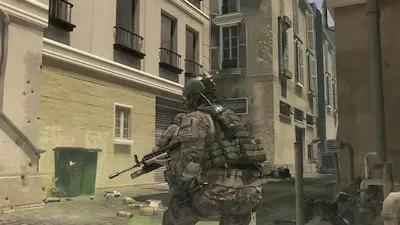
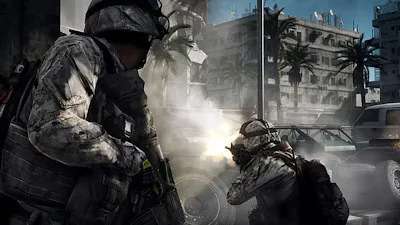
I won’t even tell you which is which.
That’s why all innovations in games are moving in the opposite direction, simplifying rather than diversifying. They’re trying to lower the bar for difficulty in order to make gaming a hobby because they don’t know what else to do with it. What’s said clarifies one more thing...
#2. The future is extremely murky

President of Epic Games Mike Capps once said that no one has the slightest idea what’s next. Epic Games, by the way, are the same guys behind the Gears of War series:
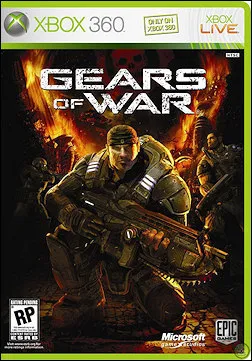
Yep, he has a chainsaw on his gun
You see, the reason Nintendo's next console will use the latest developments is that they want to allow you to play games on iPhone...
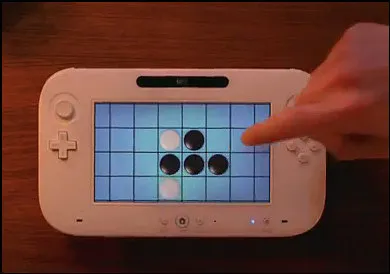
...is that for most people today, games look like this:
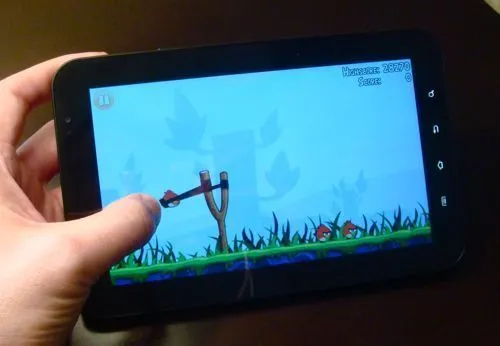
Simple games that can be played on a phone or handheld, downloaded from the app store. They cost a dollar or are even free. They can be played on a device the user already owns, no need to buy anything more. They can be developed by a small team (or even one person). As someone from Epic said: “If anything is killing us, it's dollar apps.” And the most profitable gaming company right now is not Activision\Blizzard or Nintendo or EA, but Zynga, the creators of the game Farmville (AKA Happy Farmer).
So what should you do when you need to convince a customer to spend 60 for each game? The developers' answer - who knows.
It used to be simpler. For the first 25 years of gaming consoles, the ultimate goal of the developer was to make the game look more and more visually similar to real life. For instance, I remember previously mentioning how long we waited for a good Star Wars game with lightsabers. In 1983, lightsabers looked like this:
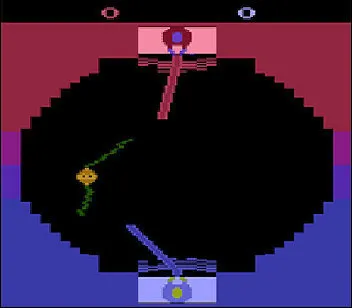
Yep, two erect pixelated dongs trying to screw a snake wearing George Lucas’ Halloween mask. But every player knew what it was trying to look like because we all had seen lightsabers. It was supposed to look like this:

So the developers of upcoming Star Wars games had a clear, real goal. But now we’ve almost reached it:
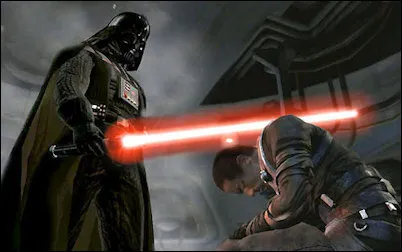
At this point, developers stopped, looked at each other in confusion, and said, “Well, what now?”
Sony spent a lot of time at E3 talking about 3D gaming, and they didn’t really have a choice because the TV division of the company poured tons of money and effort into 3D sets. I don’t know exactly what percentage of people can’t play 3D games due to headaches (many well-known cases, but no studies have been conducted), but I know that I lasted about 3 minutes before I took the glasses off. The portable 3DS managed to implement 3D without glasses, but you have to hold the console at a very specific distance from your face all the time, or everything on the screen blurs, so naturally, Nintendo allowed users to turn off 3D. Oh, and it also causes headaches. That’s, by the way, one of the reasons why ticket sales for 3D movies are declining, and investors are trying to persuade some theater chains to abandon it.
"Well," you’ll say, "then what does the future have in store for games, Guy Who Didn’t Know There Was a 'Run' Button in Resident Evil 4 Until the Final Boss?" Well, here’s a little problem...
#1. We still don’t know what 'Game' is

Ask yourself: does it make sense that earlier a person from Epic, who makes games with a budget of 50 million dollars about a space marine dismembering aliens, complained that his business was invaded by Tetris on iPhone and Angry Birds? That’s like if a ranch owner said the cotton candy producers were invading his business. And the only thing they have in common is that both a cow and cotton candy can be eaten.
Now ask yourself why each game in the Modern Warfare series consists essentially of two completely different games on one disc - one being a five-hour action movie (single) and the other being competitive eSports (multiplayer).
In both cases, it’s because we mix a bunch of totally different genres and arts and call them