
"AUGUST"
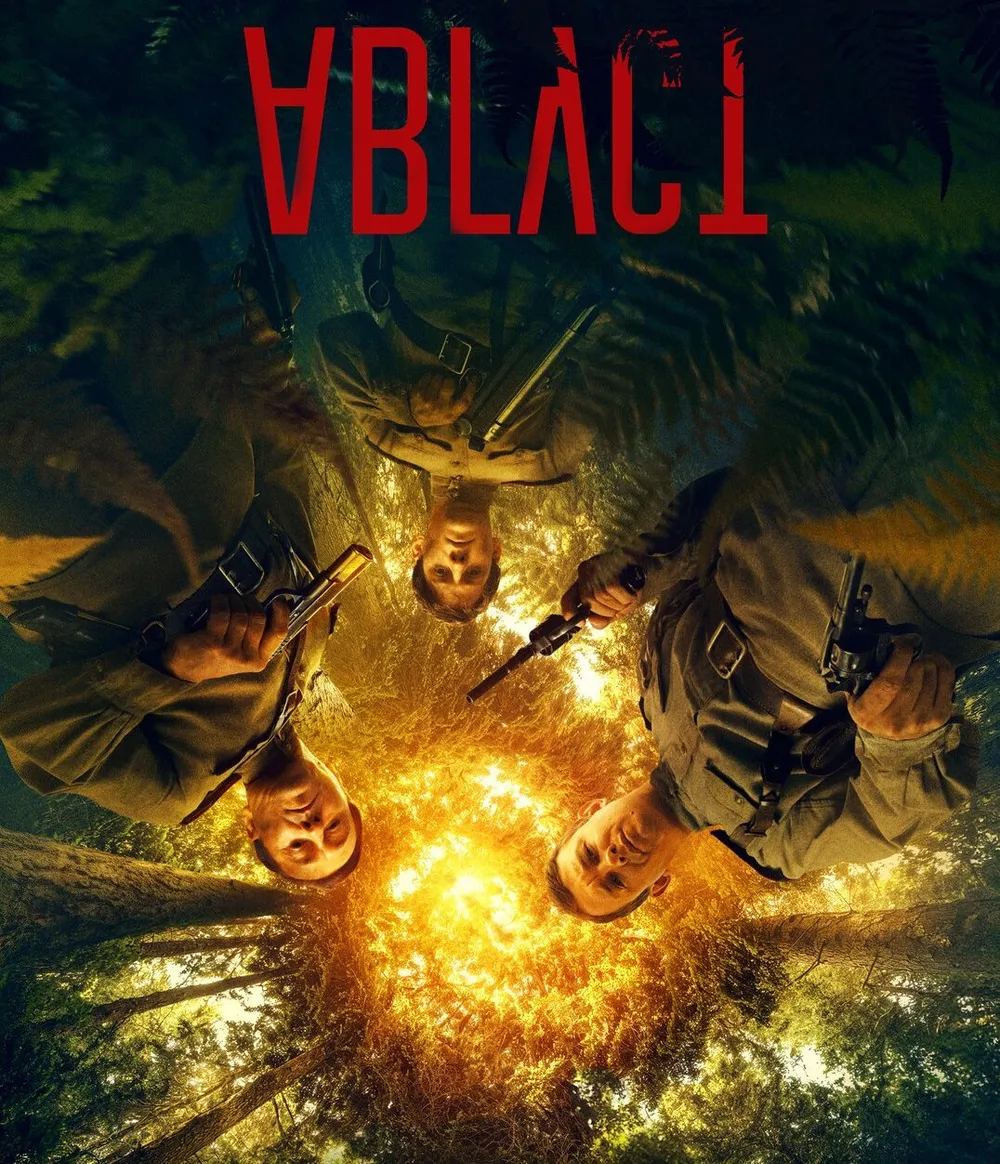
"There are... things that should be freed from experiments called 'creative freedom'" Alexander Bushkov
Too much laudatory noise has been raised around the film, which troubled me due to certain moments from the trailer. I have great respect for Vladimir Bogomolov's novel "In August of '44…"; I have reread it several times and hold dear the attempts to make a film based on this legendary work.
In my humble opinion: works of such caliber must be adapted, transferring to the screen, if not all, at least the main and important details. Have the creators of the film "August" achieved this, and what does their film represent?
Let's figure it out together!
Part One: The Book.
There is probably no other work that details the complex work of SMERSH soldiers so thoroughly. A unit composed of just three men (one of whom is an intern) must find and neutralize a group of saboteurs. Little is known about them aside from their call signs and the area of their radio transmission. How, by what signs and traces can they find the exact location of the transmission, which is not only deep in the forest but also mined and filled with lurking enemies? It's easier to find a needle in a haystack!
Nevertheless, Captain Alyokhin's group manages to locate the transmission point, and by gathering information grain by grain (even a bitten cucumber matters!), they determine the approximate area for the next appearance of the enemy group. A lot of time and effort were initially wasted on the false lead!
As a result, this slowed down the search, jeopardizing the impending offensive of the front, and the situation was brought under the control of the Supreme High Command. In the end, to thwart the actions of the elusive saboteurs, a decision has been made at the top for a military operation: to encircle the suspected area with a large number of troops; by thorough searching, locate and neutralize the enemy group. But this means that the saboteurs will most likely be destroyed, severing all ties to their hidden operatives; Captain Alyokhin's group will have to use the only chance to prevent such a finale.
As additional information, quoting telegrams and notes via radio gives readers insight into the general situation in the work of SMERSH, the nuances of data search and verification, and the difficulties in preparing a military operation to eliminate saboteurs. Through the example of Captain Anikushin, the views of ordinary soldiers on SMERSH's work are described – mistakenly convinced that only cowardly and dim-witted people serve in counterintelligence, "settling" far from combat actions. This is a brief outline of the novel.
Part Two: The Book and the Film.
Film: the scene of the uncovering and elimination of German saboteurs in a car. In the book, this occurred in July 1941, with only Tamantsev present, neither Blinov nor Alyokhin were there. There were four saboteurs, and the entire episode is described completely differently (Chapter 44. Tamantsev).
Film: Lieutenant Blinov joins Captain Alyokhin's group almost immediately after the saboteurs are eliminated. In the book, Lieutenant Blinov was in the group for three months (Chapter 48. Guards Lieutenant Blinov).
Film: Tamantsev finds a cucumber and almost immediately finds the signal from the antenna on a pine tree; all this happens near the forest edge. Book: the radio transmission point was found only after two days of searching: first, fresh footprints of German boots were discovered, then Tamantsev saw a trace of a spread tarp in a clearing deep in the forest, and after thorough searching, found two cucumbers, and then the antenna trace: on a filbert (Chapter 12. Tamantsev).
Film: Tamantsev tries the cucumber he found, verifies that it's bitter and spits it out – that's all. Book: it’s determined that this variety of cucumber is grown quite far from these areas, approximately where the sought-after radio transmitted for the first time (Chapter 9. Operational Documents). This allows the assumption: the transmission traces belong to the same group (Chapter 21. Captain Alyokhin).
Film: Tamantsev apprehends a woman tying knots on a scarf and uncovers her by a note in bread; disregarding the mirror. Book: the incident with the woman-saboteur in Smolensk, not in Lida; Tamantsev became suspicious of her and was convinced something was off when she raised a mirror above her head to check if someone was behind her (Chapter 52. Alyokhin).
Film: the captain and lieutenant, initially taken for saboteurs, turned out to be thieves trying to "earn" money on kerosene. Book: Nikolaev and Sentsov were conducting an exchange of trophy property for livestock and food on orders from their unit command (Chapter 51. Operational Documents).
Film: Pavlovsky is attempted to be captured in the forest, while Tamantsev is armed with an MP-40, and Pavlovsky with a PPS. Book: Tamantsev tries to take Pavlovsky in a field, on the approaches to the forest; Tamantsev is armed with a pocket "Walter" and an MP-40, while Pavlovsky has a PPSh with a drum magazine (Chapter 58. Tamantsev).
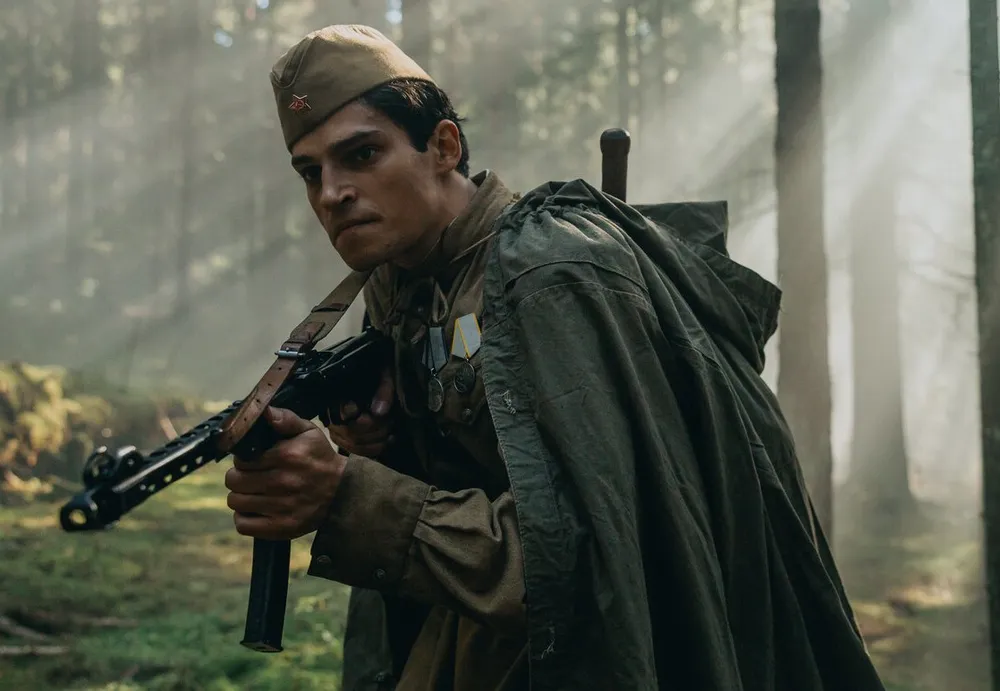
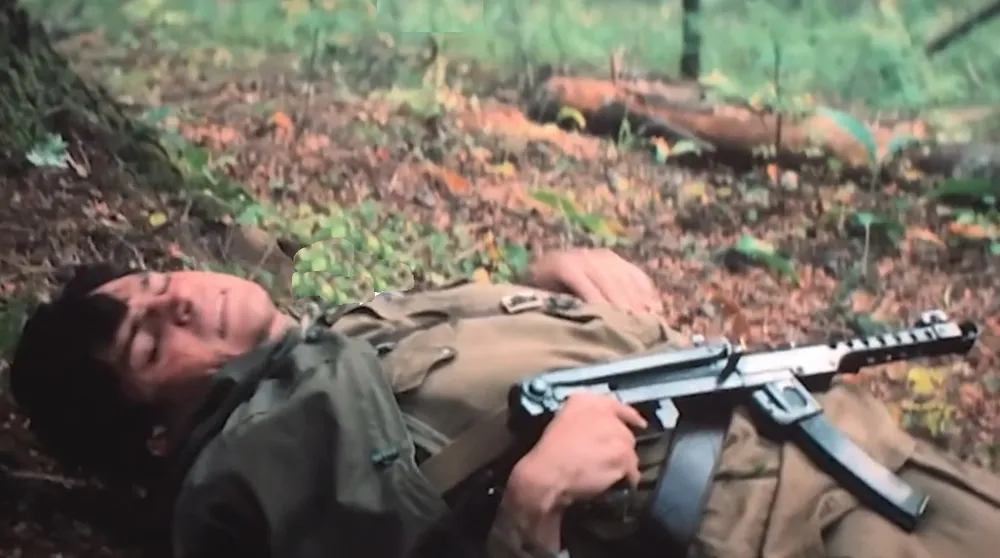
Film: behind Pavlovsky – a sapper shovel, the soil particles of which allow the assumption of the location of the radio's stash. Book: the shovel is found by Tamantsev in the attic of a house, during a search (Chapter 60. Tamantsev).
Film: an ambush is set for the supposed group of saboteurs in a pine forest almost without underbrush (most likely – Karelia). Book: the ambush is in a wide glade in a mixed broadleaf forest (Chapter 74. In the glade).
Film: Captain Anikushin, the assistant commandant, remained to guard the car and heroically perished; his "role" in the critical moment of the ambush was played by Sergeant Khizhnyak. Book: Captain Anikushin – the most vile character in the novel, who nearly botched the capture and paid for it with his life. Sergeant Khizhnyak did not participate in the ambush.Film: Tamantsev is armed with two TT pistols, and one of the saboteurs has a revolver (?!). Book: Tamantsev has two Nagans, and the saboteurs have: a TT and a "Browning Long 07" (Chapter 97. Evgeny Tamantsev – the cleaner and "wolfhound", nicknamed Skorokhvat).
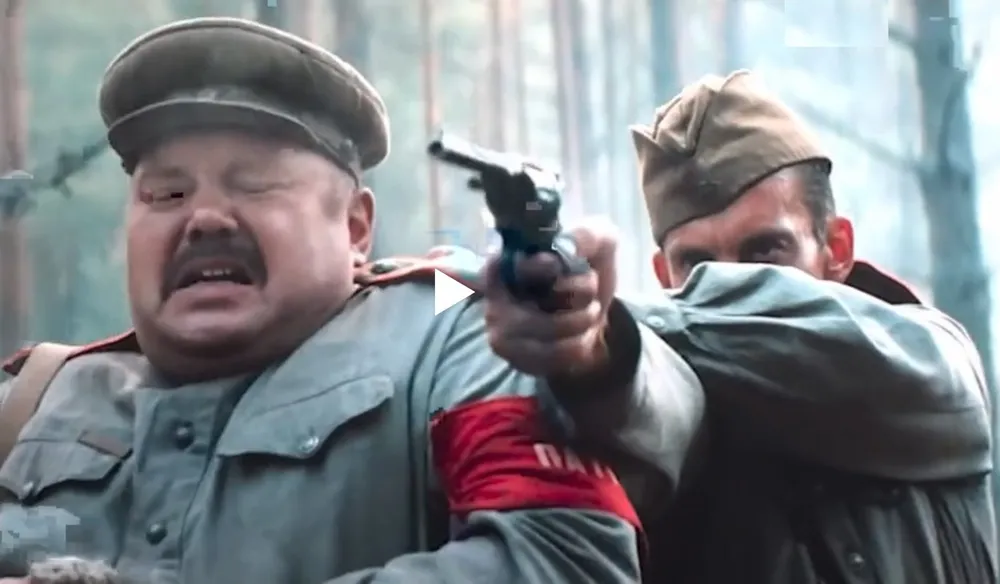
Film: only Captain Alyokhin's group is sent to capture the saboteurs; an attack from the Germans is anticipated at the airfield. Book: Alyokhin's group is one of the few; a military operation is organized to capture the saboteurs; no German attack is present.Film: an insignificantly short amount of time is allocated for the crucial scene of identifying and neutralizing the sabotage group; there is practically no "leveling up" of its leader by Alyokhin. Book: the episode takes almost a third of the entire novel; from the sixty-eighth to the hundredth chapter; the "leveling up" takes four intensely dramatic chapters.
Part Three: The Film's "Strangeness".
Alyokhin's group lacks personnel, Lieutenant Blinov is instantly attached to him: without thorough checking, straight into SMERSH - could it be that he also turned out to be a spy and was unfit for service in SMERSH? The lieutenant colonel does not understand what is happening when accepting the first stranger?
A lieutenant from Moscow who has never been in the forest and lacks experience in search work is sent alone to find the location of the radio transmission – alone. Are SMERSH operatives idiots?
In the forest, Tamantsev enters a house that was defended by Germans, after having carefully defused a grenade. Would a sane German mine the door to a room from their side?
In the "remote" forest, well-trodden paths, buildings, and a bridge exist.
The radio operator left the special communication open and left their position, allowing Tamantsev to handle the equipment. Tribunal? What tribunal? For what?
A representative of the commandant's office can arrest a representative of SMERSH?! Seriously?!
All officers constantly walk in half-unbuttoned uniforms, a general in a blouse open at the front asks Alyokhin – "Why aren't you shaven?" Do you believe that a commander of such a unit could behave like that towards their subordinates?
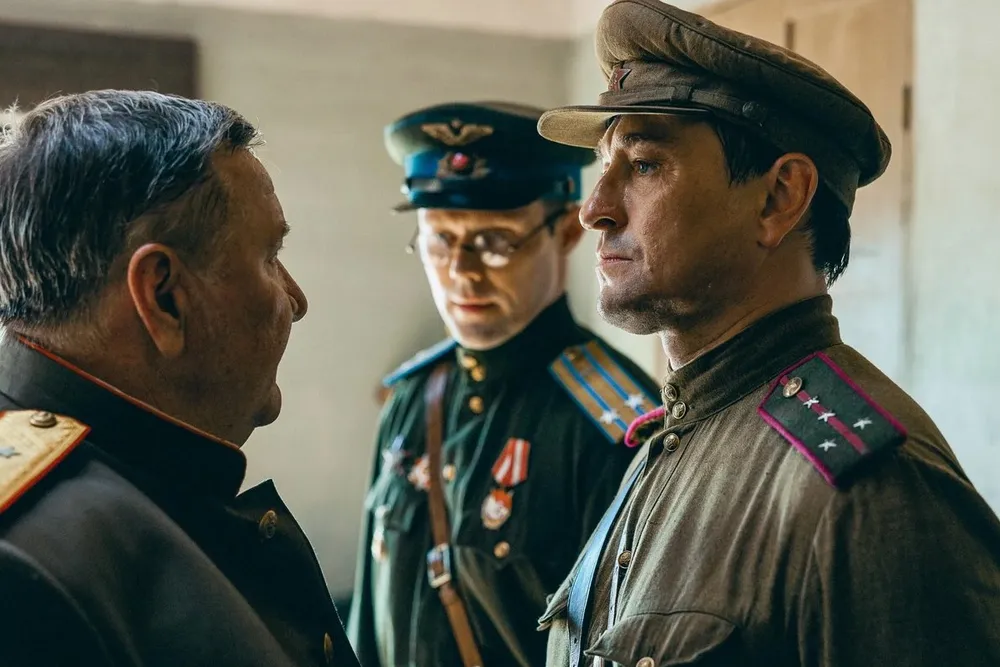
Tamantsev: "Comrades aviators!" Perhaps, instead – comrades officers?
Would a normal person dare to shave while sitting in a speeding car on a dirt road? (Thank goodness it's not a dangerous razor!)
The saboteurs with the transmitter are secondary, the main task is three thousand Germans (three regiments!) that could attack Lida. What did these three thousand feed on, and how did they concentrate in the forest? Did each small group have its own transmitter?The general isn't satisfied with the map; he ordered to create a large-scale model.
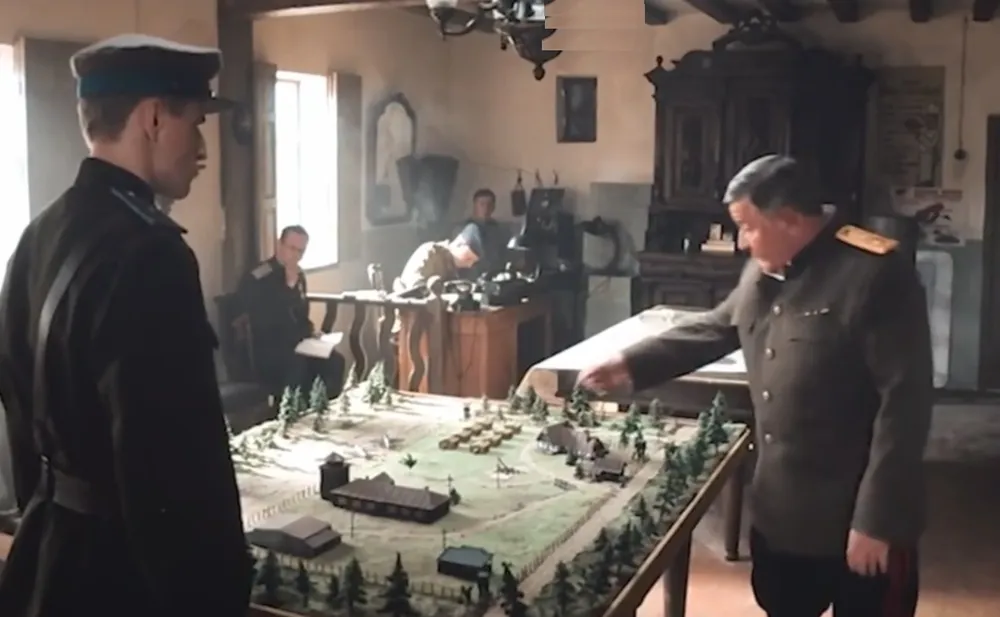
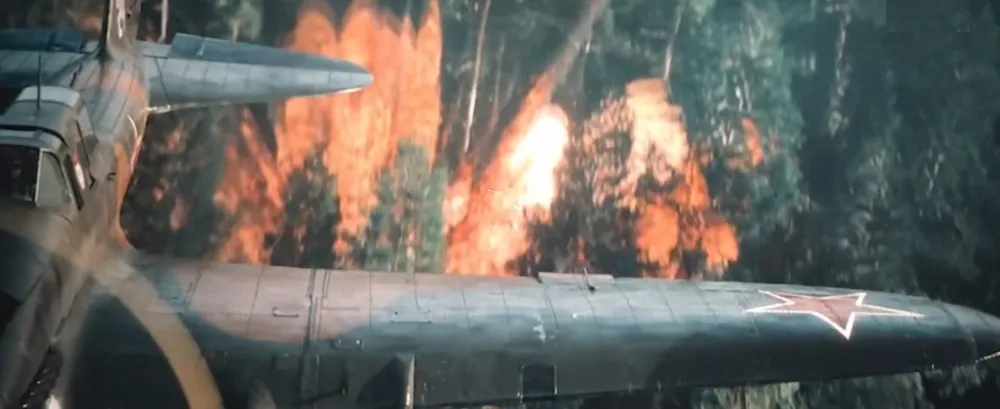
Did the Germans drag mortars with munitions through the forests? And grenades?Tamantsev did not kill the policemen who shot at him in the forest but without hesitation shot the saboteur who was much more valuable in terms of information (incidentally, these situations do not exist in the book).An IL-2 ground attack aircraft, flying at "tree-top" level (100 meters above the ground) at a speed of 400 km/h (or 100 meters per second) managed to see a group of people among the forest, understood they were Germans, and dropped a bomb directly on them.
Watermelons… What is so valuable about them that a whole truckload was delivered to the airfield? What is the meaning?
Conclusion.
To conclude: this "product" cannot be considered an adaptation, as some claim: because an adaptation is a careful and detailed transfer to the screen of the literary original. And as a standalone film about the war, "August" is extremely poor: due to numerous blunders, unexpressive character portrayals (the only one resembling a real officer is Captain Anikushin, unfortunately. Well, also Lieutenant Colonel Polyakov).
But what about the viewers who "vote with their ruble"? I assume these are those who haven't read the book! And if you still haven't read "In August of '44..." – read it, you won't regret it. Especially since this wonderful book can now be easily found online.
Good luck to you all!