
For those unfamiliar: "Baldur’s Gate"
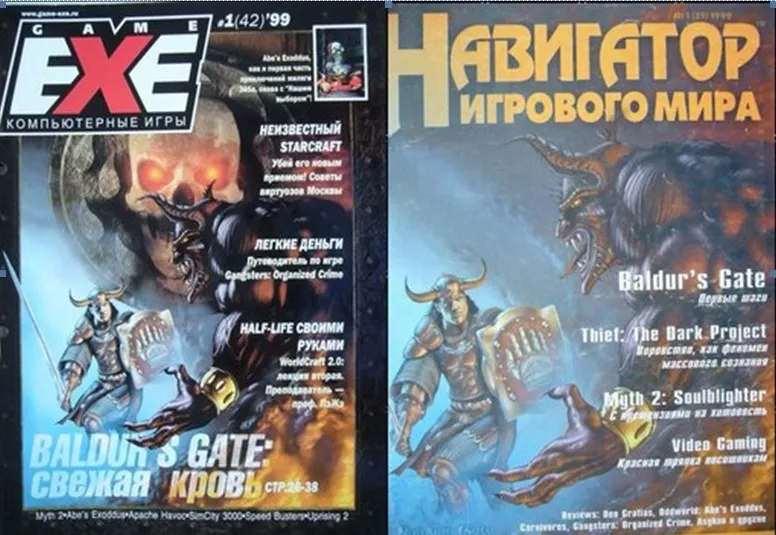
"[Baldur’s Gate](/games?search=Baldur’s Gate) is a complete and triumphant justification of all hopes and expectations. This is a game that will be celebrated through time and space."
"Game World Navigator", No. 1 for 1999
Good day, friends! Many of you, myself included, have been eagerly awaiting the release of "[Baldur’s Gate](/games?search=Baldur’s Gate) – 3", and that’s wonderful! However, unfortunately, I am unlikely to be mistaken in assuming that very few have had the chance to play the first part of this epic saga, which was released back in 1998. Therefore, I propose you get a brief overview of the beginning of the story and find out what is so remarkable about the first part of the game? Let's begin!
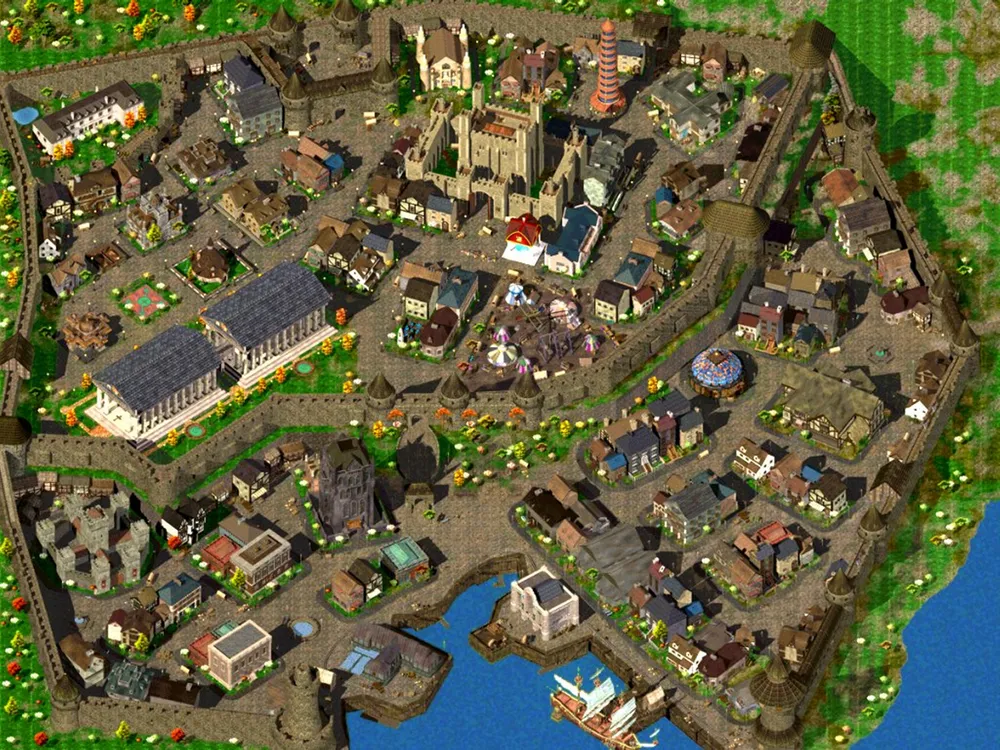
The main hero of "[Baldur’s Gate](/games?search=Baldur’s Gate)" comes to realize he is the adopted son of the monk Gorion in the Citadel of Knowledge - Candlekeep; a monastery-library located near the Gates of Baldur.
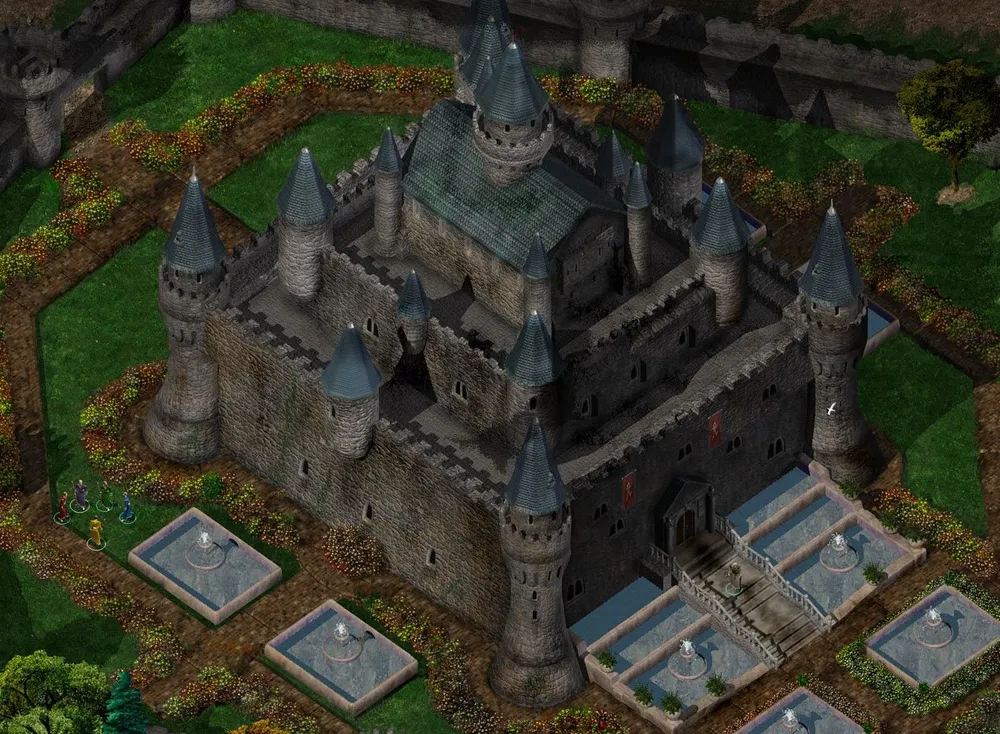
However, his serene life quickly comes to an end: his father orders him to prepare for a journey, without revealing the purpose of their travels. On the very first night, they are ambushed, and the Hero understands that the attackers are after him specifically. Gorion sacrifices himself to save his son, allowing the Hero to escape.
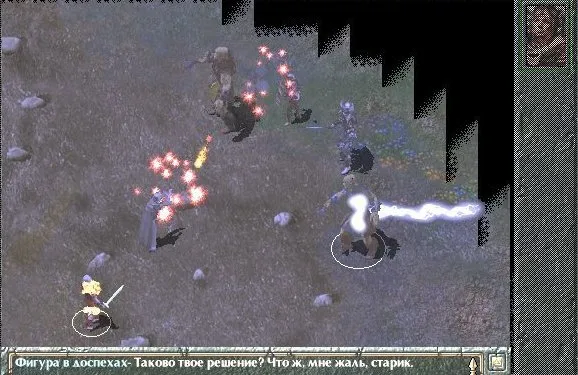
The next morning, he is joined by a monastery friend - Imoen. (In fact, she is actually his sister, but neither of them know this.)
Thus begins a journey in a world full of dangers, of which the Hero, who has lived behind the monastery walls until now, knows practically nothing. The very first encounters inform him of the "Iron Crisis"...

Even in the modern world, iron plays a significant role, and in those times and in that world, one cannot do without it: armor, weapons, agricultural tools, nails, horseshoes, and more. When it turns out that the available items are breaking down, and the iron ore being mined is unsuitable for smelting, chaos engulfs the world. To make matters worse, it becomes clear that caravans carrying good ore from afar are being attacked by bandits; and the neighboring state, Amn, is on the verge of declaring war on the Gates of Baldur. As if this isn’t enough, numerous mercenaries are hunting for the Hero wherever he goes...
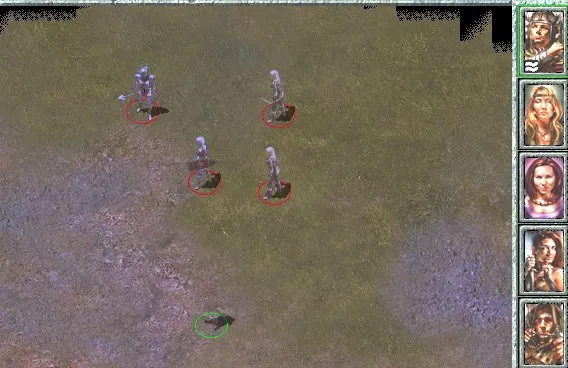
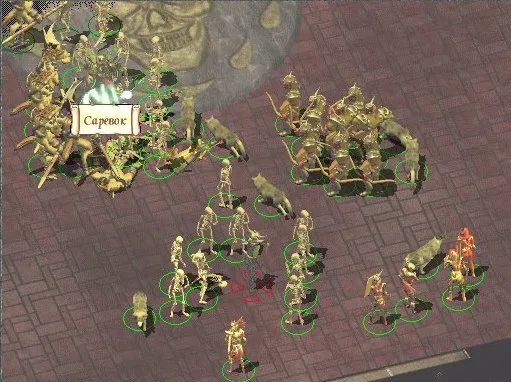
As he unravels this tangled web, the Hero uncovers an extensive, intricately planned conspiracy, headed by his brother, Sarevok: should he succeed, he would become the head of the Gates of Baldur, exterminating all of his siblings in the process.
This is the main line of the story of the first game; now let’s move on to its features. Let's start with character creation, which differs significantly from all modern games.
All of the hero's characteristics are generated at once during creation; there will be no growth in strength or dexterity with level-ups: you roll "dice", check the result, and if you don't like it - repeat as necessary.
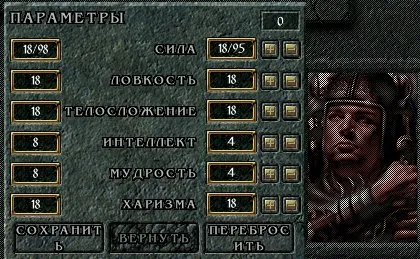
By the way, the maximum numerical value for human characteristics is eighteen units; ideally, all values should be at least even. Of course, elves and halflings get a plus one to dexterity, while dwarves get a bonus to constitution.
Any non-human race has the possibility of multi-class development: an elf alternates between classes of warrior and thief. But such a hero won’t be very good: a little above average as a warrior, a little better than average as a thief. Moreover, class skills will increase through level - it takes time!
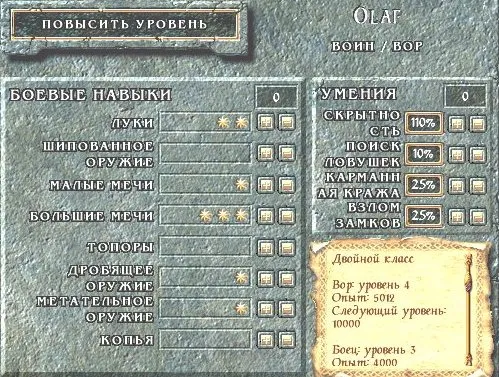
Unlike non-humans, humans can take on any class; only a human can become a paladin! However, multi-classing isn’t available for humans, but they have dual-classing: after reaching the third level, a warrior can "forget" his abilities and become a thief, provided that his leading thieving characteristic - dexterity - is no less than seventeen units. (Of course, there’s another catch - alignment. A thief cannot be Lawful Good; a warrior wanting to bring light to others will lose the ability to lighten their pockets.) Why after the third level? At the third level, the warrior receives a bonus to weapon proficiency, but the thief in the first part of the game does not get such a bonus. Thus, we get a thief capable of wearing heavy armor, donning a helmet, wielding a heavy shield and a longsword – while also being able to find traps and pick locks.
Alignment plays a role in party composition: Lawful Good characters dislike Chaotic Evil ones; sooner or later, a fight will break out in the party that cannot be stopped until one of the combatants is dead. (In one of my playthroughs, there was a case where the good Khalid and Jaheira immediately attacked the evil duo – Kzar and Montaron – right after joining the party. That time, good prevailed.)

In addition to the alignment of companions, the reputation of the party plays a role: prices in stores decrease, and some quests become available; at a reputation of twenty, evil companions may leave the party or refuse to join.
The hero has twenty-five companions in the game, among whom there are four "inseparable pairs".
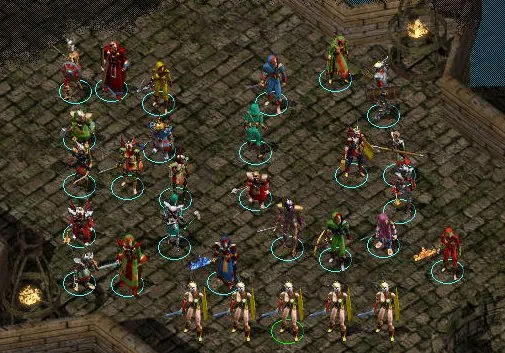
This is another feature of "[Baldur’s Gate](/games?search=Baldur’s Gate)": some NPCs prefer to walk exclusively in pairs - if you dismiss one from the party, the other will immediately leave as well, which can sometimes create inconveniences. For example, the mighty Minsk has a rather mediocre girlfriend who is not very useful in the group. You can easily separate the pair: take the unwanted one into a house and dismiss them, step outside, and your companion will not be able to return. Of course, you cannot enter this house anymore.
The main and arguably best feature of the game, in my opinion, is its non-linearity: after leaving Candlekeep, the hero has access to thirty-seven land locations out of fifty-two!

The movement of the party is not restricted, unlike in "[Divinity: Original Sin II](/games?search=Divinity: Original Sin II)"; however, one can easily run into an ambush while transitioning between locations, as well as face formidable inhabitants of the next zone, which can be very challenging for novice heroes.
However, the opportunity to outfit the party with the best gear opens up! Yes, the items of the first part of the game are permanently tied to their locations - in my view, this is great! - all that remains is to locate, buy, steal, or loot them from corpses. (However, it’s still uncertain who’s looting whom: the best weapons always belong to powerful foes; and the very best - of course - belongs to Drizzt Do'Urden.)
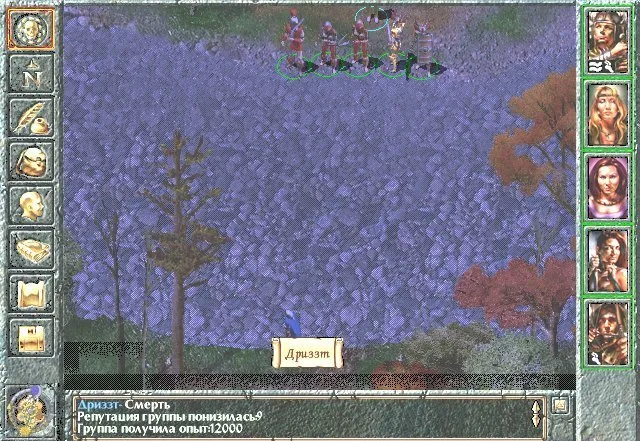
By the way: weapons and armor from the first part are not tied to the hero's level; a beginner can easily pick up the best sword and wear the best armor, just as a first-level mage can calmly read a scroll with a seventh-level spell. But will it help them?
If it doesn’t help - you’ll have to load the last save: the main hero, unlike his companions, cannot be resurrected. In general, the death of a couple of well-equipped companions turns into quite a problem: one must not only quickly run to the nearest temple but also retrieve all the equipment from the fallen - otherwise, it will disappear in three game days - and the backpacks of heroes in the first part are, alas! - incredibly small.
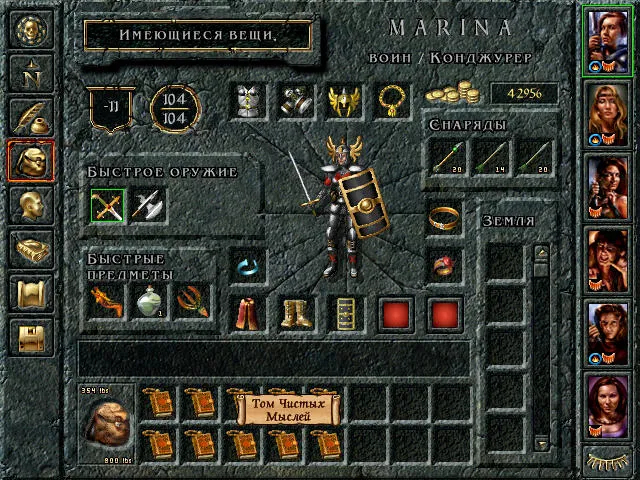
To prevent this from happening, it is necessary to constantly control the course of battle, initially assigning each companion a behavior line: for instance, ordering the thief to go into stealth at the sight of an enemy and promptly attack enemy mages, while instructing your mage to stay away from enemy warriors. However, the game has a great helper: pause! You can pause it and issue individual commands. But yes, saving the game during battle, of course, is not allowed. And yes: enemies do not level up in parallel with the hero's growth! Awesome!
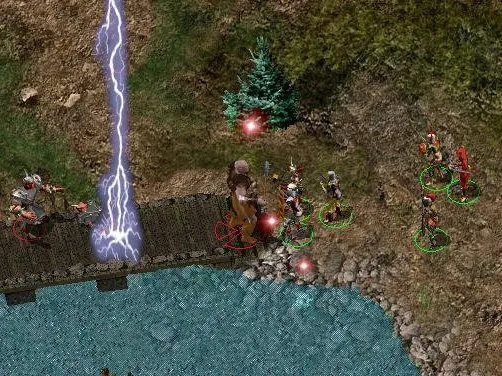
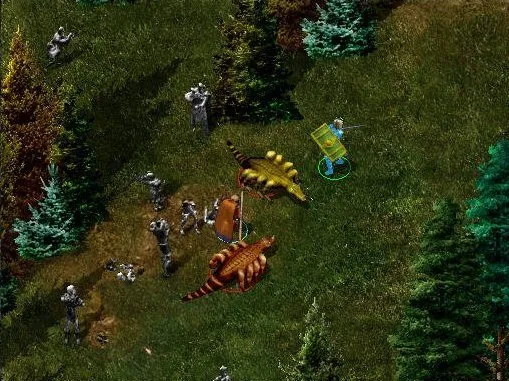
Another "feature" of the first part concerns enemy equipment: if you face a warrior in heavy armor with a shield and sword, you can be sure that after defeating him, you will receive both the shield and sword, along with heavy armor, and various little things like potions, gold, and scrolls. In simple terms, everything the enemy has will become yours after their defeat. Wonderful!
However, you won’t be able to get rich this way: for each subsequent batch of identical armor or weapons, the merchant will offer a lower price – yet their gold will never run out! Some items can be stolen from specific vendors, but you won't be able to replenish your finances again: merchants "smell" stolen goods from their colleagues and categorically refuse to buy them.
Graphics? Well, yes, it’s not three-dimensional, but quite decent for its time. I never considered it the main aspect of the game; the key things are an interesting story, non-linear gameplay, engaging quests, substantial dialogues, and an easy-to-use game mechanic. Trust me, all of this is in "[Baldur’s Gate](/games?search=Baldur’s Gate)"! Thank you for your attention!
Good luck to you all!
P.S.
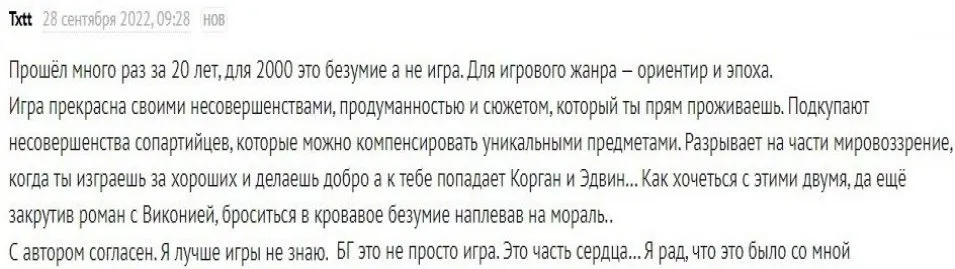
I agree with every word!!!