Heroic Bowling. Ball number two, strike? A guide to the Pharaoh.
Attention-grabbing image:
This is a kitten ^^
So, the time has come, comrades. I’ve been waiting for this moment for a long time. Why did I wait? Well, who knows… it’s all the fault of "Igromir" — truly all of it. I continue the series of posts; the first one, as you remember, became a goldmine. In the blog Heroes of Newerth, the second detailed, high-quality, current, accessible, and readable guide appears according to schedule. Tired of pros writing only for people just like them? Don’t know how to play a certain hero? Want to rise higher, become better, cooler, stronger, and more solid? Great! Come in — we will teach you.
This time we will have tips on a specific hero, and next time I’ll probably focus on mechanics. For now, I’m gathering information.
Another important point I want to emphasize (for the second time). I once wrote tips for popular cyber disciplines in my life. In particular, for DotA. Some of you probably even read them in the pages of the magazine "Best Computer Games". Back then, I faced a very aggressive response. The reasons were clear — my experience level was, let’s say, not very high. However, a lot of water has flowed under the bridge since then, so we will divide the guides into those that are suitable for real professionals and those suitable for everyone, written for "pub stomping" ("pub" — term meaning a regular public game). I repeat once again — if you intend to raise your self-esteem at the author's expense, it’s better not to. It leads to mutual resentment.
If you would like to civilly point out my mistakes, inaccuracies, and deficiencies in a spirit of goodwill — feel free to do so in the comments. Posts can be edited — I will definitely add useful corrections.

We had our trial balloon already, so today we introduce the second hero — Pharaoh. This rather un-cute comrade is practically a complete copy of Clockwerk Goblin from DotA. However, now HoN is beginning to carve its own path. Items frequently change, new ones appear… However, this has little to do with the fact that many, if not very many, players don’t know what to do at all. While with Armadon things are at least somewhat clear — he’s a pure tank, with Pharaoh it’s more complicated. He lacks defensive skills, and he’s relatively frail, has low mana, and does not possess powerful nuke spells. Moreover, his physical attacks are, to say the least, quite weak — you can't even compare him to a carry (the term refers to a hero capable of carrying the team to victory). It’s no wonder that in pursuit of any damage and mana regeneration (which is scarce) one can easily gather something that doesn't satisfy at all… and end up ruining their game.
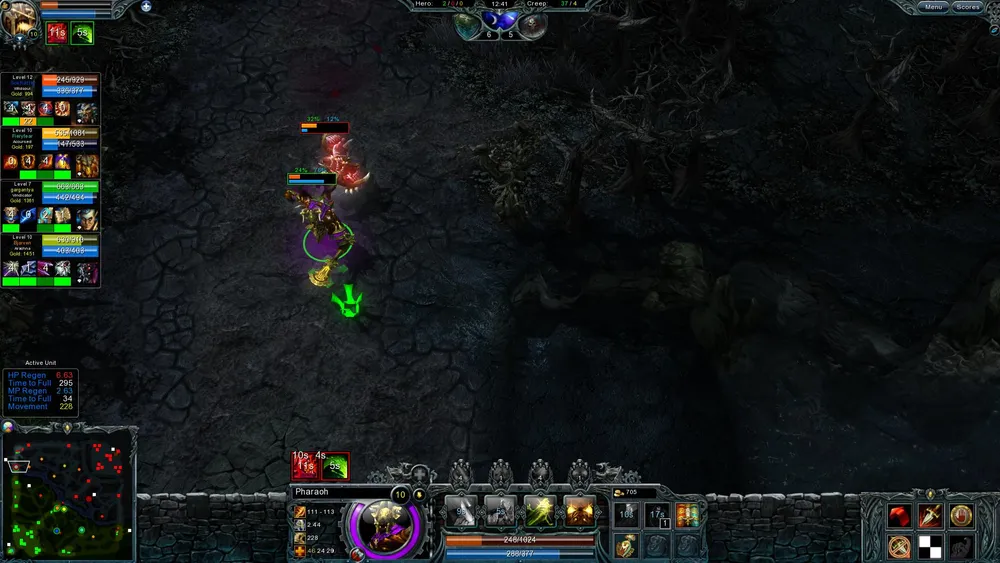
I’m being hunted by Predator. I'm about to throw my hooves.
Pharaoh's predecessor — the Goblin from DotA — also had utility problems. He essentially has all the same shortcomings — weak attack, low attack speed, non-obvious skills. If you miss the early game — we can’t inflict damage on anyone and often die. The issue is that Clockwerk heavily depends on how timely and correctly you apply his skills. In the mid-game, the importance of items is added to this. And although the latter are gradually, but surely, taking their own path in HoN, the importance of the correct play style has fully transitioned from DotA.
So, let’s define Pharaoh's role within the team. He’s somewhat of a hybrid between a tank and a spellcaster. A sort of paladin from Might and Magic 7 — fights a little, casts a little, but both are done rather mediocrely. He is a fighter, perhaps not the first strike, but the vanguard. His goal is to isolate enemies. Pharaoh’s abilities allow him to pick a target from the enemy bundle, jump to it, isolate it from the others with a wall, and then slowly but surely kill it. Or at least delay, distract it — depending on the task.
He is also great for surprise attacks. Stun from the dark, long mummy prison — excellent abilities to successfully bend enemy heroes on the lanes as early as level 6-7. This should be used constantly.
In other words, he is not a pure tank, so we should not recklessly throw ourselves into the melee. He is also not a pure mage, so we shouldn’t shy away in the backlines. We need to balance and remember the task — to grab an enemy, isolate them from the rest, and kill.
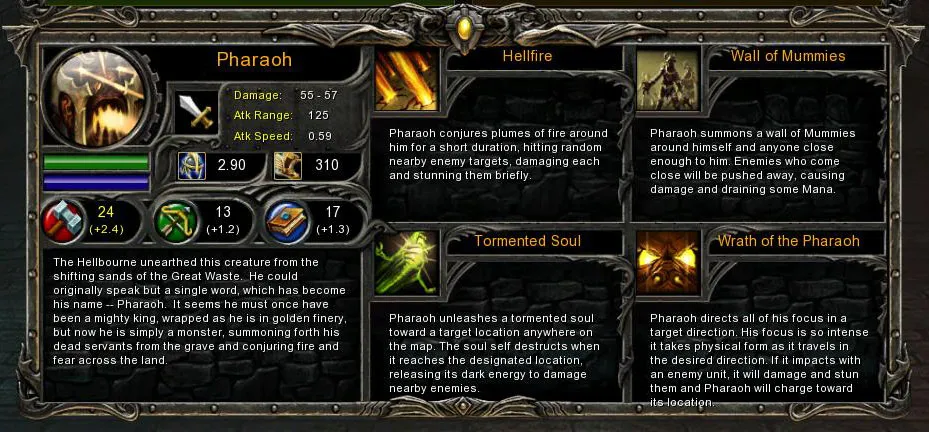
What are we rich in?

Hellfire
Pharaoh summons bursts of fire that deal damage and briefly stun enemies. The spell works in a limited radius — only around our hero and only hits random targets that are caught in the area of effect.
Type: magic, damage is purely magical
Radius: 300
Mana cost: 75 at all levels
Cooldown: 32\28\24\20 seconds
Duration: 10 seconds, burst every 0.75 seconds
First level: 10 damage, stun for 0.1 seconds at all levels.
Second level: 30 damage
Third level: 50 damage
Fourth: 70 damage
This is Pharaoh’s primary attack spell (not the other often misguidedly leveled up first), it needs to be leveled up as quickly as possible. Why? Let’s do the math. 10 seconds of effect, dealing every 0.75 seconds. Dividing it — we get 13 bursts. Yes, at the first level the damage is trivial (but that’s not the point), but at the fourth maximum series — up to 910 (less, as some is negated by magic armor, but we won't take that into account; this is something the player should remember).
However, there’s a catch — we hit random targets. In other words, this ability should only be used if there are no neutral or simply linear creatures nearby. Otherwise, the bursts will deal damage to them, not our unfortunate enemy. Use the skill like this — get close to the enemy, try to sneak behind them, anticipate their escape route (if we don’t have boots), activate the skill and try to stay close (the ideal is to block them). Micro-stuns will stop the target, giving us the opportunity to hit them with a normal attack. Essentially, even by the fifth level Pharaoh — is dangerous. His skill can deal more than 600 points of damage, which is approximately how much mages and various agile heroes will have.
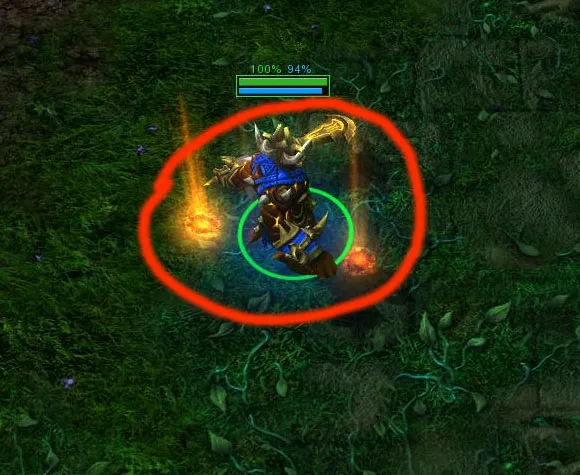
This is approximately his radius.

Wall of Mummies
Pharaoh summons his loyal servants. Mummies rise from the ground, forming an even circle around the master that prevents enemies from passing through. Touching the wall from the outside pushes the enemy back, deals damage, and burns a bit of mana. Each mummy can only push back once. To destroy a cell of the wall — three hits are needed, and the master can shove a mummy back with just one.
Mana cost: 50\60\70\80
Cooldown: 15 seconds at all levels
Duration: 3\4\5\6 seconds
First level: Mummies deal 55 damage, burning 55 mana
Second level: 70 damage and mana
Third level: 85 damage and mana
Fourth level: 100 damage and mana
A very important spell that is simply vital for Pharaoh. With its help, he can split up enemy clusters, pulling out a weak target for killing while scattering the rest with mummies. However, I have seen Pharaoh dealing without this skill altogether, managing only with artifacts. In my opinion, this only indicates the weakness of the opponent, as a competent team would quickly punish for such negligence. Mummies provide the ability to close one (rarely two) enemies, forcing them to fight only with Pharaoh, and in a very uncomfortable position — there is nowhere to retreat or maneuver, and bursts keep stunning them. And this lasts for up to 8 seconds at the last level. In that time, one can die twice.
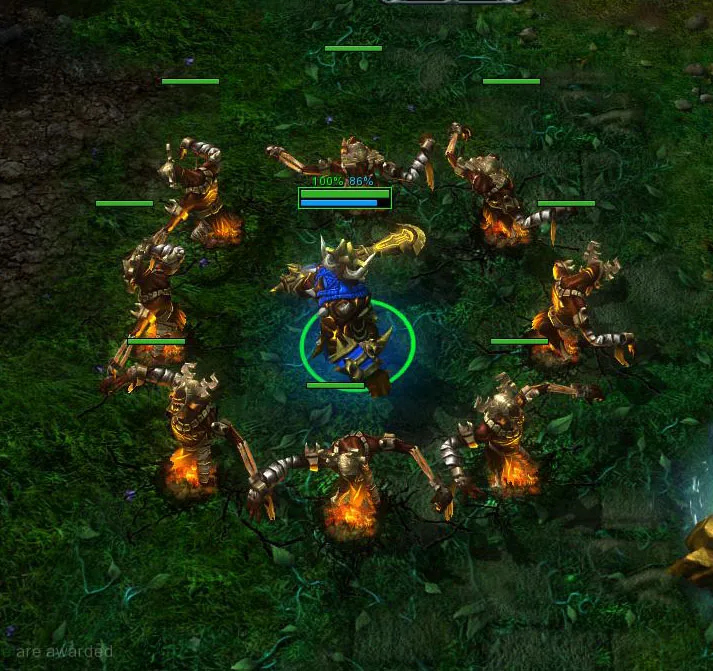
This is how the mummies work.
Tormented Soul
Pharaoh unleashes a tormented soul that explodes at the destination, dealing damage. The spell is noteworthy in that it can fly throughout the location (from Pharaoh to the destination) even in fog of war. It acts on invisibles and reveals the map (where it flies, plus the explosion site for 10 seconds). It is relatively cheap, quickly recharges, and is suitable for both reconnaissance and harassing enemies (from the term harassing — systematically dealing damage to deter and weaken, in order to subsequently finish off or simply send back to base).
Type: Magic
Range: Infinite
Explosion radius: 600
Mana cost: 50 at all levels
Cooldown: 30\25\20\15 seconds
First level: 80 damage
Second level: 120
Third level: 160
Fourth level: 200
This spell is often mistakenly leveled first. Why? It costs little mana, plus it flies over any distance, also deals area damage, plus… it opens such great prospects for finishing off someone fleeing from another lane. In general, a pleasant and safe mini-nuke. What is the mistake here? 50 mana — is still a significant expense for someone with little of it. Pharaoh has little — hence in the early stages inflicting nerves to the enemy with "rockets" will not work. They will just heal and that’s it. This especially applies to all fans of Life Tube. We become useless; if we prioritize the soul first, the bursts by the seventh level will only be at the second mark, which is 30 damage each. Very little. Too little that we are unlikely to kill anyone.
On the other hand — the soul is very cool when we are in a complete mess and can’t oppose the enemy on the lane. Here, the "rocket" will be great for finishing off creatures while simultaneously damaging the enemy. But this is a rather rare and very specific situation that needs to be kept in mind.
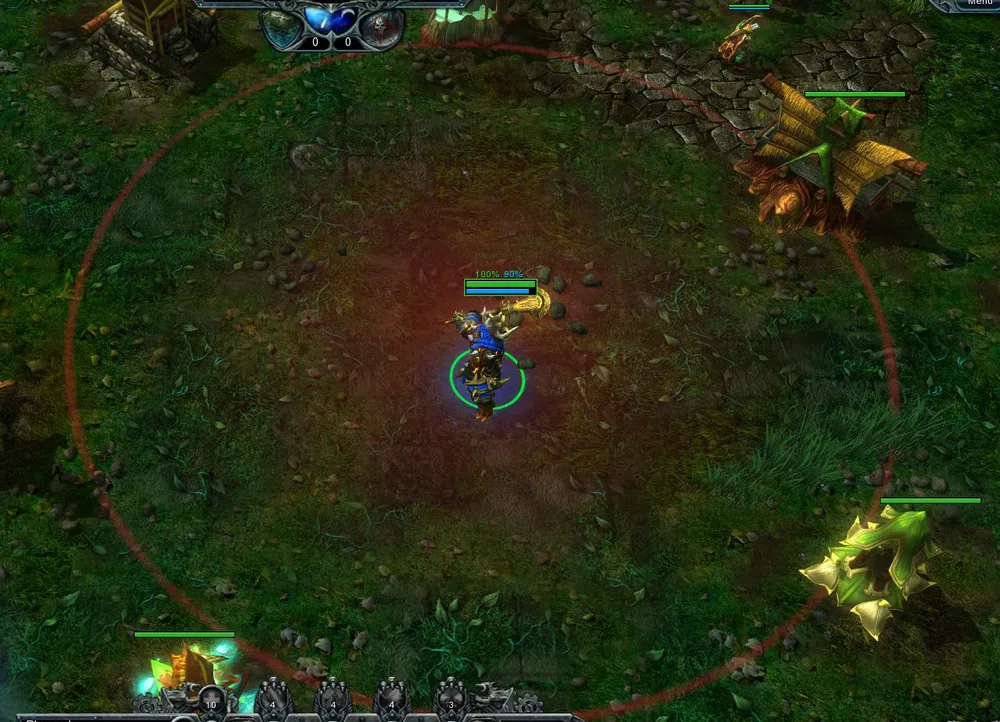
The soul has such an AoE.
Wrath of the Pharaoh
Pharaoh concentrates to such an extent that his great power takes physical form and rushes in the specified direction. If it collides with an enemy, it stuns them (and all nearby for 0.5 seconds), and Pharaoh teleports to the target in half a second.
Type: Magic
Range: 2000\2500\3000
Explosion radius: 200
Mana cost: 150 at all levels
Cooldown: 80\60\40 seconds or 20 with Staff of the Master
First level: 100 damage, target stunned for 1 second
Second level: 200 damage, 1.5 seconds
Third level: 300 damage, 2 seconds
Our final spell — the main grab of soft spots. This is Pharaoh's primary ability. It deals small damage, but pulls us almost instantly to the enemy. What does this provide? We can catch and stun a specific target at a distance (and the range of the spell is longer than various Molotovs and the like), immediately activate the bursts — and start dealing damage. When we learn to summon mummies, we can reliably cut off the caught target from allies. With regular stuns, solitary mages, for example, won’t be able to conjure anything against us. Since the bursts act independently, we can also deal normal attacks simultaneously.

The Pharaoh's gaze just flies forward. Like this.

On the Staff of the Master: for some time now (I don't remember since when, sorry) this thing improves our final spell. But how important is that, what does it give? First of all, the cooldown decreases — at all levels, now the magic restores in 20 seconds. This is useful. But the stun of enemies around the ally is silly. Why do that when an accurate Pharaoh invariably hits the enemy? The staff does not increase damage, does not add range. At level 16, the skill’s cooldown is 40 seconds. Is it worth it?
We’ve established what we can do. Next. What are Pharaoh’s strengths?
High starting damage — we can finish off creeps with a smile. For both our and their — we can spoil the enemy’s life.
There’s a weak escape mechanism from melee fighters. Activate the bursts — we run.
Excellent for surprise attacks. Especially from the bushes.
We can finish off creeps from a distance and frequently weaken opponents, often severely.
Stuns and mummies are useful at all stages of the game, even in the end.
An excellent scout. Easily controls runes and the forest.
Relatively high starting movement speed.
Now we cleared the positives, let’s talk briefly about the negatives.
Low mana.
Relatively low agility growth.
There's a nuke, but it’s weak, and with our intelligence growth (1.3), we can’t afford to use it often.
By mid-game, without a team, we are unlikely to be able to kill anyone.
Slow attack speed makes our normal hits relatively useless towards the middle-end of the game.
Dependent on expensive artifacts.
Pharaoh is not as harsh as his predecessor Armadon, but errors in skill and artifact selection can lead to a loss. We just won’t be able to do anything — and that’s not just a statistic hit, it’s also very sad and generally not cool at all.
Skill Chain
Let’s move on to the main point — the sequence of skills. Here, I believe, almost everyone (especially beginners) makes mistakes. And even worse, those incorrect thoughts later get turned into guides. And then, they are read by various underdeveloped smooth brains who lose and never become cool. It’s sad, so let’s fix that.
The mistakes are obvious — the first skill (i.e. bursts) needs to be controlled sharply, and that’s not easy — try accompanying an adequate opponent for ten seconds straight. Thus, beginners shortsightedly develop the rocket first, which seems to deal damage. But it’s little, has a long cooldown, mana runs out, again. This leads to a farce. Mummies are often forgotten due to the inability to use them. In general, let’s figure out what, how, when, and why.
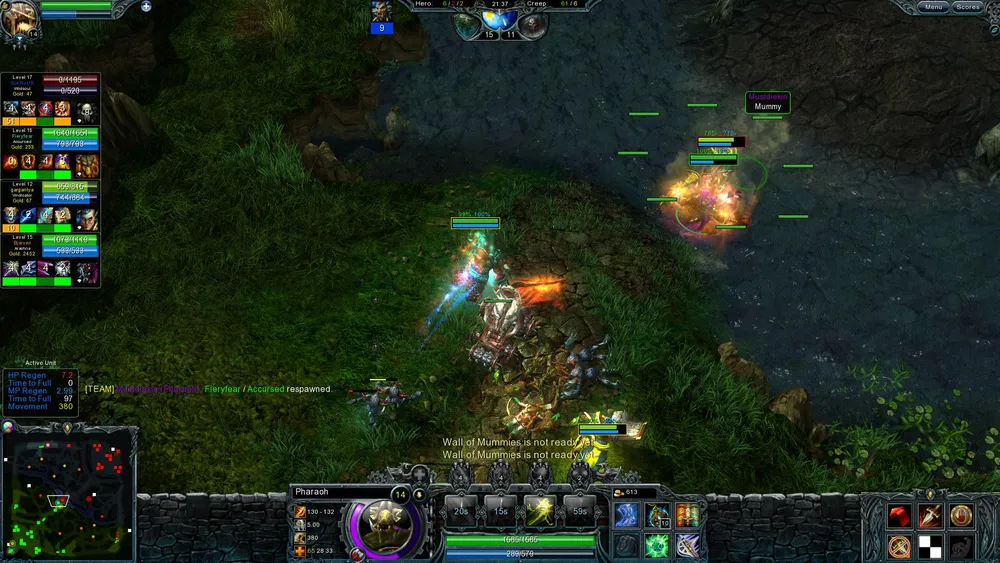
The enemy got distracted, I jumped at them, immediately activated the wall and the bursts. Someone’s about to die now.
Let’s say we are standing on a lane with someone who stuns or slows. This is a good setup for a kill (or kills) using the following scheme: the ally stuns, we approach with bursts, follow through, and then the ally finishes off as needed. Here we clearly need to focus on “Hellfire”, add the soul for scouting and some starting damage (soul, stun, bursts, then soul for finishing) and then complement with the final spell. We will become dangerous to the enemy, especially in forests and passages — where our bursts won’t miss.
After level seven, we level up the soul, then move on to mummies. We take pluses last; we need all the skills very badly.
I’ll immediately explain why the soul needs to be leveled first. It flies across the entire map — we can finish off a fleeing enemy. At the first level, this happens rarely, but it occurs. Missing a fragment due to foolishness in skill selection — this is regrettable and shameful. Very shameful. Next. We need it for rune checking and reconnaissance. Information is the key to victory. If we know more about the opponent than they do about us — we are halfway to victory.
In general, the full order looks like this:


Level 1: Tormented Soul
Level 2: Hellfire
Level 3: Hellfire
Level 4: Tormented Soul
Level 5: Hellfire
Level 6: Wrath of the Pharaoh
Level 7: Hellfire
Level 8: Tormented Soul
Level 9: Tormented Soul
Level 10: Wall of Mummies
Level 11: Wrath of the Pharaoh
Level 12: Wall of Mummies
Level 13: Wall of Mummies
Level 14: Wall of Mummies
Level 15: Attribute Boost
Level 16: Wrath of the Pharaoh
Levels 17-25: Attribute Boost
In the second example, we won’t have it easy. The enemies are two nukers. If we rush in — we’ll get hit on the back of our necks. It doesn’t matter what ally we have — we’ll end up receiving from both (just recently I had a game like that, Pharaoh with Behemoth, both were taking damage). What to do? Don’t rush in, that’s for sure. Let’s analyze the options in the Behemoth and Pharaoh duo, since I mentioned them. We are both melee fighters, so we won’t be able to kill creatures easily — the nukers drain health in an instant. So we try to drag them under the tower, distract them as best we can, and ideally finish them off with spells. The surest path here is to buy Ring of Sorcery and level up Tormented Soul instead of Hellfire, along with taking pluses. We will survive longer — harassing the opponent. Only later, when the time comes, can we stun with the final spell, by which point the ally can come to help.
This scenario is, in fact, quite rare. If the lane opponents are not nukers, then one can simply concentrate on the soul without stealing points. The purchasing options here can vary greatly — the ring can even be bought for Pharaoh if needed by the circumstances.
I’ll clarify what this coincidence of circumstances means — a significant unpleasantness that needs to be treated by changing lanes. If it’s tough for us and they won’t let us earn money, and even worse — experience, we urgently need to swap. If there’s no one to swap with, we have to endure. But it’s better to change.
The overall picture looks like this:
Level 1: Tormented Soul
Level 2: Attribute Boost
Level 3: Tormented Soul
Level 4: Attribute Boost
Level 5: Tormented Soul
Level 6: Wrath of Pharaoh
Level 7: Tormented Soul
Level 8-10: Hellfire
Level 11: Wrath of Pharaoh
Level 12: Hellfire
Level 13: Wall of Mummies
Level 14: Wall of Mummies
Level 15: Wall of Mummies
Level 16: Wrath of Pharaoh
Level 17: Wall of Mummies
Level 18-25: Attribute Boost
The third example will be the most extreme — we are standing solo on the central lane. What is needed here? Quickly develop the entire potential for surprises. So we will operate according to the first scheme, but already by the seventh level (when Hellfire reaches maximum) we should run from the center to ravage the side lanes. Pharaoh in the middle looks quite good if he has a bottle — with souls he easily controls the runes and can finish off enemies "rockets", so even against a marksman he can hold out. We live to the seventh, get boots, then forward — to unexpected kills from the bushes.
Remember that my main advice to you is to learn to act situationally, think ahead, anticipate what the opponent will counter with, how they will behave, what will happen next. Any precise modeling in HoN (as in DotA) is an absolutely unreliable thing; it only provides an approximate scheme that cannot be transferred to the general case. We consider specific options to see how the hero works — this is by no means a specific recipe but merely an illustration of the situation. In the actual game, you will be able to slice these pictures into pieces and apply them as needed.
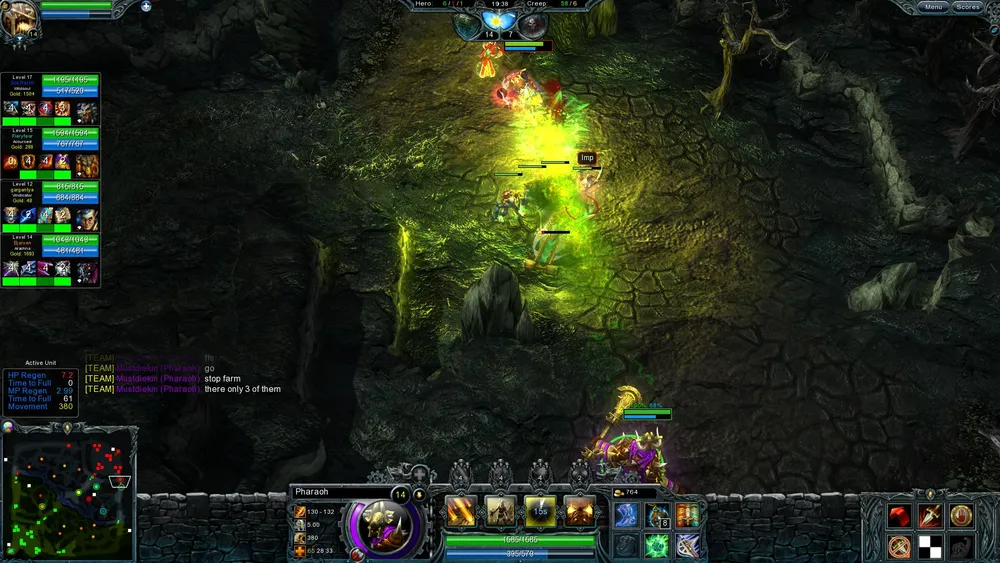
"Rockets" can deal damage, finish off, earn, and scout. It's a very cool ability in the mid-game.
Items
Pharaoh, like Armadon, is very dependent on artifacts. But while the piggy couldn’t truly deal damage in the early game, Pharaoh definitely can; however, if the moment is missed — he will be even more useless than an improperly built Armadon.
There are many purchasing options for Pharaoh, but not all are obvious. Many are actually not even understood by all. We will fill this gap and explain clearly what and why to take.
Starting purchases vary depending on mode. But these 250 coins are trivial (from 603 to 853). So the difference isn’t great; the important thing is that you have this:
[tiny_img]


[/tiny_img]
Or this:
[tiny_img]


[/tiny_img]
The second option is only valid if you have spellcasters on the lane. Not just any, but those that will frequently apply spells.
If we are heading to the center, it makes sense to buy this:
[tiny_img]


[/tiny_img]
There are various circumstances. The team often needs a tank, so we will slightly forget our magical ambitions (and regain mana from the bank, from others’ auras, at the fountain), focusing on health and resistance.
[tiny_img]


[/tiny_img]
As an option, if mages are overwhelming, do something nice for the team:

If the game isn’t going smoothly, you might try to bulk up.
[tiny_img]

[/tiny_img]
You also need to buy boots. At this point, there is a serious choice: Enchanted Boots no longer provide attack speed but offer temporary acceleration. Steam Boots provide attack speed and strength (and agility, and intelligence, but we need strength), but they make us run slowly. Post Haste is simply expensive. Choose according to the situation.
[tiny_img]


[/tiny_img]
If standing on the lane becomes tough, you can struggle and build this:

In general, some mana-replenishing items will sometimes be quite welcome.
[tiny_img]


[/tiny_img]
If we smiled and reached the mid-game, it's worth earning for expensive and very kosher artifacts:
[tiny_img]


[/tiny_img]
With these, we protect ourselves from spells, bulk up health, ensure mana growth (and mana itself), plus become very useful to the team, as we can slow down or slow down significantly. The box (the last picture) summons wicked Pokémon that hit hard. The prison of mummies is the perfect touch.
Sometimes you can take another path and build this instead:
[tiny_img]


[/tiny_img]
But this should only be done if the enemy team has many point mages without area attacks. Their sphere does not block, so why do we need it?
Now for what we really want to buy but absolutely shouldn’t. These items:

Why? The same answer — all of this is unnecessary, as hitting with our hands is not our job. Let the professionals handle it. Codex is superfluous, we will hardly have mana for that, but the lack of health will surely be felt. Barbed Armor is not for us; we aren't that much of a tank and unlikely to survive enough hits. Restoration Stone is a foolish choice by definition. Our spells don’t take so long to recharge that they need to be forced… Though I’ve seen that too.
I repeat, as tempting as it is to buy all these items — refrain. It’s tough since the hero seems to ask for them. Don’t give in. Buy only useful things.
We’ve discussed most of the personal gameplay nuances, now let's move on to allies and enemies. To know whom to beware of and how.
Allies and Enemies
Let’s start with friends. The logic is fairly simple here — ideally, you should have any stunner. Be it ranged or melee — doesn’t matter. They start an attack, and we support it (until level 6). Or we start with “Wrath,” then follows the pleasant combination of “Hellfire” and stunning or slowing spells.
In other words, a very impressive list of heroes is suitable for us as partners. Just a huge one. All who have even slightest slows — are our friends. An approximate list of good allies looks like this:
[tiny_img]


[/tiny_img]
The list of enemies, indeed, is also quite impressive. We fear many (especially if we don’t level up “Fire”), but most of all those who are similar to our friends. Stunners and slowers will not allow “Hellfire” to unfold its power; they will make all bursts go to waste. We also don’t like any disappearing or teleporting heroes. Our bursts do not hit invisible foes, and it’s easy to escape from the mummy prison through a spatial rift. We dislike mana burners — without mana, we are just useless ballast. Finally, at the end of the game, we fear all late-game heroes — they simply destroy us.
List:
[tiny_img]


[/tiny_img]
Final Word
Lastly, I want to point out that learning is simple. The main thing is not to act thoughtlessly, always analyze the situation. Calculate what the opponent might do in the next instant — for this is not actually that hard. Look into the future and try not to die — kills will come with experience, and reducing deaths to zero should begin right from the start. I wish you successful application of your new knowledge and victories.
In time, we will go through everything. We will supplement the materials as needed, here will be the most complete database of guides — even at the start of the game, you’ll be able to check HoN, to glance at what to buy and develop.