Interview with Anton Morozov at the Games Day 2026 Board Game Festival
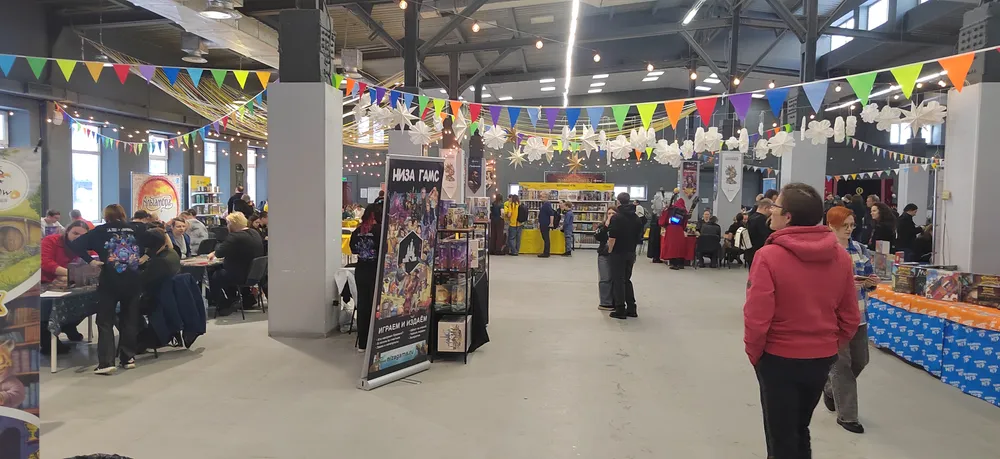
On the weekend of January 17-18, the eighth Games Day Board Game Festival took place. Its organizers, goldfish hobby center, aimed to entertain attendees with various activities and, of course, showcase new releases among board games of various types and calibers.
The Games Day festival was held at the Danilovsky Event Hall, which has hosted similar events before — for instance, it used to host the tabletop role-playing convention "Rolevik". But this time, instead of role-playing games, there were other types of board games, as well as a painting zone, a field with a remote-controlled tank, and other interesting things that I will write about later. For now, I would like to introduce one of the co-founders of goldfish — Anton Morozov, from whom I managed to get an interview.
Please tell us about your publishing house. Where did it come from?
We founded goldfish in 2015. We will soon celebrate 11 years. Initially, it was a club for Magic the Gathering enthusiasts. Then other card games appeared, followed by war games and board games, ultimately resulting in a very broad direction.
And what is currently in the highest demand? What are the print runs for board games?
The print runs for board games depend on many factors. Something simple and popular, like the well-known "Munchkin", is published in runs of tens of thousands of boxes. Less popular or new games are usually released in runs of about a thousand. After that, sales are monitored.
If a game does not pay off, the first print run remains the only one. If sales are good, a second print run is printed in one to two years. If a game sells very well, a new batch can be printed in six months or even three months.
What sells best? Are there any patterns? How do you select the publishers and games you work with?
We are a relatively small company, and we do not have any special selection for publishers. We work with everyone who wants to collaborate. Regarding board games, the situation in our country is roughly the same as in the rest of the world, but with about a six-year delay.
The patterns are quite ordinary — simple games are mainly in demand, where the rules can be explained in 3-5 minutes. Card games and games like "Mafia" are quite popular. More complicated games tend to have a smaller audience.
However, over time, the situation is improving. Ten years ago, people who spent their evenings playing board games were viewed as crazy. "Ha-ha, a Monopoly lover." Now that perception has changed, and playing board games is becoming fashionable.
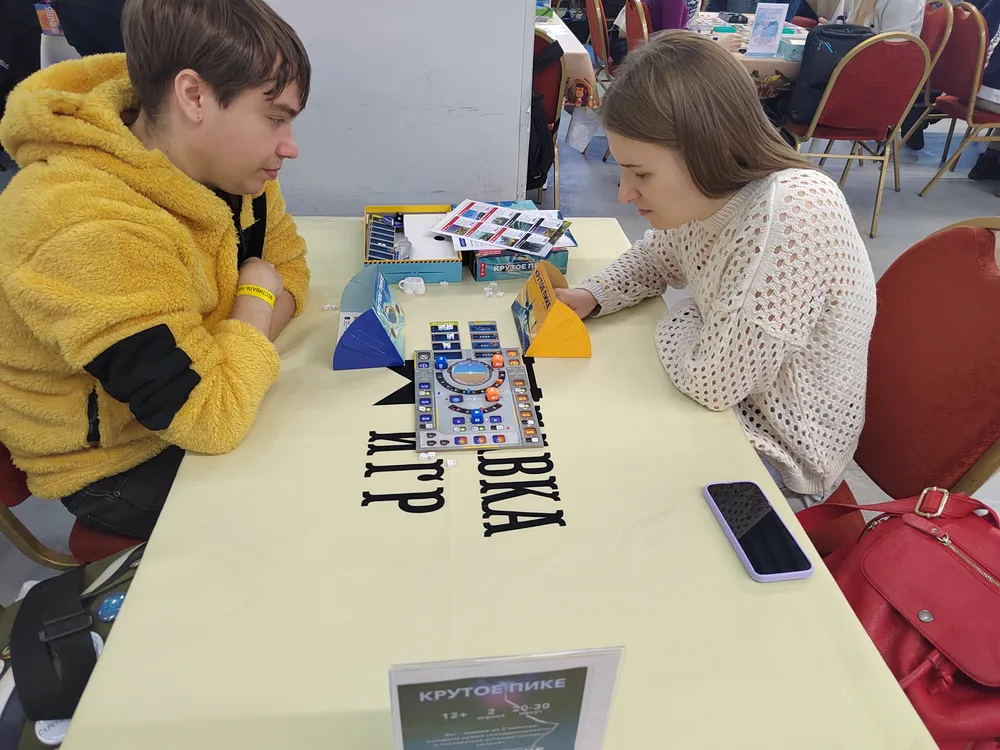
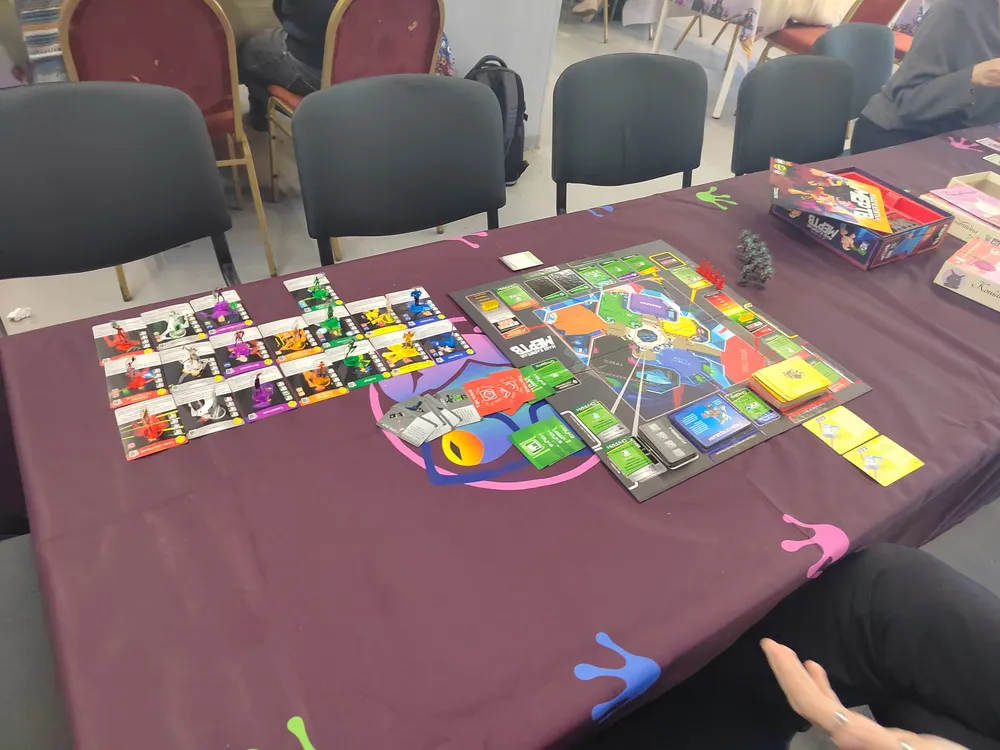
I saw some very elaborate board games on some tables. In "Cool Peak", the game board is made like a dashboard, with real switches. In "Whispers Behind the Wall" — an entire mansion. Such games must be difficult and expensive to produce, right?
Of course. The more components there are, the more difficult the production is. If the games have plastic or wooden components, we usually order them from China. Otherwise, the game might cost around 20 thousand instead of 4.
But the complexity of the rules may not depend on how many details the game has. I once encountered a war game that had only cards, but it took me about two days to understand the rules. That was the most complex game I know of.
Returning to the question of game selection. How do you determine which games to sell and which ones will not gain popularity? How do you find the potential audience? I understand that festivals like Games Day can serve as advertising. But besides them, I also attended "Igroprom" and "Igrokon", but I didn't see you there. Did I miss you?
When "Igrokon" was happening, we had only one project — "Our Captain is Dead". So we decided it wasn’t worth it.
As for the selection of games that we take on for distribution — I choose them based on experience. I have been involved with board games for 25 years, so I can sense at a subconscious level what might work and what might not.
Oh, really? What can you say about the business in general? How is the situation now — normal or not so good? Are there any nuances in distributing board games?
The main nuance is that our business is niche. Therefore, it is necessary to precisely determine the scale of print runs. If you order too many copies, the unsold ones will occupy space in the warehouse; if too few — those who want to buy will leave, and you'll have to restart the advertising campaign to win them back.
And how do you evaluate the effectiveness of advertising? Where do you advertise? How do you advertise? In general, what things bring you the most income?
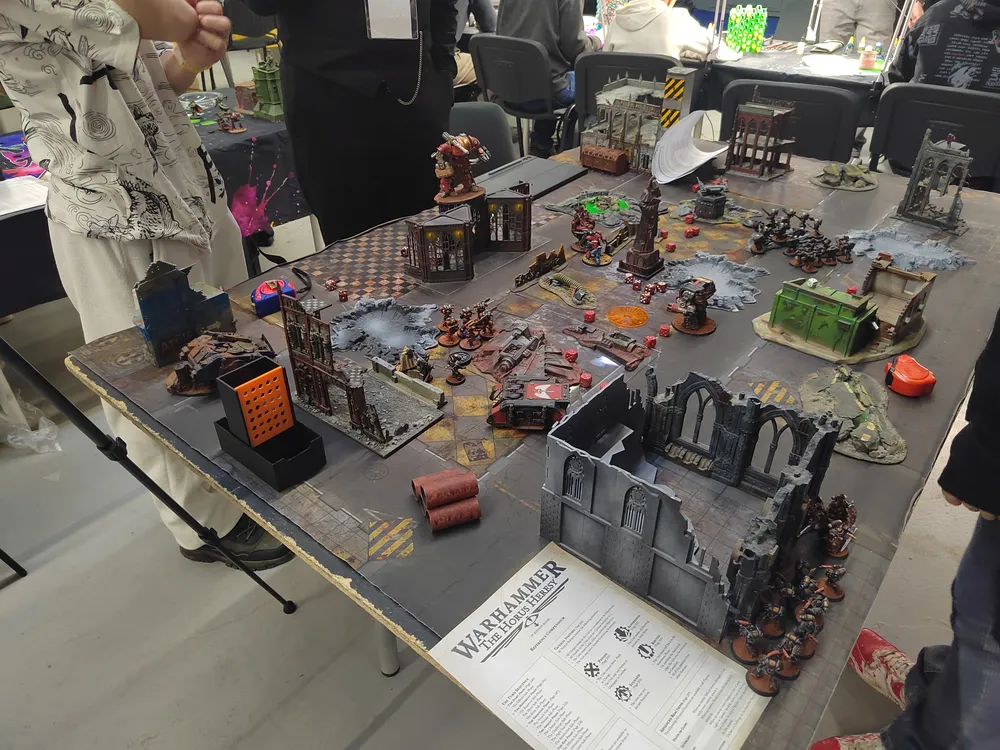
Regarding income — it's hard to say. People can buy different things at different frequencies. Among those who come to us, there is no clear distinction. A person might play Warhammer, paint miniatures (and we sell products for that), and occasionally buy games like "Cat Lady" to relax in the evening. Sometimes, they even play a simple board game during breaks between battles at tournaments.
By the way, we have the most massive Warhammer tournaments in Russia — one time 250 people gathered in one hall. It was great.
Regarding advertising, we mainly do it through bloggers. They don’t necessarily have to specialize in board games. There are quite a few influencers who create content on geek culture in general, and if they talk about a new game, it can attract quite a lot of people.
This is already the eighth time we are organizing the Games Day festival. The first one had about 600 visitors, and this time it should have around 3,000. We have participated in other festivals too. At the Red Expo, if you saw the painting miniatures corner — that was us.
Unfortunately, I didn't see it. I was at Red Expo, but at that time I wasn't very interested in board games. I literally just started attending board game events last summer, starting with tabletop RPGs.
We have tabletop RPGs as well. As I said, now people come and can play a variety of things. Some switch to painting miniatures, while others— to cosplay.
What do you think about crossovers? They are often used for promotional purposes now.
Yes, crossovers are a good way to show someone interested in a particular game or theme that there is much more around it. So in my view — it's a plus. We are a small company, developing gradually, but we search for opportunities in all directions.
Regarding development. As far as I understand, you mainly collaborate with other publishers. Are you publishing anything yourself? Planning to publish any?
Yes, I mentioned the game "Our Captain is Dead". This is our first project — the localization of a game from J.T. Smith and Joe Price. It is played cooperatively, meaning one or several players fight against the game, which throws various troubles at them, and they must survive with teamwork.
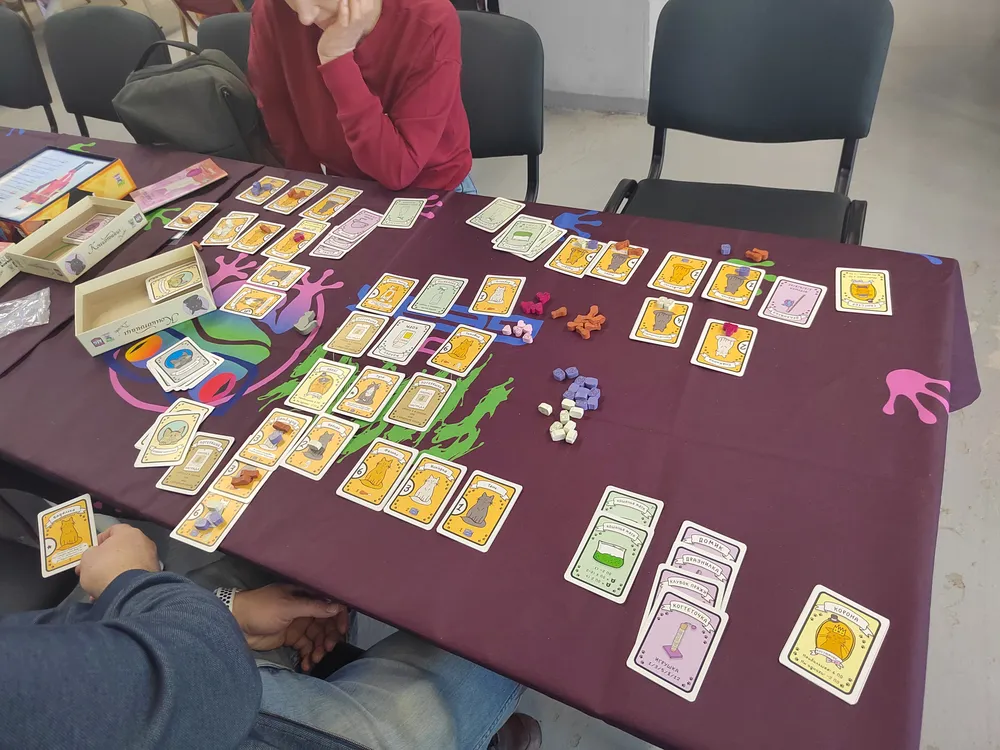
We will soon release the game "Cat Lady" (in the original, Cat Lady by Josh Wood). This is a more casual but competitive game — you need to collect and feed cats, and in the end, the one with the most points from fed cats, collected toys, and outfits wins. This game has a cute and charming design. We have literally just printed the first samples, and it is already available to try at Games Day.
We don’t have our own games yet. Actually, we have a project in development, but creating a board game is not a fast process. It can take up to two years.
Don’t you want to release it in virtual form? There are many different board games in Steam now, and even virtual simulators where you can assemble and test a board game.
Yes, you can test it, but I believe that playing a virtual board game is not the same as playing at a real table. In a computer game, when you sit alone, all those aspects that come with sitting at a table and spending time with friends disappear. The very meaning of a board game is lost.
Interesting opinion. Thank you for the interview. Good luck in promoting board games in Russia.