
Winners of the First All-Russian Accelerator of Educational Games Announced
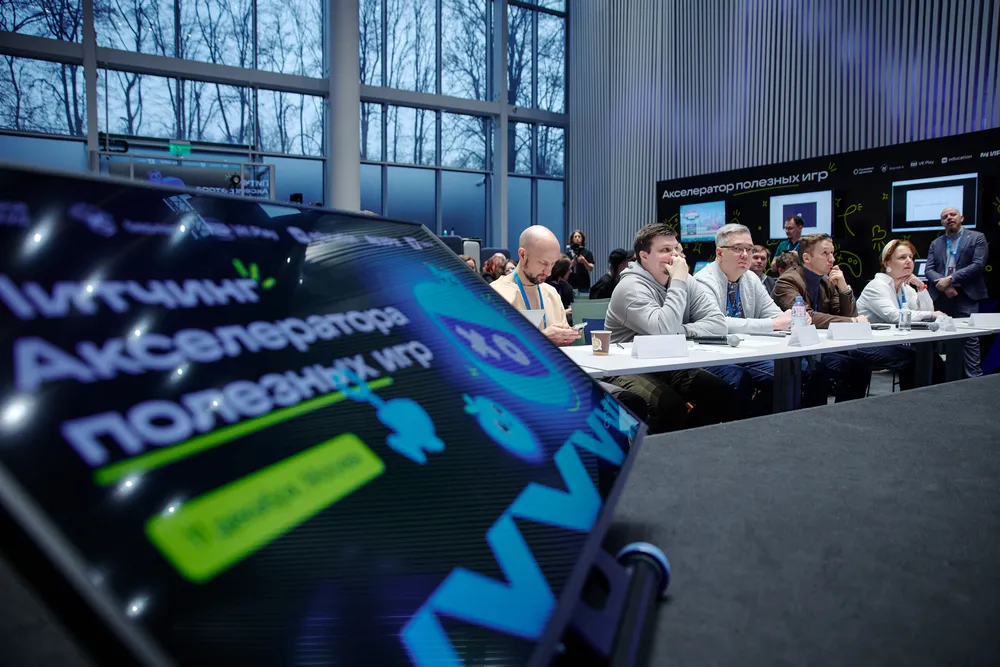
On December 11, in Moscow, at the VK office, the final of the first accelerator of educational games in Russia took place. Developers from 18 regions of the country presented 28 prototypes of games that teach school subjects, programming, and agritech. The winners received financial and expert support that the accelerator organizers will provide for further development and publication of the award-winning projects on Russian platforms.
The accelerator is organized by the Kruzhkov Movement of the National Technological Initiative (NTI), the National Cyber-Physical Platform (NCPF) "Berloga" in partnership with the Internet Development Institute (IRI), the Tavros Group, VK Play, and VK Education.
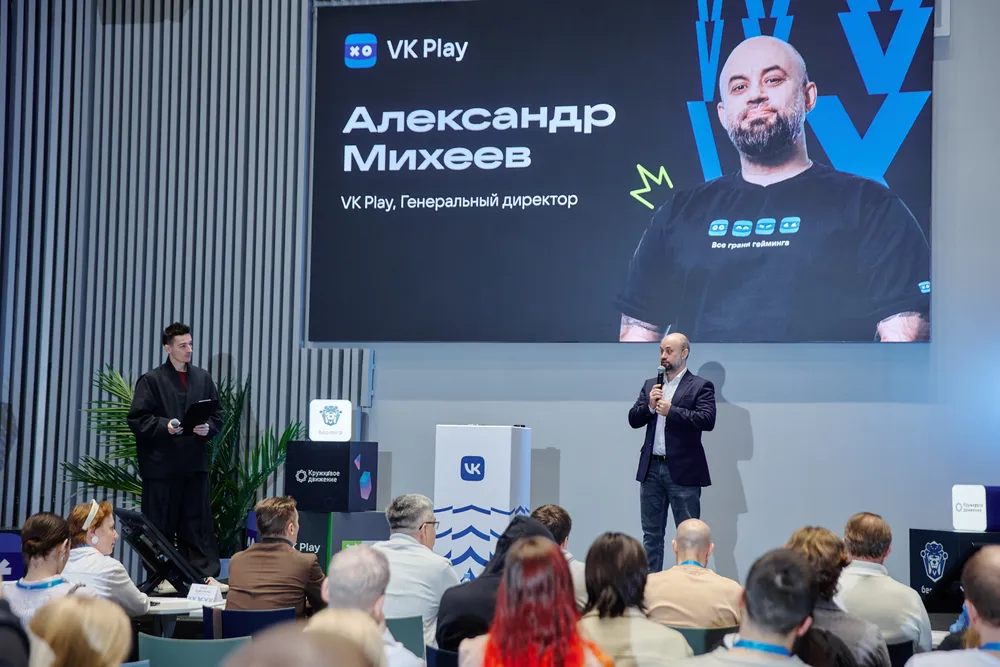
"This is one of the few programs in the country that systematically brings together young developers, game industry experts, and industrial clients to create specific products. The final pitches clearly demonstrated a high demand and potential in the regions for creating such content. Now our key task is to help the best projects refine their games and successfully launch them on the market," said CEO of VK Play Alexander Mikheev.
A total of 82 game projects for Web and PC were registered for the accelerator from developers in 50 regions. Alongside the selection process, an online game jam took place where teams created prototypes of future educational games.
Next was a stage where, with the support of mentors and experts, participants refined their projects: improving game mechanics, UI/UX design, aesthetics, characters, integrating educational content, as well as testing game hypotheses, conducting playtests, and gathering feedback from players. As a result of the educational program, 28 top teams from 18 regions advanced to the final defense in front of industry experts, organizers, and clients.
"Participation in the accelerator is a sure step for young developers who have gone through the National Technological Olympiad, various competitions, expeditions, game jams, and want to make a professional name for themselves. Our program stands out from others due to its serious educational component — teams not only prepare game prototypes for pitching but also enhance their skills, growing as professionals under the guidance of industry experts," emphasized Dmitry Zemtsov, Vice-Rector of HSE University, Secretary of the Organizing Committee of the National Technological Olympiad, and leader of the NTI "Kruzhkov Movement" working group. "For the second year in a row, we are developing the indie game developer community around the theme of educational games and see how interest is growing, with more and more young teams ready to create not just interesting games but also to imbue them with an educational mission — especially when there is a real client willing to invest in the development of educational games."
In the final, indie teams and solo developers presented projects of various genres: from production simulators and visual novels to spatial strategies and multiplayer arcades. What united them was the theme of the accelerator, "educational games." Each project aimed to provide players with new knowledge and skills in areas such as artificial intelligence, robotics, programming, chemistry, space engineering, cryptography, history of arts, additive technologies, management of various agro-productions, and other relevant fields.
"IRI has been supporting the creation of video games for several years. In the current context of industry development, we see the special importance of young teams who will strengthen the personnel potential of the field and eventually become part of bright, unique domestic game projects. We believe that events like the accelerator and, in general, the 'Ursula' project, where you can not only try your hand at game development but also receive feedback from experienced mentors, will help them do this. In games, you can infinitely improve your ideas, game mechanics, and visual style. Acquiring new knowledge and experience, interacting with experts is an essential part of this process. Today we saw many great projects with good potential. Obviously, we invite accelerator participants to our prototype competition starting in the spring of next year. I remind you that the only limitation is the age of the applicant; they must be at least 18 years old," noted Andrey Voronkov, Deputy General Director for Social Advertising AIC "IRI."
In the VK Play nomination, experts chose a game with an exciting plot and gameplay, which, they believe, will appeal to the VK Play audience — the puzzle "D.I.V.O." by the team "Shiza GAMES" (Andrey Nasonkin, Maxim Ilchenko, Ekaterina Karaseva, Konstantin Platoshkin, Alexander Markov, Antonina Goskova, Anastasia Streltcova, Maxim Rolshchikov, Viktoria Kodintseva). The winners will receive VK Play featuring and other gifts.
In the nomination from the National Cyber-Physical Platform 'Berloga', among the games in the Berloga world, the best was recognized as the point-and-click quest "World, Chemistry!" by the team "Nakhimichili" (Darya Girfanova). The winner will be promoted at the NCPF 'Berloga' events and in school technology clubs.
In the special nomination from the Game Workshop 'Ursula' for authors of visual novels in the 12+ category, the best was the team 'Women in a Cube' (Yulia Bayborina, Yesenia Ushakova, Anna Vishnyakova, Timofey Zemtsov) with the project "Mendeleev's Secret." The team will receive assistance in creating and publishing an art book based on the game.
The partner of the Accelerator of Educational Games — the agricultural holding "Tavros" — named the best simulators in the field of agritech, for which the authors will be organized excursions to production and provided with financial support for game development.
Nomination "Happy Pig":
1st place — "Magnificent Factory", team "Micro Team Games" (Pavel Rudakov, Pavel Frolov)
2nd place — "Techno Pig Farm", team "TechnoGame Makers" (Anna Girfanova)
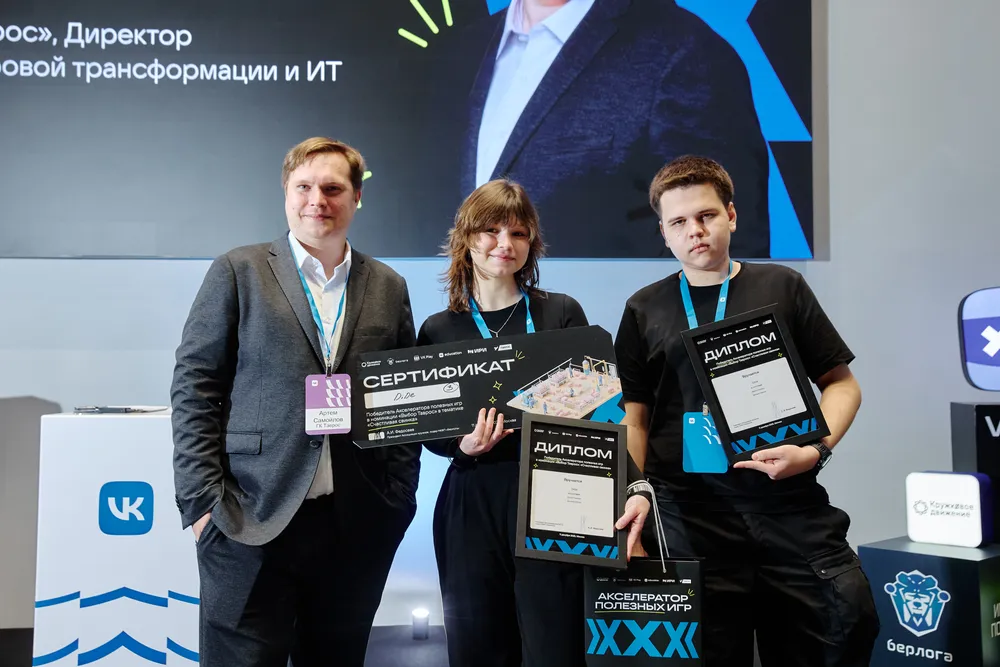
3rd place — "HryuCraft", team "DiDe" (Danil Gvizdon, Dinara Hafina)
Nomination "Poultry Farm":
1st place — "Cosmic Poultry Farm", team "Jetcode" (Andrey Nilov, Andrey Kireev, Timofey Krivtsov, Maxim Bolshakov, Ekaterina Sumenko, Evgeny Afanasyev)
2nd place — "Good Factory", team "Rurikovich" (Oleg Kildyushov, Olga Kuleshova)
3rd place — "Yarkovo Farm", team "Pumpkin Raph" (Mikhail Doronin, Alexander Leontyev, Anna Sershova)
Nomination "Sugar Factory":
1st place — "Sugar Factory Simulator", team "One in the Field Indie Developer" (Yaroslav Novikov)
2nd place — "Sugar Sky", team "teanochk" (Elizaveta Lancheva)
3rd place — "CosmoParty", team "Negative" (Ekaterina Nikolaeva, Anna Nikolaeva, Vyacheslav Biryukov)
"For the agro-industrial sector, it is crucial today to attract talented developers and show them real industrial tasks of modern production. Games are ceasing to be entertainment; they are becoming tools for education and personnel development, helping schoolchildren and students get acquainted with engineering and digital technologies, while employees of enterprises learn faster the standards, safety, processes, and new digital solutions. By supporting such projects, we invest in the future of the industry and shape a culture of technological thinking that is necessary for the development of robotics, AI, digital platforms, and modern agro-industrial technologies," highlighted Artem Samoylov, Director of Digital Transformation and IT of the Tavros Group.
All projects that participated in the accelerator can be found in the Game Workshop 'Ursula'.