
On Games and Literature: Expert Opinions from "Igroprom 2025"
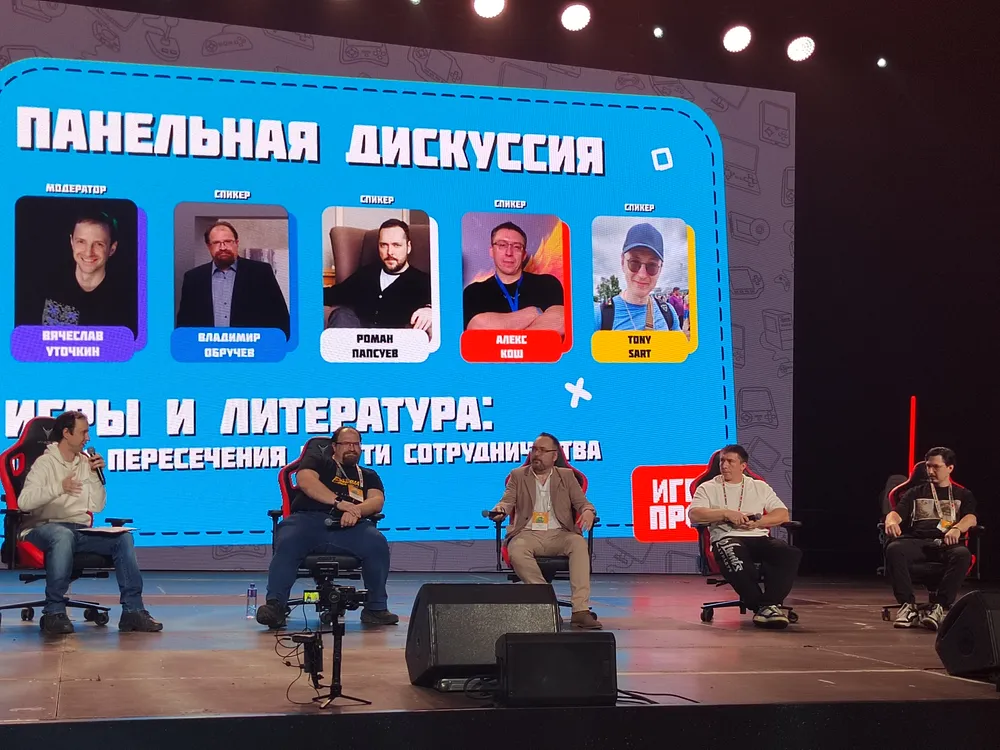
From September 19 to 21, the third edition of the "Igroprom" festival took place on the MainStage. Like the previous two times, developers, publishers, and experts from the gaming industry presented reports and sometimes engaged in discussions.
One of the discussions (on the last day of the festival) was a round table titled "Games and Literature: Points of Intersection and Paths of Cooperation." Participants included:
— Vladimir Obruchev, Head of the gaming division at the "Bombora" publishing house
— Science fiction writer Alex Kosh
— Co-author of the "Tales of Old Russia" project and co-author of the game "Immortal" Roman Papsuyev
— Creator of the MMO project based on Slavic mythology Anton Yakovlev, known by the pseudonym Tony Sart
— Moderator of the discussion, head of the gaming industry section of the Union of Russian Writers Vyacheslav Utochkin
Content of the discussion
After the discussion (which lasted about 40 minutes), I got the impression that the main, if not the only, "path of cooperation" between games and literature lies in making money in a parallel media space. All discussions ultimately came down to the question, "How much can I earn from this?" Questions about the creative and cultural value of potential adaptations (whether books based on games or games based on books) were met with considerable skepticism by the participants.
I understand that everyone needs to make a living — writers, programmers, and artists. Without money and, consequently, a paying audience to cover production costs, it is impossible to make a game or write a book. However, it's one thing to merely monitor the profitability of a project that aims, say, to attract new audiences or tell about an undiscovered (but intriguing) part of the franchise. It's quite another to focus solely on maximizing profit, thinking last of how the adaptation (or gamification) fits into the lore and plot.
Nevertheless, despite the fixation on profitability, the round table discussions were not limited to just talk about money. Participants addressed a variety of questions related to writing and the gaming industry. What is the best way to publish now — as complete books (including print) or in chapters (and on which sites)? What do authors think about visual novels as a transitional link between games and literature? Which books are most frequently accepted by publishers? (This question was primarily directed at Vladimir)
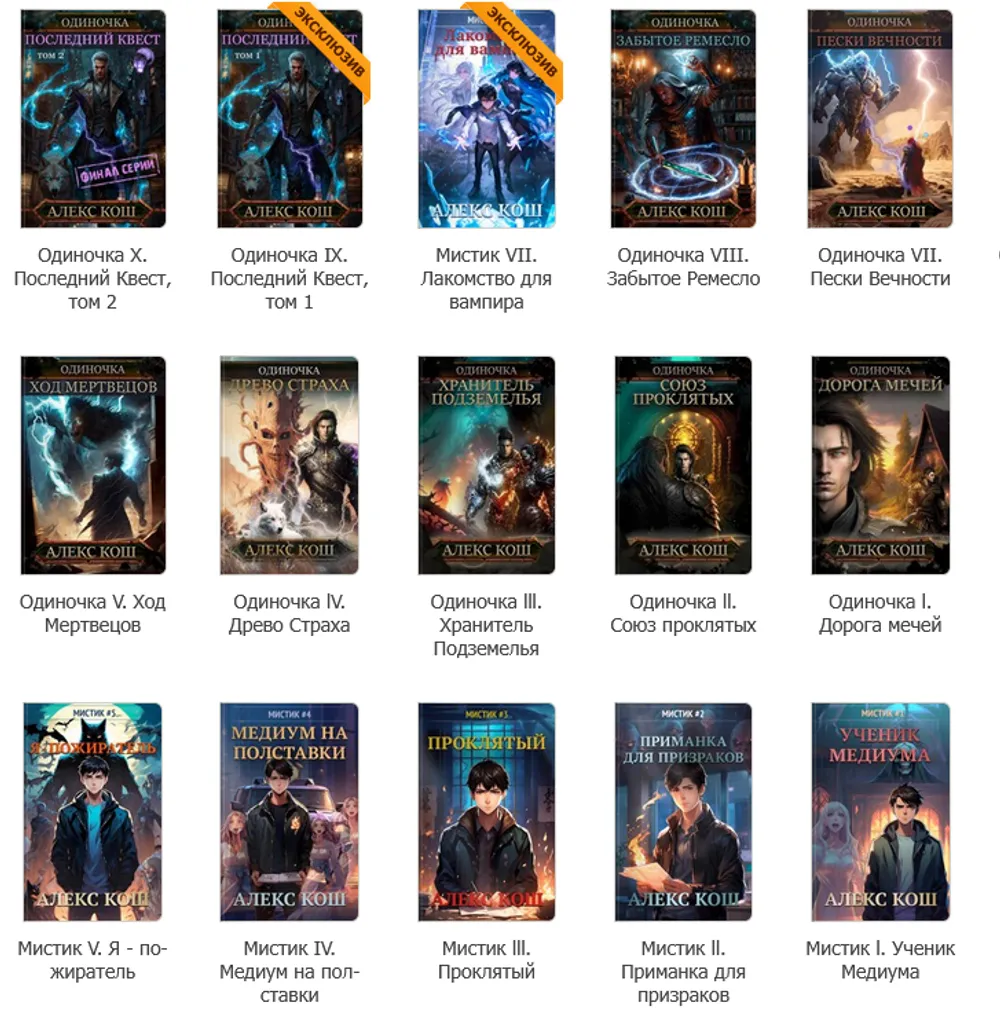
For example, writer Alex Kosh shared his successes in the LitRPG genre. He also discussed the nuances of this literary genre, where authors must not only deal with plot drama but also ensure that the mechanics of the combat system and character leveling are described interestingly and in keeping with the spirit of the games.
Roman Papsuyev spoke about the "Tales of Old Russia." By the way, he wasn't particularly eager to enter game development, but when developers from 1C approached him and offered to organize the process themselves, he quickly agreed. You don’t often get a fully formed team with experience, resources, and connections that will even pay for adapting your work.
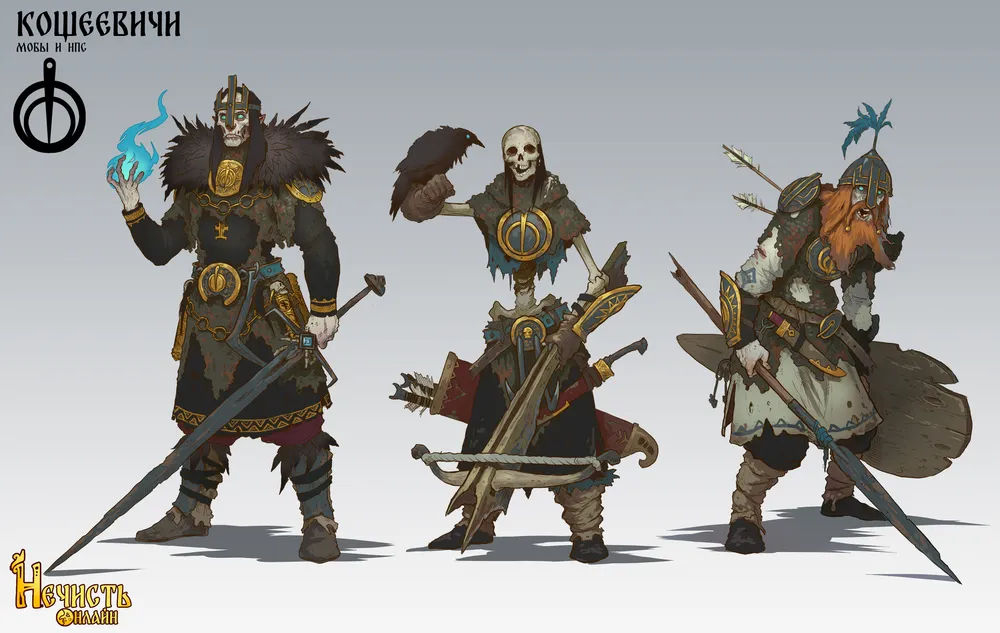
The only thing that inspires hope is that authors do monitor the quality of adaptations of their work. Roman is personally involved in the development of the game from 1C and stated that he would never hand over rights, even for decent money, if he doubted that the developer would understand the material and not go "off into the sunset." Meanwhile, Tony once collaborated with a group of fans who offered to work together out of enthusiasm but demonstrated the desire and understanding of how to adapt his books and illustrations into a game. Now they are working on it together.
However, all authors and publishers warn — even in the case of non-commercial projects, it is crucial to discuss rights beforehand. What belongs to whom after the adaptation's release and even if the project fails — someone may want to use the project’s developments. And if the game based on the book (or the book based on the game) is successful, it is highly likely that someone will want to move it onto a commercial track. The more nuances were discussed in advance, the fewer disputes and headaches there will be later.
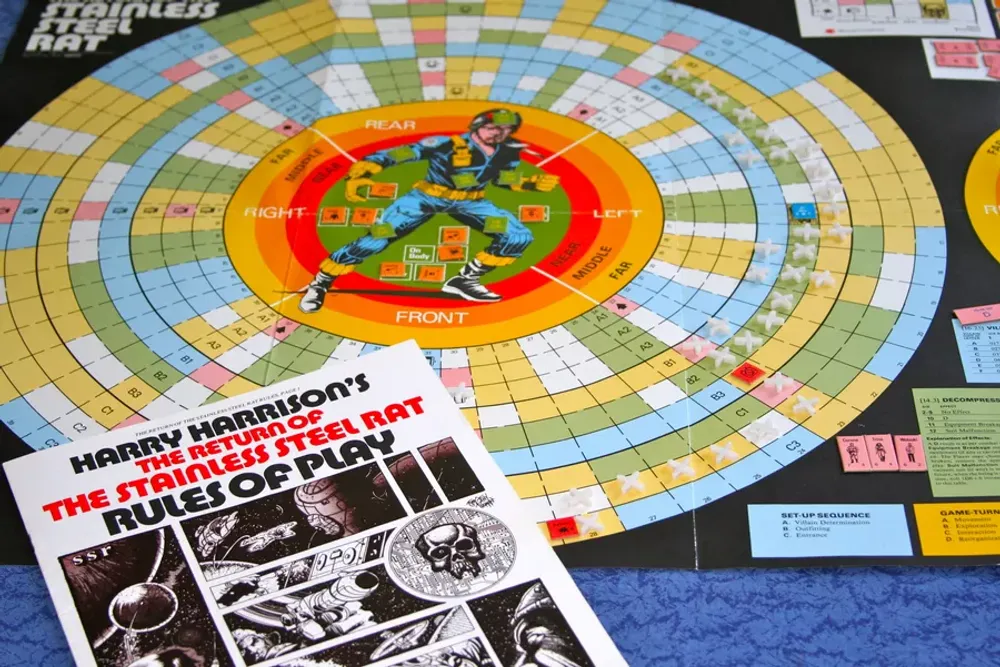
The round table also touched on non-fiction, which means books that are not literary but talk about game development or the games themselves or developers or even their methods. The value of the last group is not so straightforward — in different studios (especially if we're talking about small and independent teams), the approach to programming, game design, and other aspects of games can vary widely. It is not a fact that reading about how to create documentation or design levels will allow a person to apply this in practice with the efficiency described in the book. It may turn out that the process is not suitable for him or for the team where he works.
Opinions were divided on some issues. For instance, Roman Papsuyev and Tony Sart spoke quite skeptically about visual novels and game-books (with hyperlinks, this genre has found new life online). Despite both being writers and artists (which means they can create such games themselves, not counting sound design), they stated that they would not dabble in the VN genre. On the other hand, Vyacheslav Utochkin reported that he knows many examples of even novices making money (if not much) on such projects. Meanwhile, Vladimir from "Bombora" spoke about the 5% of authors that the industry relies upon and the rest who never achieve success.
In general, despite the financial slant of the issue (or perhaps because of it), the discussion was interesting. Nevertheless, the one-sidedness of the statements left me with a strong desire to ask questions about the topics that were overlooked on stage.
Questions for Vladimir Obruchev, Alex Kosh, and Vyacheslav Utochkin
Yes, I managed to catch three of the five participants of the "round table" for questions. Roman and Tony managed to slip away in an unknown direction. Therefore, I couldn't ask them why, being both artists and writers, they ignore visual novels and game-books, nor whether they consider some parts of their universes more suitable for games while others for books.
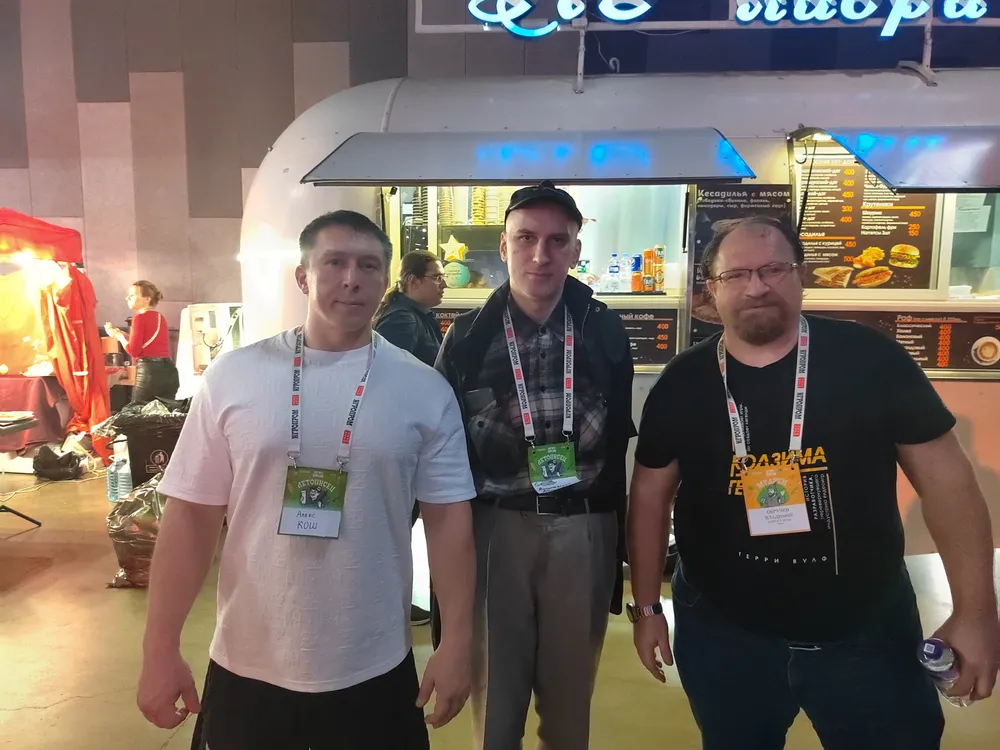
But I was able to ask Vladimir Obruchev from "Bombora" about his views on literature that expands the universe of games. Specifically, does he believe that such expansion can be more beneficial for a franchise than pure profit?
Vladimir responded that such questions should be posed by the creators of the franchise themselves. For him, as a representative of a publishing house, what matters is solely the paying audience and where it will come from. For example, the recently released "Prehistory of Enterprise 3826" received a "green light" from the publisher because it was based on Atomic Heart. A successful game and, most importantly, a well-known franchise name automatically made this book a bestseller, regardless of its literary merits.
Another telling example is Sergey Lukyanenko's novel "Competitors." It was made based on the space MMO game StarQuake, which few people remember today — there’s not much to remember about it. Moreover, the book itself was so-so. But the novel sold well due to the author's name.
Vladimir's main argument is the audience, who rarely remembers the names of screenwriters and authors of adaptations. If fans of "Ruses vs. Lizards" don't pay attention to who wrote the book based on the theme (yes, one is currently in development), what profit will the author have, besides the fee?
Creating a personal brand, attracting fans, gaining popularity — all this is a painstaking and lengthy process, according to Vladimir. And this process is more effective when creating original content rather than adaptations of someone else's work under contract. Rare examples of writers who have made a name for themselves with licensed books, such as Robert Salvatore with his series about dark elf Drizzt Do'Urden, are exceptions.
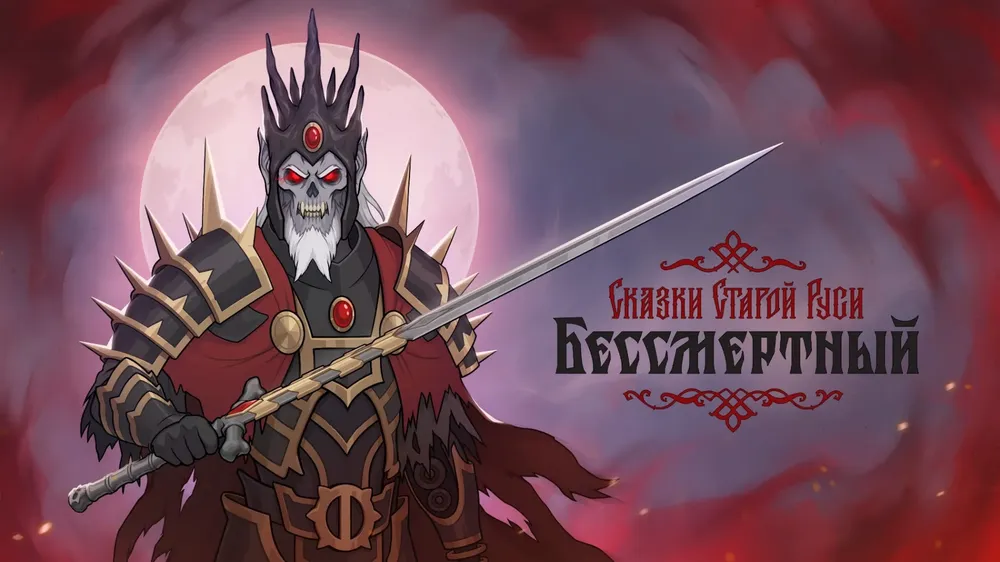
So publishers are only interested in projects that are guaranteed to have a fan base or fall into a popular trend — that also holds a high likelihood of strong sales. Moreover, if a publisher undertakes to distribute a book, they try to secure contracts for the complete package — both print releases and electronic versions online, as well as audiobooks.
However, visual novels and game-books do not interest publishers (at least literary ones) because their distribution model differs significantly from what is used for regular books. Such publishers would have to create their own department to handle the distribution of such projects. Therefore, to avoid costs, literary publishers simply collaborate with those who deal with distributing VNs themselves — they may even license a book universe (if the author agrees), after which all risks and labor fall on the developer studio.
This selective approach creates a rather interesting situation. On one hand, the publisher becomes very meticulous in choosing content, filtering out lesser-known and risky authors. On the other hand, well-known authors self-publish and demand the highest fees. So publishers have to look for that small "layer" of writers who have already shown some potential but have not yet "grown" enough to ignore the assistance of a publisher.
However, Alex Kosh, who joined the conversation, believes (as he mentioned during the discussion) that authors publishing online are a completely different category from "print" ones. And it is not only about the medium (as electronic books often come out alongside physical copies), but also about the format — on sites like Author.today, books are often released in chapters, with a certain regularity. Readers are even willing to support such "serials" by subscribing to the author on services like Boosty. It is crucial to maintain the pace and not keep the audience waiting.
Very few of those who write online in chapters later decide to publish a complete book on other platforms and even more so in print. And even when they do, their main audience consists of the same fans who buy physical books "for keeps."
By the way, this is also one of today's trends — people often follow their favorite writer and many are willing to purchase their works, even if they are unrelated to previous ones, written in a different genre, or are not books at all. Although the last point is not so straightforward, judging by the modest sales of "Immortal" based on "Tales of Old Russia."
Another current trend is the transformation of fan fiction into standalone works. Although this trend did not start today — just remember the book and film "Fifty Shades of Grey," originally fan fantasies about Edward and Bella from the "Twilight" saga. Recently, a similar fate befell Draco Malfoy and Hermione Granger from "Harry Potter" (more precisely, a romantic novel has already been released, while the adaptation is still in the works).
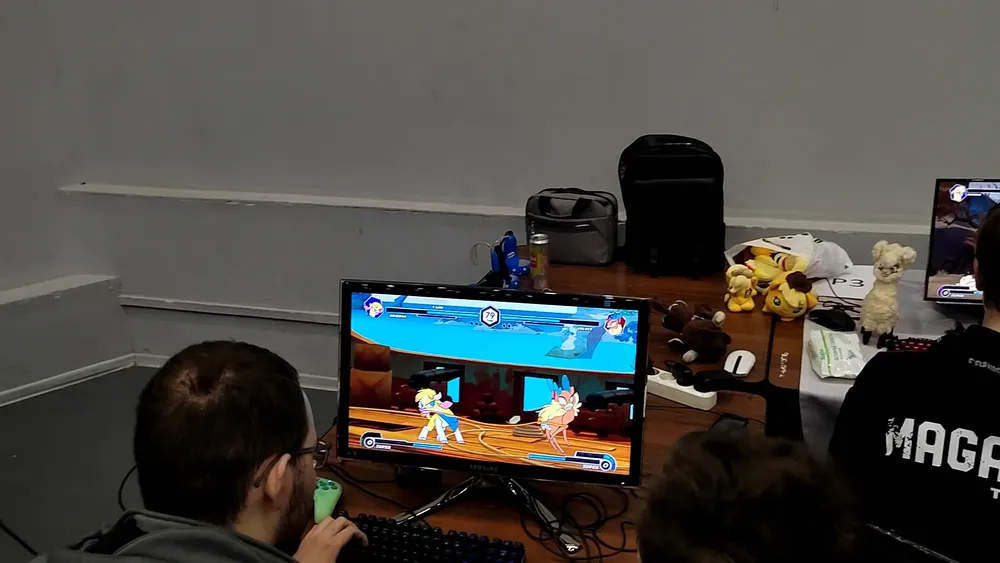
According to Viktor, modifying works to better align with trends or to avoid copyright issues is now among the few things that publishers can still offer authors in a world full of self-publishing and self-promotion opportunities. So "create and bring it to us," and the publisher will explain in detail what and how to adjust. If you hit a hot topic, your book might even become a bestseller despite the lack of a fanbase and "personal brand."
Finally, I managed to ask a couple of questions to Vyacheslav Utochkin, who, I remind you, acted as the moderator at the "round table." As not only the head of the gaming industry section of the Union of Russian Writers but also the general producer of the game studio Geeky House and the head of the program "Management of Game Projects" at the HSE Business School, Vyacheslav is well-versed in the interaction between games and literature from both sides. He has even created several visual novels himself.
From his point of view, visual novels, by the way, are one of the best ways to step into the industry. They do not require extraordinary programming skills or large resources (compared to other genres), but nonetheless, their development encompasses all aspects of game development and allows a novice to assess their abilities and even inclinations. After creating such a project from scratch, one can already draw conclusions — whether they want to work in the industry and, if so, what they prefer — engaging in narrative or developing gameplay or something else.
Regarding my question about expanding franchises, Vyacheslav provided examples like "Bunny," "Stalker," and even "World of Tanks." These adaptations primarily aimed at the audience's desire to learn more about the world described in the original source and to fill in the lore gaps, rather than quickly making money off a fan base.
Among potential candidates for "expansion," Utochkin named the novel "Rose and Worm" by Robert Ibatullin, the "Guardian" cycle by Pekhov, the trilogy "People as Gods" by Snegov, "Eternity" by Kamsha, "Day of the Oprichnik" by Sorokin, "Hour of the Bull" by Yefremov, and the inter-author cycles "Metronomicon" and "Ethnogenesis." Unfortunately, I am only partially familiar with the "Guardian" and "Hour of the Bull," but not enough to judge whether these books have a strong basis for game adaptation.
Overall, Vyacheslav reiterated the thesis of previous speakers that the main thing is actually creating new works and adaptations. After that, the audience will figure out for themselves how much they like the result. Literature and games are merely tools for self-expression that need to be skillfully used to imbue your stories with meaning.