
"The Celebration of Life." Review of Botanicula

It's nice that there are stable things in our gaming lives. Every autumn, [Need for Speed](/games?search=Need for Speed) and [Call of Duty](/games?search=Call of Duty) are released, Blizzard makes [Diablo 3](/games?search=Diablo 3), and each game by Amanita Design becomes a decisive argument in debates about whether a game can be considered art while still being a game.
[cut]
The main and, in fact, only hit of the Czech studio is Machinarium. Before it, there was the Samorost series and several educational flash creations, but they were known only in fairly narrow circles. The story of the mechanical world, released in 2009, visited all possible platforms and became a cult classic not only among indie game fans but also among adventure game lovers in general.
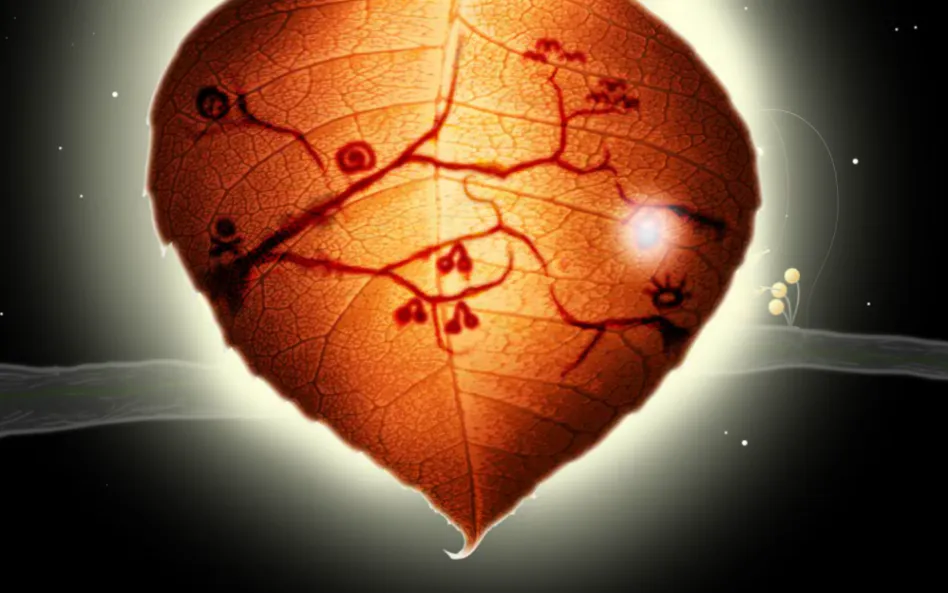
The biggest concerns were related to how much Botanicula would differ from Machinarium. The developers might cling to a tested formula, and the game could lose its indie charm, remaining just a beautiful shell of old ideas. There is no doubt about the beauty – the drawn worlds of Amanita Design are unmistakably recognizable among hundreds of others, as is the musical style – that beauty is not just visual. Fortunately, Botanicula is a delight not only for the senses.

Machinarium was a pure adventure game, and even the arcade mini-games kept it within genre boundaries. In Botanicula, the quest is just one of the elements in a diverse genre mix. The genre has changed, and so has the mood. Not so: the mood has changed so much that the game could not remain within the bounds of a simple adventure. Previous creations by Amanita were unified by a certain narrative lightness. There are opponents, but they are perceived as nothing more than street hooligans, and the main story was viewed as a backdrop and link between locations. Well, it’s time for true evil.

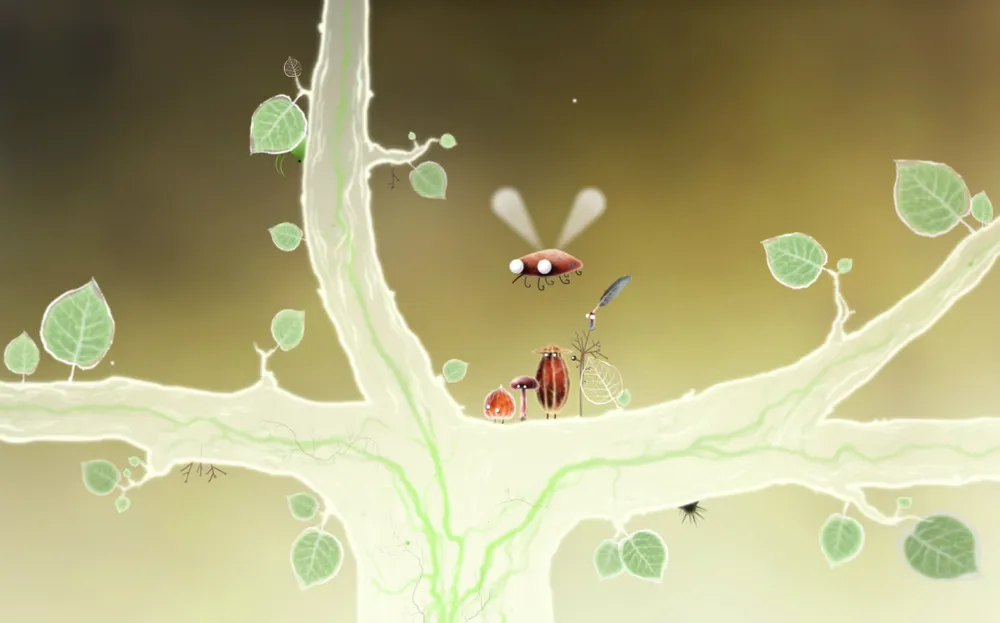
Everything as it should be: black, ancient, striving to destroy all living things, even if on the scale of a single tree. For many thousands of beings, this tree is the entire world. Such a problem cannot be solved by a solitary hero, which is why we control a whole, I dare say, party. Mr. Tuber, Miss Mushroom, Mr. Acorn, Mr. Stick, and Mr. Feather. There’s no time to solve personal problems and build romantic relationships, so you can only personally get acquainted with your party members through a series of official videos (these scenes are not in the game). The heroes arrive in the “village,” receive a storyline quest, and then explore the area and complete other missions to finish it and move on to the next story zone. Characters usually act together, but sometimes you will have to choose whose abilities to use to obtain the necessary item. The clearly defined storyline mission has solved an important problem: exploring locations (oh, those locations!) can be done without fear of triggering a plot event. The typical adventure puzzles like sliding puzzles and chess have almost disappeared, the degree of arcade mini-games has increased, and agree, such gameplay is not only difficult to call a quest, it's hard to even define it at all. And I haven't even said anything about the final stages. And I probably won't.
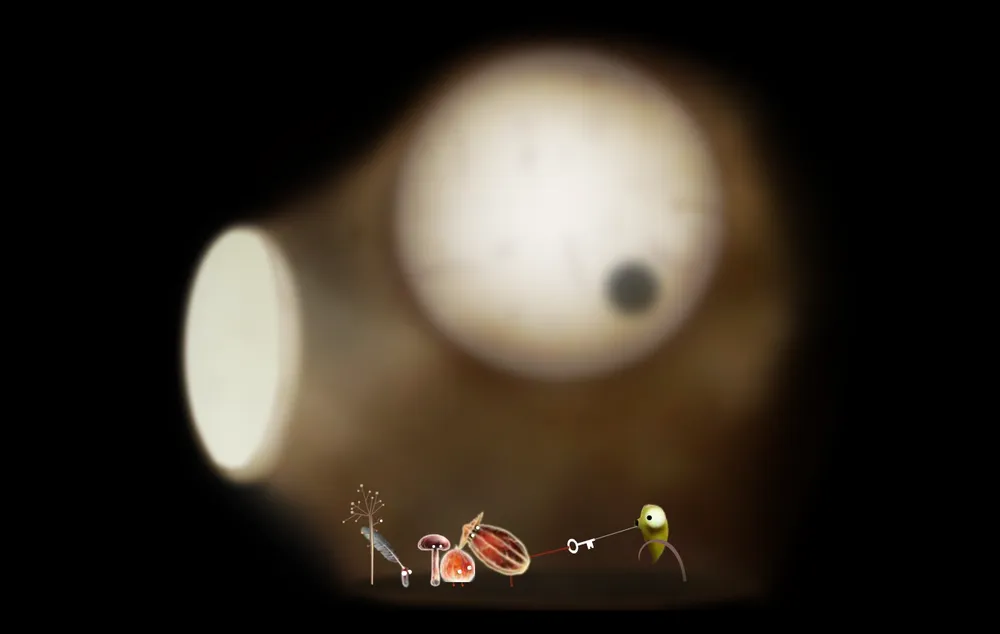
But don’t take the previous paragraph too seriously. Above all, it’s a world filled with crazy creatures, each engaged in a wildly important task and able to tell a crazy story. A crazy story, but one that is quite logical for the world in which it lives. Madness is a relative concept. In Machinarium, the beings were mechanical; here – how to put it, reminiscent of illustrations from a biology textbook. Interaction with the inhabitants of the world plays a vital role in the game. Owners of the Steam version are rewarded with achievements for certain interactions, of which there are 52 in total, but the main thing is not that: each such scene opens a card for the collection, and depending on the number of cards, a certain number of bonuses will be unlocked at the end of the game. And no, this is not a green ending. Although...

Botanicula is still an Amanita Design game, and all this running around is not limited by time or moral choices. Although the game world is in danger, evil cannot win in this fairy tale. Moreover, the inhabitants of the tree are much less afraid of the looming threat than the player. And nothing can stop the thoughtful clicking of everything in sight, which is so captivating only in Amanita games. What's more, even simply moving the cursor around the location brings immense pleasure. The reason lies in a technical innovation: objects do not just react to the movement of the cursor but consider the direction of that interaction. And without joking, you can get lost for half an hour just shaking the local pool and its inhabitants or for instance, creating waves in the grass stems. Those who have played Flower will understand me.
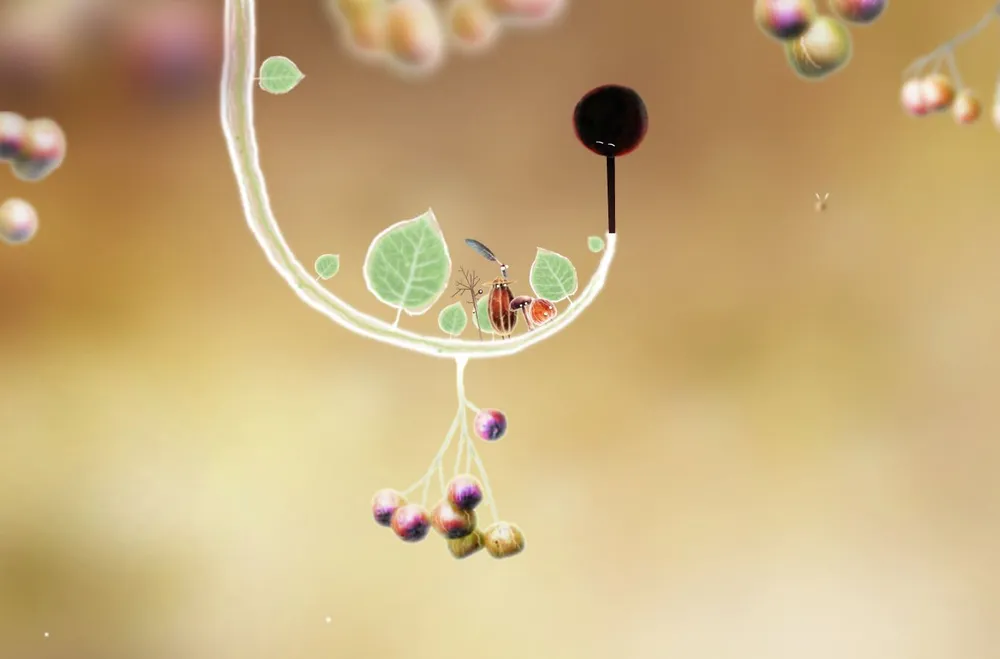
Yes, there are countless references to other masterpieces in Botanicula. Some will bring a smile, some will scare, and some will make you ponder. For example, I only now realized how close it is to “The Little Prince” by Saint-Exupéry. The same multitude of small stories, crazy and logical worlds, and the creatures living in them, behind their carefree exterior hides simple truths and plots, universal for all worlds. Such feelings can be found in many indie games. I can immediately recall Braid, [World of Goo](/games?search=World of Goo), Limbo, Flower, Journey... But nowhere does this theme resonate as loudly as in the works of Amanita Design. An absolutely essential experience for everyone who...
Though, why be modest: for everyone.