
Preview of Sid Meier's Civilization: Beyond Earth
"The planet is approaching. From this distance, it looks like Earth. But that shouldn’t comfort me. Comfort is the path to weakness, and I cannot tolerate weakness. We have prepared for a meeting with a new world, but that is not enough. If we want to survive, we need to learn more. To be vigilant. To adapt."
– Vadim Petrovich Kozlov's personal journal. Excerpts from the settlers' archives. Slavic Union.
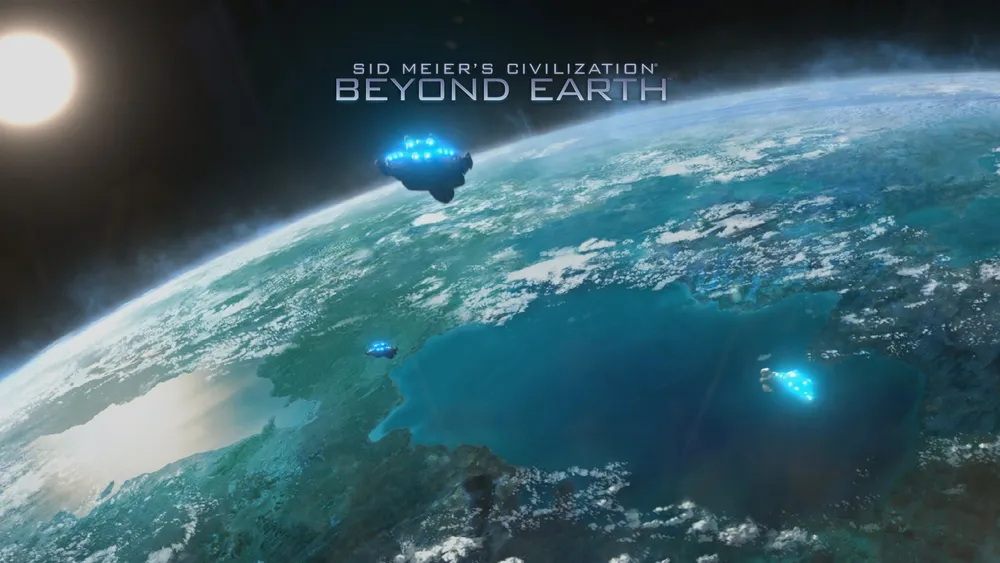
This is how the story begins!
On October 24 of this year, Sid Meier's Civilization: Beyond Earth will be released. The ideological successor of Sid Meier’s [Alpha Centauri](/games?search=Alpha Centauri), but not a sequel. The ideological successor of Sid Meier’s Civilization V, but not an expansion. "What kind of creature is this?" – you might ask with a tremble in your voice. Look to the skies, fools. A bright beam from the spotlight struck the clouds, and my sign shimmered among them. It means my time has come. So watch and listen!
At the age of 7, I was introduced to the game Sid Meier’s Civilization for the first time. The first computer game and the only one on which I spent more than three years of endless attempts to peacefully overcome my enemies. This was never successful. The First Stone, the Seventh Musketeer, the Second Sea, the Fourth Atomic – and all wars... and war never changes. I aborted a third of all rounds, unable to bear what the enemy was doing to my country. Another third ended in an unconditional victory. But what kind of victory was that? Radioactive plague lands; cities that barely numbered ten thousand inhabitants. Hunger, poverty, diseases. My armies marched through the conquered cities... but sometimes... sometimes before the absolute victory screen appeared, I managed to finish building the ship of last hope. I write all this with my characteristic irony now, but back then... back then it mattered. It was important to play as the Russians and send a ship to Alpha Centauri.
What does the storyline of Sid Meier's Civilization: Beyond Earth argue? It asserts that there were no Aztecs with nuclear missiles nor Mayans with robots, because that was a gameplay assumption, and in reality, everything was different.
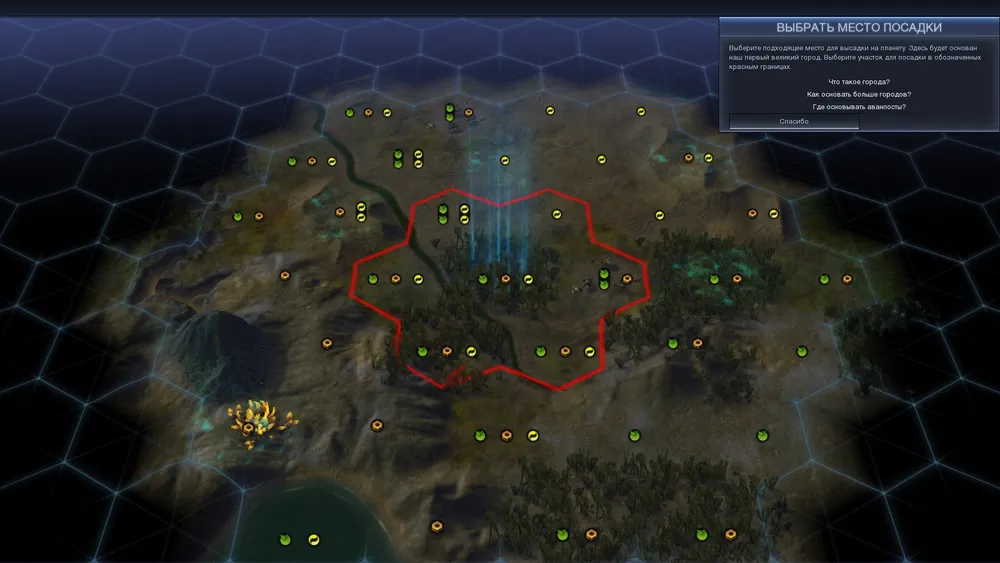
The ship with settlers will become the first settlement and the capital of the new world.
Fierce conflicts ravaged Earth. Unable to accept foreign doctrines and dogmas, and unwilling to allow the existence of other political and religious ideologies, people constantly made new and more sacrifices on the altar of war. Urbanization and industrialization made their corrections – wars changed significantly. Despite the fact that countries continued to exist, they took a backseat – now corporations ruled large territories. So it is no surprise that right after the Great Mistake, it was the corporations that became the sponsors of interstellar travel and took on the full power that had slipped from the weakened "hands" of governments.
In Russia, everything was not smooth either. The vastness of the territory saved the country from the horrific changes in the environment, and a strong hand of the government prevented the civilization from breaking into small shards. Forced to constantly intervene in Asian conflicts, Russia gradually changed its character, also adopting the name – "*Slavic Union*". The European Union disbanded, and the countries of Eastern Europe gradually began to trust the new union. Despite its Slavic orientation, many ethnic Asian groups entered the union voluntarily, retaining significant autonomy and their own governing bodies. The rising sea level and melting glaciers unexpectedly led to the elevation of the *Union*. Soon the union gained a reputation as the best in the world for building colossal infrastructures – the restoration of the Black Sea, the construction of the Volga dam network, and other giant projects provided valuable experience in construction under various conditions.
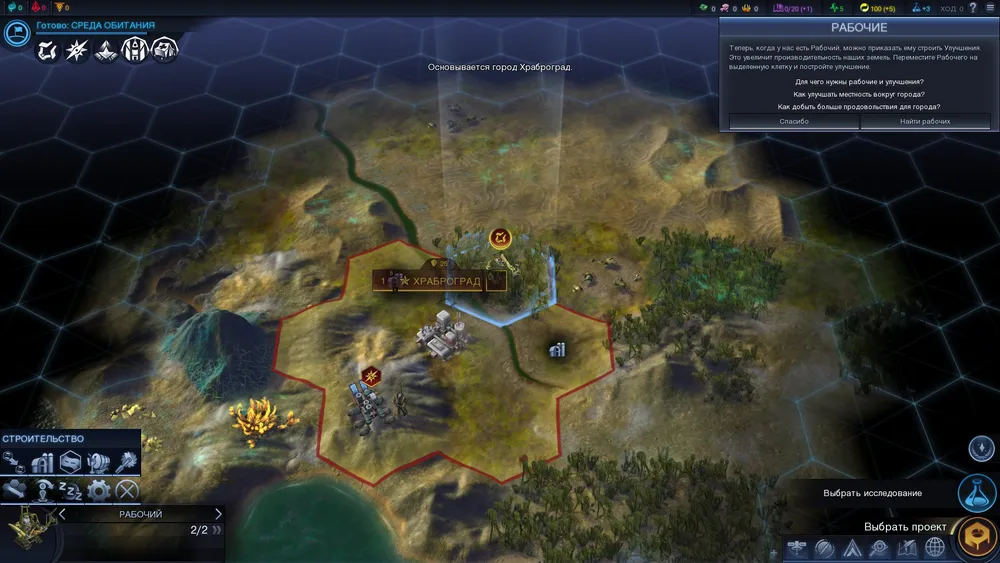
Slavic settlements are characterized by particularly pompous names. Bravegrad against some Shackleton. You feel it, right?
The Slavic Union also distinguished itself in the field of space exploration. Perhaps the legendary past played its part, or it’s just in the blood, but after unification into the Slavic Union, the best minds flocked to Roscosmos and incredibly large budgets were allocated, which led to a qualitative leap in space exploration. Based on these prerequisites, it was the Slavic colonization program that started one of the earliest.
Our interstellar journey will begin with the game asking to determine some initial data – first, we will be invited to choose a sponsor (one of the corporations). Sponsors replaced nations from Sid Meier’s Civilization V. The African Union will feed everyone, the Pan-Asian Association builds quickly, while the APK, born on the premises of the USA, is traditionally strong in its spy tricks.

Next, we need to determine the ship's crew. They can be scientists or creative individuals, laborers or aristocrats. Or ordinary farmers. It’s easy to guess that they also provide an initial boost to some resources.

After that, we need to choose the ship itself. Some are capable of detecting all life on the colonized planet, while others are equipped with especially powerful energy installations or resource scanning equipment. Every correctly chosen bonus can either ease startup conditions or complicate them.
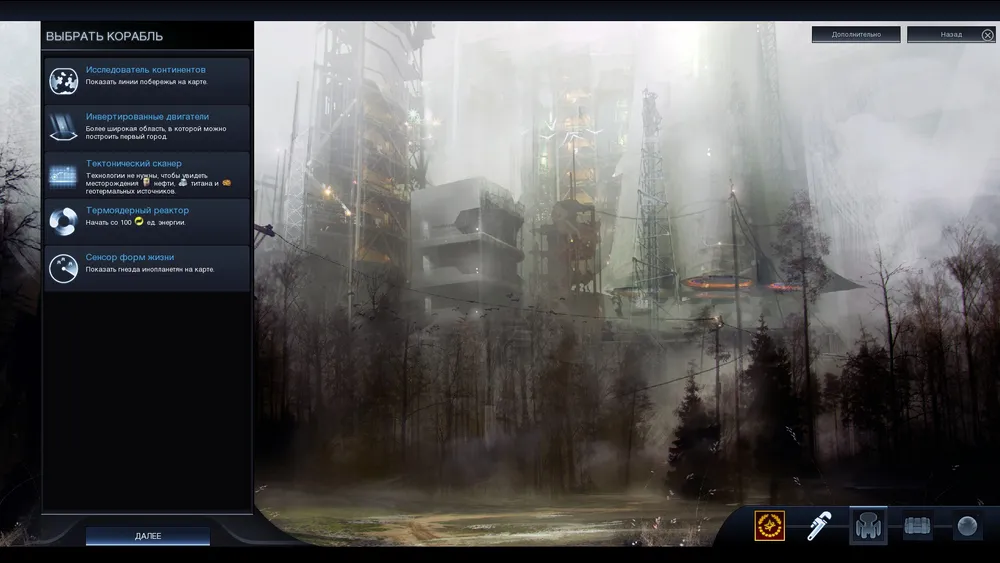
A ship with settlers is not a ship with settlers if it is not equipped with the right tools. Therefore, another thing we need to determine is the special cargo of the ship. Weapons, so one extra settler becomes a soldier. Or tools, so he becomes a worker. Or perhaps instead of cargo, we can place a hydroponic garden, allowing us to take more settlers?
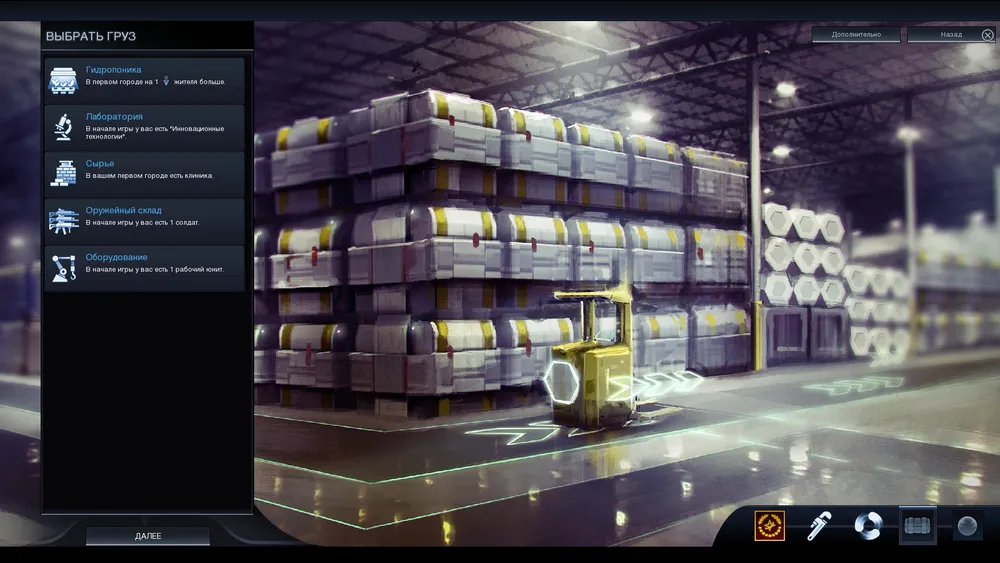
We just need to choose the planet to which our ship will go (this is how they disguised the world generation, if anyone didn’t understand – archipelagos, continents, and islands are in place), and then we are off! But this is still not the end of generating your "character". "Make a choice" – seems to be the official slogan of the game now. As soon as your ship hovers in orbit of the new Earth, the system will prompt you to choose which Perfection (direction, doctrine) the development of technologies will follow. There are three of these perfections – Righteousness, Supremacy, Harmony. The path of Righteousness is to respect the old Earth and strive with all might to remain homo sapiens; it calls to "transform the planet for people, not people for the planet". Supremacy demands that its adherents worship neither the new Earth nor the old one. If the situation demands, a Supremacy adherent will transplant their brain into a more resilient to the environment metallic body, or at least replace their lungs with artificial ones capable of breathing in poisoned air. Adherents of Harmony must love the new homeland, cherish, protect, and defend its inhabitants. Settlers must cease to be inhabitants of Earth and become inhabitants of the new planet. And if that means "ceasing to be an Earthling," then so be it.

Another direction of development that should be paid attention to. Points level up through culture points, but in reality, it’s just a mix of the same from the fifth civilization. Here you get: a free worker, a free settler – all together with other small bonuses.
In reality, the Perfections also have more to offer, for they influence the plot, the ending, and the appearance of your people, and even your leader, who might unexpectedly start to shine with a mechanical eye or gills. And yes – you heard correctly – a plot has appeared in Civilization.
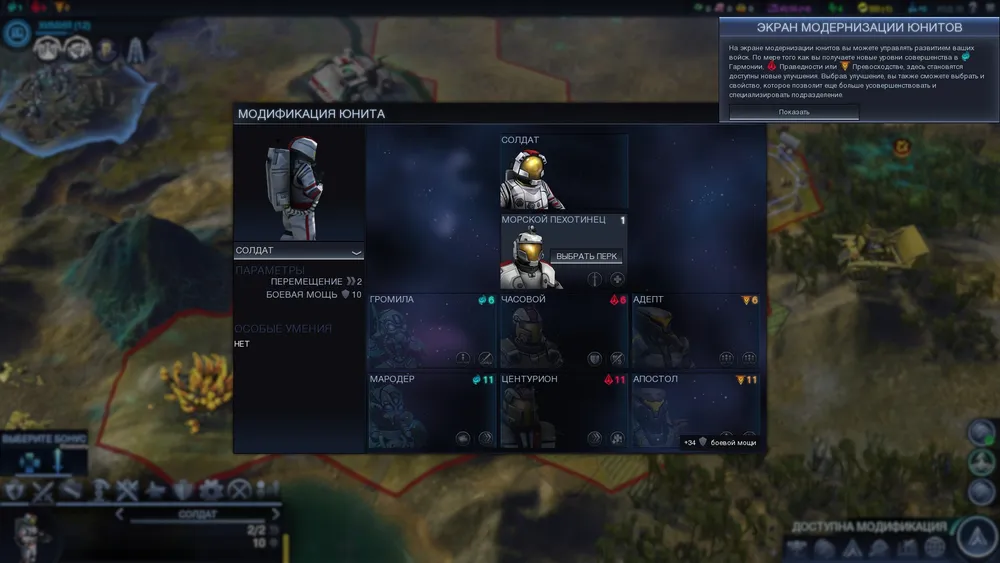
Another aspect influenced by Perfection and which continues the story of unit upgrades – unit upgrades. All combat units in the game have a modification screen, where you can choose the development path of the units, as well as their special abilities.
The technology tree has been completely redesigned. It’s understandable, people with blasters no longer need to discover fishing and the wheel. The tree now represents a web, where you need to move from the center outward, but for each studied technology there are one or two deeper levels. Thus, after studying chemistry, you can delve into biochemistry or go further. And from simple robotics, transition to combat robotics. Some studied technologies also add Perfection points, not significantly, but hinting at which direction to progress. Supremacy gravitates towards military sciences, while Harmony leans into genetics and biology.
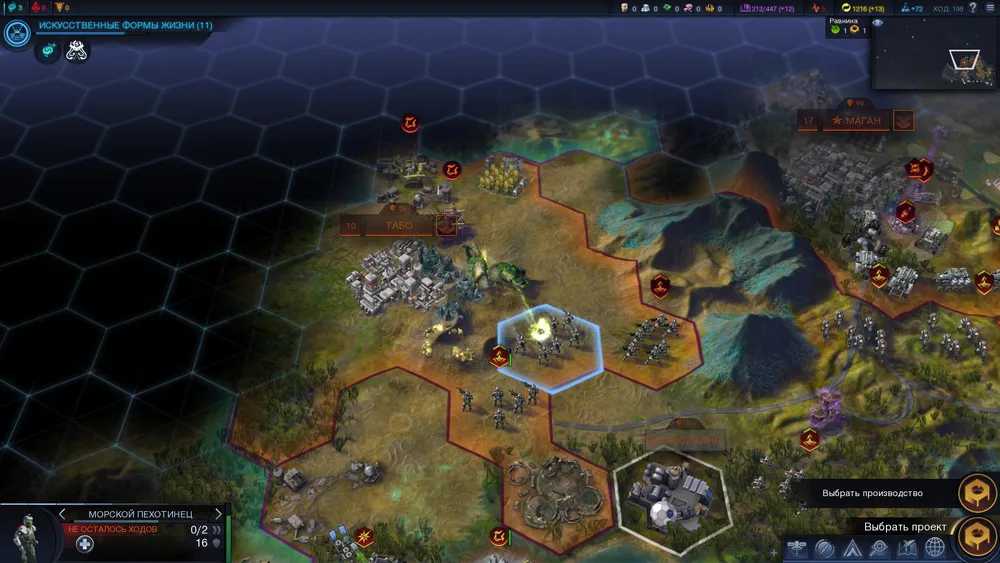
Safari with the planet's wild inhabitants now occupies a significant part of the early game
The endings according to the Perfections are quite obvious. The task we have at the very beginning states that we need to settle in and find a way to bring the rest of Earthlings here. Based on this, it is not hard to guess that the only ones who will not deviate from this task are those who chose the path of Righteousness. How they will accomplish this and what the others will do, I won't tell you, but guessing, I repeat, is not hard.
Moreover, within the plot itself, there are plenty of side quests. For example, as soon as you settle on the planet, you will need to find a way to communicate with old Earth. Or discover the reason for the disappearance of the indigenous inhabitants of the planet, to which, by the way, your scientists will also have questions. After all, they assert that it is somehow alive.
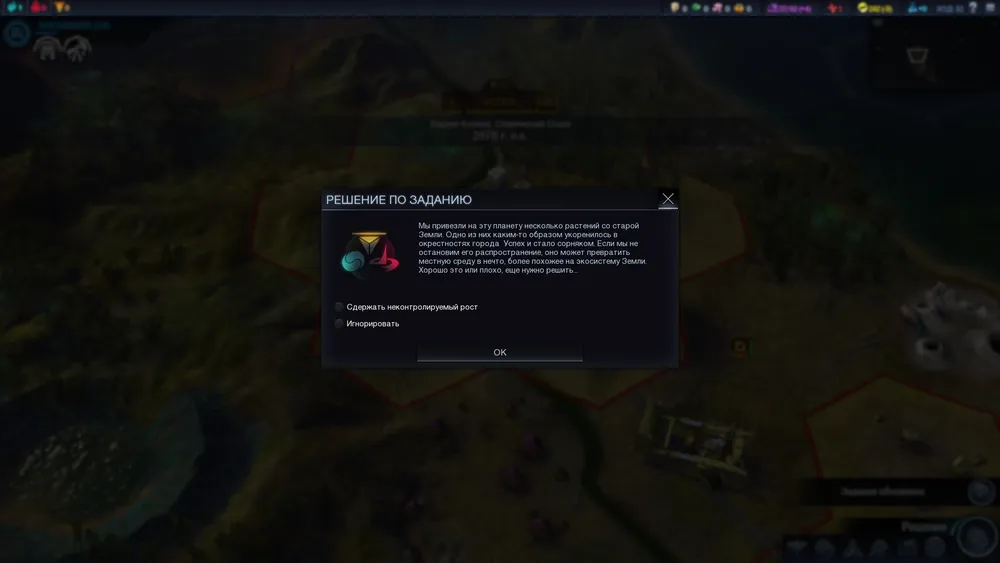
One of the accompanying quests in the game
As the leader of the new people, you will constantly be tormented by minor decisions (the motto of the game, remember?). Fishermen found a way to catch more fish, but it harms the ecology – a choice. Shelter the refugees, test them, or turn them into fertilizer? A choice! More serious situations also occur. Creating an archaeological expedition at ancient ruins, you may suddenly receive a message that your people discovered something, after which communication will be cut off. How will you proceed? Will you immediately send a rescue expedition, or will you first send a scout robot? Or will you try to forget this unpleasant history? Any of these decisions can have both pleasant and unpleasant consequences.
Despite all the futuristic and futurity, Beyond Earth does not even attempt to hide that it is primarily Civilization V, and only then a new game. And although the cities here proudly bear the name of stations, they have remained cities in their urban essence. They are still founded by settlers; territories explored by scouts; workers working... and soldiers remain to fight. The civilization of barbarians has receded into the past of Earth, and in its place has come the local fauna. Giant insects, worms, and other creatures – they have nests, they prowl the map, and if you don’t bother them, they might not even notice your people. They generally ignore those who chose the path of Harmony, but intuitively hate the representatives of Supremacy. Neutral aliens can be warded off with an ultrasonic barrier, but if you provoke a siege worm, then it will be the end. This underground dweller destroys your stations to the ground in mere turns. And the Perfections here offer absolutely different paths. If Supremacy gives ways to destroy the worms, then Harmony will allow you to lure them into service. "Tearing down foreign stations to the ground" – is the path of Harmony.
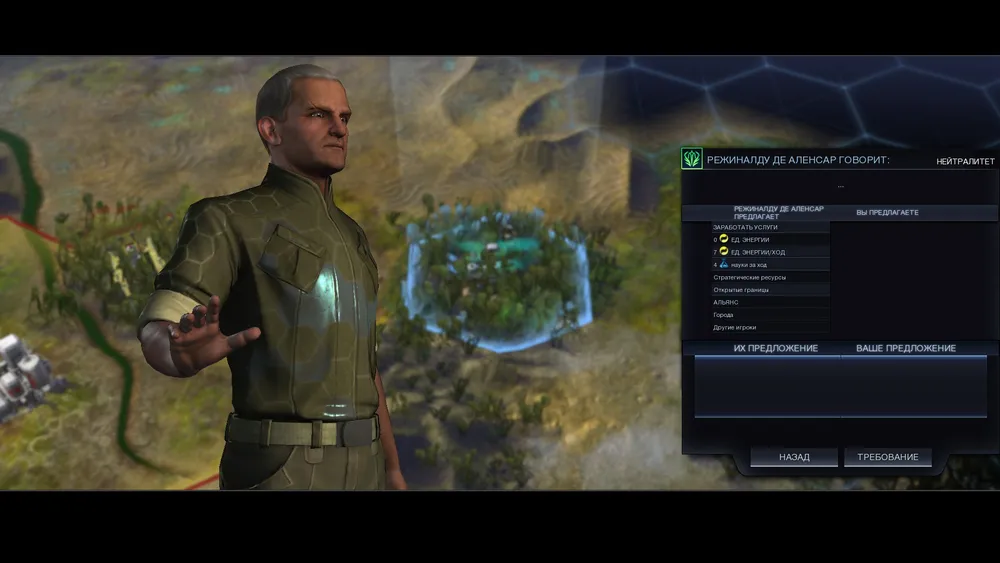
Diplomacy has not changed much. Apparently, the developers believe that it already works perfectly
In place of oil has not come some incomprehensible biomuck. But now we also harvest firaxite, chitin and other fantastical resources alongside copper, fruits, and corals. The role of gold is now played by energy, which is not surprising. In essence, little has changed. Well, yes, now money is generated not by banks and markets, but by power plants. Energy is spent on maintaining buildings and troops, and it pays for deals. And what has fundamentally changed? To complicate the game, dangerous miasmas are now highlighted on some tiles, which damage all living beings. But the same harmonists will sooner or later learn to breathe these miasmas, while the others will need to explore special technologies for eliminating infection hotspots.
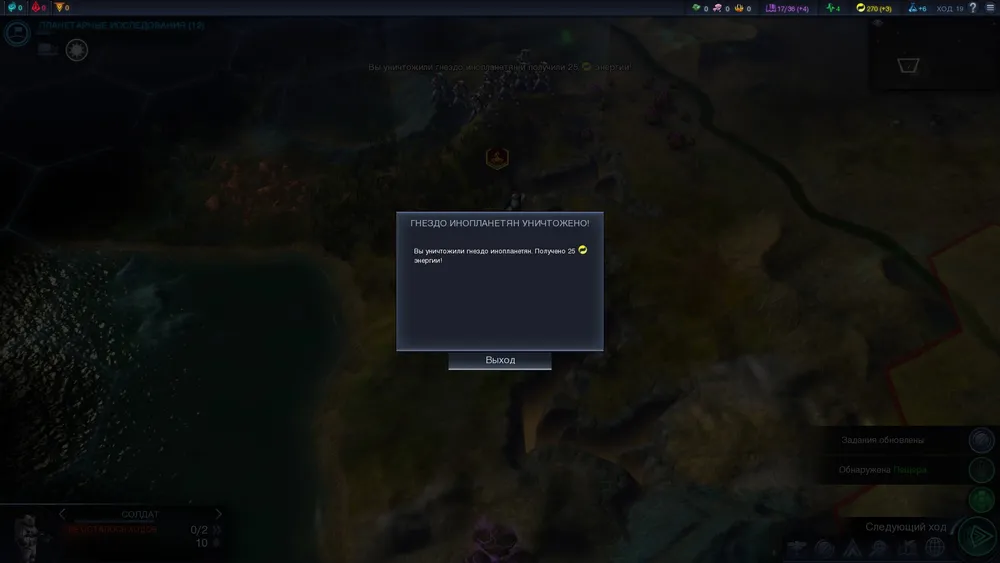
By the way, energy is a sloppy rework of gold. And health level is a similarly sloppy rework of happiness level
Details. There are so many of them. They do not hesitate to change even the basic concepts of Civilization V, what to say about the internal mechanics of the game. One only old hexagonal map has expanded due to the second level, where satellites from different directions fight for spheres of influence. Some increase the growth of extraterrestrial carrots, while others act as aphrodisiacs (anaphrodisiacs) for the inhabitants. They descend from orbit and crash to the surface, and those processed right on the spot of their wreckage bring in some resources as well. Countless little things. Now there’s a valuable resource in diplomacy – service. By providing a service to other settlers, you can soon demand something in return. And having accumulated services, you can even decide on some serious demands. Also, diplomacy here is traditionally supported by spy dealings, the effectiveness of which is sometimes simply frightening.

In Sid Meier's Civilization: Beyond Earth, there seems to be a huge foundation for future achievements. The gaming experience remains the same only when viewed from a distance. Virtually everything has changed and been redesigned. The game has become more nonlinear – the tried and true schemes for quick victories no longer exist. Everything will have to be learned and tested anew. Whether players will appreciate the attempt at improvisation, or if we will never see experimental projects under the banners of Sid Meier and Civilization – all this will become clear at the end of October. I can only responsibly state that I am looking forward to the game's release to complete it fully. Several times.