
The Inquisitor. A Tough Job
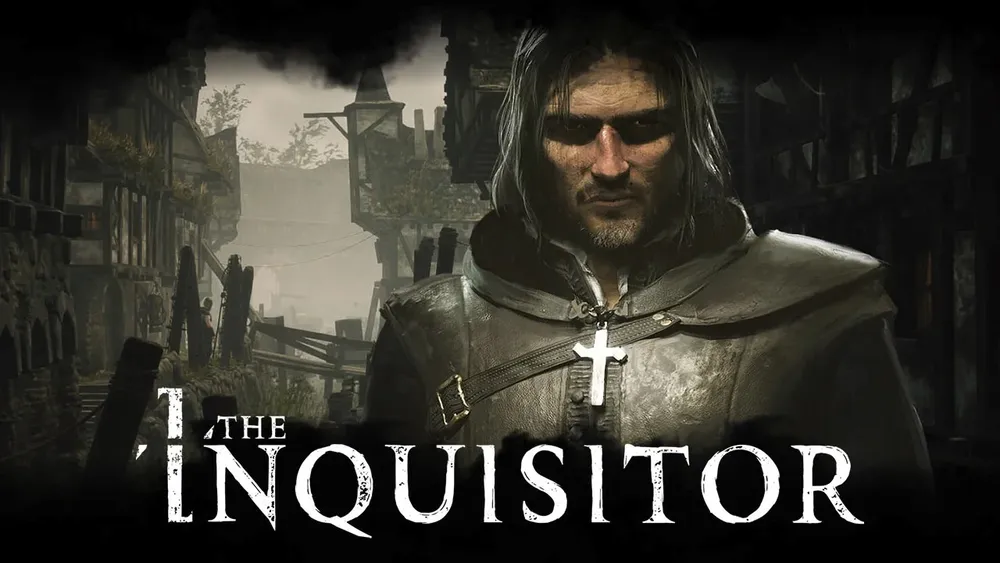
The publishing house Kalypso Media in collaboration with the studio The Dust S.A. released a new game this year.
It is based on the books of Polish writer Jacek Piekara from the "Inquisitor" series.
The Inquisitor is a narrative adventure game with action elements, designed in the style of "dark fantasy," where players will face complex moral dilemmas. The action unfolds in an alternative (religious) universe.
Polish developers have long been trying their hand in the gaming industry. Their perseverance is rewarded with successful projects, like those from Techland, which released first-person action games such as [Call of Juarez](/games?search=Call of Juarez), [Dead Island](/games?search=Dead Island), [Dying Light](/games?search=Dying Light), and others.
Let’s also mention CD Projekt RED, which has gradually conquered the world with games about the witcher Geralt, while also making Andrzej Sapkowski's books more well-known in the West.
It’s possible that yet another Polish company was inspired by this success and decided to create a game based on the books of another Polish writer. Especially since the author’s idea is quite extraordinary and can attract public attention.
The authors chose not to make an RPG but position their project as an adventure game with action elements.
Since the game world is based on the works of Jacek Piekara, the developers did not have to invent a universe; they only needed to find a successful adaptation of the literary basis in the form of a game.
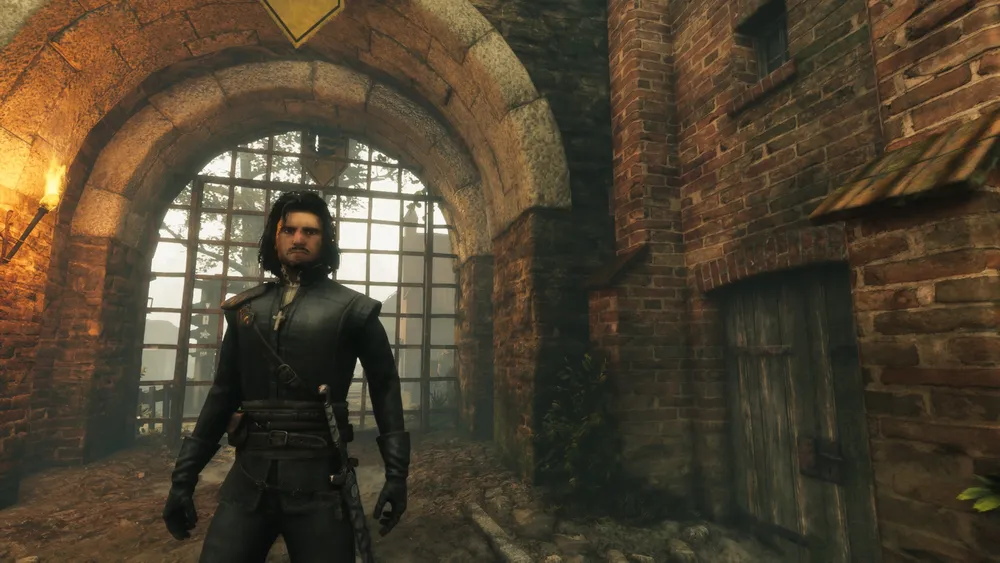
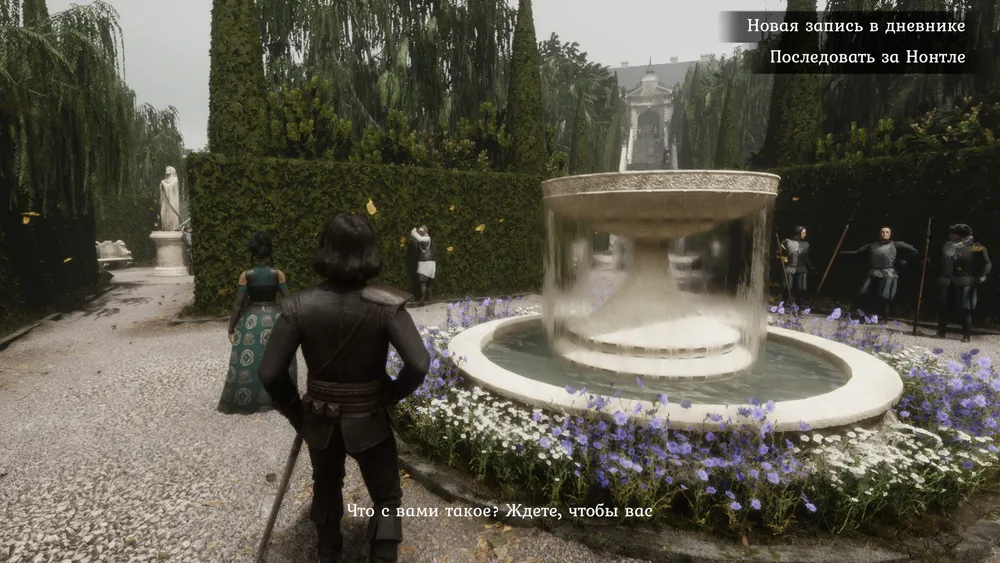
At first glance, one might mistake this world for Europe in the 16th century. Therefore, there’s nothing fantastical in such basic details at first glance. We can expect that gameplay will resemble detective stories, where the player, in the role of an inquisitor, investigates various incidents.
The chronology of this world is harsh: Christ did not suffer on the cross but manifested aggression, killing the Emperor of the Roman Empire. Thus, Christianity in this universe is characterized by brutality rather than virtue and mercy. It’s not entirely clear how good exists and how good people live in this world, but the developers did not reveal all the details of how this world is structured. It's also known that magic, witches, curses, vampires, and other mysticism and filth truly exist here. Therefore, for a long time, dark entities have been fought.
And so the main character, Mordimer Madderdin, arrives in the city of Keningshtein on a mission from his superiors at the Sacred Office—to find out if there really is a vampire in the city, as rumored, and to eliminate the monster if it is true.
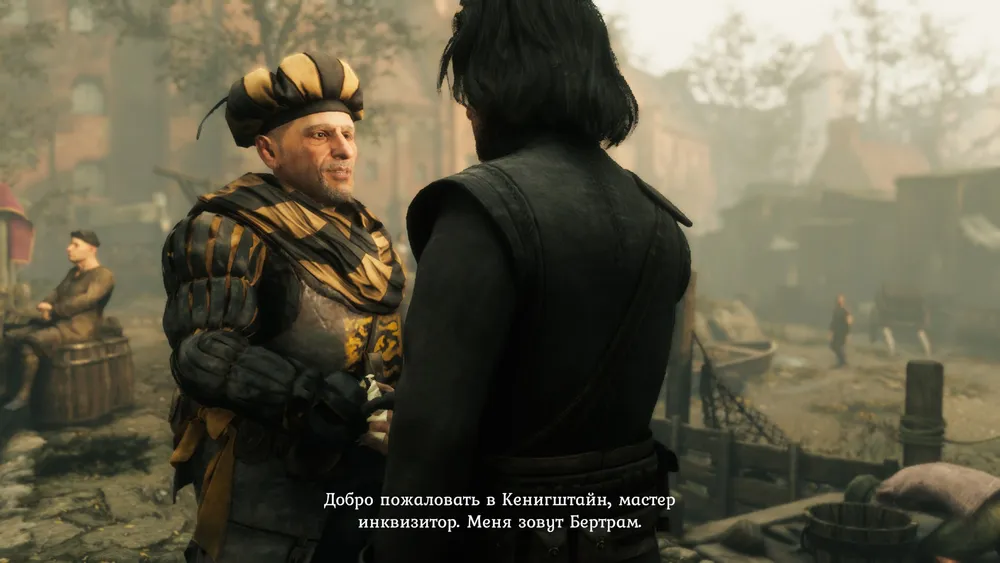
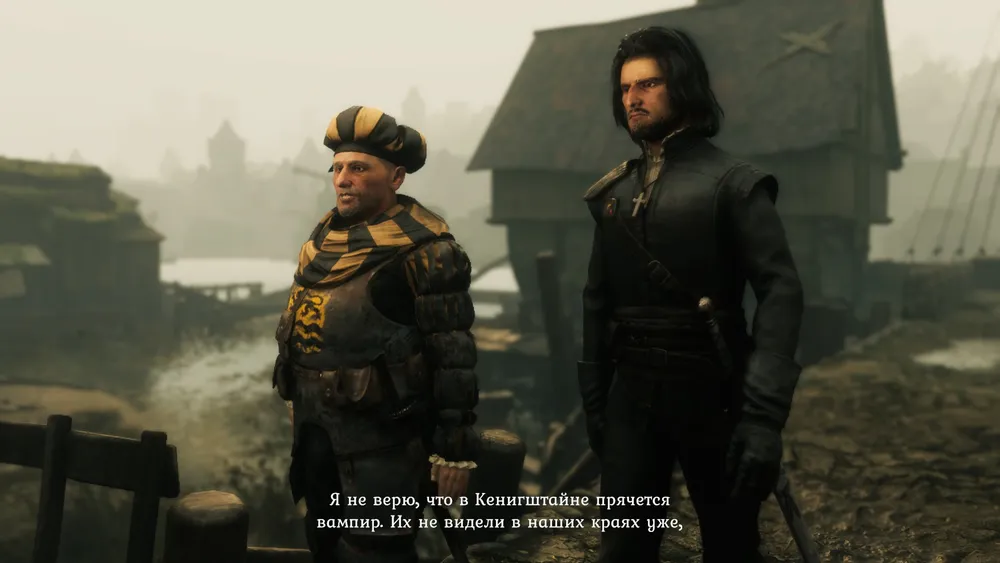
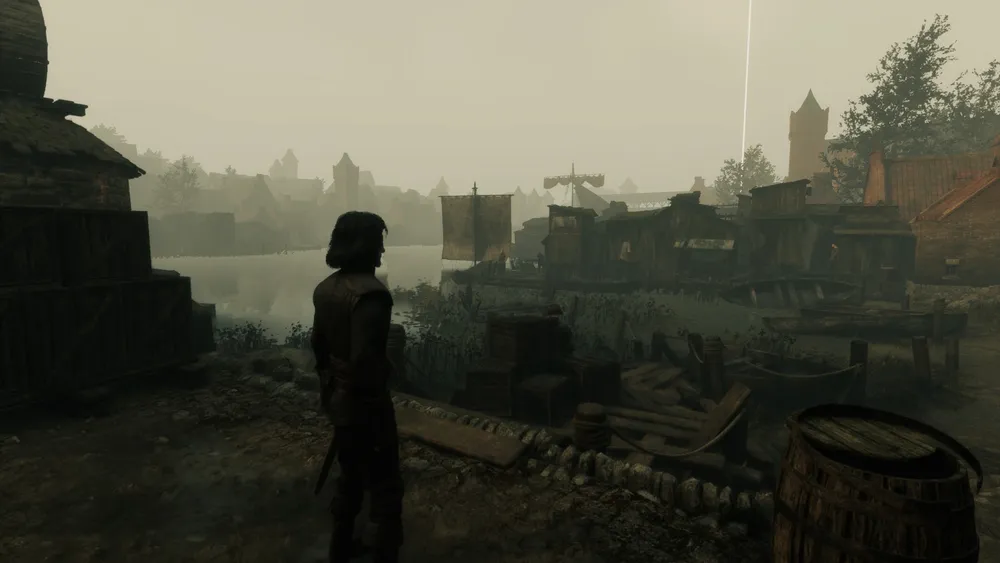
Events develop quickly. The inquisitor is met by the chief of the city guard, who informs him that the mayor is busy with some city event, so Mordimer will have to find him in the central square. Traveling around the city is pleasant: the architecture evokes familiar images from "The Witcher 3." However, freedom of movement is clearly limited. We do not have a game map, nor does the inquisitor have his own inventory. There is only a journal.
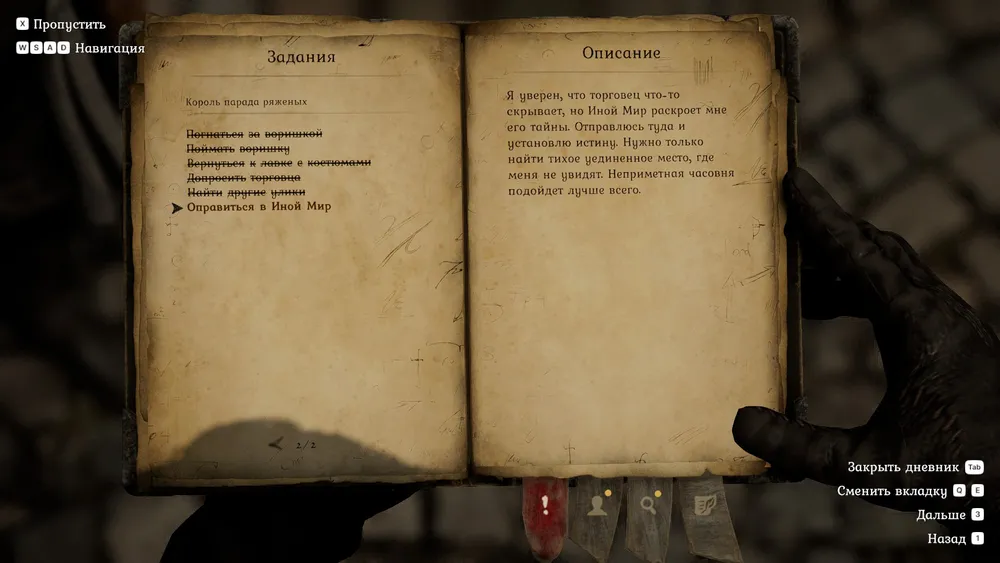
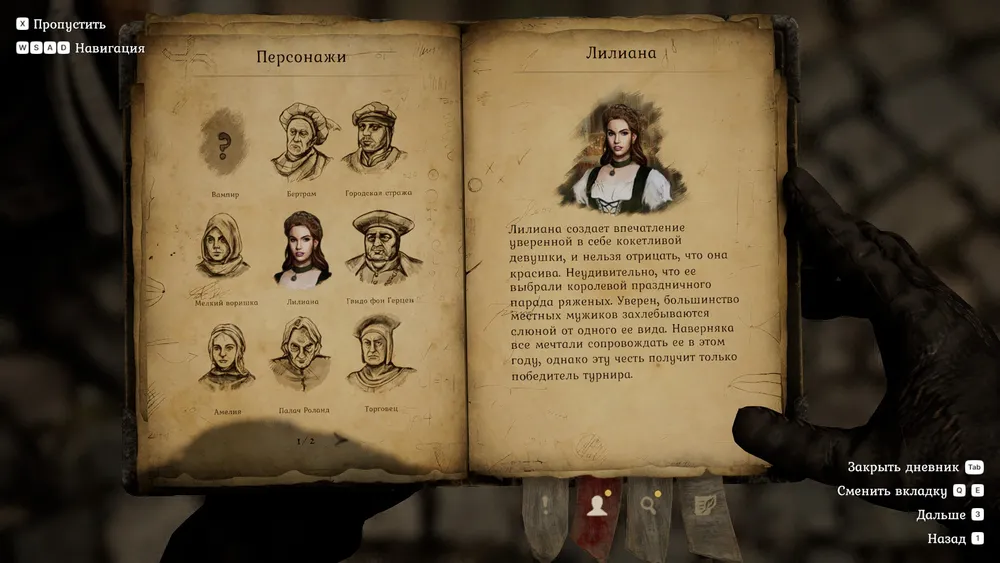
It has four sections: personal notes, characters/suspects, evidence/artifacts, and a task list.
Personal notes provide a brief summary of plot events and will be useful if details of the story need to be clarified and the chronology of some events restored to understand the current situation.
The list of characters and suspects is arranged with portraits. By selecting the faces of people, we can read their characteristics and Mordimer's assumptions about these characters.
Evidence and artifacts will acquaint the player with items that the inquisitor found at crime scenes during his investigations, and there may also be items from this universe, descriptions of which acquaint with the world of the writer Jacek Piekara.
The task list is organized simply: completed tasks are crossed out, and by selecting any task, you can read what needs to be done.

Finally, the inquisitor will meet with the mayor and explain to him the purpose of his visit to the city. Everyone will always be surprised by the suspicion of the existence of a vampire among them, since it is believed that they were exterminated a long time ago (at least in Europe, if I understood correctly).
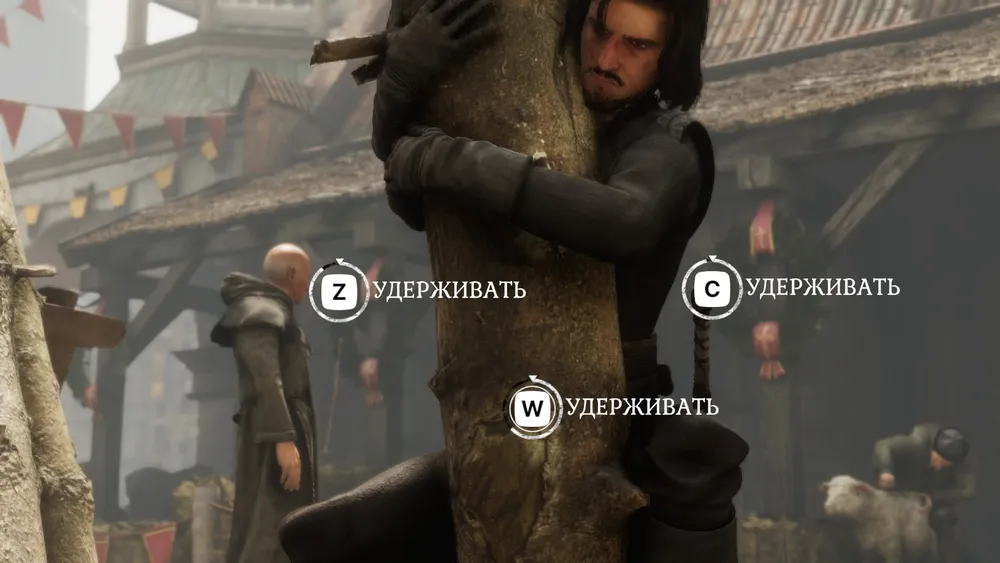
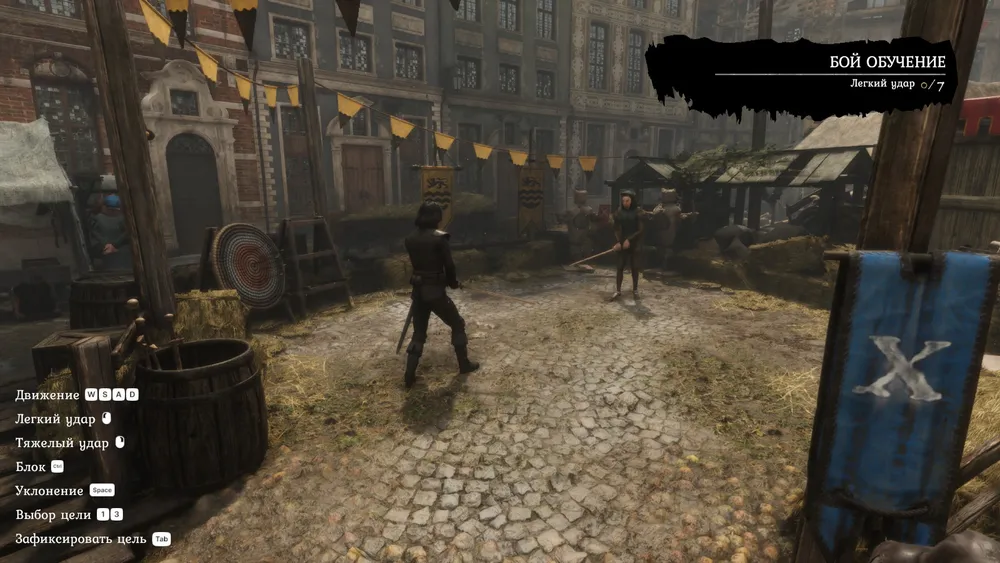
Here, the game will offer a few side quests to help master the controls and basic rules. Mordimer is invited to have fun at the city festival: dragging a log, finding a needle in a haystack, and fencing in a fun arena. At any moment, instead of this, you can immediately switch to the main quest.
This way, we will discover the authors' love for QTE (it must be said that dragging the log using QTE inserts turned out to be the most difficult stage of using this mechanic; in other cases, I did not have to replay as often). If someone hoped to find a needle in the haystack using a homemade magnet, alas, it’s much simpler. From the available items, you must take a magnifying glass to set the hay on fire.
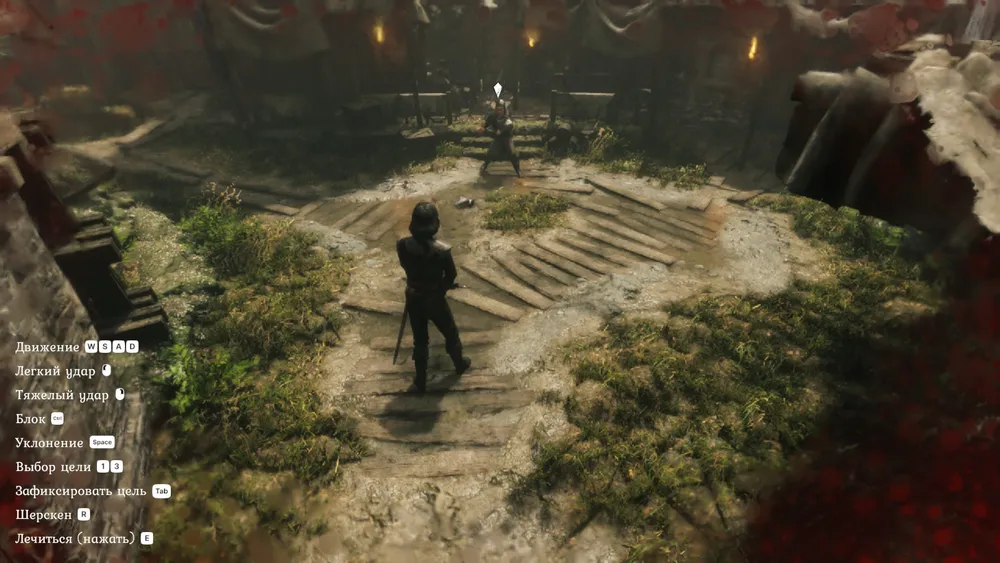
The first acquaintance with the local combat system was quite acceptable. But I immediately noticed a strange responsiveness of the character control: commands seem to lag or do not always work. Mordimer moves as if he is stuck in jelly; there’s not enough agility to convey the sensation of swift attacks. We have weak and strong strikes that differ in the extent of the weapon swing; you can block, and if you successfully catch the timing of the enemy’s strike, he will be stunned and open for our attack; there’s also dodging or bouncing off the enemy’s blow. Bouncing sometimes did not work in the right direction and for some reason resulted in facing the enemy. The camera mode during combat changes and has an unpleasant tendency to stick to the enemy, making it difficult to see obstacles behind Mordimer (if we want to retreat somewhere).
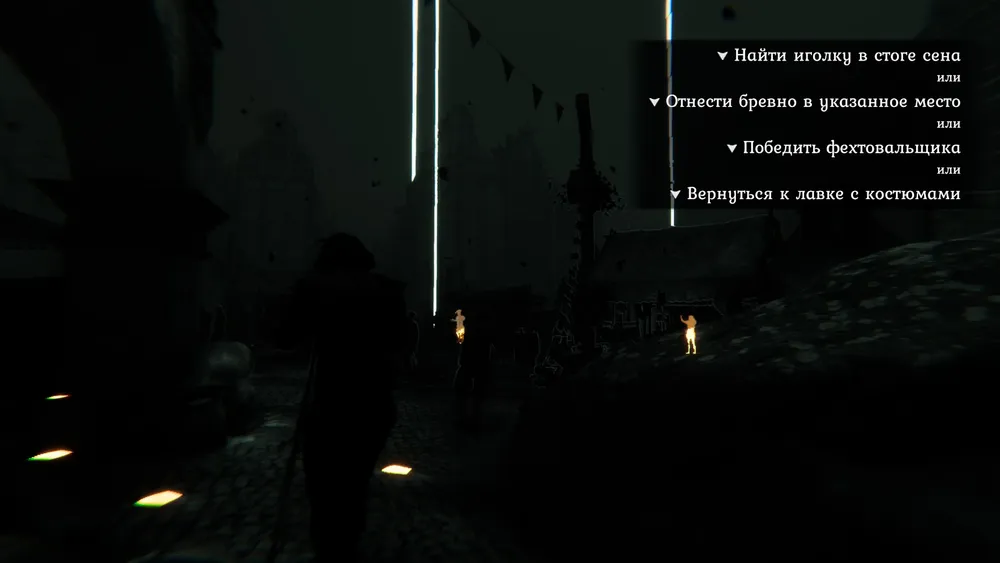
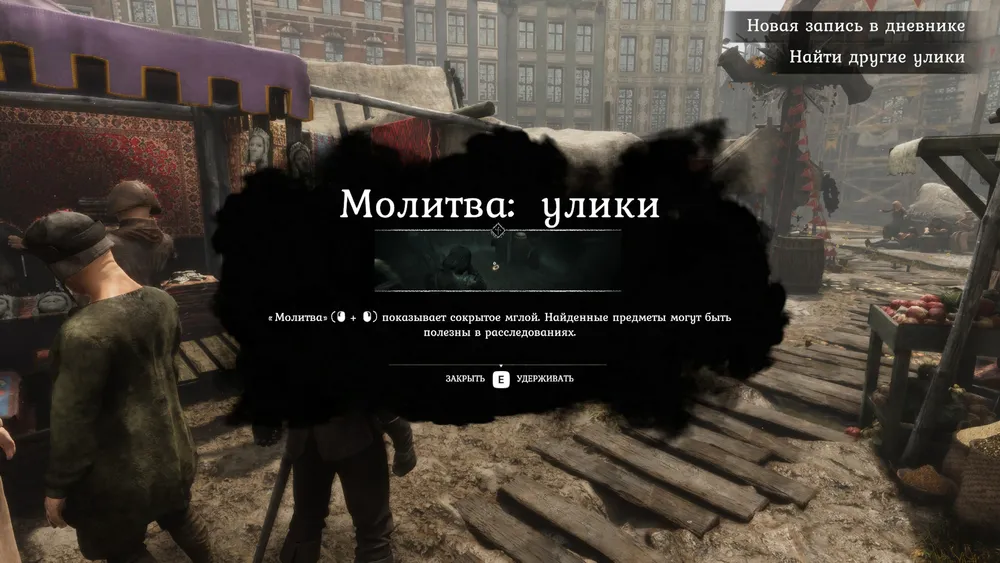
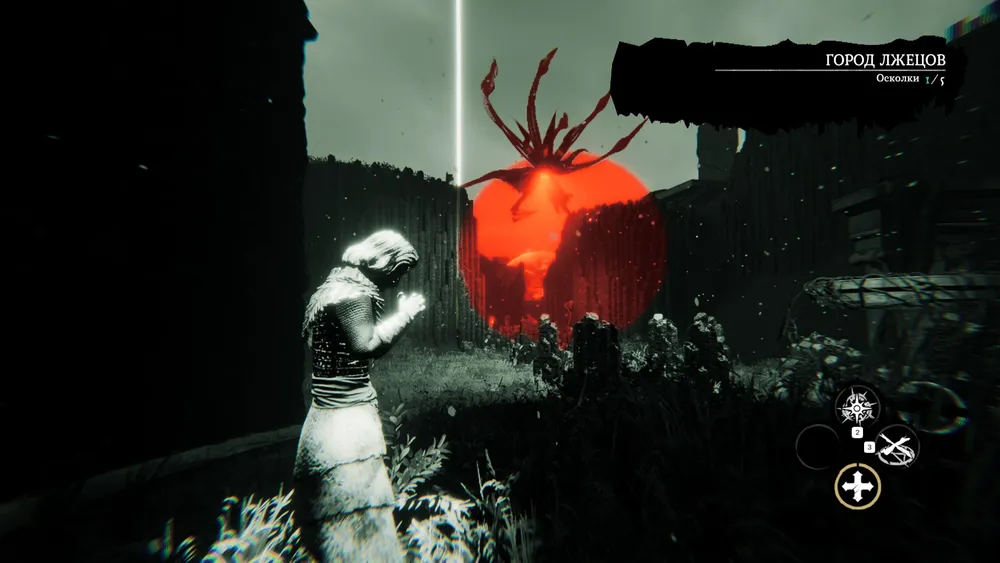
It turns out that the inquisitor has his own analogue of witcher sense. In this case, it is explained by the action of prayer: folding both hands for prayer (pressing the left and right mouse button), we begin to see the environment differently: interactive objects are highlighted, footprints appear on the ground, and even smells will float in the air. All this works not simultaneously but contextually, to solve a certain task. There will also be a pointer to the main or side quest in the form of a light pillar.
The developers also seem to have borrowed the idea of eavesdropping on conversations for gathering information from [Assassin’s Creed](/games?search=Assassin’s Creed). We sit on a bench and start looking for a group of talking people, fly the camera to them, and then we can overhear their dialogue.
From other detective quests, the authors borrowed the mechanics of examining the crime scene. For this, important points must be found where the camera focuses, and then evidence will be obtained.
And one more game design invention is intended to replace deduction. In The Inquisitor, you won’t have to, like in Sherlock Holmes games, match collected evidence and formulate some verdict to prove a theory in the investigation. No. Instead, Mordimer goes to a secluded place and falls into a trance-like state, transferring to Another World.
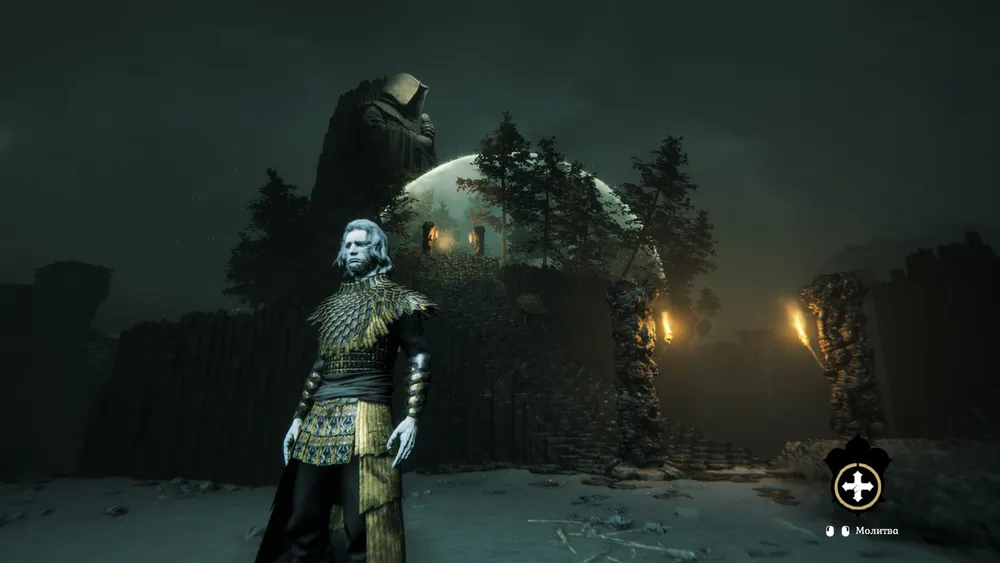

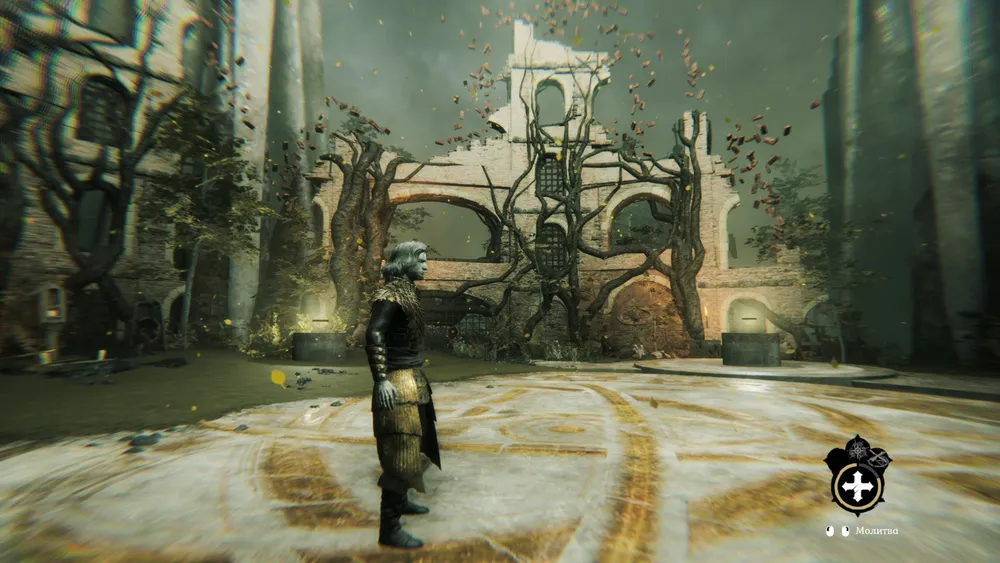
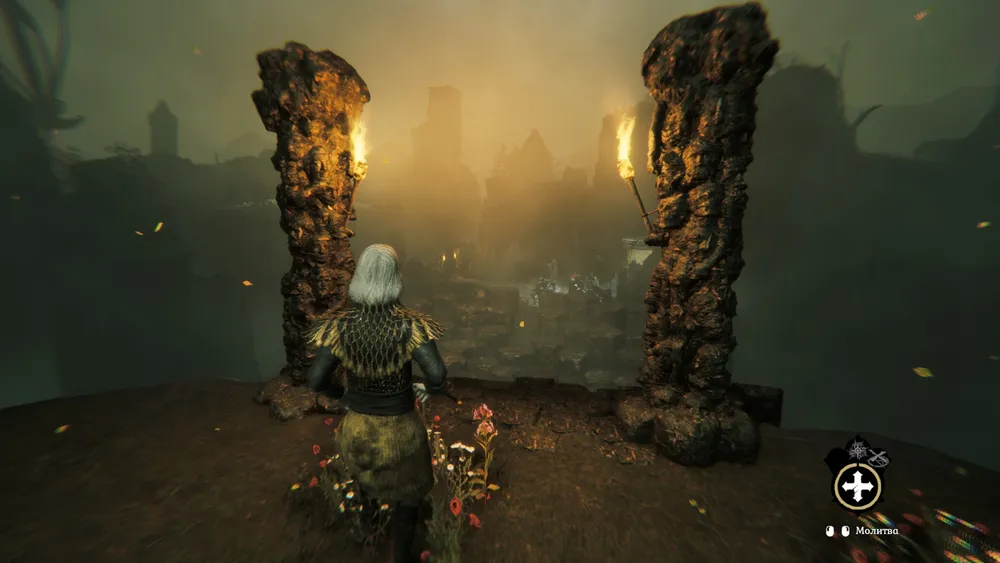
The Other World appears to be a spiritual realm. Here we find ourselves among abstract structures on floating islands. We start on a large island under a dome of protective light. Five vacant pedestals are set around. Now we must move to other islands: as soon as we approach the edge of the island, a bridge will start to form under our feet. We will cross from island to island across these bridges. Other islands will contain pedestals with some artifacts. We need to collect five such artifacts and return to the starting large island. Then Mordimer will see an event that happened in reality. This way, the inquisitor digs up the truth, so lying to inquisitors is futile. In the same way, the inquisitor digs up some revealing facts about the suspect.
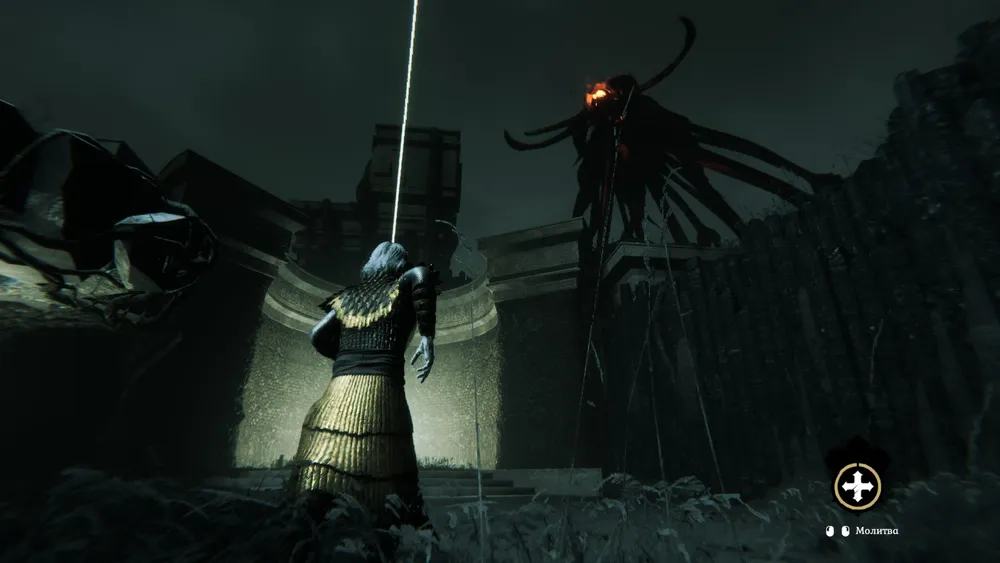
Walking in the Other World is not safe. Here dwells a certain Darkness and its Spawn. You can fight the humanoid forms of Darkness with your sword, although it's better to try to avoid them: they are somewhat blind. But the flying squids (just like in "The Matrix"!) are disgusting because they scour the ground with a red beam of sight. You need to hide under roofs to avoid losing health. Yes, there are structures that create cover for Mordimer. By the way, only in the Other World does an interface and health bar appear. Health can be slowly restored through prayer. But it’s even better to reach a small island with a so-called well of light. Activating such a well will give the player a dome of light and immediately restore the character's health.
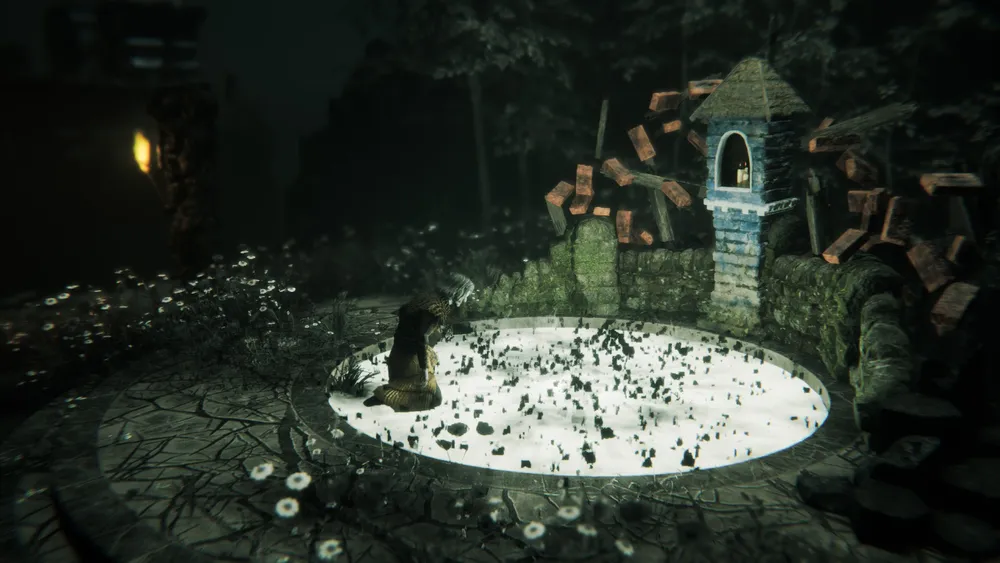
Each subsequent visit to the Other World will become more challenging. New forms of Darkness Spawns will appear, there will be more of them, and the territories of the islands will become more dangerous. Fortunately, Mordimer will also gain new abilities, but using them will cost part of his spiritual health (instead of mana for spells). Overall, walks in the Other World resemble simple puzzles: you should not charge ahead blindly but find the best ways to maneuver around to grab artifacts from the pedestals. Timely engage some of Mordimer's abilities. It's nice that after taking an artifact from a pedestal, that island clears of Darkness Spawns, making it easier to return.
This idea of the Other World reminded me most of the game [Murdered: Soul Suspect](/games?search=Murdered: Soul Suspect). It was a decent adventure with a focus on the narrative, but it also had a wonky combat system that spoiled the impression of other protagonist activities.
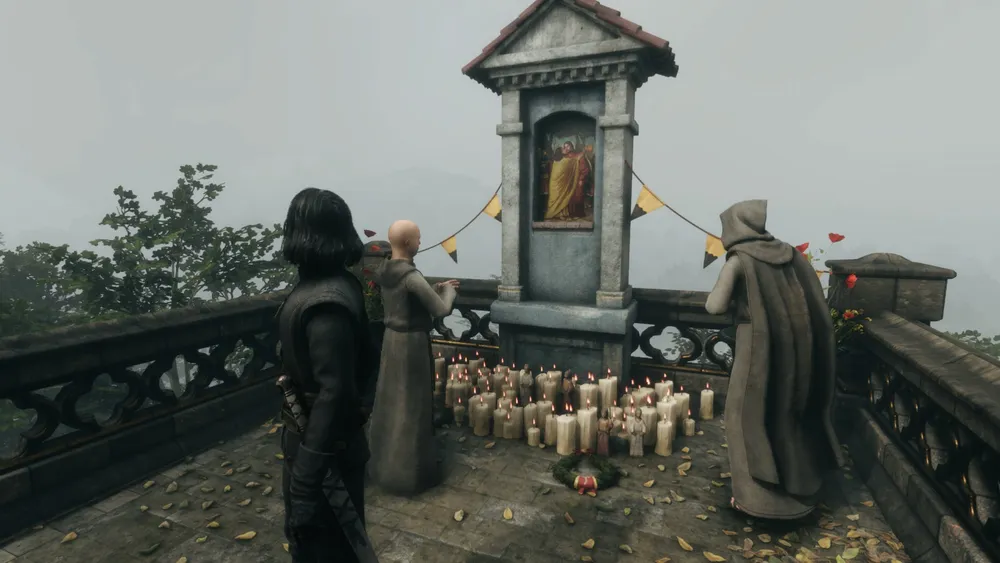
So, after getting acquainted with the Other World, the player is shown how much using his spiritual abilities wears Mordimer out: seeing the world through prayer, diving somewhere in search of new information. The game provides a tutorial hint that to restore strength, the inquisitor needs to visit a chapel, light a candle, and pray. Well, besides this case, I did not have any further problems with Mordimer, so I am inclined to believe that the final version of the game did not include a mechanic for restoring Mordimer's spiritual power (but there remains a piece of unrealized idea at the beginning of the story).

From the examples given above, the main gameplay mechanics are formed, with which the inquisitor investigates his case. Let's add to this dialogues with characters, in which there will sometimes be the opportunity to choose responses. Also, sometimes you’ll need to solve puzzles to unlock doors, find hiding spots, and move forward.
The game does not have a dynamic passage of time, so until we complete the main quests, it will not get dark. Thus, the first day of the inquisitor's stay in Keningshtein will gradually pass, after which he will go to the innkeeper and rent a room for the night.

On the very first day, we will meet a homeless girl who will repeatedly encounter Mordimer in the further plot and even help him sometimes. The relationship between the inquisitor and this girl strongly reminded me of Geralt and Ciri.
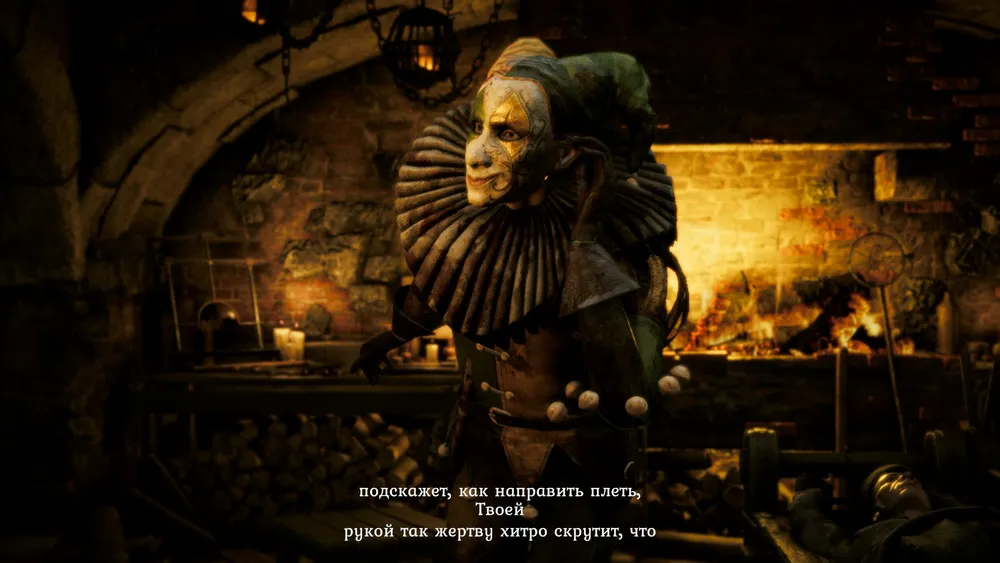
Another memorable character is the executioner Roland. He buys a executioners' mask at the fair, but no one knew that the merchants had robbed a witch, and she cursed this mask. Therefore, when the executioner puts it on, he becomes a victim of the curse and starts speaking in verses. Roland was already inclined to sadism, but the mask exacerbated it even more. A trip to the dungeons of the castle to interrogate a suspect can leave a lasting impression on the player. Roland, in the mask of a jester-executor, turns into a kind of Joker. This episode of the game can be considered quite successful and interesting.
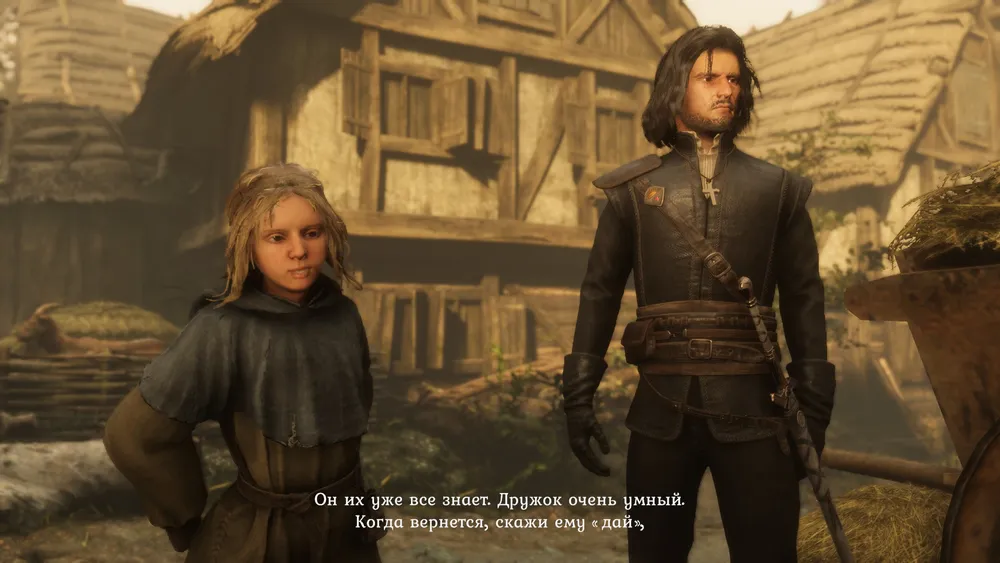
Mordimer always keeps the search for the vampire in mind, but after appearing in the city, crimes will begin to occur, and the inquisitor will have to divert his attention from his investigation to a new case.
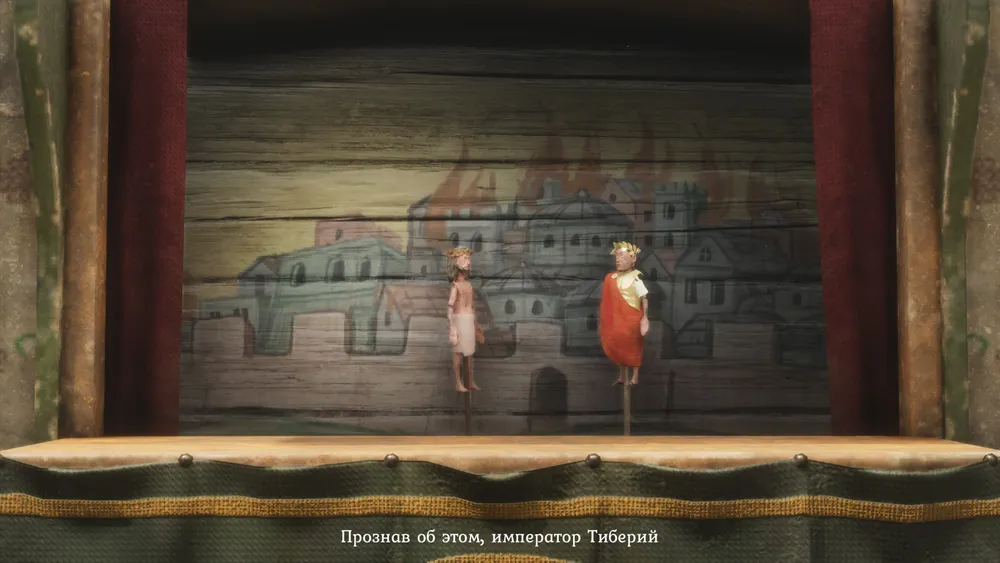
At the fair, you can watch a puppet show that recounts the local story of Christ and shows how he became Emperor.
Such examples of gameplay situations help to learn a bit more about the world.
The illusion of a living city is created by new side incidents. They can be missed if you walk by, but usually, Mordimer gets into the activation zone for scripts, and a dialogue or scene begins. For example, he is robbed by some petty thief. At another time, he will manage to chase the pickpocket to the thieves' hideout and recover the loss (but it doesn’t affect the game up to that point). There will also be an opportunity to find another bandit den, engage them in combat, and dispose of them. There will be a mini-boss: a fight with the heavily armored leader of the gang. It will take a long time to whittle him down, but the inquisitor's attacks will start to knock pieces of armor off the opponent, and after that, one can finish him off.
We will also meet blind monks and protect them from hooligans. At another time, these same monks will ask to find their lost brother.
Such small incidents enliven Keningshtein and adorn Mordimer’s path from one plot location to another. It’s a pity that the game is not RPG, and no rewards for the character are provided.
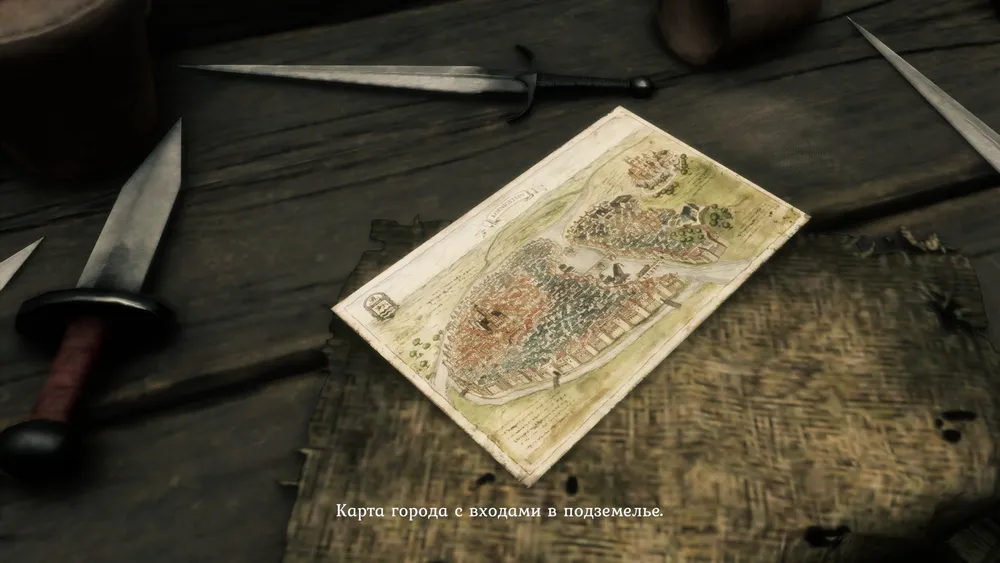
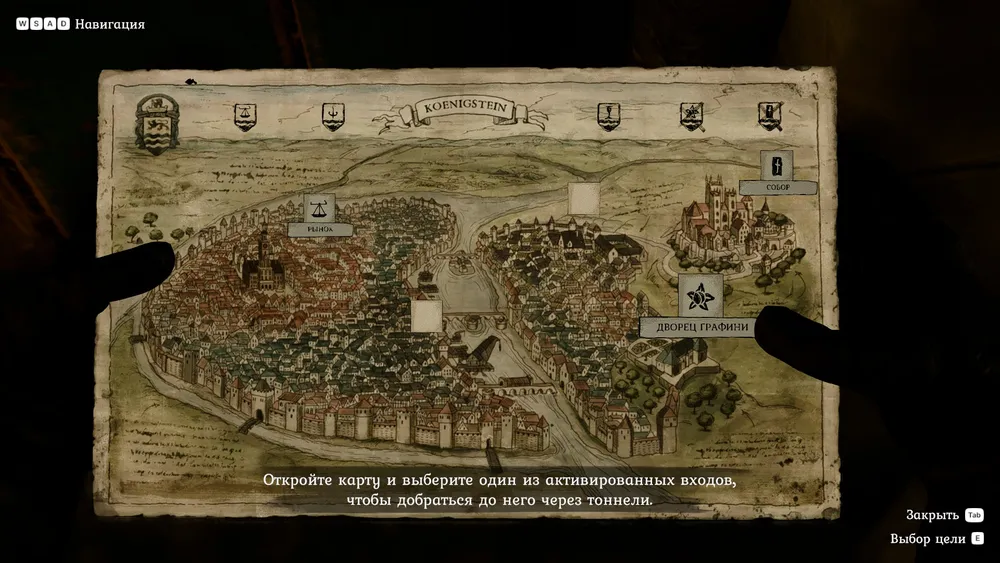
Quite early, we will find the city map (but they won’t let us use it for navigation unless they want to, unfortunately). From this map, Mordimer will learn about existing underground passages that allow quick movement to any area of Keningshtein. If the player finds all the entrances to the dungeons in each location, it will become possible to quickly move across the city instead of running on foot.
Another fun thing: searching and collecting various notes. Their texts can always be familiarized with from the game menu in the rewards section. And also, in each area, we will find a certain number of chapels, to place a candle in each of them. The inquisitor's sight will help to spot all items suitable for interaction. It's inconvenient that without a map it's hard to track which places we have already visited and where we found notes and chapels, and for their persistence, players will only be rewarded with achievements on Steam.


Another thing that connects the inquisitor with the witcher is that he has some shersken powder, which is some sort of narcotic preparation (analogous to elixirs). The secret of its production is kept secret, and during hand-to-hand battles, Mordimer can use shersken three times. With its help, one can heal: since the protagonist's health is not displayed in any way, one has to rely on the effect of a blood-smeared screen. Or one can throw a handful of shersken in the enemy's eyes... Why not sand? Strange. It doesn’t seem that shersken can poison an opponent itself, so throwing in the eyes only gives a temporary stunning effect and a chance to strike the opponent. The problem is that my throw did not always respond to the controls. And it seems to me that healing is a more valuable use. So the elixirs of the witchers were more interesting from a gameplay strategy perspective.
The Inquisitor was nonetheless a satisfying quality adventure game, with its amusing moments and a moderately interesting plot. Exploratory interest arose from the forks where one had to make a significant choice (the game even emphasizes this moment with an audio signal). The plot, in any case, is linear, but we get potential variability of events that lead to the denouement.
Moreover, there is a feeling of dark fantasy atmosphere. Although for the most part of the game, one will not have to deal with any magic or evil in reality.
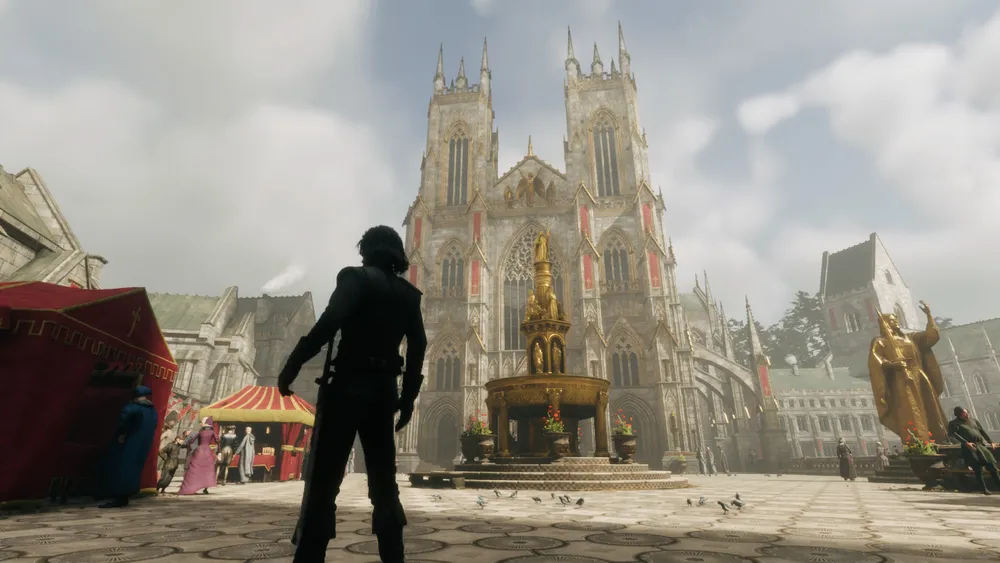
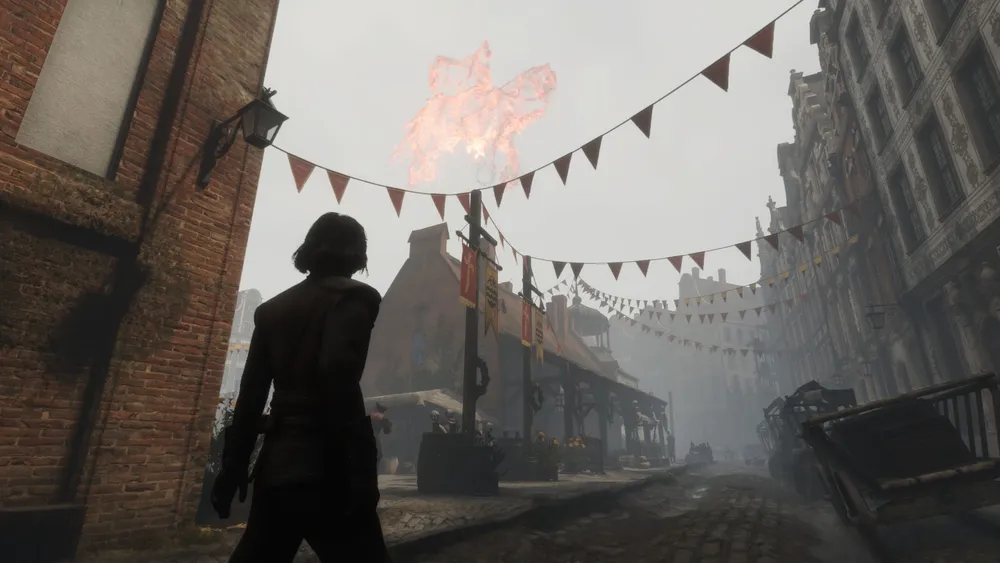
The game is not very technologically advanced. The animations during conversations are sparse, and faces are not very expressive in terms of emotions. On the other hand, the visuals can sometimes offer interesting frames and one can appreciate the beauty of a European city in the 16th century. And in the mysterious Other World, too, there lies a certain charm, as if ancient city ruins are captured there.
Although we play as an inquisitor, the theme of interrogations with torture and interrogations will be touched upon very little in the game. The player even has the opportunity, thanks to the choice system, to play a role as a softer inquisitor.
And all this was great, at least for the first half of the game. But then problems began.
First of all, I will note the technical quality. Sometimes the game crashed. Once this happened during another plot visit to the Other World. I restarted the game several times and each time, in the Other World, the system would crash as soon as I moved toward the bridge to the other islands. Fortunately, I managed to overcome this problem by lowering the graphics quality. I can afford high settings, and the game does not lag or crash. But in this case, there was a systematical failure.
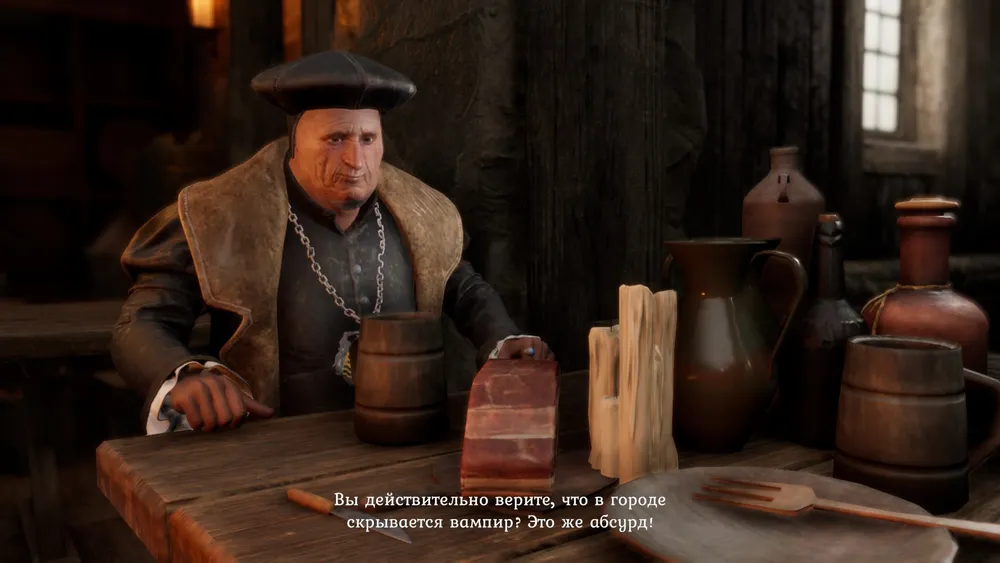
Another time, I was looking forward to seeing the consequences of my choices, for which, in a dialogue with the villain faction, I had to refuse an offer to join them. To my surprise, I was not given the option to choose a refusal, and Mordimer willingly agreed. What is this? A script failure, the influence of my previous actions in the game, or is it a game error?... Watching a YouTube video of another player showed me that scene with the dialogue, and there he had a choice and refused. Unfortunately, without proper saves that can be made anywhere, it’s not very convenient to set up experiments and test the game.
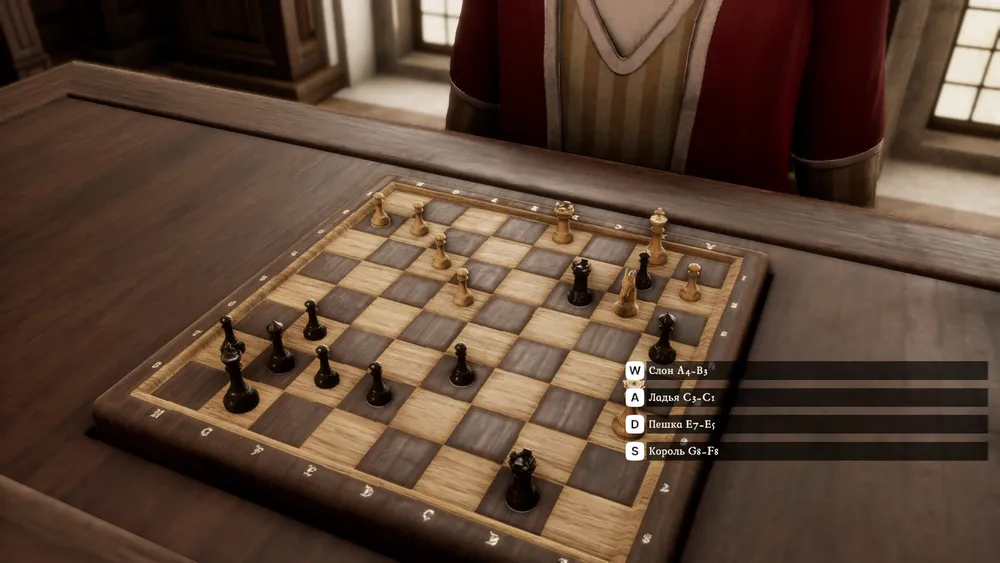
Then, while solving one puzzle, the script broke. I successfully assembled the puzzle, but after that, nothing happened. I checked the gameplay video again and confirmed that I was doing everything correctly. This time, I didn’t have to lower the graphics settings, although I was already ready to do so, and after reloading the checkpoint, I solved the puzzle again, and the script worked.
Such unpleasant technical problems increased significantly toward the finale. It’s as if the developers did not polish their project thoroughly enough and didn’t find all the errors during beta testing. It’s disappointing.
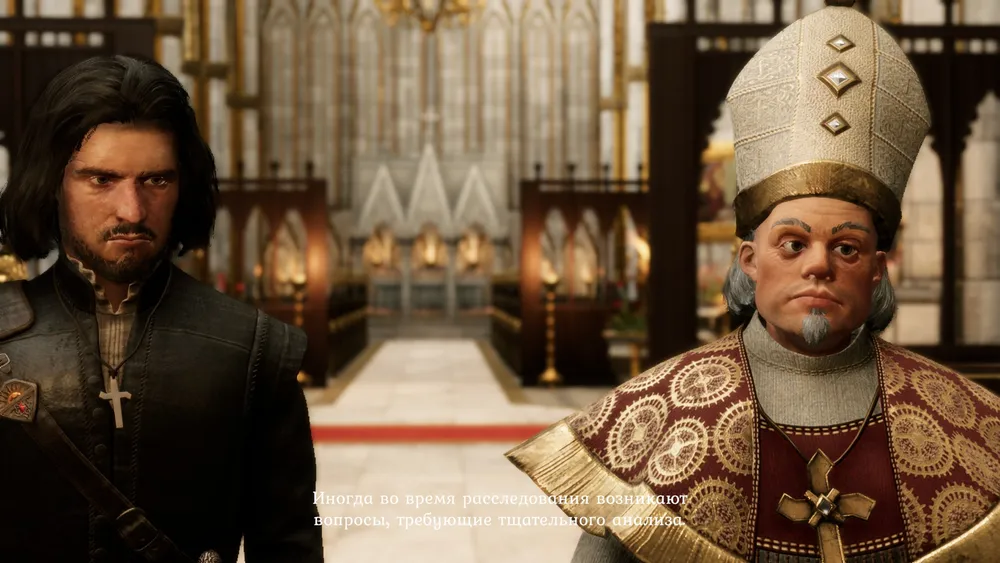
I also could not finish the walkthrough due to the flawed combat system. I believe it’s a mistake for a game like The Inquisitor to rely on combat episodes and boss fights as the final elements. An adventure involving investigations and puzzles sets up for a different, more beautiful way to conclude the game than a mundane duel. Especially since the action mechanics have flaws in responsiveness to controls and the protagonist's behavior. Motivation to try to beat the final battle is not added by how this part of the game is constructed.
First, we fight one boss in an arena. We leave the arena and watch plot scenes, talk to characters, and run to another location. There we watch plot scenes again and listen to dialogues, after which the fight with another boss begins. Which turns out to be invulnerable from the very beginning. One can guess that one must destroy four objects on the battlefield, but already after destroying the first object, our enemy calls for reinforcements. Later, after destroying the third object, he attacks Mordimer with fire columns. By the time I broke the fourth object and the boss’s health bar turned red (meaning I can now harm him), I had already used up all healing items and died. The game doesn’t always allow you to restart the boss fight immediately: sometimes it crashes, and you have to reload from the beginning. And there are no closer checkpoints, meaning I have to run back from the arena where we defeated the previous boss.
I will note such a situation: the villain went to the Other World to commit some wrongdoing. In the villain’s service is a fallen angel. He suggests killing the villain’s body and says he won’t interfere since the villain did not order the angel to protect him. The problem is that the villain is not in his body; he has possessed the body of an innocent woman. I wanted to try a better deed and chose not to kill: I was curious what would happen?... And what happened was bad. Mordimer was choked by an invisible force. After that, the final credits rolled, and I received a message, "Thank you for playing!".
I suspect that I uncovered a false ending akin to what happened in S.T.A.L.K.E.R.. It’s a shame that there is no achievement for this.
So, in one way or another, I managed to complete the game.
In my opinion, there is clearly a lack of balance in challenge and game design. For a game about puzzles, it would be fair to construct the final battle also as a puzzle-solving scenario. We destroy an object and take away 25% of the boss's health. The boss starts calling reinforcements, later the boss begins to attack with fire columns, but the player strives to survive, and after destroying the fourth object, we finish off the last quarter of the boss's health.
As a result, my initial positive impressions of the game were heavily tarnished. Otherwise, I could say that this is a satisfactory project, rating it 6 out of 10. It can be compared to a number of budget games that don’t reach for the stars, but they touch on interesting themes, settings, tell a curious story, and therefore their shortcomings in quality can be forgiven.
The Inquisitor is a game that softly lays the ground but crashes hard. The first half can be played without issues and can seriously intrigue with the intrigues of the not-so-complex plot. But when technical glitches, bugs, and an inconvenient combat system start to arise, forcing an overly frequent change of gameplay from solving puzzles to clumsy action (which does not suit this project at all), then you have already played more than 2 hours and thus it will not be easy to take advantage of the refund feature for purchases on Steam.
I hope that the developers will still fix serious bugs and work on the game's optimization. Maybe even adjust the gameplay balance. In this case, it will turn out to be a game like [Murdered: Soul Suspect](/games?search=Murdered: Soul Suspect): a detective adventure with an interesting setting but technical shortcomings and poor action.
I express my gratitude to the representatives of the company and the site gamer.ru for providing the game key to get acquainted with the project.