
Disciples: Liberation – the rebirth of the Disciples universe.
Upon launching the game for the first time, I was skeptical: a game in the Disciples universe by an unknown studio, with an unusual art style, and instead of being a turn-based strategy, it is an RPG with turn-based battles. As I progressed, most of my concerns evaporated, revealing a [good game](/games?search=good game), albeit with flaws.

The story begins with two mercenaries: the protagonist Avianna and her partner Orion, who find themselves in a dungeon with the objective of killing a high-ranking priest of the Empire (at the moment, real power in the Empire is held by a mysterious sect – the Veil). As they complete the mission, everything goes awry; they are surrounded by guards, a fight ensues, death seems imminent, but supernatural forces intervene, and we find ourselves in another dimension – in the city of Illyane. The entire Empire is hunting us, and we must find allies in the war against it. From this point, our journey across Nevendaar begins.
Throughout the game, you will meet many companions, make numerous decisions that influence how factions perceive us. Relationships impact soldiers' morale, upgrade possibilities for structures, and the hiring of more advanced fighters. Ultimately, this also affects the game's ending.
Gameplay.
The castle has 6 construction sites: for the market, blacksmith, and four buildings for hiring fighters. The spaces for the market and blacksmith are “reserved.” The market sells resources, gear, and mercenaries (random fighters from various factions), while the blacksmith upgrades gear and emotion shards (artifacts with various bonuses). Each faction has 3 buildings. We are free to replace one “barrack” with another at any moment. An unwanted building can be “frozen,” freeing up the space for a new one to be built. Thawing it out costs very little.
In each barrack, 2 types of fighters are available right away, and as you upgrade (good relationships with the faction required), two more will appear – one for each level of relationships. Also, fighters can be improved up to Avianna's level. Upgrades are inexpensive. Unfortunately, they abandoned the signature series feature of transforming one type of fighter into another upon leveling up. A pity!
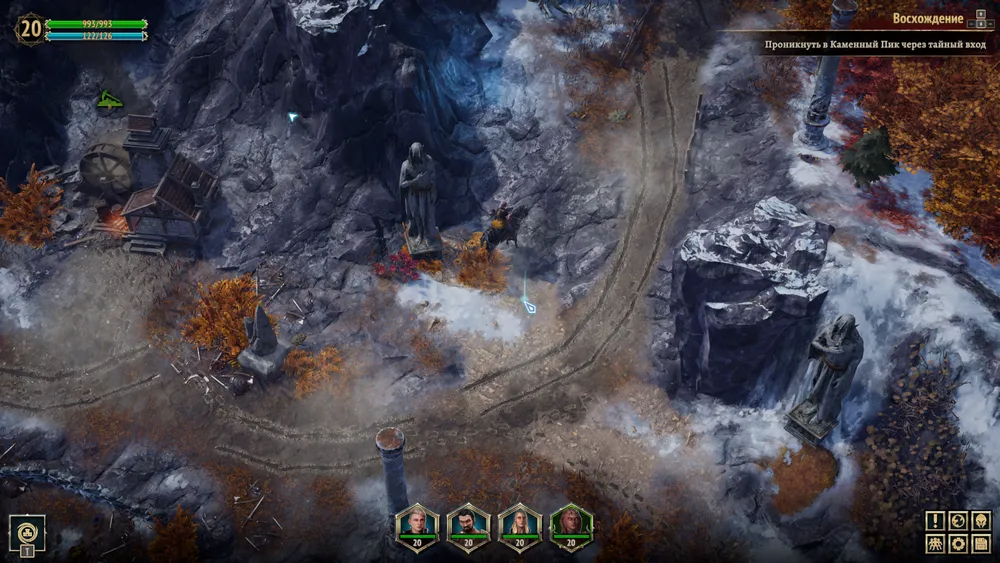
As we progress through the game, we select one of (usually) four available locations on the map, wandering in real-time, encountering adventures, completing quests: main, side, battling enemies, gaining experience and resources, capturing mines. We meet companions or special fighters, choosing to recruit them as we wish. Have you completed the main quest in all available locations? The next batch opens up, and the story progresses.

At any moment (if we aren’t in a dungeon), we can return to the city to take care of our business (gather resources; upgrade gear, fighters, artifacts, buildings; learn spells) and visit another known location or return. What I liked: the return happens exactly at the point from which we teleported. What I disliked: traveling back to visited locations is impossible after completing the main quest of that location until moving to the next. For example, we went to area 2, completed the main quest, returned to the city, and returning to area 1 is temporarily unavailable. To get back there, we need to go to area 3, and from there return to the city, and only then area 1 will again be accessible for visiting. It doesn’t create any real problems, but it’s simply inconvenient and not obvious.
To recruit a companion or fighter, as in all RPGs, you need to complete their quest. The difference between a companion and a fighter is that the former has personal quests, opinions on certain matters, and can be given both weapons and emotion shards (“artifacts” with bonuses). Fighters can only be given shards. There are named fighters who join after completing specific quests, but if they differ in any way from regular ones, it might just be in their stats (I didn’t check) and having their own name. I would have liked more!

Enemy behavior on the map is reminiscent of Heroes 4: some are “anchored” to their spots, some patrol and are ready to attack upon seeing us. You can avoid combat, even if you attacked or were attacked, but only once (there might be a noticeable cooldown on repeat fleeing) for each squad. There is an auto-battle – “Conquest” - an automatic victory over the enemy – it saves a lot of time.
Experience from battles is given uniformly adjusted for level – the higher the fighter's level, the less experience they get, and vice versa. The number of fighters in the squad does not affect the experience gained. Interestingly, the required experience for leveling up is always the same – 1000.
At the end of the game, it states the need to “return to the past” and change your decisions. Simply put – start a “new game +.” It promises new story development options and lifting the limitations on the number of companions in the squad. Such an organic beginning of a “new game+,” woven into the ending, I have never seen anywhere else.
Battles
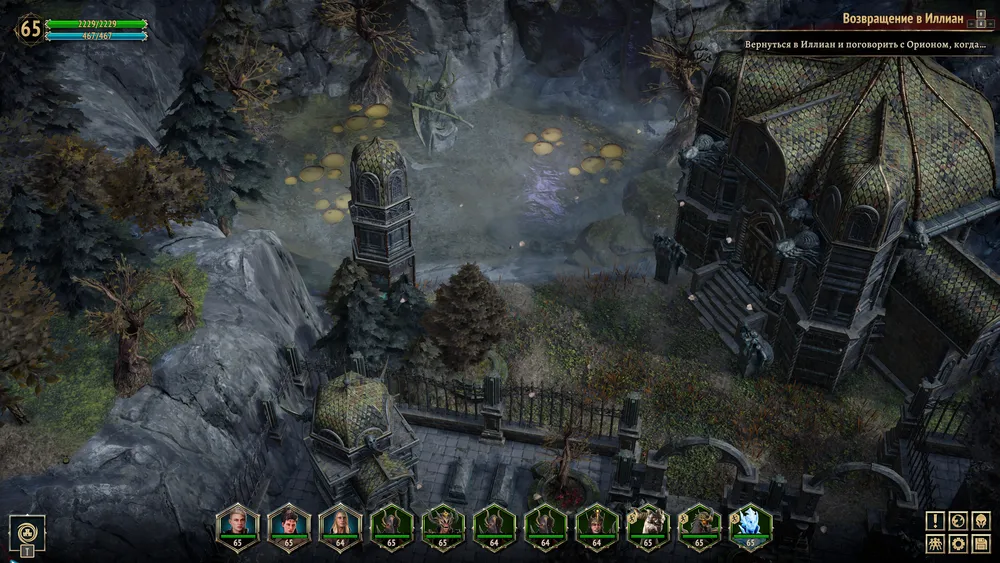
The combat system closely resembles King's Bounty from Katauri. Avianna has a certain leadership that grows a little every 5 levels (for context, I finished the game at level 66, and I think level 70 is the maximum that can be achieved while fighting absolutely everyone and not skipping any quests). Higher-ranked fighters (not to confuse with level) require more leadership. Unlike fighters, companions do not require leadership, but you can take no more than two into battle. There are also 3 slots for the rear. Those placed there simply utilize a specific passive skill. This could be either a buff to allies or a debuff to enemies or direct damage, healing. You cannot send 2 identical units to the rear, nor companions. To win, you must kill all enemies on the battlefield or one specific enemy in case of a quest battle. The rear automatically surrenders. I liked that you can “carry” a large number of soldiers and companions with you, and before the battle, select only the necessary ones, editing the squad.
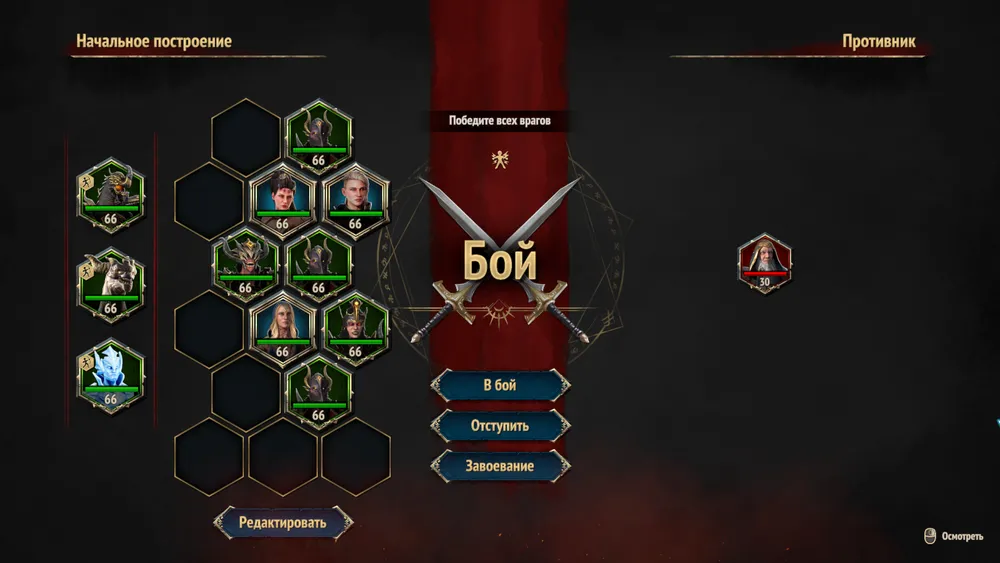
The battlefield isn’t exactly a field; it generally features various obstacles. Obstacles cannot be chosen as the center of AOE spells or abilities; they restrict their area – it cannot pass beyond it. There are also “whirlwinds” on the field: “hostile” or beneficial. They most resemble reworked “platforms” from [Disciples III](/games?search=Disciples III). Typically, several such “whirlwinds” are found on the arena. Their effects are visible right from the start of the battle; just hover the cursor and a hint will appear. Interestingly, floating creatures receive a bonus from beneficial whirlwinds and are not penalized from harmful ones (they simply do not activate them, even if they “hover” over a cell with it).

In battles themselves, there are no revelations: battles are turn-based, the order of turns is determined by initiative; one round – one turn for a unit (such that, as in Heroes 5, where furies could be accelerated to almost 3 turns per round doesn’t exist here). The AI is not very smart; it often charges ahead, even through whirlwinds with debuffs. As a variety, each soldier, aside from their attack, has an “ultimate ability” that can be used once every 3-4 turns. This is usually an AOE with a side effect, which can be either positive or negative. Also, each fighter and companion, as well as Avianna, have 2-3 action points, which can be universal or tied to action type (attack, movement). They can be used in any order. Only Avianna can cast spells. All spells in the game are purely combat spells. Skipping a turn restores a bit of health and mana (the more action points remain, the more you restore).
Among the drawbacks of the battle system are not only bad pathfinding and battle tactics but also the opponent's desire to prolong the battle when everything is already clear. Mages and archers simply retreat to the far end of the arena, forcing you to chase them, dragging the battle on for an additional 3-4 rounds. Attacking troops that are 5+ levels above Avianna is futile since the battle's complexity increases immeasurably, while the reward for it is laughable.
In my opinion, mages have an undeniable advantage in combat. Avianna's level 3 (out of 4) spell “meteor” deals massive damage over a large area, igniting enemies. At higher levels, it can be used twice per turn. However, the developers plan to make battles more challenging. How exactly – will they take the standard route of restricting our abilities and straightforwardly powering up enemies, or will they adjust intelligence, revise troop parameters – we will see.
There are bosses in the game. Unfortunately, battles with them don’t differ in variety. Generally, these are “statues” at the opposite end of the arena casting AOE, which is easy to dodge. Boss battles are poorly executed also because they possess a huge health pool; a lot of time is spent on them, while the reward for this is not great. Unfortunately, you cannot avoid these battles. The developers have noticed this issue and are currently addressing it.
Role System
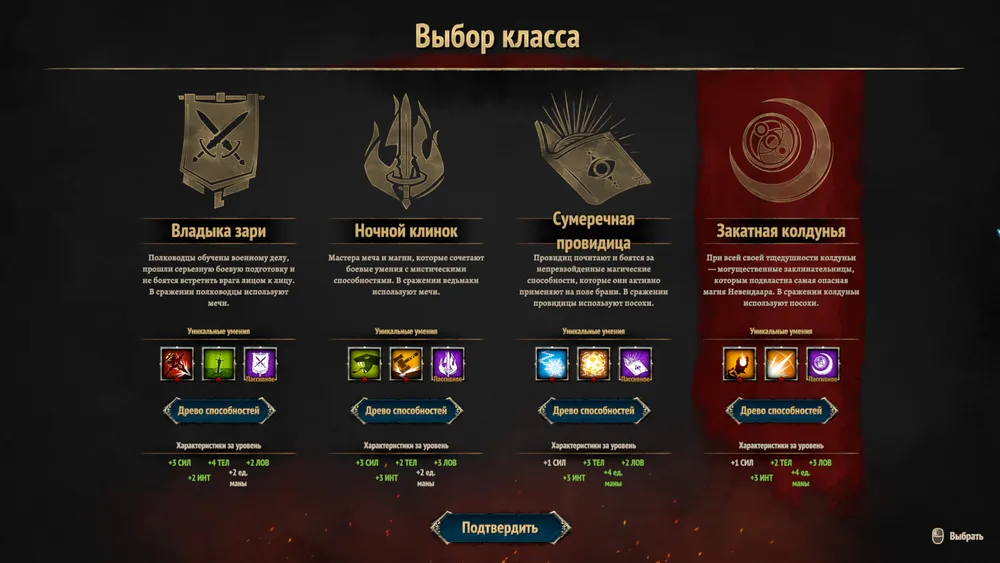
Avianna starts off as a mercenary and cannot change classes until the third mission, nor can she obtain rank 2 and 3 skills. After that, she is offered to choose one of four classes:
Warlord with a subsequent upgrade to Dawn Ruler, Witch - Night Blade, Seer - Twilight Seer, and Sorceress - Dusk Sorceress. The class determines Avianna’s skills, the growth of specific characteristics per level, and the available skills to learn. I played as a sorceress; in principle, you can try all classes and any skill combinations – a complete reset can be performed at the castle and costs a small amount - 1000 gold (roughly the reward for 3-4 battles).
In the game, there are only 2 types of weapons: swords and staffs. Swords are unavailable to sorcerers, while staffs are unavailable to warriors. Avianna can wear a helmet, armor, belt, and boots.
After completing companions' quests, they first acquire a strategic ability (e.g., castle hacking, purging corruption, etc.). In subsequent quests, they are given unique weapons and, finally, an ultimate combat ability (to be frank, it’s not very useful – it can only be used for the first time in the 6th round, requires all action points to activate, and by that time the outcome of the battle is usually already determined, leaving only the remaining enemies). There are more companions than abilities, so they duplicate.
A downside of the system is that companions cannot be developed – they lack skills; they cannot be equipped – you can only change their weapon and shard.
Interestingly: the heroine can “sleep” with literally any random encounter, be it human, demon, elf, or undead. It seems that only golems and gods were neglected in her attention.

Conclusions.
Disciples: Liberation is a good example of an RPG in the Disciples universe.
Pros:
the plot;
design of locations;
the introduction of “the rear”;
the ability to “try out” units of all races in a single playthrough;
professional quality Russian voice acting.
Cons:
- abandoning the traditional system of transforming one unit into another upon reaching a level;

- horrific art style both for models and portraits of units: some fighters appear as if they "jumped" out of Warhammer, while others are so similar that they are indistinguishable; if the designers aimed to make the undead as repulsive as possible, congratulations, they succeeded. Among all races, the elves are more or less drawn, but their stylistic approach is pure “generic-fantasy,” lacking the atmospheric quality inherent to the series. Overall, the feeling from the art style is that the first 2 games passed by artists;
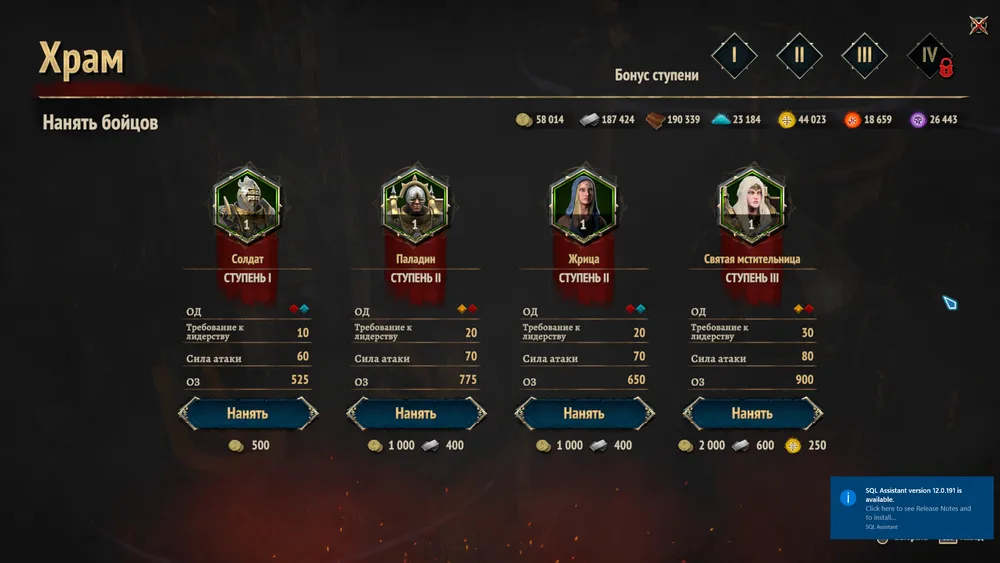

Soldiers above, assassin below. Look – don’t confuse!
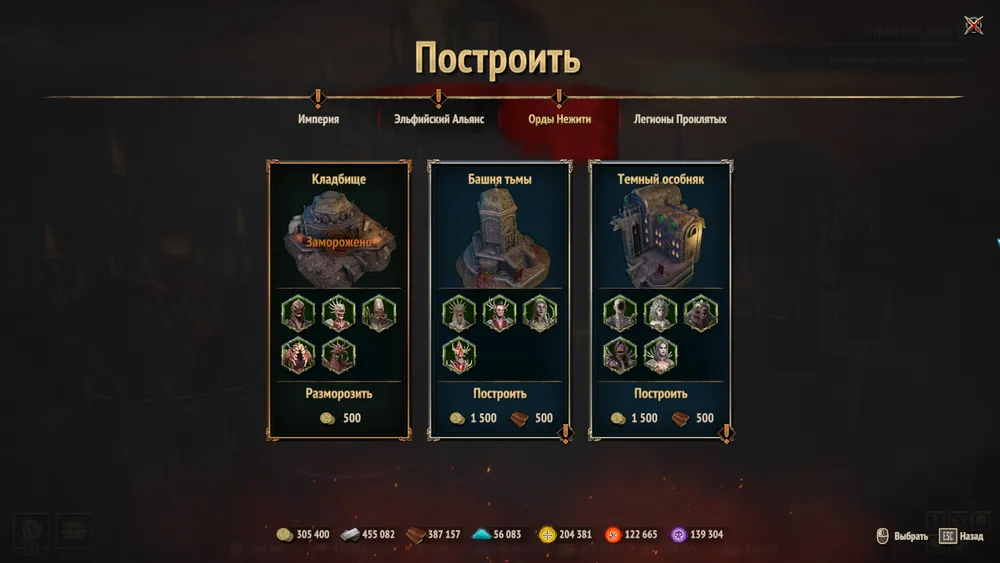
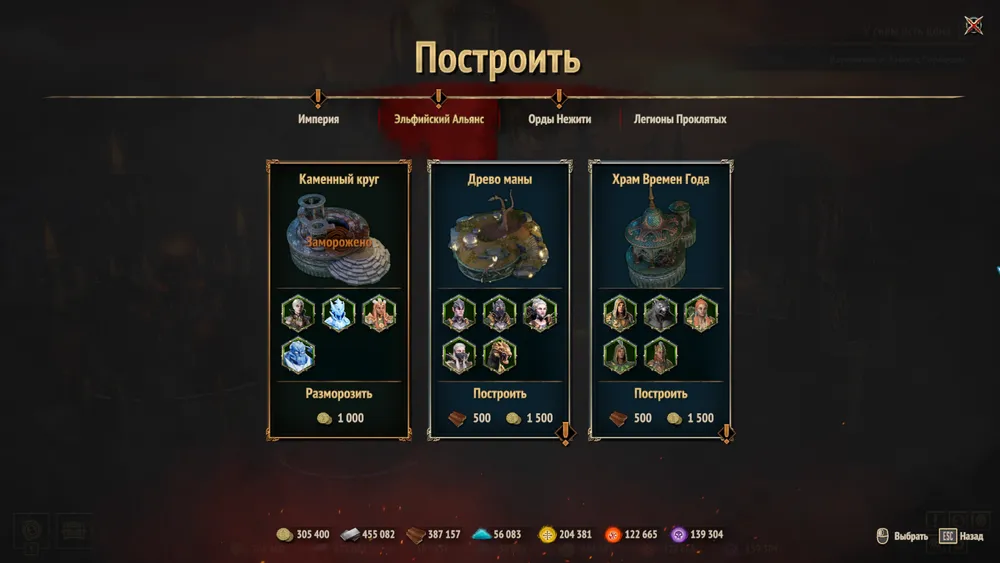
- vague visuals of the castle;

the necessity to manually collect resources in the castle;
the linking of upgrades to relationships with factions;
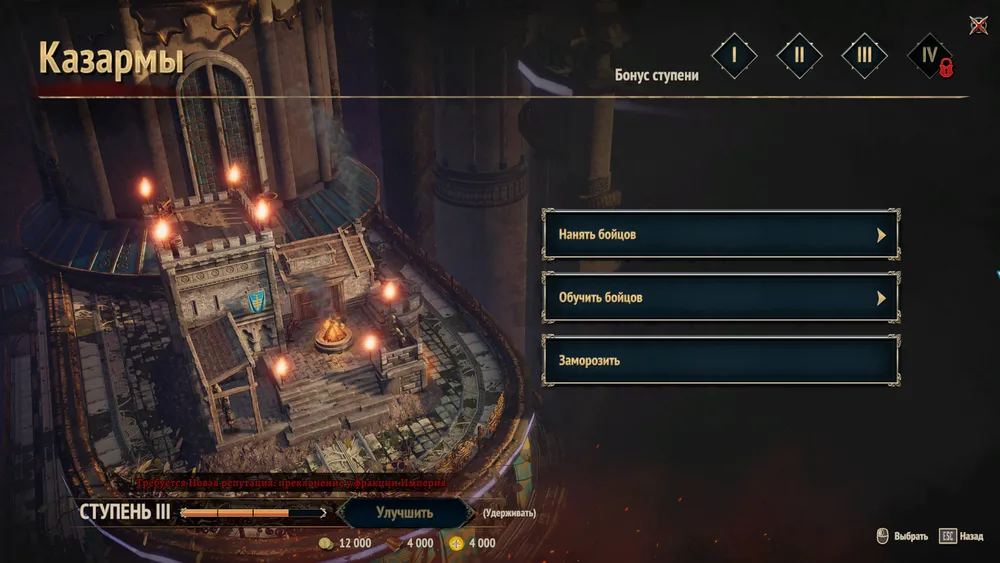
an abundance of barely useful items: weapons and gear;
lack of a leveling system for companions, as well as the inability to fully equip them;
boring repetitive battles in large quantities;
inflated pricing.
I’ll explain my position. Lately, I’ve been playing only party-based RPGs, action RPGs, and turn-based strategies, so I chose from these genres. After the New Year's Cyberpunk, I played (from the new releases) [Black](/games?search=Black) [Legend](/games?search=Legend), Siege Survivor: [Gloria Victis](/games?search=Gloria Victis), [Pathfinder](/games?search=Pathfinder): Wrath of Righteous, [Encased](/games?search=Encased) and here – in Disciples. Black Legend and Encased didn’t impress me at all; Cyberpunk, not only is it too raw, but in a year the developers have done nothing to smooth out its rawness (where’s the promised substantial storyline expansion, huh?), and one uncovered lie after another from the Reds does not endear them to me. Gloria Victis is decent, but it doesn’t quite reach game of the year status – it’s closer to a roguelike. And so, by the time of the Steam Awards voting, I had recently finished the newly released Pathfinder and Encased, and Disciples had just come out. And in my top, the game from Sovokotov was in first place, but after finishing "Liberation", I changed my mind. Both games have strong points as well as serious flaws. Both can be categorized as “indie.”
For me, the flaws of Pathfinder are: technical aspects – the abundance of bugs, which don’t significantly decrease from patch to patch, disregard for important immersion details like NPC portraits, the “sloppy” 5th and 6th acts after the stunning first two, lack of Russian voice acting in a game from a Russian studio, inflated pricing, overshadowed the flaws of the reviewed game.
Yes, it has been such a year – having to choose among various “golden” options.