The Evolution of the HoMM Series: "I Grew Up in Enroth"
Attention! The post contains a lot of personal opinions, nostalgic suffering, and generally drifting thoughts, so consider yourself warned. Unfortunately, I was elegantly bypassed on the history curve, so don’t blame me for the post’s slight redundancy; I’m aware. :(
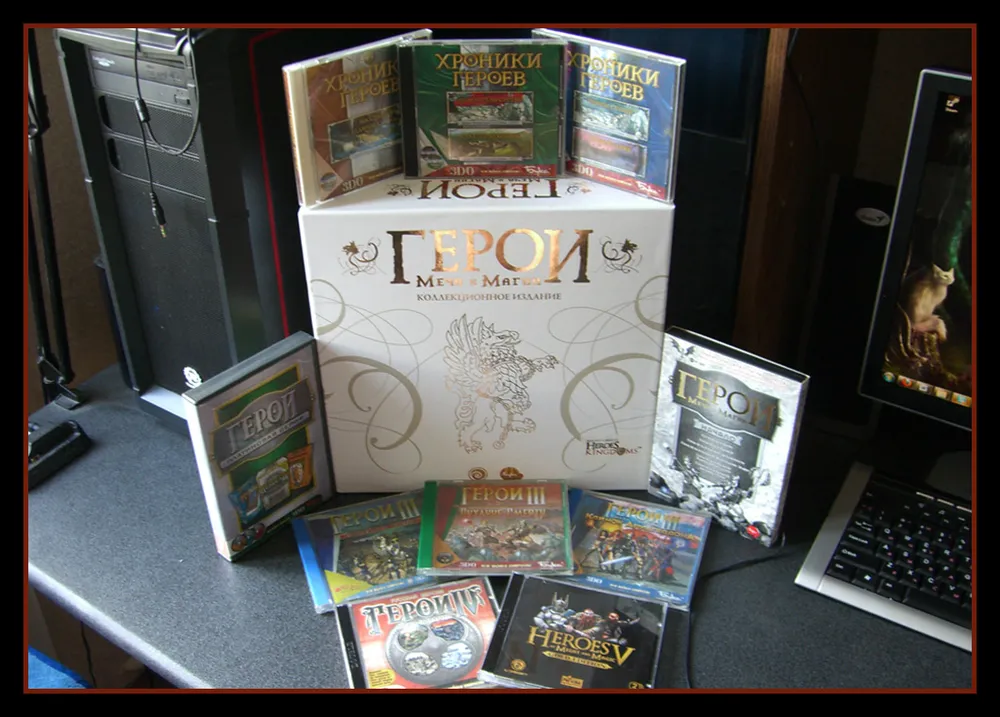
A fan of the series in this case is a diagnosis. :)
I’ve been meaning to sit down and write a post about one of my favorite computer series for a long time, and the recently announced contest from the good folks at Apgar (thank you for that, guys!) gave me the perfect opportunity to grab myself by the scruff and give my keyboard a nudge. I’m not writing this for collection's sake (because, let’s not hide it, this white box already exists in the family), but to express my respect for the wonderful series that I have lovingly cherished for a good ten years. And there are reasons for that. But I’m getting ahead of myself. So, "[Heroes of Might and Magic](/games?search=Heroes of Might and Magic)", what they are about, what to praise them for, and how to memorialize them...
Although the "Heroes" series started in August 1995, its ancestor, the Might and Magic series, is much older: the first game, [Might and Magic Book One: The Secret of the Inner Sanctum](/games?search=Might and Magic Book One: The Secret of the Inner Sanctum), was developed by New World Computing back in 1986. It was a role-playing game where gamers were invited to create their unique character, choose their class, level up attributes, and unite in parties of up to 6 players to explore the world, fight monsters, and raid caravans. Later, Might and Magic (in Russian localization - Меч и Магия) evolved as a separate role-playing series (a good dozen sequels were released under the same "roof", not counting various Messengers), while the game that came out almost a decade later, [Heroes of Might and Magic](/games?search=Heroes of Might and Magic), is considered a spin-off of the series and follows the path of turn-based strategy with role-playing elements. By the way, the release of Might and Magic: Heroes VI was timed to the 25th anniversary of the series. But more on that later. For now... it’s 1995.
FOUNDATION STONE
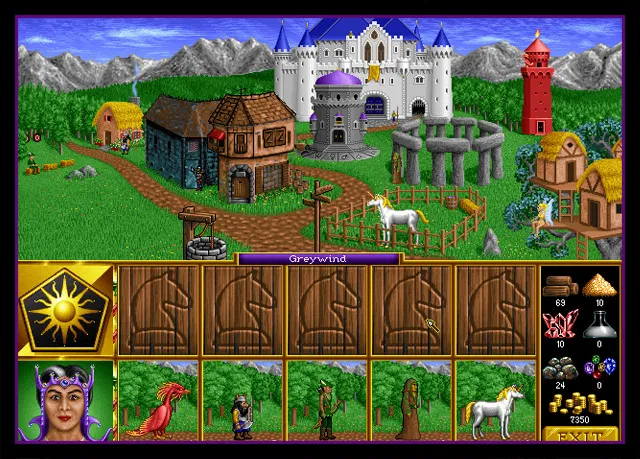
This bright cartoon is the beginning of the best fantasy strategy.
Having played plenty of Might and Magic and relying on the experience of [King's Bounty](/games?search=King's Bounty), the predecessor of "Heroes", New World Computing releases the first part of the series from their forges. The fantasy strategy immediately begins its victorious march across gamer computers, who quickly became addicted to it and could spend long hours completing and redoing engaging campaigns. Somewhere I read that the game was initially intended to be barely children’s, with gameplay so simple that even an infant could understand it. However, parents (unexpectedly!) were also delighted with the new toy, and, as I understand it, quickly pushed their kids away from the computers ("Go, baby, dad needs to work!").
The plot of the game unfolds in a colorful fantasy world. Lord Morglin Ironfist, fleeing from his evil cousin Ragnar, who usurped the throne, escapes with a handful of allies to the new world of Enroth. There, he finds new lands awaiting him, but also unfriendly neighbors who are not particularly glad at his arrival. The player can choose a campaign for any of the factions (there are four in the game - Knights, Barbarians, Sorceresses, and Warlocks), but the correct, so to speak, conclusion is Morglin's victory and the establishment of the Ironfist dynasty in Enroth.
In the first part of the game, ideas and traits took shape and solidified, without which it is hard to imagine the series now. The player needed to lead their race to victory, conquering all castles and defeating all enemy heroes, commanding their armies, developing their own commanders, exploring the world, and collecting artifacts. It should be noted that all four races were unique, each with their pros and cons, while gameplay for each faction significantly differed from the others. Two races followed the path of strength, while the other two followed the path of magic. The player had to properly play the cards dealt to them since if one race lacked flying units, the other, say, would be short on archers. There were no inherently losing or weak factions, and any hero could lead to victory.
All this together led to immense success for the series, so by the next year, a sequel galloped out of the forges.
SEQUEL
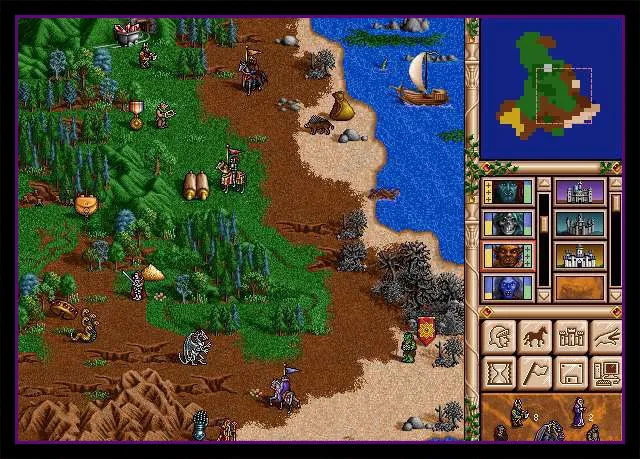
The second "Heroes": we're on the right track, going for dragons!
At the end of 1996, the first "Heroes" continued with the game [Heroes of Might and Magic II: The Succession Wars](/games?search=Heroes of Might and Magic II: The Succession Wars) ("[Герои Меча и Магии II](/games?search=Герои Меча и Магии II)"). Do you know the recipe for a good sequel? It’s the same as before, only more. The core gameplay of the second part remains the same, however, New World Computing brought changes to the game.
Firstly, there are now six classes: Sorcerers and Necromancers joined the existing factions. The races remain unique, with significant differences between them. Secondly, heroes, who had previously languished in the first part on primary attributes (attack, defense, magical power, and knowledge), now gained secondary skills that partially mirrored the special abilities of characters in the original Heroes. Heroes also received mana, which determined their magical limit, and new spells from the mage guild. Thirdly, creatures in castles could now be upgraded (though, I must admit, not all of them required upgrades).
The plot of the game develops after the death of our protégé Morglin. His two sons, Roland and Archibald, unable to bury their father, begin to divide Enroth. The hero could choose either the storyline of the "good" Roland, embodying the forces of good, or the renegade Archibald, who ultimately loses to his brother and, presumably as a warning to future generations, turns into a stone statue. In the addon The Price of Loyalty ("Цена верности"), we await four more campaigns, new buildings, artifacts, gatekeeper’s keys, and so on.
As you can see, what was laid down in the first part by the second was further developed, further solidifying the foundation of the series. New World Computing sculpted a concept that we know to this day, and deciding that such a variant was good and self-sufficient, they practically did not change it when developing the third part of "Heroes". I note that I played the first two parts of the game in retrospect, so I could not trace the development of ideas from number one to number three in chronological order. However, I highly recommend that all fans of HoMM at least familiarize themselves a bit with these games: they rightfully deserve the reviews and high scores that players have given them. Meanwhile, I will turn my attention to the third part, the landmark one for me in the heroic series.
IDEAL
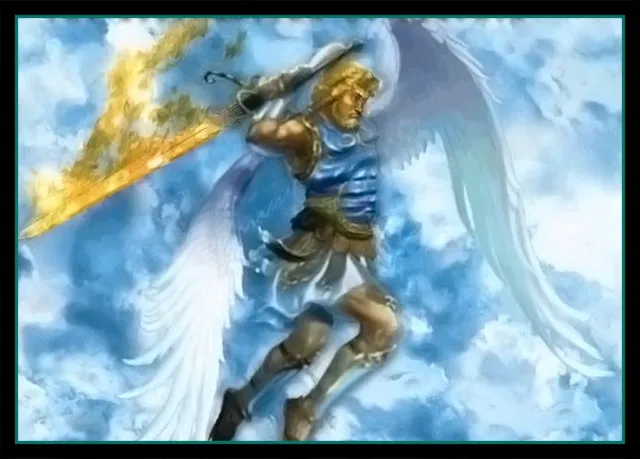
The Archangel - the hallmark of the third part.
- New World Computing releases a game that will keep me glued to the monitor for a long time and make me skip classes under the pretense of having a cold, a case of cunning, and something else (and I was a good girl, mind you!). [Heroes of Might and Magic](/games?search=Heroes of Might and Magic) III: Restoration of Erathia ("[Герои Меча и Магии III: Возрождение Эрафии](/games?search=Герои Меча и Магии III: Возрождение Эрафии)") practically flipped my understanding of strategies, gaming series, and games in general. It was wonderful! I’m not even mentioning that this was my first licensed game. I found it, oddly enough, at a stall where most toys were scandalously pirated, and licenses were as rare as hen's teeth. I stumbled upon the game quite accidentally, but my childlike eyes were instantly drawn to the beautiful cover and wouldn’t let go. And having flipped the box over and studied the screenshots, I already knew I wanted it more than any cookies. All that remained was for my mom to sigh: she clearly sensed something amiss but didn’t show it and bought me the "Heroes". I was 15 years old.
The following decade passed with me growing up alongside the game. The first few days, however, were not great: I could not figure out how to change the game map and where to click to finish my turn. My sister helped me sort it out by suggesting we tackle it head on: just click everywhere to hope something would happen. That’s how we finally made progress and started playing. Is it even worth mentioning that I spent the whole day on the game until a computer player came along and wiped out my hero?.. But the beginning was established.
I immediately dove into the adventures of Catherine, the queen ruling Enroth. Her father, Nicholas Heart of the Griffin, had passed away, and she was returning to her homeland. While things were happening, the underground lords of Nighon and the devils of Eofol invaded Erathia, and the red-haired lady needed to swiftly arm the country to drive the invaders back to where they came from. Meanwhile, the border of Erathia was also restless: barbarians and swamp dwellers had started skirmishing, which couldn’t help but impact the border settlements. Just like that... umm... chaos. This is just the setup for "Restoration of Erathia", and Catherine is just one of many heroes whose fates we’ll keep track of. But at that moment, I didn’t know that yet.
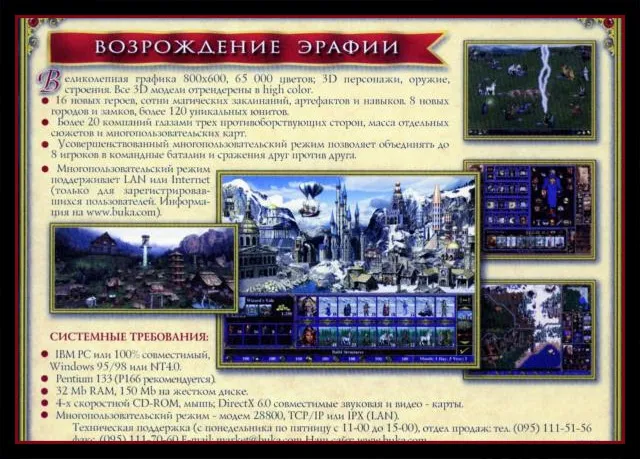
That’s the cover art we’re talking about.. O_O
In the following days, weeks, and months, I diligently gathered game information. I had no internet, and I had only the most superficial understanding of game strategies, but I did have a magical notebook filled with meticulously written units, abilities, castles, and so on. For a long time, I played alone, regularly getting my computer defeated, attacking goblin hordes against unicorn herds, and trying to break through garrisons filled with archers and slow zombies. One time during a break, I overheard a conversation between two boys in my class:
- So, how did it go, have you defeated everyone yet?
- No, I still have that pesky necromancer and the dragon lord, I can’t beat him..
- Are you talking about "Heroes"? - I timidly inquired.
- Yeah, do you play too? - the boys had a cultural shock. Showing them a tattoo on my butt would have had the same effect.
- Well, yeah, at Stronghold, but not very successful yet, - I shared my troubles with them.
The next few weeks, the three of us became fixated during breaks, discussing tactics against foes on various maps and traversing campaign storylines. Things began to improve. By the time the addons Armageddon's Blade ("Клинок Армагеддона") and Shadow of Death ("Дыхание смерти") were released, I was fully armed and had seriously deepened my knowledge of the world.
Changes in gameplay and the game itself were primarily cosmetic: the developers reworked the game, doing a titanic job and gifting Enroth with stunning visuals. Even by today’s standards, the third part of the series looks very beautiful and inspires nothing but admiration. We still run heroes over the map, build armies, and fight for cities, artifacts, and resources. The number of factions in the game increased to nine (eight in the original game and one in the addon): three good - Castle (humans), Stronghold (elves), and Tower (wizards), three evil - Inferno (demons), Necropolis (undead), and Dungeon (warlocks), and three neutrals - Fortress (beast masters), Citadel (barbarians), and Rampart (elementals, bonus town of the addon). We could build cities, search for the Grail, assemble powerful artifact sets, study magic from four schools... add to this a bunch of separate scenarios and a flexible map editor, and you’ll understand why players spent days on end in this game. The addons provided players with even more additional objects, colorful new heroes, and new storylines.
I spent my graduation year of 2002 under the banners of Tarnum (already the second time, mind you, one completion of "Chronicles of Heroes" just wasn’t enough), though the very chronicles, which many have criticized and labelled as extortion, captivated me so much with their plot that I... started writing a book. The book, alas, still hasn't materialized, but 250 pages in A4 format are still carefully stored on my computer. Although with time, I can only chuckle and say how juvenile those manuscripts were. Yet, as they say, from the heart..
Now it must be stated that I was lucky to discover the third part at the most idyllic period. I had a lot of time on my hands, games of such a level were new to me, so the "Heroes" became a wonderful discovery rather than just a disk in a box. Beautiful cutscenes, meticulously drawn cities, original units, artifacts, map objects, atmospheric music - it all looks entirely different through the eyes of a child than through those of an adult. Therefore, I was fortunate. Had I opened this series later - there would have been no such magic, just a sword devoid of magic.
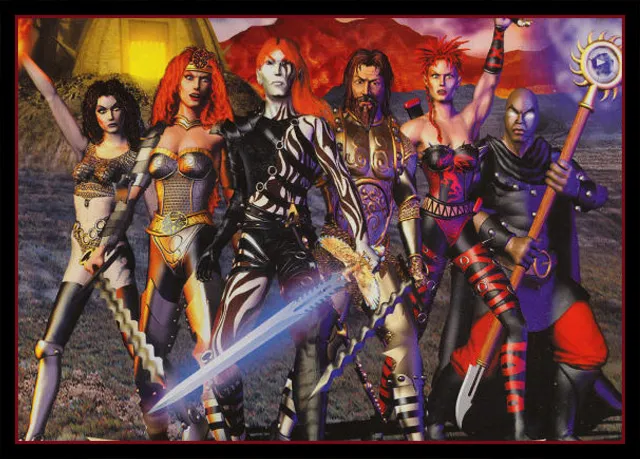
Our protégés in "Armageddon's Blade".
I’ve read several negative (!) reviews regarding the third HoMM on portals and in magazines. Yes, that happens too. The main argument is that the creators abandoned strict faction limitations and gave each race a set of fliers, archers, and mages, thereby blurring the distinctions between them and practically neutralizing gameplay for each. In a way, I can partly agree with the critics (there were indeed greater differences between factions in the first two parts), but I absolutely disagree when it comes to gameplay uniformity.
Even though there are archers, fliers, upgrades, and so forth available to everyone, we can’t speak of a lack of differences in the game. Some castles are excellent for long-lasting missions, where they become unbeatable (let’s affectionately recall the Necropolis, which is sometimes even banned on XL maps). Others can be quickly made for asset capture, as long as the necessary resources are nearby (hello, Fortress of the barbarians, devouring wood by the tons!). Thirds are balanced for any type of game and perform well on almost any map (as, for example, the beloved elves with their Stronghold). I won't even mention the heroes leading these troops into battle.
The slow-moving troops of the Fortress, tailored for defense, when commanded by a leveled Beast Master, can give even bold attackers like barbarians a run for their money (though if the latter are led by Krag Hack, I wouldn't be so sure of the water dwellers' victory). A Warlock with black dragons and expert Armageddon up their sleeve is a classic genre in speed clearing territories, à la "Draggedon". And a high-level necromancer, especially one who has grabbed a couple of necromancer artifacts, especially on a large map, can lead hordes of skeletons numbering in thousands by the end of the game (I’m not even considering the Cloak of the King of the Undead, because then the necromancer would have an easy time against everyone on practically any map).
Maybe I hold "the third" so dear due to the memories that remain. I don’t know, and I won’t judge. But this part sits at the top of my personal hero list, and it currently shows no signs of leaving that spot.
INNOVATOR
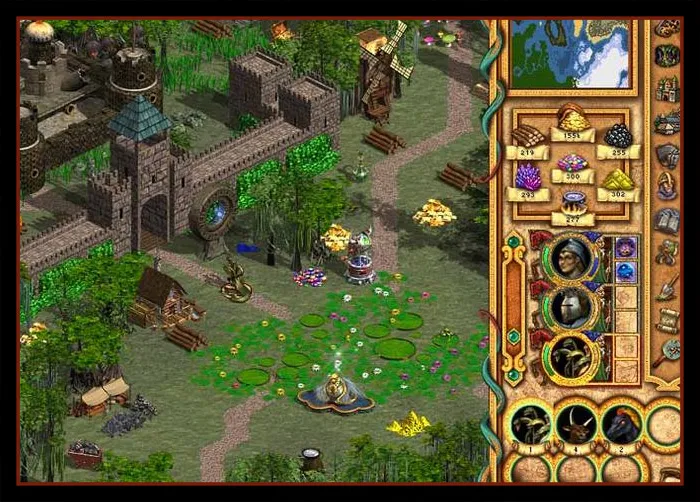
Beautiful, detailed... but it doesn't grab you.
Meanwhile, I started university. School was over; student life began, and everything changed radically. It seems that folks at New World Computing sensed it - and threw in a completely new Heroes IV. I know the explanation seems far-fetched, but it feels accurate in terms of meaning. The fourth installment, by the way, turned out to be the most ambiguous heroic project, receiving both praise and heaps of criticism. I, however, snatched it up as soon as it hit the market. Snagged it, installed it - and was perplexed.
The world changed. Jhelu (an elf-warrior, a hero from the third part's addons) and Kilgor (a barbarian king), clashing, fulfilled an ancient prophecy and brought local destruction to poor Enroth. So, all survivors had to quickly port themselves to Axio, a new and yet unblemished world. I don't know why they had to destroy Enroth, but I have the impression that a radically new system needed a radically new world. Hence, Enroth perished, and Axio was born. In the original game, throughout six campaigns for each race, we must settle in Axio, thereby starting life from scratch.
New World Computing seemingly decided to revert to the first two installments of the series, reducing the number of races to six and trying to make them distinct, as before. We had factions of Sanctuary (humans), Academy (mages), Wilderness (elves), Necropolis (undead), Haven (chaosists), and Fortress (barbarians). All six towns have unique units and buildings, and even within a faction, cities can be constructed quite differently: new unit generators force the player to choose which unit dwellings they want to build. This, I must say, does not count unique buildings for each town. Additionally, each faction possesses its own magic, except the barbarians: they cannot cast spells.
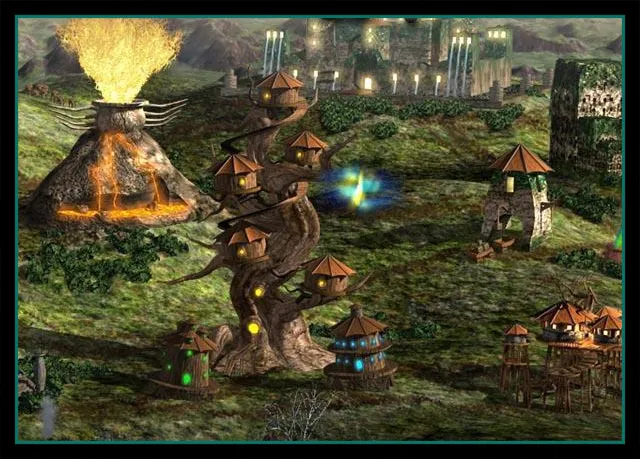
You can't build beautiful houses anymore - it’s forbidden.
The heroes have changed. They are now not just commanders but also fighters who personally participate in battles, rather than just waiting idly. Their leveling has been fundamentally altered: now, a hero could choose 5 primary skills within which they wanted to develop themselves. Combinations of these skills led to advanced classes: for instance, Archmages (the hero had to master magic from three schools), who increase the power of their spells by 20%. If in the third part, the list of secondary skill requirements for a hero varied only slightly, now the development opportunities have significantly increased. A strong hero could quite possibly replace an entire army, and troops learned to move across the map autonomously.
The adventure map has also undergone some changes. Now, it was cloaked in the fog of war, which meant that an enemy could stealthily sneak up on us and strike from around a corner. Something, however, remains unchanged. We still have to explore numerous sites, gather tons of artifacts, collect resources, mines, unit generators, and altars. However, if it sounds interesting at first glance, the visual representation of the map seriously lagged, and the fourth installment lost what the third "Heroes" were known for - clarity. A similar fate awaited castles: sieges, which used to be so clear, turned into lengthy maneuvers involving breaking down gates, shelling towers, and other shenanigans.
If I breezed through the third part, I could barely manage the first two campaigns in the fourth. That's where my acquaintance with this part of the series came to an end. I don’t know what the reason was; I suspect that in striving for complexity, the developers lost the lightness and unobtrusiveness of the game, which had been the hallmark of the series. Had they limited themselves to merely incorporating a new leveling system and engaging scripted events (the editor in "the fourth" is excellent in its versatility), everything could have turned out quite differently.
However, what came out is what came out, and the game received two necessary addons The Gathering Storm ("Грядущая буря") and Winds of War ("Вихри войны"), while New World Computing stepped away, passing the baton to companies Nival and UbiSoft.
RESTORER

Angels. Fighters or cute critters..?
Nival considered the players' feedback on the ambiguous "fourth" and decided to deliver a fifth part with a plus. In 2006, [Heroes of Might and Magic V](/games?search=Heroes of Might and Magic V) stepped forward into both the past and the future, and even a little sideways. Let’s break it down..
The storyline followed the path laid out by Heroes IV: the developers offer us a new world, Ashan, created by the great Asha, the mother of all dragons. Her brother, Urghash, the progenitor of demons, engaged in a battle with Asha but was defeated. He was imprisoned in the core of the world, while his charges were exiled to Shio, a hellish prison-world. Twenty years later, amidst battles with the demons, King Nicholas is set to marry Lady Isabelle and live happily ever after. However, unexpected guests arrive at the wedding - demons from Shio, and a war breaks out in Ashan, during which we can take sides with one of six factions.
These would be Order (humans), Academy (mages), Forest Alliance (elves), Inferno (demons), Necropolis (undead), and the League of Shadows (dark elves). Two more races await us in the addons. In Hammers of Fate ("Владыки Севера") - the dwarves, and in Tribes of the East ("Повелители Орды") - the barbarians. The construction principle of cities was borrowed from the third part, and we again have those seven creature generators, along with some new innovations. Heroes inherited from "the fourth" a branching development system, though the number of classes for each faction decreased to one, in contrast to the two in the third and fourth parts of the series. But the main change was the graphics.
The fifth part greeted the fans of the series with full 3D. The voluminous cartoonish figures were presumably a bow to the original "Heroes", as the more realistic graphics of the later installments of the series bore little resemblance to HoMM V. All this, combined with a rather inconvenient camera, pushed me away at the time. While friends were passionately playing as Lady Isabelle and thrashing demons, I was spinning the infernal camera around in all directions, hoping that this nightmare was not here to stay. With nostalgia, I returned to the "Chronicles" and "The Breath", where everything felt so familiar, comforting, and intuitive, and I hoped that I wouldn’t have to endure this management nightmare again. Plus, the main campaign struck me as rather bland, so without much interest, I played a few scenarios, packed it away, and waited to see what would happen next.
HOPE
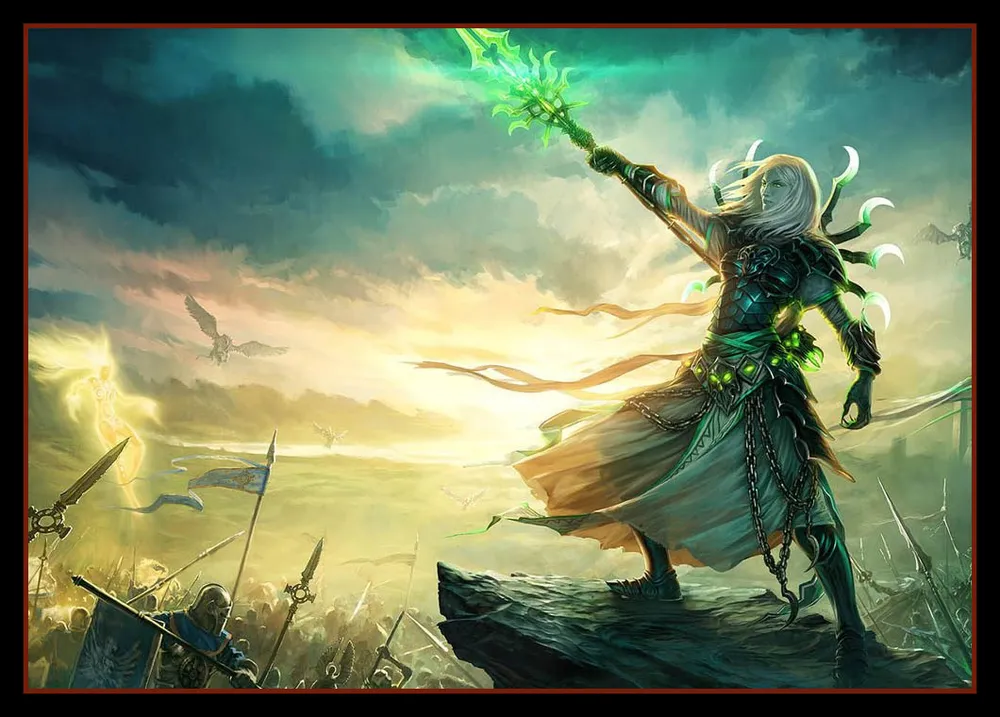
Hoping that the sixth installment doesn't falter!
And then, at long last, the sixth installment appeared on the horizon. Nival dropped out, and under the heroic banners, the company Black Hole Entertainment has been working tirelessly. I remind you that the game's release is slated for 2011, and in light of the impending quarter-century anniversary at UbiSoft, the company managing development, it was decided to "unite" both series (heroic and magic) under one banner, unifying the game name. That’s why for the first time since the original HoMM, the game is titled first Might and Magic and then Heroes VI. However, it immediately becomes clear where its roots lie.
We will again find ourselves in Ashan, but 400 years before the events of Heroes V, when the Griffin dynasty had not yet ascended to the imperial throne. We are promised five story campaigns about the descendants of the deceased Duke Slava and a final mission that will clarify everything. According to announcements and news segments, the sixth installment of the series balances on the edge of the three previous parts, taking from the third the base gameplay, from the fourth the interesting character development, and from the fifth the volume of 3D graphics. The heroes of five factions (Order (humans), Necropolis (undead), Inferno (demons), Citadel (orcs), and Sanctuary (water people)) are once again divided into warriors and mages, but now they level up skill trees rather than primary and secondary traits. This is all determined by their reputation, and each race has its unique abilities.
There are now seven schools of magic, while the resources were "cut" down to four, deciding that heroes should fight for one single rare resource rather than seek and mine their "native" one. City construction has its limitations (not everything can be built), but captured enemy cities can be converted into... your own! A pleasant surprise for me was that the nightmarish camera, which symbolized pure evil to me, is now fixed, and the graphics have taken a step towards beautiful detailed element designs.
Overall, I can summarize that perhaps these anniversary "Heroes" will allow me to once again feel like a child and immerse myself in the world of little people on horseback trotting across the map under their flags. In any case, I really hope for that, because it is these ecstatic sensations that keep me believing in the series and keenly following its fate. I think anyone who grew up in Enroth will understand me. It's not just a sword; it's genuine magic, and whoever says otherwise, for me, the "Heroes" still remain the benchmark of turn-based strategy, while the old compositions of the Stronghold and Citadel periodically pop up in my playlists..