התפתחות סדרת HoMM: "גדלתי באנרוט"
תשומת לב! בפוסט יש הרבה חופש הביטוי, סבלנות נוסטלגית ובכלל שיטוט במחשבות, אז אתם מתודעים. למרבה הצער, בנושא ההיסטוריה אני מודה שלא הערתי את הנושא הזה, אז אל תאשימו אותי על הדו-ערכיות של הפוסט, אני מודעת לכך. :(
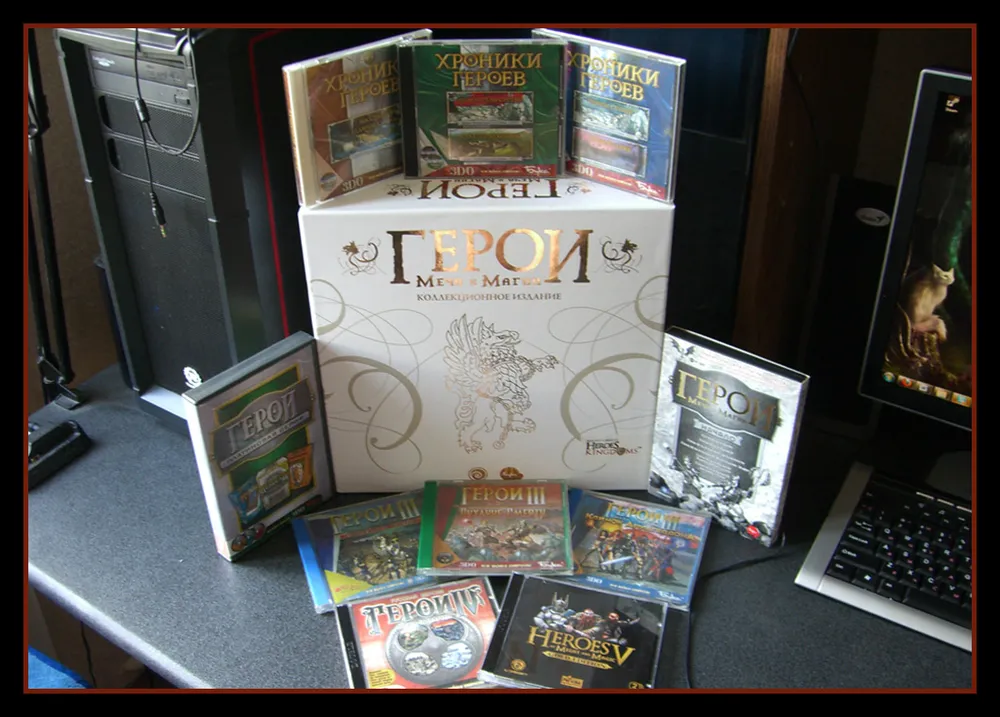
אוהדת הסדרה במקרה הזה - אבחנה. :)
אני מתכננת לכתוב פוסט על אחת הסדרות המחשוב האהובות עליי כבר מזמן, והקמפיין שהוכרז לאחרונה מהאפופארים (תודה לכם, חבר'ה!) נתן לי הזדמנות נהדרת לקחת את עצמי בידיים ולהאיץ את הכיווץ על המקלדת. אני לא כותבת את הפוסט הזה בגלל האספנות (כי, מה יש להסתיר, יש לנו כבר את הקופסה הלבנה הזאת במשפחה), אלא מתוך כבוד לסדרה המדהימה הזאת, שאותה אני אוהבת מתשע השנים האחרונות. ויש לכך סיבות. אבל אני קופצת קדימה. אז, "[גיבורי חרב וקסם](/games?search=גיבורי חרב וקסם)", עם מה טיבם, למה לשבח ומה להקים להם פסל...
למרות שסדרת "גיבורי חרב" התחילה באוגוסט 1995, המקור שלה סדרת Might and Magic הרבה יותר עתיקה: המשחק הראשון [Might and Magic Book One: The Secret of the Inner Sanctum](/games?search=Might and Magic Book One: The Secret of the Inner Sanctum) פותח על ידי חברת New World Computing כבר בשנת 1986. זה היה משחק RPG, שבו השחקן נדרש ליצור דמות ייחודית, לבחור את המעמד שלה, לשדרג את המאפיינים ולחבור עם עד 6 שחקנים, לחקור את העולם, להילחם במפלצות ולבזוז שיירות. בהמשך, Might and Magic (בעברית - מגוון וקסם) התפתחה כסדרה RPG נפרדת (שיצאו לה עשרה המשכים תחת אותה "גג", ולא נחשב לשום מסר), והמשחקים שיצאו כמעט עשור לאחר מכן [Heroes of Might and Magic](/games?search=Heroes of Might and Magic) נחשבים לספין-אוף של הסדרה והולכים בדרך של אסטרטגיה בתורות עם אלמנטים RPG. אגב, השחרור של Might and Magic: Heroes VI מתאמים בדיוק ל-25 השנה לסדרה. אבל על זה מדברים בהמשך. ובינתיים.. אנחנו ב-1995.
מיסד
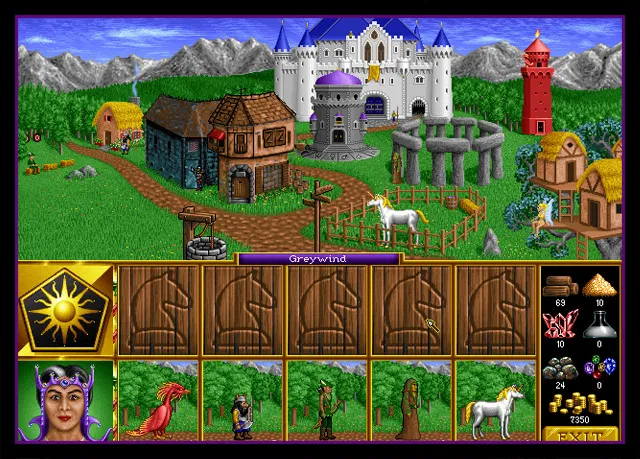
האנימציה הבהירה הזאת היא תחילת האסטרטגיה הפנטזית הכי טובה.
אחרי ששיחקתי מספיק בסדרת Might and Magic ובסמוך לניסיון משחק [King's Bounty](/games?search=King's Bounty), אבי "גיבורי חרב", חברת New World Computing מוציאה את החלק הראשון בסדרה מהנחושת שלה. האסטרטגיה הפנטזית מתחילה את מסע הניצחונות שלה על המחשבים של השחקנים, אשר מיד התמכרו אליה ויכולים לשחק בקמפיינים המרתקים שוב ושוב. somewhere I read that the game was originally planned to be a children's game, a gameplay that anyone could understand. However, parents (unexpectedly!) were also thrilled with the new toy and quickly pushed their kids away from computers ("Go, baby, dad has to work!").
The game's story played out in a colorful fantasy world. Lord Morglin Iron Fist, fleeing from his wicked cousin Ragnar, who usurped the throne, escapes with a handful of comrades to the new world of Enroth. There, he is welcomed not only by new lands but also by unfriendly neighbors who are not particularly pleased with the lord's arrival in the realm. The player can choose to campaign for any of the factions (there are four factions in the game - Knights, Barbarians, Sorceresses and Warlocks), but the correct ending, so to speak, is the victory of Morglin and the establishment of the Iron Fist dynasty in Enroth.
It is precisely in the first part of the game that the ideas and features were established and solidified that make it hard to imagine the series today. The player had to lead their race to victory by capturing all the castles and defeating all enemy heroes, commanding their armies, developing their own generals, exploring the world and collecting artifacts. It should be noted that all four races were unique, each with their pros and cons, and the gameplay for each of the factions was favorably different from the others. Two races took the path of strength, while the other two took the path of magic. The player needed to play their cards right, because if one race lacked flyers, the other, say, wouldn’t have archers. There were no outright losing or weak factions, and any hero could lead to victory.
All of this led to the huge success of the series, so just a year later, another sequel sprang from the workshops.
היורש
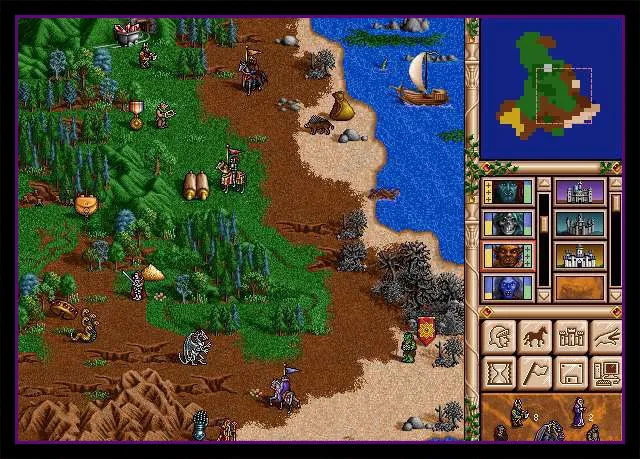
The second "Heroes": we're heading in the right direction, to dragons!
At the end of 1996, the first "Heroes" actions continue with the game [Heroes of Might and Magic II: The Succession Wars](/games?search=Heroes of Might and Magic II: The Succession Wars) ("[גיבורי חרב וקסם II](/games?search=Heroes of Might and Magic II)"). You know the recipe for a good sequel? It's the same as before, only more. The core gameplay of the second part remains the same, however, New World Computing introduced changes into the game.
First of all, there are six classes: the company has added Sorcerers and Necromancers to the existing factions. The races remain unique, and there are significant differences between them. Secondly, the heroes, who remained at the primary attributes from the first part (attack, defense, spell power and knowledge) now have secondary skills that partially repeat the special abilities of characters in the original Heroes. Heroes received mana, which determined their spell limit, as well as new spells from the mage guild. Thirdly, creatures in castles could now be upgraded (although, I admit, upgrades were needed for far from all of them).
The plot of the game develops after the death of our hero Morglin. His two sons, namely Roland and Archibald, start dividing Enroth before they've even buried their father. The hero could choose either the story of "good" Roland, who embodies the forces of good, or the renegade Archibald, who ultimately loses to his brother and, one might say, turns into a stone statue to serve as a warning to later generations. In the addon The Price of Loyalty ("מחיר הנאמנות") there are four more campaigns, new constructions, artifacts, keymaster gates, and the like.
As you can see, what was set in the first part was developed further, further strengthening the foundation of the series. New World Computing shaped a concept that we still know today, and deciding that this variant was good and self-sufficient, they practically did not change it as they developed the third part of "Heroes". I would like to note that I, speaking critically, played the first two parts retrospectively, so I couldn't track the development of the series' ideas from number one to number three in chronological order. However, I highly recommend to all fans of HoMM to at least familiarize yourself a little with these games: they rightfully deserve the reviews and high ratings given to them by the players. In the meantime, I will turn to the third part, which is significant for me in this heroic series.
דגם
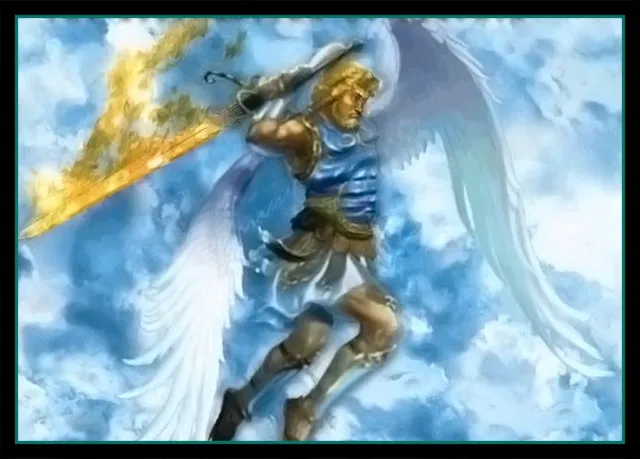
The Archangel - the calling card of the third part.
- New World Computing releases a game that will long keep me glued to the monitor screen and make me skip lessons, simulating a cold, inflammation of wit and something else (and I was a good girl, mind you!). [Heroes of Might and Magic](/games?search=Heroes of Might and Magic) III: Restoration of Erathia ("[גיבורי חרב וקסם III: שיקום של אירתיה](/games?search=Heroes of Might and Magic III: Restoration of Erathia)") practically turned my idea of strategy, game series and games in general upside down. It was wonderful! I’m not even mentioning that it was my first licensed game. I found it strangely enough, at a stall where most of the toys were shamelessly pirated, and there were barely any licenses. I stumbled upon the game completely by accident, but the childish eyes firmly grasped the beautiful cover and wouldn’t let go. And after turning the box around and examining the screenshots, I knew I wanted it more than any cookies. All that was left for mom was to sigh: she sensed something was off but didn't show it and bought me "הגיבורים". I was 15 years old.
The following decade, the game and I grew up together. The first few days, however, were not so great: I just couldn't figure out how to change the game map and where to click to end my turn. My sister helped me figure it out by suggesting that I attack the screen relentlessly in hopes that something would happen. That’s how we got off the ground and started playing. Is it worth mentioning that I spent all day on the game until the computer player came and destroyed my hero?.. But the beginning was established.
I dove right into the adventures of Katherine, the queen ruling Enroth of the dynasty. Her father Nicolas Heart of the Griffin passed away, and she set off for her homeland. As the matter stood, the underground lords of Nigona and the demons of Eofola invaded Erathia, and the red-haired lady needed to quickly mobilize the country to drive the invaders back to where they came from. Meanwhile, the border of Erathia was also turbulent: the barbarians and swamp dwellers started a conflict, which was bound to affect the border towns of Erathia. Such a.. ahem.. mess. This was just the beginning of "נדבך שיקום אירתיה", and Katherine herself is just one of the many heroes whose fates we will follow. But at that moment, I didn't know about that.
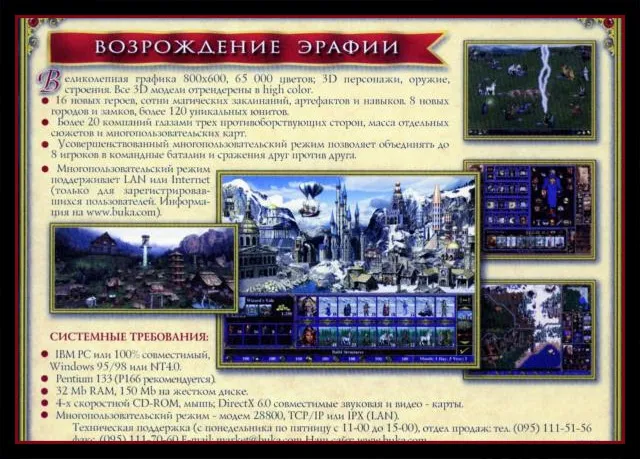
The iconic back cover.. O_O
In the following days, weeks and months I meticulously gathered gaming information. I had no internet, I had the most superficial understanding of game strategies, but I had a magical notebook painstakingly written with units-abilities-castles and so on. For a long time, I played alone, frequently losing to the computer, attacking goblin squads with unicorn herds and trying to break through garrisons stuffed with archers and slow zombies. Once, during a break, I overheard a conversation between classmates:
- So, have you defeated everyone yet?
- No, I still have a necromancer left to defeat, and the dragon lord, I just can’t seem to defeat him..
- Are you talking about "הגיבורים"? - I hesitantly asked.
- Yes, do you play them too? - my boys experienced cultural shock. With the same success, I could have shown them a tattoo on my butt; the effect would have been the same.
- Well, yes, I’m with the Stronghold, but not very successfully yet - I shared my problems with them.
The next few weeks, the three of us glued ourselves during breaks, discussing the tactics of fighting enemies on different maps and passing story campaigns. Things improved. By the release of the addons Armageddon's Blade ("חודה של ארמגדון") and Shadow of Death ("נשימה של מוות"), I was well armed and had significantly deepened my knowledge of the world.
Changes in gameplay and in the "third installment" were primarily cosmetic: the developers redraw the game, going through a titanic effort and giving Enroth stunning visuals. Even by today's standards, the third part of the series looks very beautiful and evokes nothing but admiration. We still roam heroes across the map, build armies and fight for towns, artifacts and resources. The number of factions in the game increased to nine (eight in the original game and one in the addon): three good - Castle (humans), Rampart (elves) and Tower (sorcerers), three evil - Inferno (demons), Necropolis (undead) and Dungeon (warlocks), and three neutrals - Stronghold (beast masters), Fortress (barbarians) and Conflux (elementals, bonus city from the addon). We could build towns, search for the Grail, assemble powerful artifact sets, study magic from four schools.. add to this a bunch of separate scenarios and a flexible editor, and you'll understand why players were glued to this game for days on end. The expansions provided players with even more additional objects, new colorful heroes and new storylines.
I spent my graduation year of 2002 under the banners of Tarnum (already for the second time, by the way, one passing of "Heroic Chronicles" was simply not enough for me), and these chronicles, which many criticized and labeled as extortion, impacted me so deeply that I... sat down to write a book. The book, alas, has not come to fruition, but 250 A4 pages are still kept safely on my computer. Though, as time passed, I can only smirk and say how childish those manuscripts were. But as they say, it's from the heart..
Now I must admit I was lucky to catch the third installment during the most suitable period for it. I had a lot of time, high-level games were a novelty for me, so "גיבורי חרב" became a wonderful discovery, not just a disc in a box. Beautiful cutscenes, carefully drawn towns, original units, artifacts, map objects, atmospheric music - all of this looks completely different in the eyes of a child compared to those of an adult. Therefore, I was indeed lucky. Had I opened this series later, that magic would have been absent; there would have been just a sword, without the magic.
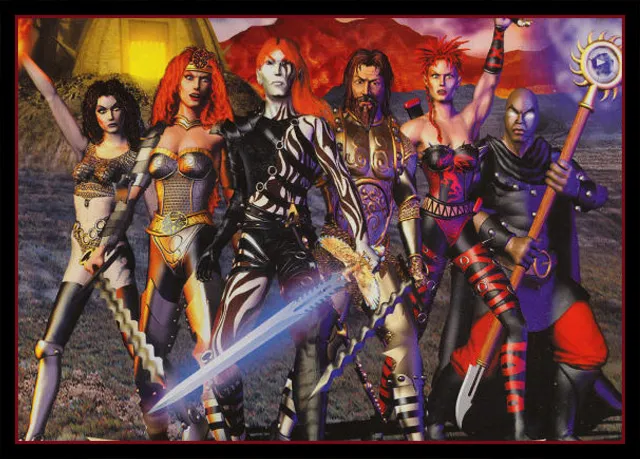
Our heroes in "Blade of Armageddon".
Multiple times I read negative reviews about the third HoMM on portals and magazines. Yes, that happens. The main argument is that the creators refuse to impose strict limitations on factions and funded each race with a package of flyers-archers-mages, resulting in the erasure of differences between them and almost individualizing the gameplay for each of them. To a degree, I can agree with the critics (to tell the truth, there were indeed more differences between factions in the first two parts), but on unifying gameplay, I absolutely disagree.
Even though archers, flyers, upgrades and so forth exist for everyone, the claim of no differences in the game cannot be made. Some castles are perfect for long-term missions, where they become unbeatable (remember my fondness for Necropolis, which on XL maps is sometimes even banned). Others can easily make property grabs, provided there are nearby resources (shoutout to the Fortress of barbarians, which devours wood for breakfast!). The third is balanced for any type of play and performs well on nearly any map (like, for instance, the beloved elves with their Rampart). Not to mention that the heroes leading these ranks into battle.
The forces of the slow Fortress, designed for defense, under the banners of a leveled Beast Master will give even attack-focused barbarians a run for their money (though if the last is led by Kraag Hack, I wouldn’t be too confident about the victory of the swamp dwellers). A Warlock with black dragons and expert Armageddon in their pocket is a classic when it comes to rapid territory cleaning in the style of "Dreggeddon". And a high-level necromancer, especially one who has seized a couple of necromantic artifacts, particularly on a large map, can summon hordes of skeletons that may amount to thousands by the end of the game (I won't consider the Cloak of the King of the Undead because then the necromancer will give everyone a hot time on practically any map).
Maybe that's why I'm so tender toward the "third installment" specifically because of the memories it left me with. I don’t know and won’t judge. But this part occupies the top spot of my personal hero list and is showing no signs of leaving that position.
מחדשן
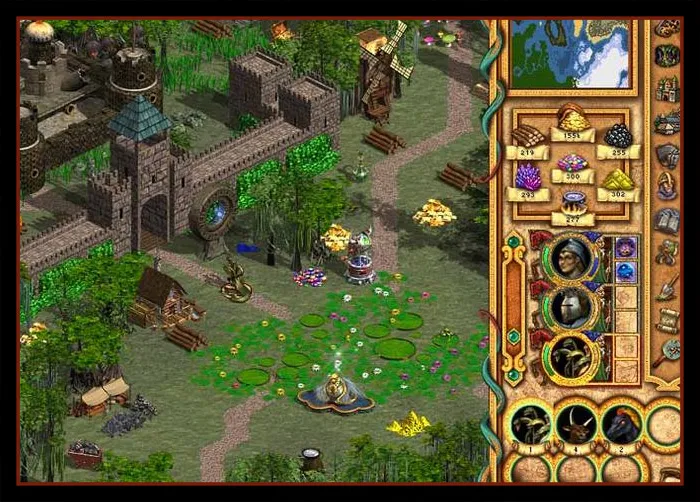
Beautiful, detailed.. but doesn’t grab you.
Meanwhile, I entered university. School was over, student life began, and life changed drastically. It feels like New World Computing sensed this - and tossed out a completely new Heroes IV. The explanation feels contrived, of course, but it seems plausible. The fourth installment became the most ambiguous heroic project, receiving both rave reviews and buckets of criticism. I, however, snagged it the moment it hit the market. Snagged it, installed it - and was puzzled.
The world had changed. Jellu (elf-warrior, a hero from the third part’s addons) and Kilgor (the barbarian king) clashed and brought ruin upon the beleaguered Enroth. So all survivors had to urgently teleport to Axenot, a new and so far unharmed world. I don’t know why Enroth had to be destroyed, but I came to believe that a radically new system needed a radically new world. Thus Enroth perished, and Axenot emerged. In the original game, throughout six campaigns for each race, we will need to settle in Axenot, beginning a fresh life.
New World Computing, evidently deciding to revert back to the first two installments of the series, reduced the number of races to six and attempted to make them distinctively themselves, as before. The game provides us with the factions of the Abode (humans), Academy (mages), Sanctuary (elves), Necropolis (undead), Fortress (chaos beings) and Stronghold (barbarians). All six towns possess unique units and buildings, and even within one faction, the towns can be built up quite differently: the new creature generators force players to choose which units' homes they want to build. This, by the way, does not count on unique buildings for each town. Moreover, each faction possesses its own magic, with the exception of barbarians: they are not good at casting.
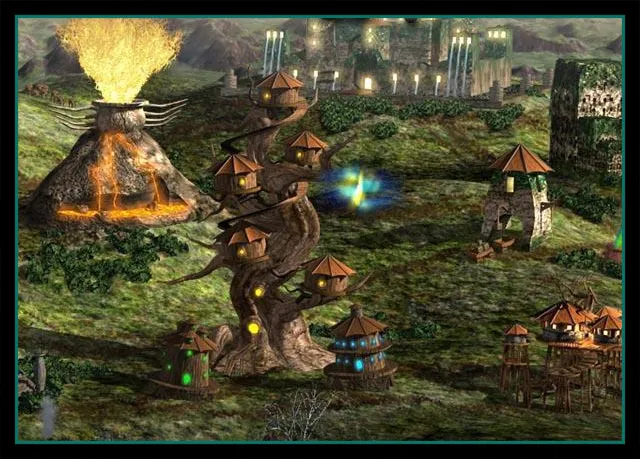
You can’t build beautiful houses anymore - it’s not allowed.
The heroes have transformed. They are no longer just commanders but fighters who personally engage in battles, rather than waiting for fate to bring them something. Their leveling up was fundamentally altered: now a hero could choose 5 primary skills within which they would like to develop. These combinations of skills resulted in advanced classes: for instance, Archmagi (where the hero had to command the magic of three schools) increase their spell power by 20%. While the list of necessary secondary skills for a hero in the third part varied only slightly, now the potentials for development have increased exponentially. A strong hero could easily replace an entire army, and armies learned to move independently across the map.
The adventure map has also undergone some changes. From now on, it was shrouded in fog of war, meaning that the enemy could sneak up on us and hit us from behind. Some things, however, did not change. We still encountered numerous sites we could visit, an abundance of artifacts to be looted, resources, mines, creature generators, and altars. However, if it sounds interesting at first glance, the visualization of this map seriously underperformed, and the fourth installment lost what the third "Heroes" were famous for - visual clarity. A similar fate awaited the castles: the sieges, which were straightforward before, turned into lengthy maneuvers involving breaking down gates, bombarding towers, and other tricks.
If I passed the third installment eagerly, in the fourth I could barely complete two campaigns. And that’s where my acquaintance with this part of the series ended. I don’t know what caused that suspicion; I suspect that in the pursuit of complexity, the developers lost the lightness and unpretentiousness of the game that the series was known for. And, had they limited themselves to just implementing the new leveling system and interesting scripted events (the editor in the "fourth installment" is magnificent in its multi-functionality) - things could have turned out completely differently.
However, what has happened has happened; the game received its two required addons The Gathering Storm ("סערה מתקרבת") and Winds of War ("רוחות מלחמה"), and New World Computing stepped down, passing the baton to Nival and UbiSoft.
שחזור

Angels. Whether they are warriors or cuties..
Nival took notice of players' reactions to the ambiguous "fourth installment" and decided to make the fifth one a five with an extra plus. In 2006, [Heroes of Might and Magic V](/games?search=Heroes of Might and Magic V) emerged, taking steps both backward and forward, and a little sideways. In order..
The story of the game followed the path introduced in Heroes IV: the developers present us with the new world Ashan, created by the great Aska, the progenitor of all dragons. Her brother, Urgash, the progenitor of demons, entered into a battle with Aska but was defeated. He was sealed in the world's core, while his charges were exiled to Shio, a hellish prison world. After battles with the demons (and precisely twenty years later), King Nicolas is gearing up to marry Lady Isabel and live happily ever after. But at the wedding, unexpected guests emerge - demons from Shio, and war erupts in Ashan, during which we can choose to side with one of six factions.
These are the Order (humans), Academy (mages), Woodland Alliance (elves), Inferno (demons), Necropolis (undead) and League of Shadows (dark elves). Two other races await us in the addons. In Hammers of Fate ("מאורות הצפון") - these are the dwarves, and in Tribes of the East ("אדוני הכוח") - the barbarians. The town building principle was adopted from the third instalment of the game, and we find ourselves with the same seven creature generators but with some new innovations. Heroes inherited from "the fourth installment" a branched leveling system, though the number of classes for each faction has been reduced to one compared to the two in the third and fourth iterations of the series. However, the main change was the graphics.
The fifth installment welcomed fans of the franchise with full 3D. Volumetric cartoon figures were, I suppose, a nod to the first "Heroes", as the more realistic graphics of later series bore little resemblance to the look of HoMM V. All combined with a fairly awkward camera that repulsed me at the time. While friends were enthusiastically playing as Lady Isabel and wreaking havoc on demons, I was twisting the infernal camera around and hoping that such horror would never occur again. Longing for the "Chronicles" and "Breath of Death", where everything was so familiar, welcoming and comprehensible, I hoped I wouldn’t have to endure this management nightmare again. Plus, the campaign itself seemed fairly bleak, so after playing a few individual scenarios without much interest, I tucked the game away and started waiting for what would come next.
תקווה
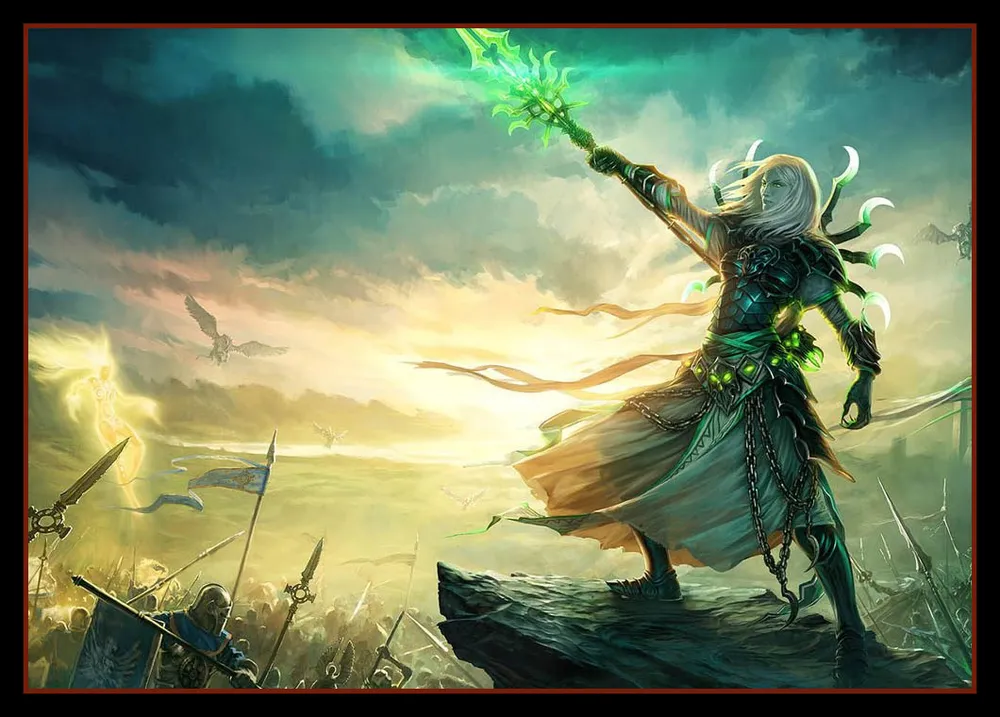
I hope the sixth installment doesn't let down!
And so, finally, the sixth installment loomed on the horizon. Nival dropped out of the picture, and under banners of heroes, the company Black Hole Entertainment was hard at work. I remind you, the release of the game is scheduled for 2011, and in light of this upcoming quarter-century anniversary, the UbiSoft company, overseeing development, decided to unify both series (the hero and varied magical) under one banner, standardizing the game title. That’s why, for the first time since the first HoMM, the game is called originally Might and Magic, and then Heroes VI. Thus, it is immediately clear where it is coming from.
We will again enter Ashan, but 400 years before the events in Heroes V, when the Griffin dynasty has not yet seized control of the imperial throne. We are set to face five story campaigns led by the descendants of the slain Duke of Glory, along with a final mission that will put all with a dot over “i”. According to the announcements and news blocks, the sixth part of the series balances on the junction between three previous installments, taking gameplay base from the third, interesting character development from the fourth, and comprehensive 3D visuals from the fifth. The heroes of the five factions (Order (humans), Necropolis (undead), Inferno (demons), Citadel (orcs) and Sanctuary (waterfolk)) are once again divided into warriors and mages; however, they now upgrade branches of skills, rather than primary and secondary attributes. All of this is determined by their reputation, with each race featuring its own abilities.
The magic schools expanded to seven, while the resources were