
The Story of the Game: Heroes of Might and Magic
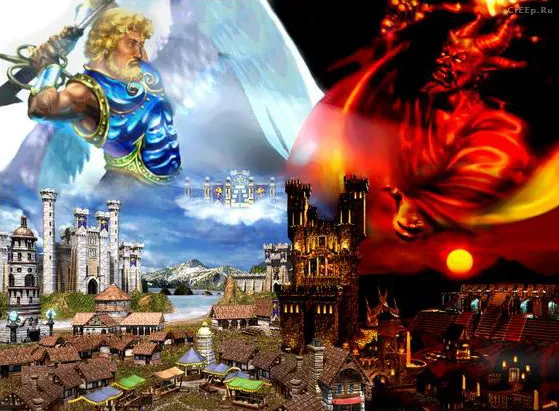
What do we love about video games? I'm sure everyone will answer this question differently. Some adore spending their time playing various shooters, hordes of monstrous monsters, conquering cities, wealth, and glory; others wander for hours in search of adventures in various role-playing games, living in a virtual world of computer fantasy; a third seeks entertainment in various sports simulators, becoming champions in their favorite competitions. But, without a doubt, a huge number of gamers love to play strategic games, as they can create civilizations and build cities, wage wars and capture resources, rule states, continents, and worlds. Maybe that's why strategies are so popular – after all, a person has strived for world domination since birth. And if it can't be done in reality, why not try to rule everything in the virtual world?
I also love strategies. Like with many other fans, this love came to me instantaneously, from the first glance, the first movement of the mouse; it literally overwhelmed my consciousness and drew me into its magical world of tactics and strategy. I played with fervor in various strategies – serious and not so serious, complex and simple, popular and obscure. I reached the heights of world development and fell into the deepest abyss of dark ages, won battles and suffered crushing defeats, created a world in my own image and likeness…. Just like that :)
In general, as you've already guessed, I have played a sufficient number of games in this genre. But among all the toys, there are two or three that I occasionally install on my computer and enjoy replaying. One of them will be discussed in this material. I hope you love it just as much as I do…
Heroes of Might and Magic… When I speak of this game, I feel a thrill in my soul and a pause in my heart. Yes, Heroes have become not just a game but a kind of standard, a monument, the ideal of turn-based strategies. Over its 15 years of existence, this game managed to formulate the canons of the genre, win the hearts of millions of gamers, occupy the highest places in the top best games in history, and simply become a place of pleasant pastime. All these years we played Heroes, admired them, rejoiced in victories, lived in a fictional yet very real fantasy world created by the series' writers. Some started with the very first ones, others joined along the way, from the second, third, fourth, or even fifth part of the legend. But in any case, people who once started playing Heroes of Might and Magic became lifelong fans of this gaming miracle. Forever lost among the fields, forests, and meadows of the magical Enroth…
Today, I want to tell you the history of this game. I became a fan of Heroes from the third part, so during my research of the series, I learned a lot that was interesting for myself. I hope you enjoy my story; some will nostalgically remember the old days of great battles, some will contemplate acquiring the fifth part, and some will discover and immerse themselves headfirst in the adventures of a game that is completely new to them. And, newbies, believe me – it's worth it!
It's no secret that strategic games held quite a significant place among their competitors right from the beginning of the industry's development. What's more, they were much more popular than even now. So, back in 1995, everything was fine in this genre. Among Real-time strategies, the unrivaled Dune, the magnificent Warcraft, and the newly emerging Command & Conquer ruled. In another camp, in the world of turn-based strategies, the activity was no less, and even more – gamers were already playing the stunning Warlords, battling in King's Bounty, and building their civilizations in the legendary Sid Meier’s Civilization. Later, Master of Orion, Colonization, Lords of The Realm, X-COM, Panzer General appeared. Each of the mentioned games laid the foundations of the genre, bringing something new and uniquely their own, capable of complementing and saturating the world of turn-based strategies. But this entire list was brilliantly highlighted, supplemented, and in some moments even overshadowed by a game released in 1995. Yes, friends, this game was Heroes of Might and Magic.
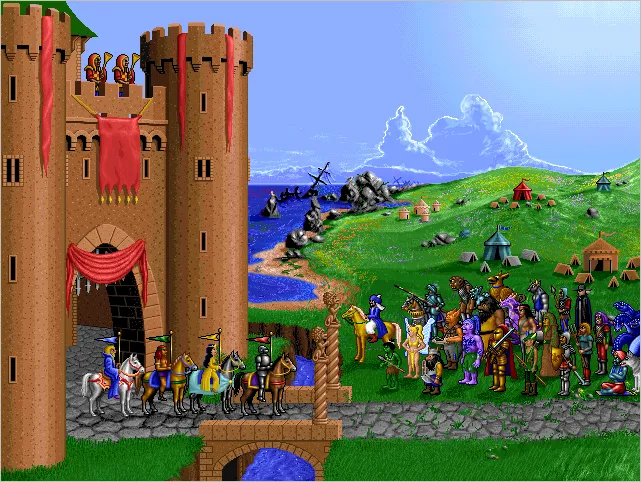
In 1993, the globally renowned company Might & Magic and King's Bounty, New World Computing, parted with its independence and came under the control of the publishing corporation 3DO. The harsh market laws (as the era of CRPG, on which the company had originally flourished, began to gradually lose ground) or financial troubles of the company are unknown. But this does not matter now; what matters is that as a result of this union, the world saw a new, unparalleled strategic game Heroes of Might and Magic: A Strategic Quest, which became the best strategic game of 1995.
Fans of strategy, of course, could not overlook this yet unknown game, if only for the reason that it was developed based on the megahit King's Bounty, released in 1990. But this was neither a sequel nor the same game under another name – Heroes of Might and Magic were significantly different from Kings, but the principles developed by the developers in Heroes were taken from the game of the 90-year version. The designer of both games was the creator of the Might and Magic series Jon Van Caneghem. Therefore, general parallels were drawn. And if we talk about parallels, they certainly also extended to another, more successful and advanced game produced by New World Computing, namely Might & Magic. Even the name was similar to that game. But as I mentioned earlier – no one dared to say that the new game was an absolute copy of the old; the developers merely took the best elements from them, enriching them with new, revolutionary, quality features.
The growing popularity of Heroes was not sustained solely by their glorious ancestors – the game featured unparalleled gameplay in which a player could battle other players or simply the computer for control over territory and resources.
The game's design was executed with high quality and seriousness, and the designers worked hard. As a result, from the 'conveyor', a kind of benchmark emerged for others, a game that began to draw fans to its camp through quality, quality, and again quality.
Heroes of Might and Magic were made in an entirely independent and unattached plot, and the game used advanced SVGA graphics, which was state-of-the-art for the time, and primarily struck us with its appearance. The hand-drawn graphics astonishingly combined stylization with medieval miniatures (the armies of the knightly castle) and modern kitsch (fairies in swimsuits and blue-blue djinn). However, this tendency was also inherited by the role-playing series Might and Magic, rarely one of which was without robots and references to Star Trek. In Heroes, thematic references were, fortunately, purely visual.
During the game, we managed heroes – people who had a special status in the kingdom and possessed the ability to recruit other game creatures into their armies. These creatures could be recruited in towns and other various settlements. Heroes with their armies could: battle with other heroes and neutral (