
The History of the Series Development. Part 1
Oh horror - yesterday in the comments to another post, someone asked, "why was Arena originally a gladiatorial game?" And upon searching, I found that no one described the history of the series, not even a copy-paste! This issue needs to be urgently addressed. No, not by copy-pasting - by translating. Although, it's a very free translation with lots of comments. Well, all other prefaces aside - let's go. So, long ago, in a galaxy far, far away...
TES: Arena
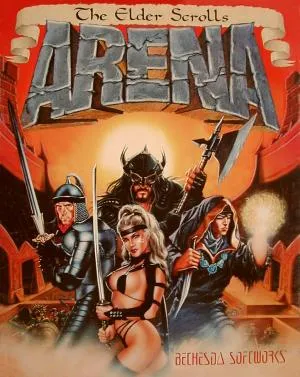
Before working on Elder Scrolls, the guys at Bethesda Softworks (Hereafter: BS, as I will get tired of writing it every time =)) primarily worked on sports games and licensed games (by the way, they even had a license for Terminator). In the six years from the founding of the company to the release of Arena, in 1992, BS released ten games, six of which were sports games – games with titles like Hockey League Simulator, NCAA Basketball: Road To The Final Four ('91/'92 Edition), and Wayne Gretzky Hockey – as well as working on licensed games - adapting the Terminator series to the computer world.
Unfortunately (or rather, fortunately), BS did not succeed with sports games, and Terminator was not exactly a huge success – that's when the idea of creating their own RPG game arose. Designer Ted Peterson recalls the experience: "I remember chatting with the guys from SirTech, who were making Wizardry: Crusaders of the Dark Savant at that time, and how they laughed at us, not believing we could pull it off." Ted Peterson worked alongside Vijay Lakshman as one of the two designers of what was then simply called Arena, "a medieval gladiator simulator".

Peterson, Lakshman, and Julian LeFay were those who, in Peterson's opinion, "really stood at the origins of the series". Game journalist Joe Blankett, however, attributes such a characterization to company co-founder Chris Weaver: "If Weaver had a child, it would be Arena – that says it all." During the development of Arena, Todd Howard, later Executive Producer of Oblivion, joined BS, whose first "task" there was to check the CD-ROM version of Arena. Ted Peterson joined the company in 1992, with the aim of developing games for Terminator: 2029, Terminator Rampage, Terminator Future Shock, and other "pretty forgettable titles", as Ted himself put it.
Peterson, Lakshman, and LeFay, being long-time fans of pencil-and-paper role-playing games, influenced the creation of Tamriel the way it was created. They were also fans of Looking Glass Studios with the Ultima Underworld series, which served as "a prototype" and "inspiration" for Arena.
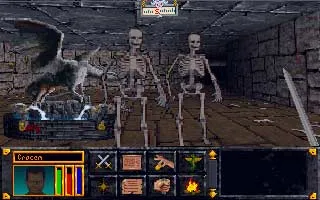
The influence of Legends of Valour, a game that Ted Peterson describes as "a freeform first-person game set in the same city", was also noted. When asked about his opinion on the game, he replied, "Of course, it influenced...". Besides the fact that BS made Arena "Much, much bigger" than other games of that time on the market, Peterson believed that the team "did not make a revolution" when creating Arena.
Initially, Arena was not supposed to be an RPG at all. The player, along with their team of fighters, would travel the world, battling other teams on their arenas until the player became a "great champion" in the capital, the Imperial City. As development progressed, the role-playing elements evolved until the idea was proposed that a decent role-playing game could be made out of all this (and they were damn right!). Ultimately, combat became a less important part of the game, while the exploration component increased. Later on, RPG elements were finally added to the game, the game expanded to include cities outside the arenas, and caves outside the cities. Ultimately, it was decided to significantly reduce the idea of tournaments in general and focus on quests, dungeons, and the world.

Interestingly: In the excerpt, instead of which I inserted this block, it was stated that from the actual arena in Arena (forgive the pun) nothing remained but the name and the text file with the description. In general, many people are greatly mistaken, and some publications even asked rhetorical questions about whether to rename the game... So, it's time to unveil the masks – the arena in Arena exists, absolutely everyone playing it has seen it but didn't pay attention – the whole trick is that *drumroll* Nirn translates as Arena! (for those who are not in the know – Nirn is the mortal plane in the game). Therefore, in principle, the title can be read as The Elder Scrolls: Nirn, there's no special mistake here. In fact, even the developers somewhat awkwardly explained this, but it did not receive attention.
The concept of traveling teams was eventually also removed from the game because the team's decision to shift the game into the RPG genre required changes to the world as a whole.

Overall, the title was a bit clumsy. The idea of "The Elder Scrolls" was proposed by Lakshman, but later Ted Peterson said, "I don't think he knew what the hell it meant more than we did ourselves". Those words - Elder Scrolls - eventually came to mean "mystical tomes of Tamriel, knowledge that recounts its past, present, and future." It was then that in the intro video a voice-over says slightly different text: "It was foretold in the Elder Scrolls..."
The game's release was not very successful (yes, it's hard to believe, but the potential of the game was not seen immediately). BS missed Christmas and was forced to release the game at an unfortunate time for such projects - in March 1994, which was "really serious for such a small developer-publisher like BS". The misleading packaging, which caused disgust among distributors towards the game, led to a modest initial print run of only 3000 copies – which was even less, Peterson recounts, than the sales of his Terminator: 2029. "We were sure we had led the company to bankruptcy". However, days and weeks went by, and the opinion about the game slowly but surely changed for the better.
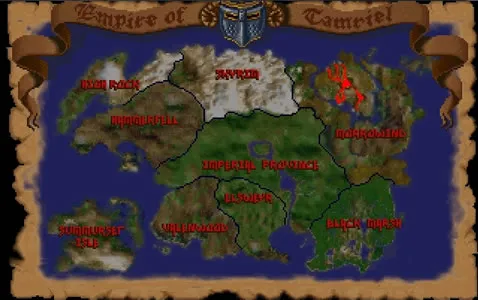
Map during character race selection
And eventually, a small miracle happened – soon, despite quite harsh reviews, a slew of bugs, and unrealistic system requirements – the game became a hit, a cult classic. Ratings began to change from bad to neutral, from neutral to good, from good to masterpiece, until the game was elevated to the standards of RPGs. However, Matt Barton thinks that, in any case, "The game set a new standard for this type of CRPG, but merely demonstrated how much room remained for innovation".
TES 2: Daggerfall
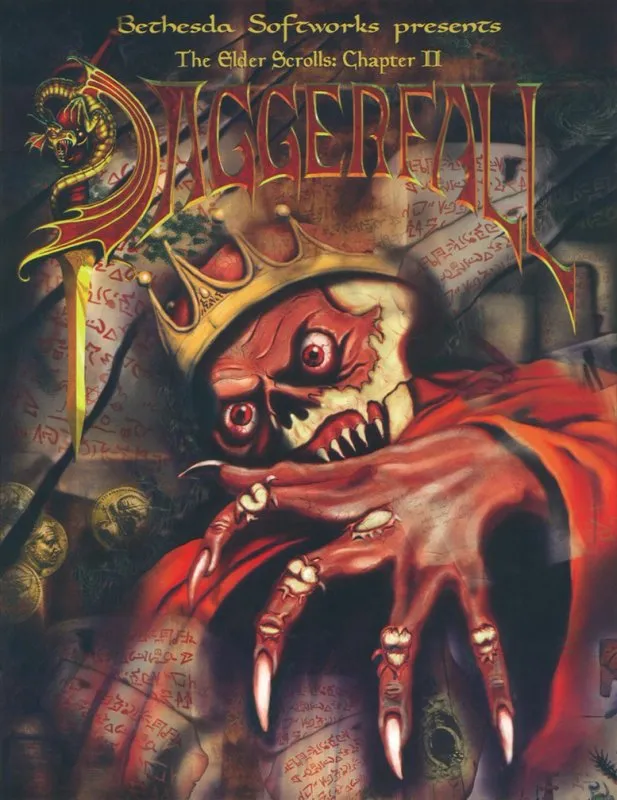
Work on TES II: Daggerfall began immediately after the release of Arena in March 1994. Ted Peterson was appointed lead designer. Initially, the setting was supposed to start in Mournhold and end in Morrowind, but as development progressed, the setting shifted to High Rock and Hammerfell. Daggerfall was not created on a template like Arena, which was extremely linear - "Find the eight missing parts of the 'Staff of Chaos' and use it to save the Emperor from captivity", as Ted Peterson put it, "that's the most cliché plot of all role-playing games - killing the evil wizard". The transition was to "a complex series of adventures leading to various choices".
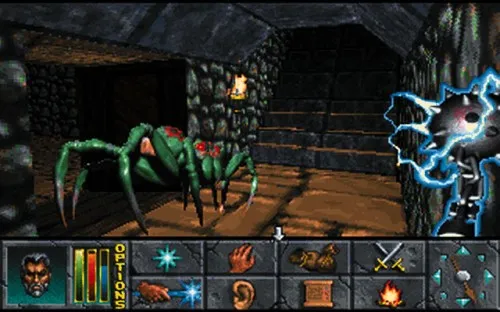
Daggerfall was based on the experience of Arena, but the system was replaced with one that rewarded the player for role-playing. Daggerfall had a new and upgraded engine, which included not just selecting a class from a list as in Arena, but a class creation system allowing players to choose some skills and adjust appearance. Initially, Daggerfall was being developed in pseudo-3D, like Doom, but later the decision was changed in favor of XnGine, one of the first truly 3D engines. The game world of Daggerfall was equal to twice the size of the UK, filled with 15,000 cities and a population of 750,000 NPCs.
Interestingly: by size, Daggerfall is larger than Arena, however, Daggerfall only shows a small bay in Tamriel, whereas Arena has the entire Tamriel. The developers always disliked such a thing as "scale".
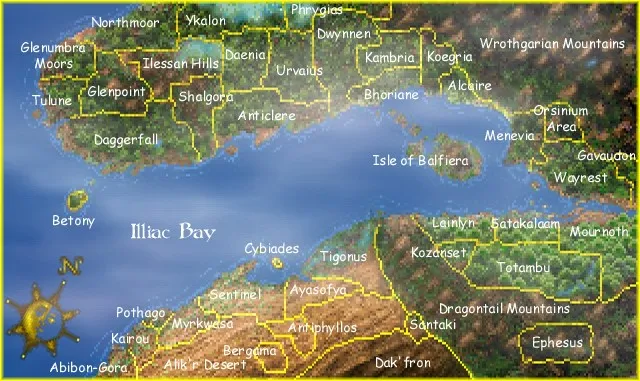
In-game map
Daggerfall, in Peterson's opinion, was devoid of influence from modern video games because they simply "weren't very interesting". "I remember playing King's Quest, Doom, and Sam&Max: Hit the Road, but I can't say they had a significant influence on history or design". The most profound influences on Daggerfall came from some analog games and literature that Julian LeFay or Ted Peterson happened to play and read at the time, for example, the book "The Man in the Iron Mask", written by Dumas, which influenced "the quest where the player had to find the missing Emperor", and Vampire: The Masquerade, which influenced "the idea of vampire clans scattered throughout the world".
Daggerfall was released August 31, 1996, within the scheduled time frame. Like Arena, Daggerfall suffered from an enormous number of bugs. Some of them were fixed with patches, however, not all bugs could be definitively fixed – to release a game of such scope, the beta testing process had to be forcibly interrupted – even today Daggerfall is not fully understood.
Interestingly: Daggerfall accumulated so many different errors that it has been called "a bug sanctuary" and "Baggerfall" – the most infamous errors include eternal questions like "Why when I cross through a wall using levitation, does the horse and cart move with me?" and even script-related story errors. Nevertheless, another such game won't be made anytime soon.

Later, LeFay said, "we collected all possible nonsense in Daggerfall". Subsequently, the company made games more cautiously, focusing on quality rather than quantity.
Then there were Battlespire and Redguard, Morrowind with expansions, the great and terrible Oblivion...
However, about this in the second part
Source: English Wikipedia
Translation and comments: Pegazs