
Elex Overview.
Elex is an action/RPG from the creators of Gothic, released 2 years ago. I should say right away that I am not a fan of Gothic, although I have played the first two parts several times. But that was about 15 years ago, I've forgotten a lot, leaving only some vague memories. So, unfortunately, I won’t be able to fully compare Elex with Gothic.
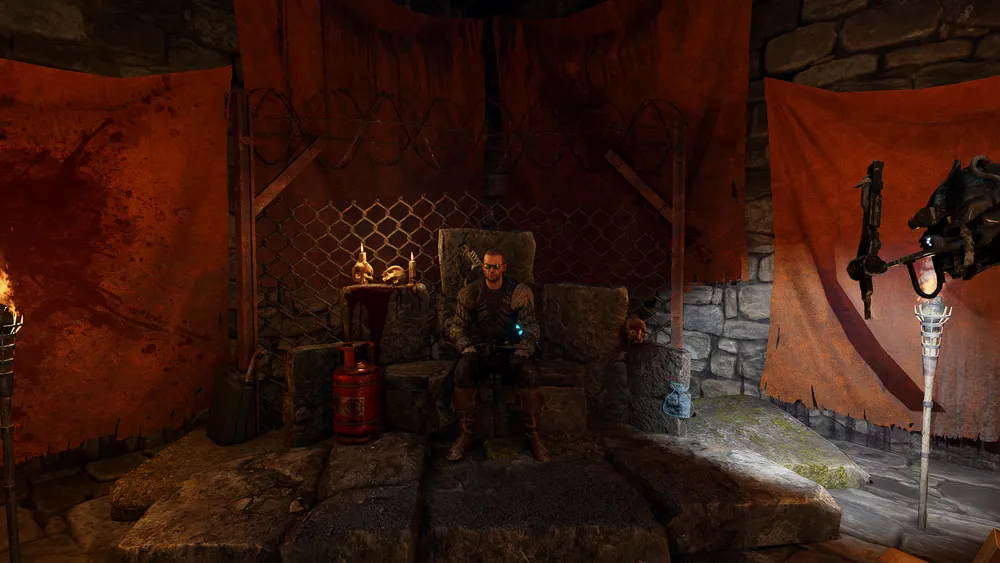
Plot.
This time, the game has chosen a sci-fi setting. The Piranhas have sent us to "conquer" the planet Magalan. A large comet struck the planet about 200 years before the events of the game. It seems like yet another post-apocalypse in all its glory? Yes and no. Although remnants of a civilization very much resembling our modernity are scattered across the planet, overall, both the planet and its inhabitants have recovered from the impact. The climate has changed significantly, but in general, it resembles ordinary Earth conditions. To the south lies the Tavar Desert, just north of it - the tropical and broadleaf forests of Edana, further north - Abessa with mixed and coniferous forests, Ignadon, lying amid scorched land now abundant with volcanic activity due to the awakened volcanoes after the collision, and also - at the very north of the continent Ksarcor - the icy wasteland.
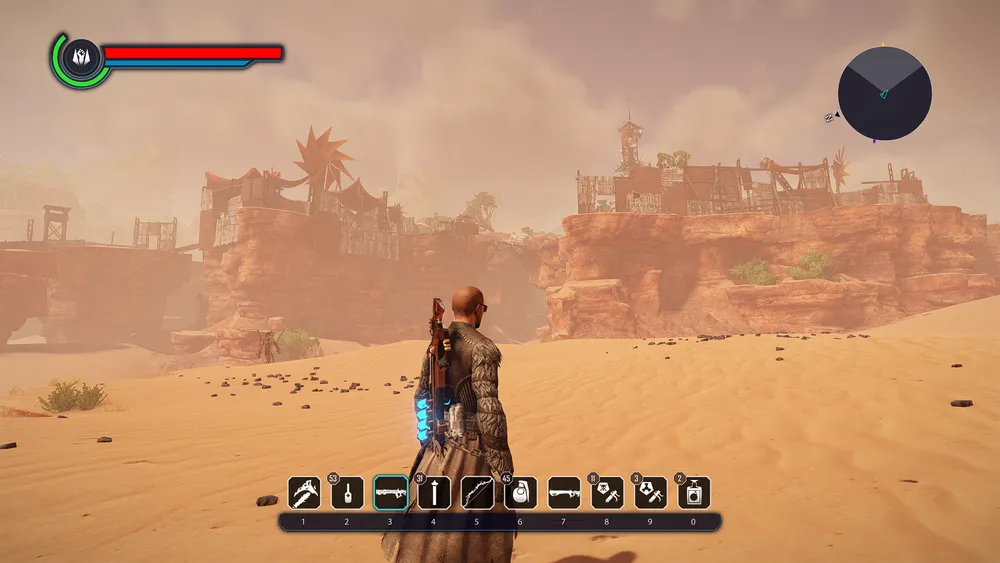
Survivors from the chaos and the subsequent cataclysms after the comet's fall began to organize themselves into various factions. Over time, these factions disappeared, were absorbed, or broke apart, until everything settled more or less. By the time the game starts, there are 4 major factions: in the south of the Tavar Desert, the Outcasts have settled - free-spirited and adventurous people,
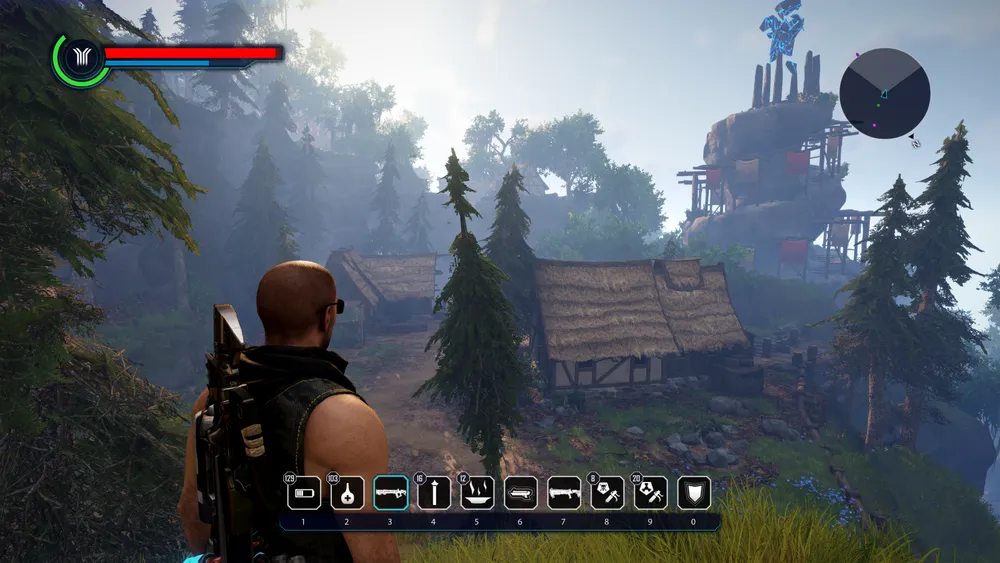
in Edessa are the berserkers, striving to live in harmony with nature, intolerant of any electronic devices, and forbidding the use of them,
in Abessa and Ignadon live clerics with a combination that is if not unique, then quite rare for games: religion and technophilia.
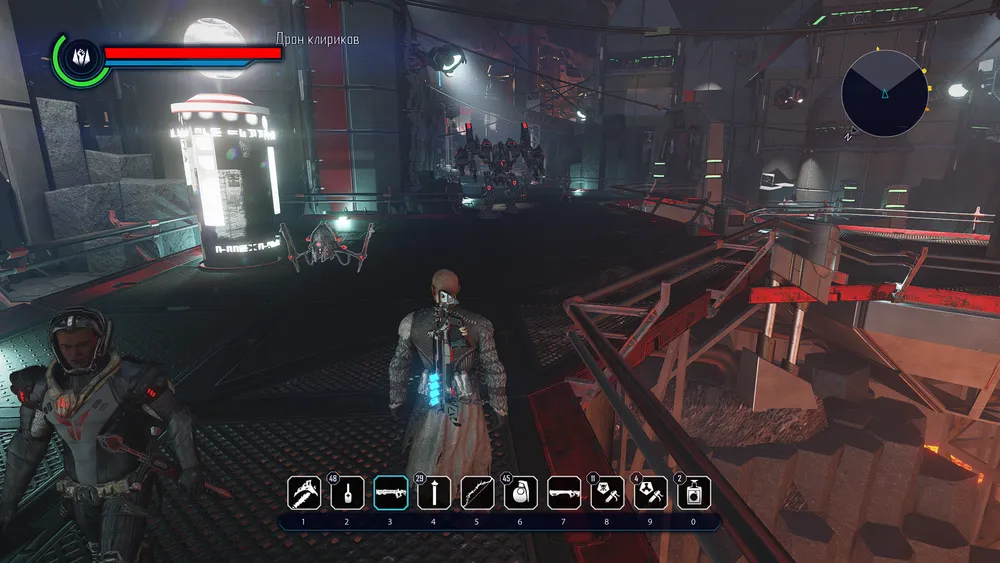
This probably resonates somewhat with Warhammer 40K, but the clerics of Magalan do not worship the machine; their technophilia is purely pragmatic - they are few, and technology is meant to remedy this deficiency. Clerics have a taboo against using puffs.
In the far north, in Ksarcor, amidst the icy wasteland live the albs. The albs once separated from the clerics due to their unwillingness to worship their god.
The first three factions fiercely fought among themselves until their forces were exhausted. Then a peace treaty was signed, and if we do not count border conflicts and individual skirmishes, peace reigns over most of the continent.
The comet brought with it a strange mineral, previously unknown on Magalan - elex. It quickly spread across the planet. Some began to test it "on the taste", feeling extraordinary abilities, yet could not stop in time. Thus, mindless mutants appeared. Those who managed to stop in time became albs - people who are completely devoid of emotions. However, the albs continue to controllably consume elex, which gives them additional strength, agility, and resilience.
Some time after the emergence of the faction, the albs gained a new leader - the Hybrid. He brought with him the Directive (something like a long-term goal) for the albs, death for the rest. The Directive stated: all elex of Magalan must be mined and transported to the Ice Palace - the residence of the Hybrid in Ksarcos for the achievement of a new stage of evolution. This is how the planet got converters - giant platforms for extracting elex.
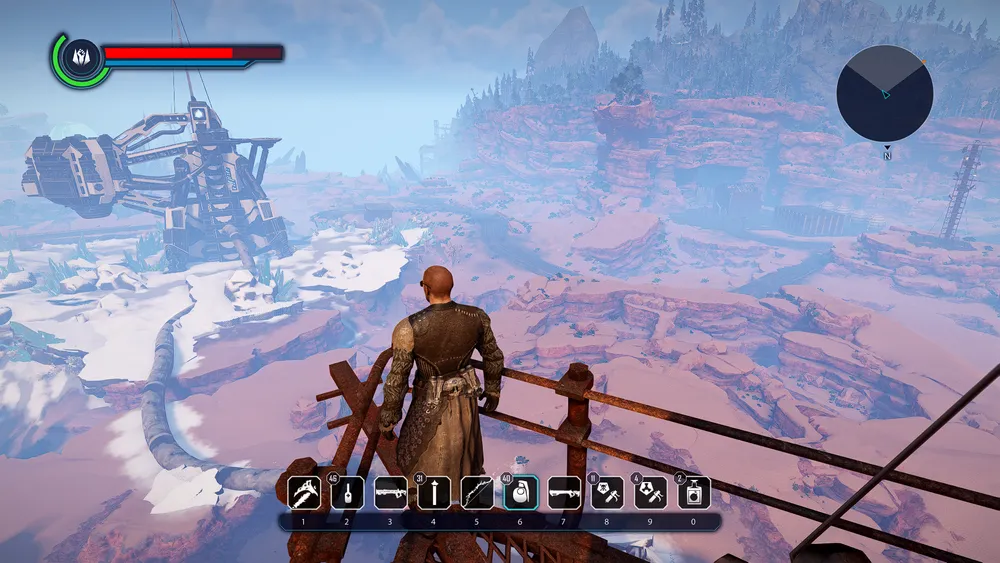
They were built over major deposits, but they didn't shy away from extracting elex from living beings, taming mutants for the purpose of exploring elex stocks. The albs are also known for their cruelty and unwillingness to engage in negotiations - any person caught in their sight is subject to immediate destruction or becomes a victim of the converter.
Naturally, the remaining people could not quietly watch as the albs mine elex from the living, and they began to resist, with the berserkers excelling the most, having destroyed one of the converters. Additionally, they managed to extract a plant that converts elex into mana. It is said that their leader left the Fortress to find a way to convert all elex into mana at once. However, the "all-seeing" Hybrid anticipated this and sent our protagonist - the elexetor Jax (yes, the main character is no longer the Nameless One) on a secret mission - to find and kill the berserkers' leader.
The game begins at the moment when Jax's glider is shot down in the middle of Edana; he scarcely escapes from it, but his own people are already waiting for him, accusing him of failing his mission, and shoot him, but (as usual) do not confirm his death or take the body with them. In general, a standard setup for an action game.
The storyline of the game revolves around Jax wanting to reach the Ice Palace and find out who ordered his liquidation. Here we face an irreconcilable contradiction - an alb who knows perfectly well that he did not fulfill the mission knows that death is the penalty for this. An alb who is by definition unemotional, accustomed to obeying the laws (or whatever they have - rules? directives?), suddenly wants to know who ordered his liquidation. The game makes attempts to explain this, but in my opinion, they are unconvincing.
Gameplay
So what does the game itself represent? It is an RPG with an open world. A truly open world. The main highlight that made it possible - the jetpack. Crowds of various monsters roam the land, albs wander, but this is no obstacle when you have a jetpack in your "pocket"!

It allows you to fly a short distance. Typically, the patrol radius of mobs is not high, and the aggro radius is even lower (and this often plays a cruel joke, I will explain below in the "flaws"), hills, elevations, and remnants of houses are scattered everywhere. The strongest monsters are the slowest. It is not particularly difficult to climb a hill and slide down the other side or to scale a high mountain by footholds. A couple of downsides of the jetpack: it’s hard to maneuver, sometimes it refuses to listen to the keyboard and flies vertically, and the second downside is that when about a third of the power reserve is left, it spontaneously turns off and you have to activate it again, losing a few precious meters of height. Fortunately, the developers didn’t complicate fuel for it, as it automatically replenishes power; all you have to do is wait a few seconds.
The game developers did not forget about fast travel. During the exploration of territories, teleporters will be opened, which you can move to at any moment and from any place. There is a perk that unlocks all teleporters in the game, but in my opinion, it is completely unnecessary as it takes away the interest in independent exploration of the map.
There are virtually no large caves or dungeons in the game. Usually, these are either rare basements of buildings or caves with bandits.
The world is interesting to explore; notes, audio recordings, and books describing the events before, during, and after the catastrophe are scattered here and there. Here are notes from citizens, letters from scientists, military personnel, and doctors. The "goldmine" is the "hidden" quest "Four Houses," which provides a lot of information about what happened for completion. For this, the developers deserve special thanks - I love Morrowind-style games where you can piece together the world's story from read books, notes, etc. You can encounter quest givers in the most unexpected places and follow their tasks, getting caught up in another one, and return after running half the map. Life barely survives all over Magalan, not limited to cities and fortresses.
I liked the landscapes and panoramas in the game. There are many places that offer a beautiful view.


An interesting part of the map's edge is implemented. This is usually mountains. As you approach it, noise activates and a "glare" appears, signaling nothing good. If you go further, you will encounter negative effects that quickly drain life over time (you have time to return). Depending on the region, this may be radiation, cold, or fire. But this also represents a great drawback, as the effects are standard for the entire game, and until you start pushing through, you won’t know whether it’s the end of the map or just a dangerous zone you can traverse. Such situations occur in the game periodically.
The RPG component is implemented standardly: there are primary skills (strength, endurance, agility, intelligence, cunning) and secondary ones that require certain indicators in primary ones (additional damage from weapons, additional trophies from monsters, more experience from reading books, etc.). Secondary skills also include faction-specific ones. You can only join one faction. Berserkers and clerics specialize in magic (for clerics, it is called "mental energy"), while the outcasts specialize in drugs - "puffs." On paper, everything looks beautiful, but in real life, playing as clerics, I only used abilities to increase ranged weapon damage, increase armor, and a couple of times applied "persuasion." Consequently, everything can be easily done without it, and you won’t feel like you are lacking something necessary or at least very useful. At least on normal difficulty.
Throughout the game, you encounter companions. Their attitude towards you changes based on the actions they witnessed. If the attitude drops to hatred, they will leave.

Mamba hates you all. :D
One from each faction + "hidden" ones. Naturally, each of them has their quests of varying degrees of interest, but still - there are no outright foolish ones, and that’s good. In battle, companions are immortal (at least on normal). They only lose consciousness for about 15 seconds. There is a limit of about 10 "deaths", after which the cooldown for "revival" increases significantly, probably to a couple of minutes.
With companions, towards the end of the game, romantic relationships are possible. Fortunately, only traditional. No sex. Amusingly, the game allows for at least 1 jealousy scene.
Overall, quests in the game are more or less standard: go there, bring that, talk to someone; but the important difference from many other RPGs is the ability to complete most quests in a couple of different ways. Many quests can be completed for the benefit of one faction or another. Almost always you can deceive the quest giver, saying that you did as they wanted. Sometimes the deception is uncovered, but it bears no consequences - just a finger-wag and they will treat you worse. Usually, for deception, you receive less money (payments in the game are made in elex shards - elexit). I believe that the storyline is quite successful. Despite individual inconsistencies and contradictions, the game draws you in. You want to explore the world, learn its history. Quest givers are not only concentrated in cities but are also found in large numbers outside them.
I didn’t like the faction quests (at least for the clerics); they would be suitable for side quests, for trials during joining, after all, but definitely not for rank increases which, unfortunately, don’t give anything in terms of gameplay, other than access to faction armor. Melee faction weapons can be found or stolen. Ironically, the quest for joining is even more interesting.
It’s well thought out that after completing a quest, experience is given on the spot, while for the reward you need to walk to the quest giver. However, everything has its flaws - experience comes from completing quests that you not only did not take but also won't be able to take since you've joined another faction.
The jetpack is needed not only to escape enemies but also to cut corners. It’s always worth climbing to the rooftop, flying to the tops of various semi-destroyed towers and radar installations. Even onto wind turbines. There’s always something lying around. Often in the most unexpected places. And while 99% of the loot is merely junk for sale, every now and then, something decent can pop up among it. Weapons or ammo, bottles or puffs. Using the pack, you can hover in the air (fuel continues to drain) and shoot.
Hacking is interestingly realized. Here and there, you will come across locked chests and safes,
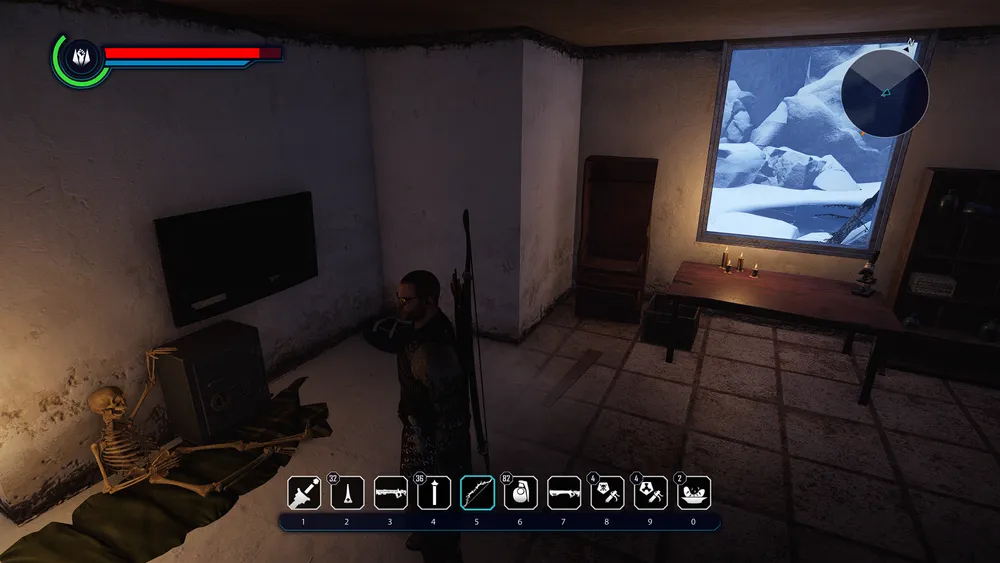
and electronic coded locks.
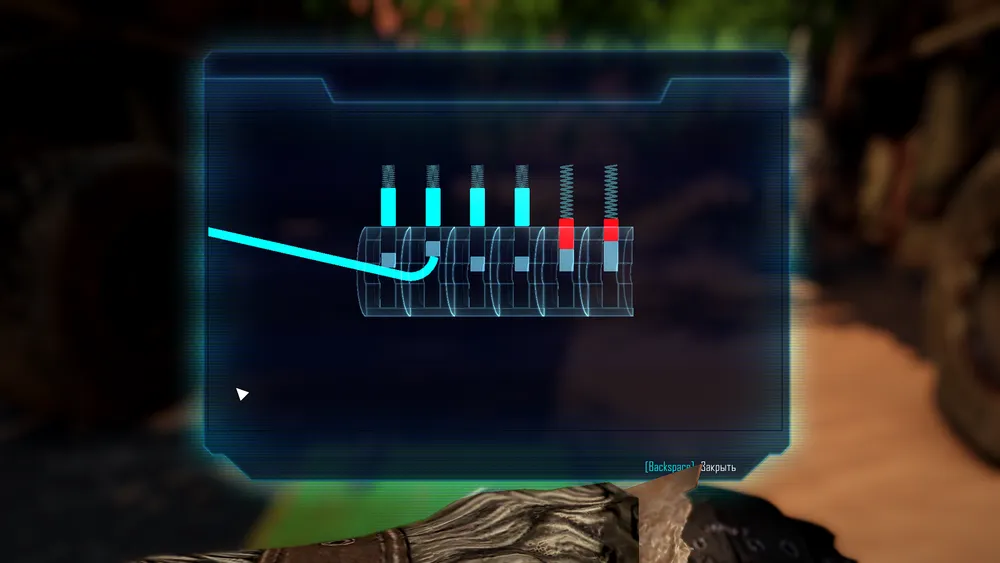
Chests are picked with lockpicks. You need to find the order in which all springs will be compressed. The more complicated the level, the more springs there are. I am very glad that developers did not attach a timer to hacking. Lockpicks periodically break, but there are more than enough in the game, so you don’t have to worry.
Safes and locks are opened using a combination of four digits. Sometimes the code can be found nearby: scratched on a wall, drawn on the floor, ceiling; it can also be "encoded" in a text note: lying nearby or standing out altogether as a reward for a quest (there are only a couple or three such throughout the game). Hacking a safe involves attempting to solve a simple inequality in 4 attempts. The more complex the level of the code, the less time is allotted for this and more digits are involved (unused digits in low-level locks are instantly obscured). If you guessed just a digit - it turns yellow; if you guessed both the digit and its place - it turns green; if you didn’t guess - it turns red. Fortunately, there are no penalties for not being able to hack, you can continue attempts using your previous experience.

You can fight both in melee and ranged combat. In melee, there is slashing, dodging, blocking, power strikes, combos. I can’t say much about it as I prefer ranged combat in all games. Ranged combat is very simple - with the left mouse button, you simply shoot (the sight appears after the first shot), or with the right mouse button, you enable "sniper mode" (the enemy's image magnifies a bit, and a sight appears).
As in Gothic, initially, even the weakest monsters would kill you in 1-2 hits. Later, with increased life, gaining armor, survivability increases significantly. However, there's a subjective feeling that armor doesn't help much, better bet on a large amount of life.
Unfortunately, enemies are not particularly memorable, many of them are reskins of those from Gothic. Their behavior does not stand out in originality: they graze during the day and sleep at night. The only thing that caught my eye is that they seek to find a way to the protagonist if he suddenly climbed onto some hill or other elevation. I can't recall if this was a feature in Gothic? The "response" to the appearance of the jetpack, and therefore, to the opportunity for the character to climb some high rock inaccessible from the ground, was the appearance of most monsters having a "spit" that flies very far and fairly quickly, has a decent "alpha," and deals damage over time.
Sometimes monsters fight among themselves. Typically, the most primitive individuals, like rats, "ostriches," "boars," distinguish themselves with their belligerence. The funniest thing is that they are often so engrossed in their battles that you can approach them closely and observe the duel's proceedings - they won’t pay any attention to the character until someone wins. During this time, you can practice equalizing the chances of victory - help the weaker one by beating or shooting at the stronger.
The variety of weapons is impressive: from a pipe fragment to two-handed swords and axes, hammers, from a primitive bow to a blaster. Some types of ranged weapons use several types of projectiles or several fire modes. For example, ordinary, explosive, radioactive bullets. Regular, sharpened (causes bleeding), explosive-ended harpoons. Shooting single shots, short or long bursts. In the regular mode, by electromagnetic pulse, explosive (how all this is combined in one weapon and ammo - I have no idea). If that’s not enough, the game even has hand grenades! The explosion of your grenade or explosive projectile in close proximity to the character deals damage to him. Occasionally, if the enemy comes too close, it makes sense to blow up a grenade at your feet to send him flying.
Damage types are unified, but can have bonuses from ammunition or special properties of melee weapons added. You can injure an enemy, strike them with radiation, poison them, set them on fire, freeze them.
Crafting. There is crafting in the game. You can upgrade any weapon 3 times. Each upgrade requires increasingly more investments in primary skills to use. For example, shooting requires agility and (strength or intelligence). Additionally, you can insert gems into weapons (with the availability of a "slot" and the skill "gem slot"). Gems can be improved. From 4 smaller ones, you can get a larger one (requires "jeweler"). There are 4 stages, so for one large gem, you’ll need 16 small ones. There are several colors: offhandedly, red, white, yellow, green, blue. I still haven’t found all 16 gems of even one color. The maximum is 15. It’s not surprising since even though I tried to search every bush, I might have missed something - the map is huge, often treasures just lie under a bush or tree, on a hillock.
You can create rings and amulets (unfortunately, the overwhelming majority of jewelry is not worth the resources spent); brew potions and cook puffs. Armor cannot be upgraded at all - you can only buy it. The best armor is factional. You cannot buy or steal armor from another faction. Potions are brewed from recipes that can be found, bought, or stolen. There are special potions that permanently increase health or endurance, mana, or mental power. They require rare plants (dragon root or golden whisper) that are not sold and only exist on the map in a few instances.
Leveling up. For leveling up, you receive 10 points for primary skills and 1 point for secondary ones. All primary starting skills equal 10 (sic!) and this is for an elexetor, the second in the hierarchy of the albs, who are supposedly stronger, quicker, and more resilient than other humans. Secondary skills are initially absent (what a commander the albs have). Up to 31 in a primary skill, raising costs 1 point, from 32 to 61 - 2, from 62 to 91 - 5 points each, from 92 to 100 - 10. As the level increases, experience requirements for leveling significantly rise. How much - is hard to say - I will explain in the flaws section. The maximum requirement for primary characteristics that I came across is 85. The maximum experience, apparently, is unlimited. I reached level 49. Mobs respawn regularly, so there are no issues with gaining experience. This isn’t Gothic, where you could clear an area and until the next chapter, or even until the end of the game, "smoke bamboo".
Elex. Deserves a separate mention. In the game, it exists in two "forms": elexit, shards - money and "raw elex" - an ingredient for... almost everything relatively valuable. Raw elex is extracted from mutant corpses (max level of the "hunter trophies" skill is required), is found in small amounts in elex ore deposits, or nearby converters, or it may simply lie among the loot. You can buy it from almost any trader.
Additionally, raw elex can be used to brew elex potions. There are large, medium, and small elex potions. Small ones give +100 experience, medium ones +2 to available primary skills, and large ones - +1 to free secondary ones. There are several recipes for obtaining those, only the small one is brewed from pure raw material. The others may use lower concentrations to yield more.
Coldness. A rather strange parameter that affects endings and dialog options. Some skills start to work only at certain "coldness" values. Initially, Jax is somewhat unemotional, his coldness is close to maximum. Over the course of completing tasks, it can rise or fall depending on the method of execution. Additionally, coldness increases from taking elex drinks. In practical terms, if you don’t need coldness, it’s quite easy to lower it with good, altruistic options in quests, and significantly raise it with elex drinks - a non-trivial task. That is to say, de facto nothing stops a good emotional Jax from downing elex glass after glass.
Flaws of the game.
In my opinion, there are quite a few.
First - technical. Piranhas wouldn’t be themselves if they released a bug-free game. What I noticed: objects falling through textures, partners passing through walls, absence of textures in plain sight (at least you don’t fall through them).

This is not a ghost - this is a companion.
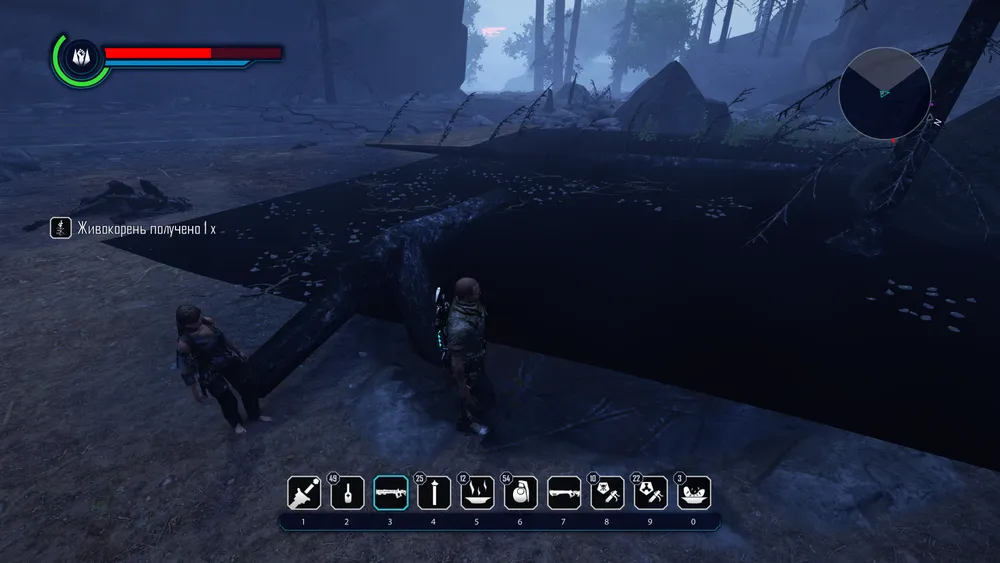
Do you see the texture? Neither do I.

The meme about "two chairs" takes on a new meaning.
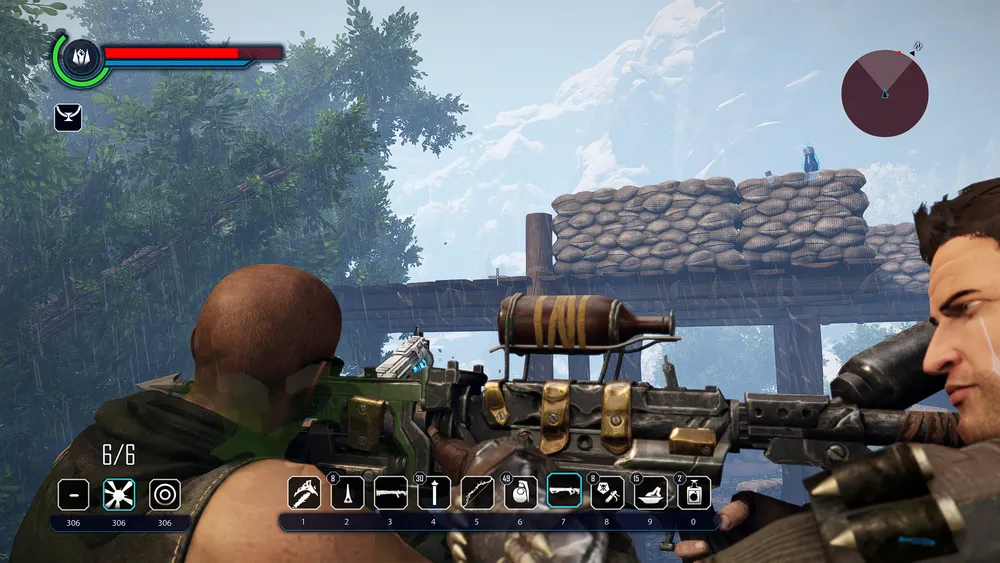
Nothing unusual, just a weapon freely passing through the head.
Under certain circumstances, enemies or even allies start spinning around their waists like a fan.
If you start shooting at an enemy-human (this seems to be characteristic only to albs) while being quite far away and at a significant height (for example, on a mountain), they start to "burn" and launch into "orbit," crashing into the "celestial firmament" and disappearing. The animation repeats until you tire of watching, or you kill them mid-flight (yes, this is even possible in this game).
However, if you approach the spot where they stood before the attack, you’ll find they are back there. Even though a second ago, no one was there. There have been rare instances when an enemy vanished; just running far away would cause them to appear unexpectedly in another location, right in your path, but well away from where the fight began.
Sometimes, projectiles pass straight through mobs. Even if it is such a large "beast" as a troll.
Second - completely inconvenient inventory. Instead of a rectangular grid, a vertical "line" and scrolling are used. This has increasingly become prevalent in RPGs (at least in GreedFall, The Outer Worlds), which I believe is related to trying to create a universal interface for PCs and consoles.
I want to express a separate "thanks" for the fact that you can’t manually adjust the number of items sold. You accumulated a stack of a couple of hundred but want to keep maybe 30? Well, suffer. It initially suggests selling everything (at least thank goodness for that), and after that, you use the mouse to adjust: by 1 or by 10.

This is very disappointing.

Third - non-functional primary skills. Based on the description, agility should increase ranged weapon damage, endurance - the amount of life, and so on. However, this does not work. As Reddit users have determined, primary skills do not yield anything at all; they are merely keys to unlocking secondary ones.

Descriptions do not match reality.
Fourth - opacity almost everywhere. Many secondary skills are labeled as god knows what. For example, "Increases ranged weapon damage" - by how much - god knows (this can at least be seen in the weapons' description) or "Enemies attack not immediately" (how do you understand what was meant?). Or here's "Reactive Attack": unlocks the ability to perform a special attack using the jetpack.

Is it clear to you? To me - no. While studying it, I hoped that the enemies would be knocked back and somewhat burned. In the first battle, I learned that this does not work (that way). I had to Google it. It turns out this is akin to a "strike from the heavens" and only works with melee weapons.
The precise numbers: life, endurance, mana, mental strength, experience: total, until the next level are not displayed anywhere. All this is shown in a bar, without numerical indicators. Okay, we’ll survive, but here’s the most crucial indicator in the game - "coldness," on which both dialog options and endings depend, as well as some perks. For example, the perk "Machine": increases (by how much?) damage of ranged weapons when coldness is below 80. Well, for it to work, one doesn’t have to lower coldness below a certain threshold. There’s an even more interesting variant - the perk "Balance": increases damage in melee if coldness is between 40 and 60. Yet we only see the qualitative characteristic of coldness, for instance - "spontaneous." Resistances: to poisons, frost, fire, and radiation are displayed nowhere.
For a long time, I was confused by the fact that primary skills were sufficient to learn the skill, but it just wouldn’t learn. While rummaging through the inventory, I found an amulet that gives +5 to agility. That is, it turns out, only own persistent characteristics are checked (which is correct), but the display of instances where skills are sufficient, only if one wears a ring-amulet, is poorly realized.
Fifth - crafting. The fact that upgrading the level of a weapon means losing its special properties like poison damage, radiation, etc., can be understood and possibly accepted with some reluctance. However, it can be an unpleasant surprise that the weapon you decided to upgrade, spending heaps of resources, deals the same or less damage than what you already have. And why? Well, because it shows requirements and damage only for the next level of a weapon, while each can be upgraded 3 times. Hence the recommendation - save before upgrading a weapon. Each faction has a perk that roughly translates as: "Creating <special> weapons," having the description "allows you to improve faction weapons at the workbench." Did you learn it and did not understand why nothing changed? It turns out it only applies to specific melee weapons.
Sixth - companions. Of all the commands, they only know two: stay here and go to the camp. You can't command them to attack, you can't designate a preferred type of weapon, distance to follow. In battle, despite having ranged weapons, they will often unwittingly engage in melee, in which they frequently perish. They tend to keep too close to the protagonist, which is annoyingly frustrating as they draw unnecessary attention from enemies to our persona, increasing the density of enemy fire. They also often aggro crowds simply because they decided to fly up to the hero on the jetpack when they could have just walked on the ground or simply jumped over the obstacle. In general, they cause about as much harm as good.
Seventh - other. The state of the jetpack's fuel is not saved in the save file; it hangs in memory. That is, if you landed badly, wasting time and fuel, and then loaded, you’ll emerge again with an empty "tank." All ranged weapons have 3 firing modes (or types of ammunition - it depends on the weapon). Suppose you, like me, enjoy carrying multiple types of weapons. For example, a laser rifle and a blaster. You've configured the rifle for a short burst and then decided to shoot with the blaster's explosive mode. When you switch modes, in the next fight, you pull out the laser again, and oh - it automatically switched to a different mode. And that’s because when switching a mode in one weapon, it switches (cyclically) in the others. At least, in those in the quick-use menu.
Abandonment of the minimap (its place is taken by a radar, not particularly useful until you learn a special perk - to see enemies on the map) and the "darkness" of the map led to the fact that it is unclear whether you have been here before or if it is your first visit? You can only figure it out through indirect signs.
Due to the low aggro radius of enemies (or the overall sluggishness/glitches of checks), it may happen that you don’t know if the being in front of you is a friend or foe until you bump into their back/chest. The most memorable instance for me was in the swamps. The radar showed an enemy right before my face, but I couldn’t even see them at point-blank. I was about to write it off as another glitch, but then I ran into the head of a troll sitting in the water, completely submerged, who immediately attacked me. I believe that one of the most important items for high difficulty games will be glasses with a living detector (they, by the way, also show plants).
From killed enemies, neither weapons nor armor drop. Occasionally – grenades.
The presence of scattered bones in the desert I can still understand (although it’s not very logical), but what rational explanation can there be for scattered "packs" (one, but compactly and over a large area) of explosive ammo for bazookas? Here it raises the question, what were the game designers smoking? They didn’t stop to think that ammo in the blistering sun will simply detonate?
Berserkers curse even when using a "pip-boy," but its use causes no problems, while companions from berserkers will calmly use the jetpack. Clerics fight against puffs, but at a legal trader inside their stronghold, they are sold openly. Albs - supposedly soulless "machines" destroying everything in their path, but at the same time, there is a quest from circumstances which makes it quite clear that an alb-outlaw colluded with outcasts. After all that has been mentioned above, it’s not even surprising that very, very rare plants suddenly materialize in bunches two steps away from the quest giver. I do not know whose fault it is here - the game designers or simple designers, but to an outside observer, the albs differ from the clerics only in costume: the same weapons, the same technology is used, the same robots march. Sometimes, while reading dialogues, I recalled Stanislavsky. When an alb-defector fully clad complains that the Free People (all residents of Magalan, excluding the albs) sometimes recognize him, it makes you want to scream - I don’t believe!
Recently, developers have been spending less and less time adhering to their own established conditions.
What I am missing in modern RPGs is the possibility, like in the good old days, to find the quest's target just from the description, without any markers. Unfortunately, in Elex, this is not possible most of the time.
Epilogue
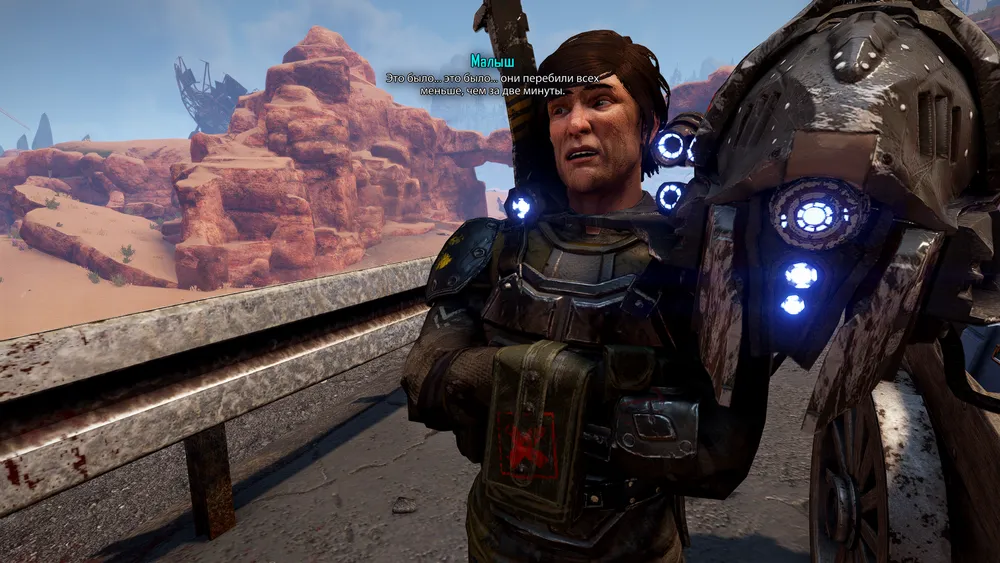
You know, despite the vast number of shortcomings, Elex is a game that engages you, a game that deserves to be called an RPG. The story conceived is interesting, side quests add charm to it. I recommend it to all RPG lovers to play it at least once. I myself am thinking that I will definitely play it at least one more time. And of course, I will be waiting for a sequel. The outlines of the upcoming conflict emerge at the end of the game.